The buy-to-let landscape faces a fundamental shift: from May 2026, landlords must accept tenant pet requests unless they can demonstrate "reasonable grounds" for refusal—a dramatic reversal that transforms rental property valuations overnight. With pet-friendly rental listings already declining 13% despite the Act's pro-tenant intentions[6], property surveyors now face unprecedented challenges in quantifying long-term damage risks within portfolios where pet occupancy becomes the default rather than the exception.
Understanding the valuation impacts of Renters' Rights Act 2026 pet clauses: surveyor strategies for assessing long-term damage risks has become essential for accurate property assessments in today's rental market. This legislative change fundamentally alters how registered RICS valuers must approach buy-to-let property evaluations, requiring new methodologies to account for accelerated wear patterns and maintenance liabilities.
Key Takeaways
- 🏠 Mandatory pet consideration from May 2026 requires landlords to respond within 28 days to pet requests, fundamentally changing rental property risk profiles
- 💷 No additional deposits permitted for pets under the Act, limiting landlords' financial protection against damage beyond standard tenancy deposits
- 📊 Valuation adjustments of 3-8% may apply to BTL properties based on pet damage risk exposure and property characteristics
- 📸 Enhanced documentation becomes critical for surveyors, including thermal imaging, UV detection, and comprehensive baseline inventories
- 🔍 Risk stratification by property type, construction quality, and pet type enables more precise valuation adjustments
Understanding the Renters' Rights Act 2026 Pet Provisions
The Renters' Rights Act 2026 introduces sweeping changes to pet ownership in rental properties, fundamentally altering the landlord-tenant dynamic. Under the new framework, landlords cannot automatically refuse pet requests but must provide written responses within 28 days of receiving formal applications, or within seven days if additional information is requested[2].
Key Legislative Changes
The Act establishes several critical parameters that directly impact property valuations:
Deposit Restrictions: Landlords cannot charge separate pet deposits or additional pet-related fees. Only the standard tenancy deposit remains available to cover damage beyond fair wear and tear[1][2]. This limitation significantly reduces financial buffers against pet-related deterioration.
Reasonable Grounds Framework: Refusals must be based on demonstrable concerns such as property unsuitability, lease restrictions, or specific animal welfare issues[4]. Vague objections no longer suffice as legal grounds for denial.
Insurance Considerations: Landlords may require tenants to obtain pet damage insurance as a condition of approval, though this adds complexity to the approval process[7].
Market Response and Supply Dynamics
Despite intentions to facilitate pet ownership, the market has responded counterintuitively. Pet-friendly rental listings have dropped by 13%, suggesting landlords may be implementing more restrictive practices or exiting the rental market entirely[6]. This supply contraction creates valuation pressure as properties become less attractive to the expanding pet-owning tenant demographic.
The legislation's practical effect transforms rental properties from discretionary pet-friendly assets into presumptively pet-occupied investments, requiring surveyors to recalibrate baseline assumptions about property condition trajectories.
Valuation Impacts of Renters' Rights Act 2026 Pet Clauses: Core Assessment Challenges
The valuation impacts of Renters' Rights Act 2026 pet clauses create multifaceted challenges for property surveyors conducting comprehensive property valuations. Traditional valuation methodologies must now incorporate pet-occupancy risk premiums across multiple assessment dimensions.
Primary Valuation Adjustment Factors
Surveyors must evaluate several interconnected factors when determining appropriate valuation adjustments:
| Factor | Impact Range | Assessment Priority |
|---|---|---|
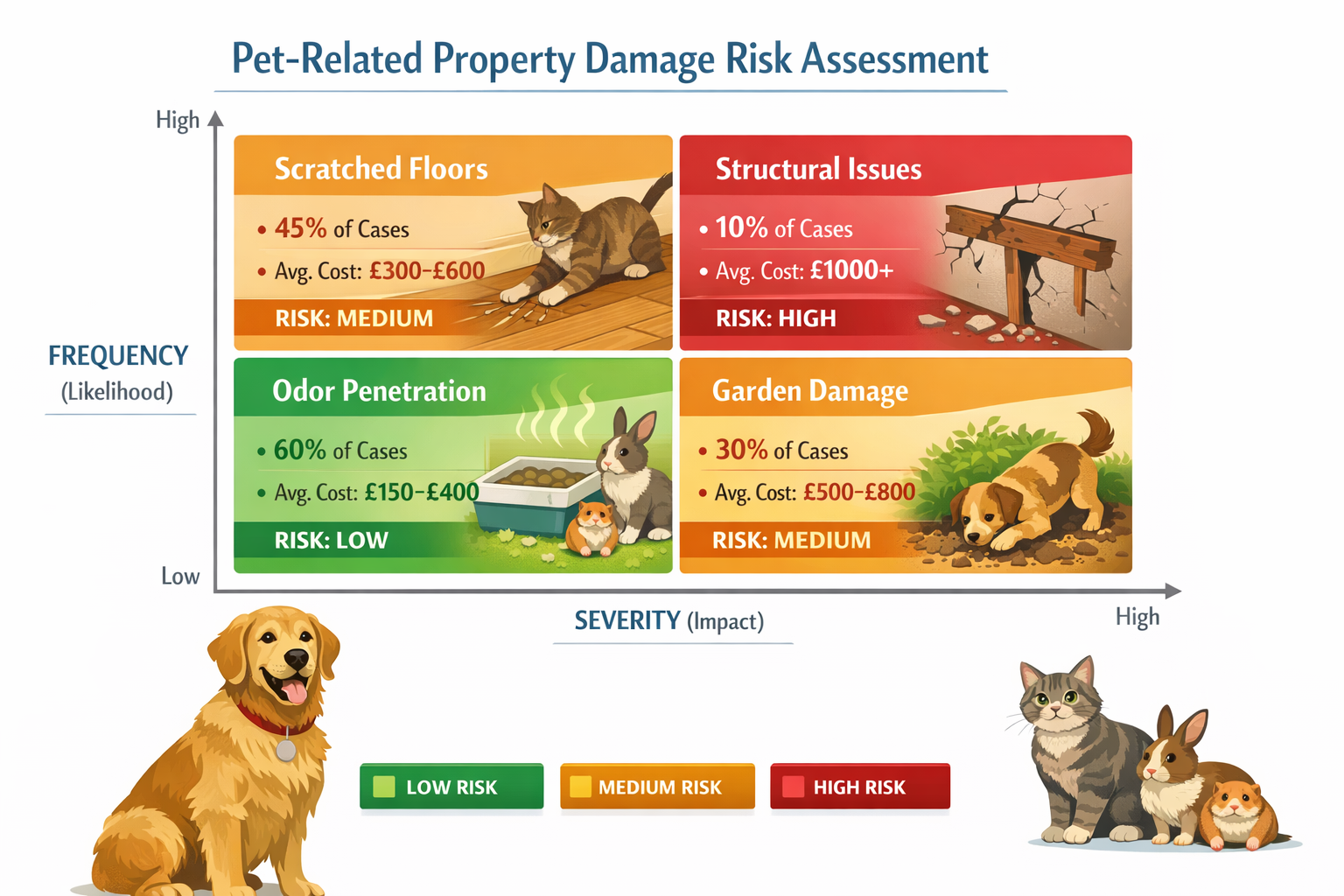
| Flooring deterioration | 2-5% valuation reduction | High ⚠️ |
| Odor penetration | 1-4% valuation reduction | High ⚠️ |
| Garden/outdoor damage | 0.5-2% valuation reduction | Medium |
| Structural scratching | 0.5-3% valuation reduction | Medium |
| HVAC contamination | 1-3% valuation reduction | Low-Medium |
Property-Specific Risk Stratification
Not all properties face equal pet-related risks. Valuation factors must account for property characteristics that amplify or mitigate damage potential:
High-Risk Properties 🔴
- Properties with carpeted flooring throughout
- Older buildings with porous surfaces
- Units with limited outdoor access
- Properties with shared ventilation systems
- Buildings with restrictive pet policies in communal areas
Lower-Risk Properties 🟢
- Hard-floored properties (tile, vinyl, sealed concrete)
- Ground-floor units with private gardens
- Recently renovated properties with pet-resistant materials
- Properties with separate entrance/exit routes
- Buildings designed with pet amenities
Depreciation Acceleration Modeling
Pet occupancy accelerates depreciation curves across multiple property components. Surveyors must adjust standard depreciation schedules to reflect shortened useful life spans:
Flooring: Standard carpet replacement cycles of 7-10 years may compress to 4-6 years under continuous pet occupancy. Hard flooring shows accelerated wear patterns at joint seams and high-traffic areas.
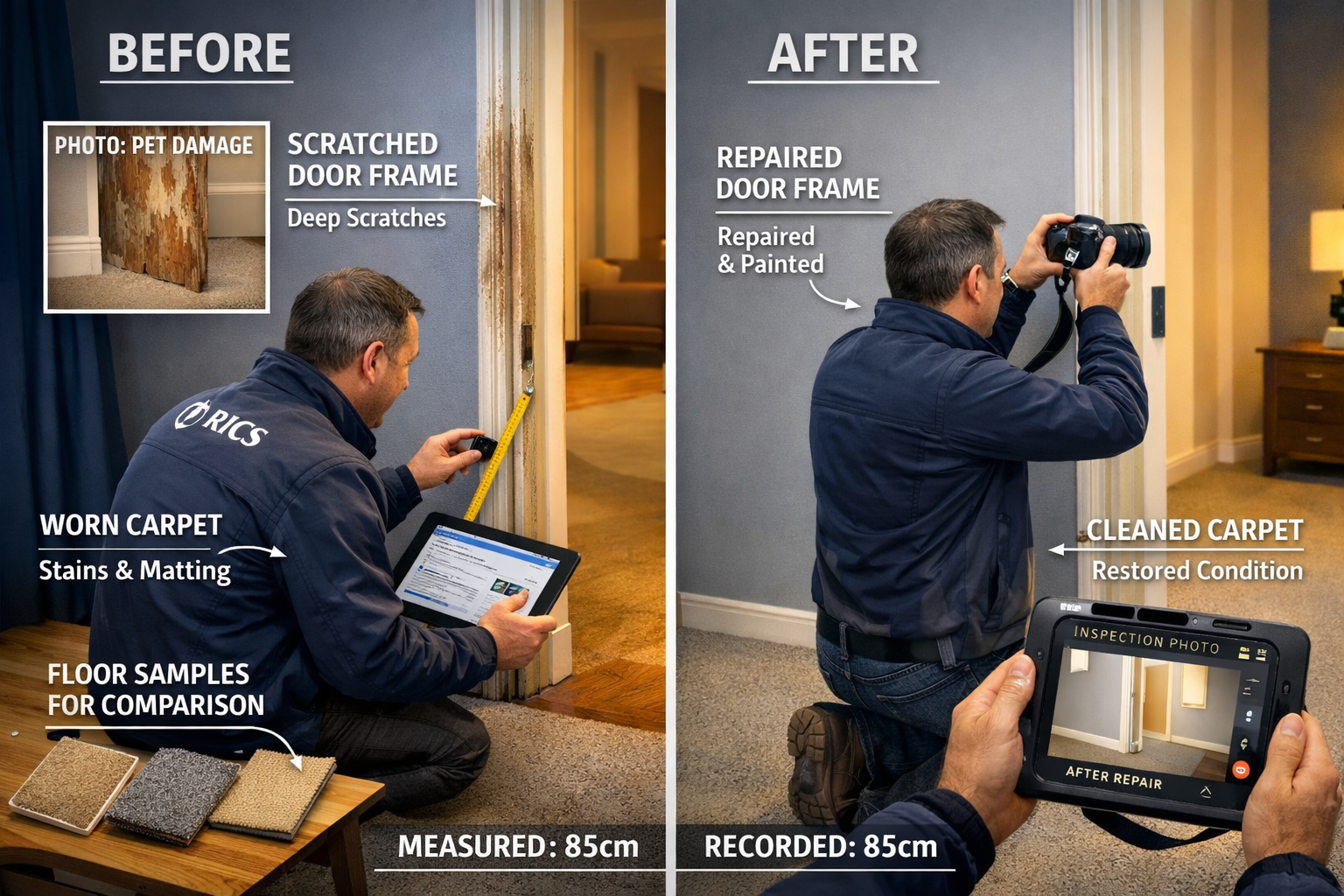
Interior Doors and Trim: Scratching damage typically manifests within 18-24 months of pet occupancy, requiring refinishing or replacement significantly ahead of standard maintenance schedules.
HVAC Systems: Pet dander accumulation reduces system efficiency by 15-30%, necessitating more frequent filter replacements and potential duct cleaning interventions.
When conducting methods of valuation, these accelerated depreciation factors must be quantified and incorporated into income capitalization approaches for buy-to-let properties.
Surveyor Strategies for Assessing Long-Term Damage Risks
Professional surveyors require enhanced methodologies and specialized tools to accurately assess the valuation impacts of Renters' Rights Act 2026 pet clauses. Traditional inspection protocols prove insufficient for detecting latent pet-related damage and projecting long-term maintenance liabilities.
Advanced Documentation Protocols
Comprehensive baseline documentation becomes paramount when standard deposits provide the only financial recourse for damage claims. Surveyors should implement multi-layered documentation strategies:
Visual Documentation Suite 📸
- High-resolution photography of all flooring surfaces (minimum 12MP)
- Video walkthroughs with timestamp metadata
- 360-degree panoramic captures of each room
- Macro photography of existing wear patterns and imperfections
- Exterior documentation of gardens, patios, and fencing
Technical Detection Methods 🔬
- UV light inspection: Reveals biological stains invisible to naked eye, particularly critical for carpet and upholstery assessment
- Thermal imaging: Identifies moisture penetration from pet accidents that may compromise subflooring or structural elements
- Moisture meters: Quantify dampness levels in floors, walls, and baseboards to establish baseline readings
- Air quality testing: Documents baseline odor levels and particulate concentrations
Risk-Adjusted Valuation Frameworks
Surveyors conducting commercial property valuations or residential BTL assessments should implement structured risk adjustment frameworks:
Tier 1: Baseline Risk Assessment (All Properties)
- Document existing condition comprehensively
- Identify pre-existing damage or wear patterns
- Establish replacement cost schedules for vulnerable components
- Calculate standard depreciation trajectories
Tier 2: Pet-Specific Risk Modeling (Properties with confirmed pet occupancy)
- Apply 1.5-2.5x accelerated depreciation multipliers to flooring
- Increase maintenance reserve allocations by 20-35%
- Adjust vacancy assumptions to account for potential tenant pool narrowing
- Factor in deep-cleaning costs between tenancies (£300-£800 per property)
Tier 3: Portfolio-Level Analysis (Multi-property investors)
- Diversification strategies across pet-friendly and restricted properties
- Geographic risk distribution based on local pet ownership rates
- Property type optimization (flats vs. houses with gardens)
- Insurance cost modeling across portfolio
Comparative Market Analysis Adjustments
When performing rent review assessments or comparative valuations, surveyors must account for the Act's market-wide impact:
Rental Income Adjustments: Properties marketed as pet-friendly may command 5-10% rental premiums in supply-constrained markets, partially offsetting damage risk concerns. However, this premium varies significantly by location and property type.
Yield Compression: BTL investors may accept lower yields on pet-accommodating properties due to reduced vacancy periods and expanded tenant pools, particularly in family-oriented neighborhoods.
Exit Value Considerations: Properties showing documented pet-related wear may face 2-4% discounts upon sale compared to equivalent properties without pet occupancy history, affecting long-term investment returns.
Specialized Inspection Checklists
Surveyors should develop pet-specific inspection protocols that extend beyond standard homebuyers survey procedures:
Interior Assessment Points ✅
- Flooring integrity (scratches, staining, delamination)
- Baseboards and door frames (chew marks, scratching)
- Wall surfaces (scratching, rubbing marks at pet height)
- Window sills and frames (scratching, weathering)
- Interior doors (scratching panels, damaged hardware)
- Carpet pile condition and odor absorption
- Upholstered fixtures (if included in letting)
Exterior Assessment Points ✅
- Garden lawn condition and bare patches
- Fence integrity and dig-hole presence
- Patio/decking scratching and staining
- External door condition (scratching, weathering)
- Drainage system blockages (from pet waste)
- Boundary integrity and escape route assessment
Systems Assessment Points ✅
- HVAC filter condition and replacement frequency
- Ventilation system contamination levels
- Plumbing for pet-related blockages
- Electrical outlets for chewing damage
- Window mechanisms for forced-opening damage
Long-Term Monitoring Recommendations
For ongoing portfolio management, surveyors should recommend periodic reassessment protocols:
Annual Inspections: Comprehensive condition surveys to track deterioration rates and validate initial risk assumptions. These inspections inform reserve fund adequacy and identify emerging issues before they escalate.
Mid-Tenancy Reviews: Six-month check-ins for properties with multiple or large pets, allowing early intervention for developing damage patterns.
Benchmarking Analysis: Comparison of actual deterioration against projected models to refine future valuation methodologies and improve risk prediction accuracy.
Professional surveyors working with local chartered surveyors can leverage regional expertise to understand local pet ownership patterns and market-specific damage risk profiles.
Financial Modeling for Pet-Accommodating Properties
The financial implications of the Renters' Rights Act 2026 extend beyond immediate damage concerns to encompass lifecycle cost analysis and investment return modeling.
Enhanced Reserve Fund Calculations
Traditional reserve fund allocations typically set aside 0.5-1% of property value annually for maintenance and repairs. Pet-accommodating properties require enhanced reserves:
Recommended Reserve Adjustments 💰
- Standard properties: 0.5-1% of property value annually
- Pet-accommodating properties: 1.2-2% of property value annually
- High-risk configurations: 2-3% of property value annually
For a £300,000 BTL property, this represents an additional £2,100-£4,500 annual reserve requirement, directly impacting cash flow projections and investment returns.
Insurance Premium Adjustments
Landlord insurance policies increasingly differentiate between pet-friendly and pet-restricted properties. Premium increases of 8-15% are common for properties with confirmed pet occupancy, adding £80-£200 annually to operating costs for typical policies.
Some insurers now offer specialized pet damage coverage riders, providing additional protection for £150-£300 annually but with deductibles typically ranging from £250-£500.
Tenant Turnover Cost Analysis
While pet-friendly properties may experience reduced vacancy periods, turnover costs increase substantially:
Standard Turnover Costs: £500-£800
- Basic cleaning
- Minor repairs
- Repainting touch-ups
Pet-Occupancy Turnover Costs: £1,200-£2,500
- Deep cleaning and odor treatment (£300-£600)
- Carpet replacement or professional cleaning (£400-£1,200)
- Repair of scratching damage (£200-£400)
- Garden restoration (£150-£300)
- HVAC system cleaning (£150-£300)
These elevated turnover costs must be amortized across expected tenancy durations when calculating true rental yields.
Market Positioning and Strategic Recommendations
The bifurcation of the rental market into pet-accommodating and pet-restricted segments creates strategic opportunities for informed investors and requires sophisticated positioning advice from surveyors.
Property Optimization Strategies
Physical Modifications: Properties can be strategically upgraded to minimize pet-related damage risks while maintaining marketability:
- Flooring transitions: Replace carpeting with luxury vinyl tile (LVT) or sealed hardwood (investment: £2,000-£5,000 for typical property)
- Protective barriers: Install kickplates on doors and protective corner guards (investment: £200-£500)
- Fencing enhancements: Upgrade garden boundaries to prevent escape and contain outdoor activities (investment: £1,000-£3,000)
- Easy-clean surfaces: Specify washable paint finishes and sealed surfaces throughout (marginal cost: £300-£600)
These modifications typically deliver ROI within 2-3 tenancy cycles through reduced turnover costs and expanded tenant appeal.
Tenant Screening Enhancements
While the Act limits refusal grounds, robust screening protocols remain permissible:
Pet Reference Requirements 🐕
- Previous landlord pet references
- Veterinary records demonstrating responsible ownership
- Pet training certifications (particularly for dogs)
- Photographic evidence of pet size and breed
- Detailed pet descriptions including age, behavior characteristics, and exercise routines
Insurance Verification: Confirming tenant pet damage insurance coverage before approval provides additional financial protection layer.
Geographic and Demographic Targeting
Surveyors should advise clients on market positioning based on local demographics:
High-Opportunity Markets 📍
- Family-oriented suburban areas with garden access
- Neighborhoods near parks and green spaces
- Areas with established pet service infrastructure (vets, groomers, pet stores)
- Communities with lower population density and outdoor amenities
Challenging Markets ⚠️
- High-density urban areas with limited outdoor space
- Luxury apartment complexes with shared amenities
- Properties with restrictive freeholder covenants
- Buildings with vulnerable tenant populations (allergy concerns)
Regulatory Compliance and Documentation Standards
Surveyors must ensure their assessment methodologies align with RICS standards while addressing the unique challenges posed by the Act.
RICS Red Book Considerations
When conducting formal RICS valuations, surveyors must explicitly address pet-related factors within their reports:
Required Disclosures 📋
- Confirmation of pet occupancy status (current or historical)
- Documentation of pet-related damage or wear patterns
- Explanation of valuation adjustments applied for pet-related risks
- Comparable evidence from similar pet-accommodating properties
- Market condition analysis regarding pet-friendly supply/demand dynamics
Assumptions and Special Assumptions: Valuations should clearly state assumptions regarding future pet occupancy and associated maintenance requirements, particularly for portfolio valuations where occupancy patterns may vary.
Liability Protection for Surveyors
The evolving regulatory landscape creates potential liability exposure for surveyors who fail to adequately assess pet-related risks:
Professional Indemnity Considerations 🛡️
- Document all inspection limitations and access restrictions
- Photograph evidence of pet presence (bowls, bedding, toys, scratching posts)
- Explicitly state when pet-specific inspection tools were not available or deployed
- Recommend specialist follow-up inspections when significant concerns identified
- Maintain detailed contemporaneous notes of all observations
Surveyors should review professional indemnity insurance coverage to ensure adequate protection for pet-related valuation disputes.
Future-Proofing Valuation Methodologies
As the rental market adjusts to the Renters' Rights Act 2026, surveyors must develop adaptive methodologies that evolve with emerging data and market trends.
Data Collection and Benchmarking
Industry-wide data collection on actual pet-related damage costs and frequency remains limited. Surveyors should:
Establish Internal Databases 📊
- Track actual damage costs across inspected properties
- Document repair/replacement frequencies by property type
- Analyze correlation between pet types/sizes and damage severity
- Monitor insurance claim patterns and settlement amounts
- Benchmark turnover costs against initial projections
This empirical data enables continuous refinement of risk models and valuation adjustments, improving accuracy over time.
Technology Integration
Emerging technologies offer enhanced assessment capabilities:
AI-Powered Damage Detection: Machine learning algorithms can analyze photographs to identify and quantify pet-related damage patterns with increasing accuracy, providing objective damage scoring.
Predictive Analytics: Historical data combined with property characteristics enables probabilistic modeling of future damage likelihood and cost ranges.
Digital Twin Technology: Creating digital property models allows tracking of condition changes over time and simulation of different pet occupancy scenarios.
Regulatory Monitoring
The Act's implementation will likely generate case law and regulatory guidance that refines "reasonable grounds" for pet refusal and damage liability standards. Surveyors should:
- Monitor tribunal decisions regarding pet-related disputes
- Track insurance industry responses and product evolution
- Participate in industry forums sharing best practices
- Engage with RICS technical standards updates
- Maintain awareness of local authority enforcement approaches
Conclusion
The valuation impacts of Renters' Rights Act 2026 pet clauses represent a fundamental shift in how surveyors must approach rental property assessments. The presumption of pet occupancy, combined with restricted deposit protections, creates elevated damage risk profiles that demand sophisticated evaluation methodologies and enhanced documentation protocols.
Professional surveyors must now integrate multi-layered risk assessment frameworks that account for property-specific vulnerabilities, implement advanced detection technologies to identify latent damage, and apply evidence-based valuation adjustments that reflect accelerated depreciation patterns. The strategic deployment of specialized inspection tools—from UV lighting to thermal imaging—enables comprehensive baseline documentation that protects both landlord and surveyor interests.
Actionable Next Steps
For property surveyors and valuation professionals:
- Upgrade inspection equipment to include UV lights, thermal cameras, and moisture detection tools for comprehensive pet damage assessment
- Develop standardized checklists specific to pet-related damage indicators across different property types and configurations
- Establish empirical databases tracking actual damage costs and frequencies to refine risk models and valuation adjustments
- Enhance professional development through specialized training on pet-related property deterioration patterns and assessment methodologies
- Review professional indemnity coverage to ensure adequate protection for pet-related valuation disputes and liability exposure
- Engage with clients proactively to educate on risk mitigation strategies, property modifications, and market positioning opportunities
The rental market's evolution toward presumptive pet accommodation creates both challenges and opportunities. Surveyors who develop robust, evidence-based assessment frameworks will deliver superior value to clients navigating this transformed landscape while maintaining professional standards and managing risk exposure effectively.
For comprehensive property assessments that account for the latest regulatory changes, consider engaging professional surveying services with specialized expertise in rental market valuations and risk assessment methodologies.
References
[1] Pet Friendly Tenancies How The Renters Rights Act 2025 Changes The Rules For Landlords – https://www.hunters.com/guides/landlord/pet-friendly-tenancies-how-the-renters-rights-act-2025-changes-the-rules-for-landlords/
[2] Renting To Pet Owners What Changes In 2026 Under The Renters Rights Act – https://www.parkersproperties.co.uk/guides/landlord/renting-to-pet-owners-what-changes-in-2026-under-the-renters-rights-act/
[4] A Landlords Guide To Renting With Pets Under The Renters Rights Act 2025 – https://www.martinco.com/guides/landlord/a-landlords-guide-to-renting-with-pets-under-the-renters-rights-act-2025/
[6] Watch – https://www.youtube.com/watch?v=rVat8TD4IBE
[7] Pets Families And Fairness The Renters Rights Act – https://www.johndwood.co.uk/journal/pets-families-and-fairness-the-renters-rights-act