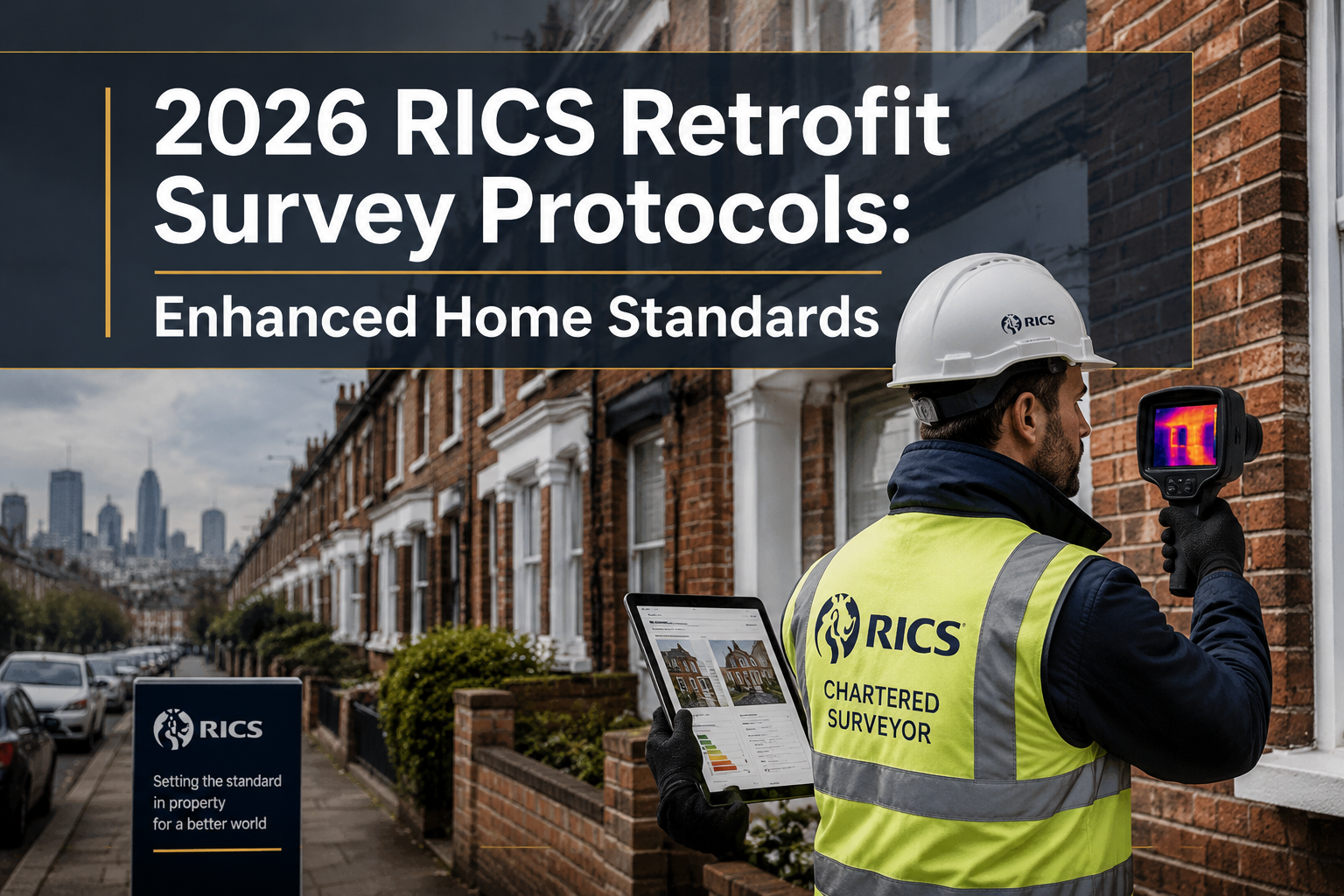

The built environment generates 40% of global carbon emissions, yet more than 60% of property professionals conduct carbon calculations in less than half their projects—or not at all. [5] This striking disconnect between climate urgency and professional practice defines the central challenge facing surveyors and valuers as we move through 2026. The RICS Sustainability Report 2025: Practical Integration into Building Surveys and Valuations for Spring 2026 reveals both concerning gaps and emerging opportunities for practitioners who must now translate environmental, social, and governance (ESG) factors into measurable client advice.
Drawing on responses from 3,500 professionals across 36 countries, [4] the report exposes a sector at a crossroads. While demand for green buildings remains positive globally, momentum is stalling precisely when acceleration is needed most. For surveyors conducting RICS building surveys and valuations in spring 2026, the practical question becomes clear: how do we embed sustainability metrics into standard practice when adoption remains uneven and market confidence wavers?
Key Takeaways
- Regional demand varies dramatically: Middle East & Africa leads with +52% growth in sustainable building demand, while the Americas lag at +11%, requiring location-specific approaches to sustainability integration [1]
- Carbon assessment adoption remains critically weak: Over 60% of professionals fail to conduct regular carbon calculations or climate resilience assessments, creating liability risks and missed opportunities [1]
- Waste tracking shows promise: 40% of professionals now regularly monitor waste reduction, indicating potential pathways for broader sustainability metric adoption [1]
- Climate resilience trumps energy efficiency: Investors increasingly prioritize adaptability and resilience over traditional energy performance, reshaping valuation criteria [1]
- Policy intervention is essential: Mandatory carbon reporting and government support are identified as critical enablers for sector transformation [1]
Understanding the RICS Sustainability Report 2025: Practical Integration into Building Surveys and Valuations for Spring 2026
The Current State of Sustainable Building Demand
The RICS Sustainable Building Index remains in positive territory for 2025, but the underlying data reveals a more complex picture. [1] Global momentum for green buildings is slowing, not accelerating, despite increased awareness of climate risks. This deceleration occurs against a backdrop of economic uncertainty, rising construction costs, and competing investment priorities.
Regional performance varies significantly:
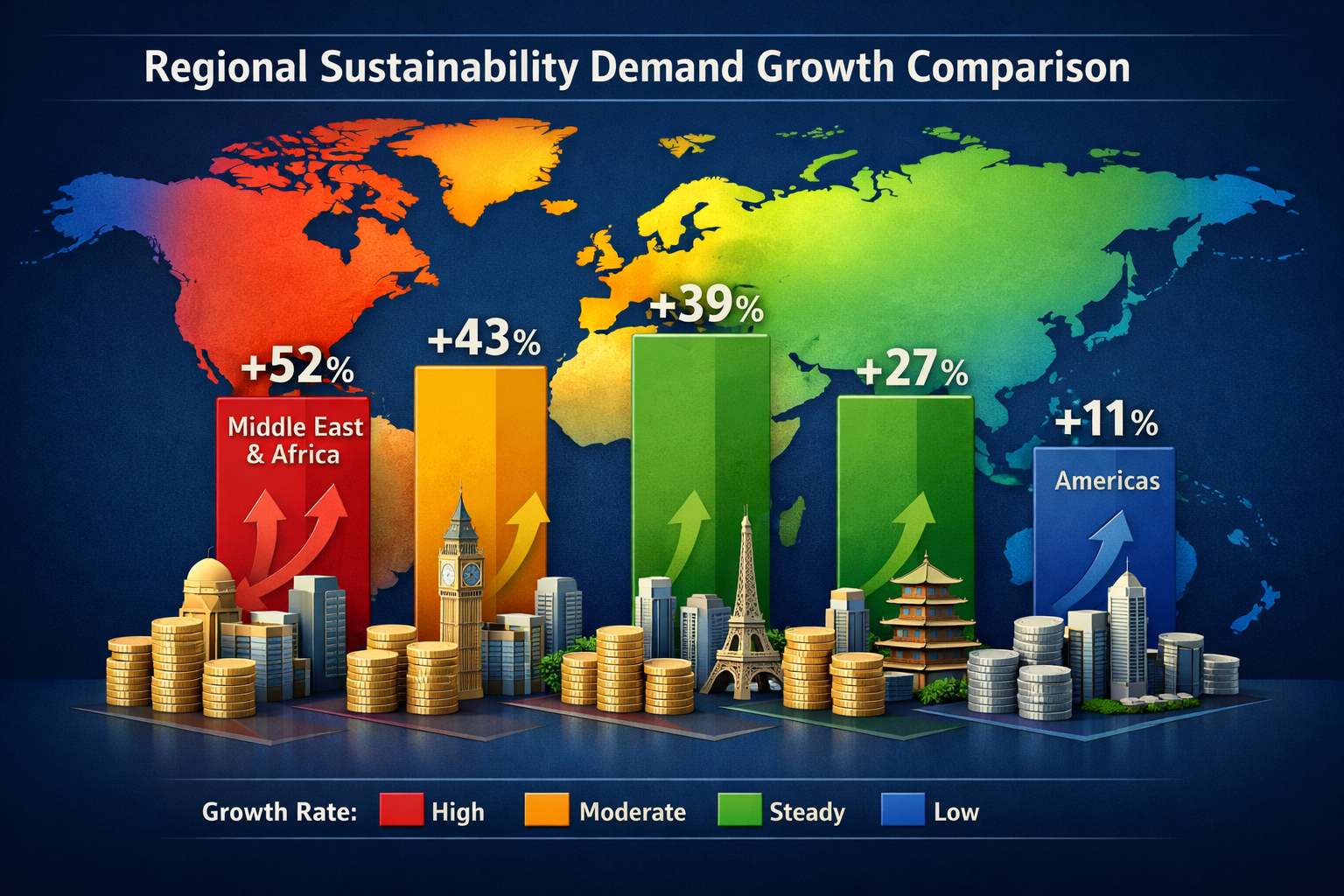
| Region | Demand Growth | Key Drivers |
|---|---|---|
| Middle East & Africa | +52% | Climate vulnerability, water scarcity, government mandates |
| United Kingdom | +43% | Regulatory pressure, EPC requirements, retrofit opportunities |
| Europe | +39% | EU Green Deal, taxonomy compliance, investor demand |
| Asia Pacific | +27% | Urbanization, heat exposure, emerging standards |
| Americas | +11% | Mixed policy landscape, cost sensitivity |
These regional disparities require surveyors to adjust their approach based on location. A Level 2 homebuyer survey in the UK must now address different sustainability expectations than a comparable assessment in North America.
Why Sustainability Integration Matters for Surveyors in 2026
Property professionals face mounting pressure from multiple stakeholders:
🏢 Clients increasingly request sustainability assessments alongside traditional surveys
💼 Lenders incorporate ESG criteria into lending decisions and risk assessments
⚖️ Regulators expand disclosure requirements and minimum energy performance standards
📊 Investors demand quantifiable climate risk data and resilience metrics
Surveyors who fail to integrate sustainability considerations risk providing incomplete advice. A RICS home survey that ignores energy performance, climate resilience, or retrofit potential delivers diminished value in 2026's market conditions.
Practical Application: Embedding Sustainability into Building Surveys
Carbon Assessment Integration
The report's most concerning finding is that 60% or more of professionals conduct carbon calculations in less than half their projects or not at all. [1] This represents a significant professional gap that surveyors must address urgently.
Practical steps for carbon integration:
- Establish baseline measurements – Calculate embodied carbon in existing structures and operational carbon from energy use
- Identify reduction opportunities – Assess retrofit potential, material substitution options, and renewable energy integration
- Quantify financial implications – Translate carbon metrics into cost projections and value impacts
- Document limitations – Clearly state assessment boundaries and data quality issues
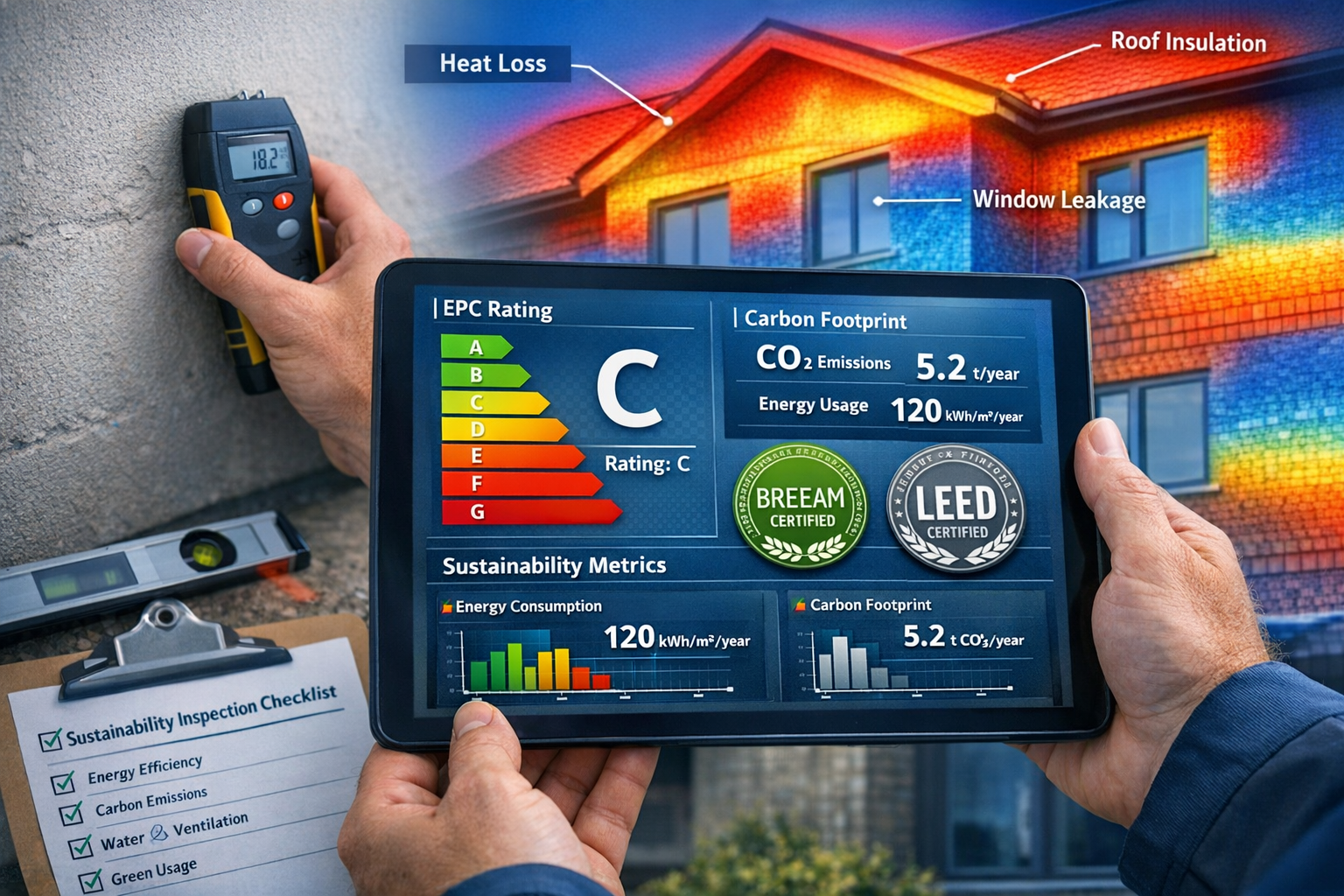
For building surveys, this means expanding inspection protocols to capture:
- Insulation quality and thermal performance gaps
- Heating system efficiency and electrification potential
- Renewable energy installation feasibility
- Embodied carbon in structural materials
- Whole-life carbon trajectory under different scenarios
Climate Resilience Assessment
The report identifies climate resilience and adaptability as top investor priorities, particularly in regions facing drought, heatwaves, and water scarcity. [1] Middle East, Africa, and Asia Pacific professionals report stronger stakeholder agreement on adaptation as critical, reflecting heightened exposure to climate impacts.
Key resilience factors for survey integration:
🌡️ Heat stress – Overheating risk, cooling demand, passive cooling potential
💧 Water management – Flood risk, drainage capacity, water efficiency systems
🌪️ Extreme weather – Structural resilience to storms, fire resistance, wind loading
🏗️ Adaptability – Design flexibility for future climate scenarios and use changes
When conducting specialist defect surveys, surveyors should now evaluate whether identified defects compound climate vulnerabilities. For example, inadequate drainage becomes more critical in areas facing increased precipitation intensity.
Waste Reduction and Circular Economy Considerations
The report notes that 40% of professionals regularly track waste reduction, representing one of the stronger adoption rates for sustainability metrics. [1] This creates opportunities for surveyors to differentiate their services.
For commercial building surveys, waste considerations include:
- Material reuse potential in refurbishment scenarios
- Demolition waste management planning
- Design for disassembly assessment
- Recycled content in existing materials
- End-of-life disposal implications
Surveyors should document materials with high reuse value and identify components that create disposal challenges, providing clients with circular economy insights alongside traditional condition assessments.
RICS Sustainability Report 2025: Practical Integration into Valuation Practice for Spring 2026
Shifting Valuation Criteria
Traditional valuation methodologies focused primarily on location, condition, and comparable sales. The RICS Sustainability Report 2025 signals a fundamental shift in what constitutes value:
Top sustainable building features identified by investors: [1]
- Green building certification (BREEAM, LEED, etc.)
- High adaptability and resilience ratings
- Low operational carbon footprint
- Climate risk mitigation measures
- Biodiversity and ecosystem integration
This hierarchy suggests that resilience now rivals or exceeds energy efficiency in value determination. A property with excellent EPC ratings but poor flood resilience may face valuation penalties in vulnerable locations.
Quantifying the Green Premium (or Brown Discount)
While the report doesn't provide specific premium percentages, it confirms that sustainability features increasingly influence transaction prices. Valuers must develop frameworks to quantify these impacts.
Practical valuation adjustments for sustainability factors:
Positive adjustments:
- Certified green buildings (5-15% premium depending on certification level and market)
- High climate resilience features (3-10% premium in vulnerable locations)
- Low operational costs from efficiency (capitalize savings at appropriate yield)
- Future-proofing against regulatory changes (reduced obsolescence risk)
Negative adjustments:
- Poor energy performance below minimum standards (10-25% discount as regulations tighten)
- High climate vulnerability without mitigation (5-20% discount depending on exposure)
- Stranded asset risk from carbon-intensive design (increasing discount over time)
- Costly retrofit requirements to meet standards (direct cost deduction)
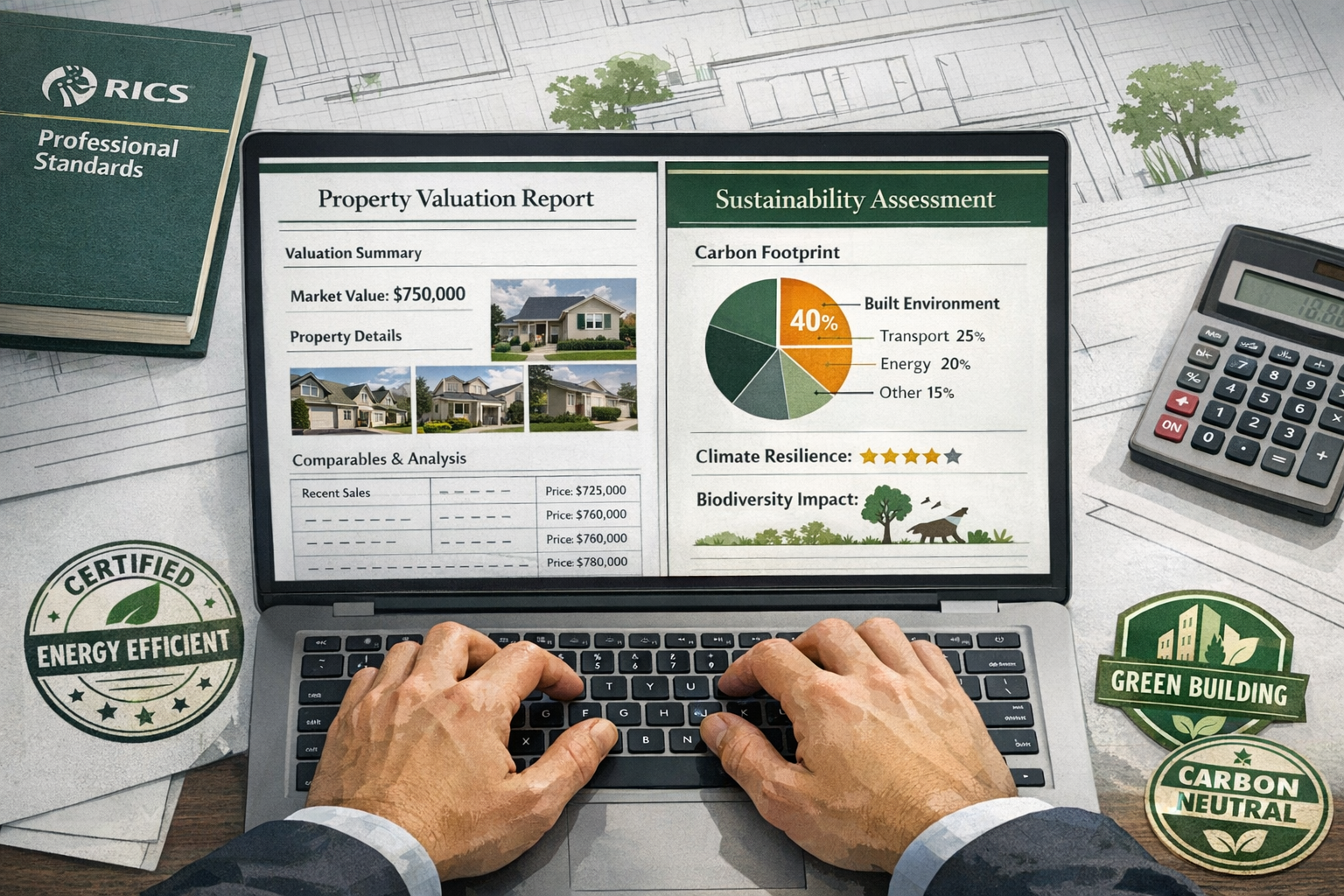
For property valuations, surveyors should document the reasoning behind sustainability-related adjustments with reference to market evidence and regulatory timelines.
Special Considerations for Different Valuation Types
Different valuation purposes require tailored approaches to sustainability integration:
Probate valuations – Must reflect current market conditions including buyer preferences for efficient properties and potential buyer pool limitations for poor performers.
Help to Buy valuations – Should consider government lending criteria increasingly tied to energy performance and future saleability in a carbon-constrained market.
Commercial property valuations – Must address tenant demand shifts, corporate ESG commitments, and stranded asset risks more prominently than residential assessments.
Capital gains tax valuations – Need to establish historic market conditions and sustainability expectations at the relevant valuation date, which may differ significantly from current standards.
Data Challenges and Professional Limitations
The report acknowledges that adoption remains uneven across practices, with significant gaps in critical assessment capabilities. [1] Valuers must be transparent about limitations:
- Insufficient comparable evidence for novel green technologies
- Limited historical data on climate resilience impacts
- Evolving regulatory landscape creating uncertainty
- Regional variations in sustainability premium magnitude
Professional reports should clearly state which sustainability factors have been considered, which have been excluded due to data limitations, and how this affects the valuation's reliability. This transparency protects both the client and the surveyor while encouraging market development of better sustainability data.
Policy Context and Professional Development Needs
Government Policy as a Transformation Enabler
The RICS Sustainability Report 2025 emphasizes that government policy is critical for sector transformation, identifying regulatory policies, government support, and collaborative partnerships as essential to meeting climate goals. [1]
Key policy recommendations from RICS: [1]
✅ Mandatory carbon reporting – Standardized disclosure requirements across all property transactions
✅ Clear decarbonization pathways – Sector-specific targets and timelines for emissions reduction
✅ Green building investment incentives – Financial support for retrofits and new sustainable construction
✅ Biodiversity scaling requirements – Integration of nature-based solutions and ecosystem protection
For surveyors, these policy directions signal where professional practice must evolve. Anticipating regulatory changes allows practitioners to develop capabilities before they become mandatory, creating competitive advantage and reducing compliance risk.
Professional Skills Development Requirements
The report explicitly recommends that professional capabilities and knowledge be developed to drive meaningful progress in sustainable practice adoption. [1] This creates both challenges and opportunities for surveyors in 2026.
Essential competency areas:
📚 Technical knowledge – Understanding of building physics, energy modeling, carbon calculation methodologies, and climate science basics
🔧 Assessment tools – Proficiency with thermal imaging, energy audit equipment, sustainability rating systems, and carbon accounting software
📊 Data analysis – Ability to interpret sustainability metrics, benchmark performance, and translate technical data into client-friendly advice
⚖️ Regulatory awareness – Current knowledge of evolving standards, disclosure requirements, and compliance deadlines
🗣️ Communication skills – Capacity to explain complex sustainability concepts to diverse stakeholders and justify valuation adjustments
Surveyors should pursue continuing professional development (CPD) in these areas, with particular focus on topics directly relevant to their practice specialization. Those conducting structural surveys might prioritize embodied carbon and material assessment, while valuation specialists should focus on market analysis of sustainability premiums.
Addressing Market Caution: Practical Client Advice for Spring 2026
Navigating Slowing Momentum in Uncertain Markets
The report's finding that demand for green buildings is slowing globally [1] creates a complex advisory challenge. Clients need honest guidance about sustainability investments in cautious market conditions.
Balanced advice framework:
Short-term considerations:
- Regulatory compliance requirements and deadlines
- Immediate operational cost savings from efficiency improvements
- Market positioning relative to comparable properties
- Financing availability and terms for sustainable features
Long-term considerations:
- Future-proofing against tightening regulations
- Climate risk exposure and insurance implications
- Asset obsolescence and stranded asset risk
- Changing tenant and buyer preferences
Surveyors should help clients distinguish between sustainability investments that deliver immediate returns (energy efficiency, regulatory compliance) and those that provide longer-term risk mitigation (climate resilience, adaptability).
Retrofit vs. New Build: Sustainability Implications
The report's emphasis on the built environment's 40% contribution to global emissions [5] highlights the critical importance of existing building stock. Most properties that will exist in 2050 have already been built, making retrofit assessment a core surveyor competency.
Retrofit assessment framework:
- Baseline performance – Document current energy use, carbon emissions, and climate vulnerabilities
- Improvement potential – Identify technically feasible and cost-effective interventions
- Regulatory trajectory – Project future compliance requirements and timing
- Financial analysis – Calculate payback periods, lifecycle costs, and value impacts
- Implementation priorities – Recommend phased approach based on urgency and return
When conducting homebuyer surveys, surveyors should provide clear guidance on anticipated retrofit costs and priorities, helping buyers make informed decisions about properties with different sustainability profiles.
Regional Strategy Adjustments
The dramatic regional variations in sustainability demand [1] require location-specific approaches:
High-growth regions (MEA +52%, UK +43%):
- Emphasize competitive disadvantage of poor sustainability performance
- Highlight strong market evidence for green premiums
- Focus on regulatory compliance urgency
- Stress climate resilience given regional vulnerabilities
Moderate-growth regions (Europe +39%, APAC +27%):
- Balance sustainability benefits with cost considerations
- Provide nuanced analysis of market segment variations
- Address specific regional climate risks
- Consider regulatory harmonization trends
Lower-growth regions (Americas +11%):
- Focus on cost savings and risk mitigation rather than premiums
- Highlight leading indicators suggesting future demand shifts
- Address insurance and financing implications
- Identify early-adopter opportunities
Surveyors practicing across multiple regions should develop location-specific expertise and adjust their advice accordingly, recognizing that sustainability integration progresses at different speeds in different markets.
Conclusion
The RICS Sustainability Report 2025: Practical Integration into Building Surveys and Valuations for Spring 2026 delivers a clear message: the property sector's sustainability transformation is underway but insufficient. For surveyors and valuers, this creates both professional obligations and competitive opportunities. Those who develop sustainability assessment capabilities, integrate ESG factors into standard practice, and provide clear client guidance on climate risks will deliver superior service in an evolving market.
The report's findings—particularly the weak adoption of carbon calculations, the regional demand variations, and the growing emphasis on climate resilience—provide a roadmap for professional development priorities. Surveyors must move beyond viewing sustainability as a specialty service and recognize it as a core competency essential to comprehensive property assessment.
Actionable Next Steps for Surveyors in 2026
✅ Audit current practice – Review existing survey and valuation templates to identify gaps in sustainability coverage
✅ Invest in training – Pursue CPD in carbon assessment, climate resilience, and sustainability rating systems relevant to your practice area
✅ Upgrade tools and technology – Acquire thermal imaging equipment, energy modeling software, and sustainability databases
✅ Develop regional expertise – Research local climate risks, regulatory timelines, and market evidence for sustainability premiums in your service area
✅ Enhance reporting templates – Create standardized sections for sustainability factors in survey reports and valuations
✅ Build professional networks – Connect with energy assessors, climate scientists, and sustainability consultants to enhance referral capabilities
✅ Monitor policy developments – Stay current on evolving regulations, disclosure requirements, and industry standards
✅ Collect market evidence – Document sustainability-related price variations in your local market to support valuation adjustments
The integration of sustainability into building surveys and valuations is no longer optional—it's a professional imperative. As the RICS Sustainability Report 2025 demonstrates, the sector faces significant challenges but also possesses the knowledge and tools needed for transformation. Surveyors who embrace this evolution will provide greater value to clients, reduce professional liability risks, and contribute to the urgent climate action the built environment requires.
For those seeking comprehensive property assessments that incorporate modern sustainability considerations, working with qualified professionals who understand the RICS Sustainability Report 2025: Practical Integration into Building Surveys and Valuations for Spring 2026 ensures access to the most current expertise and best practices in this rapidly evolving field.
References
[1] Sustainability Report 2025 – https://www.rics.org/news-insights/current-topics-campaigns/sustainability/sustainability-report-2025
[2] Sustainability Report 2025 Royal Institution Chartered Surveyors – https://build-up.ec.europa.eu/en/resources-and-tools/publications/sustainability-report-2025-royal-institution-chartered-surveyors
[3] Sustainability Report 2025 – https://www.rics.org/content/dam/ricsglobal/documents/reports/Sustainability-report-2025.pdf
[4] Q4 2025 Report – https://www.rics.org/content/dam/ricsglobal/documents/about-rics/Q4-2025-report.pdf
[5] Sustainability Report 2025 Infographic – https://www.rics.org/content/dam/ricsglobal/documents/reports/Sustainability-Report-2025-Infographic.pdf