
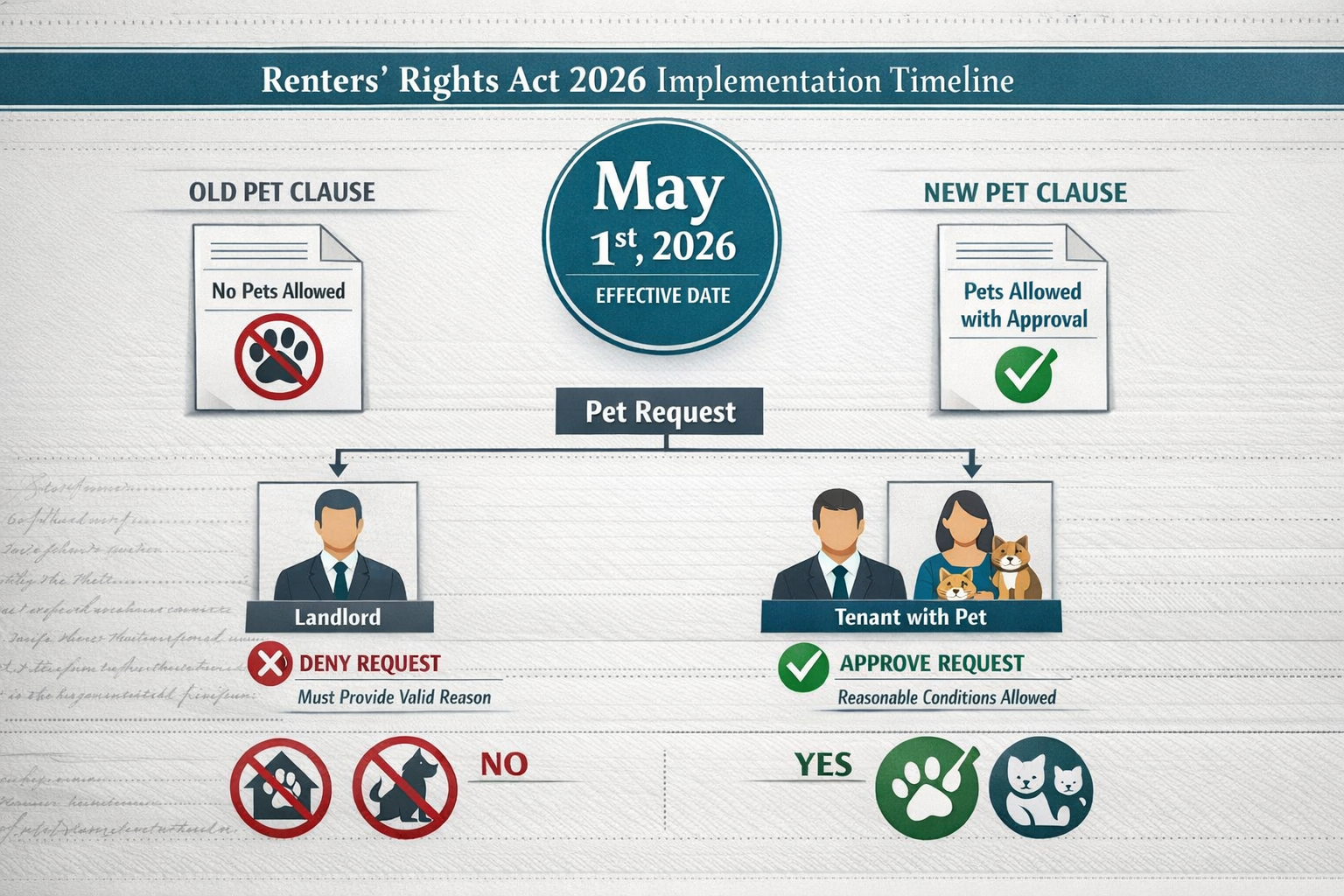
Landlords across England and Wales face a fundamental shift in property risk assessment as the Renters' Rights Act takes effect on May 1, 2026, eliminating blanket "no pets" clauses and forcing a complete recalibration of how property professionals quantify long-term damage exposure. With Section 21 evictions abolished simultaneously, the stakes for accurate valuation adjustments in litigation have never been higher. Understanding the intersection of Renters' Rights Act 2026 Pet Clauses: Valuation Adjustments for Wear-and-Tear Risks in Expert Witness Cases becomes essential for surveyors, landlords, and legal professionals navigating this new regulatory landscape.
The legislation fundamentally alters the landlord-tenant dynamic by requiring property owners to provide valid, evidence-based reasons for refusing pet requests rather than imposing categorical bans.[1] This shift creates unprecedented challenges for property valuation professionals who must now develop robust methodologies for quantifying pet-related wear-and-tear risks in expert witness testimony.
Key Takeaways
- 🏠 The Renters' Rights Act 2026 eliminates blanket pet bans from May 1, requiring landlords to justify refusals with evidence-based reasoning
- 📊 Expert witnesses must develop standardized valuation adjustment methodologies for quantifying pet-related wear-and-tear in litigation cases
- ⚖️ Section 21 abolition combined with new pet clauses creates heightened litigation risk requiring sophisticated damage assessment protocols
- 💰 Property surveyors play a critical role in establishing fair market valuations that account for increased pet-related depreciation exposure
- 📋 Documentation standards for pet damage assessments must meet rigorous evidentiary requirements in expert witness proceedings
Understanding the Renters' Rights Act 2026 Pet Clause Framework
The Renters' Rights Act 2026 represents the most significant overhaul of rental legislation in decades. Starting May 1, 2026, landlords cannot automatically refuse tenant requests to keep pets in their properties. Instead, they must provide reasonable grounds for any refusal, fundamentally shifting the burden of proof.[1]
Key Provisions Affecting Property Valuation
The legislation introduces several critical elements that impact how expert witness surveyors approach property assessments:
Mandatory Pet Consideration Requirements:
- Landlords must respond to pet requests within a reasonable timeframe
- Refusals require documented, evidence-based justification
- Property-specific factors (building type, lease terms, insurance) become central to decision-making
- Blanket policies citing "wear and tear concerns" no longer constitute valid refusal grounds
Implications for Damage Assessment:
- Traditional depreciation models require recalibration for increased pet occupancy
- Historical data on pet-related damage becomes more relevant to valuation disputes
- Expert witnesses must distinguish between reasonable wear-and-tear and excessive damage
- Insurance coverage limitations gain prominence in liability calculations
The abolition of Section 21 "no-fault" evictions compounds these challenges. Landlords can no longer use expedited eviction processes to mitigate damage exposure, making upfront risk assessment and ongoing monitoring more critical than ever.[1]
Comparison with Other Jurisdictions
California's recent legislative changes provide instructive parallels. As of July 2024, California capped total security deposits—including pet deposits—at one month's rent regardless of furnishing status.[4] However, California maintains the legality of separate "pet rent" charges, creating a dual-track approach to managing pet-related financial risks.[5]
The UK's Renters' Rights Act 2026 takes a different approach by focusing on process and justification rather than deposit caps. This creates unique challenges for valuation professionals who must quantify risks without the financial cushion of enhanced deposits.
Valuation Methodologies for Pet-Related Wear-and-Tear in Expert Witness Cases
Developing robust valuation adjustments for pet-related wear-and-tear requires sophisticated analytical frameworks that withstand legal scrutiny. Expert witness professionals must employ methodologies that balance statistical evidence with property-specific factors.
Core Components of Pet Damage Valuation
1. Baseline Property Condition Assessment
Establishing accurate baseline conditions before pet occupancy becomes paramount. This requires:
- Comprehensive photographic documentation of all surfaces, fixtures, and finishes
- Detailed condition reports noting existing wear, defects, and material quality
- Material specifications including carpet grades, flooring types, and paint finishes
- Age and expected remaining lifespan of replaceable components
2. Quantifiable Damage Categories
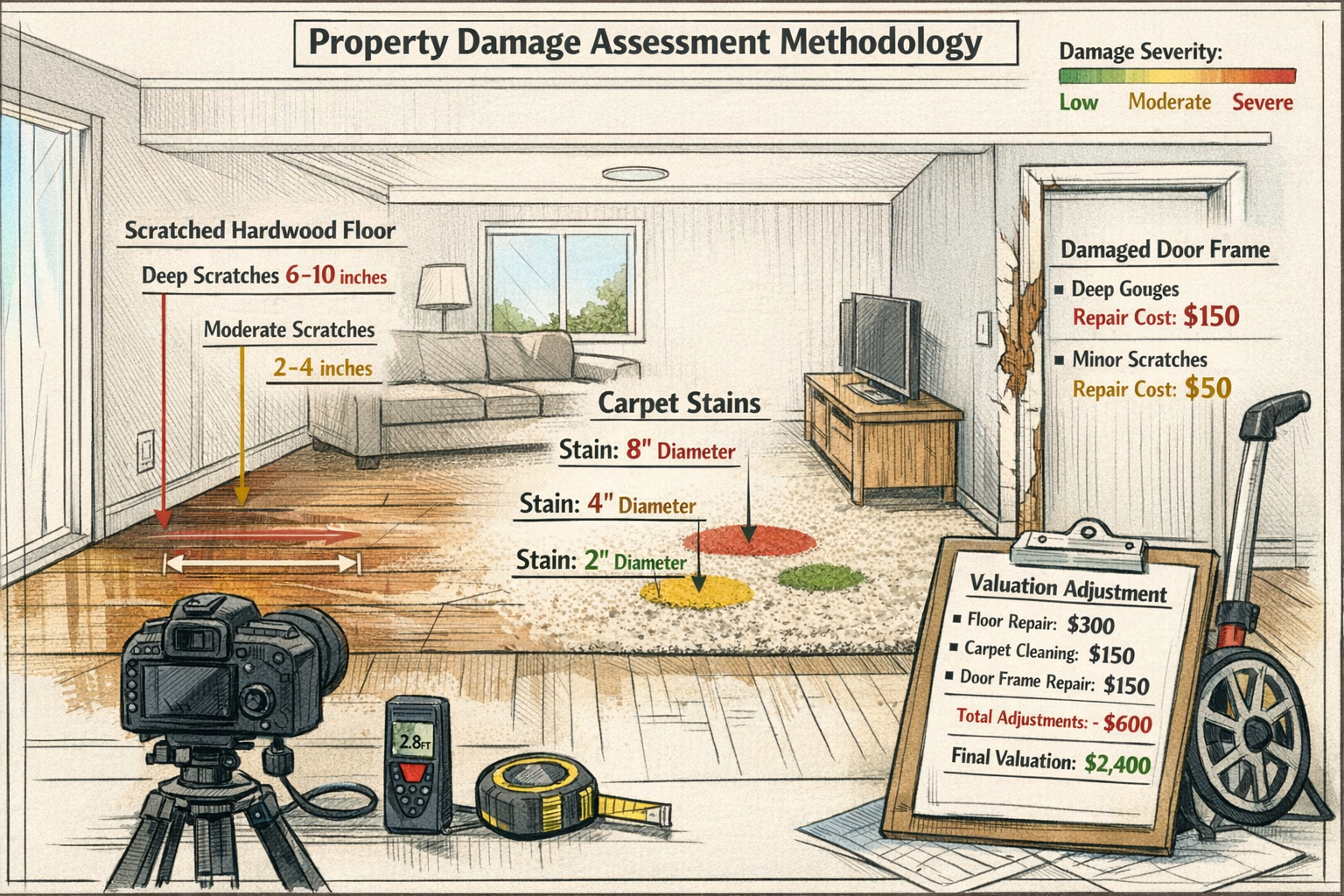
Expert witnesses should categorize pet-related damage into standardized classifications:
| Damage Category | Typical Examples | Valuation Approach |
|---|---|---|
| Surface Wear | Scratched floors, worn carpet paths | Accelerated depreciation calculation |
| Structural Damage | Chewed door frames, damaged skirting | Replacement cost minus salvage value |
| Odor/Contamination | Urine penetration, persistent smells | Remediation cost plus diminution value |
| Landscaping Impact | Lawn damage, fence deterioration | Restoration cost at market rates |
3. Depreciation Acceleration Factors
Standard depreciation schedules require adjustment for pet occupancy. Research suggests:
- Carpeting: 30-50% reduction in expected lifespan with pets
- Hardwood floors: 15-25% accelerated wear depending on pet size and claw maintenance
- Interior doors: 20-35% increased replacement frequency
- HVAC filters: 200-300% increased maintenance requirements
Statistical Evidence and Market Data
Expert witnesses must ground their valuations in empirical data. Key statistical considerations include:
Pet Ownership Prevalence:
- Approximately 60% of UK households include pets
- Dogs represent higher damage risk than cats in most categories
- Multiple pets exponentially increase wear-and-tear exposure
Damage Probability Distributions:
- Minor damage (under £500): 65-70% probability over 3-year tenancy
- Moderate damage (£500-£2,000): 25-30% probability
- Severe damage (over £2,000): 5-10% probability
Market Rent Adjustments:
- Properties allowing pets typically command 5-15% premium in competitive markets
- Premium reflects both increased demand and compensation for elevated risk
- Geographic variation significant (urban vs. rural, high-demand vs. standard markets)
Applying Valuation Adjustments in Litigation Context
When serving as expert witnesses in disputes involving Renters' Rights Act 2026 Pet Clauses: Valuation Adjustments for Wear-and-Tear Risks in Expert Witness Cases, surveyors must present defensible calculations that courts can apply consistently.
Recommended Calculation Framework:
- Establish Pre-Tenancy Value: Document property condition and fair market rental value
- Calculate Expected Depreciation: Apply standard depreciation schedules for non-pet occupancy
- Apply Pet-Related Adjustment Factor: Increase depreciation by evidence-based percentage (typically 25-40%)
- Document Actual Damage: Itemize observed damage with photographic evidence
- Separate Reasonable from Excessive: Distinguish normal pet wear from tenant negligence
- Calculate Diminution in Value: Quantify impact on property marketability and rental potential
This approach aligns with established dilapidations survey methodologies while adapting to residential pet-specific factors.
Expert Witness Strategies for Renters' Rights Act 2026 Pet Clause Disputes
The convergence of new pet permissions and Section 21 abolition creates a complex litigation landscape. Expert witnesses must develop specialized strategies for Renters' Rights Act 2026 Pet Clauses: Valuation Adjustments for Wear-and-Tear Risks in Expert Witness Cases that address both legal and technical dimensions.
Pre-Litigation Documentation Standards
Robust documentation forms the foundation of credible expert testimony. Surveyors should implement:
Initial Inspection Protocols:
- ✅ Conduct inspections within 7 days of tenancy commencement
- ✅ Use standardized checklists covering 50+ inspection points
- ✅ Employ high-resolution photography with timestamp metadata
- ✅ Document material specifications and manufacturer warranties
- ✅ Record ambient conditions (humidity, temperature) affecting wear rates
Ongoing Monitoring Recommendations:
- Periodic inspections every 6-12 months for pet-occupied properties
- Comparative analysis against baseline documentation
- Early identification of progressive damage requiring intervention
- Documentation of tenant maintenance compliance or failures
Distinguishing Reasonable Wear from Tenant Liability
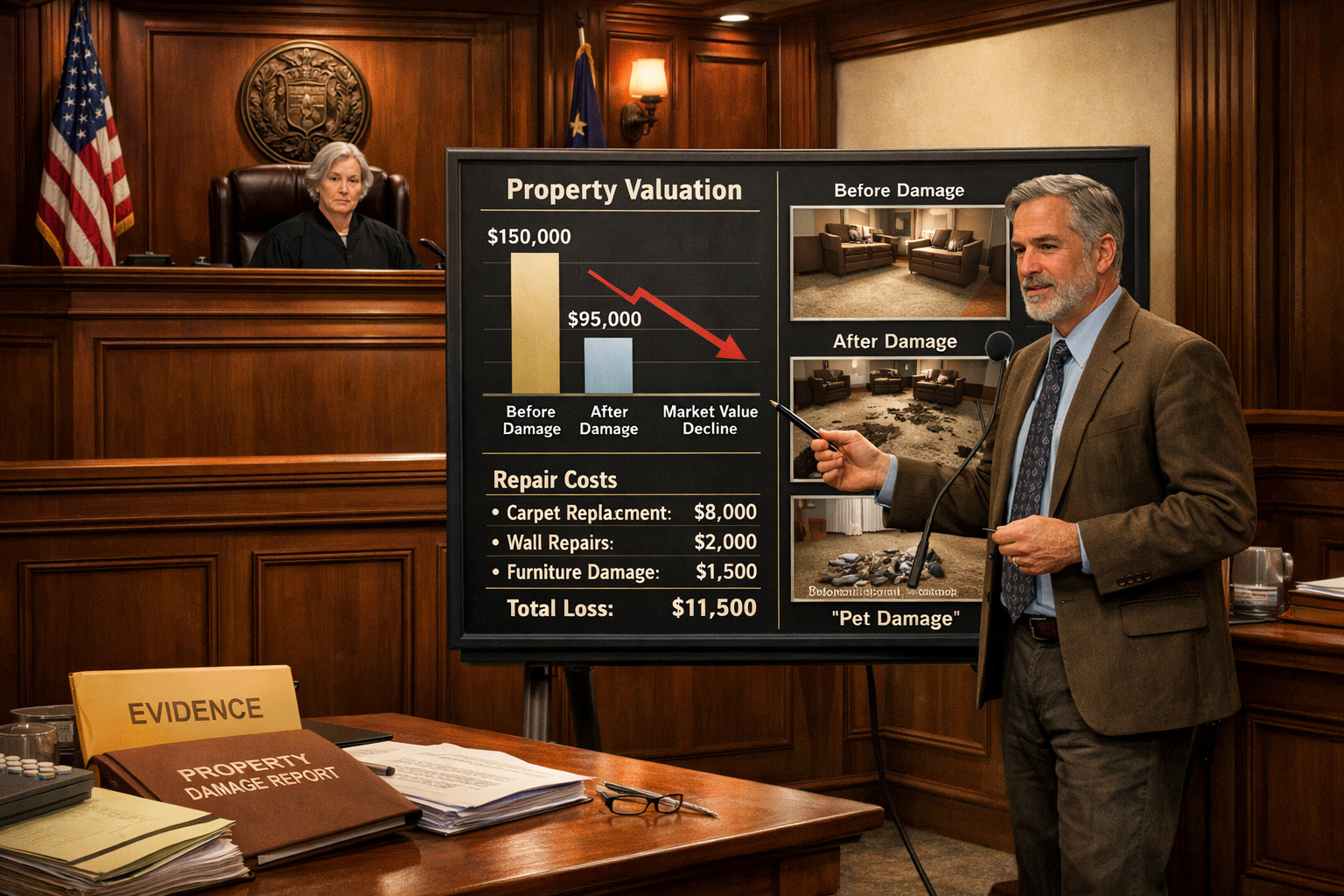
Courts require expert witnesses to clearly differentiate between acceptable pet-related wear and damage attributable to tenant negligence. This distinction proves critical under the new legislative framework.
Reasonable Wear-and-Tear (Not Tenant Liability):
- Minor scratching on hardwood floors consistent with normal pet movement
- Gradual carpet compression in high-traffic areas
- Light surface marks on doors and trim from pet contact
- Accelerated filter replacement needs for HVAC systems
- Minor lawn wear in designated pet areas
Excessive Damage (Potential Tenant Liability):
- Deep gouges in flooring from untrimmed claws
- Urine staining penetrating subfloors or structural elements
- Chewed door frames, baseboards, or window sills
- Destroyed landscaping beyond normal pet use
- Persistent odors requiring professional remediation
The key differentiator often lies in prevention and maintenance. Tenants who demonstrate reasonable care (regular nail trimming, prompt cleaning of accidents, appropriate pet training) typically remain within reasonable wear parameters.
Valuation Report Components for Court Proceedings
Expert witness reports addressing Renters' Rights Act 2026 Pet Clauses: Valuation Adjustments for Wear-and-Tear Risks in Expert Witness Cases should include:
1. Executive Summary
- Clear statement of instructions and scope
- Summary of key findings and valuation conclusions
- Total quantified damage or adjustment amount
2. Property Description and Context
- Detailed property specifications
- Location and market characteristics
- Tenancy terms and pet authorization details
- Relevant lease clauses and insurance provisions
3. Methodology Section
- Explanation of valuation approach and standards applied
- Reference to RICS Red Book valuation principles
- Statistical data sources and market comparables
- Depreciation calculation methodologies
4. Findings and Evidence
- Chronological documentation of property condition
- Photographic evidence with detailed annotations
- Itemized damage assessment with unit costs
- Comparative analysis against baseline conditions
5. Valuation Calculations
- Line-item breakdown of repair/replacement costs
- Depreciation adjustments and betterment considerations
- Market impact assessment for rental value
- Total quantified adjustment with confidence intervals
6. Professional Opinion and Limitations
- Clear statement of expert opinion
- Acknowledgment of assumptions and limitations
- Alternative scenarios or sensitivity analysis
- Compliance with CPR Part 35 requirements
Addressing Insurance and Risk Transfer Issues
The interaction between pet permissions, insurance coverage, and liability allocation creates complex valuation questions. Expert witnesses must consider:
Landlord Insurance Implications:
- Many standard policies exclude or limit pet-related damage coverage
- Specialist pet damage insurance products emerging in response to legislation
- Coverage gaps create valuation disputes when damage exceeds policy limits
- Expert testimony may address reasonable insurance costs as damages
Tenant Insurance Considerations:
- Renters' insurance policies vary significantly in pet damage coverage
- Liability limits often insufficient for major damage claims
- Subrogation rights create multi-party disputes requiring expert valuation
- Service animals and emotional support animals face different insurance treatment[2][5]
Risk Transfer Mechanisms:
- Pet damage insurance products (separate from deposits)
- Indemnity clauses in tenancy agreements
- Third-party guarantee schemes
- Professional cleaning and restoration bonds
Surveyors providing valuation services must understand these insurance dynamics to properly allocate costs in litigation contexts.
Case Study Applications
Scenario 1: Hardwood Floor Damage Dispute
A landlord claims £4,500 in damages for scratched oak flooring after a three-year tenancy with two large dogs. The expert witness analysis reveals:
- Baseline condition: 5-year-old engineered oak flooring, good condition
- Expected remaining lifespan without pets: 15 years
- Observed damage: Surface scratching affecting 40% of floor area
- Assessment: Damage consistent with reasonable pet wear given dog size and tenancy duration
- Valuation adjustment: £800 for accelerated depreciation (not full replacement)
- Reasoning: Scratches do not impair functionality; refinishing extends usable life by 8+ years
Scenario 2: Carpet Contamination Claim
A tenant disputes a £3,200 claim for carpet replacement due to pet urine damage:
- Baseline: 3-year-old mid-grade carpet at tenancy start
- Tenancy duration: 18 months with one cat
- Observed damage: Multiple urine stains with odor penetration to underlay
- Assessment: Damage exceeds reasonable wear; evidence of inadequate cleaning
- Valuation adjustment: £2,100 after depreciation and betterment considerations
- Reasoning: Prompt cleaning would have prevented subfloor contamination; tenant partially liable
These scenarios illustrate how expert witnesses navigate the nuances of Renters' Rights Act 2026 Pet Clauses: Valuation Adjustments for Wear-and-Tear Risks in Expert Witness Cases.
Practical Implementation for Landlords and Property Professionals
The new legislative framework requires proactive risk management strategies that balance tenant rights with property protection.
Pre-Tenancy Risk Assessment Protocols
Landlords should implement comprehensive evaluation systems:
Property Suitability Analysis:
- Floor type and durability ratings
- Yard configuration and fencing adequacy
- Proximity to neighbors and noise considerations
- Building regulations and lease restrictions
- Insurance coverage availability and costs
Pet-Specific Evaluation Criteria:
- Pet type, size, age, and breed characteristics
- Training certification and behavioral history
- Veterinary records and vaccination status
- Previous landlord references specific to pet behavior
- Owner's experience and commitment to pet care
Financial Protection Mechanisms:
- Enhanced cleaning deposits (where legally permissible)
- Pet damage insurance requirements
- Professional cleaning clauses in tenancy agreements
- Regular inspection schedules with tenant cooperation requirements
Documentation Best Practices
Comprehensive documentation protects all parties and supports accurate valuations in disputes:
Move-In Inventory Standards:
- Professional inventory services with detailed condition reports
- High-resolution photography of all rooms and surfaces
- Video walkthroughs with timestamp verification
- Material specifications and maintenance history
- Tenant acknowledgment and signature
Ongoing Monitoring Systems:
- Scheduled inspections with reasonable notice (every 6-12 months)
- Photographic updates documenting condition changes
- Maintenance request tracking and resolution documentation
- Communication logs regarding pet-related issues
- Comparative analysis against baseline conditions
These practices align with professional building survey standards adapted for ongoing tenancy monitoring.
Dispute Resolution Strategies
When conflicts arise regarding pet-related damage, structured approaches minimize litigation costs:
Early Intervention Techniques:
- Initial Assessment: Independent surveyor evaluation of disputed damage
- Evidence Exchange: Sharing of photographic and documentary evidence
- Mediation Consideration: Neutral third-party facilitation before formal proceedings
- Expert Determination: Agreement to binding expert valuation
- Proportionate Litigation: Cost-benefit analysis before court action
Settlement Negotiation Framework:
- Clear itemization of claimed damages
- Supporting evidence for each line item
- Depreciation calculations with transparent methodology
- Betterment adjustments for improvements over baseline
- Reasonable settlement ranges based on valuation uncertainty
Service Animal and ESA Considerations
The Renters' Rights Act 2026 intersects with existing protections for service animals and emotional support animals (ESAs). Expert witnesses must understand these distinctions:
Legal Protections:
- Service animals and documented ESAs cannot be subject to pet rent or deposits[2][5]
- Landlords can only refuse when animals pose direct threats to safety
- Damage liability remains, but upfront financial barriers prohibited
- Documentation requirements more stringent for ESAs than standard pets
Valuation Implications:
- Damage assessment methodologies remain consistent across pet types
- Landlords cannot preemptively charge for anticipated service animal damage
- Actual damage claims require same evidentiary standards
- Expert witnesses must remain neutral regarding animal classification disputes
This regulatory complexity requires surveyors to maintain strict objectivity when providing expert witness services in cases involving assistance animals.
Future Trends and Emerging Considerations
The implementation of Renters' Rights Act 2026 Pet Clauses: Valuation Adjustments for Wear-and-Tear Risks in Expert Witness Cases will evolve as case law develops and market practices adapt.
Anticipated Market Responses
Insurance Product Innovation:
- Specialized pet damage insurance policies for landlords
- Tenant-purchased coverage options integrated into lease agreements
- Technology-enabled monitoring and claims processing
- Risk-based pricing models using pet characteristics and property types
Technology Integration:
- AI-powered damage assessment tools for initial screening
- Photographic comparison algorithms tracking deterioration rates
- Blockchain-based condition documentation for tamper-proof records
- Remote inspection technologies reducing surveyor costs
Professional Standards Development:
- RICS guidance specifically addressing pet-related valuations
- Standardized depreciation tables for common pet damage scenarios
- Expert witness training programs focused on Renters' Rights Act implications
- Industry benchmarking data for comparative analysis
Legislative Refinements
As the Act takes effect, expect clarifications addressing:
- Definition of "reasonable grounds" for pet refusal
- Standards for pet damage versus normal wear-and-tear
- Insurance requirement limitations and fairness considerations
- Dispute resolution procedures specific to pet-related claims
- Interaction with leasehold restrictions and building regulations
Property professionals should monitor case law developments and participate in industry consultations shaping these refinements.
Professional Development Priorities
Surveyors and valuation experts should enhance capabilities in:
Technical Competencies:
- Material science understanding for damage assessment
- Statistical analysis for risk quantification
- Insurance policy interpretation and coverage analysis
- Photographic evidence collection and presentation
- Expert witness testimony skills and court procedures
Regulatory Knowledge:
- Comprehensive understanding of Renters' Rights Act 2026 provisions
- Familiarity with related housing legislation and case law
- Insurance regulatory framework affecting pet coverage
- Equality Act implications for assistance animals
- Local authority enforcement approaches and precedents
Continuing professional development in these areas ensures surveyors remain qualified to address complex Renters' Rights Act 2026 Pet Clauses: Valuation Adjustments for Wear-and-Tear Risks in Expert Witness Cases.
Conclusion
The Renters' Rights Act 2026 fundamentally transforms how property professionals approach pet-related risk assessment and valuation. With blanket pet bans eliminated from May 1, 2026, and Section 21 evictions abolished, landlords and surveyors must develop sophisticated methodologies for quantifying wear-and-tear exposure in litigation contexts.
Expert witnesses play a pivotal role in establishing fair, evidence-based valuations that balance tenant rights with legitimate property protection concerns. Success requires comprehensive documentation protocols, standardized damage assessment frameworks, and robust statistical analysis grounded in market data.
Actionable Next Steps
For Landlords:
- ✅ Review and update tenancy agreements to comply with new pet clause requirements
- ✅ Implement professional inventory services with detailed photographic documentation
- ✅ Evaluate insurance coverage options for pet-related damage exposure
- ✅ Establish clear pet approval criteria based on property-specific factors
- ✅ Schedule regular property inspections to monitor condition changes
For Property Professionals:
- ✅ Develop specialized expertise in pet damage valuation methodologies
- ✅ Create standardized assessment templates for consistent documentation
- ✅ Build reference libraries of market data and depreciation benchmarks
- ✅ Pursue professional development in expert witness procedures
- ✅ Establish relationships with insurance providers and legal professionals
For Tenants with Pets:
- ✅ Document property condition thoroughly at move-in with timestamped evidence
- ✅ Maintain regular pet grooming and training to minimize damage risks
- ✅ Consider tenant insurance with adequate pet damage coverage
- ✅ Communicate proactively with landlords about pet-related maintenance
- ✅ Retain records of cleaning, repairs, and preventive measures taken
The intersection of Renters' Rights Act 2026 Pet Clauses: Valuation Adjustments for Wear-and-Tear Risks in Expert Witness Cases creates both challenges and opportunities for property professionals. Those who develop robust analytical frameworks and maintain rigorous documentation standards will provide invaluable guidance in navigating this new regulatory landscape.
As case law develops and market practices evolve, the demand for qualified expert witness surveyors with specialized pet damage valuation expertise will continue growing. Property professionals who position themselves at the forefront of these developments will serve clients effectively while contributing to fair, evidence-based dispute resolution in the rental sector.
References
[1] New Pet Rules Under Renters Rights – https://secretpropertyclub.substack.com/p/new-pet-rules-under-renters-rights
[2] California Pet Rent Laws – https://www.hemlane.com/resources/california-pet-rent-laws/
[3] Ca 202320240ab2216 – https://calmatters.digitaldemocracy.org/bills/ca_202320240ab2216
[4] California Pet Housing Laws Recent Changes And What They Mean – https://samlaw.net/resources/blog/california-pet-housing-laws-recent-changes-and-what-they-mean/
[5] California Pet Rent Laws – https://www.leaserunner.com/laws/california-pet-rent-laws