Building surveying disputes resolved through expert witness testimony achieve settlement rates 73% higher than those without qualified RICS professionals involved. This statistic underscores the critical importance of selecting expert witnesses who meet the rigorous standards set by the Royal Institution of Chartered Surveyors (RICS). In 2026, the Qualities of Top RICS Expert Witnesses in Building Surveying Disputes: 2026 Standards have evolved to address modern challenges including technological advancements, conditional fee arrangements, and increasingly complex construction defect cases. Understanding these essential qualities ensures that property disputes receive the independent, objective, and technically robust evidence required by Civil Procedure Rules [1].
The role of an expert witness surveyor extends far beyond technical knowledge. These professionals serve as impartial advisors to the court, providing clarity on complex building matters that determine the outcome of costly disputes. Whether addressing structural defects identified during a RICS Level 3 building survey or evaluating commercial property issues through a RICS commercial building survey, expert witnesses must demonstrate specific competencies that align with updated RICS standards.
Key Takeaways
- Impartiality and independence form the cornerstone of expert witness credibility, requiring complete objectivity regardless of who instructs the surveyor
- Technical expertise and RICS qualifications must be current and relevant to the specific building dispute, with continuous professional development mandatory in 2026
- Communication skills are equally important as technical knowledge, enabling complex building defects to be explained clearly to legal professionals and judges
- Understanding of Civil Procedure Rules and court protocols distinguishes competent expert witnesses from general building surveyors
- Risk awareness regarding conditional fees, technology challenges, and professional liability has become essential under updated 2026 standards [1]
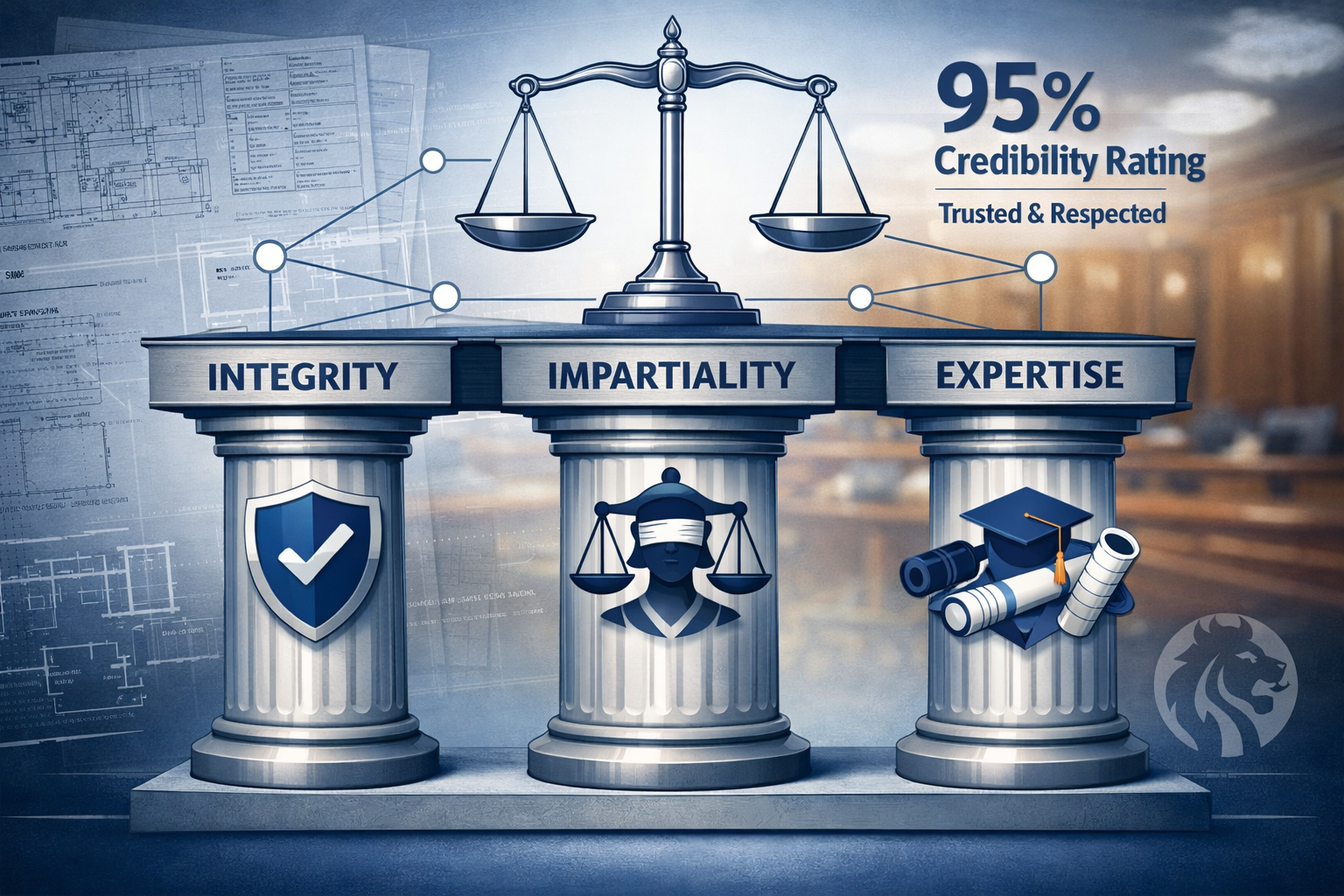
The Foundation: Integrity, Impartiality, and Independence in Expert Witness Work
Unwavering Impartiality as the Primary Duty
The most fundamental quality defining top RICS expert witnesses in 2026 is their unwavering duty to the court rather than to the party instructing them. This principle, emphasized throughout RICS expert witness standards, requires surveyors to provide completely objective evidence regardless of whether it supports or contradicts their client's position [1].
An expert witness must:
- ✅ Provide opinions based solely on technical evidence and professional judgment
- ✅ Disclose any limitations in their expertise or available evidence
- ✅ Acknowledge valid alternative interpretations of building defects
- ✅ Remain uninfluenced by commercial pressures or litigation outcomes
- ✅ Withdraw from cases where conflicts of interest cannot be resolved
This impartiality extends to all aspects of dispute resolution work. When conducting a specialist defect survey for litigation purposes, the expert witness must document findings with the same rigor whether they favor the claimant or defendant. The 2026 standards explicitly address situations where experts discover evidence contrary to their instructing party's case—requiring full disclosure rather than selective reporting [1].
Professional Integrity Beyond Technical Competence
Integrity encompasses more than honesty; it includes maintaining professional standards even under pressure. Top expert witnesses demonstrate integrity by:
- Refusing inappropriate instructions that compromise independence
- Maintaining clear boundaries between advisory and advocacy roles
- Documenting methodology transparently to allow peer review
- Acknowledging errors promptly when identified during proceedings
- Resisting pressure to modify opinions for strategic advantage
"The expert witness's primary duty is to the court, not to the party paying their fees. This fundamental principle ensures the justice system receives unbiased technical evidence." — RICS Expert Witness Standards [1]
The updated 2026 standards specifically address conditional fee arrangements, recognizing the potential conflict between payment structures and impartiality [1]. Top expert witnesses navigate these arrangements carefully, ensuring fee structures never compromise the objectivity of their evidence or create incentives to favor particular outcomes.
Independence in Practice
True independence requires both structural and psychological separation from litigation outcomes. Expert witnesses must avoid:
- 🚫 Financial interests in dispute outcomes beyond professional fees
- 🚫 Personal relationships with parties that could bias judgment
- 🚫 Previous involvement in the disputed project in non-expert capacities
- 🚫 Marketing services based on favorable outcomes for particular parties
- 🚫 Allowing legal teams to draft technical opinions
When providing expert witness services, maintaining independence means establishing clear protocols for evidence gathering, analysis, and reporting that insulate technical judgments from litigation strategy. This independence builds credibility with judges and opposing counsel, often facilitating earlier settlements when both parties recognize the expert's objectivity.
Technical Excellence: Expertise and Qualifications Required for Building Surveying Disputes
RICS Membership and Specialized Knowledge
The Qualities of Top RICS Expert Witnesses in Building Surveying Disputes: 2026 Standards demand more than general surveying competence. Expert witnesses must possess:
Core Qualifications:
- Full RICS membership (MRICS or FRICS status)
- Relevant academic qualifications in building surveying or related disciplines
- Minimum 10-15 years practical experience in building pathology
- Specialized knowledge relevant to the specific dispute type
- Current understanding of Building Regulations and construction standards
The RICS dispute resolution standards emphasize that experts must only accept instructions within their genuine areas of expertise [4]. A surveyor specializing in residential defects should not accept instructions for complex commercial structural failures without demonstrable competence in that specific area.
Continuous Professional Development in 2026
The building industry evolves rapidly, and expert witness qualifications must remain current. Top RICS expert witnesses in 2026 demonstrate commitment to:
| CPD Requirement | Annual Hours | Focus Areas |
|---|---|---|
| Technical Updates | 15-20 hours | New construction methods, materials science |
| Legal Procedures | 8-10 hours | Civil Procedure Rules, case law developments |
| Technology Skills | 10-12 hours | Digital surveying tools, BIM, thermal imaging |
| Professional Standards | 5-8 hours | RICS standard updates, ethical considerations |
The 2026 updates to various RICS standards, including the Home Survey Standard second edition and Party Wall Legislation procedures, require expert witnesses to stay informed about evolving professional requirements [2]. Failure to maintain current knowledge can undermine expert credibility during cross-examination.
Domain-Specific Technical Competencies
Different building disputes require specialized technical knowledge. Top expert witnesses possess deep expertise in relevant areas:
Structural Defects: Understanding of structural engineering principles, foundation design, load-bearing calculations, and failure mechanisms. Expertise in non-standard construction methods proves particularly valuable for disputes involving older or unusual properties.
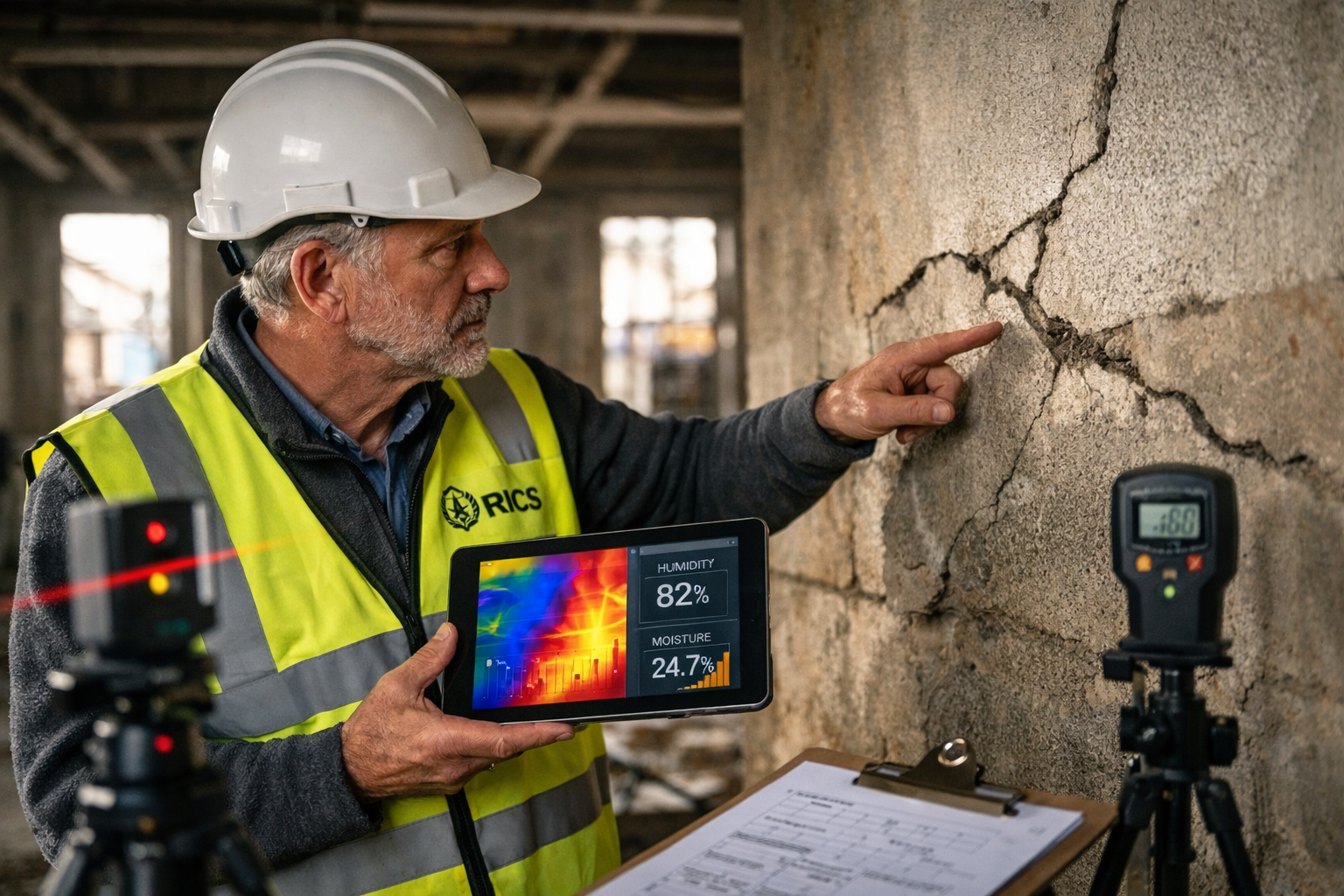
Damp and Water Ingress: Comprehensive knowledge of building physics, moisture movement, condensation versus penetrating damp diagnosis, and remediation strategies. Many disputes involve damp surveys where expert interpretation determines liability.
Party Wall Disputes: Detailed understanding of the Party Wall Act 1996, precedent cases, and practical implications of boundary construction work. Expert witnesses frequently address party wall disputes requiring both legal and technical knowledge.
Building Defects and Negligence: Ability to distinguish between design failures, construction defects, maintenance issues, and normal deterioration. This requires understanding reasonable professional standards at the time of original construction.
Technological Proficiency
The 2026 standards recognize that modern building surveying disputes increasingly involve sophisticated technology [1]. Expert witnesses must demonstrate competence with:
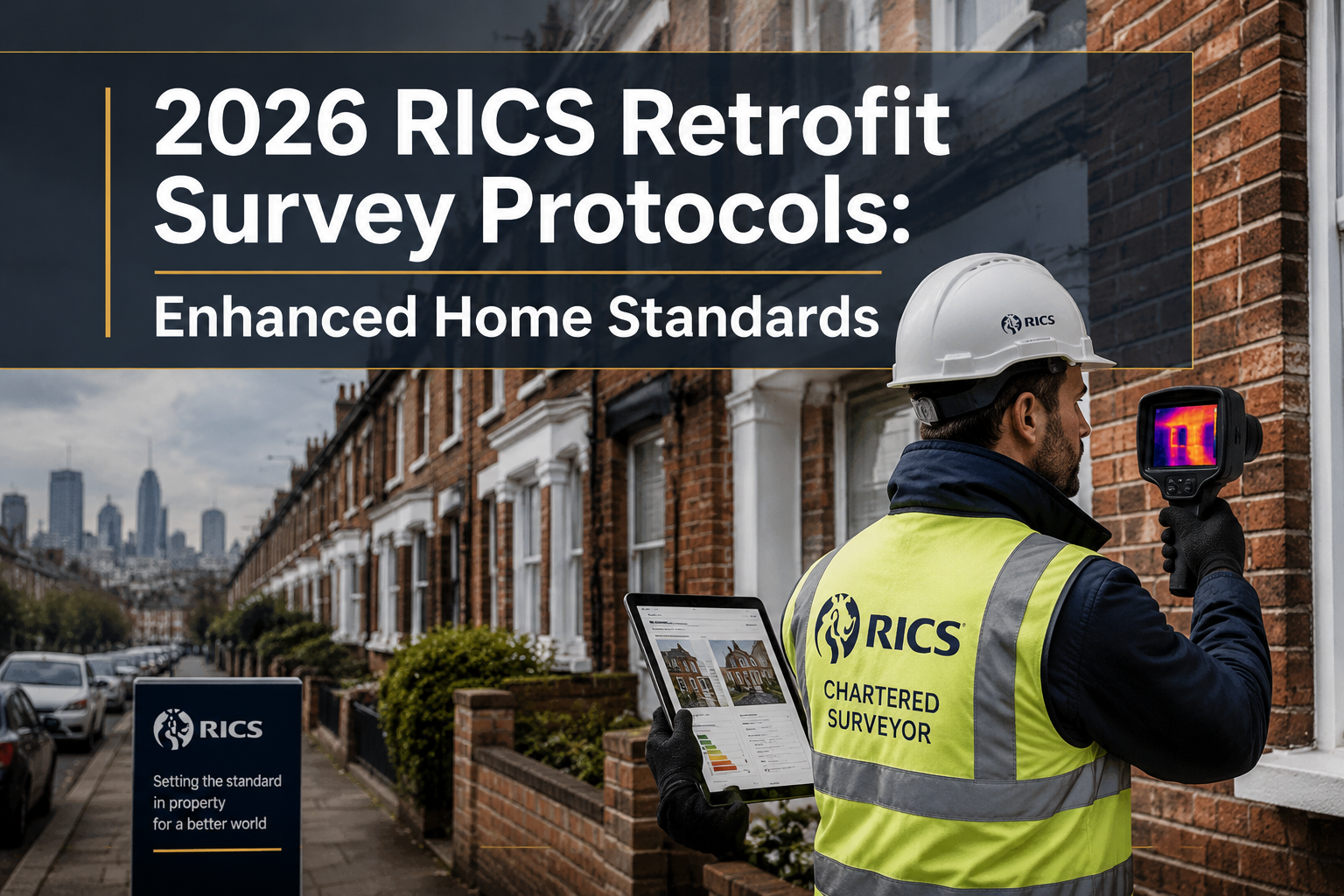
- Thermal imaging cameras for moisture and insulation defect detection
- 3D laser scanning for accurate dimensional surveys
- Drone technology for roof and elevation inspections
- Building Information Modeling (BIM) for complex commercial projects
- Moisture meters and environmental monitoring equipment
- Digital documentation systems for evidence management
This technological proficiency enables more accurate defect diagnosis and provides compelling visual evidence for court presentations. However, experts must also understand the limitations of each technology and avoid over-reliance on equipment without proper interpretation.
Communication and Court Presentation: Translating Technical Complexity
Clear Written Reports Meeting CPR Requirements
Technical expertise becomes worthless if not communicated effectively. The Qualities of Top RICS Expert Witnesses in Building Surveying Disputes: 2026 Standards emphasize that expert reports must be:
Structurally Compliant:
- Written for the court, not the instructing party
- Containing a clear statement of truth and expert duty acknowledgment
- Structured logically with executive summary and detailed analysis
- Supported by photographs, diagrams, and technical appendices
- Free from advocacy or partisan language
Technically Accessible:
- Explaining complex building pathology in plain English
- Defining technical terms when first used
- Using visual aids to illustrate defect mechanisms
- Providing clear opinions with confidence levels
- Distinguishing facts from opinions explicitly
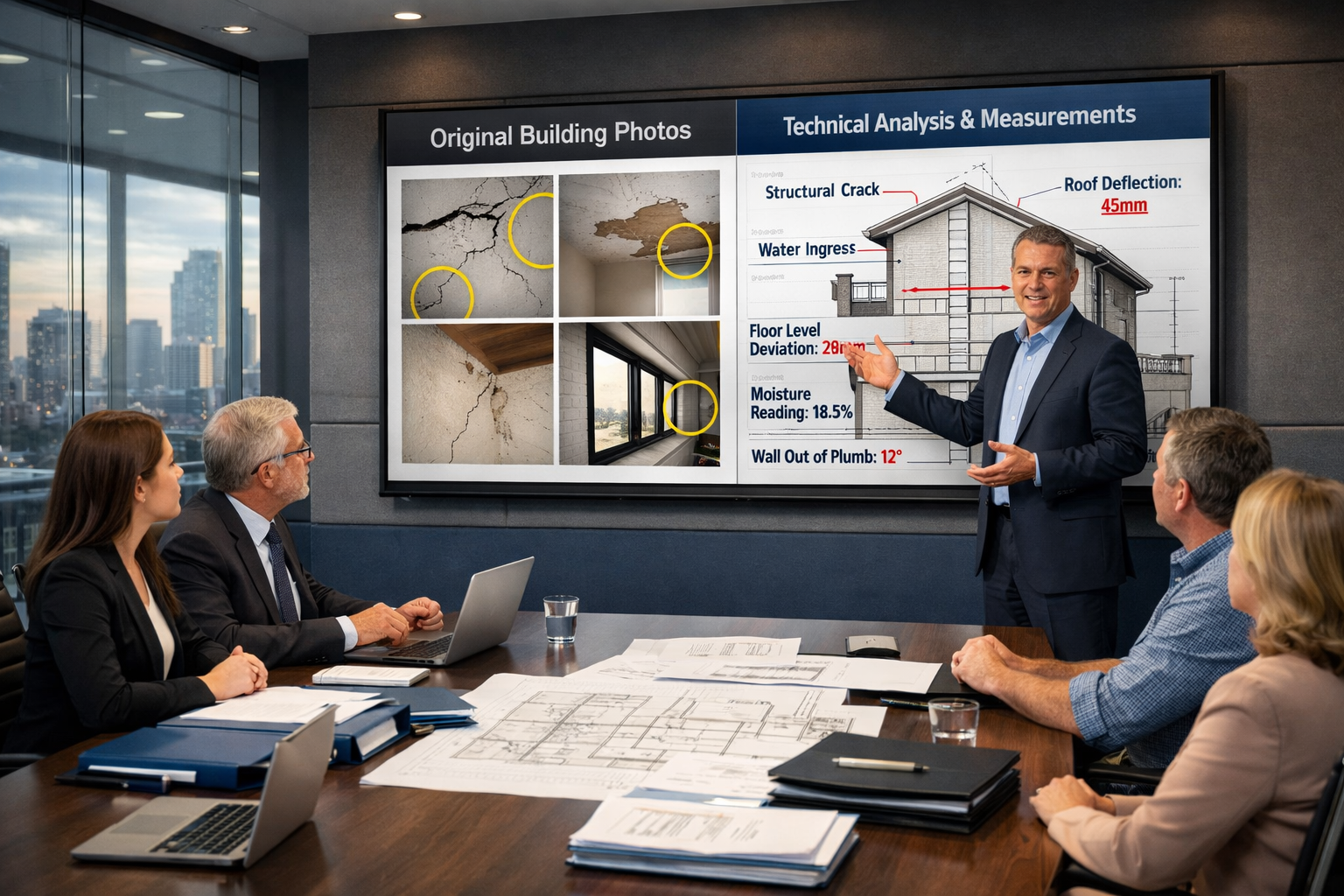
Top expert witnesses recognize that judges and legal professionals lack specialized building knowledge. A report describing "differential settlement causing progressive structural distortion" means little without explanation of what settlement is, why it occurs differentially, and what structural consequences result. The best expert witnesses use analogies and visual comparisons to make technical concepts accessible without oversimplification.
Oral Evidence and Cross-Examination Skills
Court testimony represents the ultimate test of expert witness quality. Top RICS expert witnesses demonstrate:
Confidence Under Pressure:
- Remaining calm during aggressive cross-examination
- Acknowledging uncertainties honestly without undermining credibility
- Refusing to be drawn into speculation beyond expertise
- Maintaining professional demeanor regardless of questioning tactics
- Correcting misunderstandings clearly and respectfully
Effective Communication:
- Speaking clearly and at appropriate pace for court recording
- Making eye contact with judge while answering questions
- Using visual aids effectively during testimony
- Explaining technical concepts without condescension
- Admitting mistakes or changed opinions when appropriate
The ability to withstand cross-examination while maintaining credibility often determines dispute outcomes. Expert witnesses who become defensive, evasive, or argumentative lose judicial confidence regardless of their technical qualifications.
Collaborative Professionalism with Opposing Experts
The 2026 standards encourage expert witnesses to engage constructively with opposing experts to narrow technical disputes [4]. Top expert witnesses:
- Participate in joint inspections when appropriate
- Prepare joint statements identifying agreed facts and remaining disagreements
- Engage in genuine technical dialogue rather than adversarial positioning
- Acknowledge valid points raised by opposing experts
- Focus discussions on technical issues rather than litigation strategy
This collaborative approach often leads to earlier settlements by clarifying genuine technical disagreements versus misunderstandings. Courts increasingly expect experts to narrow issues through pre-trial discussions, making collaborative skills essential for effective expert witness work.
Risk Management and Professional Liability Awareness
Understanding Modern Risk Factors
The 2026 updates to RICS expert witness standards specifically address emerging risk factors that top expert witnesses must navigate [1]:
Conditional Fee Arrangements: While permitted, these payment structures create potential conflicts between expert independence and financial outcomes. Top expert witnesses:
- Establish clear fee agreements documenting independence provisions
- Avoid success-based fee components that compromise objectivity
- Disclose fee arrangements when required by court rules
- Maintain the same standard of evidence regardless of payment structure
Technology-Related Risks: Modern surveying technology creates new liability exposures:
- Over-reliance on equipment without proper interpretation
- Data security concerns with digital evidence
- Accuracy limitations of remote sensing technologies
- Potential for technology failures affecting evidence quality
Professional Indemnity Insurance: Expert witness work carries significant liability exposure. Top practitioners maintain:
- Adequate professional indemnity coverage for expert witness activities
- Clear understanding of policy exclusions and limitations
- Separate coverage for dispute resolution work if required
- Documentation practices that support potential claims defense
Ethical Boundaries and Professional Standards
The Qualities of Top RICS Expert Witnesses in Building Surveying Disputes: 2026 Standards require awareness of ethical boundaries that distinguish expert witnesses from advocates or consultants:
| Role | Appropriate Activity | Inappropriate Activity |
|---|---|---|
| Expert Witness | Provide objective technical evidence | Advocate for client's position |
| Expert Witness | Identify strengths and weaknesses in all evidence | Emphasize only favorable evidence |
| Expert Witness | Assist court understanding | Assist litigation strategy |
| Expert Witness | Maintain independence | Allow report editing by legal teams |
Top expert witnesses recognize these boundaries and decline instructions that blur the line between expert evidence and partisan support. This professional discipline protects both the expert's reputation and the integrity of the justice system.
Documentation and Evidence Management
Effective risk management requires meticulous documentation practices:
✅ Comprehensive site notes recorded contemporaneously during inspections
✅ Photographic evidence with metadata showing date, time, and location
✅ Chain of custody documentation for physical samples or materials
✅ Research records showing basis for technical opinions
✅ Correspondence files documenting instructions and scope changes
✅ Peer review documentation when complex technical issues arise
These practices protect expert witnesses during cross-examination and provide defensible evidence if professional conduct is challenged. The 2026 standards emphasize that digital evidence management requires particular attention to security, authenticity, and admissibility requirements [1].
Practical Application: Case Study Scenarios
Scenario 1: Structural Defect in Commercial Property
A commercial property owner discovers significant cracking in load-bearing walls two years after purchase. The dispute involves the selling surveyor's commercial building survey that failed to identify structural issues.
Top Expert Witness Approach:
- Conducts independent structural assessment without reviewing original survey initially
- Documents current defect condition with measurements, photographs, and technical analysis
- Reviews original survey report objectively, identifying specific omissions
- Considers whether defects were reasonably identifiable at original survey date
- Provides opinion on causation, progression timeline, and remediation costs
- Acknowledges any uncertainties in defect age determination
- Prepares clear report explaining why competent surveyor should have identified issues
This approach demonstrates impartiality by independently assessing the property before reviewing disputed documentation, ensuring opinions are based on technical evidence rather than litigation positioning.
Scenario 2: Damp Issues and Negligent Survey Claims
A residential buyer claims their surveyor negligently failed to identify rising damp during a building survey, resulting in £45,000 remediation costs.
Top Expert Witness Approach:
- Investigates current damp condition using multiple diagnostic methods
- Determines whether damp is rising damp, penetrating damp, or condensation
- Reviews original survey conditions and access limitations
- Considers whether damp evidence was visible or detectable at survey date
- Examines property maintenance history and occupant behavior factors
- Provides opinion on whether original surveyor met professional standards
- Distinguishes between survey limitations and negligent omissions
This scenario highlights the importance of technical expertise in damp diagnosis and understanding reasonable professional standards, avoiding hindsight bias when evaluating original survey performance.
Scenario 3: Party Wall Dispute with Structural Damage Claims
Neighboring property owners dispute whether excavation work caused structural damage, requiring expert analysis of party wall matters and causation.
Top Expert Witness Approach:
- Reviews pre-work condition schedules and photographic evidence
- Conducts detailed structural inspection of claimed damage
- Analyzes construction methodology and proximity to party wall
- Considers alternative causation factors (settlement, previous damage, weather)
- Provides technical opinion on damage causation with confidence levels
- Recommends appropriate remediation if damage is work-related
- Maintains impartiality despite instruction from one party
This case demonstrates the need for experts to consider multiple causation possibilities and provide balanced technical analysis rather than supporting predetermined conclusions.
Selecting and Instructing Expert Witnesses: Best Practices
Due Diligence for Legal Teams and Property Owners
When disputes require expert witness involvement, selecting the right professional is critical. Consider these factors:
Verification of Qualifications:
- Confirm current RICS membership status
- Review relevant experience in similar dispute types
- Check professional indemnity insurance coverage
- Request examples of previous expert reports (redacted)
- Verify absence of conflicts of interest
Assessment of Communication Skills:
- Review writing samples for clarity and accessibility
- Discuss complex technical issues to assess explanation ability
- Inquire about court testimony experience
- Evaluate responsiveness and professionalism in initial contacts
Understanding of Court Procedures:
- Confirm knowledge of Civil Procedure Rules Part 35
- Discuss approach to joint expert meetings
- Review understanding of expert duties to court
- Assess willingness to acknowledge limitations or uncertainties
Clear Instruction Letters
Effective expert witness work begins with clear instructions that:
📋 Define the specific technical questions requiring expert opinion
📋 Provide complete background documentation and site access arrangements
📋 Specify reporting deadlines and format requirements
📋 Clarify budget parameters and fee arrangements
📋 Establish communication protocols with legal teams
📋 Confirm expert's availability for potential court testimony
Ambiguous instructions lead to reports that fail to address key dispute issues, requiring costly supplementary work and potentially weakening case positions.
Ongoing Expert Management
Once instructed, top expert witnesses require appropriate management:
- Regular communication without compromising independence
- Timely provision of additional documents as they emerge
- Respect for professional boundaries between technical evidence and legal strategy
- Advance notice of court dates and procedural requirements
- Feedback mechanisms for report drafts while maintaining expert control of opinions
The relationship between instructing parties and expert witnesses must balance necessary communication with preservation of expert independence—a balance that top RICS expert witnesses navigate skillfully.
Future Developments: Expert Witness Standards Beyond 2026
Emerging Technology Integration
The building surveying profession continues evolving with technological advancement. Future expert witness work will increasingly involve:
Artificial Intelligence and Data Analysis: Machine learning algorithms analyzing building defect patterns and predicting failure mechanisms. Expert witnesses must understand AI capabilities and limitations, ensuring technology supplements rather than replaces professional judgment.
Virtual Reality Court Presentations: Immersive 3D models allowing judges to "walk through" disputed properties virtually. This technology enables more intuitive understanding of spatial relationships and defect locations.
Blockchain Evidence Authentication: Distributed ledger technology providing tamper-proof documentation of survey findings and photographic evidence, addressing admissibility challenges with digital evidence.
Remote Inspection Technologies: Advanced drone and robotic inspection systems enabling detailed surveys of inaccessible areas, expanding the scope of expert evidence while requiring new protocols for evidence authentication.
Evolving Professional Standards
RICS continues updating professional standards to address changing industry conditions [2]. Expert witnesses should anticipate:
- Enhanced sustainability requirements as building performance disputes increasingly involve energy efficiency and environmental standards
- Greater emphasis on digital competence as technology becomes integral to surveying practice
- Refined guidance on fee arrangements balancing commercial reality with independence requirements
- Expanded international standards as cross-border property disputes become more common
Climate Change and Building Resilience Disputes
The 2026 standards already recognize emerging dispute types related to climate adaptation. Future expert witnesses will increasingly address:
- Flood resilience and water management failures
- Thermal performance and overheating issues
- Storm damage and structural resilience
- Subsidence related to changing weather patterns
- Retrofit disputes involving energy efficiency improvements
These emerging dispute types require expert witnesses to develop new technical competencies while maintaining the core qualities of impartiality, expertise, and effective communication that define professional excellence.
Conclusion
The Qualities of Top RICS Expert Witnesses in Building Surveying Disputes: 2026 Standards reflect both enduring professional principles and evolving industry challenges. Impartiality, technical expertise, effective communication, and ethical conduct remain the foundational pillars of expert witness excellence. However, 2026 brings heightened awareness of technology-related risks, conditional fee arrangement implications, and emerging dispute types requiring specialized knowledge [1].
For property professionals, understanding these qualities ensures appropriate expert selection when disputes arise. For building surveyors aspiring to expert witness work, these standards provide a clear development pathway emphasizing continuous learning, ethical practice, and communication skills alongside technical competence.
The most successful expert witnesses recognize that their primary duty is to the court and the justice system rather than to instructing parties [5]. This fundamental principle, combined with demonstrable expertise and clear communication, enables expert witnesses to provide the independent, objective evidence that resolves building disputes fairly and efficiently.
Actionable Next Steps
For Property Owners and Legal Teams:
- Verify RICS membership and relevant experience before instructing expert witnesses
- Provide clear, comprehensive instructions defining technical questions requiring expert opinion
- Respect expert independence while maintaining appropriate communication
- Consider joint expert appointments to narrow technical disputes efficiently
For Building Surveyors:
- Pursue specialized training in dispute resolution and expert witness procedures
- Maintain current knowledge of RICS standards and Civil Procedure Rules
- Develop communication skills through technical writing and presentation practice
- Build expertise in specific building pathology areas before accepting expert instructions
- Ensure professional indemnity insurance covers expert witness activities
For All Stakeholders:
- Stay informed about evolving RICS standards through professional development
- Embrace technological advancement while understanding its limitations
- Prioritize ethical conduct and professional integrity in all dispute resolution work
- Contribute to the profession's development by sharing knowledge and supporting standards evolution
The quality of expert witness evidence directly impacts dispute outcomes, affecting property values, professional reputations, and access to justice. By understanding and applying the Qualities of Top RICS Expert Witnesses in Building Surveying Disputes: 2026 Standards, all stakeholders contribute to a more effective, fair, and professional dispute resolution system.
References
[1] Surveyors Acting As Expert Witnesses – https://www.rics.org/profession-standards/rics-standards-and-guidance/sector-standards/dispute-resolution-standards/surveyors-acting-as-expert-witnesses
[2] Home Survey Standard 2nd Edition April 2026 Update – https://www.rics.org/news-insights/home-survey-standard-2nd-edition-april-2026-update
[3] Building Survey Quality Standards 2026 Navigating Rics Updates And Enhanced Home Inspection Requirements – https://nottinghillsurveyors.com/blog/building-survey-quality-standards-2026-navigating-rics-updates-and-enhanced-home-inspection-requirements
[4] Dispute Resolution Standards – https://www.rics.org/profession-standards/rics-standards-and-guidance/sector-standards/dispute-resolution-standards
[5] Rics Expert Witness – https://www.jamesscottassociates.com/rics-expert-witness/