

The UK construction sector is experiencing its most aggressive growth phase in over a decade, with average new house prices surging to £300,000 in early 2026—a staggering 30% increase from just five years prior[3]. This unprecedented boom has triggered a corresponding surge in party wall survey demands, as homeowners across high-density urban areas race to maximise property values through extensions, loft conversions, and structural modifications. Understanding the essential protocols for Party Wall Surveys for 2026 Construction Boom: Essential Protocols for High-Demand UK Housing Markets has never been more critical for property owners, developers, and construction professionals navigating this competitive landscape.
The housing shortage continues to drive renovation activity, with planning approval timelines stretching up to four years in some local authorities[3]. This bottleneck has pushed homeowners toward permitted development rights and smaller-scale projects that still trigger party wall obligations. As construction activity intensifies across terraced housing estates, Victorian conversions, and semi-detached properties, the risk of disputes and compliance failures escalates proportionally.
Key Takeaways
- Construction activity in 2026 has reached unprecedented levels, with loft conversions and extensions driving party wall survey demands across UK housing markets
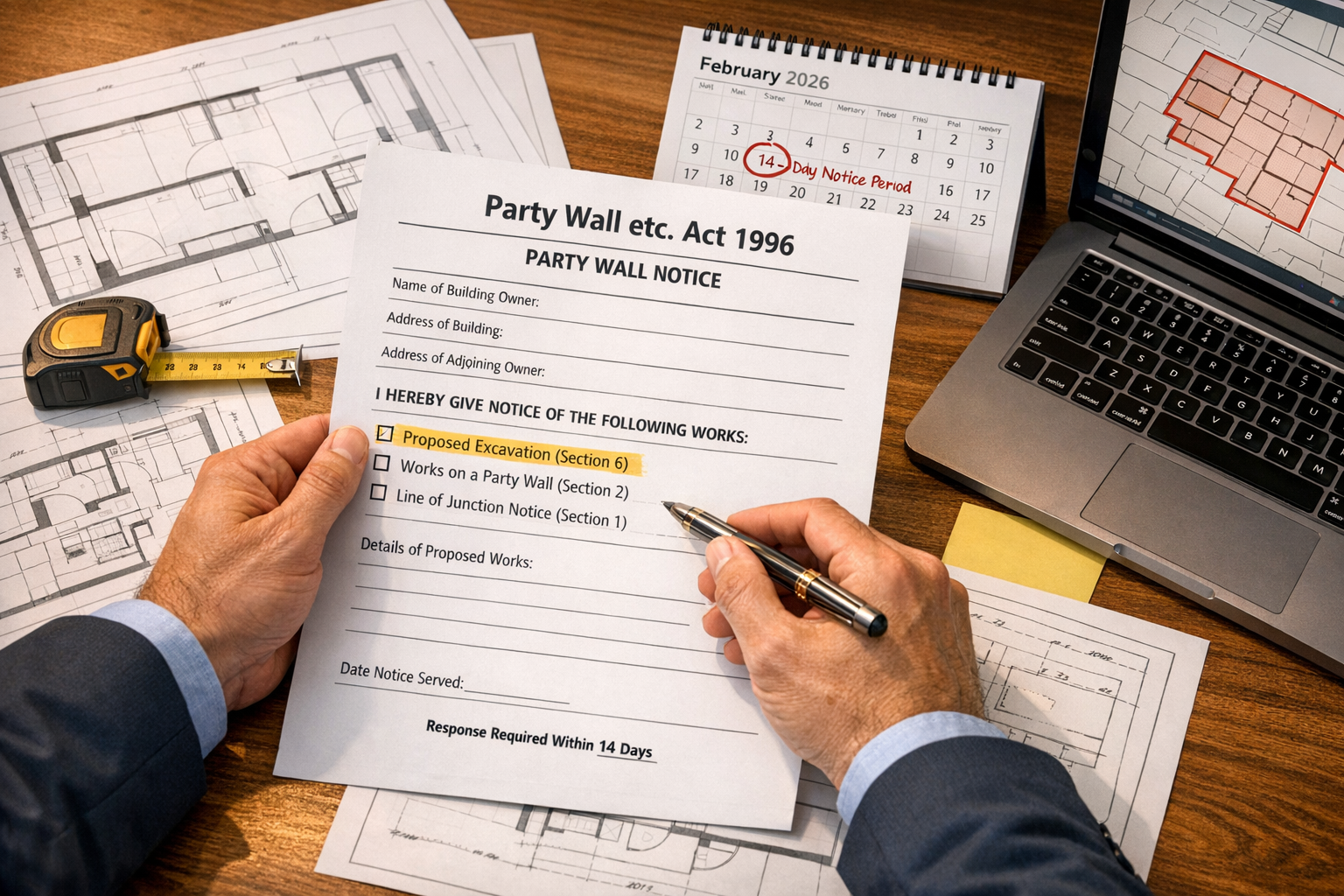
- Proper notice procedures are legally mandatory under the Party Wall etc. Act 1996, with specific timelines that must be observed to avoid costly delays and disputes
- Professional party wall surveyors provide essential protection for both building and adjoining owners through detailed schedules of condition and impartial awards
- High-demand markets require proactive planning, with survey bookings now extending 6-8 weeks ahead in major urban centres
- Non-compliance carries significant financial and legal consequences, including injunctions, project delays, and liability for damage claims
Understanding Party Wall Surveys for 2026 Construction Boom: Essential Protocols for High-Demand UK Housing Markets
The Legislative Framework and Current Context
The Party Wall etc. Act 1996 remains the cornerstone legislation governing building work on or near shared boundaries in England and Wales. This Act requires property owners to serve formal notice to adjoining owners before commencing specific types of work, including:
- Building on or at the boundary line between properties 🏗️
- Working directly on an existing party wall or party structure
- Excavating within three metres of a neighbouring building where the work goes deeper than the neighbour's foundations
- Excavating within six metres where the work extends below a 45-degree plane from the neighbour's foundation base
The 2026 construction boom has brought these requirements into sharp focus. With party wall surveying experiencing increased demand corresponding with the surge in home extensions[2], understanding when and how to engage the process has become essential for project success.
When Party Wall Surveys Become Necessary
Loft conversions represent one of the most common triggers for party wall procedures in 2026. When converting a loft in a semi-detached or terraced property, work typically involves:
- Raising or altering the party wall structure
- Installing steel beams that bear on the party wall
- Cutting into the party wall to insert joists or structural supports
- Modifying shared chimney stacks or flues
For comprehensive guidance on loft-specific requirements, property owners should consult resources on party wall considerations for loft conversions.
Basement excavations and extensions also frequently require party wall procedures, particularly where foundations extend below neighbouring structures. The three-metre rule establishes critical thresholds that determine notification requirements.
The Notice Process: Critical Timelines
Serving proper notice represents the first essential protocol in Party Wall Surveys for 2026 Construction Boom: Essential Protocols for High-Demand UK Housing Markets. The Act specifies distinct notice periods:
| Type of Work | Notice Type | Minimum Notice Period |
|---|---|---|
| Work on existing party wall | Party Structure Notice | 2 months |
| New building at boundary | Line of Junction Notice | 1 month |
| Excavation near boundary | Notice of Adjacent Excavation | 1 month |
Failure to serve proper notice can result in serious consequences. Adjoining owners may seek injunctions to halt work, and building owners become liable for any damage that occurs. Understanding what happens when no party wall agreement exists highlights the importance of compliance.
Essential Protocols for Managing High-Volume Survey Demands
Appointing Party Wall Surveyors in Competitive Markets
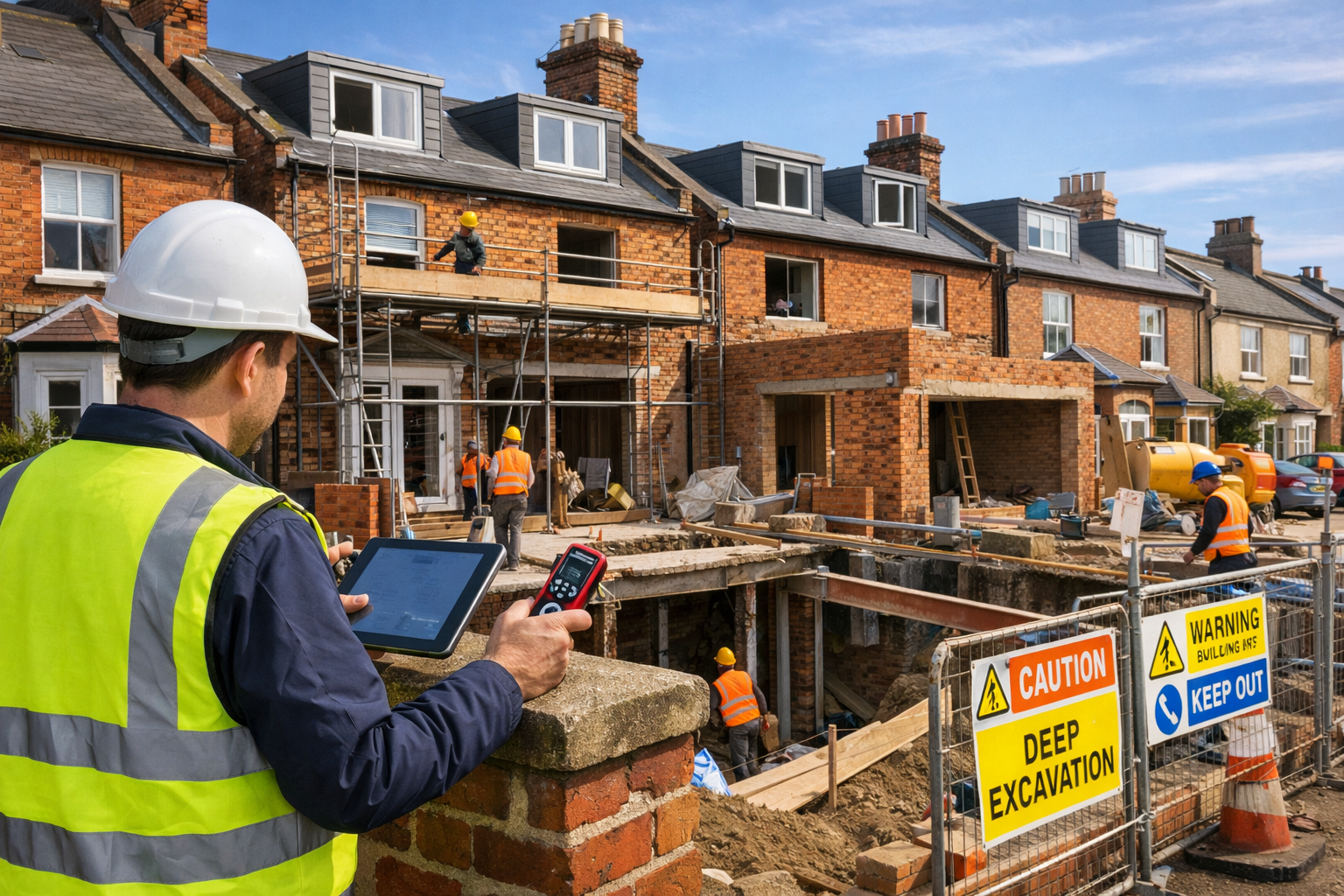
The 2026 construction boom has created unprecedented demand for qualified party wall surveyors. In high-demand UK housing markets, securing surveyor appointments now requires 6-8 weeks advance booking in major urban centres[2]. This timeline necessitates early planning well before construction commencement.
Three appointment scenarios exist under the Act:
- Agreed Surveyor: Both parties consent to appointing a single surveyor who acts impartially
- Two Surveyors: Each party appoints their own surveyor, who then jointly select a third surveyor for dispute resolution
- Deemed Appointment: If the adjoining owner fails to respond within 14 days, the building owner may appoint a surveyor on their behalf
The agreed surveyor approach offers cost efficiency and streamlined decision-making, making it particularly attractive during high-volume periods. However, adjoining owners retain the right to appoint their own surveyor to ensure independent representation.
Conducting Thorough Schedules of Condition
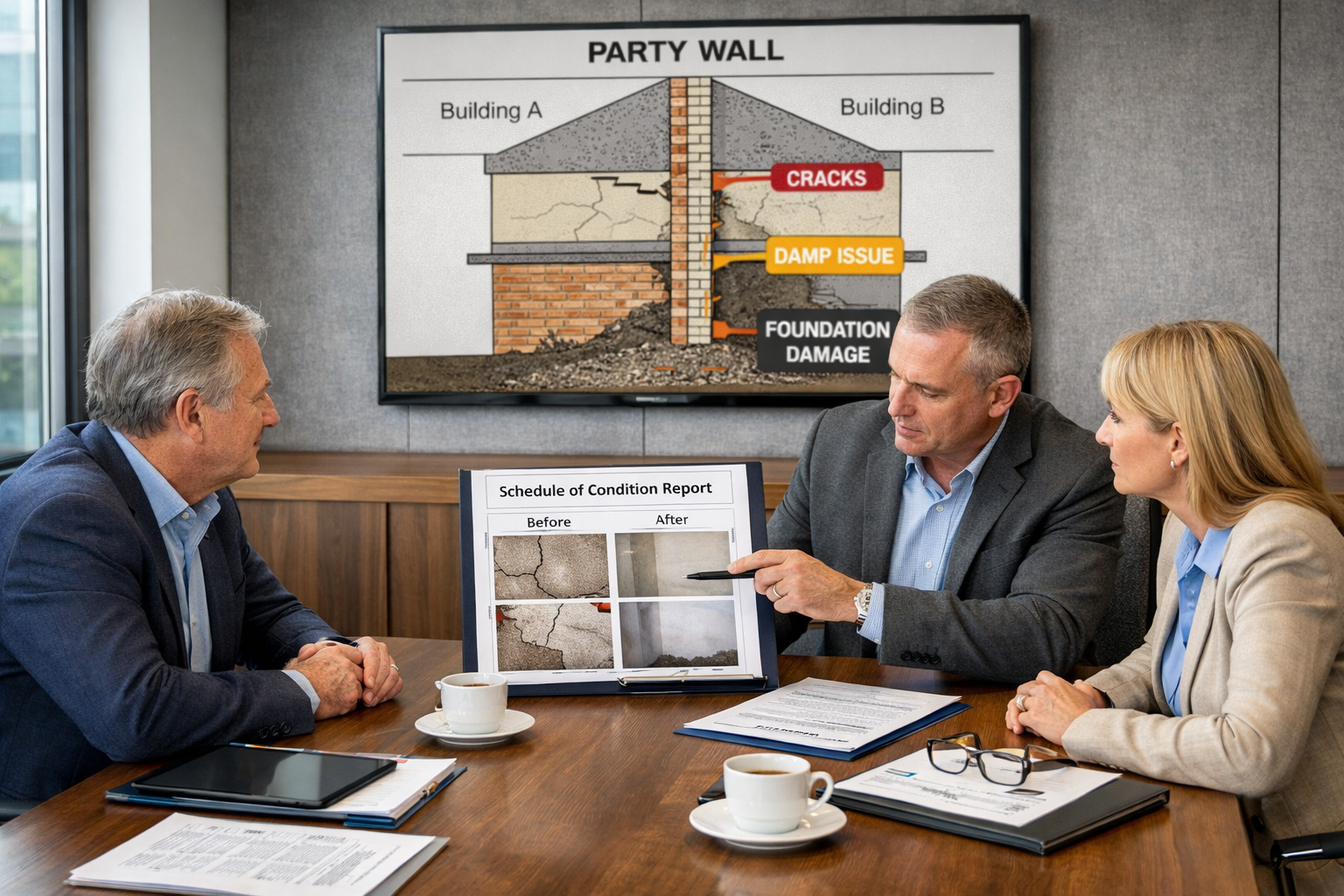
A schedule of condition represents one of the most critical protective measures in party wall procedures. This detailed photographic and written record documents the pre-construction state of the adjoining property, establishing baseline conditions against which any subsequent damage can be assessed.
Professional schedules of condition should include:
- Comprehensive photography of all rooms, focusing on walls, ceilings, floors, and existing defects
- Detailed written descriptions of materials, finishes, and structural elements
- Measurements and diagrams showing crack widths, settlement patterns, and structural features
- External documentation of facades, rooflines, and boundary features
For detailed guidance on creating effective documentation, refer to resources on schedule of condition procedures.
Securing Consent for Party Wall Work
Obtaining consent for party wall work requires clear communication and proper documentation. The adjoining owner has three response options upon receiving notice:
✅ Consent in writing to the proposed work
❌ Dissent or fail to respond within 14 days, triggering the dispute resolution process
📋 Request modifications to the proposed work methodology
Even when adjoining owners consent, appointing surveyors remains advisable to document pre-construction conditions and establish protocols for access, working hours, and damage resolution.
Navigating Disputes and Compliance Challenges in 2026 Markets
Common Dispute Triggers in High-Demand Markets
The construction boom has intensified several common dispute scenarios. Understanding what constitutes a party wall dispute helps building owners anticipate and mitigate conflicts.
Frequent dispute triggers include:
- Noise and disruption concerns from extended construction periods
- Structural damage fears based on previous neighbourhood experiences
- Access requirements for surveyor inspections and construction monitoring
- Cost disputes regarding surveyor fees and apportionment
- Timeline disagreements over construction schedules and working hours
The surge in loft conversions has particularly increased disputes involving shared chimneys and chimney stacks, where structural modifications affect both properties.
The Party Wall Award: Binding Resolution
When disputes arise or adjoining owners dissent, surveyors must prepare a party wall award—a legally binding document that sets out:
- Detailed work descriptions and methodologies
- Access arrangements and notification procedures
- Working hours and construction timelines
- Cost apportionment between parties
- Dispute resolution mechanisms for subsequent issues
Awards must be served on both parties, who have 14 days to appeal to the County Court. This appeal window represents the final opportunity to challenge surveyor decisions before work commences.
Managing Damage Claims and Liability
Despite careful planning, construction work occasionally causes damage to adjoining properties. The schedule of condition becomes invaluable in these situations, providing clear evidence of pre-existing conditions versus construction-related damage.
Liability protocols under the Act:
- Building owners bear strict liability for damage caused by notifiable work
- Surveyors assess damage severity and appropriate remediation
- Repair costs are typically borne by the building owner
- Disputes over damage extent may require third surveyor determination
For guidance on handling damage situations, consult resources on damage to property in party wall contexts.
Addressing Non-Compliance Scenarios
The construction boom has unfortunately increased instances where party wall notices are not served before work commences. This non-compliance creates significant legal and financial exposure:
⚠️ Consequences of non-compliance:
- Adjoining owners may obtain court injunctions halting construction
- Building owners face unlimited liability for any damage
- Retrospective party wall procedures become necessary, delaying projects
- Legal costs escalate significantly compared to proactive compliance
- Insurance complications may arise from unauthorised work
Best Practices for Building Owners in 2026
Early Planning and Timeline Management
Given the extended booking periods for surveyors and statutory notice requirements, building owners should initiate party wall procedures at least 3-4 months before planned construction. This timeline allows for:
- Surveyor appointment and initial consultations (2-3 weeks)
- Notice preparation and service (1 week)
- Statutory notice period (1-2 months)
- Schedule of condition preparation (2-3 weeks)
- Award preparation if required (2-4 weeks)
- Buffer time for unexpected complications
Selecting Qualified Professionals
The increased demand has unfortunately attracted some unqualified practitioners to the party wall field. Building owners should verify that surveyors possess:
- RICS membership (Royal Institution of Chartered Surveyors) or equivalent professional qualification
- Specific party wall experience and local market knowledge
- Professional indemnity insurance covering party wall work
- Clear fee structures and transparent cost estimates
Communication and Neighbour Relations
While legal procedures provide structure, maintaining positive neighbour relationships throughout the process reduces conflict and facilitates smoother project delivery. Proactive communication strategies include:
📧 Pre-notice informal discussions explaining project scope and benefits
🤝 Flexibility on working arrangements where feasible
📸 Regular progress updates and open communication channels
🛠️ Prompt response to concerns and complaints
✨ Considerate construction practices minimising disruption
Cost Management and Budgeting
Party wall procedures involve several cost components that building owners must budget for:
| Cost Component | Typical Range | Notes |
|---|---|---|
| Building Owner's Surveyor | £800-£2,000 | Varies with project complexity |
| Adjoining Owner's Surveyor | £600-£1,500 | Building owner typically pays |
| Schedule of Condition | £300-£800 | Per adjoining property |
| Award Preparation | Included | Usually within surveyor fees |
| Third Surveyor (if needed) | £500-£1,500 | Only in dispute scenarios |
In high-demand markets, these costs have increased by approximately 15-20% in 2026 compared to previous years[2], reflecting surveyor scarcity and increased workload.
Emerging Trends and Future Considerations
Technology Integration in Party Wall Procedures
The 2026 construction boom has accelerated technology adoption in party wall surveying:
- Digital scheduling tools enabling remote condition documentation
- Drone surveys for roof and elevation assessments
- 3D laser scanning providing precise structural measurements
- Digital award platforms streamlining document management and service
These technologies improve accuracy and efficiency while reducing costs and timeline pressures in high-demand markets.
Regulatory Evolution and Policy Changes
As construction activity intensifies, regulatory scrutiny of party wall compliance has increased. Local authorities and professional bodies are emphasising:
- Stricter enforcement of notice requirements
- Enhanced surveyor qualification standards
- Greater transparency in fee structures and cost apportionment
- Improved dispute resolution mechanisms
Building owners and surveyors must stay informed about evolving standards and expectations.
Sustainability and Party Wall Considerations
The push toward energy efficiency and sustainability creates new party wall considerations, particularly regarding insulation in party walls. Retrofit projects involving cavity wall insulation, external wall insulation, or internal insulation systems may trigger party wall procedures depending on their scope and impact on shared structures.
Conclusion
The 2026 construction boom presents both opportunities and challenges for property owners across high-demand UK housing markets. Party Wall Surveys for 2026 Construction Boom: Essential Protocols for High-Demand UK Housing Markets require careful navigation of legal requirements, professional appointments, and neighbour relations to ensure successful project delivery.
Key action steps for building owners:
- Start early – Initiate party wall procedures 3-4 months before planned construction
- Engage qualified professionals – Verify surveyor credentials and experience
- Serve proper notice – Comply with statutory timelines and documentation requirements
- Document thoroughly – Ensure comprehensive schedules of condition are prepared
- Communicate proactively – Maintain positive relationships with adjoining owners
- Budget appropriately – Account for all party wall costs in project planning
- Monitor compliance – Ensure contractors adhere to award conditions throughout construction
The surge in construction activity shows no signs of abating, with housing shortages continuing to drive renovation and extension projects. By understanding and implementing essential party wall protocols, building owners can protect their investments, maintain neighbour relationships, and navigate the 2026 construction boom successfully.
For comprehensive guidance on party wall procedures and professional surveying services, explore party wall resources and consult with qualified professionals early in your project planning process. The investment in proper party wall compliance pays dividends through reduced disputes, legal protection, and smoother construction delivery in even the most competitive housing markets.
References
[1] Party Wall Surveys Amid 2026 Construction Boom Handling Disputes In High Demand Uk Housing Markets – https://nottinghillsurveyors.com/blog/party-wall-surveys-amid-2026-construction-boom-handling-disputes-in-high-demand-uk-housing-markets
[2] Party Wall Surveying Surge In 2026 Loft Conversions Navigating High Demand Compliance During Housing Uptick – https://nottinghillsurveyors.com/blog/party-wall-surveying-surge-in-2026-loft-conversions-navigating-high-demand-compliance-during-housing-uptick
[3] Watch – https://www.youtube.com/watch?v=Bw3OVr_kgtA