

The UK residential property market has recorded three consecutive months of improvement in buyer enquiries, with the net balance climbing from -29% in November 2025 to -15% in January 2026—the strongest reading in seven months.[1] This upward trajectory in the Market Recovery Signals in RICS January 2026 Survey: Valuation Strategies for Turning Buyer Confidence represents a critical inflection point for valuation surveyors seeking to capitalize on improving sentiment while navigating subdued transaction volumes. As agreed sales reach their least negative position since June 2025, property professionals face a unique opportunity to refine their valuation methodologies and position themselves strategically for the anticipated recovery.
Key Takeaways
- 📈 Buyer enquiries improved for three consecutive months, reaching -15% in January 2026 from -29% in November 2025, signaling easing downward pressure on demand
- 🏡 First-time buyers are expected to lead the market recovery, with smaller properties outperforming flats and apartments across most regions
- 💷 House prices stabilized nationally after months of decline, with long-term price expectations reaching their strongest level since February 2025
- 🗺️ Regional disparities are widening significantly, with Scotland and Northern Ireland showing strongest growth while London lags due to high prices and mansion tax concerns
- ⚖️ Valuation professionals must adapt methodologies to account for improving sentiment, regional variations, and first-time buyer dominance in transaction activity
Understanding the Market Recovery Signals in RICS January 2026 Survey
The Royal Institution of Chartered Surveyors (RICS) January 2026 Residential Market Survey reveals a market in transition. While overall activity remains subdued compared to historical norms, the directional momentum tells a compelling story of gradual recovery.[1]
Buyer Enquiry Trends Show Sustained Improvement
The net balance for new buyer enquiries has demonstrated remarkable consistency in its upward trajectory:
| Month | Net Balance | Change from Previous Month |
|---|---|---|
| November 2025 | -29% | – |
| December 2025 | -21% | +8 points |
| January 2026 | -15% | +6 points |
This sustained improvement represents a cumulative 14-point increase over three months, suggesting that buyer confidence is gradually returning to the market.[1] For valuation professionals, this trend indicates that properties are receiving more viewing requests and generating increased interest, which should be factored into market value assessments.
Agreed Sales Reach Seven-Month High
Perhaps more significantly, agreed sales posted a net balance of -9% in January 2026, compared to -19% in December 2025.[1] This represents the least negative reading since June 2025 and suggests that buyer interest is translating into actual transactions, albeit at lower volumes than peak market periods.
One surveyor noted in the RICS report: "The recovery is likely to be led from the first-time buyer range, with increased properties coming to market being the best early sign of 2026 activity."[6] This observation has profound implications for valuation strategies, particularly when assessing properties in the entry-level price brackets.

Regional Variations in Market Recovery Signals and Valuation Implications
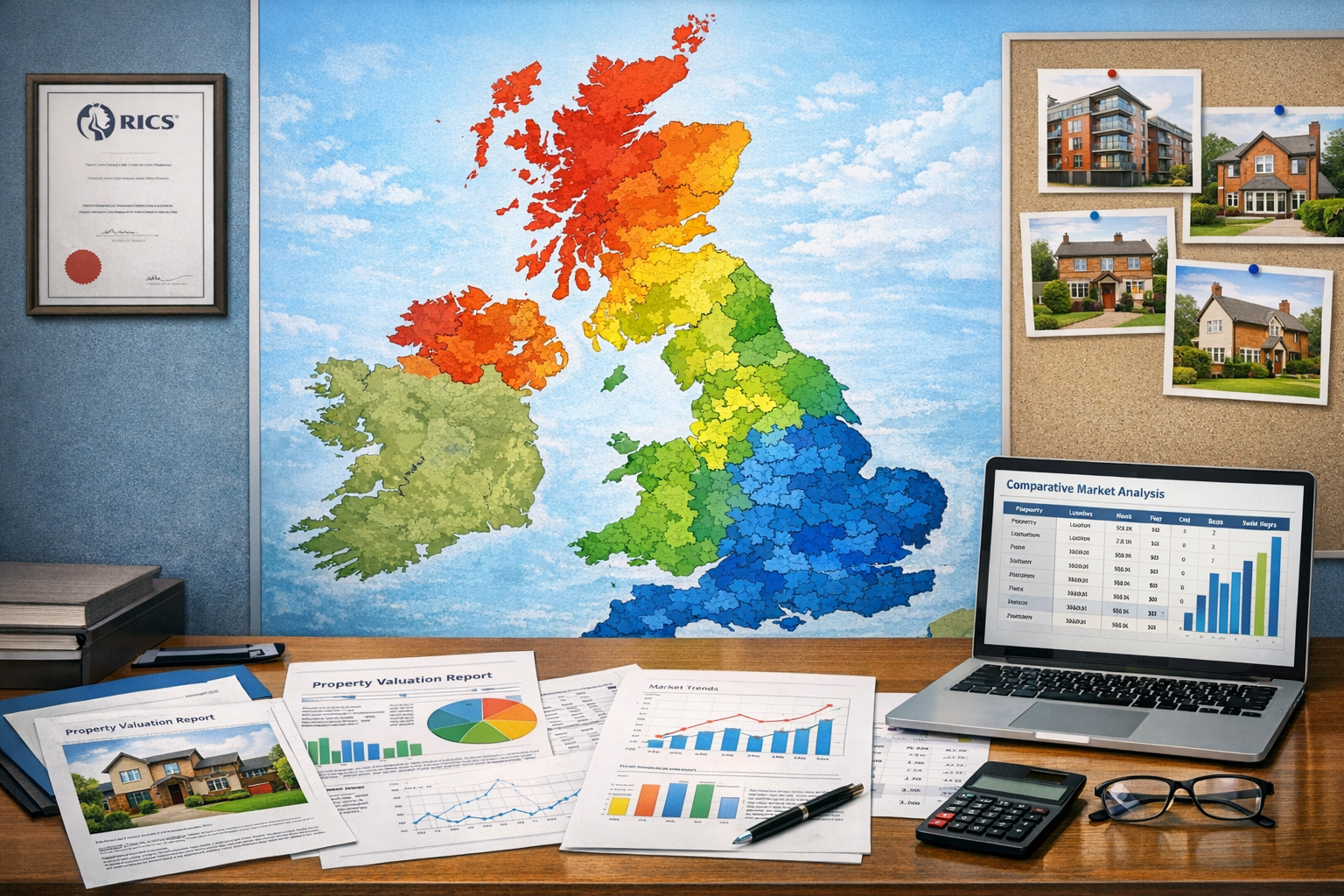
The Market Recovery Signals in RICS January 2026 Survey: Valuation Strategies for Turning Buyer Confidence reveal stark regional disparities that demand location-specific valuation approaches.
Scotland and Northern Ireland Lead Price Growth
Scotland and Northern Ireland have emerged as the strongest performers in terms of price growth, bucking the national trend of price stabilization.[2] Registered RICS valuers operating in these regions must account for continued upward price pressure when conducting market valuations.
The sustained demand in these regions reflects:
- More affordable price points relative to southern England
- Strong local employment markets supporting buyer confidence
- Limited housing supply creating competitive bidding situations
London Market Faces Unique Headwinds
In contrast, the London market continues to lag significantly behind national recovery trends.[2] Two primary factors are suppressing buyer confidence in the capital:
- Elevated house prices that remain substantially above long-term affordability metrics
- Concerns about potential mansion tax implementation affecting higher-value properties
However, some resilience remains visible. Survey respondents noted that certain buyers are willing to absorb additional tax costs to secure properties in desirable London locations.[2] For valuation professionals conducting property valuations in Canterbury and surrounding areas, understanding these London dynamics provides context for commuter-belt pricing.
North West and North England Show Positive Momentum
The North West and North of England regions have also demonstrated price gains, positioning themselves between the strong Scottish market and the subdued London market.[2] This regional strength reflects:
- ✅ Improved regional infrastructure investment
- ✅ Growing employment opportunities outside London
- ✅ Relative affordability attracting first-time buyers and relocating families
When preparing valuation reports, surveyors must incorporate these regional trends into their comparable analysis and market commentary sections.
Property Type Performance: Valuation Strategies for Different Segments
Understanding which property types are outperforming provides crucial intelligence for valuation professionals seeking to accurately assess market value in the current environment.
Smaller Properties Outperform Flats
The RICS January 2026 survey reveals that smaller houses are significantly outperforming flats and apartments in terms of both buyer enquiries and sales agreed.[2] This trend has accelerated since the beginning of 2026 and reflects several underlying factors:
🏠 Buyer Preferences Post-Pandemic:
- Desire for outdoor space (gardens, patios)
- Home office requirements
- Perceived better value compared to leasehold flats
💰 First-Time Buyer Dominance:
- Smaller houses typically represent the entry point to homeownership
- Government schemes supporting house purchases over flats
- Better long-term capital appreciation expectations
For valuation professionals, this divergence in performance necessitates careful selection of comparables. When conducting a Level 2 Homebuyer Survey, surveyors should prioritize recent transactions of similar property types rather than relying solely on broader market indices.
Commercial Property Considerations
While the RICS January 2026 survey focuses primarily on residential markets, commercial property valuers should note parallel trends affecting commercial building surveys and valuations. The return-to-office movement and changing retail patterns continue to create valuation challenges in commercial sectors.
Valuation Methodologies for Improving Market Conditions
As the Market Recovery Signals in RICS January 2026 Survey: Valuation Strategies for Turning Buyer Confidence demonstrate early signs of recovery, valuation professionals must adapt their methodologies to capture improving sentiment while maintaining professional skepticism.
Incorporating Forward-Looking Indicators
The RICS survey reveals that 43% of respondents anticipate higher prices over the next 12 months—the strongest reading since February 2025 and representing consecutive increases across five preceding reports.[1] This improving sentiment should inform valuation approaches in several ways:
1. Market Commentary Sections
Valuation reports should explicitly reference improving market sentiment while maintaining appropriate caveats about uncertainty. Professional valuation factors must balance optimism with evidence-based analysis.
2. Comparable Selection Timeframes
In rising markets, more recent comparables typically provide better guidance than older transactions. Consider weighting recent sales (within 3 months) more heavily than those from 6+ months ago.
3. Adjustment Factors
Apply positive adjustment factors when comparing subject properties to older comparables, reflecting the improving price environment. Document these adjustments transparently with reference to RICS survey data and local market intelligence.
Understanding the Confidence Gap
Despite improving fundamentals, three-month sales expectations showed a net balance of only +4% in January 2026, down from +22% in December 2025.[1] This confidence gap between long-term optimism and short-term caution reflects:
- 🔍 Ongoing economic uncertainty
- 🔍 Interest rate volatility concerns
- 🔍 Political and policy uncertainty
Valuation professionals must acknowledge this caution in their risk assessments and market commentary. Properties requiring quick sales may still face pricing pressure despite improving underlying trends.

Practical Valuation Strategies for First-Time Buyer Properties
Given that first-time buyers are expected to lead the market recovery, valuation professionals should develop specialized expertise in this segment.[6]
Pricing Strategy for Entry-Level Properties
First-time buyer properties require particular attention to:
Affordability Metrics
- Calculate monthly mortgage costs at current interest rates
- Compare to local rental costs to assess buy-vs-rent equation
- Consider Help to Buy scheme eligibility and impact on pricing
Competitive Positioning
- Analyze supply of similar properties in immediate area
- Assess time-on-market for recent comparables
- Identify unique selling points that appeal to first-time buyers
Condition and Presentation
- First-time buyers often have limited renovation budgets
- Properties in move-in condition command premiums
- Highlight any recent improvements or upgrades
Methods of Valuation for Recovery Markets
Professional valuers should review their methods of valuation to ensure they're appropriate for transitioning markets:
Comparable Method (Primary)
- Remain the gold standard for residential valuations
- Require careful adjustment for market direction
- Document all adjustments with clear reasoning
Investment Method (Secondary)
- Increasingly relevant as rental demand strengthens
- Consider rental yields for buy-to-let investors
- Factor in landlord cost increases from recent legislation
Residual Method (Development Sites)
- Apply conservative assumptions about future sales values
- Account for construction cost inflation
- Include extended timeframes for planning and sales
Price Stabilization and Long-Term Expectations
The RICS January 2026 survey shows that house prices have stabilized at the national level after months of decline, with the net balance for prices over the past three months standing at -10% in January, improving from a low of -19% in October 2025.[1]
What Price Stabilization Means for Valuations
Price stabilization creates a more predictable environment for valuation work:
Reduced Volatility
- Comparables from recent months remain relevant longer
- Less need for aggressive time adjustments
- Greater confidence in valuation accuracy
Improved Transaction Certainty
- Buyers and sellers have clearer price expectations
- Reduced likelihood of renegotiations post-survey
- Faster transaction completion times
Professional Liability Considerations
- Stabilizing markets reduce valuation negligence risks
- Clearer audit trail for professional indemnity purposes
- Better alignment between valuation and eventual sale price
Long-Term Price Projections
With 43% of RICS respondents anticipating higher prices over the next 12 months, valuation professionals should consider:
- Conservative growth assumptions of 2-4% annually for base case scenarios
- Regional variations with stronger growth in Scotland, Northern Ireland, and northern England
- Property type differentials with houses outperforming flats
These projections should inform advice provided to clients regarding purchase timing, development feasibility, and investment decisions.
Lettings Market Dynamics and Valuation Implications
The RICS January 2026 survey reveals that tenant demand increased, ending two consecutive quarters of flat or negative readings.[1] However, supply remained constrained with landlord instructions still firmly negative.[1]
Impact on Investment Valuations
The strengthening rental market has several implications:
Rental Value Growth
- Tight supply and growing demand support rental increases
- Investment properties may warrant higher valuations
- Yield compression in some locations as capital values rise
Buy-to-Let Investor Interest
- Improving rental market may attract new landlord investment
- Competition for suitable investment properties could intensify
- Valuation demand for portfolio valuations likely to increase
Regulatory Considerations
- Recent landlord legislation increases operational costs
- Energy efficiency requirements affect property values
- Selective licensing schemes in some local authorities
Risk Factors and Valuation Caveats
Despite positive signals in the Market Recovery Signals in RICS January 2026 Survey: Valuation Strategies for Turning Buyer Confidence, several risk factors warrant inclusion in valuation reports:
Economic Uncertainty
⚠️ Interest Rate Volatility: Future Bank of England decisions could impact affordability and demand
⚠️ Inflation Concerns: Persistent inflation may limit household budgets for housing
⚠️ Employment Market: Any deterioration in employment could quickly reverse buyer confidence gains
Policy and Political Risks
⚠️ Taxation Changes: Potential mansion tax or other property tax reforms could affect higher-value segments
⚠️ Planning Policy: Changes to development rules could impact land and development site values
⚠️ Mortgage Market: Regulatory changes affecting lending criteria could constrain demand
Market-Specific Risks
⚠️ Oversupply in New Build: Some locations face potential oversupply of new construction
⚠️ Leasehold Reform: Ongoing reforms may affect flat valuations and ground rent investments
⚠️ Climate Considerations: Flood risk and energy efficiency increasingly affect values
Professional valuers should incorporate appropriate caveats and assumptions in their reports, referencing these risks where relevant to the specific instruction.
Actionable Strategies for Valuation Professionals
To capitalize on the improving market conditions revealed in the RICS January 2026 survey, valuation professionals should implement these strategies:
1. Enhance Market Intelligence Gathering
- Subscribe to RICS monthly surveys and analyze trends relevant to your operating area
- Develop relationships with local estate agents to gain real-time market intelligence
- Monitor planning applications to anticipate supply changes
- Track mortgage approval data as a leading indicator of demand
2. Refine Comparable Analysis
- Prioritize recent transactions (within 3 months) more heavily in improving markets
- Adjust for property type performance differentials (houses vs. flats)
- Apply regional adjustments based on RICS survey regional data
- Document all adjustments transparently with clear reasoning
3. Develop Specialist Expertise
- Focus on first-time buyer segment as the recovery leader
- Build knowledge of Help to Buy and other government schemes
- Understand regional market dynamics in detail
- Develop expertise in emerging property types (eco-homes, modular construction)
4. Improve Client Communication
- Provide market context from RICS surveys in valuation reports
- Explain regional variations and how they affect the subject property
- Offer forward-looking commentary on likely market direction
- Highlight risks and uncertainties transparently
5. Invest in Professional Development
- Complete RICS CPD requirements with focus on market analysis
- Attend valuation conferences and networking events
- Review professional indemnity coverage as market activity increases
- Update valuation templates to incorporate market recovery context
Conclusion
The Market Recovery Signals in RICS January 2026 Survey: Valuation Strategies for Turning Buyer Confidence present a pivotal moment for property valuation professionals. With three consecutive months of improvement in buyer enquiries, agreed sales reaching seven-month highs, and price stabilization after months of decline, the residential market is showing clear signs of recovery—albeit from subdued levels.[1][3]
First-time buyers are positioned to lead this recovery, particularly in the smaller house segment, while regional disparities create opportunities for location-specific expertise.[2][6] Scotland and Northern Ireland demonstrate the strongest price growth, while London faces unique headwinds from high prices and taxation concerns. The North West and North of England occupy a middle ground with positive momentum building.
For valuation professionals, success in this transitioning market requires:
✅ Adaptive methodologies that account for improving sentiment while maintaining professional skepticism
✅ Regional expertise that recognizes significant variations in market performance across the UK
✅ Property type specialization with particular focus on smaller houses and first-time buyer properties
✅ Enhanced market intelligence drawing on RICS survey data and local market knowledge
✅ Transparent risk assessment that acknowledges ongoing economic and policy uncertainties
The 43% of RICS respondents anticipating higher prices over the next 12 months—the strongest reading since February 2025—provides a foundation for cautious optimism.[1] However, the confidence gap between long-term expectations and short-term caution (three-month sales expectations at only +4%) reminds us that recovery will likely be gradual rather than dramatic.[1]
Valuation professionals who adapt their methodologies, enhance their market intelligence, and position themselves strategically for the first-time buyer-led recovery will be best placed to capitalize on improving market conditions throughout 2026 and beyond. The key lies in balancing optimism about improving fundamentals with appropriate professional caution about remaining uncertainties.
Take Action Today: Review your current valuation methodologies against the insights from the RICS January 2026 survey, update your comparable databases with recent transactions, and consider how regional and property type variations affect your local market. For professional valuation services that incorporate the latest market intelligence and RICS best practices, consult with experienced chartered surveyors who understand the nuances of the recovering property market.
References
[1] Uk Resi Survey Jan 2026 Report Shows Early Signs Market Recovery Despite Caution – https://www.rics.org/news-insights/uk-resi-survey-jan-2026-report-shows-early-signs-market-recovery-despite-caution
[2] Residential Market Shows Signs Of Early Recovery In January 2026 Rics – https://theintermediary.co.uk/2026/02/residential-market-shows-signs-of-early-recovery-in-january-2026-rics/
[3] Uk Residential Housing Market Shows Signs Of Recovery – https://www.morningstar.com/news/alliance-news/1770865507395385800/uk-residential-housing-market-shows-signs-of-recovery
[4] Uk Residential Market Survey January 2026 – https://www.rics.org/content/dam/ricsglobal/documents/market-surveys/uk-residential-market-survey/UK-Residential-Market-Survey_January-2026.pdf
[5] tradingeconomics – https://tradingeconomics.com/united-kingdom/rics-house-price-balance/news/525158
[6] Latest Rics Survey Reveals Global Headwinds Are Weighing On Housing Market Confidence – https://www.buyassociationgroup.com/en-gb/news/latest-rics-survey-reveals-global-headwinds-are-weighing-on-housing-market-confidence/