London's commercial property landscape is undergoing a dramatic transformation in 2026. Across the capital, empty office buildings are being converted into much-needed residential spaces. But beneath the promise of these revival schemes lies a complex web of structural challenges, compliance issues, and hidden defects that can derail even the most promising conversion project. Level 3 Surveys for Office-to-Resi Conversions: Risk Identification in London's 2026 Revivals have become essential tools for developers, investors, and property professionals navigating this complex terrain.
The surge in office-to-residential conversions represents both opportunity and risk. While government incentives and relaxed planning regulations have accelerated these projects, the technical challenges remain formidable. A comprehensive RICS Building Survey Level 3 provides the detailed analysis needed to identify structural defects, assess retrofit feasibility, and quantify the true costs of transformation.
Key Takeaways
✅ Level 3 surveys are essential for office-to-residential conversions, identifying critical structural risks that simpler surveys miss, including load-bearing capacity issues and hidden defects in aging commercial buildings.
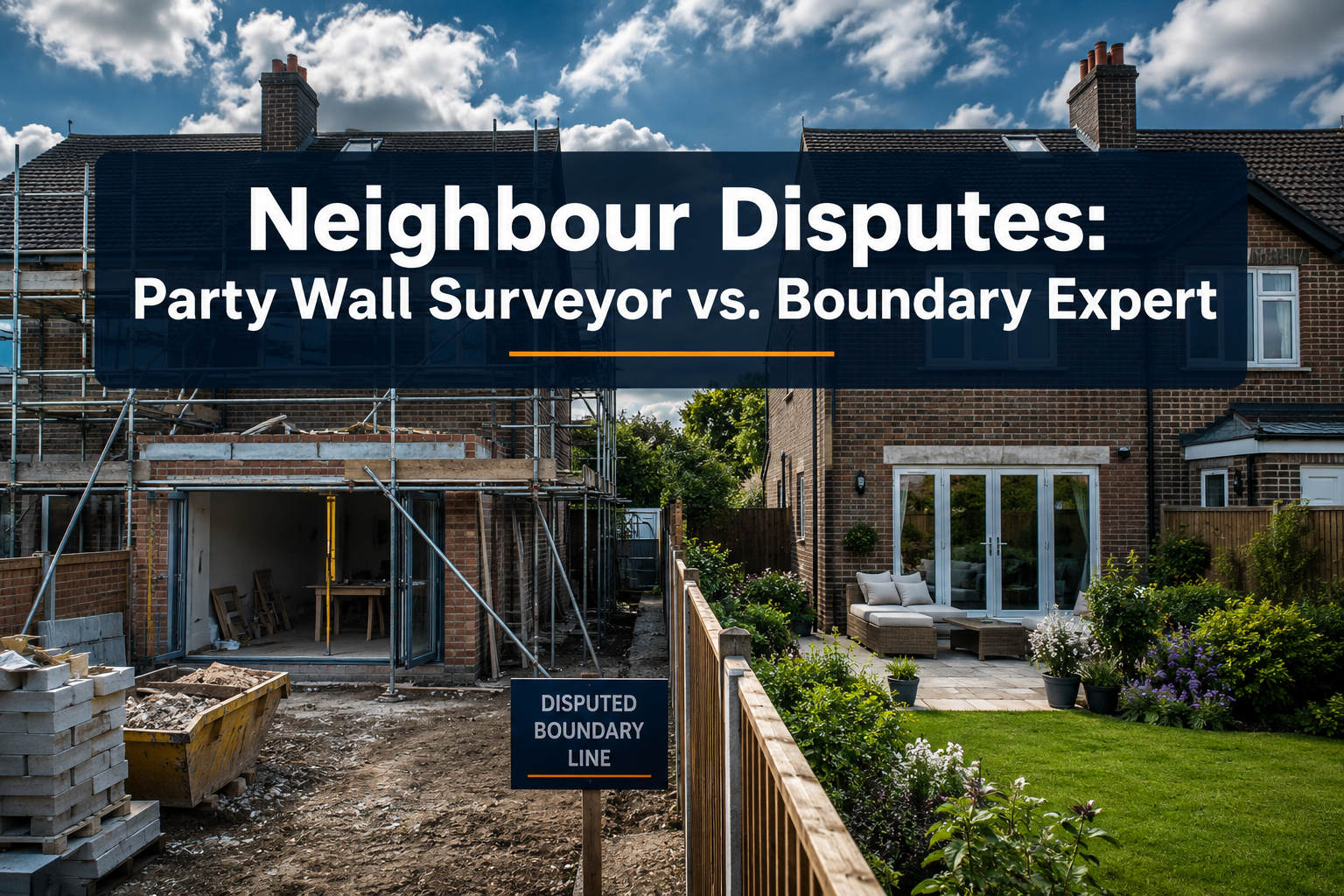
✅ Party wall complications frequently arise in conversion projects, requiring detailed assessment of shared structural elements and potential impacts on adjacent properties before work begins.
✅ Compliance challenges in 2026 include meeting updated Building Regulations for residential use, fire safety standards, acoustic insulation requirements, and energy performance obligations that differ significantly from commercial specifications.
✅ Cost implications of identified risks can dramatically affect project viability, with structural remediation, services installation, and compliance upgrades often exceeding initial estimates by 30-50%.
✅ Professional survey expertise provides risk mitigation through detailed documentation, specialist testing, and actionable recommendations that protect investment value and ensure successful conversion outcomes.
Understanding Level 3 Surveys in the Context of Office Conversions
What Makes Level 3 Surveys Different
A Level 3 survey represents the most comprehensive form of property inspection available. Unlike basic homebuyer surveys, Level 3 surveys—also known as building surveys—provide exhaustive analysis of a property's condition. For office-to-residential conversions, this level of detail becomes absolutely critical.
The difference between Level 2 and Level 3 surveys is substantial. While Level 2 surveys offer general overviews suitable for conventional residential purchases, Level 3 surveys involve:
- Detailed structural analysis of load-bearing elements
- Invasive investigation where necessary (with permission)
- Comprehensive services assessment including electrical, plumbing, heating, and ventilation systems
- Specialist testing for damp, timber defects, and structural movement
- Detailed cost estimates for identified remedial works
- Regulatory compliance assessment against current building standards
For conversion projects, these surveys must evaluate not just the current condition, but also the building's suitability for residential adaptation. This requires understanding how commercial construction differs from residential design, and identifying the specific challenges that transformation will present.
Why Office Buildings Present Unique Survey Challenges
Commercial office buildings were designed for entirely different purposes than residential homes. This fundamental difference creates multiple risk factors:
Structural Loading Differences 🏗️
Office buildings typically feature open-plan layouts with fewer internal walls. The structural system relies on different load distribution patterns than residential buildings. Converting these spaces requires careful analysis of:
- Floor loading capacity for residential use (including bathrooms, kitchens with heavy equipment)
- Partition wall additions and their impact on existing structure
- Point loads from new services and fixtures
- Vibration and deflection characteristics unsuitable for residential comfort
Services Infrastructure Mismatch 🔧
Commercial buildings have centralized services designed for daytime occupancy. Residential conversion requires:
- Individual metering for utilities (gas, electric, water)
- Drainage systems designed for domestic waste (kitchens, bathrooms)
- Hot water systems for multiple independent units
- Ventilation appropriate for sleeping and cooking spaces
- Fire detection and suppression systems meeting residential codes
Building Envelope Performance 🌡️
Office buildings often have poor thermal performance by residential standards. Single-glazed curtain walling, inadequate insulation, and thermal bridging create challenges for achieving required Energy Performance Certificate (EPC) ratings for residential use.
The 2026 London Conversion Context
London's office-to-residential conversion boom in 2026 has been driven by several factors:
- Post-pandemic office vacancy rates remaining elevated in certain areas
- Acute housing shortage creating strong demand for new residential units
- Permitted Development Rights allowing conversions without full planning permission in many cases
- Government incentives supporting brownfield residential development
However, this rapid transformation has also revealed significant quality concerns. Early conversion projects have experienced problems with inadequate sound insulation, poor natural light, insufficient storage, and structural issues that weren't properly identified before work commenced.
This context makes Level 3 Surveys for Office-to-Resi Conversions: Risk Identification in London's 2026 Revivals more important than ever. Proper due diligence protects investors, ensures resident safety, and maintains property values in an increasingly competitive market.
Critical Risk Categories in Office-to-Residential Conversions
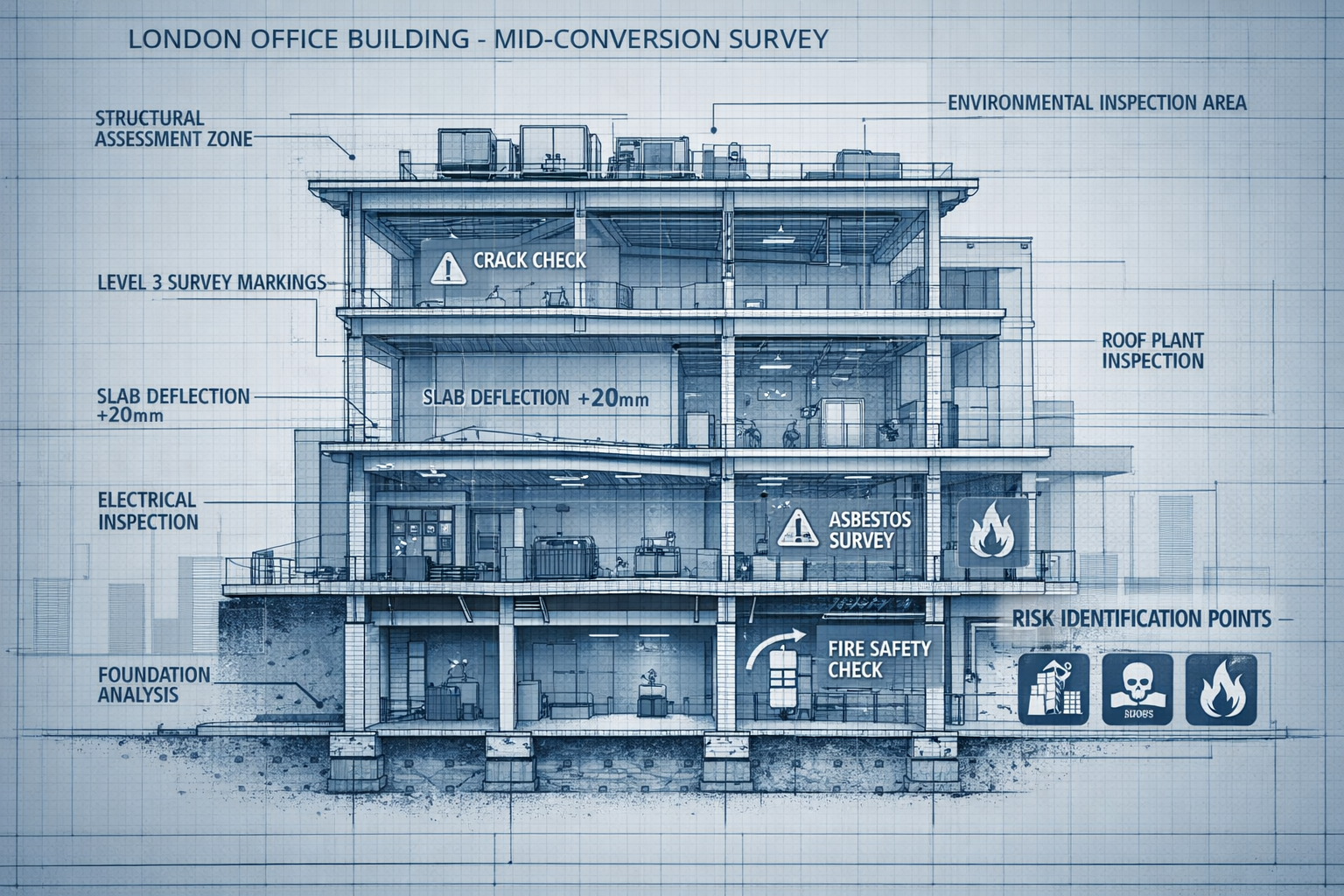
Structural Integrity and Load-Bearing Capacity
The structural assessment forms the foundation of any conversion survey. Office buildings may have adequate strength for their original purpose but require significant reinforcement for residential use.
Floor Strength and Deflection 💪
Residential floors must support different loads than office floors. Bathrooms add concentrated point loads from filled bathtubs, kitchen appliances create additional weight, and residential building codes often require higher safety factors. A residential structural engineering assessment evaluates:
- Current floor loading capacity versus residential requirements
- Deflection characteristics (excessive bounce unsuitable for homes)
- Condition of existing structural elements (concrete deterioration, steel corrosion)
- Reinforcement requirements and associated costs
Partition Wall Additions
Creating individual residential units requires new walls. These additions affect:
- Load distribution to existing structural frame
- Fire compartmentation and structural fire resistance
- Acoustic separation between units
- Services routing and structural penetrations
Foundation and Substructure Concerns
Older office buildings may have foundation issues that weren't problematic for commercial use but become critical for residential conversion. A solid floor slab survey can identify:
- Settlement or subsidence affecting structural stability
- Inadequate damp-proofing at ground floor level
- Basement waterproofing deficiencies
- Soil contamination from previous industrial uses
Damp, Moisture, and Building Envelope Issues
Moisture problems represent one of the most common and costly defects in conversion projects. Commercial buildings often have different moisture management strategies than residential properties.
Rising and Penetrating Damp 💧
Many office buildings lack adequate damp-proof courses or have compromised waterproofing. A comprehensive damp survey identifies:
- Rising damp from failed or absent damp-proof courses
- Penetrating damp through external walls and windows
- Condensation risks from inadequate ventilation
- Moisture damage to structural timber elements
Roof Condition and Weatherproofing
Flat roofs common on office buildings present particular challenges. A detailed roof survey examines:
- Membrane condition and remaining service life
- Drainage adequacy and ponding issues
- Insulation performance for residential thermal standards
- Structural capacity for roof terrace or amenity space additions
Window and Curtain Wall Performance
Large glazed facades may look impressive but often perform poorly for residential use:
- Single glazing failing to meet thermal and acoustic standards
- Curtain wall systems with air leakage and water penetration
- Inadequate opening windows for residential ventilation requirements
- Safety glass compliance for residential use
Services and Infrastructure Deficiencies
Converting centralized commercial services to individual residential systems represents a major technical and cost challenge.
Drainage and Plumbing Systems 🚿
Office buildings typically have minimal plumbing compared to residential needs. A drainage survey reveals:
- Existing drainage capacity and condition
- Requirements for new soil stacks and waste pipes
- Water supply infrastructure for multiple units
- Hot water generation and distribution systems
Electrical Infrastructure
Commercial electrical systems require complete reconfiguration:
- Individual metering for each residential unit
- Upgraded capacity for residential appliances
- Consumer unit installations meeting current regulations
- Emergency lighting and fire alarm systems
Heating, Ventilation, and Air Conditioning
Commercial HVAC systems rarely suit residential conversion:
- Individual heating controls for each unit
- Ventilation meeting residential building regulations
- Noise levels acceptable for residential use
- Energy efficiency standards for residential EPC ratings
Fire Safety and Building Regulations Compliance
Fire safety represents perhaps the most critical compliance challenge in office-to-residential conversions. The regulatory framework for residential buildings is substantially more stringent than for offices.
Fire Compartmentation 🔥
Creating safe residential units requires:
- Fire-resistant walls and floors between units
- Protected escape routes with appropriate fire resistance
- Fire doors with proper certification and installation
- Cavity barriers and fire-stopping of services penetrations
Means of Escape
Residential escape requirements differ significantly from commercial standards:
- Travel distances to exits meeting residential codes
- Protected stairways with adequate fire resistance
- Alternative escape routes where required
- Emergency lighting and signage
Detection and Suppression Systems
Modern residential buildings require sophisticated fire safety systems:
- Smoke detection in individual units and common areas
- Heat detection in kitchens
- Sprinkler systems in buildings over certain heights
- Fire alarm systems with appropriate zoning
Party Wall and Adjacent Property Considerations
Office-to-residential conversions frequently involve party wall issues, particularly in London's dense urban environment. These legal and structural considerations can significantly impact project timelines and costs.
Party Wall Act Implications
Conversion work often triggers Party Wall Act requirements:
- Structural alterations affecting shared walls
- New floor and ceiling constructions affecting party elements
- Services installations penetrating party walls
- Excavation work affecting adjacent properties
Acoustic Separation Requirements 🔇
Residential buildings require much higher acoustic performance than offices:
- Sound insulation between units meeting Building Regulations Part E
- Impact sound insulation for floors and stairs
- Airborne sound insulation for walls and party elements
- Services noise control (plumbing, ventilation, lifts)
Structural Interdependence
Many office buildings share structural elements with adjacent properties:
- Load-bearing party walls requiring careful analysis
- Shared foundations and basements
- Interconnected drainage systems
- Structural movements affecting neighboring buildings
The Level 3 Survey Process for Conversion Projects
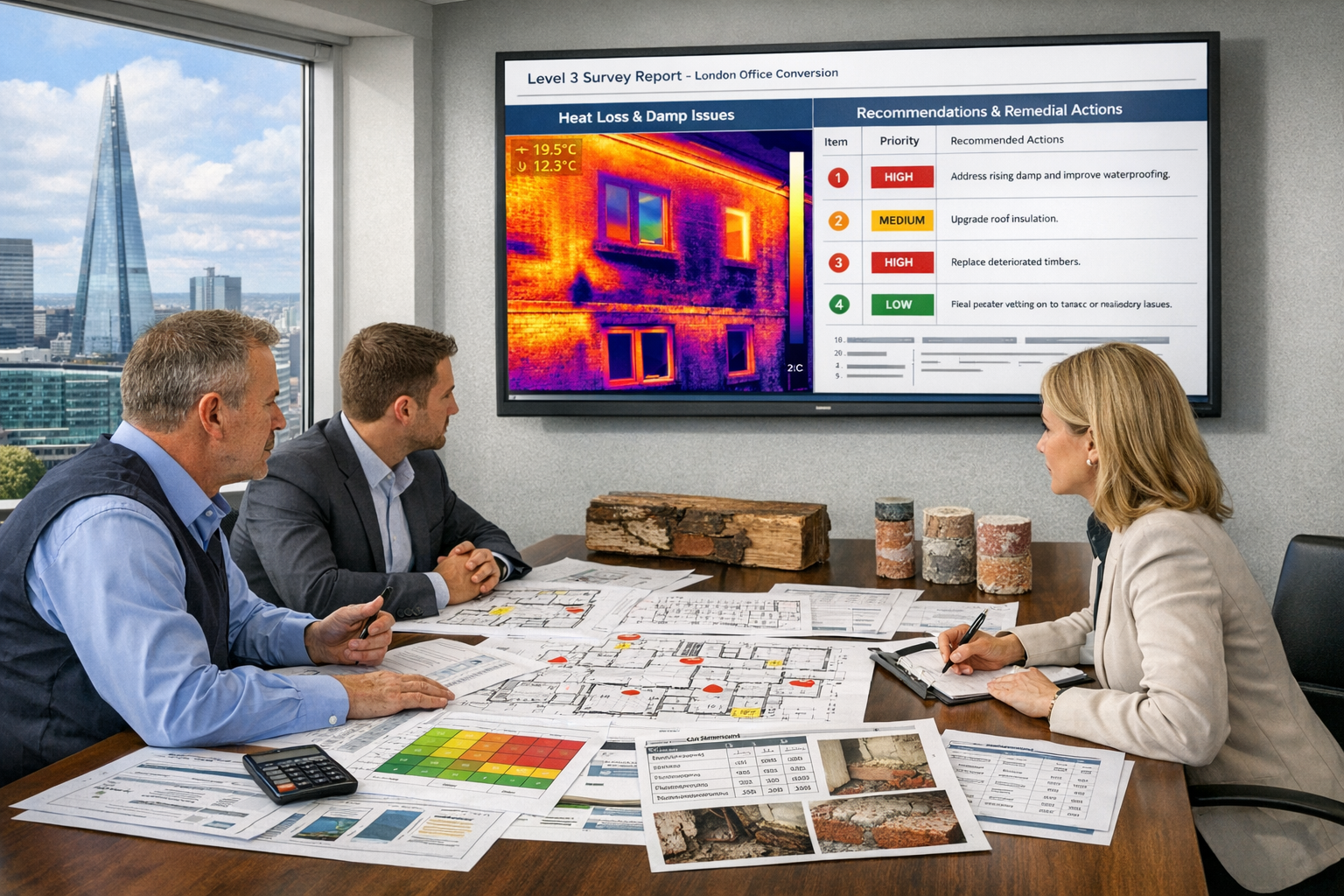
Pre-Survey Preparation and Scope Definition
Successful conversion surveys begin with clear scope definition. Unlike standard residential surveys, conversion projects require tailored investigation addressing specific transformation challenges.
Document Review 📋
Before site inspection, surveyors should review:
- Original building plans and structural calculations
- Previous survey reports and maintenance records
- Planning permissions and building regulation approvals
- Asbestos registers and contamination assessments
- Energy Performance Certificates and compliance documentation
Specialist Testing Requirements
Conversion surveys typically require specialist investigations:
- Structural engineer assessment of load-bearing capacity
- Electrical condition reports
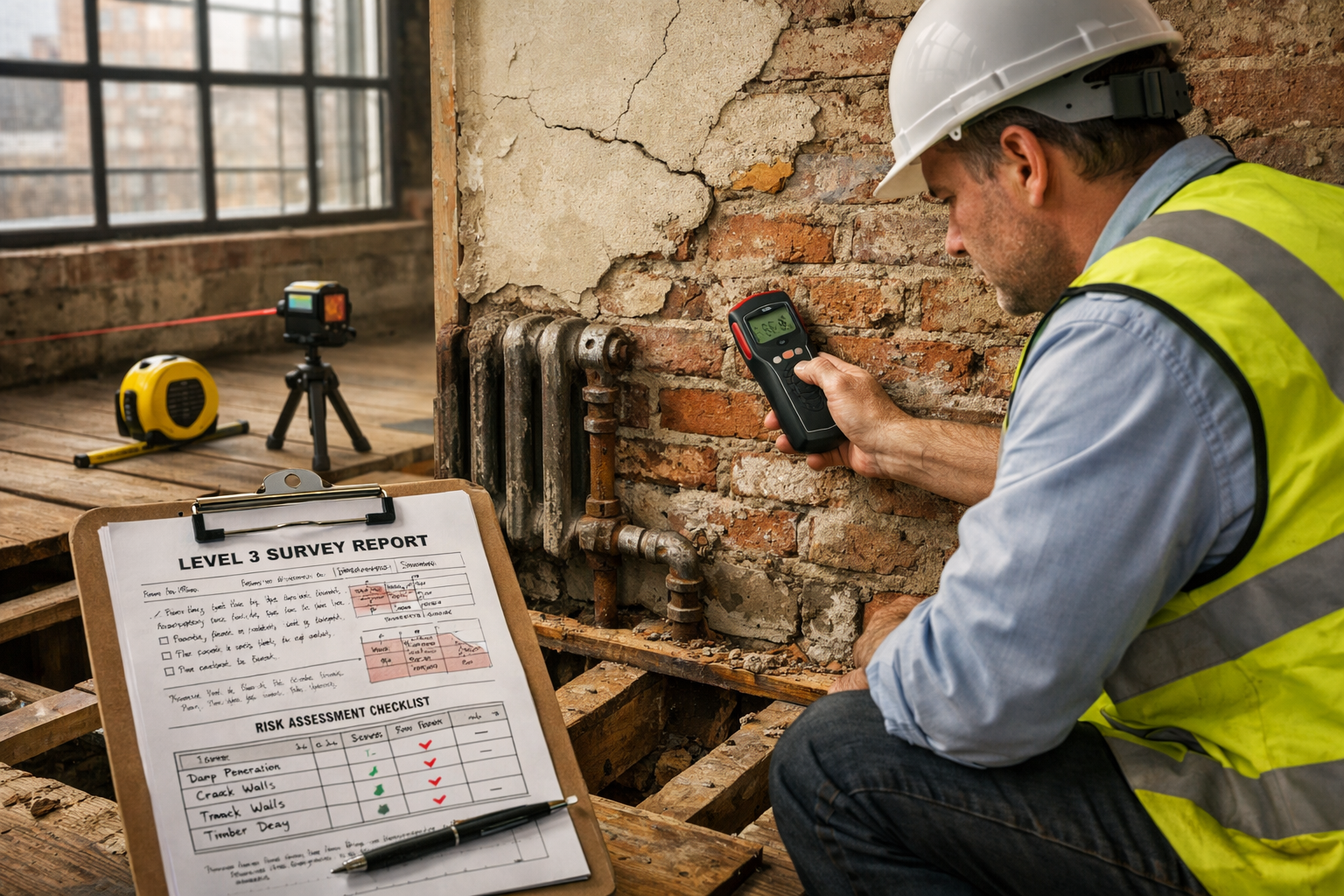
- Damp and timber surveys with moisture meter testing
- Drainage CCTV surveys
- Thermal imaging for insulation and air leakage
- Acoustic testing of existing separating elements
On-Site Investigation Methodology
A comprehensive Level 3 survey for office conversion involves systematic inspection of all accessible areas, with particular focus on elements critical to residential transformation.
Structural Assessment
Detailed examination of the building's structural system:
- Foundation inspection (where accessible)
- Load-bearing walls, columns, and beams
- Floor structures and their condition
- Roof structure and weatherproofing
- External walls and their construction
- Signs of structural movement, cracking, or distortion
Building Envelope Analysis
Thorough evaluation of the building's exterior:
- External wall construction and condition
- Window and door installations
- Roof covering and drainage
- Damp-proof courses and membranes
- Thermal performance and insulation
- Air tightness and ventilation provisions
Services Infrastructure Review
Assessment of existing services and conversion requirements:
- Electrical systems and capacity
- Plumbing and drainage infrastructure
- Heating and hot water systems
- Ventilation and air conditioning
- Lift installations (if present)
- Fire safety systems
Internal Condition Survey
Detailed inspection of internal elements:
- Internal walls and their construction
- Floor finishes and underlying structures
- Ceiling constructions and voids
- Internal joinery and fittings
- Signs of damp, condensation, or decay
- Spatial layouts and natural light provision
Specialist Testing and Investigation
Many conversion projects require invasive investigation to fully assess condition and suitability. With appropriate permissions, surveyors may conduct:
Moisture Investigation 💧
- Electronic moisture meter readings
- Carbide meter testing for concrete moisture content
- Thermal imaging to identify cold spots and moisture patterns
- Borescope inspection of wall cavities
Structural Testing
- Core samples from concrete elements
- Timber probe testing for decay
- Load testing of floor structures
- Rebound hammer testing for concrete strength
Services Testing
- Electrical installation condition reports
- Drainage CCTV surveys
- Water pressure and flow testing
- Heating system efficiency assessments
Report Compilation and Risk Prioritization
The final survey report must translate technical findings into actionable information for decision-makers. Effective reports for conversion projects include:
Executive Summary
Clear overview of key findings, critical risks, and overall suitability for conversion.
Detailed Findings by Element
Systematic documentation of condition, defects, and concerns for each building element, typically organized by:
- Structure and foundations
- External envelope
- Internal elements
- Services and infrastructure
- Fire safety and compliance
- Party wall and adjacent property issues
Risk Assessment and Prioritization ⚠️
Clear categorization of identified issues:
- Critical risks requiring immediate attention or preventing conversion
- Significant risks requiring substantial remediation
- Moderate risks requiring attention during conversion
- Minor issues for routine maintenance
Cost Estimates
Realistic budget estimates for remedial works and conversion requirements, including:
- Structural reinforcement and alterations
- Building envelope upgrades
- Services installation and upgrades
- Fire safety and compliance works
- Contingency allowances for unforeseen issues
Recommendations and Next Steps
Clear guidance on:
- Further specialist investigations required
- Regulatory approvals needed
- Design considerations for conversion
- Project risk mitigation strategies
- Monitoring requirements during construction
For those seeking detailed analysis, a specific defect report can provide focused investigation of particular concerns identified during initial assessment.
Financial and Valuation Implications
Impact on Project Viability
Survey findings directly affect conversion project economics. Identified risks can substantially increase costs or even render projects unviable.
Cost Escalation Factors 💰
Common survey findings that increase conversion costs:
- Structural reinforcement requirements: £50,000-£200,000+ depending on extent
- Building envelope upgrades: £30,000-£100,000+ for facade improvements
- Services installation: £15,000-£40,000 per residential unit
- Fire safety compliance: £20,000-£80,000+ for compartmentation and systems
- Acoustic insulation: £10,000-£30,000 per party element
Hidden Cost Discoveries
Level 3 surveys frequently reveal unexpected costs:
- Asbestos removal requirements
- Contaminated land remediation
- Party wall awards and associated works
- Planning condition compliance
- Structural repairs to existing defects
Valuation Considerations
Survey findings affect both development appraisal and end-value assessment. Professional valuers rely heavily on comprehensive survey information to determine:
Development Appraisal Inputs
- Realistic construction cost estimates
- Project timeline implications
- Risk contingencies
- Phasing requirements
- Holding costs during extended construction
End-Value Assessment
- Quality of conversion affecting sales values
- Building defects affecting marketability
- Ongoing maintenance liabilities
- Energy efficiency and running costs
- Lease terms and management obligations
For complex projects, engaging chartered surveyors in Central London or North London with specific conversion experience ensures accurate valuation advice.
Regulatory Framework and Compliance in 2026
Building Regulations for Change of Use
Converting offices to residential use triggers substantial Building Regulations requirements. In 2026, the regulatory framework includes:
Part A – Structure
Demonstrating adequate structural capacity for residential use, including altered loading patterns and new partition walls.
Part B – Fire Safety
Meeting residential fire safety standards, including compartmentation, means of escape, and detection systems—significantly more stringent than commercial requirements.
Part C – Site Preparation and Resistance to Contaminants
Ensuring adequate damp-proofing and addressing any ground contamination issues.
Part E – Resistance to the Passage of Sound
Achieving acoustic separation between units meeting residential standards—often the most challenging aspect of office conversions.
Part F – Ventilation
Providing adequate ventilation for residential use, including extract ventilation in bathrooms and kitchens.
Part L – Conservation of Fuel and Power
Meeting energy efficiency standards for residential buildings, requiring substantial envelope upgrades in many office conversions.
Part M – Access to and Use of Buildings
Ensuring accessibility for residential use, including wheelchair-accessible units where required.
Planning Considerations
While Permitted Development Rights allow many office-to-residential conversions without full planning permission, important limitations and requirements exist:
Permitted Development Limitations 🏛️
- Size and location restrictions
- Prior approval requirements for certain aspects
- Exclusions in conservation areas and listed buildings
- Local authority Article 4 directions removing permitted development rights
Quality and Space Standards
Many London boroughs have adopted space standards requiring:
- Minimum unit sizes (often 37-50 sqm for one-bedroom units)
- Minimum ceiling heights (typically 2.5m)
- Adequate natural light and outlook
- Private amenity space provisions
- Cycle and refuse storage
Energy Performance and Sustainability Requirements
2026 regulations place increasing emphasis on energy efficiency and sustainability:
EPC Requirements
Residential units must achieve minimum EPC ratings (typically C or above for new conversions), requiring:
- Enhanced insulation of walls, floors, and roofs
- High-performance windows and doors
- Efficient heating and hot water systems
- Renewable energy contributions where feasible
Future Homes Standard
Anticipating further regulatory tightening, forward-thinking developers consider:
- Low-carbon heating systems
- Enhanced fabric performance
- Smart controls and monitoring
- Electric vehicle charging infrastructure
Best Practices for Commissioning Level 3 Conversion Surveys
Selecting Qualified Professionals
Not all surveyors have appropriate experience for office-to-residential conversion projects. When commissioning surveys, prioritize:
Professional Qualifications 🎓
- RICS-qualified chartered surveyors
- Specific experience with commercial-to-residential conversions
- Structural engineering expertise (or collaboration with structural engineers)
- Knowledge of relevant building regulations and planning requirements
Track Record and References
- Previous conversion project experience
- References from developers and investors
- Understanding of London-specific requirements
- Familiarity with common office building types (1960s concrete frame, Victorian warehouse conversions, etc.)
Defining Survey Scope and Deliverables
Clear scope definition ensures surveys deliver necessary information:
Scope Inclusions
- Full structural assessment including load capacity analysis
- Comprehensive services evaluation
- Fire safety and building regulations compliance review
- Party wall implications assessment
- Cost estimates for identified works
- Feasibility assessment for proposed conversion scheme
Deliverables Timeline
- Draft report for review: typically 2-3 weeks post-inspection
- Final report with cost estimates: 3-4 weeks
- Specialist testing results: variable depending on tests required
Understanding structural survey pricing helps budget appropriately for comprehensive conversion surveys, which typically cost £3,000-£10,000+ depending on building size and complexity.
Coordinating with Project Team
Effective surveys integrate with broader project planning:
Early Engagement
Commission surveys before committing to purchase or detailed design work to identify deal-breaking issues early.
Design Team Coordination
Share survey findings with architects and engineers to inform feasible design solutions.
Contractor Input
Involve contractors in reviewing survey findings to validate cost estimates and construction methodology.
Ongoing Monitoring
Consider commissioning monitoring surveys during construction to verify assumptions and identify emerging issues.
Case Study Insights: Common Issues in London Conversions
Structural Challenges in 1960s Office Blocks
Post-war concrete frame office buildings represent a significant proportion of London's conversion pipeline. These buildings commonly present:
Concrete Deterioration
- Carbonation of concrete reducing alkalinity
- Reinforcement corrosion causing spalling
- Inadequate concrete cover to reinforcement
- Structural capacity questions requiring detailed assessment
Floor Capacity Issues
- Existing floors adequate for office loading but marginal for residential
- Deflection characteristics unsuitable for residential comfort
- Difficulty adding bathrooms without structural reinforcement
Building Envelope Failures
- Single-glazed curtain walling with poor thermal performance
- Water penetration through facade systems
- Thermal bridging at structural frame
- Expensive facade replacement often necessary
Victorian and Edwardian Warehouse Conversions
Historic commercial buildings offer character but present distinct challenges:
Structural Timber Concerns 🪵
- Timber floor joists with inadequate capacity
- Historic timber decay and beetle infestation
- Deflection and vibration issues
- Fire resistance inadequacies
Damp and Moisture Problems
- Absent or failed damp-proof courses
- Solid wall construction with penetrating damp
- Basement waterproofing challenges
- Condensation risks from poor ventilation
Heritage and Conservation Constraints
- Listed building consent requirements
- Restrictions on external alterations
- Requirements to retain historic features
- Balancing conservation with building regulations compliance
Modern Office Blocks with Services Challenges
Recent office buildings may appear in good condition but present conversion obstacles:
Raised Access Floors
- Removal required for residential use
- Implications for floor levels and ceiling heights
- Services routing complications
- Structural implications of floor removal
Centralized Services
- Difficulty creating individual metering
- Inadequate riser capacity for residential services
- Noise transmission through services voids
- Complex lease and management arrangements
Acoustic Performance
- Lightweight partitions inadequate for residential separation
- Floor structures with poor impact sound insulation
- Services noise requiring extensive mitigation
- Expensive acoustic upgrades necessary
Conclusion: Protecting Your Investment Through Comprehensive Risk Assessment
Level 3 Surveys for Office-to-Resi Conversions: Risk Identification in London's 2026 Revivals represent essential due diligence for anyone involved in conversion projects. The transformation of commercial buildings into residential homes offers tremendous opportunity, but success depends on thorough understanding of the technical challenges involved.
The risks are real and substantial. Structural inadequacies, hidden defects, compliance challenges, and unexpected costs can quickly erode project margins or create long-term liabilities. However, comprehensive Level 3 surveys provide the detailed intelligence needed to make informed decisions, plan realistic budgets, and execute successful conversions.
Key Success Factors 🔑
Early Investigation
Commission comprehensive surveys before committing to projects. The cost of a thorough survey is minimal compared to the financial exposure of undiscovered defects.
Qualified Professionals
Engage experienced chartered surveyors with specific conversion expertise. Generic residential surveys miss critical commercial-to-residential transition issues.
Realistic Budgeting
Use survey findings to develop accurate cost estimates, including adequate contingencies for unforeseen issues—typically 15-25% for conversion projects.
Integrated Approach
Coordinate survey findings with design, planning, and construction teams to develop feasible solutions addressing identified risks.
Regulatory Compliance
Ensure conversion schemes meet all building regulations, planning requirements, and quality standards—cutting corners creates future liabilities.
Next Steps for Your Conversion Project
If you're planning an office-to-residential conversion in London:
- Commission a comprehensive Level 3 survey from qualified professionals with conversion experience
- Budget realistically based on survey findings, including contingencies for identified risks
- Engage specialist consultants for structural engineering, fire safety, and acoustic design where needed
- Verify regulatory compliance early in the process to avoid costly redesigns
- Consider ongoing monitoring during construction to identify emerging issues promptly
The office-to-residential conversion boom of 2026 offers significant opportunities for developers, investors, and London's housing market. However, success requires diligent risk identification and management. A comprehensive Level 3 survey provides the foundation for informed decision-making and successful project delivery.
Don't let hidden defects and unforeseen costs derail your conversion project. Invest in professional survey expertise that identifies risks, quantifies costs, and provides the detailed intelligence needed for successful transformation of London's office buildings into quality residential homes.
For expert guidance on your conversion project, consult with experienced chartered surveyors who understand the unique challenges of office-to-residential transformation in London's dynamic property market.