As artificial intelligence transforms property valuation across the UK, a new battleground has emerged in courtrooms and tribunals. Expert Witness Roles in AI Valuation Disputes: RICS Strategies for 2026 Algorithm Challenges have become critical as automated systems generate valuations that conflict with traditional surveyor assessments. When an AI algorithm down-values a property by £50,000 compared to a chartered surveyor's opinion, who is right? This question is no longer theoretical—it's being litigated right now, and expert witnesses must be prepared.
The stakes are enormous. With the new RICS professional standard on responsible AI use taking effect on March 9, 2026, surveyors face unprecedented scrutiny when defending their professional valuation methods against algorithm-driven alternatives. High Court cases have already exposed fake citations generated by careless AI use, and 89% of surveying professionals demand specific guidance for expert witness AI practices.[1]
Key Takeaways
- New RICS AI standard effective March 9, 2026, establishes mandatory requirements for expert witnesses using AI in valuation disputes, including quarterly risk assessments and client transparency obligations
- Professional judgment remains paramount—expert witnesses cannot submit AI-generated report content as their own opinion; AI may only assist with formatting and language improvement
- Documented court failures involving fake AI-generated case citations highlight critical risks that expert witnesses must actively mitigate through verification protocols
- Mandatory data governance policies and written due diligence procedures are now required for firms deploying AI systems in materially impactful ways
- Practical preparation strategies for 2026 include algorithm audit procedures, bias detection protocols, and clear documentation of human oversight in valuation processes
Understanding Expert Witness Responsibilities Under the 2026 RICS AI Standard
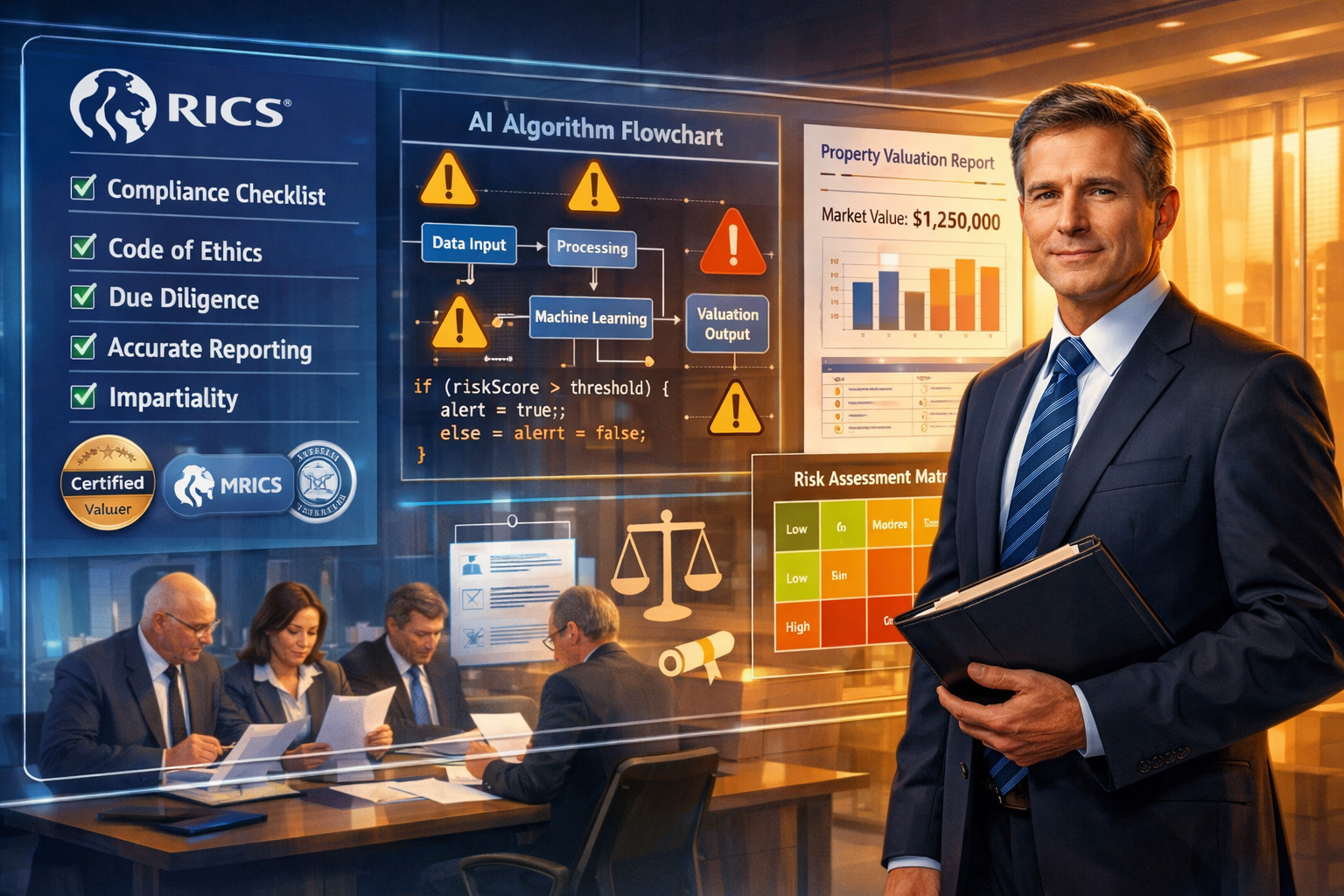
The landscape of expert witness testimony in property valuation disputes has fundamentally shifted with the implementation of the RICS professional standard titled "Responsible use of artificial intelligence in surveying practice."[1] This groundbreaking regulation represents the first comprehensive framework specifically addressing AI use in surveying and valuation services.
Core Principles for Expert Witnesses
Professional judgment must remain central to all valuation work, regardless of AI involvement. The standard explicitly places the professional judgment of the surveyor—encompassing knowledge, skills, experience, and professional scepticism—at the core of any AI-assisted workflow.[2] This means expert witnesses cannot simply defer to algorithmic outputs when challenged in court.
Martin Burns, head of alternative dispute resolution at RICS, has made the position crystal clear: it would be "inappropriate for an expert witness to use AI to write the substantive content of a report and submit the AI-written report without ensuring it reflects their personal and honest opinion."[1] This guidance has profound implications for how expert witnesses prepare evidence and testimony.
Permissible vs. Prohibited AI Applications
Understanding what AI can and cannot do in expert witness work is essential for compliance:
✅ Permissible AI Uses:
- Formatting and layout optimization
- Grammar and language improvement
- Routine data compilation and organization
- Photo classification and tagging
- Template-driven report generation (with human review)
- Risk-flagging based on predefined indicators[3]
❌ Prohibited AI Uses:
- Generating substantive valuation opinions
- Creating expert analysis without verification
- Producing case law citations without validation
- Replacing professional judgment in material conclusions
- Fully automated high-stakes professional opinions[3]
The distinction is critical. When providing Canterbury property valuation services or expert witness testimony, surveyors must ensure their professional opinion drives the analysis, with AI serving only as an assistive tool.
Mandatory Documentation Requirements
The 2026 standard introduces rigorous documentation obligations that expert witnesses must maintain:
Written Risk Registers: Firms must maintain a written risk register reviewed at least quarterly, documenting the reliability of AI outputs when they have material impact on service delivery.[2] For expert witnesses, this means tracking every instance where AI tools assist in case preparation.
Data Governance Policies: Robust data governance policies must be established to safeguard private and confidential information before deploying AI systems.[2] Given the sensitive nature of valuation disputes, this requirement is particularly stringent for expert witness work.
Third-Party AI Due Diligence: Written due diligence must be conducted before procuring third-party AI systems.[2] Expert witnesses cannot simply adopt popular AI tools without formal evaluation and documentation.
Client Transparency Obligations
Perhaps most significantly for dispute resolution, the standard mandates that firms must explicitly set out in terms of engagement when and how AI will be used, the processes available for clients to contest its use, and how clients may seek redress if negatively affected.[2]
For expert witnesses, this transparency requirement extends to opposing counsel and the tribunal. When preparing evidence for RICS building surveys or valuation disputes, experts must be prepared to disclose:
- 📋 Which AI systems were used in analysis
- 🔍 How AI outputs were verified and validated
- 👤 Where human judgment overrode algorithmic suggestions
- ⚖️ What quality control measures were applied
This level of transparency represents a significant departure from traditional expert witness practice, where methodology disclosure was often limited to general principles rather than specific tools.
Common AI Valuation Dispute Scenarios and Expert Witness Strategies
The proliferation of AI-powered valuation tools has created predictable patterns of disputes that expert witnesses must be prepared to address. Understanding these scenarios and developing robust response strategies is essential for Expert Witness Roles in AI Valuation Disputes: RICS Strategies for 2026 Algorithm Challenges.
Scenario 1: Automated Valuation Model (AVM) Down-Valuations
The Dispute: A lender's AVM produces a valuation £75,000 below a chartered surveyor's opinion, threatening a property transaction or refinancing arrangement.
Expert Witness Strategy:
🔍 Algorithm Transparency Analysis: Demand disclosure of the AVM's methodology, training data, and comparable selection criteria. Most AVMs use proprietary algorithms, but expert witnesses can challenge valuations based on:
- Geographic data limitations
- Insufficient local market knowledge
- Failure to account for property-specific features
- Outdated training data
📊 Comparable Sales Validation: Systematically review the AVM's comparable selections against RICS Red Book standards. Document instances where the algorithm selected inappropriate comparables due to:
- Incorrect property classification
- Failure to adjust for condition differences
- Geographic boundary errors
- Temporal market changes not reflected in training data
When preparing evidence for disputes involving valuation factors, expert witnesses should create detailed comparison matrices showing why human-selected comparables provide superior accuracy.
Scenario 2: Algorithmic Bias in Specialized Property Types
The Dispute: AI valuations systematically undervalue or overvalue properties with unique characteristics such as listed buildings, shared ownership properties, or properties with complex lease structures.
Expert Witness Strategy:
Training Data Gap Analysis: Demonstrate that the AI system's training data lacks sufficient examples of the property type in question. For specialized valuations such as non-domicile tax valuation or ATED valuation, expert witnesses can show:
- Statistical underrepresentation in training datasets
- Geographic concentration bias
- Temporal data limitations
- Feature recognition failures
Professional Judgment Documentation: Create comprehensive narratives explaining the specific professional judgments that AI cannot replicate, such as:
- Heritage value assessment
- Local planning policy implications
- Market sentiment analysis
- Buyer pool characteristics
Scenario 3: Conflicting AI Systems Producing Different Values
The Dispute: Multiple AI valuation platforms generate significantly different values for the same property, creating confusion and conflict among parties.
Expert Witness Strategy:
Comparative Algorithm Audit: Conduct a systematic comparison of the competing AI systems, documenting:
| Factor | System A | System B | RICS Standard |
|---|---|---|---|
| Comparable selection radius | 0.5 miles | 2 miles | Market-appropriate |
| Time adjustment methodology | Linear | Seasonal | Market-driven |
| Condition adjustment | Binary | Graduated | Detailed inspection |
| Data sources | Land Registry only | Multiple sources | Verified sources |
Professional Synthesis Approach: Position the expert witness as the authoritative synthesizer who applies professional judgment to reconcile algorithmic variations. This approach demonstrates the continuing necessity of human expertise in complex valuation scenarios.
Scenario 4: AI-Generated Evidence Containing Errors
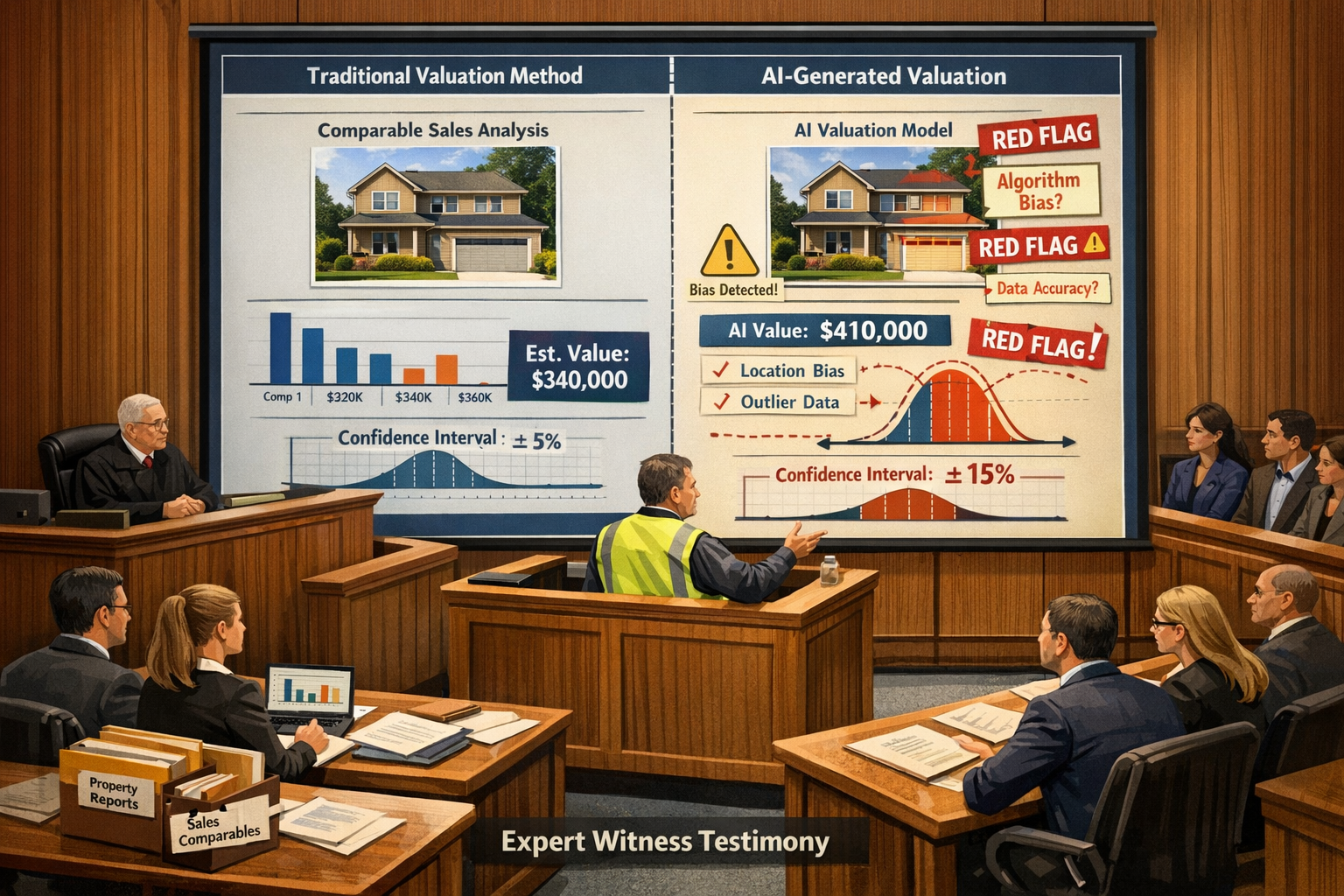
Following Dame Victoria Sharp's identification of cases where fake citations were presented due to careless AI use[1], expert witnesses must be vigilant about AI-generated errors.
Expert Witness Strategy:
Verification Protocol Implementation:
- ✅ Manually verify every case citation
- ✅ Cross-reference all statistical claims
- ✅ Validate property data against primary sources
- ✅ Document the verification process
Hallucination Detection: Train teams to recognize common AI "hallucinations" including:
- Invented case law precedents
- Fabricated statistical data
- Non-existent comparable sales
- Incorrect property details
When preparing evidence for lease extension valuation or freehold valuation disputes, expert witnesses should maintain detailed audit trails showing how every factual assertion was verified.
Scenario 5: Temporal Market Changes Not Reflected in AI Models
The Dispute: AI valuations fail to capture rapid market changes, local planning decisions, or infrastructure developments that materially affect value.
Expert Witness Strategy:
Real-Time Market Intelligence: Demonstrate superior professional awareness through:
- Recent local transaction analysis
- Current market sentiment assessment
- Emerging planning policy impacts
- Infrastructure project implications
Temporal Lag Documentation: Quantify the time lag between AI training data and current market conditions. For example:
- Training data cutoff dates
- Publication delays in source data
- Model update frequency
- Market velocity calculations
This approach is particularly relevant for desktop house valuation disputes where AI systems may rely on outdated information.
Building a Robust Expert Witness Toolkit
To effectively navigate these scenarios, expert witnesses should develop:
🛠️ Technical Competency: Understanding of machine learning fundamentals, training data concepts, and algorithmic bias sources
📚 Case Law Library: Maintained collection of precedents involving AI evidence and valuation disputes
🔬 Testing Protocols: Standardized procedures for evaluating AI valuation outputs
📝 Template Reports: Pre-structured formats that ensure compliance with the 2026 RICS standard while maintaining flexibility for case-specific analysis
The goal is not to position traditional valuation methods as inherently superior, but rather to demonstrate that professional judgment informed by local knowledge, current market conditions, and property-specific factors provides the most reliable valuation foundation—with or without AI assistance.
Practical Implementation: Preparing for 2026 Algorithm Challenges in Expert Witness Work
As the surveying profession navigates Expert Witness Roles in AI Valuation Disputes: RICS Strategies for 2026 Algorithm Challenges, practical implementation of the new RICS standard requires systematic preparation and process development. Expert witnesses must establish robust frameworks that satisfy regulatory requirements while maintaining the flexibility to address diverse dispute scenarios.
Establishing Quarterly Risk Assessment Protocols
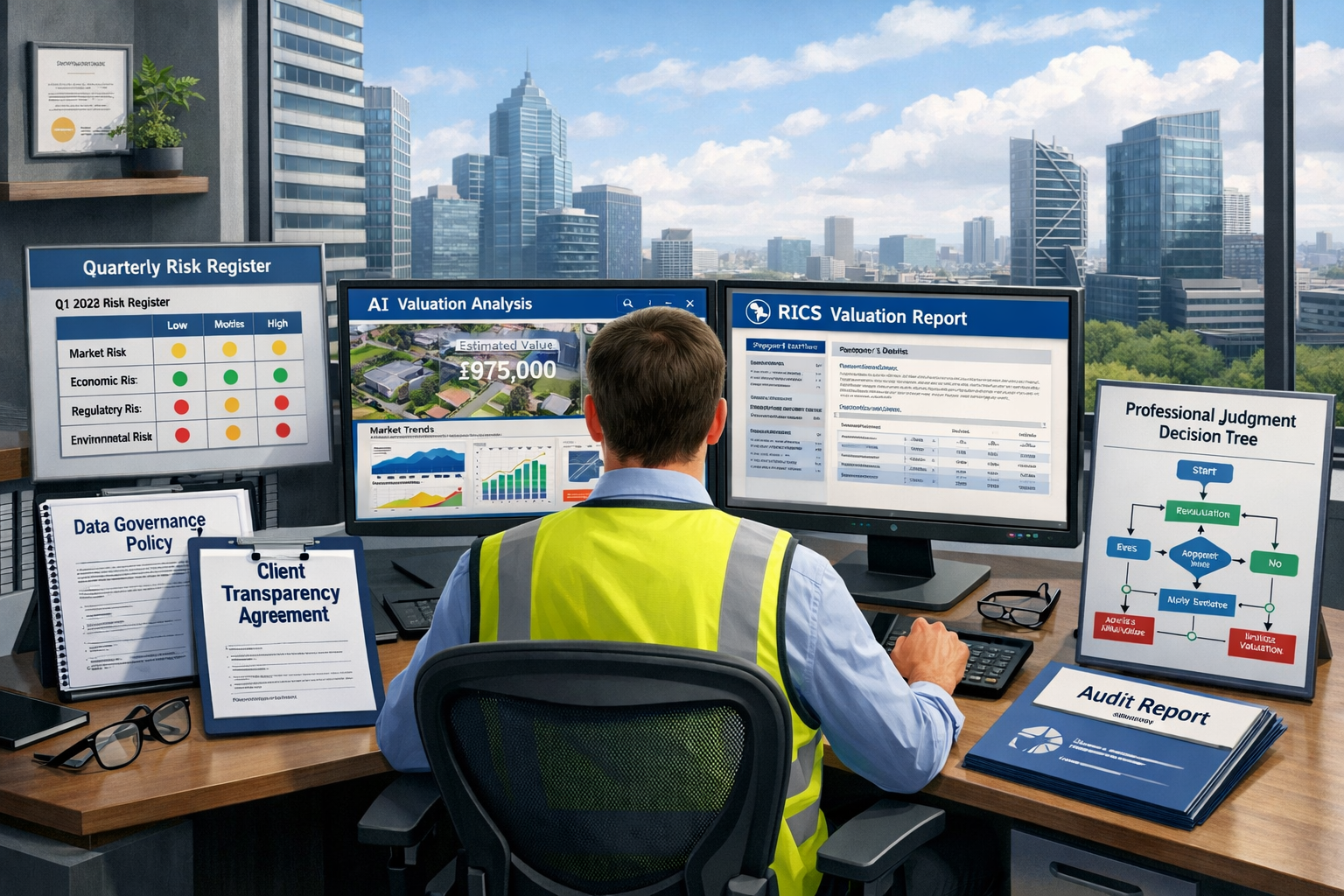
The RICS standard mandates quarterly reviews of AI risk registers for firms using AI in materially impactful ways.[2] Expert witnesses should implement structured review processes:
Q1-Q4 Risk Assessment Framework:
January/April/July/October Reviews:
- 📊 Audit all AI tools used in expert witness work during the quarter
- 🔍 Document instances where AI outputs were overridden by professional judgment
- ⚠️ Identify any errors, biases, or limitations discovered
- 📈 Track accuracy metrics comparing AI suggestions to final expert opinions
- 🔄 Update risk mitigation procedures based on findings
Documentation Template:
Quarter: Q2 2026
AI Tools Used: [List specific platforms]
Cases Involving AI: [Case references]
Override Instances: [Number and reasons]
Errors Detected: [Description and resolution]
Risk Level: [Low/Medium/High]
Mitigation Actions: [Specific measures implemented]
This systematic approach ensures compliance while building a defensible record of professional oversight that can be presented in cross-examination.
Developing Client and Court Transparency Procedures
Transparency obligations under the 2026 standard require proactive disclosure of AI use.[2] Expert witnesses should adopt standardized disclosure language:
Terms of Engagement Addendum:
"In preparing expert evidence, we may utilize artificial intelligence tools for specific limited purposes including data organization, formatting, and preliminary research. All substantive analysis, professional opinions, and conclusions represent the personal judgment of the named expert witness. AI-generated content undergoes rigorous verification and validation. Clients may request detailed disclosure of AI tool usage and have the right to contest such use. This practice maintains compliance with the RICS professional standard on responsible AI use effective March 9, 2026."
Court Disclosure Statement:
When submitting expert reports in valuation disputes, include a clear methodology section addressing AI use:
"AI Tool Disclosure: This report was prepared by [Expert Name], Chartered Surveyor. AI-assisted tools were used for [specific limited purposes]. All valuation analysis, comparable selection, adjustments, and conclusions represent the expert's independent professional judgment. Verification protocols were applied to all AI-assisted content. The expert takes full responsibility for all opinions expressed herein."
This level of transparency protects expert witnesses from challenges regarding undisclosed AI use while demonstrating compliance with professional standards.
Creating Algorithm Audit Checklists
When challenging AI valuations or defending traditional methodologies, expert witnesses need systematic evaluation frameworks:
AI Valuation System Audit Checklist:
Data Quality Assessment:
- ☑️ Training data sources identified and documented
- ☑️ Geographic coverage appropriate for subject property
- ☑️ Temporal range of training data disclosed
- ☑️ Data quality controls documented
- ☑️ Update frequency established
Methodology Transparency:
- ☑️ Algorithm type disclosed (e.g., hedonic, neural network, ensemble)
- ☑️ Comparable selection criteria explained
- ☑️ Adjustment methodology documented
- ☑️ Confidence intervals provided
- ☑️ Limitations acknowledged
Validation and Testing:
- ☑️ Accuracy metrics disclosed
- ☑️ Testing methodology explained
- ☑️ Known biases identified
- ☑️ Edge case handling documented
- ☑️ Human oversight procedures described
Regulatory Compliance:
- ☑️ RICS standard compliance confirmed
- ☑️ Data protection measures documented
- ☑️ Professional indemnity coverage verified
- ☑️ Quality assurance procedures established
This checklist provides a structured approach for evaluating opposing AI evidence or validating AI tools used in one's own practice.
Building Continuing Professional Development (CPD) Programs
The rapid evolution of AI technology requires ongoing education. Expert witnesses should pursue targeted CPD in:
Technical Skills:
- Machine learning fundamentals (10 hours annually)
- Data science basics for surveyors (8 hours annually)
- Algorithm bias detection (6 hours annually)
- AI tool evaluation methodologies (6 hours annually)
Legal and Regulatory Updates:
- RICS AI standard interpretation (4 hours annually)
- Case law involving AI evidence (6 hours annually)
- Expert witness duties in technology disputes (4 hours annually)
Practical Application:
- Hands-on AI tool testing (8 hours annually)
- Mock cross-examination on AI methodology (6 hours annually)
- Collaborative case studies (6 hours annually)
This structured CPD approach ensures expert witnesses maintain current knowledge as AI technology and regulatory frameworks evolve throughout 2026 and beyond.
Establishing Third-Party AI Due Diligence Procedures
Before adopting any AI tool for expert witness work, the RICS standard requires written due diligence.[2] Implement a formal evaluation process:
AI Tool Procurement Evaluation:
Phase 1: Initial Assessment (2-3 weeks)
- Request detailed technical documentation
- Review training data sources and methodology
- Evaluate transparency and explainability features
- Assess data protection and confidentiality measures
Phase 2: Testing and Validation (4-6 weeks)
- Conduct blind testing on known properties
- Compare outputs to manual valuations
- Test edge cases and unusual property types
- Document accuracy, biases, and limitations
Phase 3: Compliance Review (1-2 weeks)
- Verify RICS standard compliance
- Review professional indemnity implications
- Assess client disclosure requirements
- Evaluate ongoing support and updates
Phase 4: Implementation Decision
- Document findings in written report
- Make adoption decision with clear rationale
- Establish monitoring and review procedures
- Create user training protocols
This rigorous approach ensures that any AI tools used in expert witness work meet professional standards and can withstand scrutiny in cross-examination.
Preparing for the Upcoming RICS Valuation Guidance
With comprehensive guidance titled "Artificial intelligence in real estate valuation" scheduled for public consultation in Q2 2026 and publication later in 2026[4], expert witnesses should:
Immediate Actions:
- 📅 Monitor RICS communications for consultation release
- 💬 Prepare to participate in consultation process
- 📚 Review draft guidance thoroughly upon release
- 🤝 Engage with professional networks to discuss implications
Medium-Term Preparation:
- 🔄 Plan to update all procedures upon final guidance publication
- 📋 Prepare training materials for team members
- 📝 Draft updated client communications and terms of engagement
- 🎯 Identify areas requiring additional expertise or resources
The forthcoming guidance will likely provide more specific direction on valuation methodology, acceptable AI applications, and quality assurance procedures—all critical for expert witness work in 2026 and beyond.
Case Study: Implementing RICS Strategies in a Complex Dispute
Scenario: Expert witness engaged in a £2.5 million commercial property valuation dispute where the opposing party relies on an AVM valuation £400,000 below the expert's opinion.
Implementation of 2026 Strategies:
Week 1-2: Conduct comprehensive algorithm audit using the checklist framework, identifying three significant methodological flaws in the AVM's comparable selection.
Week 3-4: Prepare detailed comparison analysis showing how professional judgment applied to commercial building survey data produces superior accuracy.
Week 5-6: Document all AI tools used in preparation (if any), complete transparency disclosures, and prepare cross-examination defense of methodology.
Week 7-8: Finalize expert report with clear AI disclosure statement, comprehensive methodology section, and detailed critique of opposing AVM evidence.
Outcome: The systematic application of RICS strategies provides a robust, defensible position that demonstrates both technical competency and regulatory compliance.
This practical framework enables expert witnesses to navigate the complex intersection of traditional valuation expertise and emerging AI challenges while maintaining the highest professional standards.
Conclusion
The emergence of Expert Witness Roles in AI Valuation Disputes: RICS Strategies for 2026 Algorithm Challenges represents a defining moment for the surveying profession. As the RICS standard on responsible AI use takes full effect in 2026, expert witnesses must adapt their practices to meet rigorous new requirements while maintaining the professional judgment that remains at the heart of credible valuation evidence.
The stakes are clear: 89% of professionals recognize the need for specific AI guidance[1], courts have already encountered fake citations from careless AI use[1], and disputes involving algorithmic valuations are proliferating. Expert witnesses who fail to implement robust AI governance, transparency, and verification procedures risk both professional liability and diminished credibility in court.
Key Success Factors for 2026:
✅ Maintain professional judgment primacy—AI must augment, never replace, expert opinion
✅ Implement quarterly risk assessments and comprehensive documentation protocols
✅ Ensure complete transparency with clients and courts regarding AI tool usage
✅ Develop systematic audit procedures for evaluating opposing AI evidence
✅ Pursue targeted CPD to maintain current technical and regulatory knowledge
The forthcoming RICS guidance on AI in real estate valuation, expected later in 2026[4], will provide additional clarity and direction. Expert witnesses should actively engage with this guidance development process and prepare to update their procedures accordingly.
Actionable Next Steps
Immediate Actions (Next 30 Days):
- Review current practices against the March 9, 2026 RICS AI standard
- Implement AI disclosure language in terms of engagement
- Create initial risk register documenting current AI tool usage
- Develop verification protocols for AI-assisted content
Short-Term Actions (Next 90 Days):
- Establish quarterly risk assessment procedures
- Conduct due diligence on any third-party AI tools currently used
- Develop algorithm audit checklists for common dispute scenarios
- Create training materials for team members on 2026 requirements
Medium-Term Actions (Next 6-12 Months):
- Participate in RICS consultation on AI valuation guidance
- Build comprehensive CPD program covering technical and regulatory updates
- Develop case study library documenting successful AI dispute strategies
- Establish peer review networks for complex AI-related cases
The integration of AI into property valuation is irreversible, but the need for expert professional judgment has never been greater. By embracing the RICS 2026 framework, implementing systematic procedures, and maintaining unwavering commitment to transparency and verification, expert witnesses can successfully navigate algorithm challenges while upholding the highest standards of professional practice.
For surveyors providing valuation services or preparing expert witness evidence, the message is clear: adapt proactively, document comprehensively, and maintain the professional skepticism that distinguishes expert judgment from algorithmic output. The future of credible valuation evidence depends on this balance.
References
[1] Ai Expert Witness – https://ww3.rics.org/uk/en/modus/technology-and-data/surveying-tools/ai-expert-witness.html
[2] Navigating The New Rics Ai Standard What It Means For Surveyors – https://www.artefact.com/blog/navigating-the-new-rics-ai-standard-what-it-means-for-surveyors/
[3] What Surveyors Think Ai – https://ww3.rics.org/uk/en/modus/technology-and-data/surveying-tools/what-surveyors-think-ai.html
[4] Ai In Real Estate Valuation – https://www.rics.org/profession-standards/rics-standards-and-guidance/sector-standards/valuation-standards/ai-in-real-estate-valuation