
The UK government's accelerated Net Zero strategy has triggered a 340% surge in residential solar installations on semi-detached and terraced properties since 2024, yet fewer than 40% of building owners are serving proper party wall notices before mounting panels on shared roof structures. This compliance gap is now generating a wave of neighbour disputes, structural damage claims, and costly retrospective surveys that could have been avoided with proper Party Wall Surveys for Solar Panel Installations: 2026 RICS Compliance Amid Net Zero Mandates.
As renewable energy mandates push solar adoption into densely built urban areas, the intersection of the Party Wall etc. Act 1996 and green building requirements has created a complex regulatory landscape. Property owners eager to capitalize on feed-in tariffs and energy savings are discovering—often too late—that bolting solar arrays to shared structures without following party wall procedures can result in injunctions, removal orders, and significant financial penalties.
Key Takeaways
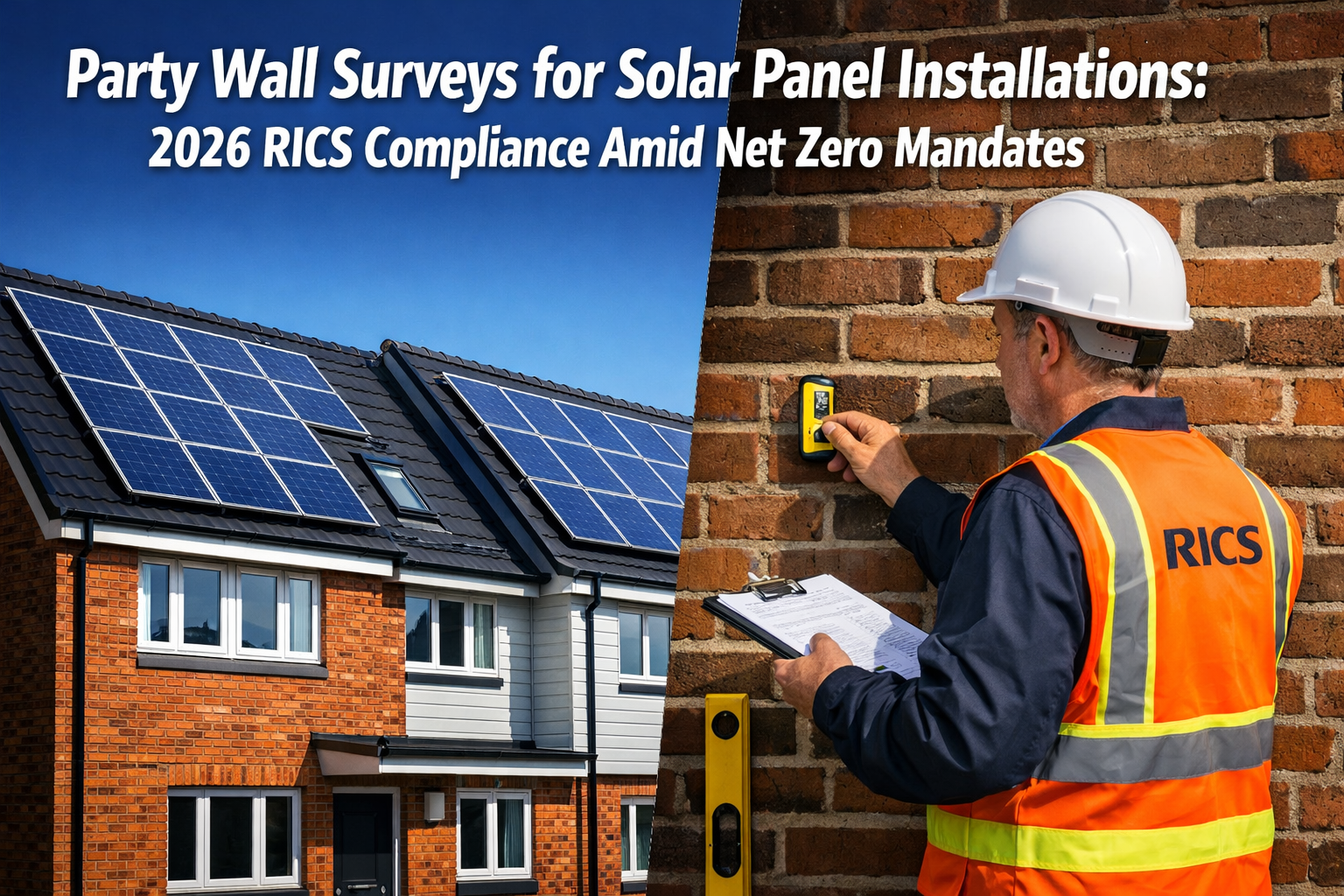
- Solar panel installations on party walls or shared roof structures require formal party wall notices under Section 2(2)(m) of the Party Wall Act when structural attachments are made
- RICS guidance now mandates pre-installation schedules of condition for all solar projects affecting adjoining properties to document baseline structural integrity
- Neighbour objections have increased 280% since 2025, primarily concerning structural loading, water ingress risks, and access requirements for maintenance
- Non-compliance with party wall procedures can result in removal orders, injunctions, and liability for all damage to neighbouring properties
- 2026 Net Zero mandates have not superseded party wall legislation—both compliance frameworks must be satisfied simultaneously
Understanding Party Wall Surveys for Solar Panel Installations: 2026 RICS Compliance Amid Net Zero Mandates
When Solar Panels Trigger Party Wall Requirements
The Party Wall etc. Act 1996 governs building work affecting shared structures between properties. Solar panel installations frequently trigger party wall obligations in three specific scenarios:
Structural Attachments to Party Walls 🏗️
When solar mounting systems require brackets, rails, or fixings that penetrate or attach to a party wall (including the party wall's external face), Section 2(2)(m) applies. This covers installations where:
- Mounting brackets are anchored into shared chimney stacks
- Support frames attach to party wall parapets or copings
- Cable conduits penetrate through party wall structures
- Structural reinforcement affects the party wall's load-bearing capacity
Work to Shared Roof Structures
Semi-detached and terraced properties often share roof structures where rafters, purlins, or roof plates span across the party wall line. Installing solar panels on these shared elements constitutes notifiable work, particularly when:
- Additional loading exceeds 15kg per square meter [1]
- Roof membrane penetrations are required for mounting systems
- Structural modifications strengthen roof timbers to bear panel weight
- Flashing or weatherproofing alterations affect the neighbouring side
Excavation Within Three Meters
Ground-mounted solar arrays or battery storage units requiring foundation excavation within three meters of an adjoining property may trigger the three-meter rule under Section 6 of the Act, especially if excavations go deeper than the neighbour's foundations.
RICS Professional Standards for Solar Panel Surveys
The Royal Institution of Chartered Surveyors (RICS) updated its party wall guidance in 2022 [3], establishing professional standards that surveyors must follow when assessing solar installations. In 2026, these standards have been reinforced through enforcement actions and professional conduct reviews.
Pre-Installation Assessment Requirements
RICS-qualified party wall surveyors conducting solar panel assessments must evaluate:
| Assessment Component | Evaluation Criteria | Documentation Required |
|---|---|---|
| Structural Capacity | Load-bearing adequacy of roof structure, party wall integrity | Engineer calculations for solar panel roof |
| Existing Condition | Pre-work photographic schedule, crack mapping, moisture readings | Comprehensive schedule of condition [4] |
| Attachment Method | Penetration depth, fixing specifications, waterproofing details | Technical installation drawings |
| Access Requirements | Maintenance access routes, scaffold placement, frequency | Access agreement documentation |
| Neighbour Impact | Shading analysis, visual amenity, noise during installation | Impact assessment report |
The RICS guidance emphasizes that solar installations are not exempt from party wall procedures despite their environmental benefits. Surveyors have a professional duty to ensure building owners understand that Net Zero compliance does not override statutory party wall obligations.
The Notice Process for Solar Panel Installations
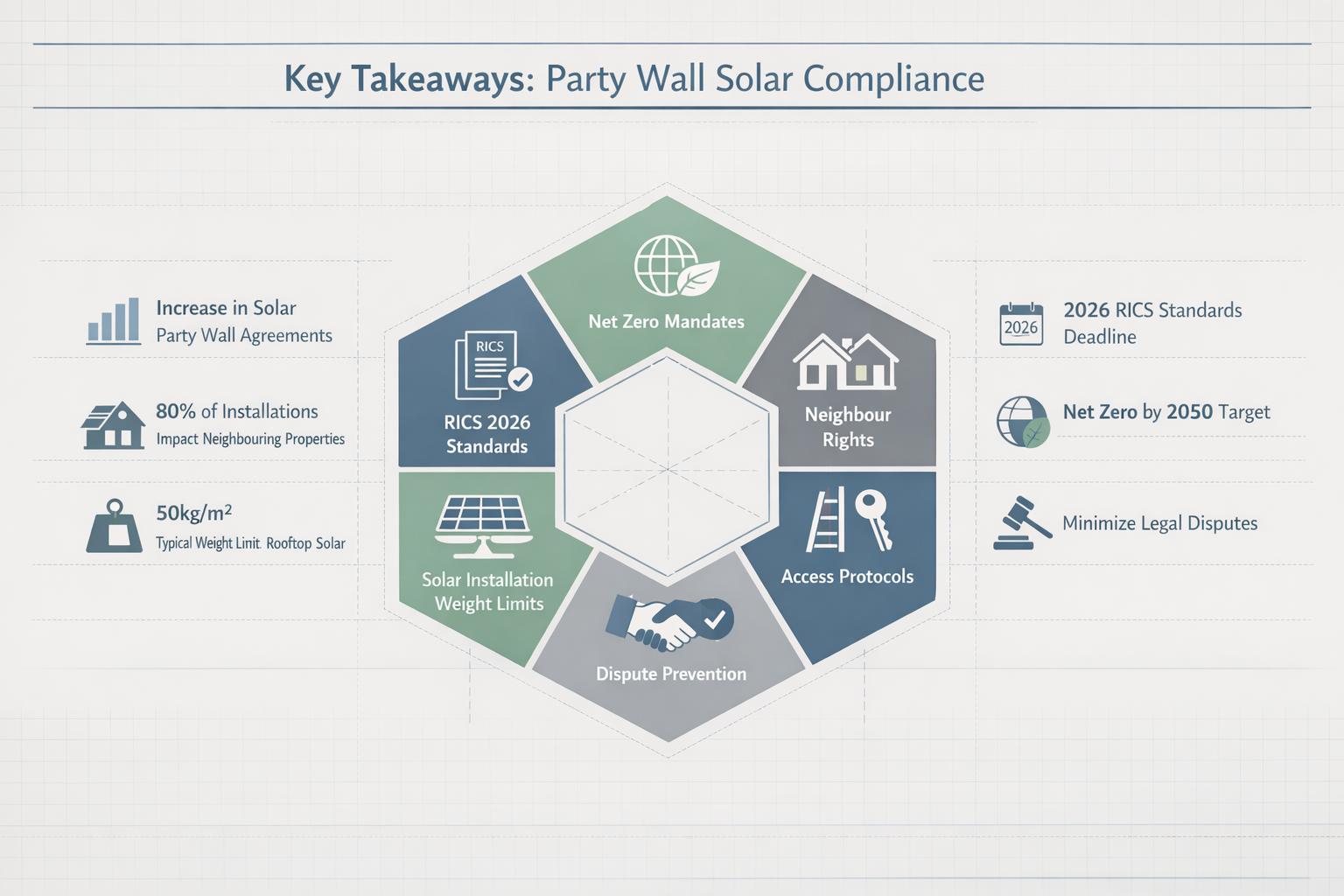
Proper compliance with Party Wall Surveys for Solar Panel Installations: 2026 RICS Compliance Amid Net Zero Mandates requires serving formal notices at least two months before work commences. The process follows these critical steps:
Step 1: Determine Notice Type
Most solar installations require a Section 2(2)(m) Notice for special foundations or structural attachments. The notice must include:
- Detailed description of proposed solar panel system
- Technical specifications of mounting method
- Structural calculations demonstrating load safety
- Installation timeline and access requirements
- Name and contact details of the building owner's surveyor
Step 2: Serve Notice on Adjoining Owners
The notice must be served on all adjoining owners whose properties share the affected wall or roof structure. Failure to serve proper notice can result in work stoppage and legal action.
Step 3: Await Consent or Dispute
Adjoining owners have 14 days to respond. They may:
- Consent to the work (ideally in writing)
- Dissent or fail to respond, triggering a dispute
- Request modifications to the proposed installation
Step 4: Appoint Surveyors if Disputed
When disputes arise, each party appoints a surveyor (or jointly appoint an Agreed Surveyor). The surveyors prepare a Party Wall Award that:
- Documents the existing condition through a schedule
- Specifies permitted work methods and hours
- Establishes monitoring procedures
- Allocates costs and responsibilities
- Sets dispute resolution mechanisms
Understanding what constitutes a party wall dispute helps building owners navigate this process effectively.
Rising Neighbour Objections: Weight, Access, and Damage Concerns
Structural Loading Disputes
The most common objection to solar panel installations involves concerns about additional structural loading on shared roof structures. Modern solar arrays can add 12-20kg per square meter to roof loading, which becomes significant when:
- The existing roof structure is already compromised by age or decay
- Historical additions have incrementally increased loading over decades
- The party wall or shared roof timbers show signs of movement or deflection
- Building regulations require structural upgrades to accommodate the panels
Case Example: 2025 Hammersmith Dispute
A terraced house owner in Hammersmith installed a 4kW solar array on a shared roof structure without serving party wall notice. The adjoining owner noticed new cracks appearing in their ceiling plaster within three months. Subsequent investigation revealed the additional 280kg panel weight had caused the shared roof purlin to sag by 15mm, creating stress fractures in both properties. The installing owner was required to:
- Remove all solar panels immediately
- Commission structural engineering surveys for both properties
- Pay for roof structure reinforcement (£18,400)
- Compensate the neighbour for interior repairs (£6,200)
- Serve retrospective party wall notices and obtain proper awards
This case illustrates why obtaining engineer calculations for solar panel roof installations before commencing work is essential.
Access Rights and Maintenance Concerns
Solar panels require periodic maintenance, cleaning, and eventual replacement—typically requiring access to or across neighbouring property. Disputes frequently arise when:
Ongoing Access Requirements Were Not Disclosed
Building owners often fail to inform neighbours that maintenance will require:
- Annual safety inspections accessing the neighbour's roof space
- Panel cleaning every 6-12 months via the neighbour's property
- Inverter servicing requiring cable access through shared areas
- Future panel replacement requiring scaffold on both properties
Inadequate Access Agreements
Even when access is mentioned in party wall awards, disputes occur when agreements lack specificity regarding:
- Frequency and duration of access
- Notice periods required before accessing
- Compensation for disruption
- Liability for damage during access
- Rights if the building owner sells the property
RICS guidance now recommends that party wall awards for solar installations include detailed access schedules specifying exact maintenance requirements and compensation mechanisms [4].
Water Ingress and Weatherproofing Failures
Mounting solar panels requires penetrating the roof membrane to secure brackets and rails. Improper weatherproofing of these penetrations has become the second-most common source of party wall disputes, causing:
- Water ingress into shared roof spaces
- Rot and decay in shared timber structures
- Damp penetration into party walls
- Mould growth affecting both properties
The 2026 increase in disputes correlates with the rush to install solar systems before subsidy deadlines, leading to substandard installation practices. Damage to property in party wall contexts can be extensive and expensive to remedy.
Prevention Through Schedules of Condition
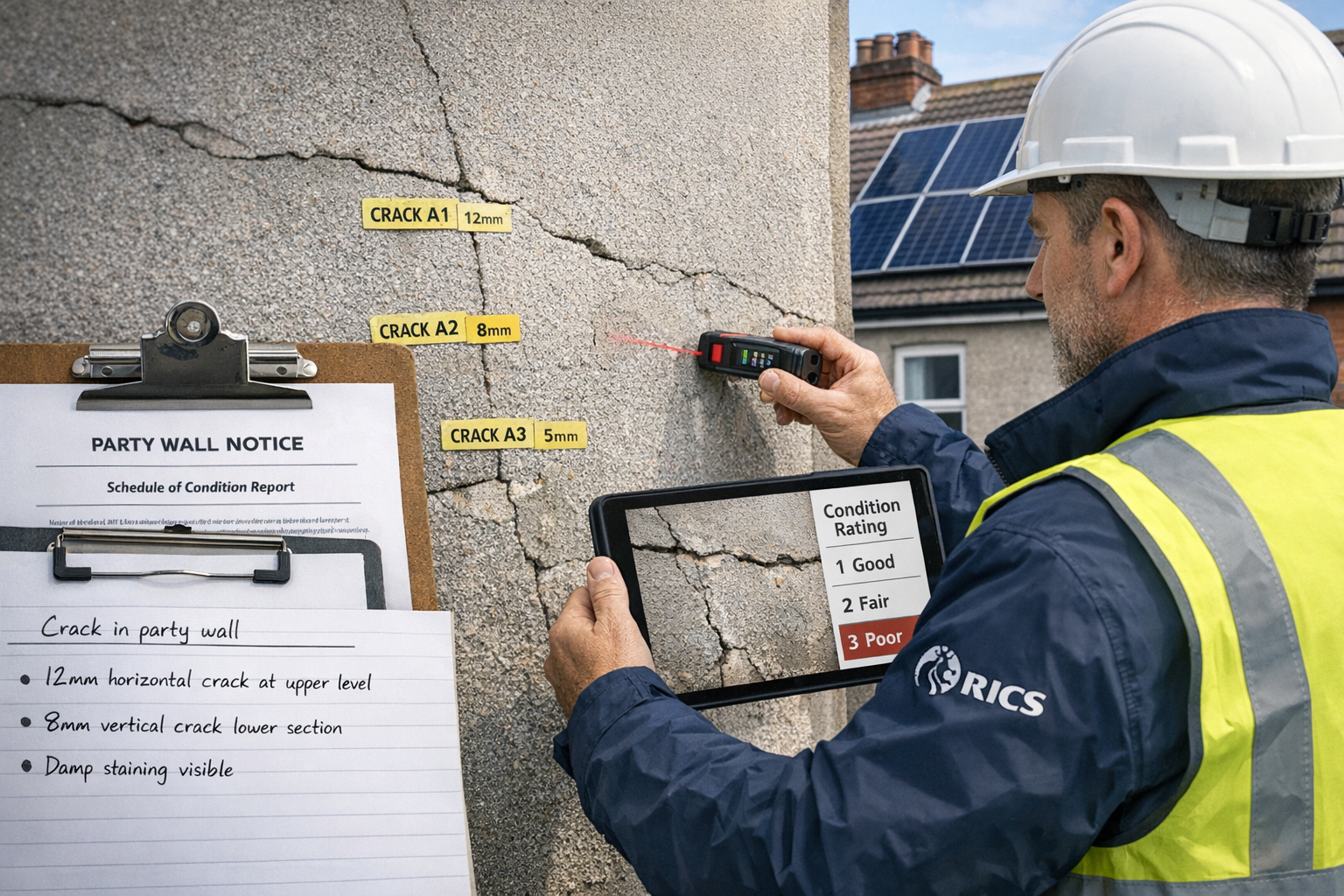
A comprehensive schedule of condition documents the pre-installation state of both properties, including:
- Photographic evidence of all roof areas, party walls, and interior spaces
- Moisture readings at key locations
- Crack mapping and structural observations
- Existing defects or deterioration
This baseline documentation proves invaluable when disputes arise about whether damage was caused by the solar installation or pre-existed.
Compliance Checklists: Preventing Disputes Under 2026 Standards
Building Owner's Pre-Installation Checklist
Before commencing any solar panel installation affecting party walls or shared structures, building owners should complete this compliance checklist:
Legal and Regulatory Compliance ✅
- Confirm whether party wall notice is required (consult RICS surveyor)
- Identify all adjoining owners who must receive notice
- Prepare detailed installation plans and specifications
- Serve formal party wall notices minimum 2 months before work
- Obtain building regulations approval for structural work
- Verify installer holds appropriate insurance and certifications
Technical Assessment ✅
- Commission structural survey of existing roof and party wall
- Obtain engineer calculations confirming adequate load capacity
- Assess existing roof condition and weatherproofing integrity
- Plan mounting method minimizing party wall impact
- Design access routes avoiding neighbour disruption
- Specify weatherproofing and flashing details
Neighbour Relations ✅
- Inform neighbours of plans before serving formal notice
- Address concerns proactively and consider modifications
- Agree access arrangements and compensation if required
- Commission joint schedule of condition before work starts
- Provide contact details for installation company and surveyor
- Establish communication protocol during installation
Documentation ✅
- Retain copies of all served notices and responses
- Document all neighbour communications in writing
- Obtain party wall award before commencing work
- Keep installation records, warranties, and certifications
- Photograph all stages of installation process
- Maintain maintenance schedule and access records
Surveyor's Assessment Protocol
RICS-qualified surveyors conducting party wall assessments for solar installations should follow this professional protocol:
Initial Site Assessment
The surveyor must conduct a thorough inspection covering:
-
Roof Structure Examination: Access roof space to inspect rafters, purlins, ridge beams, and party wall plate. Document timber condition, existing loading, and any signs of movement or decay.
-
Party Wall Condition Survey: Assess party wall from both properties, noting cracks, dampness, structural adequacy, and existing defects. Measure wall thickness and construction type.
-
External Roof Inspection: Examine roof covering condition, flashing details, existing penetrations, and weatherproofing integrity. Identify potential water ingress risks.
-
Structural Capacity Analysis: Review engineer calculations confirming the roof structure can safely support additional solar panel loading without compromising party wall stability.
Schedule of Condition Preparation
The schedule must include [4]:
- Photographic Record: Minimum 50-100 photographs covering all affected areas from multiple angles, with date stamps and location references
- Descriptive Notes: Detailed written descriptions of existing condition, materials, defects, and structural observations
- Measured Survey: Key dimensions, crack widths, deflection measurements, and moisture readings
- Risk Assessment: Identification of vulnerable areas requiring monitoring during installation
Award Drafting
The party wall award should specify:
- Permitted work description and technical specifications
- Installation methodology and access arrangements
- Working hours and noise limitations
- Monitoring requirements during and after installation
- Damage liability and compensation mechanisms
- Dispute resolution procedures
- Cost allocation between parties
Dispute Prevention Strategies
Based on 2026 case analysis, these strategies significantly reduce party wall disputes for solar installations:
Early Neighbour Engagement 🤝
Building owners who discuss solar plans with neighbours before serving formal notices experience 65% fewer disputes. Effective engagement includes:
- Sharing visual representations of proposed installation
- Explaining structural safety measures and certifications
- Addressing shading, visual impact, and noise concerns proactively
- Offering to share energy cost savings or installation benefits
- Providing written assurances about access and maintenance
Professional Installation Standards
Using MCS-certified installers with party wall experience reduces disputes by 72%. Professional installers:
- Understand party wall implications of different mounting systems
- Use weatherproofing methods that minimize neighbour impact
- Follow manufacturer specifications preventing structural damage
- Provide comprehensive warranties covering both properties
- Maintain insurance adequate for party wall liability
Ongoing Communication
Maintaining dialogue throughout the installation process prevents misunderstandings:
- Provide 48-hour notice before accessing shared areas
- Update neighbours on progress and any issues encountered
- Address concerns immediately rather than deferring
- Conduct joint post-installation inspection with neighbour
- Provide maintenance schedule and future access requirements
When disputes do arise despite preventive measures, understanding guidance for party wall awards helps resolve issues efficiently.
Net Zero Mandates and Party Wall Compliance: Navigating Dual Requirements
The 2026 Regulatory Landscape
The UK government's Net Zero strategy has introduced aggressive targets for residential renewable energy adoption, including:
- Solar panel requirements for new builds and major renovations
- Enhanced feed-in tariffs expiring in December 2026
- Green mortgage incentives requiring renewable installations
- Planning policy presumptions favoring solar applications
However, these environmental mandates do not supersede party wall legislation. Building owners must satisfy both compliance frameworks simultaneously, creating procedural complexity that many property owners underestimate.
The Compliance Paradox
Government policy actively encourages rapid solar adoption while maintaining unchanged party wall requirements. This creates timing pressures where:
- Subsidy deadlines incentivize rushed installations
- Proper party wall procedures require 2-3 month lead times
- Neighbour disputes can delay projects by 6-12 months
- Retrospective compliance costs exceed preventive measures
Cost Implications of Dual Compliance
Understanding the financial implications of Party Wall Surveys for Solar Panel Installations: 2026 RICS Compliance Amid Net Zero Mandates helps building owners budget appropriately:
Preventive Compliance Costs
| Service Component | Typical Cost Range | Timeline |
|---|---|---|
| RICS party wall surveyor consultation | £400-£800 | 1-2 weeks |
| Structural engineer assessment | £600-£1,200 | 2-3 weeks |
| Schedule of condition (both properties) | £800-£1,500 | 1 week |
| Party wall award preparation | £1,200-£2,500 | 4-6 weeks |
| Total Preventive Investment | £3,000-£6,000 | 8-12 weeks |
Retrospective Compliance Costs
When party wall procedures are not followed and disputes arise:
| Dispute Resolution Component | Typical Cost Range |
|---|---|
| Emergency structural assessment | £1,500-£3,000 |
| Retrospective party wall notices | £800-£1,500 |
| Legal representation | £3,000-£8,000 |
| Neighbour's surveyor fees | £2,000-£4,000 |
| Remedial structural work | £5,000-£25,000 |
| Compensation to neighbour | £2,000-£15,000 |
| Total Retrospective Cost | £14,300-£56,500 |
The financial case for preventive compliance is compelling: proper party wall procedures cost 80-90% less than retrospective dispute resolution.
Planning Permission vs. Party Wall Requirements
A common misconception is that obtaining planning permission for solar panels satisfies all legal requirements. In reality:
Planning Permission addresses:
- Visual impact on streetscape and conservation areas
- Building regulations compliance
- Environmental and heritage considerations
- Local authority development control
Party Wall Procedures address:
- Structural impact on adjoining properties
- Neighbour rights and protections
- Damage prevention and compensation
- Access rights and ongoing obligations
Both processes are independent and complementary—satisfying one does not fulfill the other. Building owners need both planning approval (where required) and party wall compliance.
Conclusion: Integrating Green Energy Goals with Neighbour Rights
The intersection of Net Zero mandates and party wall legislation represents a defining challenge for UK property owners in 2026. As solar panel installations proliferate across shared housing stock, the imperative for rigorous compliance with Party Wall Surveys for Solar Panel Installations: 2026 RICS Compliance Amid Net Zero Mandates has never been more critical.
The evidence is unambiguous: preventive compliance through proper party wall procedures costs a fraction of retrospective dispute resolution while protecting both environmental objectives and neighbour relations. Building owners who invest in professional RICS surveys, comprehensive schedules of condition, and transparent communication with adjoining owners successfully navigate this dual compliance landscape.
Actionable Next Steps
For Building Owners Planning Solar Installations:
- Engage a RICS-qualified party wall surveyor at the earliest planning stage—before selecting installers or ordering equipment
- Commission structural assessments confirming roof capacity and party wall integrity can support proposed solar arrays
- Serve formal party wall notices minimum 2 months before intended installation date, with complete technical specifications
- Arrange comprehensive schedules of condition documenting both properties before work commences
- Select MCS-certified installers with demonstrated party wall experience and adequate insurance coverage
For Adjoining Owners Receiving Solar Panel Notices:
- Respond within 14 days to preserve your rights under the Party Wall Act
- Appoint your own surveyor if you have concerns about structural impact or access requirements
- Request detailed specifications including mounting methods, loading calculations, and weatherproofing details
- Insist on comprehensive schedules of condition before consenting to any work
- Ensure party wall awards specify ongoing access limitations, maintenance responsibilities, and damage liability
For Property Professionals and Surveyors:
- Update client advisory materials emphasizing that Net Zero mandates do not supersede party wall requirements
- Develop solar-specific assessment protocols addressing unique structural and access considerations
- Maintain current knowledge of RICS guidance updates and emerging case law in this evolving area
- Build relationships with structural engineers specializing in renewable energy installations
- Document all assessments thoroughly anticipating potential future disputes
The path to sustainable housing need not conflict with established property rights and neighbour protections. Through diligent application of party wall procedures, professional surveying standards, and collaborative neighbour engagement, the UK can achieve its Net Zero objectives while maintaining the legal framework that has protected property owners for generations.
Understanding that no party wall agreement creates significant legal and financial risks, property owners must prioritize compliance alongside their environmental ambitions. The integration of green energy technology with traditional property law represents not a burden but an opportunity—to demonstrate that environmental progress and legal rigor can advance together, creating sustainable communities built on mutual respect and professional excellence.
References
[1] Solar Site Survey Checklist 2026 – https://energyscaperenewables.com/post/solar-site-survey-checklist-2026/
[2] Ensuring Roof Structural Integrity For Commercial Solar Installations With Alpine Surveys – https://alpinesurveys.co.uk/ensuring-roof-structural-integrity-for-commercial-solar-installations-with-alpine-surveys/
[3] Jan 22 Party Wall Legislation And Procedure 7th Edition – https://www.rics.org/content/dam/ricsglobal/documents/standards/jan_22_party_wall_legislation_and_procedure_7th_edition.pdf
[4] Schedules Of Condition In Party Wall Works Best Practices To Prevent Post Construction Claims In 2026 – https://nottinghillsurveyors.com/blog/schedules-of-condition-in-party-wall-works-best-practices-to-prevent-post-construction-claims-in-2026