
The Housing Ombudsman received over 8,000 damp and mould complaints in 2023 alone, yet fewer than 15% of landlords maintain documentation robust enough to withstand judicial scrutiny under the expanded Awaab's Law provisions. When compliance disputes escalate to litigation in 2026, the difference between dismissal and six-figure damages often hinges on a single factor: whether building survey evidence meets Civil Procedure Rules Part 35 standards for expert witness testimony.
Expert Witness Strategies for Awaab's Law Compliance Disputes: Court-Ready Evidence from Building Surveys represents the intersection of forensic building pathology, statutory housing compliance, and legal evidence standards. As Awaab's Law extends beyond social housing to encompass private landlords, surveyors must now prepare documentation that satisfies not only RICS professional standards but also the exacting requirements of court-ready expert reports. This article provides chartered surveyors with actionable frameworks for producing defensible evidence in hazard remediation disputes.
Key Takeaways
- Digital documentation with timestamps, geolocation, and chain of custody forms the foundation of legally defensible compliance evidence under Awaab's Law [2]
- CPR Part 35 expert witness reports require independence, technical rigor, and adherence to specific structural formats that differ substantially from standard survey reports
- Statutory deadline failures create immediate enforcement risk and establish prima facie evidence of non-compliance that surveyors must document forensically [2]
- Valuation diminution calculations must link directly to HHSRS Category 1 hazards using recognized methodologies to support damages claims
- Joint independent surveys can resolve disputes pre-litigation but require careful structuring to maintain expert witness independence [3]
Understanding Awaab's Law Compliance Requirements for Expert Witness Documentation
The Legislative Framework and Statutory Deadlines
Awaab's Law, named after two-year-old Awaab Ishak who died from prolonged mould exposure, imposes rigid, non-negotiable statutory timeframes that create the foundation for compliance disputes. The compliance timer launches immediately upon tenant report: 14 days for investigation completion, 48 hours for written feedback delivery, and 7 days (or 24 hours for emergencies) to commence repairs when health risks are identified [2].
These deadlines are not aspirational targets—they represent legal thresholds that councils, ombudsmen, lenders, and insurers use to determine enforcement action. Missing even a single deadline creates immediate enforcement risk and establishes documentary evidence of non-compliance that opposing counsel will exploit in litigation [2].
For surveyors preparing expert witness reports, understanding these timeframes is critical because every inspection, communication, and decision must be evaluated against the statutory clock. Courts will scrutinize whether landlords maintained chronological, exportable evidence packs from initial complaint through aftercare, including e-signed inspection reports, geotagged site photos, and threaded communications with unique reference numbers [2].
The Burden of Proof Has Shifted
Under traditional housing disrepair claims, tenants bore the burden of proving landlord negligence. Awaab's Law fundamentally reverses this dynamic. Landlords must now proactively document compliance with location-specific evidence: every moisture reading, wall location, visible symptom, and remediation decision must be recorded during inspection visits [2].
This shift transforms the surveyor's role from reactive investigator to forensic documentarian. When preparing expert witness reports, surveyors must recognize that future auditors, councils, and judges will review not only what was found but also the rationale for every decision and departure from policy [2].
Accredited Surveyor Assessments Provide Litigation-Grade Credibility
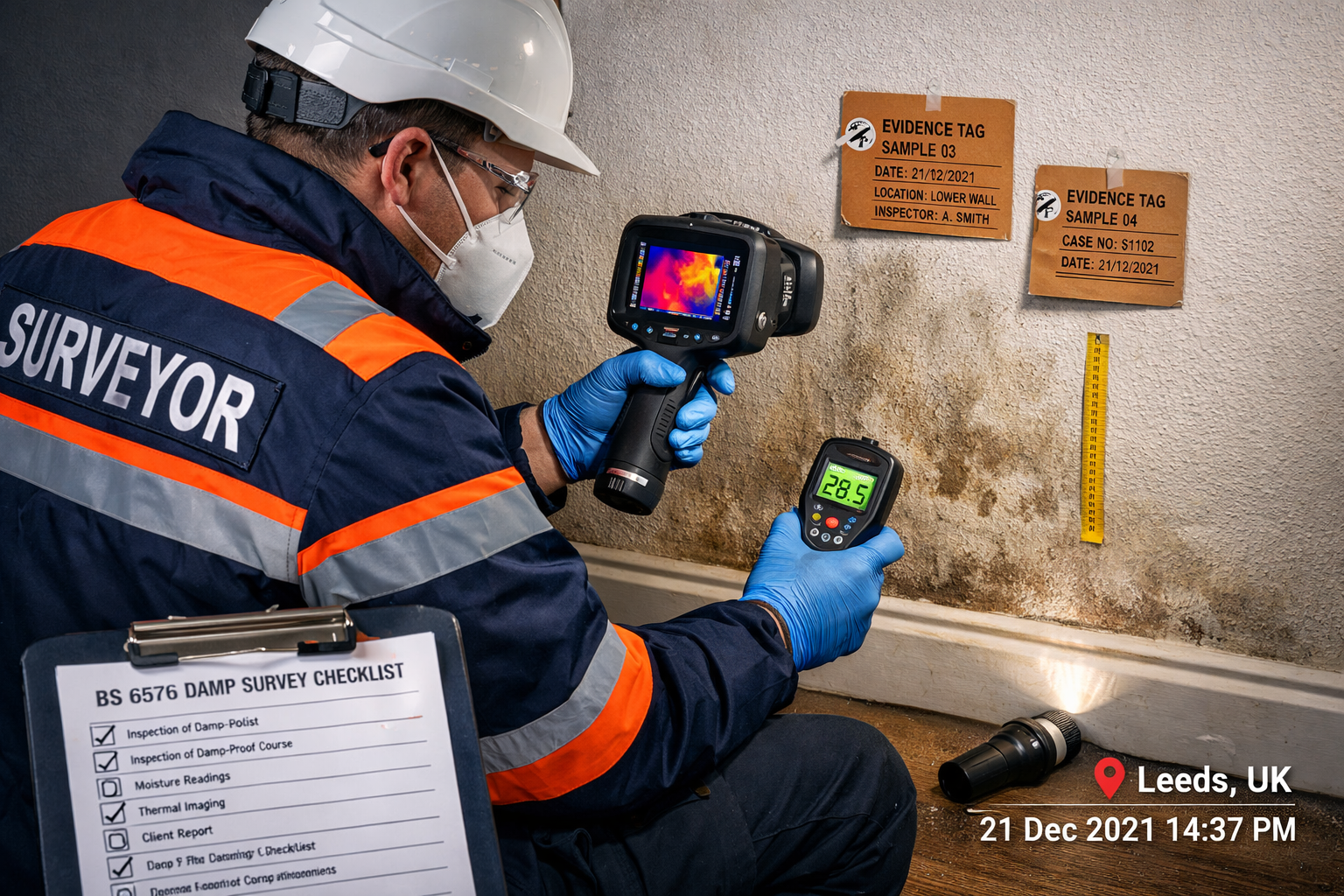
While landlords may conduct internal inspections, independent surveyor-grade investigations using BS 6576/8102/2035-aligned forensic diagnostics add external validation that courts recognize as reliable proof [4]. These assessments incorporate:
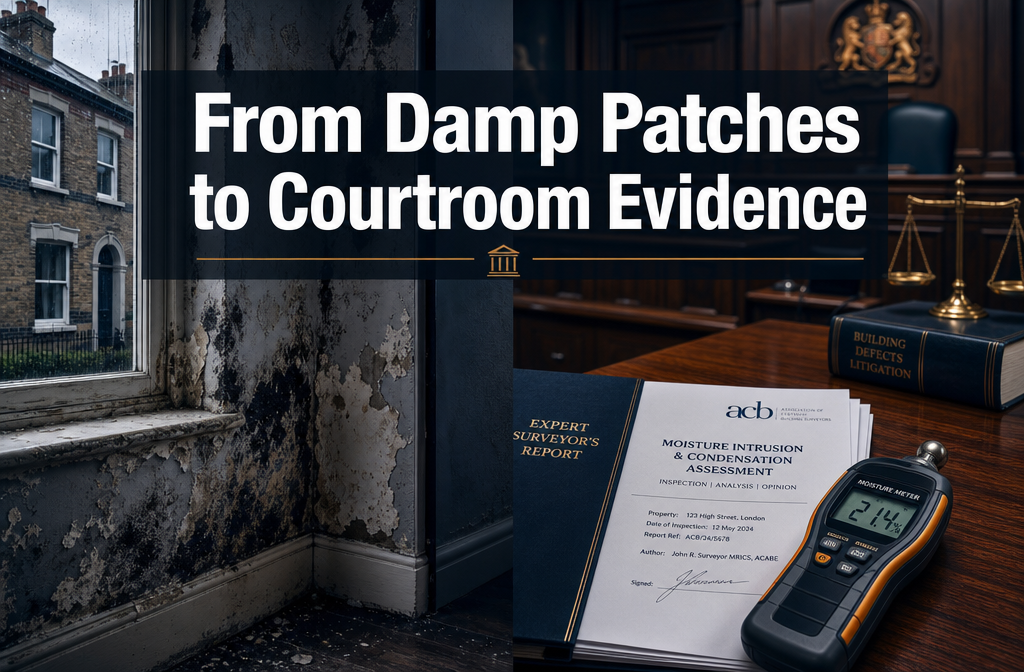
- Moisture mapping using calibrated electronic meters and thermal imaging
- Salt analysis to differentiate rising damp from condensation
- Building diagnostics to identify structural defects contributing to dampness
- HHSRS hazard rating using the Housing Health and Safety Rating System
- Photographic evidence with metadata preservation (geolocation, timestamp, device ID)
For surveyors preparing court-ready evidence, the distinction between a standard RICS Level 3 Building Survey and a forensic compliance investigation is substantial. The latter requires chain of custody documentation, calibration certificates for testing equipment, and adherence to legal evidence standards that exceed typical survey protocols.
Expert Witness Strategies for Awaab's Law Compliance Disputes: Preparing CPR Part 35 Reports
Understanding CPR Part 35 Obligations for Surveyors
The Civil Procedure Rules Part 35 govern expert witness testimony in English courts and impose specific obligations that fundamentally differ from standard surveyor-client relationships. Under CPR 35.3, the expert's overriding duty is to the court, not to the party instructing them—even when that party pays the fees [8].
This independence requirement creates unique challenges in Awaab's Law disputes where landlords instruct surveyors to defend compliance positions. Surveyors must resist pressure to advocate for their client's position and instead provide objective, balanced analysis that acknowledges both strengths and weaknesses in the compliance evidence.
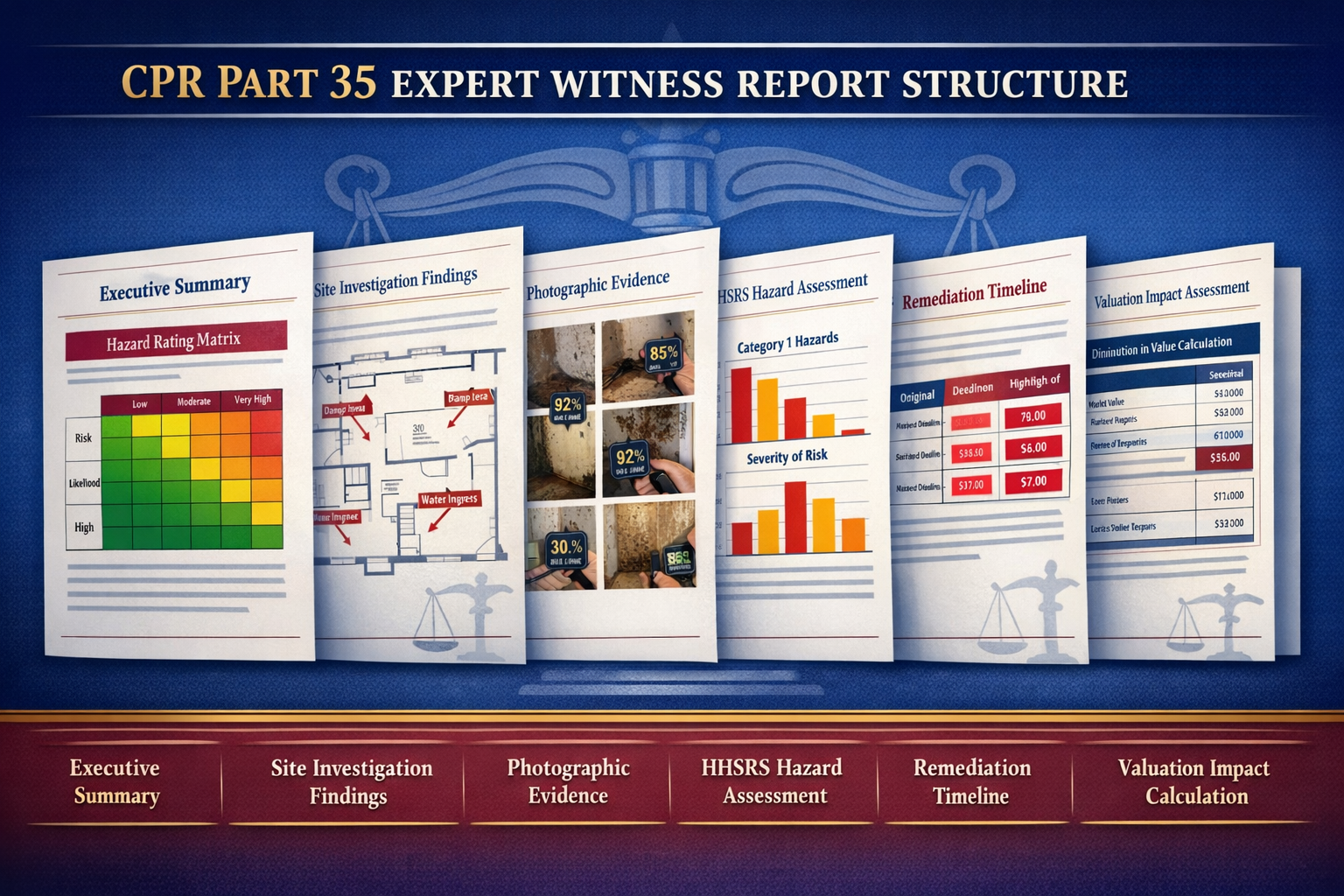
Key CPR Part 35 requirements for expert witness reports include:
✅ Statement of Truth: The report must conclude with a declaration that the expert understands their duty to the court and has complied with it
✅ Qualifications and Experience: Detailed CV demonstrating relevant expertise in building pathology, damp investigation, and housing standards
✅ Instructions Summary: What questions the expert was asked to address
✅ Facts and Assumptions: Clear distinction between observed facts and assumed information
✅ Investigation Methodology: Detailed description of inspection procedures, testing protocols, and equipment used
✅ Opinion and Reasoning: Clear explanation of conclusions with supporting technical analysis
✅ Range of Opinion: Acknowledgment of alternative interpretations or uncertainty where applicable
✅ Summary of Conclusions: Concise answers to the instructing party's questions
Structuring the Compliance Investigation Report
When preparing Expert Witness Strategies for Awaab's Law Compliance Disputes, surveyors should structure reports to address the specific legal questions courts will examine:
1. Timeline Compliance Analysis
Create a chronological matrix documenting every statutory deadline against actual landlord response:
| Statutory Requirement | Deadline | Landlord Action | Date | Compliance Status | Evidence Reference |
|---|---|---|---|---|---|
| Written acknowledgment | Day 0 | Email sent | [Date] | ✅ Compliant | Appendix A-1 |
| Investigation completion | Day 14 | Survey conducted | [Date] | ❌ Day 17 – Non-compliant | Appendix B-3 |
| Written feedback | +48 hours | Report issued | [Date] | ❌ Day 21 – Non-compliant | Appendix C-2 |
| Repairs commenced | +7 days | Works started | [Date] | ❌ Day 35 – Non-compliant | Appendix D-4 |
This matrix provides courts with immediate visual evidence of compliance failures and establishes the factual foundation for liability determinations [2].
2. Hazard Assessment and HHSRS Rating
Courts require quantified hazard assessments using the Housing Health and Safety Rating System. Expert reports must:
- Identify specific Category 1 hazards (score 1000+) related to dampness and mould growth
- Calculate likelihood scores based on vulnerable occupant exposure
- Assess harm outcomes using the four-tier classification system
- Document how hazard severity evolved during delayed remediation periods
The HHSRS assessment directly links to valuation diminution calculations and damages awards, making technical precision essential [4].
3. Root Cause Analysis with Building Pathology Evidence
Effective expert witness reports distinguish between symptom documentation and causation analysis. Courts need to understand:
- Primary moisture sources: Rising damp, penetrating damp, condensation, or combination factors
- Contributing building defects: Failed DPC, inadequate ventilation, thermal bridging, structural cracks
- Occupant behavior factors: Balanced assessment without victim-blaming
- Remediation adequacy: Whether proposed solutions address root causes or merely cosmetic symptoms
This analysis should reference specific building survey findings from comprehensive structural surveys and specialized investigations such as drainage surveys where relevant.
4. Evidence Quality Assessment
A critical component of Expert Witness Strategies for Awaab's Law Compliance Disputes involves evaluating the landlord's documentation quality. Expert reports should assess:
📋 Completeness: Are all statutory timeframes documented with written evidence?
📋 Authenticity: Do timestamps, metadata, and chain of custody support document integrity?
📋 Technical Adequacy: Do moisture readings, photographs, and diagnostics meet professional standards?
📋 Decision Rationale: Is there documented reasoning for critical compliance decisions?
Where documentation gaps exist, expert reports must clearly state what evidence should exist but is absent, as courts will draw adverse inferences from missing records [2].
Valuation Diminution Calculations in Compliance Disputes
When Awaab's Law failures result in property damage or prolonged hazard exposure, courts may award damages based on diminution in property value. Expert surveyors must provide defensible valuation calculations that link directly to compliance failures.
Methodology for Valuation Diminution
The accepted approach involves comparing:
Market Value (Compliant Condition) – Market Value (Actual Condition with Hazards) = Diminution Amount
This calculation requires:
- Baseline valuation assuming full Awaab's Law compliance and absence of Category 1 hazards
- Actual condition valuation reflecting documented dampness, mould, and structural deterioration
- Remediation cost assessment including both immediate repairs and long-term monitoring
- Market perception discount for stigma associated with health hazard history
For residential properties, diminution typically ranges from 5-15% for moderate dampness issues to 20-40% for severe mould contamination with documented health impacts. Expert reports must provide comparable evidence supporting the specific percentage applied [7].
Linking Valuation Impact to Statutory Deadline Failures
Courts are particularly interested in how delayed compliance extended hazard exposure and increased property damage. Expert reports should demonstrate:
- Moisture penetration progression documented through sequential readings
- Structural deterioration that could have been prevented with timely intervention
- Secondary damage (timber decay, plaster failure, decoration damage) resulting from delayed repairs
- Increased remediation costs due to problem escalation
This temporal analysis transforms abstract compliance failures into quantified financial consequences that support damages calculations.
Court-Ready Evidence Collection: Forensic Survey Protocols for Awaab's Law Disputes
Digital Documentation Standards for Legal Admissibility
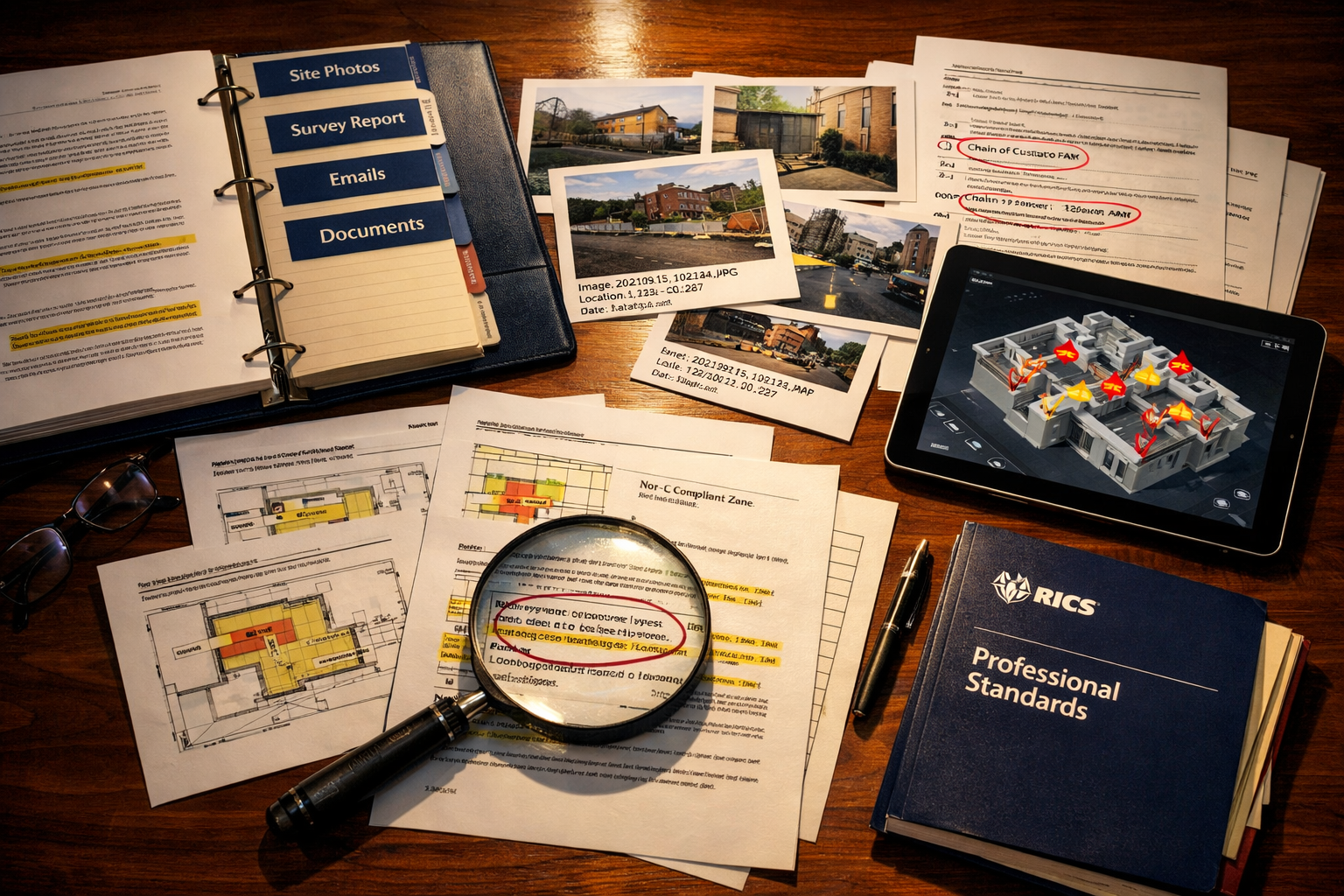
When collecting evidence for Expert Witness Strategies for Awaab's Law Compliance Disputes, surveyors must recognize that digital evidence faces heightened scrutiny regarding authenticity and chain of custody. Courts require:
🔒 Metadata Preservation: Photographs must retain EXIF data including GPS coordinates, timestamp, camera ID, and original filename
🔒 Unaltered Originals: Raw image files stored separately from edited versions used in reports
🔒 Calibration Certificates: Documentation that moisture meters, thermal cameras, and other testing equipment were recently calibrated to manufacturer specifications
🔒 Witness Statements: Where site access involved third parties, signed statements confirming inspection conditions
🔒 Continuity Records: Log documenting who handled evidence, when, and for what purpose
Many surveyors underestimate these requirements, assuming standard survey photography suffices. However, opposing counsel will challenge evidence authenticity, making forensic-grade documentation protocols essential for litigation cases [2].
Inspection Protocols for Maximum Evidentiary Value
Pre-Inspection Preparation
Before conducting site visits for compliance disputes:
- Review all tenant communications to identify specific complaint locations and timeline
- Obtain landlord's compliance documentation to identify gaps requiring verification
- Prepare evidence collection kit including calibrated meters, camera with GPS, voice recorder, evidence bags, and chain of custody forms
- Draft inspection checklist aligned with HHSRS assessment requirements and statutory compliance points
On-Site Investigation Methodology
Effective forensic surveys follow systematic protocols:
1️⃣ Photographic overview: Establish property context with exterior elevations, room layouts, and general condition
2️⃣ Complaint-specific investigation: Document each reported issue with multiple angles, scale references, and close-up detail
3️⃣ Moisture mapping: Take readings at standard heights (100mm, 1000mm above floor level) across affected and adjacent areas
4️⃣ Thermal imaging: Capture temperature differentials indicating moisture presence, thermal bridging, or insulation failures
5️⃣ Ventilation assessment: Document extraction systems, trickle vents, and air flow patterns
6️⃣ Structural defect identification: Inspect for failed DPC, cracked render, defective rainwater goods, and other moisture ingress pathways
7️⃣ Comparative analysis: Photograph unaffected areas demonstrating normal building condition for contrast
This systematic approach ensures comprehensive evidence collection that withstands cross-examination regarding investigation thoroughness [4].
Joint Independent Surveys: Strategic Considerations
Awaab's Law disputes increasingly utilize joint independent surveys where landlords and tenants jointly instruct a single surveyor to provide neutral evidence [3]. This approach offers several advantages:
✅ Cost efficiency: Parties share investigation costs rather than each commissioning separate experts
✅ Dispute resolution: Neutral findings may facilitate settlement without litigation
✅ Court preference: Judges favor single joint experts in lower-value housing disputes
However, joint instructions create unique challenges for surveyors:
⚠️ Conflicting expectations: Parties may have incompatible assumptions about investigation scope or reporting format
⚠️ Independence pressure: Both parties may attempt to influence findings during the investigation
⚠️ Fee disputes: Payment disagreements can compromise surveyor independence
Surveyors accepting joint instructions must establish clear terms of engagement addressing:
- Precise investigation scope and methodology
- Report delivery timeline and format
- Fee structure and payment terms (ideally advance payment from both parties)
- Communication protocols (all correspondence copied to both parties)
- Dispute resolution mechanism if parties disagree on scope changes
The joint instruction letter should explicitly state that the surveyor's duty is to the court, not to either instructing party, preserving the independence required under CPR Part 35 [3].
Responding to Part 35 Questions and Supplementary Instructions
After expert reports are disclosed, opposing parties may submit Part 35 questions seeking clarification or challenging conclusions. Surveyors must respond within the court-ordered timeframe (typically 28 days) with:
- Direct answers to each numbered question without evasion
- Additional reasoning where original report was unclear
- Acknowledgment of errors if questions identify genuine mistakes (with corrected analysis)
- Refusal to answer only where questions exceed the expert's original instructions or expertise
Surveyors should avoid defensive responses that appear to advocate for the instructing party's position. Courts interpret evasive or combative answers as evidence of compromised independence, potentially undermining the entire expert opinion [8].
Practical Application: Case Study Framework
Hypothetical Compliance Dispute Scenario
Background: Social housing tenant reports visible mould in bedroom and bathroom on March 1, 2026. Landlord acknowledges complaint via email March 3 (Day 2). Internal inspection conducted March 22 (Day 21 – non-compliant). Survey report issued March 28 (Day 27 – non-compliant). Repairs commence April 15 (Day 45 – non-compliant).
Tenant's Position: Statutory deadline failures caused prolonged health hazard exposure, requiring damages for health impact, temporary accommodation costs, and property damage to belongings.
Landlord's Defense: Delays were reasonable given contractor availability; tenant's drying habits contributed to condensation; remediation was appropriate once completed.
Expert Witness Survey Objectives
The instructing solicitor requests the surveyor address:
- Whether landlord complied with Awaab's Law statutory timeframes
- Root cause of dampness and mould growth
- Whether remediation was adequate and timely
- Extent of property damage attributable to delayed response
- Valuation diminution resulting from compliance failures
Evidence Collection and Analysis
The expert surveyor conducts a comprehensive Level 3 Building Survey including:
- Document review: All tenant-landlord communications, internal inspection reports, contractor quotations, and completion certificates
- Site investigation: Moisture mapping, thermal imaging, ventilation assessment, and structural defect identification
- Comparative analysis: Review of landlord's inspection photographs against current conditions
- Timeline reconstruction: Chronological matrix of all actions against statutory requirements
Expert Report Conclusions
The report concludes:
✅ Statutory compliance: Landlord failed to meet investigation (Day 14), feedback (Day 16), and repair commencement (Day 23) deadlines by 7, 11, and 22 days respectively
✅ Root cause: Primary issue was failed cavity tray above bedroom window allowing penetrating damp, exacerbated by inadequate bathroom extraction
✅ Remediation adequacy: Repairs addressed symptoms (mould treatment, redecoration) but failed to rectify underlying cavity tray defect, meaning recurrence is likely
✅ Property damage: Prolonged moisture exposure caused irreversible timber decay to window board and skirting requiring replacement (£850 additional cost)
✅ Valuation diminution: Property value reduced by approximately 8% (£18,000 on £225,000 baseline) due to documented hazard history and incomplete remediation
This evidence-based analysis provides courts with the technical foundation for liability and damages determinations while maintaining the objectivity required under CPR Part 35.
Avoiding Common Expert Witness Pitfalls in Awaab's Law Cases
Pitfall 1: Advocacy Over Independence
The most frequent criticism of expert witnesses is loss of independence through excessive alignment with the instructing party's position. Surveyors must resist pressure to:
- Downplay compliance failures to protect landlord clients
- Exaggerate hazard severity to support tenant damages claims
- Selectively report evidence that favors one party
Courts can strike expert evidence that appears partisan rather than objective, potentially exposing surveyors to wasted costs orders and professional conduct complaints [8].
Pitfall 2: Insufficient Technical Rigor
Standard survey reports often lack the forensic precision required for litigation. Common deficiencies include:
- Moisture readings without equipment calibration documentation
- Photographs without scale references or metadata preservation
- Hazard assessments without HHSRS score calculations
- Causation opinions without supporting building pathology analysis
Expert reports must exceed the technical standards of routine homebuyer surveys, incorporating specialized investigation techniques appropriate for legal proceedings [4].
Pitfall 3: Scope Creep Beyond Expertise
Surveyors instructed on Awaab's Law compliance must recognize the boundaries of their expertise. Common overreach includes:
- Medical opinions on health impacts (requires medical expert)
- Legal interpretations of statutory obligations (requires housing law solicitor)
- Building regulations compliance (requires building control surveyor)
- Contractual disputes between landlord and contractor (requires quantity surveyor)
Expert reports should clearly state "this falls outside my area of expertise" rather than offering unqualified opinions that undermine credibility [8].
Pitfall 4: Inadequate Response to Part 35 Questions
When opposing parties submit challenging questions, surveyors sometimes provide:
- Evasive answers that don't directly address the question
- Defensive responses that appear combative
- Referrals back to original report without additional clarification
- Refusals to answer legitimate questions within scope
Effective responses demonstrate professional confidence and objectivity by directly addressing challenges, acknowledging limitations, and correcting errors when identified.
Regulatory and Professional Standards Considerations
RICS Professional Standards for Expert Witnesses
The Royal Institution of Chartered Surveyors publishes specific guidance for members acting as expert witnesses, emphasizing:
📘 Competence: Experts must possess current knowledge of relevant technical standards (BS 6576, BS 8102, BS 2035) and legal frameworks
📘 Independence: Financial or personal relationships that could compromise objectivity must be disclosed
📘 Transparency: Methodology, limitations, and assumptions must be clearly stated
📘 Continuing Professional Development: Regular training on expert witness duties and evolving housing standards
Surveyors preparing Expert Witness Strategies for Awaab's Law Compliance Disputes should maintain specialized CPD records demonstrating expertise in housing health hazards, damp investigation, and litigation procedures.
Insurance Implications for Expert Witness Work
Professional indemnity insurance for expert witness work requires enhanced coverage beyond standard survey insurance. Key considerations:
- Retroactive coverage: Policies must cover claims arising from past expert reports
- Aggregate limits: Multiple claims from related cases can quickly exhaust standard limits
- Court attendance coverage: Policies should include costs of attending hearings for cross-examination
- Wasted costs exposure: Coverage for potential orders if court finds expert evidence deficient
Surveyors should verify their professional indemnity insurance specifically covers expert witness activities before accepting instructions [7].
Record Retention Requirements
Expert witness files must be retained significantly longer than standard survey records:
⏰ Minimum 15 years: Limitation periods for negligence claims against experts
⏰ Permanent retention recommended: For significant cases that may be cited in future litigation
Records should include:
- All instructions and correspondence
- Raw data, photographs, and testing results
- Draft reports and peer review comments
- Part 35 questions and responses
- Court bundles and hearing transcripts
This comprehensive retention protects surveyors against future challenges to their evidence and supports defense of professional conduct complaints [2].
Emerging Trends in Awaab's Law Litigation
Extension to Private Sector Landlords
While Awaab's Law initially focused on social housing, 2026 sees accelerating extension to private landlords through the Decent Homes Standard expansion [6]. This creates exponential growth in potential compliance disputes as:
- Private tenants become aware of statutory rights
- Local authorities increase enforcement activity
- Tenant advocacy organizations pursue test cases
Surveyors should anticipate increased demand for expert witness services in private sector disputes, requiring familiarity with both social and private tenancy frameworks [5].
Technology-Enhanced Evidence Collection
Courts increasingly accept digital evidence technologies that enhance traditional survey methods:
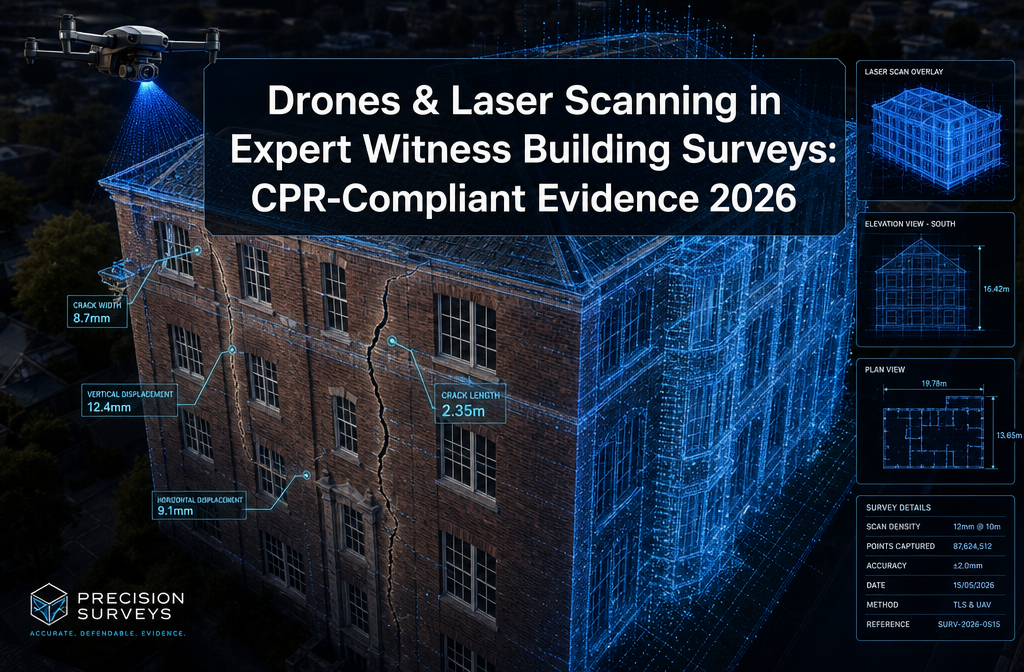
- 3D laser scanning: Creates immersive property models preserving spatial relationships
- Drone photography: Documents external defects and roof conditions safely
- IoT moisture sensors: Provides continuous monitoring data demonstrating hazard progression
- Blockchain timestamping: Establishes tamper-proof evidence chronology
Surveyors incorporating these technologies into Expert Witness Strategies for Awaab's Law Compliance Disputes gain competitive advantages in evidence quality and presentation [7].
Proactive Compliance Auditing
Forward-thinking landlords commission preventive compliance audits before disputes arise, creating opportunities for surveyors to:
- Assess current compliance status against Awaab's Law requirements
- Identify documentation gaps requiring remediation
- Recommend policy and procedure improvements
- Provide training to property management teams
This proactive work reduces litigation risk while establishing surveyors as trusted advisors rather than adversarial experts [6].
Conclusion
Expert Witness Strategies for Awaab's Law Compliance Disputes: Court-Ready Evidence from Building Surveys represents a specialized intersection of building pathology, housing law, and litigation procedure that demands exceptional technical rigor and professional independence. As Awaab's Law extends across the housing sector in 2026, surveyors who master these competencies will play increasingly critical roles in resolving compliance disputes and establishing legal precedents.
The foundation of effective expert witness work lies in forensic-grade documentation that satisfies both RICS professional standards and CPR Part 35 legal requirements. This means moving beyond standard survey protocols to incorporate metadata preservation, chain of custody procedures, calibration documentation, and systematic evidence collection methodologies that withstand judicial scrutiny.
Surveyors must recognize that their overriding duty is to the court, not to instructing parties, requiring objectivity that acknowledges both strengths and weaknesses in compliance evidence. This independence, combined with technical expertise in HHSRS hazard assessment, building pathology analysis, and valuation diminution calculations, enables surveyors to provide courts with the reliable evidence foundation necessary for just dispute resolution.
Actionable Next Steps for Surveyors
- Enhance technical competencies through specialized CPD in damp investigation (BS 6576/8102/2035), HHSRS assessment, and expert witness duties
- Upgrade documentation protocols to incorporate metadata preservation, calibration certificates, and chain of custody procedures
- Review professional indemnity insurance to ensure adequate expert witness coverage including court attendance and wasted costs protection
- Develop CPR Part 35 report templates incorporating all required elements (statement of truth, qualifications, methodology, range of opinion)
- Establish joint instruction protocols for neutral survey appointments that preserve independence while facilitating dispute resolution
- Invest in forensic investigation equipment including calibrated moisture meters, thermal imaging cameras, and GPS-enabled photography systems
- Build relationships with housing law solicitors to develop referral networks and understand evolving litigation trends
The expansion of Awaab's Law creates both professional opportunities and responsibilities for chartered surveyors. Those who embrace the rigorous standards required for expert witness work will find themselves at the forefront of improving housing standards while contributing to the development of housing law jurisprudence that protects vulnerable tenants from health hazards.
For surveyors seeking to develop expertise in this specialized field, comprehensive building survey experience, combined with formal expert witness training and ongoing engagement with housing law developments, provides the foundation for effective practice. The technical challenges are substantial, but the impact on tenant safety and housing quality makes this among the most meaningful work chartered surveyors can undertake.
References
[1] Watch – https://www.youtube.com/watch?v=p6ITZ7c56RQ
[2] Landlord Strategies For Responding To Damp And Mould Complaints Under Awaabs Law – https://www.insituscp.co.uk/landlord-strategies-for-responding-to-damp-and-mould-complaints-under-awaabs-law/
[3] Awaab S Law What It Means For Landlords Tenants How Nuven Surveyors Can Help – https://www.nuvensurveyors.co.uk/blog/awaab-s-law-what-it-means-for-landlords-tenants-how-nuven-surveyors-can-help/
[4] Awaabs Law Awareness Triage And Categorisation Of Hazards – https://www.sussexdampexperts.com/awaabs-law-awareness-triage-and-categorisation-of-hazards/
[5] Seven Top Tips For Compliance With Awaab S Law – https://www.ashfords.co.uk/insights/articles/seven-top-tips-for-compliance-with-awaab-s-law
[6] Ten Tips For Compliance With The Decent Homes Standard And Awaabs Law – https://www.nrla.org.uk/news/ten-tips-for-compliance-with-the-decent-homes-standard-and-awaabs-law
[7] Awaabs Law What Property Managers And Surveyors Must Know – https://www.howdengroup.com/uk-en/awaabs-law-what-property-managers-and-surveyors-must-know
[8] Awaabs Law Guide – https://anthonygold.co.uk/insight/awaabs-law-guide/