

The property surveying landscape stands at a pivotal crossroads in 2026. Government consultations proposing mandatory upfront property condition assessments threaten to fundamentally reshape how surveyors operate, when they're engaged, and what services they deliver. For surveying professionals, property buyers, and real estate stakeholders, understanding these potential regulatory changes isn't just important—it's essential for survival in an evolving marketplace.
Building Survey Standards Under Mandatory Upfront Assessment Consultation: Preparing for Regulatory Change represents more than bureaucratic adjustment. This shift could redefine the entire homebuying process, moving critical property inspections from optional buyer protections to mandatory pre-listing requirements. The implications ripple through fee structures, liability frameworks, service delivery models, and competitive positioning.
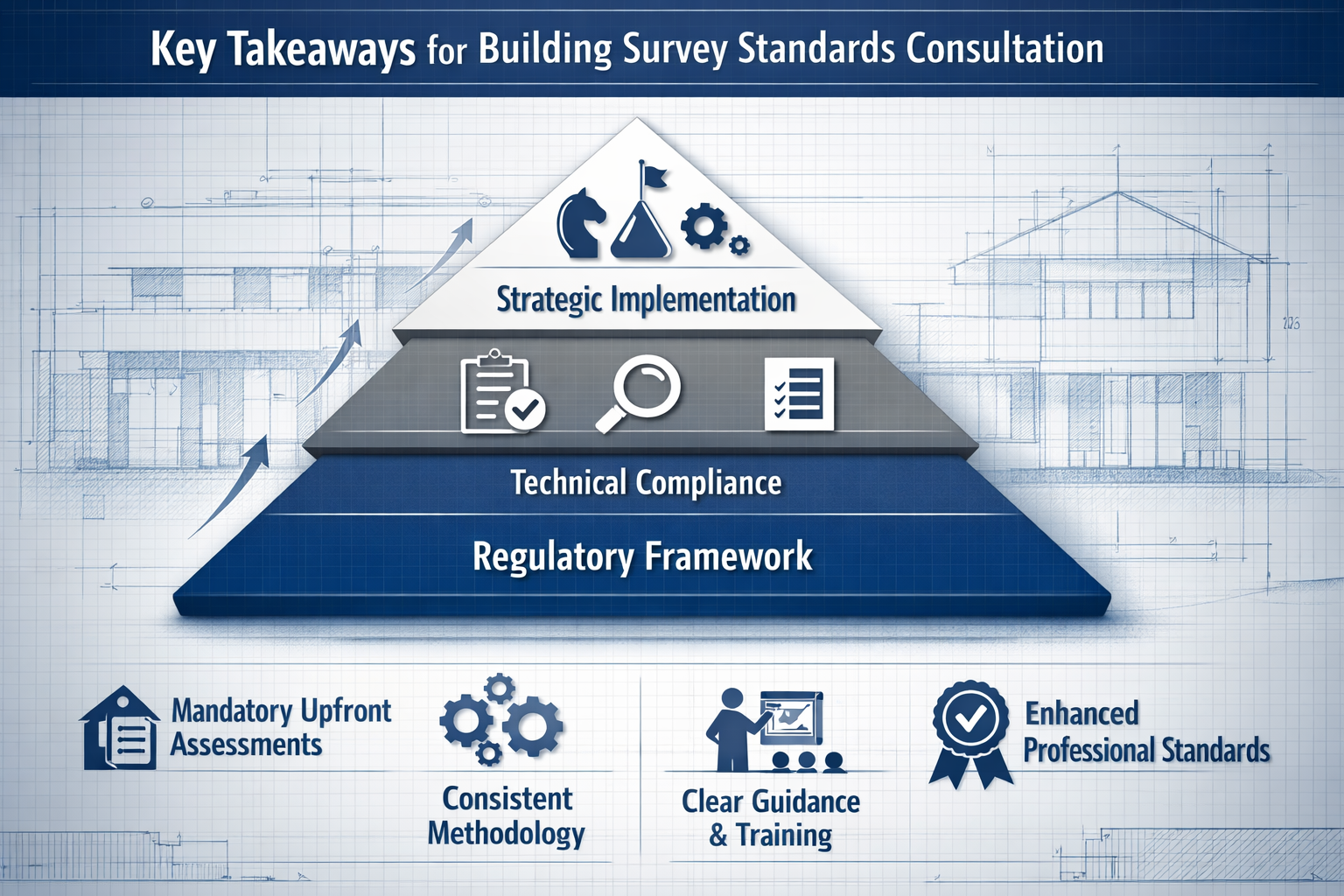
Key Takeaways
- 🏗️ Mandatory upfront assessments could shift building surveys from buyer-initiated to seller-required services, fundamentally changing when and how surveyors engage with properties
- 📊 Enhanced transparency requirements demand more comprehensive documentation, expanded records research, and clearer communication of risks and limitations
- 💰 Fee structures and pricing models will require adaptation as survey timing, scope, and liability considerations evolve under new regulatory frameworks
- ⚖️ Professional liability exposure increases with expanded surveyor responsibilities for independent research and risk identification
- 🔄 Service model innovation becomes essential for surveyors to remain competitive as the market adjusts to upfront assessment requirements
Understanding the Mandatory Upfront Assessment Consultation Framework
The consultation on mandatory upfront property assessments represents the most significant proposed change to UK homebuying processes in decades. Unlike voluntary surveys currently commissioned by buyers, the new framework would require sellers to obtain comprehensive property condition reports before listing properties for sale.
What Makes This Change Different
Traditional building surveys occur late in the transaction process, after buyers have made offers and committed emotionally and financially to purchases. This timing creates pressure to proceed even when surveys reveal significant defects. The proposed mandatory upfront model shifts this dynamic entirely [1].
Under the consultation framework, property condition assessments would become standard pre-listing requirements. Sellers would commission surveys before marketing begins, making condition information available to all potential buyers from the outset. This transparency aims to reduce transaction failures, minimize gazumping, and create more informed markets.
The consultation explores several implementation models:
- Full mandatory regime: All residential properties require upfront surveys before listing
- Conditional requirements: Surveys mandatory only for properties above certain values or ages
- Incentive-based approach: Tax benefits or expedited processes for sellers who provide upfront assessments
- Gradual rollout: Phased implementation starting with specific property types or regions
For surveyors, each model presents distinct operational challenges and opportunities. A full mandatory regime would dramatically expand survey volumes but compress timelines and intensify competition. Conditional requirements might create two-tier markets with different service expectations.
Key Consultation Questions Affecting Surveyors
The government consultation poses critical questions that will shape how RICS building surveys evolve:
Scope and standards: What level of inspection should mandatory assessments require? Should they match current Level 2 homebuyer surveys, comprehensive Level 3 building surveys, or create new standardized formats?
Validity periods: How long should upfront assessments remain valid? Properties deteriorate over time, creating tension between survey currency and transaction timelines.
Liability frameworks: Who bears responsibility when upfront surveys miss defects? Should surveyors face extended liability periods covering multiple potential buyers?
Cost allocation: Should sellers pay for surveys that benefit buyers? How might this affect property pricing and market accessibility?
Professional qualifications: What credentials should surveyors hold to conduct mandatory assessments? Will new certification requirements emerge?
These questions directly impact surveying practices, with answers determining everything from insurance requirements to continuing professional development needs.
Building Survey Standards Under Mandatory Upfront Assessment: Technical and Professional Implications
The shift toward mandatory upfront assessments demands significant evolution in surveying standards and practices. While the UK consultation focuses on residential property reform, parallel developments in commercial surveying standards provide instructive precedents for how regulatory change reshapes professional requirements.

Expanded Research and Documentation Requirements
Recent updates to land title survey standards demonstrate how regulatory evolution increases surveyor responsibilities. The 2026 ALTA/NSPS standards, which became effective in February 2026, illustrate this trend by requiring surveyors to independently research non-public documents and adjoining property records rather than relying solely on title companies [2].
Similar expansions would likely accompany mandatory upfront assessment requirements. Surveyors might need to:
- Conduct independent records research across multiple authorities and databases
- Review planning history including applications, approvals, and enforcement actions
- Investigate building control records to verify compliance with regulations
- Examine environmental data including flood risk, contamination, and protected species
- Research utility connections and service infrastructure affecting properties
This expanded scope increases both survey costs and completion timelines. Surveyors must invest in research capabilities, database access, and administrative systems to manage enhanced documentation requirements efficiently.
Enhanced Transparency and Risk Communication
Mandatory upfront assessments demand clearer communication of findings, limitations, and risks. The 2026 ALTA/NSPS standards provide useful models by requiring surveyors to provide comprehensive notes explaining discrepancies, access limitations, and boundary observations [2].
For building surveys under upfront assessment regimes, enhanced transparency might include:
Structured risk summaries: Standardized sections highlighting significant observed conditions, potential defects, and areas requiring specialist investigation. The new optional Table A item in ALTA/NSPS standards offers precedent for systematic risk identification [3].
Clear limitation statements: Explicit documentation of inspection constraints, inaccessible areas, and conditions that prevent comprehensive assessment. This protects both surveyors and property buyers by establishing reasonable expectation boundaries.
Photographic evidence requirements: Comprehensive visual documentation supporting findings and demonstrating inspection thoroughness. Digital platforms enable efficient image capture, annotation, and integration into survey reports.
Follow-up recommendation protocols: Clear guidance on when specialist investigations (damp surveys, structural assessments, asbestos testing) become necessary, with specific referral pathways.
These transparency requirements create both challenges and opportunities. While they increase report preparation time and complexity, they also differentiate professional surveyors from less thorough competitors and reduce dispute risks through clear communication.
Coordination Between Surveys and Legal Processes
Mandatory upfront assessments require tighter integration between surveyors and conveyancing processes. The enhanced coordination requirements in 2026 ALTA/NSPS standards, which improve alignment between survey findings and title insurance underwriting [2], illustrate this principle.
For residential property transactions, improved coordination might involve:
- Standardized information exchange protocols between surveyors, solicitors, and estate agents
- Digital platforms enabling real-time access to survey reports and supporting documentation
- Pre-transaction defect resolution where sellers address issues before marketing rather than negotiating after surveys
- Integrated risk assessment combining physical condition, legal title, and environmental factors
Surveyors who develop strong coordination capabilities and embrace digital integration will gain competitive advantages in upfront assessment markets. Those who maintain traditional isolated practices risk marginalization.
Quality Assurance and Professional Standards
Mandatory upfront assessments intensify focus on quality assurance and professional standards. When surveys become transaction prerequisites rather than optional buyer protections, consistency and reliability become paramount.
Quality assurance measures might include:
Standardized methodologies: Consistent inspection protocols ensuring comparable assessments across different surveyors and properties. This might involve mandatory checklists, minimum inspection durations, or prescribed reporting formats.
Peer review requirements: Independent verification of survey findings for high-value or complex properties, similar to quality assurance processes in other regulated professions.
Continuing professional development mandates: Regular training requirements ensuring surveyors remain current with evolving standards, technologies, and regulatory expectations.
Performance monitoring: Industry bodies or regulators tracking complaint rates, dispute frequencies, and professional conduct to identify training needs and maintain standards.
For individual surveyors, these quality assurance requirements demand investment in professional development, documentation systems, and practice management. However, they also raise barriers to entry that protect established professionals from low-quality competition.
Preparing for Building Survey Standards Under Mandatory Upfront Assessment Consultation: Strategic Responses
Forward-thinking surveyors are already positioning themselves for potential regulatory change. Strategic preparation involves operational adjustments, service innovations, and business model adaptations that create resilience regardless of specific consultation outcomes.

Operational Readiness and Capacity Planning
Mandatory upfront assessments would fundamentally alter survey demand patterns. Instead of reactive buyer-initiated commissions, surveyors would face proactive seller-driven requests concentrated around property listing decisions.
Capacity planning considerations include:
- Seasonal demand fluctuations: Spring property market peaks would create intense survey demand periods requiring flexible staffing
- Geographic coverage: Sellers expect rapid response times, favoring surveyors with local presence and efficient scheduling
- Turnaround expectations: Pre-listing surveys require faster completion than traditional buyer surveys to avoid delaying property marketing
- Volume versus value trade-offs: Higher survey volumes at potentially lower per-unit fees require operational efficiency improvements
Surveyors should model various demand scenarios and develop scalable operating models. This might involve associate networks, technology investments enabling remote assessments, or partnerships with estate agents for streamlined referrals.
Understanding surveyor pricing structures becomes crucial as fee models evolve under new regulatory frameworks.
Service Innovation and Differentiation
Mandatory upfront assessments create opportunities for service innovation beyond basic compliance. Surveyors who develop distinctive value propositions will capture premium market segments despite standardization pressures.
Innovation opportunities include:
Digital-first delivery models: Interactive online reports with searchable findings, embedded photographs, and clear visual presentations. Buyers increasingly expect digital experiences matching other consumer services.
Tiered service offerings: Basic mandatory compliance surveys supplemented by premium comprehensive assessments for discerning buyers. This creates revenue diversification while meeting minimum regulatory requirements.
Integrated specialist services: Bundled offerings combining building surveys with damp surveys, structural assessments, or asbestos testing providing comprehensive property intelligence.
Warranty and insurance products: Survey-backed condition warranties or defect insurance giving buyers additional protection and surveyors recurring revenue streams.
Pre-listing consultation services: Advising sellers on cost-effective remediation before surveys, positioning surveyors as strategic advisors rather than mere inspectors.
These innovations require investment but create defensible competitive positions in commoditizing markets.
Fee Structure Adaptation and Pricing Strategy
Mandatory upfront assessments pressure traditional fee structures. When sellers pay for surveys benefiting buyers, price sensitivity increases. Surveyors must balance competitive pricing with sustainable margins.
Pricing strategy considerations:
Volume-based models: Lower per-survey fees compensated by higher volumes, requiring operational efficiency to maintain profitability
Subscription services: Estate agents or property management companies purchasing survey capacity at negotiated rates, providing surveyors with predictable revenue
Value-based pricing: Premium fees for complex properties, heritage buildings, or comprehensive assessments justified by specialized expertise
Transparent pricing: Clear fee schedules published online, reducing negotiation friction and attracting cost-conscious sellers
Bundled offerings: Combined packages with conveyancing, estate agency, or other transaction services creating mutual referral value
Surveyors should analyze cost structures carefully, identifying minimum viable fees while understanding competitive positioning. Regional variations in property values and market conditions require localized pricing strategies.
Technology Investment and Digital Transformation
Regulatory change accelerates technology adoption across surveying. Mandatory upfront assessments demand digital capabilities for efficiency, quality assurance, and competitive differentiation.
Priority technology investments:
Mobile inspection platforms: Tablet-based applications enabling efficient on-site data capture, photograph annotation, and preliminary report generation
Cloud-based practice management: Centralized systems managing scheduling, client communications, document storage, and compliance tracking
Thermal imaging and diagnostic tools: Advanced equipment identifying hidden defects and demonstrating inspection thoroughness
Digital reporting platforms: Professional online report delivery with interactive features, client portals, and automated follow-up communications
Data analytics capabilities: Historical defect databases informing risk assessment and supporting evidence-based recommendations
Integration APIs: Connections with conveyancing platforms, estate agency systems, and property portals streamlining information exchange
Technology investments require careful evaluation balancing costs against productivity gains and competitive advantages. Surveyors should prioritize tools directly improving client experience or operational efficiency rather than pursuing technology for its own sake.
Professional Development and Regulatory Engagement
Preparing for regulatory change extends beyond operational adjustments to professional development and industry engagement. Surveyors who actively participate in standards development shape outcomes favorable to their practices.
Professional development priorities:
- Regulatory literacy: Understanding consultation processes, comment periods, and implementation timelines
- Standards expertise: Mastering current RICS standards and anticipating evolution under mandatory assessment regimes
- Specialist qualifications: Pursuing advanced certifications in heritage properties, commercial surveys, or specialist assessment types
- Risk management training: Developing expertise in professional liability, insurance requirements, and dispute resolution
- Business skills: Enhancing capabilities in marketing, pricing strategy, and practice management
Industry engagement opportunities:
- Consultation responses: Submitting formal comments on proposed regulatory changes
- Professional body committees: Participating in RICS working groups developing standards and guidance
- Industry forums: Engaging with estate agents, solicitors, and lenders to understand stakeholder perspectives
- Public education: Contributing to media coverage and public understanding of survey importance
Surveyors who invest in professional development and industry engagement position themselves as thought leaders, gaining referral advantages and shaping regulatory outcomes.
Client Communication and Expectation Management
Regulatory change creates confusion among property buyers and sellers. Surveyors who communicate clearly about evolving requirements build trust and capture market share from less articulate competitors.
Communication strategies:
Educational content: Blog posts, guides, and FAQs explaining proposed changes and implications for property transactions. Clear explanations of how long surveys take help manage expectations.
Proactive client updates: Regular communications to existing clients about regulatory developments and service adaptations
Transparent process explanations: Clear descriptions of what surveys include, what they exclude, and what additional investigations might be necessary
Limitation discussions: Honest conversations about inspection constraints, inaccessible areas, and inherent assessment uncertainties
Value articulation: Clear explanations of how professional surveys protect property investments and inform decision-making
Effective communication differentiates professional surveyors from competitors treating surveys as commodities. Clients value expertise, transparency, and guidance through complex processes.
Potential Challenges and Risk Mitigation Strategies
While mandatory upfront assessments create opportunities, they also present significant challenges requiring careful risk management. Surveyors must anticipate difficulties and develop mitigation strategies.
Liability and Insurance Considerations
Mandatory upfront assessments potentially expand surveyor liability. When multiple parties rely on single surveys, exposure to claims increases. The question of who can sue surveyors—only commissioning sellers, or also subsequent buyers—remains unresolved [1].
Risk mitigation approaches:
- Clear engagement terms: Contracts explicitly defining who can rely on surveys and liability limitations
- Enhanced professional indemnity insurance: Coverage adequate for expanded exposure under mandatory assessment regimes
- Limitation periods: Clear statements about survey validity and currency, reducing long-tail liability
- Disclaimer language: Appropriate caveats about inspection limitations without undermining report value
- Quality assurance processes: Robust internal review procedures reducing error rates and demonstrating professional care
Surveyors should consult insurance brokers and legal advisors about liability implications under various regulatory scenarios, ensuring adequate protection before mandatory assessment implementation.
Market Disruption and Competitive Dynamics
Regulatory change disrupts established market relationships. Traditional buyer-surveyor connections weaken as sellers commission surveys. Estate agents gain influence over surveyor selection, potentially commoditizing services.
Competitive response strategies:
- Direct seller marketing: Building brand awareness among property sellers through targeted advertising and content marketing
- Estate agent partnerships: Developing preferred provider relationships offering mutual value through streamlined processes
- Buyer engagement: Maintaining buyer relationships through supplementary services beyond mandatory baseline assessments
- Niche specialization: Focusing on property types or assessment areas where expertise creates defensible competitive advantages
- Geographic concentration: Building dominant local presence where reputation and responsiveness overcome price competition
Surveyors should analyze competitive positioning carefully, identifying sustainable advantages in evolving market structures.
Cost and Pricing Pressures
Mandatory assessments may commoditize basic surveys, creating downward pricing pressure. Enhanced requirements simultaneously increase costs through expanded research, documentation, and quality assurance obligations.
Cost management strategies:
- Process optimization: Streamlining workflows through technology, standardization, and efficient scheduling
- Scope management: Clearly defining mandatory assessment minimums versus optional enhanced services
- Overhead reduction: Minimizing fixed costs through flexible staffing, shared resources, or virtual operations
- Value demonstration: Articulating quality differences justifying premium pricing over low-cost competitors
- Diversified revenue: Developing multiple income streams beyond basic survey fees
Surveyors must balance cost efficiency with quality maintenance, avoiding race-to-bottom pricing that undermines professional standards and business sustainability.
Technology Adoption Challenges
Digital transformation requires significant investment in equipment, software, training, and process redesign. Smaller practices may struggle with technology costs and learning curves.
Technology adoption strategies:
- Phased implementation: Gradual technology rollout prioritizing highest-value tools and capabilities
- Cloud-based solutions: Subscription software avoiding large capital expenditures and providing automatic updates
- Training investment: Dedicated time and resources ensuring staff effectively utilize new technologies
- Vendor partnerships: Relationships with technology providers offering support, customization, and industry-specific solutions
- Peer learning: Engagement with professional networks sharing technology experiences and best practices
Surveyors should view technology as essential infrastructure rather than optional enhancement, recognizing that digital capabilities increasingly define competitive viability.
The Broader Context: Lessons from Commercial Survey Standards
While UK residential property reform consultations proceed, parallel developments in commercial surveying provide instructive precedents. The 2026 ALTA/NSPS land title survey standards demonstrate how regulatory evolution affects professional practices [2][3][4][5].
Key Lessons from ALTA/NSPS 2026 Updates
Clarification over expansion: The 2026 standards emphasize clarity and consistency rather than dramatically expanding scope. Most transactions experience minimal cost or timing impacts, with changes focusing on standardizing existing best practices [4].
This suggests mandatory upfront assessment implementation might similarly prioritize clear standards over revolutionary requirements. Surveyors should prepare for enhanced documentation and transparency rather than fundamentally different inspection methodologies.
Independent research requirements: The 2026 standards shift responsibility for records research from title companies to surveyors, requiring independent investigation of non-public documents and adjoining property records [2][5].
Residential surveyors should anticipate similar shifts, developing capabilities for comprehensive records research across planning, building control, environmental, and utility databases. This requires both technical skills and administrative systems.
Enhanced transparency mandates: The 2026 standards require more comprehensive notes explaining discrepancies, limitations, and observations [2]. The new optional Table A item enables structured risk summaries [3][4].
These transparency requirements model likely directions for residential survey standards. Surveyors should develop clear communication protocols, standardized risk summaries, and comprehensive limitation statements.
Coordination improvements: The 2026 standards enhance coordination between surveyors and title insurers, improving alignment between physical surveys and legal title analysis [2].
Residential mandatory assessments would similarly require tighter integration between surveyors, solicitors, estate agents, and mortgage lenders. Digital platforms enabling efficient information exchange become competitive necessities.
Timing and cost impacts: While most properties face minimal changes, those with unique features or non-standard interests experience higher compliance burdens [3][5]. Early confirmation that surveyors are properly scoped becomes critical.
This suggests mandatory residential assessments might create tiered markets. Standard properties receive streamlined baseline surveys, while complex properties require enhanced assessments at premium fees. Surveyors should develop clear service tiers and scoping protocols.
Cross-Sector Professional Standards Evolution
Regulatory change in building surveys reflects broader trends toward enhanced professional accountability, transparency, and consumer protection across sectors. Financial services, healthcare, and legal professions have experienced similar evolutions.
Common themes include:
- Standardization: Clear minimum standards ensuring consistent service quality
- Documentation: Enhanced record-keeping demonstrating professional care and supporting quality assurance
- Disclosure: Transparent communication of limitations, risks, and conflicts of interest
- Continuing competence: Ongoing professional development requirements maintaining current expertise
- Consumer accessibility: Clear information enabling informed decision-making
Surveyors should view mandatory upfront assessments within this broader professional evolution rather than as isolated regulatory burden. Embracing enhanced standards positions surveying alongside other respected professions rather than as transactional commodity services.
Preparing Your Practice: Actionable Implementation Steps
Strategic preparation requires concrete action. Surveyors should implement specific steps positioning practices for regulatory change regardless of final consultation outcomes.
Immediate Actions (Next 3 Months)
- Conduct regulatory review: Analyze consultation documents, understanding proposed changes and implementation timelines
- Assess current capabilities: Evaluate practice strengths, weaknesses, and gaps relative to anticipated requirements
- Review insurance coverage: Consult brokers about liability implications and coverage adequacy under various scenarios
- Engage professional bodies: Join RICS committees or working groups participating in standards development
- Survey client base: Understand current client needs and perspectives on regulatory changes
- Benchmark competitors: Analyze how other surveyors are positioning themselves for regulatory change
- Evaluate technology needs: Identify priority digital capabilities supporting enhanced requirements
Medium-Term Actions (3-12 Months)
- Develop service tiers: Create clear offerings from basic mandatory compliance to comprehensive premium assessments
- Implement technology solutions: Deploy priority digital tools improving efficiency and client experience
- Build strategic partnerships: Establish relationships with estate agents, solicitors, and other transaction participants
- Create educational content: Develop client-facing materials explaining regulatory changes and service value
- Refine pricing strategies: Establish sustainable fee structures balancing competitiveness with profitability
- Enhance quality assurance: Implement internal review processes ensuring consistent high-quality delivery
- Pursue specialist qualifications: Obtain advanced certifications in priority assessment areas
Long-Term Strategic Positioning (1-3 Years)
- Build brand recognition: Invest in marketing establishing strong reputation among property sellers and agents
- Develop proprietary methodologies: Create distinctive assessment approaches differentiating from competitors
- Expand service portfolio: Add complementary offerings creating comprehensive property intelligence solutions
- Invest in data capabilities: Build historical defect databases supporting evidence-based risk assessment
- Cultivate thought leadership: Contribute to industry discussions through publications, speaking, and media engagement
- Scale operations: Develop systems enabling efficient growth as mandatory assessment volumes increase
- Explore adjacent opportunities: Identify new revenue streams emerging from regulatory changes
Conclusion
Building Survey Standards Under Mandatory Upfront Assessment Consultation: Preparing for Regulatory Change represents both challenge and opportunity for surveying professionals. The potential shift toward mandatory pre-listing property assessments would fundamentally reshape when surveys occur, who commissions them, and what they must deliver.
Successful navigation requires understanding the consultation framework, anticipating technical and professional implications, and implementing strategic responses positioning practices for various regulatory outcomes. Key preparation areas include operational readiness, service innovation, fee structure adaptation, technology investment, professional development, and risk management.
The 2026 ALTA/NSPS commercial survey standards provide instructive precedents, demonstrating how regulatory evolution emphasizes clarity, transparency, enhanced research, and improved coordination. These themes will likely characterize residential survey standard development as mandatory upfront assessments progress from consultation to implementation.
Forward-thinking surveyors are already adapting, viewing regulatory change as catalyst for professional elevation rather than bureaucratic burden. By embracing enhanced standards, investing in capabilities, and clearly communicating value, surveyors can strengthen competitive positioning while advancing industry professionalism.
Next Steps
Property professionals should take immediate action:
✅ Review consultation documents and submit formal responses representing practice perspectives
✅ Assess current capabilities against anticipated mandatory assessment requirements
✅ Develop strategic plans addressing operational, technological, and commercial implications
✅ Engage professional networks to share insights and influence standards development
✅ Communicate proactively with clients about evolving requirements and service adaptations
✅ Invest strategically in technology, training, and systems supporting enhanced delivery
✅ Monitor developments as consultations progress toward regulatory implementation
The surveying profession stands at a transformative moment. Those who prepare thoughtfully will thrive as mandatory upfront assessments reshape property transactions. Those who wait risk marginalization in an evolving marketplace demanding enhanced capabilities, transparency, and professionalism.
Whether conducting Level 2 homebuyer surveys or comprehensive commercial building surveys, surveyors must adapt to changing regulatory landscapes. The time to prepare is now, positioning practices for success regardless of specific consultation outcomes.
For surveyors seeking guidance navigating regulatory change, connecting with experienced local chartered surveyors familiar with evolving standards provides valuable insights and strategic direction.
References
[1] Homebuying Reform Impacts On Building Surveys Preparing For Mandatory Upfront Condition Assessments In 2026 – https://nottinghillsurveyors.com/blog/homebuying-reform-impacts-on-building-surveys-preparing-for-mandatory-upfront-condition-assessments-in-2026
[2] 2026 Alta Survey Standards Updates – https://www.hklaw.com/en/insights/publications/2026/03/2026-alta-survey-standards-updates
[3] Alta Nsps Key Changes And Updates In The 2026 Standards – https://www.beneschlaw.com/insight/alta-nsps-key-changes-and-updates-in-the-2026-standards/
[4] Alta Nsps 2026 Survey Standards Whats Changed And What It Means For The Industry – https://atwell.com/news-and-insights/alta-nsps-2026-survey-standards-whats-changed-and-what-it-means-for-the-industry/
[5] 2026 Alta Nsps Survey Standards Update Key Takeaways For Commercial Real Estate – https://www.taftlaw.com/news-events/law-bulletins/2026-alta-nsps-survey-standards-update-key-takeaways-for-commercial-real-estate/
[6] Expert Witness Roles In 2026 Homebuying Reform Disputes Defending Survey Evidence Under New Upfront Standards – https://nottinghillsurveyors.com/blog/expert-witness-roles-in-2026-homebuying-reform-disputes-defending-survey-evidence-under-new-upfront-standards