

Only 3% of residential property transactions in England and Wales involve sites exceeding two acres, yet these deals account for a disproportionate share of post-completion disputes, lender down-valuations, and structural defect claims. The reason is straightforward: high-value country homes and small estates present layers of complexity that standard survey and valuation methodologies were never designed to address alone. When a property includes a stable block, a converted barn, a detached annexe, paddocks, private drainage, and shared access tracks, every one of those elements carries its own risk profile, legal status, and contribution to market value.
This article explores the additional due diligence, defect risks, and valuation considerations that arise when building surveyors and valuers engage with larger rural homes and small estates. It also explains how professionals should communicate these findings clearly to high-net-worth buyers and their lenders.
Key Takeaways
- A RICS Level 3 Building Survey is almost always the appropriate starting point for high-value country homes with multiple outbuildings, but it rarely covers every structure by default.
- Outbuildings must be assessed individually for condition, planning status, and functional contribution to value — not treated as a single line item.
- Private drainage systems, shared access arrangements, and land characteristics each require specialist input beyond a standard survey.
- Valuers face a genuine comparable-evidence problem with unique rural properties, making methodology selection and transparent reporting critical.
- High-net-worth buyers and lenders both benefit from a coordinated approach that integrates building survey findings, specialist reports, and formal valuation advice before exchange.
Why Standard Surveys Fall Short on Rural Estates
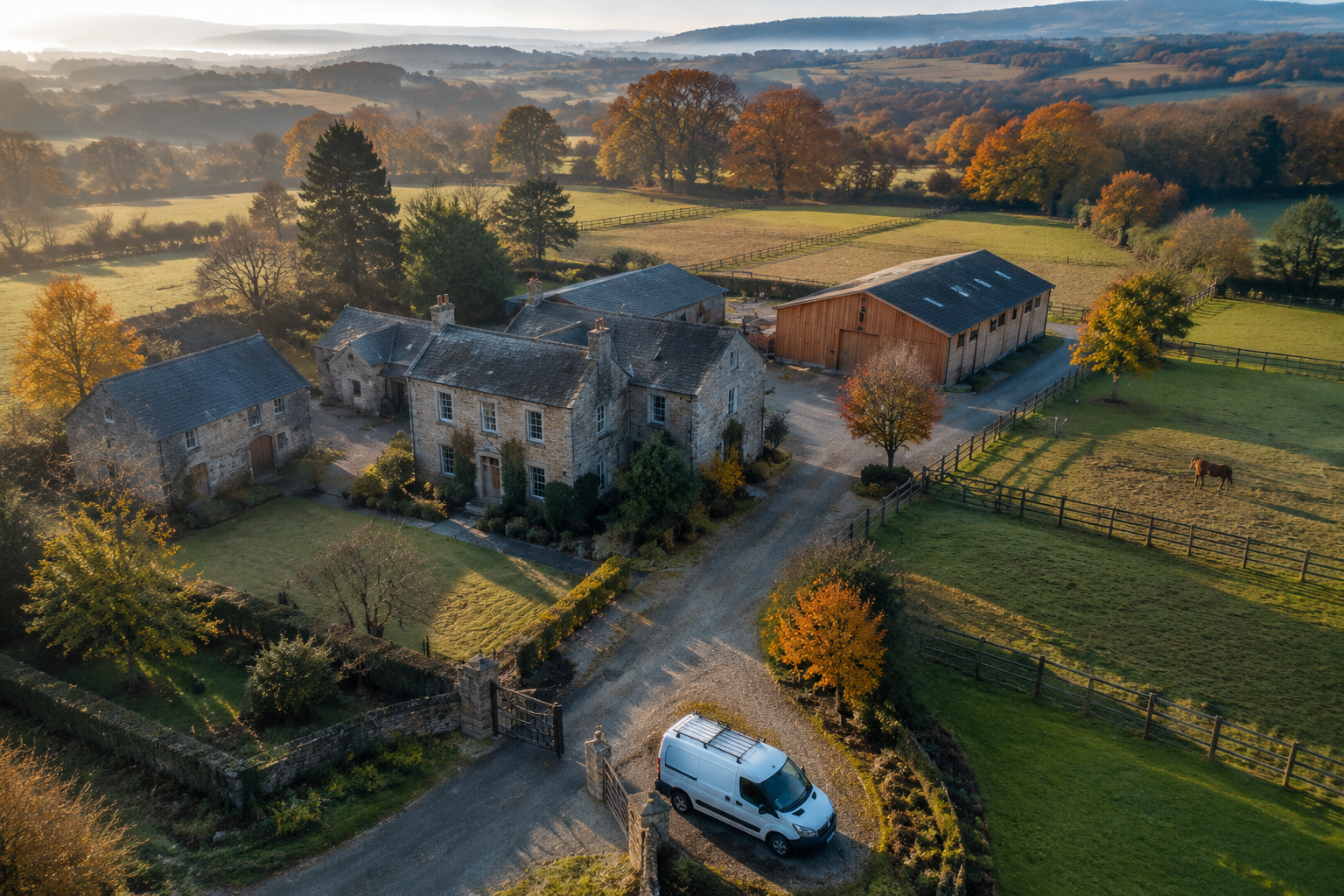
The majority of residential surveys are commissioned on urban or suburban properties where the scope is relatively contained: four walls, a roof, and a garden. High-value country homes and small estates operate in an entirely different dimension. A single instruction may require a surveyor to assess a Grade II listed farmhouse, a detached cart lodge, a timber-framed barn, a modern stable block, a borehole water supply, a private sewage treatment plant, and several acres of paddock — all in one visit.
The RICS Level 3 Building Survey (formerly the Full Structural Survey) is the benchmark product for complex residential properties. It provides a detailed assessment of construction, condition, and defects across all accessible elements. However, buyers and their solicitors often assume that commissioning a Level 3 survey automatically covers every outbuilding on the site. In practice, the scope is agreed in advance, and structures beyond the main dwelling may be excluded unless explicitly listed. Buyers should confirm in writing exactly which buildings are included. For an overview of what different survey types cover, the RICS Building Surveys Level 3 guide provides a useful starting point.
Luxury and architecturally unique properties demand advanced valuation techniques and specialized training that go well beyond the competencies required for standard residential work [1]. A surveyor unfamiliar with agricultural construction methods, for example, may miss critical defects in a converted barn — steel portal frame corrosion, inadequate fire separation, or substandard insulation — that would be immediately apparent to a specialist.
Assessing Complex Outbuildings: Structure by Structure
The Scope Problem
One of the most common errors in surveying rural estates is treating outbuildings as a collective rather than assessing each structure on its own merits. A stable block built from concrete block in the 1980s carries entirely different risks from a 19th-century stone cart lodge. The surveyor's report should address each building individually, covering:
- Construction type and age — traditional masonry, steel frame, timber frame, or prefabricated
- Condition rating — using the RICS 1, 2, 3 traffic-light system
- Planning and building regulations status — particularly for converted or extended outbuildings
- Current and potential use — residential annexe, commercial letting, agricultural storage
- Contribution to overall value — functional utility versus aesthetic appeal
Outbuildings such as barns, workshops, and guest houses contribute meaningfully to a property's overall value, but appraisers must assess these structures based on their condition, functionality, and actual contribution to the property's utility rather than simply their presence [4].
Common Defect Risks in Rural Outbuildings
| Structure Type | High-Risk Defects | Specialist Input Often Needed |
|---|---|---|
| Converted barn | Structural frame integrity, damp ingress, fire separation | Structural engineer |
| Stable block | Drainage, ventilation, concrete floor condition | Equestrian specialist |
| Detached annexe | Electrical compliance, damp, planning status | Building control records |
| Cart lodge / open garage | Roof covering, timber decay, foundation settlement | Surveyor + timber specialist |
| Swimming pool building | Structural waterproofing, mechanical plant condition | Pool engineer |
For properties with suspected structural movement or non-standard construction, a structural survey from a qualified engineer should be commissioned alongside the building survey, not as an afterthought.
Non-Standard Construction
Many rural outbuildings — and indeed some main houses on older estates — use construction methods that are unfamiliar to lenders and difficult to insure. Cob walls, flint rubble, green oak frames, and corrugated asbestos cement roofs all appear regularly on rural survey instructions. Asbestos cement sheeting is particularly common on agricultural buildings from the mid-20th century and requires a formal asbestos survey before any intrusive work or demolition is planned. Surveyors should flag the presence of suspected asbestos-containing materials clearly in their reports and recommend a licensed surveyor's assessment.
Land Valuation: Paddocks, Access, and Drainage
How Land Characteristics Drive Value
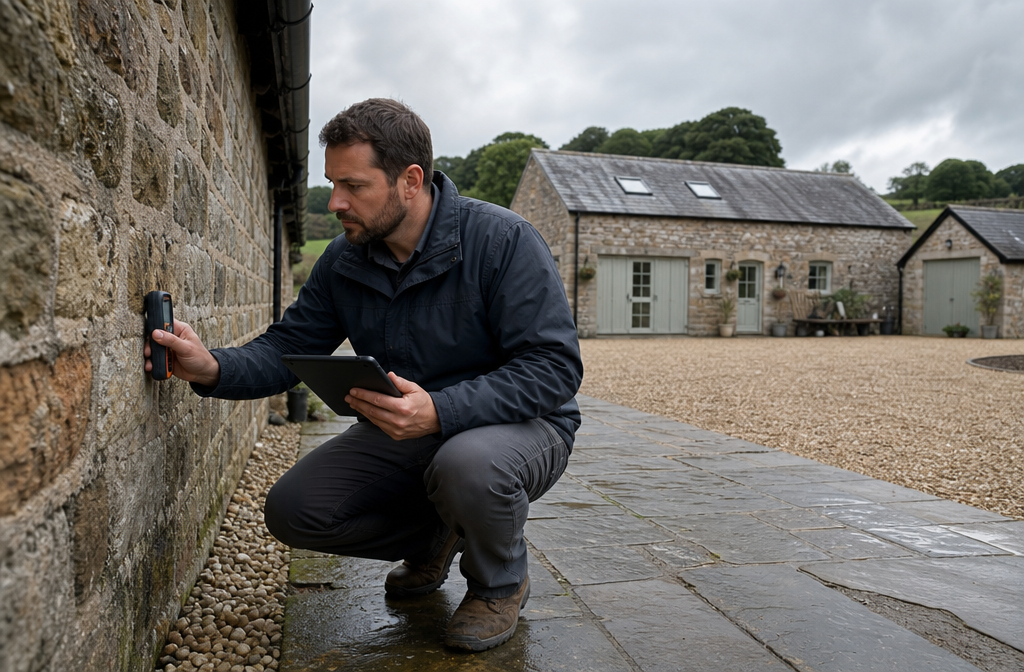
Physical attributes — size, shape, terrain, soil quality, and aspect — significantly influence land value on rural estates [6]. A paddock with good drainage, level ground, and direct road access is worth considerably more per acre than a waterlogged, steeply sloping field accessed only via a shared track. Valuers must assess each parcel of land individually rather than applying a blanket per-acre rate.
Key land characteristics that affect valuation include:
- Soil type and drainage — heavy clay soils prone to waterlogging reduce agricultural and equestrian utility
- Topography — steeply sloping land limits use and may require costly site preparation
- Shape and configuration — irregular or landlocked parcels reduce development potential and accessibility [6]
- Existing improvements — post-and-rail fencing, field shelters, water troughs, and hard-standing all add measurable value [5]
Determining the highest and best use of each land parcel is fundamental to accurate valuation. This analysis assesses the most profitable legal use of the land, taking into account zoning regulations, physical characteristics, and market demand [2]. A paddock adjacent to a village boundary, for example, may carry a modest hope value for future residential development that a purely agricultural valuation would miss.
Excess Land and Surplus Land
Valuers working on small estates must distinguish between excess land — which could be sold off separately without impairing the main property — and surplus land, which is integral to the property and cannot be separated [7]. This distinction matters enormously for lenders, who typically lend against the core property and may exclude excess land parcels from their security. It also affects how buyers should structure their purchase if they intend to sell off part of the site in the future.
Private Drainage Systems
Private drainage is one of the most frequently underestimated risk areas on rural properties. Many country homes rely on septic tanks or sewage treatment plants rather than mains sewer connections. Since the 2020 general binding rules came into force in England, older septic tanks that discharge to surface water are no longer compliant and must be upgraded or replaced — a cost that can run to several thousand pounds.
A drainage survey using CCTV inspection is strongly recommended on any rural property with private drainage. The surveyor's report should confirm the type of system, its age, its compliance status, and any visible defects. Buyers should also establish whether the system serves neighboring properties and, if so, what maintenance responsibilities and costs are shared.
Shared Access and Easements
Shared access tracks are a common feature of rural estates and a frequent source of post-completion disputes. The surveyor should note the physical condition of any shared access route and flag it for legal investigation. The valuer must consider whether the access arrangement is formally documented, whether maintenance costs are shared equitably, and whether any ambiguity in the title could affect the property's mortgageability or future sale.
Properties with direct road access and existing utilities are generally valued higher than those relying on shared or informal arrangements [6]. Where access is genuinely uncertain, lenders may require a formal indemnity insurance policy or a deed of easement before releasing funds.
Valuation Methodology for High-Value Country Homes
The Comparable Evidence Problem
Surveyors often face significant difficulties valuing unique country homes due to limited comparable sales, non-standard construction, and location-specific factors [3]. When a property is genuinely one of a kind — a converted mill with five acres, a fortified manor house, a Georgian rectory with a coach house — there may be no directly comparable transaction within a reasonable search radius or time frame.
In these circumstances, valuers typically employ a combination of approaches:
- Comparable method — adjusted sales of broadly similar properties, with explicit adjustments for differences in size, condition, outbuildings, and land
- Residual method — used where development potential is a significant value driver
- Investment method — relevant where outbuildings or cottages generate rental income
- Depreciated replacement cost — occasionally used for unique or heritage structures where market evidence is absent
Specialized appraisal firms that focus exclusively on complex residential and rural properties bring a depth of comparable data and methodological expertise that generalist valuers may lack [8]. For high-value instructions, commissioning a valuer with demonstrable experience in the rural market is not a luxury — it is a basic risk management step.
Land-to-Value Ratio Analysis
Analysing the proportion of a property's total value attributable to land versus built improvements is an important discipline in rural valuation [5]. On a small estate, the land component may represent 30–60% of total value, depending on location, acreage, and planning context. This ratio informs lenders about the security they hold and helps buyers understand where the value truly lies.
"The land-to-value ratio is not merely an accounting exercise. It tells a buyer whether they are paying for bricks and mortar, for acres of countryside, or for the planning potential that neither currently delivers."
Environmental and Regulatory Factors
Environmental conditions — including the presence of flood zones, protected habitats, ancient woodland, or contaminated land — can materially affect both usability and value [2]. Valuers must check Environment Agency flood risk maps, Natural England designations, and local authority planning constraints as part of their due diligence. A paddock within a Site of Special Scientific Interest (SSSI) buffer zone, for example, may have severely restricted use that is not immediately apparent from the title documents.
Compliance with local planning and zoning requirements is equally important. Outbuildings that have been converted or extended without planning permission, or that are used in ways that breach planning conditions, represent a material risk to value and mortgageability [2]. The surveyor should note any apparent breaches and recommend that the buyer's solicitor investigates further.
Reporting to High-Net-Worth Buyers and Lenders
Clarity Over Comprehensiveness
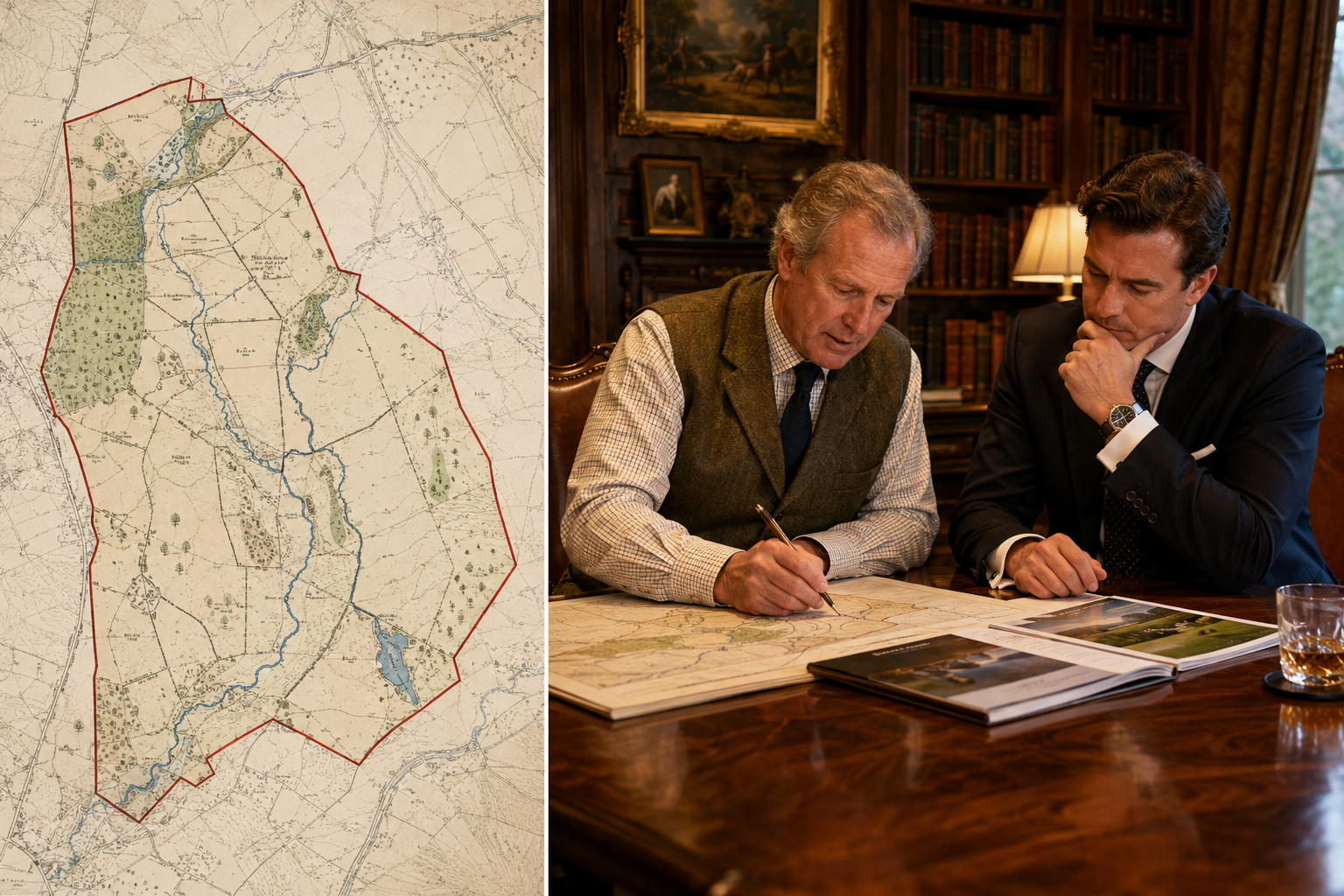
A survey report for a complex rural estate can run to 80 or more pages. The challenge is not producing enough content — it is structuring that content so that a busy buyer or a lender's underwriter can quickly identify the material risks and understand what action is required. Best practice includes:
- An executive summary at the front of the report, listing all significant findings in plain English
- A clear risk register or traffic-light summary covering the main dwelling and each outbuilding separately
- Explicit cost estimates or cost ranges for significant remedial works, even if approximate
- Clear recommendations for specialist reports, with an explanation of why each is needed
- A dedicated section on legal matters to investigate, covering drainage, access, planning, and boundaries
For buyers seeking guidance on which type of survey is appropriate for their property, the guide to choosing the right property survey offers a clear framework.
What Lenders Need to Know
Lenders have specific concerns that differ from those of the buyer. They need to understand:
- Whether the property is mortgageable in its current condition
- Whether any outbuildings or land parcels should be excluded from the security
- Whether there are any conditions that must be satisfied before funds are released
- Whether the valuation is robust given the limited comparable evidence
Down-valuations are a significant risk on unique rural properties, and they frequently arise not because the valuer is wrong but because the lender's panel criteria are too conservative for the asset class [3]. Buyers should be prepared for this possibility and should consider commissioning an independent valuation alongside the lender's instruction.
Coordinating Multiple Specialists
High-value country homes and small estates rarely require just one professional. A typical instruction might involve:
- A RICS Level 3 Building Surveyor for the main house and outbuildings
- A structural engineer for suspected movement or non-standard construction
- A drainage specialist for the private sewage system
- A boundary surveyor for disputed or unclear land boundaries — see the boundary surveys service for more detail
- An environmental consultant for contamination or flood risk
- A planning consultant for any buildings with uncertain consent status
The buyer's solicitor should coordinate these reports and ensure that all material findings are resolved — or at least understood — before exchange of contracts. Trying to address these issues after completion is invariably more expensive and more stressful.
For buyers in rural counties, working with chartered surveyors in Surrey or chartered surveyors in Oxfordshire who have direct experience of the local rural market can make a significant difference to the quality and relevance of the advice received.
Conclusion
High-value country homes and small estates demand a level of professional diligence that goes well beyond what a standard homebuyer survey can provide. Every outbuilding, every acre of paddock, every private drain, and every shared access track carries its own risk profile and its own contribution to value — and each deserves individual, expert attention.
Actionable next steps for buyers and their advisers:
- Commission a RICS Level 3 Building Survey and confirm in writing that all outbuildings and structures are included in the scope.
- Instruct a drainage specialist to carry out a CCTV survey of any private drainage system before exchange.
- Ask the valuer to confirm their methodology and comparable evidence in writing, particularly if the property is unusual or the market is thin.
- Ensure the solicitor investigates all shared access arrangements, easements, and planning compliance issues flagged in the survey.
- Budget for specialist reports — structural engineer, asbestos surveyor, environmental consultant — as part of the purchase costs, not as optional extras.
- Work with surveyors who have genuine rural and high-value property experience, ideally with knowledge of the specific county or region.
The complexity of these properties is precisely what makes them desirable. With the right professional team and a thorough due diligence process, buyers can proceed with confidence — and lenders can lend with clarity.
References
[1] Luxury Or Complex Properties – https://www.teamappraisal.com/luxury-or-complex-properties?utm_source=openai
[2] How Do You Value Land Methods Factors And Taxes – https://legalclarity.org/how-do-you-value-land-methods-factors-and-taxes/?utm_source=openai
[3] Selling A Unique Country Home How To Avoid Down Valuations – https://www.country-properties.co.uk/guides/sellers/selling-a-unique-country-home-how-to-avoid-down-valuations/?utm_source=openai
[4] Appraisals With Acreage And Outbuildings St Marys Seller Tips – https://oerealty.homes/blog/appraisals-with-acreage-and-outbuildings-st-marys-seller-tips?utm_source=openai
[5] Land Improvements Appraisal Adjustment Methodology – https://www.madisonparkappraisal.com/blog/land-improvements-appraisal-adjustment-methodology?utm_source=openai
[6] How To Appraise Land Value Methods And Key Factors – https://legalclarity.org/how-to-appraise-land-value-methods-and-key-factors/?utm_source=openai
[7] Excess Land Vs Surplus Land Appraisal Distinctions – https://legalclarity.org/excess-land-vs-surplus-land-appraisal-distinctions/?utm_source=openai
[8] Residential – https://landvest.com/consulting/appraisal/residential/?utm_source=openai