
The Housing Ombudsman reported a staggering 42% surge in hazard-related complaints during the first quarter of 2026 alone, with electrical faults and fire safety violations dominating the caseload [2]. This dramatic escalation signals a fundamental shift in the private rental sector (PRS) landscape, where landlord-tenant disputes now hinge on expert witness testimony that can withstand rigorous legal scrutiny. As Awaab's Law extends its reach beyond social housing into the PRS, Expert Witness Valuations for Awaab's Law Electrical and Fire Hazard Disputes in PRS: Building Evidence Post-2026 Expansion have become the cornerstone of defensible litigation strategies.
The 2026 expansion introduces five new hazard categories that fundamentally alter how property professionals assess risk and quantify diminution in rental values [1]. For chartered surveyors, this regulatory evolution demands mastery of both technical inspection methodologies and the evidentiary standards required in tribunal proceedings. The intersection of RICS valuation principles with Housing Health and Safety Rating System (HHSRS) assessments now determines the outcome of disputes worth millions across the rental market.
Key Takeaways
- 🔥 Fire safety and electrical risks now represent the primary focus areas in PRS hazard complaints, accounting for the majority of the 42% increase in Q1 2026 disputes
- 📊 40% increase in landlord-tenant disputes expected throughout 2026 as new hazard categories take effect across the private rental sector [1]
- ⚖️ RICS Red Book valuation standards provide the framework for defensible expert witness testimony in Awaab's Law litigation
- 🏠 Five new hazard categories introduced in the 2026 expansion require specialized assessment protocols and documentation
- 📋 Expert witness reports must integrate HHSRS scoring, photographic evidence, and quantified valuation impacts to meet tribunal standards
Understanding the 2026 Expansion of Awaab's Law in the Private Rental Sector
The legislative framework governing rental property standards underwent a seismic transformation in 2026. Originally focused on social housing following the tragic death of two-year-old Awaab Ishak from prolonged mould exposure, Awaab's Law now extends comprehensive hazard assessment requirements into the private rental sector. This expansion mandates that landlords address a broader spectrum of health and safety risks within strict timeframes, with electrical hazards and fire safety deficiencies emerging as the most contentious areas [2].
The Five New Hazard Categories
The 2026 expansion specifically targets hazards that pose immediate risks to tenant safety. These categories include:
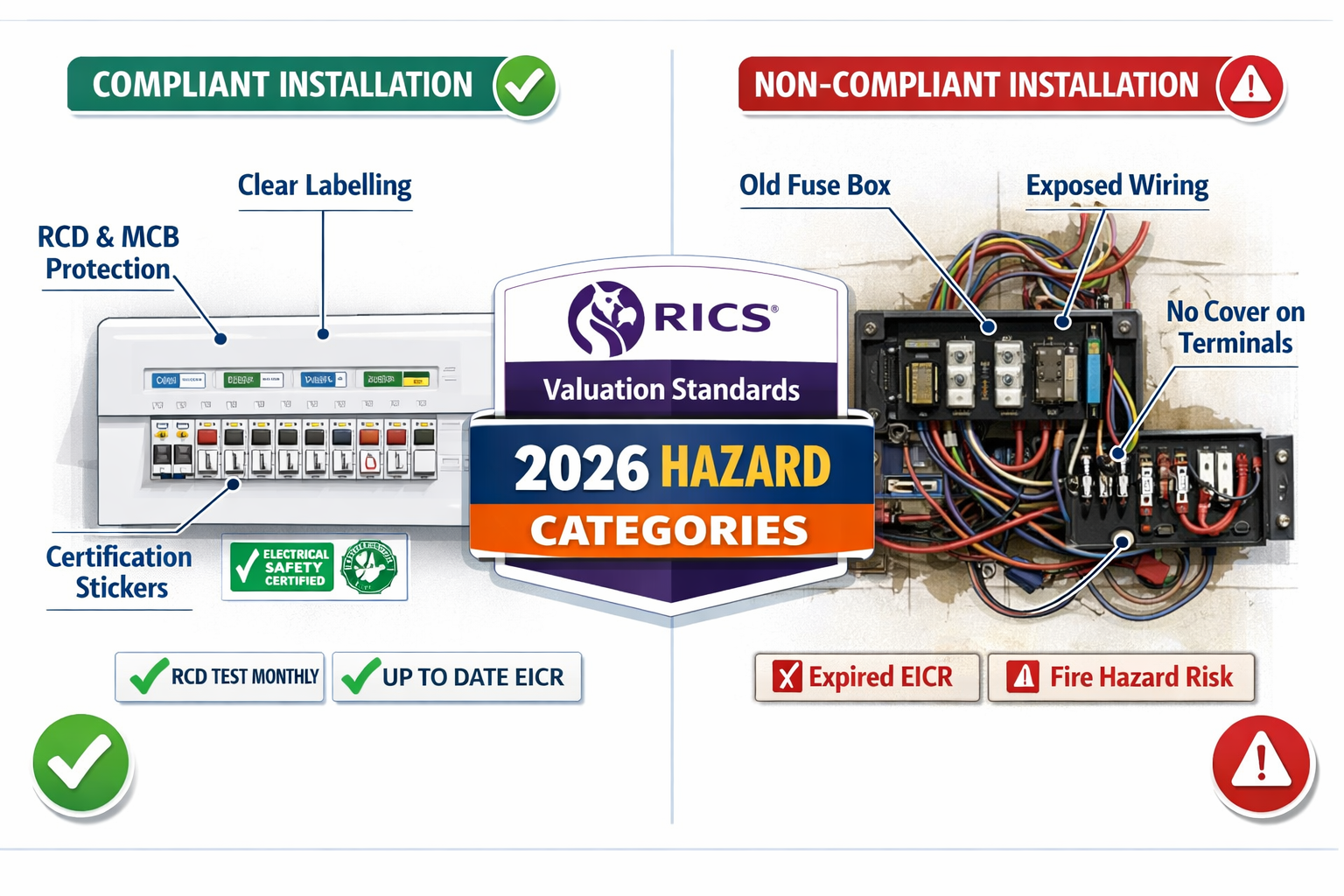
- Electrical Safety Deficiencies – Outdated wiring, missing RCD protection, overloaded circuits
- Fire Safety Violations – Inadequate escape routes, missing fire doors, non-compliant detection systems
- Temperature Control Failures – Inadequate heating systems, excessive cold, ventilation deficiencies
- Structural Fire Risks – Combustible cladding, compromised fire compartmentation
- Emergency Lighting and Signage – Missing or non-functional emergency systems in HMOs
Phase 2 of the expansion prioritizes fire safety and temperature control as interconnected hazards requiring simultaneous assessment [3]. This interconnection reflects the reality that electrical faults frequently trigger fire incidents, while inadequate heating systems contribute to condensation and subsequent mould growth.
Impact on PRS Landlords and Tenants
The regulatory shift has created a perfect storm of compliance pressures. Landlords face:
- Mandatory 14-day investigation periods following tenant complaints
- 28-day remediation deadlines for Category 1 hazards
- Financial penalties ranging from £7,000 to £30,000 for non-compliance
- Potential rent repayment orders spanning up to 12 months
Tenants, meanwhile, have gained unprecedented leverage to challenge property conditions. The expert witness services provided by chartered surveyors have become essential to substantiate claims and quantify damages in tribunal proceedings.
Building Robust Evidence: Expert Witness Valuations for Awaab's Law Electrical and Fire Hazard Disputes in PRS
Constructing defensible expert witness testimony requires a methodical approach that integrates technical inspection, regulatory compliance assessment, and valuation impact quantification. The foundation of any credible expert witness report lies in the systematic application of RICS standards combined with HHSRS scoring protocols.
RICS Red Book Valuation Framework
The RICS Red Book valuation standards provide the authoritative framework for property assessments in legal disputes. When applied to Awaab's Law cases, valuers must:
Establish the Basis of Value 📋
- Market value assuming full compliance with regulations
- Market value in current defective condition
- Cost to remedy identified hazards
- Diminution in rental income during remediation period
Apply Appropriate Valuation Methods
The methods of valuation most relevant to hazard disputes include:
| Valuation Method | Application in Hazard Disputes | Typical Adjustments |
|---|---|---|
| Comparative Method | Benchmarking against compliant properties | -15% to -35% for Category 1 electrical hazards |
| Investment Method | Calculating rental yield impact | Void period costs + remediation expenses |
| Residual Method | Major renovation scenarios | Full rewiring costs + fire safety upgrades |
| Profits Method | HMO properties with multiple hazards | Lost licensing income + tenant compensation |
Technical Inspection Protocols
Expert witnesses must conduct comprehensive building surveys that document every aspect of the alleged hazards. For electrical and fire safety disputes, this includes:
Electrical System Assessment ⚡
- Age and condition of consumer unit
- Presence and functionality of RCD protection
- Condition of visible wiring and accessories
- Evidence of DIY modifications or non-compliant work
- Date of last Electrical Installation Condition Report (EICR)
- Compliance with BS 7671 (18th Edition) wiring regulations
Fire Safety Evaluation 🔥
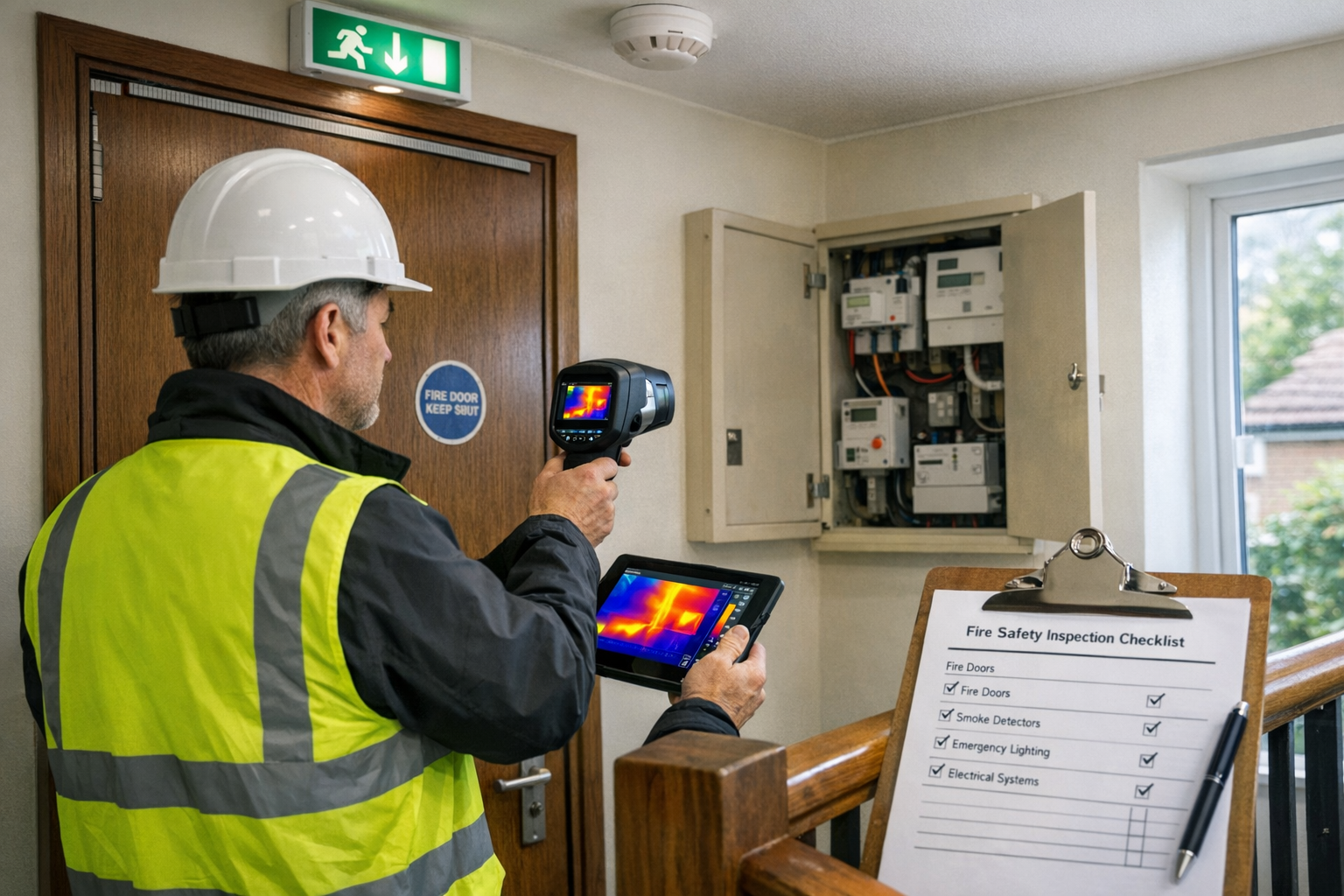
- Fire detection and alarm system adequacy
- Emergency escape route assessment
- Fire door compliance (FD30/FD60 ratings, intumescent strips, self-closers)
- Compartmentation integrity
- Emergency lighting functionality
- Portable appliance testing (PAT) records
HHSRS Scoring and Category Classification
The Housing Health and Safety Rating System provides the statutory framework for hazard assessment. Expert witnesses must demonstrate competency in:
- Likelihood of occurrence scoring (1-10 scale)
- Severity of harm classification (Classes I-IV)
- Vulnerable group identification and exposure assessment
- Category 1 vs Category 2 hazard determination
A Category 1 electrical hazard (HHSRS score >1,000) typically involves imminent risk of electric shock or fire, such as exposed live conductors or absence of RCD protection on socket circuits. The expert witness must articulate how the specific deficiency meets the threshold criteria and quantify the associated risks.
Quantifying Valuation Impact in Expert Witness Valuations for Awaab's Law Electrical and Fire Hazard Disputes in PRS
The financial consequences of electrical and fire hazards extend far beyond simple repair costs. Expert witnesses must construct comprehensive valuation models that capture the full economic impact on both landlords and tenants.
Diminution in Property Value
Properties with documented hazards suffer measurable value reductions that expert witnesses must quantify with precision. The diminution typically encompasses:
Direct Value Impact
- Immediate stigma effect: 10-20% reduction in market value for properties with recent fire incidents
- Compliance deficit: 5-15% reduction for properties requiring complete electrical rewiring
- Marketability impairment: Extended marketing periods adding 8-12 weeks to typical sale timelines
Indirect Financial Consequences
- Higher insurance premiums (typically 25-40% increases)
- Mandatory safety certificates reducing net yield
- Potential mortgage lending restrictions
- Future disclosure obligations affecting resale value
Rental Income Loss Calculations
For investment properties, expert witnesses must quantify the rental income implications:
Total Financial Impact = Lost Rent + Remediation Costs + Legal Fees + Compensation
Example Calculation for Category 1 Electrical Hazard:
- Monthly rental value: £1,500
- Investigation period: 14 days = £700 lost rent
- Remediation period: 21 days = £1,050 lost rent
- Rewiring costs: £5,500
- EICR and certification: £350
- Rent repayment order (3 months): £4,500
- Total landlord liability: £12,100
The registered RICS valuers must support these calculations with comparable evidence from similar cases and local market data.
Tenant Compensation Assessment
Expert witnesses frequently testify regarding appropriate compensation for tenants who have endured hazardous conditions. The assessment framework includes:
Quantifiable Damages 💷
- Rent overpayment for substandard accommodation
- Temporary accommodation costs during remediation
- Damaged personal property (electrical surge damage, fire-related losses)
- Medical expenses related to hazard exposure
Non-Quantifiable Damages
- Stress and inconvenience (typically 25-50% of rent during affected period)
- Loss of quiet enjoyment
- Health impact from anxiety about safety risks
Building the Evidential Chain
The most effective expert witness reports establish an unbroken chain of evidence connecting the identified hazards to quantified financial impacts. This requires:
- Photographic Documentation – Timestamped images showing defects from multiple angles
- Technical Test Results – EICR outcomes, thermal imaging data, smoke alarm testing records
- Regulatory Benchmarking – Comparison against current Building Regulations and BS standards
- Market Evidence – Comparable property values and rental rates
- Cost Verification – Contractor quotations for remediation works
- Timeline Analysis – Chronology of complaint, investigation, and remediation periods
Commercial building surveys for multi-unit properties require additional complexity, as hazards may affect multiple tenancies simultaneously.
Preparing Expert Witness Testimony for Tribunal Proceedings
The transition from written report to oral testimony represents a critical juncture in Awaab's Law disputes. Expert witnesses must prepare to defend their valuations under cross-examination while maintaining professional objectivity.
Report Structure and Content Requirements
A defensible expert witness report follows a standardized structure:
Executive Summary
- Property identification and inspection date
- Key hazards identified with HHSRS scores
- Valuation conclusions and financial impact summary
Qualifications and Independence
- Professional credentials (MRICS, FRICS)
- Relevant experience in hazard assessment
- Declaration of conflicts of interest
- Confirmation of expert witness duty to tribunal
Methodology Section
- Inspection protocols employed
- Standards and regulations referenced
- Valuation approaches applied
- Limitations and assumptions
Findings and Analysis
- Detailed hazard descriptions with photographic evidence
- HHSRS scoring rationale
- Compliance gap analysis
- Valuation calculations with supporting data
Conclusions and Recommendations
- Summary of financial impacts
- Remediation cost estimates
- Opinion on liability and causation
Cross-Examination Preparation
Opposing counsel will challenge every aspect of the valuation. Common attack vectors include:
Technical Competency Challenges 🎯
- Questioning electrical testing methodology
- Disputing HHSRS scoring interpretation
- Challenging comparables selection
- Contesting cost estimates
Independence and Bias Allegations
- Scrutinizing fee arrangements
- Highlighting previous work for instructing party
- Questioning assumption selection
Methodology Disputes
- Challenging inspection adequacy
- Disputing valuation approach selection
- Questioning market evidence relevance
Effective expert witnesses prepare by:
- Conducting mock cross-examinations
- Reviewing all source documentation
- Preparing clear visual aids and summaries
- Maintaining contemporaneous inspection notes
- Ensuring all calculations are fully auditable
The Role of Specialist Surveys
Complex cases may require supplementary specialist reports to support the primary valuation. These include:
- Damp surveys to establish interconnection between electrical faults and moisture ingress
- Structural surveys to assess fire compartmentation integrity
- Specific defect reports focusing on individual hazard categories
The integration of multiple specialist reports strengthens the overall evidential basis and demonstrates thoroughness.
Case Study Applications and Practical Considerations
Understanding how Expert Witness Valuations for Awaab's Law Electrical and Fire Hazard Disputes in PRS: Building Evidence Post-2026 Expansion apply in real-world scenarios illuminates best practices and common pitfalls.
Case Study: Victorian Conversion with Electrical Deficiencies
Property Profile:
- Three-bedroom flat in converted Victorian house
- Last rewired in 1985
- No RCD protection on socket circuits
- Exposed cables in bathroom
- Tenant complaint filed February 2026
Expert Witness Findings:
- HHSRS Score: 1,850 (Category 1 hazard)
- Immediate risk of electric shock in bathroom
- Non-compliance with 18th Edition regulations
- Fire risk from overloaded circuits
Valuation Impact:
- Market rent (compliant condition): £1,800/month
- Actual achievable rent: £1,350/month (25% reduction)
- Remediation cost: £6,800 (full rewire + certification)
- Tenant compensation: £5,400 (3 months rent repayment)
- Total landlord liability: £12,200
Tribunal Outcome:
The expert witness testimony proved decisive, with the tribunal accepting the valuation methodology and awarding the tenant full compensation plus costs.
Case Study: HMO Fire Safety Violations
Property Profile:
- Five-bedroom HMO
- Missing fire doors on bedrooms
- Inadequate emergency lighting
- Single-point smoke detection (non-interconnected)
- Landlord failed to remediate within 28 days
Expert Witness Findings:
- Multiple Category 1 fire hazards (HHSRS scores 1,200-2,100)
- Non-compliance with HMO licensing conditions
- Breach of Regulatory Reform (Fire Safety) Order 2005
Valuation Impact:
- Licensing suspension period: 12 weeks
- Lost rental income: £18,000 (5 rooms × £900/month × 3 months)
- Fire safety upgrades: £14,500
- Civil penalty: £20,000
- Total financial consequence: £52,500
Key Learning Point:
The expert witness demonstrated how interconnected hazards (electrical + fire safety) compound both the risk profile and financial liability, resulting in significantly higher penalties.
Future Implications and Emerging Trends
The 2026 expansion represents only the beginning of an evolving regulatory landscape. Expert witnesses must anticipate future developments to provide forward-looking advice.
Anticipated Regulatory Developments
2027-2028 Horizon:
- Extension to Houses in Multiple Occupation (HMO) with enhanced standards
- Introduction of mandatory five-year electrical testing cycles
- Digital hazard reporting platforms with real-time compliance tracking
- Increased penalties for repeat offenders (up to £50,000)
Technology Integration:
- Thermal imaging becoming standard inspection tool
- IoT-enabled hazard monitoring systems
- Blockchain-verified compliance certificates
- AI-assisted HHSRS scoring
Professional Development Requirements
Chartered surveyors providing expert witness services must maintain current competency through:
- Annual CPD in electrical and fire safety standards (minimum 10 hours)
- HHSRS assessment training and periodic recertification
- Expert witness skills development including mock tribunal participation
- Technical standards updates (BS 7671, Building Regulations Part B, etc.)
The price of valuation services for expert witness work reflects this enhanced specialization, with fees typically ranging from £1,500-£3,500 for comprehensive reports in Awaab's Law disputes.
Conclusion
Expert Witness Valuations for Awaab's Law Electrical and Fire Hazard Disputes in PRS: Building Evidence Post-2026 Expansion have become an indispensable component of rental property litigation. The 42% surge in hazard-related complaints during Q1 2026 demonstrates the immediate impact of regulatory expansion, while the anticipated 40% overall increase in disputes throughout the year underscores the growing demand for qualified expert witnesses [1][2].
Success in this specialized field requires the integration of multiple competencies: technical inspection expertise, HHSRS assessment proficiency, RICS valuation standards mastery, and effective tribunal communication skills. The financial stakes are substantial, with individual cases regularly involving liabilities exceeding £50,000 when multiple hazards interact.
Actionable Next Steps
For Landlords:
- Commission comprehensive RICS building surveys to identify potential hazards before tenant complaints arise
- Maintain current electrical certificates (maximum 5-year intervals, 1-year for HMOs)
- Implement proactive fire safety audits with documented remediation plans
- Engage registered RICS valuers for early assessment if disputes emerge
For Tenants:
- Document all hazard concerns with timestamped photographs and written communications
- Request formal HHSRS assessments from local authority environmental health teams
- Seek early expert witness consultation to understand potential compensation entitlements
- Preserve evidence of financial losses and health impacts
For Property Professionals:
- Invest in specialized training for Awaab's Law compliance and expert witness testimony
- Develop standardized inspection protocols incorporating the five new hazard categories
- Build referral networks with electrical contractors and fire safety specialists
- Maintain comprehensive professional indemnity insurance covering expert witness work
The evolution of Awaab's Law from social housing protection to comprehensive PRS regulation represents a watershed moment in tenant safety standards. Expert witnesses who can navigate this complex intersection of technical assessment, regulatory compliance, and valuation methodology will play a pivotal role in shaping fair outcomes for all parties in the years ahead.
References
[1] Expert Witness Preparation For Awaabs Law Expansion Disputes 2026 Hazard Assessments In Rental Valuations – https://nottinghillsurveyors.com/blog/expert-witness-preparation-for-awaabs-law-expansion-disputes-2026-hazard-assessments-in-rental-valuations
[2] Expert Witness Preparation For Awaabs Law 2026 Expansions Testifying On New Rental Hazards Like Fire And Electrical Risks – https://nottinghillsurveyors.com/blog/expert-witness-preparation-for-awaabs-law-2026-expansions-testifying-on-new-rental-hazards-like-fire-and-electrical-risks
[3] Building Surveys And Awaabs Law 2026 Extensions Identifying Electrical Fire And Temperature Hazards In Prs Properties – https://nottinghillsurveyors.com/blog/building-surveys-and-awaabs-law-2026-extensions-identifying-electrical-fire-and-temperature-hazards-in-prs-properties