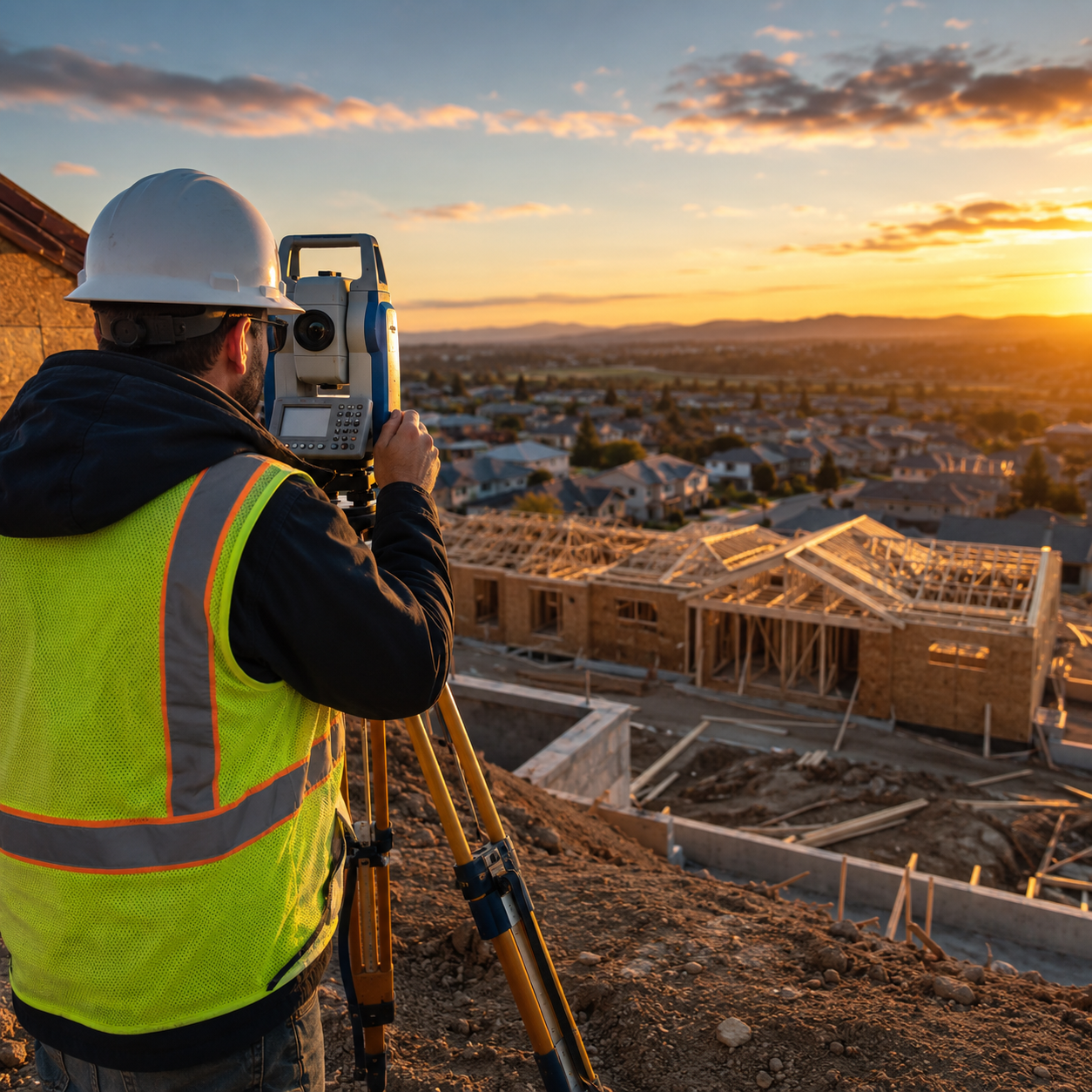
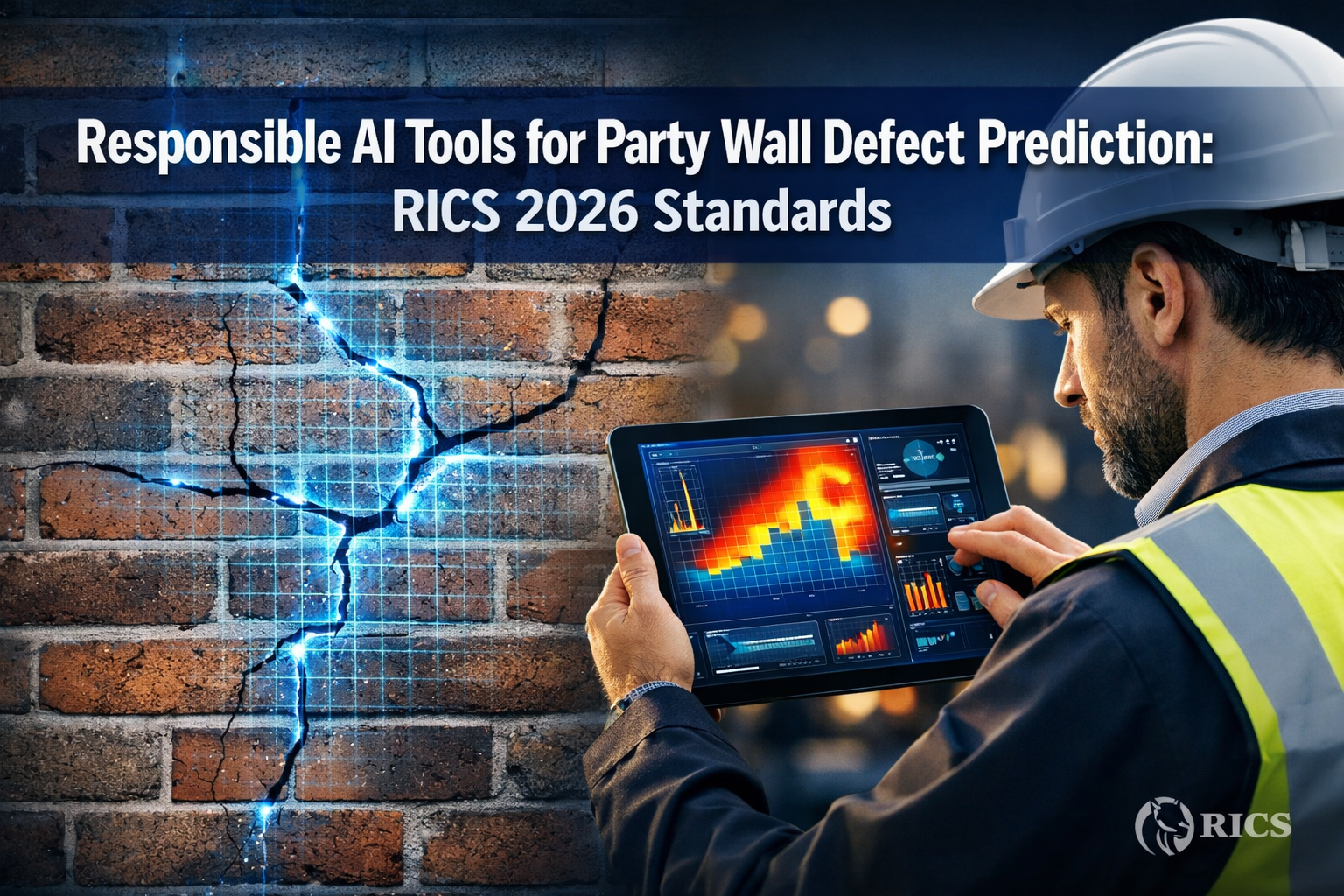
The Royal Institution of Chartered Surveyors (RICS) made history on March 9, 2026, when its first-ever global professional standard for responsible artificial intelligence use came into effect—a watershed moment that fundamentally reshapes how surveyors approach party wall defect prediction and assessment.[2][3] This groundbreaking standard arrives at a critical juncture, as AI-powered tools increasingly promise to detect structural issues like cracks, vibrations, and moisture damage in shared walls before they escalate into costly disputes.
Responsible AI Tools for Party Wall Defect Prediction: RICS 2026 Standards and Practical Surveyor Applications represents more than just technological advancement—it establishes ethical guardrails for an industry where professional judgment can mean the difference between preventative intervention and catastrophic failure. For surveyors navigating complex party wall scenarios during extensions, renovations, or excavations, understanding these new requirements isn't optional.
Key Takeaways
- ✅ RICS 2026 AI standard became mandatory March 9, 2026, requiring all members using AI to demonstrate understanding of AI types, limitations, bias risks, and data security[2][3]
- 🏗️ AI tools analyze visual data to detect party wall defects including cracks, damp, corrosion, and structural deviations using machine learning and computer vision algorithms[1]
- 📋 Four core compliance areas: governance and risk management, professional judgment and oversight, transparency and client communication, and responsible AI development[3]
- ⚖️ Surveyors remain fully accountable for all professional advice regardless of AI tool involvement—technology supports but never replaces human expertise[1][3]
- 🎯 Firms must implement AI use policies informed by risk registers and conduct governance assessments before deploying AI systems[2]
Understanding the RICS 2026 AI Standard Framework
The March 2026 implementation of RICS' responsible AI standard marks a pivotal shift in professional surveying practice. Unlike voluntary guidelines, this standard applies to all RICS members and regulated firms globally, creating a unified approach to artificial intelligence deployment across the surveying profession.[2][3]
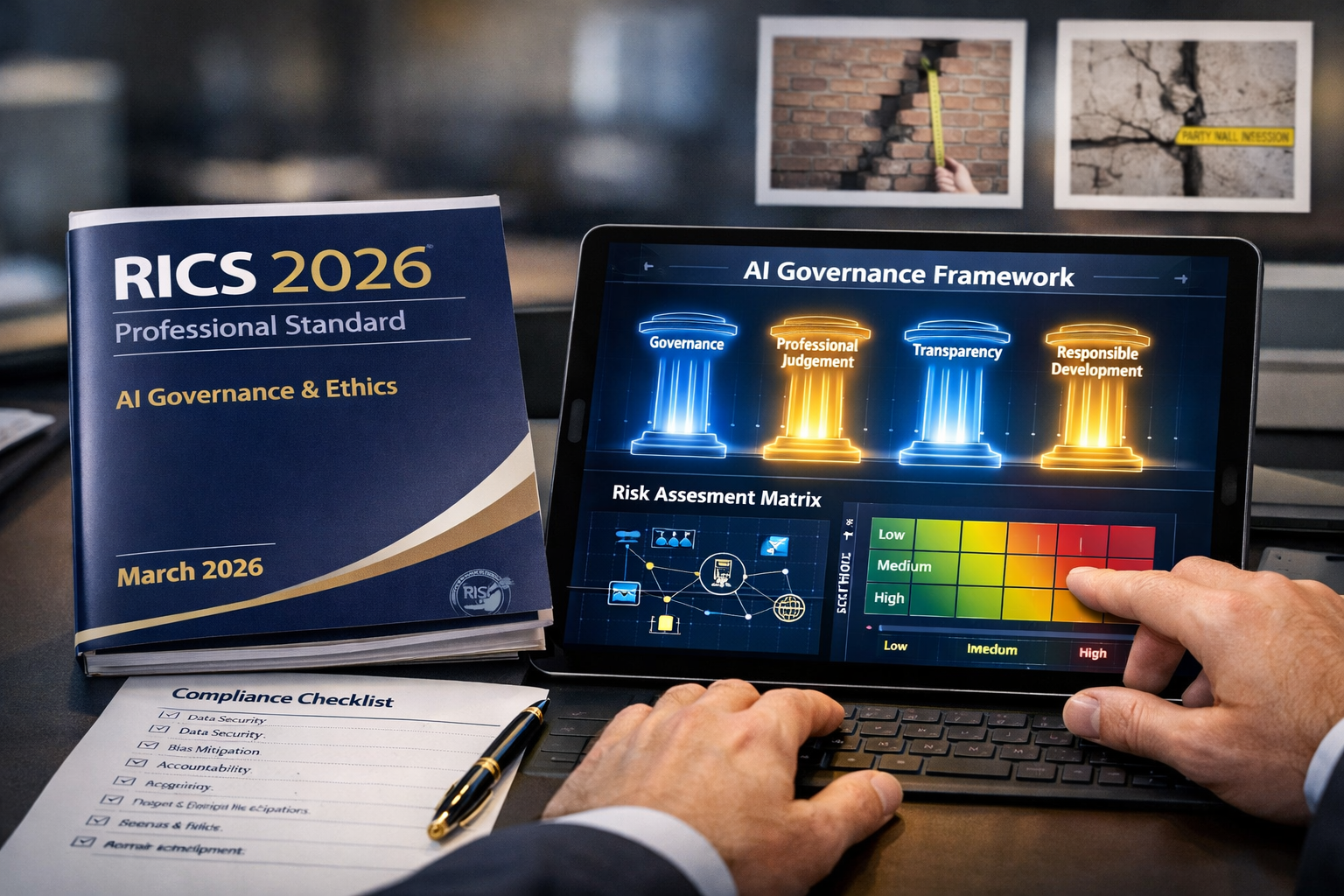
The Four Pillars of Compliance
The standard establishes requirements across four critical domains that surveyors must address when implementing AI tools for party wall defect prediction:[3]
| Pillar | Key Requirements | Party Wall Application |
|---|---|---|
| Governance & Risk Management | Develop AI use policies, maintain risk registers, conduct system assessments | Document AI tool capabilities and limitations in party wall surveys |
| Professional Judgment & Oversight | Human validation of AI outputs, contextual review, accountability maintenance | Surveyor verification of AI-detected cracks or structural concerns |
| Transparency & Client Communication | Disclose AI use when material to service delivery, explain AI role in assessments | Inform property owners when AI contributes to damage assessments |
| Responsible Development | Ensure ethical AI design, address bias, protect data privacy | Verify training data represents diverse party wall construction types |
Who Must Comply and When
An important clarification: RICS members are not required to use AI.[2] However, those who choose to deploy AI tools for party wall defect prediction must demonstrate comprehensive understanding of:
- 🤖 Different AI types and their operational mechanisms
- ⚠️ System limitations and potential failure modes
- 🎲 Risks of erroneous outputs (hallucinations)
- ⚖️ Bias risks inherent in training data
- 🔒 Data usage protocols and security risks
For RICS-regulated firms, the requirements extend further. These organizations must develop and implement formal responsible AI use policies informed by detailed risk registers, and complete system governance assessment procedures before deploying any AI system.[2]
How AI Tools Detect and Predict Party Wall Defects
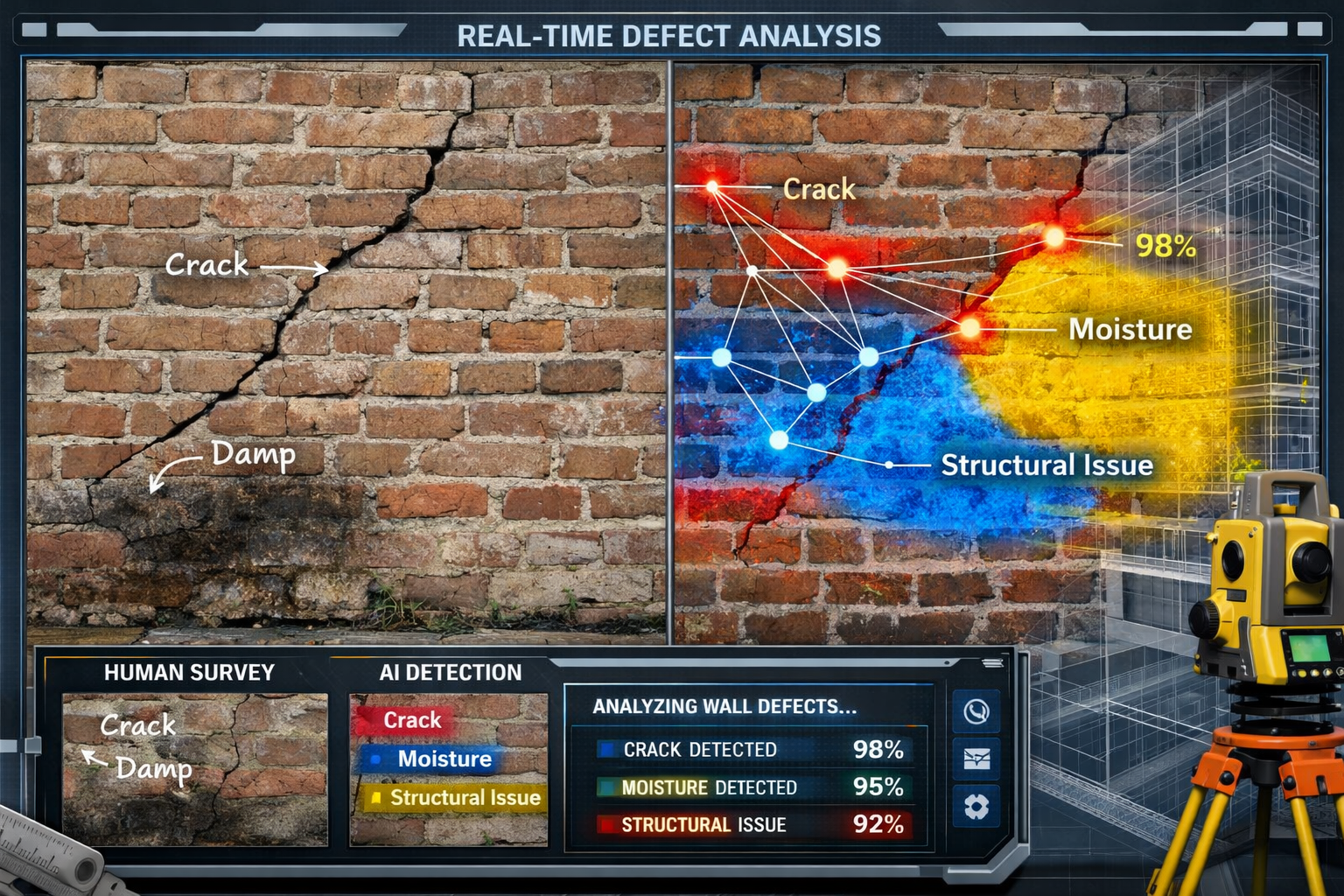
Artificial intelligence has transformed party wall defect detection from reactive assessment to proactive prediction. Modern AI systems employ machine learning and computer vision algorithms to analyze visual footage and identify potential structural issues including cracks, damp penetration, corrosion, and incomplete installation work.[1]
The Technology Behind AI Defect Detection
AI-powered surveying tools process high-resolution images and video footage captured during specialist defect surveys, comparing visual site data against Building Information Modelling (BIM) specifications and construction schedules in real time.[1] This capability proves particularly valuable during construction phases when early defect identification prevents costly rework.
Key technological capabilities include:
- 📸 Image recognition algorithms that identify crack patterns, moisture stains, and structural deformations
- 📊 Predictive analytics that forecast defect progression based on historical data
- 🔍 Thermal imaging analysis detecting hidden moisture or insulation failures
- 📐 Dimensional variance detection comparing actual construction against approved plans
- ⏱️ Temporal analysis tracking defect evolution across multiple inspection visits
Real-World Applications in Party Wall Scenarios
When property owners undertake extension work near shared boundaries, AI tools can monitor potential impacts on adjacent structures. For example, when assessing compliance with the three-meter rule for excavations, AI systems can analyze ground movement data and predict settlement risks before visible damage occurs.
During basement conversions or foundation work, AI algorithms process vibration sensor data alongside visual inspections to detect micro-movements in party walls that might indicate structural stress. This proactive approach allows surveyors to recommend remedial action before minor issues escalate into disputes requiring formal party wall awards.
Critical Limitations Surveyors Must Understand
The RICS standard emphasizes that accuracy of AI output depends heavily on input quality.[1] Poor lighting conditions, low-resolution imagery, or obstructed views can significantly distort assessment results. Surveyors must recognize these constraints when interpreting AI-generated defect predictions.
Moreover, the reliability of AI-processed information remains challenging to fully understand, as it's not always transparent how the model prioritizes or interprets foundational data.[1] This opacity necessitates rigorous human professional oversight to maintain quality, accountability, and client trust—a principle embedded throughout the 2026 standard.
Practical Integration of Responsible AI Tools for Party Wall Defect Prediction: RICS 2026 Standards and Practical Surveyor Applications
Implementing AI tools within the RICS 2026 framework requires surveyors to balance technological capabilities with professional responsibility. The standard makes clear that AI must support but never replace human professional expertise.[1]
Determining Material Impact on Service Delivery
One of the most nuanced aspects of the standard involves determining when AI use has had a "material impact" on service delivery. According to RICS guidance, this occurs when AI tools:[2]
- ✍️ Summarize documents that inform professional opinions
- 📝 Compose portions of professional reports or recommendations
- 🔎 Identify specific areas requiring further investigation
- 📊 Generate data analysis that influences conclusions
For party wall surveyors, this means disclosing AI involvement when tools contribute to schedule of condition reports, defect identification, or damage causation analysis. Transparency doesn't diminish professional credibility—it demonstrates adherence to ethical standards while leveraging technological advantages.
Step-by-Step Integration Framework
Phase 1: Pre-Deployment Assessment
Before incorporating AI tools into party wall practice, surveyors should:
- Conduct risk assessment – Identify potential failure modes specific to party wall applications
- Evaluate training data – Verify the AI system was trained on diverse construction types representative of local building stock
- Test accuracy – Compare AI outputs against known defects in controlled scenarios
- Document limitations – Create clear records of what the system can and cannot reliably detect
Phase 2: Operational Integration
During active use for party wall defect prediction:
- 🔄 Validate all AI outputs through direct physical inspection
- 📋 Maintain audit trails documenting AI recommendations and human decisions
- 💬 Communicate clearly with property owners about AI's role in the assessment
- ⚖️ Apply professional judgment to contextualize AI findings within broader structural understanding
Phase 3: Quality Assurance
Ongoing compliance requires:
- Regular calibration checks comparing AI predictions against actual defect outcomes
- Periodic review of false positive and false negative rates
- Updates to risk registers as new limitations emerge
- Continuous professional development on AI capabilities and constraints
Case Study: AI in Extension-Related Party Wall Monitoring
Consider a scenario where a property owner plans a two-story rear extension requiring foundation excavation within three meters of a neighboring property. Traditional practice involves pre-commencement condition surveys and periodic visual inspections during construction.
With responsible AI integration under the 2026 standard, the surveyor might:
- Establish baseline using high-resolution photography and AI-assisted defect mapping of the existing party wall
- Deploy continuous monitoring with vibration sensors and periodic imaging analyzed by AI algorithms
- Receive automated alerts when AI detects new crack formation or crack propagation exceeding predetermined thresholds
- Conduct immediate physical verification of any AI-flagged concerns
- Document the process transparently in party wall awards and correspondence
Critically, the surveyor remains accountable for all professional advice despite AI involvement. If the AI system fails to detect a developing defect that a competent surveyor should have identified, professional responsibility rests with the human practitioner, not the technology.[3]
Addressing Bias and Data Quality Concerns
The responsible development pillar of the RICS standard requires surveyors to consider whether AI training data adequately represents the diversity of party wall construction encountered in practice. Older properties with solid brick walls, Victorian terraces with lime mortar, and modern cavity wall construction may exhibit different defect patterns.
An AI system trained predominantly on modern construction might misinterpret historic building movement as active defects, leading to unnecessary alarm and intervention. Conversely, systems lacking exposure to traditional construction techniques might fail to recognize significant issues in period properties.
Surveyors must actively question and verify the provenance and representativeness of AI training datasets, particularly when working across diverse building typologies.
Cost Considerations and Return on Investment
While the RICS 2026 standard doesn't mandate AI adoption, firms considering these tools must weigh implementation costs against potential benefits. Initial investment includes software licensing, hardware for data capture, staff training, and policy development to ensure compliance.
For practices handling substantial party wall caseloads, AI tools can reduce inspection time, improve defect detection rates, and provide compelling visual evidence for party wall awards. However, smaller practices might find traditional methods more cost-effective given the governance overhead required by the standard.
Understanding party wall cost structures helps contextualize AI investment decisions. If AI tools enable earlier defect detection that prevents disputes and reduces liability exposure, the return on investment may justify initial expenditure.
Professional Development and Competency Requirements
The RICS 2026 standard implicitly requires ongoing professional development in AI literacy. Surveyors cannot demonstrate "basic understanding of AI types and their workings" without dedicated learning.[2]
Professional development should encompass:
- 📚 Technical fundamentals – How machine learning models process visual data
- 🎯 Practical application – Hands-on experience with AI surveying tools
- ⚖️ Ethical considerations – Bias recognition and mitigation strategies
- 📜 Regulatory compliance – RICS standard requirements and documentation protocols
- 🔄 Continuous learning – Staying current as AI capabilities evolve
Many surveyors already possess strong technical skills from conducting RICS building surveys and structural surveys. The challenge lies in extending this expertise into the AI domain while maintaining the human judgment that defines professional practice.
Future Directions and Emerging Applications
The March 2026 implementation of the RICS AI standard represents just the beginning of AI integration in party wall practice. Emerging applications on the horizon include:
- 🌐 Integrated sensor networks providing continuous party wall monitoring during construction projects
- 🤖 Predictive maintenance algorithms forecasting when shared structures require intervention
- 📱 Mobile AI applications enabling real-time defect assessment during site visits
- 🔗 Blockchain-verified AI reports creating immutable records of condition assessments
- 🧠 Natural language processing automating party wall notice drafting and correspondence
As these technologies mature, the RICS standard will likely evolve, potentially introducing more specific technical requirements or expanding governance frameworks. Surveyors who develop AI competency now position themselves advantageously for these developments.
Conclusion
Responsible AI Tools for Party Wall Defect Prediction: RICS 2026 Standards and Practical Surveyor Applications represents a fundamental evolution in professional surveying practice. The March 2026 implementation of RICS' first global AI standard establishes clear ethical guardrails while enabling surveyors to leverage powerful predictive technologies for detecting cracks, moisture damage, and structural issues in shared walls.
The standard's four pillars—governance and risk management, professional judgment and oversight, transparency and client communication, and responsible development—create a comprehensive framework that protects both practitioners and property owners. Critically, the standard reinforces that surveyors remain fully accountable for all professional advice, regardless of technological assistance.
Actionable Next Steps for Surveyors
If you currently use or plan to use AI tools:
- ✅ Audit your current AI usage against the four RICS compliance pillars
- 📋 Develop formal AI use policies with documented risk registers
- 🎓 Invest in professional development to build AI literacy
- 💬 Review client communication protocols to ensure transparency about AI involvement
- 🔍 Implement validation procedures requiring human verification of all AI outputs
If you practice traditional methods:
- Stay informed about AI capabilities and limitations to advise clients effectively
- Consider how AI tools might enhance specific aspects of your practice
- Understand the standard's requirements should you adopt AI in future
- Recognize that competitors using AI responsibly may gain efficiency advantages
The integration of AI into party wall defect prediction offers tremendous potential for early intervention, dispute prevention, and enhanced professional service delivery. However, this potential can only be realized through responsible implementation that prioritizes professional judgment, transparency, and accountability—precisely what the RICS 2026 standard demands.
For surveyors navigating party wall matters, from excavation notices to obstruction resolution, understanding these new standards isn't just about compliance—it's about maintaining professional excellence in an evolving technological landscape.
References
[1] Ruai Case Studies 06 – https://www.rics.org/profession-standards/rics-standards-and-guidance/conduct-competence/responsible-use-of-ai/ruai-case-studies-06
[2] Ai Responsible Use Standard – https://ww3.rics.org/uk/en/journals/construction-journal/ai-responsible-use-standard.html
[3] Rics First Ever Standard On Responsible Ai Use Now In Effect – https://www.rics.org/news-insights/rics-first-ever-standard-on-responsible-ai-use-now-in-effect