

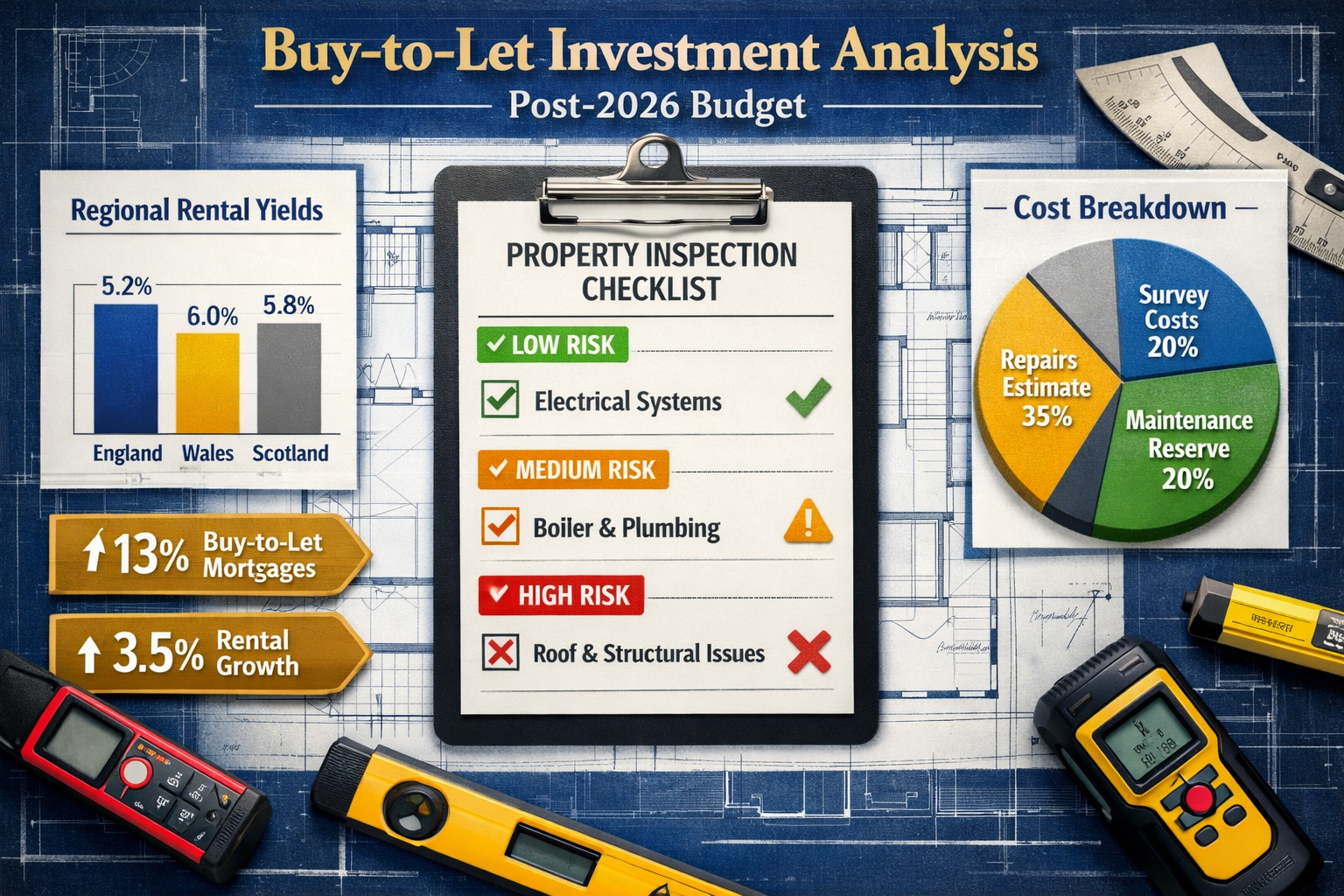
The UK rental market is entering a new phase in 2026. After years of rapid rent increases and landlord uncertainty, Building Surveys for Post-Budget Rental Recovery: Spotting Risks in Buy-to-Let Amid Stabilizing Yields has become essential for property investors navigating this changing landscape. With buy-to-let mortgage applications rising by 13% and rental growth moderating to a more sustainable 3.5% annually[3], landlords are returning to the market with renewed confidence—but success depends on identifying hidden property risks before they erode investment returns.
The current market presents both opportunity and challenge. While rental yields are stabilizing and demand remains strong due to persistent supply shortages[2], the properties entering buy-to-let portfolios require thorough inspection to avoid costly surprises. Professional building surveys have never been more critical for landlords seeking to maximize returns while minimizing risk in this post-budget recovery period.
Key Takeaways
- 📊 Rental growth is moderating: UK rents increased 3.5% annually to £1,367/month in January 2026, down from 4.0% in December 2025, signaling market stabilization[1]
- 🏠 Landlord confidence is returning: Buy-to-let purchase mortgages rose 13% and remortgages jumped 23%, indicating renewed investment activity[3]
- 🔍 Professional surveys are essential: Comprehensive building surveys identify structural defects, damp issues, and maintenance liabilities that can significantly impact rental yields
- 📍 Regional variation matters: Wales leads with 5.8% rent growth, while Scotland shows 2.6% growth, requiring location-specific investment strategies[1]
- ⚠️ Supply constraints persist: Record-low rental listings create opportunities for well-maintained properties but increase competition for quality stock[2]
Understanding the 2026 Rental Market Recovery Context
The Post-Budget Landscape for Buy-to-Let Investors
The rental market in 2026 represents a significant shift from the volatility of recent years. Average UK private rents reached £1,367 per month in January 2026, reflecting a 3.5% annual increase that marks a deceleration from the 4.0% growth recorded just one month earlier[1]. This moderation suggests the market is moving toward sustainable growth rather than the unsustainable spikes that characterized 2023 and 2024.
For landlords, this stabilization creates a more predictable investment environment. Rightmove forecasts approximately 2% national rent increases during 2026[3], providing clearer expectations for yield calculations and long-term planning. However, this controlled growth also means that profit margins depend more heavily on property condition and maintenance costs—factors that professional RICS building surveys can help identify and quantify.
Regional Variations in Rental Demand and Yields
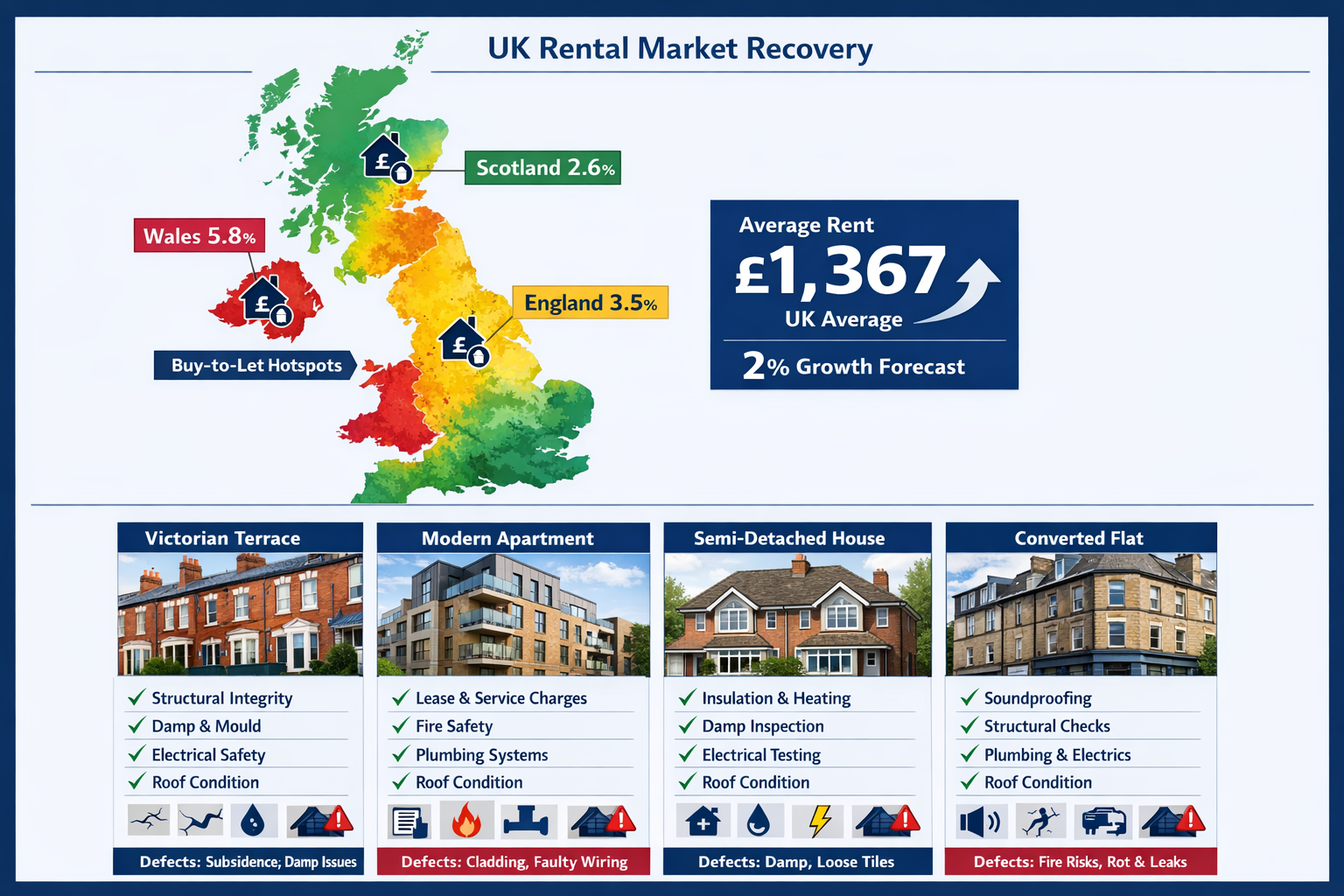
The rental recovery is far from uniform across the UK. Regional data from January 2026 reveals significant geographical variation:
| Region | Average Monthly Rent | Annual Growth Rate |
|---|---|---|
| England | £1,423 | 3.5% |
| Wales | £826 | 5.8% |
| Scotland | £1,021 | 2.6% |
| UK Average | £1,367 | 3.5% |
Wales demonstrates the strongest rental growth at 5.8%[1], making it an attractive market for buy-to-let investors seeking higher yield potential. However, properties in Wales often include older housing stock that requires careful inspection for structural issues, damp problems, and maintenance requirements. Scotland's more modest 2.6% growth reflects a different market dynamic, with supply and demand factors varying significantly from England and Wales.
Understanding these regional differences is crucial when commissioning building surveys. A Level 3 RICS Building Survey in Wales might prioritize different defects than one in Scotland, reflecting the age, construction type, and common issues prevalent in each region's housing stock.
Supply Constraints and Investment Opportunities
The UK private rented sector faces a deepening supply crisis with rental listings at record lows[2]. This shortage creates a favorable environment for landlords who can offer well-maintained properties, as tenant demand significantly outstrips available supply. However, the supply constraint also means that investors may face pressure to acquire properties quickly, potentially overlooking critical defects in their haste.
The 23% increase in landlord remortgages[3] indicates that existing landlords are refinancing to take advantage of improving mortgage rates and market conditions. This activity, combined with the 13% rise in buy-to-let purchase mortgages, demonstrates renewed confidence in the sector's fundamentals despite recent regulatory and tax challenges.
Building Surveys for Post-Budget Rental Recovery: Essential Defect Identification
Why Comprehensive Building Surveys Matter More Than Ever
In the context of stabilizing yields and renewed landlord activity, Building Surveys for Post-Budget Rental Recovery: Spotting Risks in Buy-to-Let Amid Stabilizing Yields serves as insurance against unexpected costs that can quickly erode rental profits. With rental growth moderating to 2-3.5% annually[1][3], landlords cannot afford to absorb major repair costs that weren't identified before purchase.
A comprehensive building survey provides several critical advantages:
✅ Accurate cost forecasting: Identifies repair and maintenance requirements, allowing precise budget planning
✅ Negotiation leverage: Defects discovered during survey can justify price reductions or seller-funded repairs
✅ Regulatory compliance: Ensures properties meet current safety standards for rental properties
✅ Insurance protection: Detailed documentation of property condition at purchase protects against future disputes
✅ Investment validation: Confirms that expected rental yields account for realistic maintenance costs
The difference between a profitable buy-to-let investment and a financial burden often lies in the quality of the pre-purchase survey. Choosing the right property survey for your specific property type and investment goals is the first critical decision.
Common Defects in Buy-to-Let Properties That Impact Yields
Building surveys for rental properties should focus on defects that directly affect tenant satisfaction, ongoing costs, and regulatory compliance. The most significant issues include:
🏚️ Structural Problems
Subsidence and settlement remain among the most expensive defects to remedy. Signs include:
- Diagonal cracks wider than 3mm, especially near doors and windows
- Cracks that are wider at the top than bottom
- Doors and windows that stick or won't close properly
- Gaps between walls and ceilings or floors
Subsidence repairs can cost £10,000-£50,000+ depending on severity, making early identification essential. A structural survey can assess foundation integrity and recommend monitoring or remediation.
💧 Damp and Water Penetration
Damp issues are particularly problematic in rental properties because they:
- Affect tenant health and satisfaction
- Lead to mold growth requiring ongoing treatment
- Damage interior finishes and furnishings
- Violate housing health and safety standards
Common damp sources include:
- Rising damp from failed damp-proof courses
- Penetrating damp through walls, roofs, or around windows
- Condensation from inadequate ventilation
- Leaking plumbing or drainage
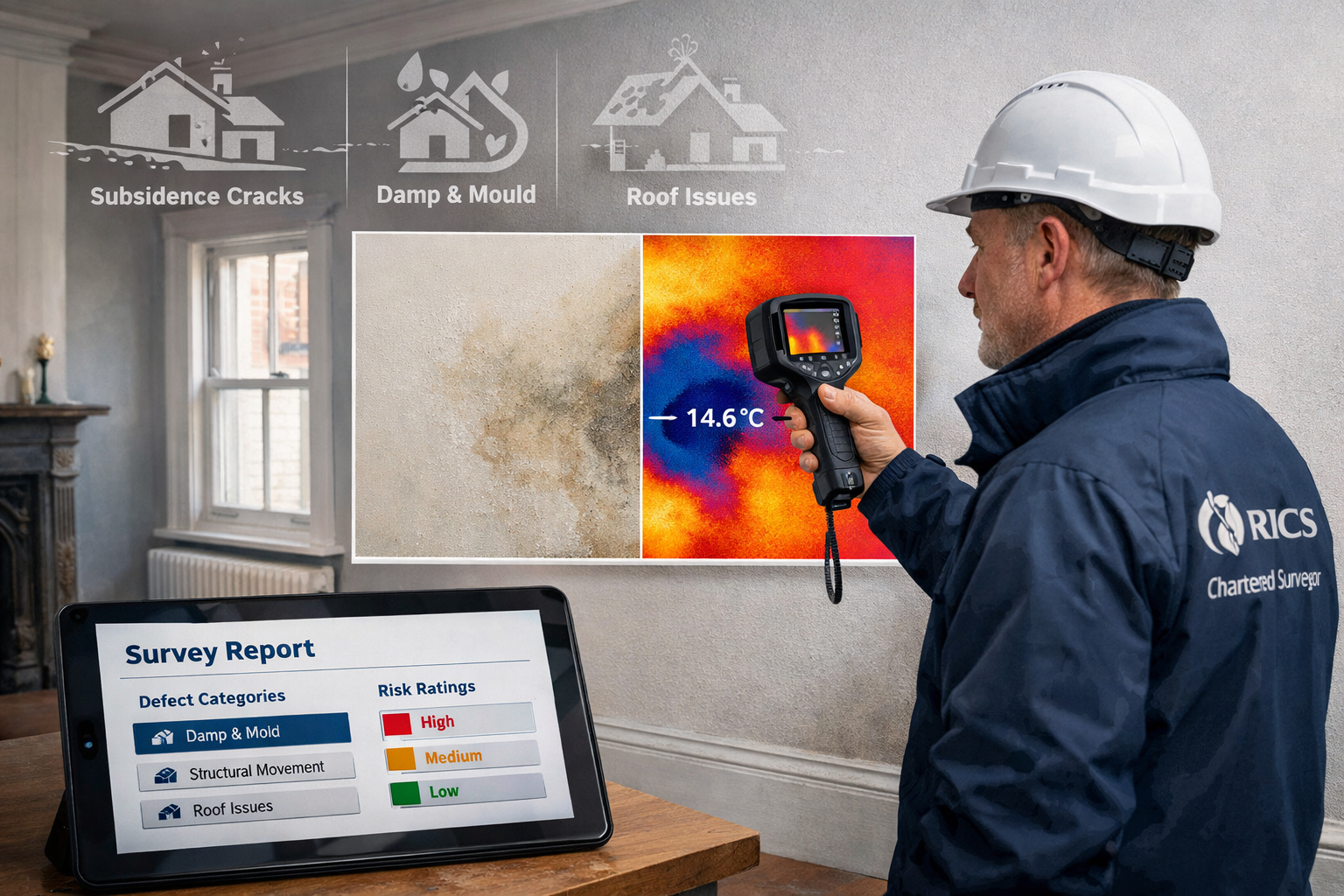
Professional damp surveys use moisture meters and thermal imaging to identify water ingress that isn't visible to the naked eye. Remediation costs vary from £500 for minor repairs to £5,000+ for comprehensive damp-proofing.
🔌 Electrical and Heating Systems
Rental properties must meet specific electrical safety standards. Building surveys should assess:
- Age and condition of consumer units (fuse boxes)
- Presence of residual current devices (RCDs)
- Condition of visible wiring and sockets
- Heating system functionality and efficiency
Landlords must provide an Electrical Installation Condition Report (EICR) for rental properties, with inspections required every five years. Budget £300-£500 for EICR testing and £1,000-£3,000 for rewiring if required.
🏠 Roof and External Envelope
The roof and external walls form the property's primary weather protection. Survey priorities include:
- Roof covering condition (tiles, slates, felt)
- Flashings around chimneys and valleys
- Guttering and downpipes
- External wall condition and pointing
Roof surveys can identify issues before they cause internal damage. Roof repairs range from £500 for minor fixes to £10,000+ for complete re-roofing.
Survey Levels: Matching Inspection Depth to Property Risk
Not all buy-to-let properties require the same survey depth. Understanding the appropriate survey level saves money while ensuring adequate protection:
Level 2 Homebuyer Survey (RICS)
Suitable for: Conventional properties in reasonable condition, typically built post-1900
A Level 2 Homebuyer Survey provides:
- Visual inspection of accessible areas
- Traffic light rating system (1-3) for defect severity
- Market valuation
- Advice on urgent repairs
Cost: £400-£800 depending on property value and location
Level 3 Building Survey (RICS)
Suitable for: Older properties (pre-1900), unusual construction, properties in poor condition, or high-value investments
A Level 3 Building Survey includes:
- Detailed inspection of all accessible areas
- Comprehensive defect analysis
- Repair cost estimates
- Maintenance advice
- No market valuation (unless separately requested)
Cost: £600-£1,500+ depending on property size and complexity
Understanding the difference between Level 2 and Level 3 surveys helps landlords make informed decisions about inspection depth.
"The rental market's stabilization in 2026 means landlords must focus on property quality and maintenance efficiency to maintain yields. A comprehensive building survey is not an expense—it's an investment in predictable returns." — RICS Surveying Professional
Integrating Survey Findings into Buy-to-Let Investment Decisions
Calculating True Return on Investment Post-Survey
The true value of Building Surveys for Post-Budget Rental Recovery: Spotting Risks in Buy-to-Let Amid Stabilizing Yields becomes apparent when survey findings are integrated into financial projections. Many landlords make the mistake of calculating yields based solely on purchase price and expected rent, ignoring the capital expenditure required to address defects.
Adjusted ROI Calculation:
- Purchase price: £250,000
- Survey identifies defects: £15,000 in required repairs
- Effective investment: £265,000
- Annual rent: £15,600 (£1,300/month)
- Gross yield before repairs: 6.24%
- Gross yield after repairs: 5.89%
This 0.35% difference may seem small, but over a 10-year investment period, it represents thousands of pounds in reduced returns. More importantly, failing to identify these costs upfront can create cash flow crises when unexpected repairs arise.
Negotiation Strategies Based on Survey Results
Survey findings provide powerful negotiation leverage. When defects are identified, landlords have several options:
Price Reduction
Request a purchase price reduction equal to estimated repair costs. This is most effective when:
- Defects are significant (£10,000+)
- Multiple competing properties are available
- The seller is motivated to complete quickly
Seller-Funded Repairs
Require the seller to complete repairs before completion. This approach:
- Ensures work is completed to acceptable standards
- Removes uncertainty about actual costs
- May delay completion while work is undertaken
Retention of Funds
Agree to complete purchase but retain funds in escrow until repairs are completed. This compromise:
- Allows transaction to proceed on schedule
- Protects buyer from seller's failure to repair
- Requires legal agreement on retention terms
Acceptance with Adjusted Projections
Proceed with purchase but adjust yield expectations and reserve funds for repairs. This makes sense when:
- Property location or characteristics are exceptional
- Long-term appreciation potential justifies short-term costs
- Rental demand ensures quick tenant placement despite needed work
Prioritizing Repairs for Rental Compliance and Tenant Appeal
Not all defects require immediate attention. Strategic prioritization maximizes rental income while managing cash flow:
Immediate Priority (Complete Before Letting):
- Safety hazards (electrical, gas, structural)
- Regulatory compliance issues (smoke alarms, EICR, gas safety)
- Major damp or water penetration
- Security concerns (locks, windows)
Short-Term Priority (Within 6 Months):
- Cosmetic improvements affecting rental value
- Heating system upgrades
- Energy efficiency improvements
- Minor structural repairs
Long-Term Maintenance (1-3 Years):
- Roof replacement (if not urgent)
- External redecoration
- Window replacement
- Garden and boundary improvements
This prioritization ensures properties meet legal requirements and tenant expectations while spreading capital expenditure over time to maintain cash flow.
Regional Considerations for Building Surveys in the 2026 Market
High-Growth Areas: Wales and Regional Hotspots
Wales's 5.8% rental growth[1] makes it an attractive market for buy-to-let investors, but the region's housing stock presents specific survey considerations:
Common Welsh Property Characteristics:
- Older stone construction requiring specialist knowledge
- Solid wall construction without cavity insulation
- Rural locations with septic tanks and private water supplies
- Exposure to severe weather requiring robust external envelope
Surveys in Wales should specifically assess:
- Stone wall condition and pointing
- Roof integrity against wind and rain exposure
- Drainage systems, especially in rural areas
- Damp penetration through solid walls
The higher rental growth in Wales can justify additional survey costs for specialist defect surveys when unusual construction or severe defects are suspected.
Urban Centers: London and Major Cities
England's average rent of £1,423 per month[1] is heavily influenced by London and major urban centers, where property prices are higher but yields may be lower. Urban buy-to-let surveys should focus on:
Flat and Apartment Considerations:
- Leasehold issues and service charge liabilities
- Building insurance and major works provisions
- Fire safety compliance (post-Grenfell regulations)
- Shared facilities and maintenance responsibilities
Conversion Properties:
- Building regulation compliance for conversions
- Sound insulation between units
- Shared services (heating, water, drainage)
- Planning permission verification
Urban properties often require specialist surveys for specific defects like noise transmission, fire safety, or structural alterations.
Scotland: Different Legal Framework Considerations
Scotland's 2.6% rental growth[1] reflects a distinct property market with unique legal and regulatory frameworks:
Scottish Survey Differences:
- Home Report system (required for sales)
- Different building standards and regulations
- Specific damp and condensation issues in tenement properties
- Unique tenure arrangements
While Scotland's Home Report provides baseline information, buy-to-let investors should commission additional surveys focusing on:
- Rental-specific compliance requirements
- Common repairs obligations in tenements
- Energy efficiency standards
- Landlord registration requirements
Technology and Modern Survey Techniques for Rental Properties
Advanced Inspection Methods
Modern building surveys employ technology that reveals defects invisible to visual inspection:
Thermal Imaging
Infrared cameras detect:
- Heat loss through walls, roofs, and windows
- Hidden water leaks and damp penetration
- Missing or inadequate insulation
- Air leakage points
Thermal surveys are particularly valuable for assessing energy efficiency, which affects both tenant appeal and regulatory compliance with Energy Performance Certificate (EPC) requirements.
Moisture Meters
Electronic moisture detection provides:
- Quantified moisture levels in walls and floors
- Differentiation between surface condensation and penetrating damp
- Monitoring data for ongoing issues
- Evidence for insurance claims
Drone Roof Surveys
Unmanned aerial vehicles enable:
- Safe inspection of high or dangerous roofs
- Detailed photographic evidence of roof condition
- Chimney and flashing assessment without scaffolding
- Cost-effective inspection of large or complex roofs
These advanced techniques add £100-£300 to survey costs but can identify thousands of pounds in hidden defects.
Digital Survey Reports and Action Planning
Modern survey reports provide more than defect lists—they offer actionable investment intelligence:
Interactive Digital Reports:
- Photographic evidence linked to specific defects
- Clickable floor plans showing defect locations
- Priority ratings and cost estimates
- Maintenance scheduling recommendations
Integration with Investment Analysis:
- Repair cost data feeds into yield calculations
- Compliance checklists ensure regulatory adherence
- Energy efficiency recommendations quantify improvement costs
- Long-term maintenance forecasts support cash flow planning
Digital reports enable landlords to share findings with contractors, mortgage lenders, and property managers, streamlining the acquisition and renovation process.
Post-Survey Action: From Defect Identification to Profitable Letting
Creating a Remediation Timeline
Survey findings should drive a structured remediation plan:
Week 1-2: Immediate Safety Issues
- Gas and electrical safety certification
- Structural stabilization if required
- Water leak repairs
- Security improvements
Week 3-6: Compliance and Essential Repairs
- Smoke and carbon monoxide alarm installation
- EICR remediation work
- Damp treatment
- Heating system repairs
Week 7-10: Tenant Appeal Improvements
- Decoration and cosmetic improvements
- Kitchen and bathroom upgrades if needed
- Flooring replacement
- Garden clearance and presentation
Week 11-12: Final Preparation
- Professional cleaning
- Safety certification documentation
- Photography for marketing
- Inventory preparation
This timeline ensures properties are legally compliant and market-ready while managing contractor scheduling and cash flow.
Ongoing Maintenance and Re-Inspection Strategies
Building surveys aren't one-time exercises. Successful buy-to-let investors implement ongoing inspection and maintenance:
Annual Landlord Inspections:
- Visual check of property condition
- Tenant feedback on maintenance issues
- Appliance and system functionality tests
- External envelope condition assessment
Five-Year Re-Surveys:
- Comprehensive re-inspection using RICS Home Survey methodology
- Updated defect assessment
- Maintenance planning for next five years
- Rental value reassessment
Specific Defect Monitoring:
- Structural movement monitoring for subsidence concerns
- Damp level tracking in problem areas
- Roof condition assessment after severe weather
- Drainage system inspection
Monitoring surveys provide ongoing data about structural movement or recurring defects, enabling proactive maintenance before minor issues become major expenses.
Maximizing Yields Through Survey-Informed Improvements
Survey findings can guide strategic improvements that increase rental value:
High-ROI Improvements:
- Energy efficiency upgrades (insulation, double glazing, efficient heating)
- Modern kitchen and bathroom installations
- Additional bedroom creation through loft or garage conversion
- Outdoor space enhancement (gardens, parking)
Yield Impact Analysis:
| Improvement | Typical Cost | Rental Increase | Annual ROI |
|---|---|---|---|
| Kitchen upgrade | £5,000 | £50/month | 12% |
| Bathroom upgrade | £3,000 | £30/month | 12% |
| Loft conversion | £25,000 | £200/month | 9.6% |
| EPC upgrade (E to C) | £4,000 | £40/month | 12% |
These improvements not only increase rental income but also enhance tenant retention, reducing void periods and turnover costs.
Risk Mitigation Strategies for Buy-to-Let Investors in 2026
Insurance and Warranty Considerations
Building survey findings should inform insurance decisions:
Buildings Insurance:
- Disclose all known defects to insurers
- Obtain specialist cover for non-standard construction
- Ensure adequate rebuild cost coverage
- Consider excess levels for subsidence and flood risk
Landlord Insurance:
- Rent guarantee insurance for income protection
- Contents insurance for furnished properties
- Legal expenses cover for tenant disputes
- Emergency assistance for urgent repairs
Structural Warranties:
- Consider purchasing structural warranties for older properties
- New-build warranties (NHBC, etc.) provide 10-year protection
- Defect insurance can cover specific known issues
Comprehensive insurance based on accurate survey data protects investment returns against unexpected events.
Regulatory Compliance and Future-Proofing
The rental market faces increasing regulation. Survey-informed compliance planning includes:
Current Requirements (2026):
- EPC rating minimum of E (C by 2028 for new tenancies)
- Electrical safety inspections every 5 years
- Gas safety certificates annually
- Smoke and carbon monoxide alarms
- Deposit protection scheme registration
Anticipated Future Requirements:
- Higher EPC standards (potentially B or A)
- Awaab's Law compliance (damp and mold)
- Decent Homes Standard for private rentals
- Enhanced energy efficiency standards
Building surveys that identify compliance gaps enable proactive upgrades before regulatory deadlines, avoiding enforcement action and maintaining rental income continuity.
Portfolio Management and Survey Scheduling
Landlords with multiple properties should implement systematic survey scheduling:
Portfolio Survey Strategy:
- Acquisition surveys: Comprehensive Level 3 survey for all purchases
- Annual inspections: Visual inspection of all properties
- Five-year re-surveys: Detailed re-inspection on rotation
- Specific defect surveys: As issues arise or are reported
- Pre-sale surveys: Condition assessment before portfolio disposal
This systematic approach ensures no property deteriorates unnoticed and maintenance budgets accurately reflect actual requirements across the portfolio.
Working with Professional Surveyors: Maximizing Value
Selecting the Right Surveyor for Buy-to-Let Properties
Not all surveyors have equal expertise in rental property assessment. When selecting a surveyor, consider:
RICS Qualification:
- Ensure surveyors are RICS (Royal Institution of Chartered Surveyors) registered
- Verify they hold appropriate professional indemnity insurance
- Check for specialist qualifications in building surveying
Rental Market Experience:
- Ask about experience with buy-to-let properties
- Request examples of rental property surveys
- Confirm knowledge of landlord compliance requirements
Local Market Knowledge:
- Choose surveyors familiar with regional property types
- Verify understanding of local construction methods
- Confirm awareness of area-specific issues (flooding, subsidence, etc.)
Local chartered surveyors bring valuable regional expertise to property assessment.
Briefing Your Surveyor for Maximum Insight
Effective communication with surveyors ensures surveys address specific investment concerns:
Pre-Survey Briefing Should Include:
- Investment objectives and target rental yield
- Specific concerns about the property
- Budget available for remediation
- Timeline for completion and letting
- Particular features of interest (conversion potential, extensions, etc.)
Questions to Ask:
- What are the three most significant defects?
- What repairs are essential before letting?
- What is the realistic repair cost range?
- Are there any compliance issues?
- What ongoing maintenance should be budgeted?
This dialogue ensures survey reports address investment-critical issues rather than providing generic property assessments.
Understanding and Acting on Survey Reports
Survey reports can be lengthy and technical. Focus on key sections:
Executive Summary:
- Overall property condition rating
- Most significant defects
- Urgent repair requirements
- Estimated repair costs
Defect Schedule:
- Categorized by severity (1-3 or traffic light system)
- Location-specific descriptions
- Photographic evidence
- Recommended actions
Maintenance Advice:
- Long-term maintenance requirements
- Anticipated component replacement schedules
- Ongoing monitoring recommendations
Cost Estimates:
- Repair cost ranges
- Prioritization guidance
- Specialist contractor recommendations
Don't hesitate to request clarification calls with surveyors to discuss findings and recommendations. Most surveyors welcome follow-up questions and can provide additional context for complex issues.
Conclusion: Building Surveys as Investment Insurance in the Stabilizing Market
As the UK rental market enters a period of stabilization in 2026, with rental growth moderating to sustainable levels and landlord confidence returning, Building Surveys for Post-Budget Rental Recovery: Spotting Risks in Buy-to-Let Amid Stabilizing Yields represents essential due diligence for successful property investment. The 13% increase in buy-to-let purchase mortgages and 23% rise in landlord remortgages[3] demonstrates renewed market activity—but success in this competitive environment requires thorough property assessment.
The moderation of rental growth to 3.5% annually[1] and forecasted 2% increases during 2026[3] means profit margins depend more heavily on controlling costs and avoiding unexpected repairs. A comprehensive building survey costing £600-£1,500 can identify defects worth tens of thousands of pounds, protecting investment returns and enabling accurate yield calculations.
Actionable Next Steps for Buy-to-Let Investors
Before Property Purchase:
- ✅ Commission appropriate survey level based on property age and condition
- ✅ Engage RICS-qualified surveyors with rental property experience
- ✅ Brief surveyors on investment objectives and specific concerns
- ✅ Review survey reports thoroughly and seek clarification on findings
- ✅ Integrate repair costs into ROI calculations and negotiation strategy
After Survey Completion:
- ✅ Negotiate price reductions or seller-funded repairs based on findings
- ✅ Create prioritized remediation timeline addressing safety and compliance first
- ✅ Obtain specialist surveys for significant defects requiring detailed assessment
- ✅ Update insurance coverage based on disclosed defects
- ✅ Plan strategic improvements that enhance rental value and yields
For Ongoing Portfolio Management:
- ✅ Implement annual inspection schedules for all properties
- ✅ Commission five-year re-surveys on rotation
- ✅ Monitor specific defects identified in original surveys
- ✅ Budget for maintenance based on survey recommendations
- ✅ Stay informed about regulatory changes affecting property standards
The rental market's recovery in 2026 offers significant opportunities for well-informed investors. Regional variations—from Wales's 5.8% growth to Scotland's 2.6%[1]—create diverse investment possibilities, but each requires thorough property assessment tailored to local conditions and construction types.
Building surveys are not expenses to be minimized—they are investments in predictable returns, regulatory compliance, and long-term portfolio performance. As supply constraints persist[2] and competition for quality rental properties intensifies, the landlords who succeed will be those who combine market insight with rigorous property due diligence.
The stabilizing yields of 2026 reward careful property selection, thorough inspection, and strategic maintenance planning. By making comprehensive building surveys a non-negotiable part of the acquisition process, buy-to-let investors protect their capital, maximize returns, and build sustainable rental portfolios capable of weathering future market changes.
Whether acquiring a first rental property or expanding an existing portfolio, the principles remain constant: understand the market, inspect thoroughly, calculate accurately, and maintain proactively. Building Surveys for Post-Budget Rental Recovery: Spotting Risks in Buy-to-Let Amid Stabilizing Yields provides the foundation for all these objectives, transforming property investment from speculation into informed, strategic wealth building.
References
[1] February2026 – https://www.ons.gov.uk/economy/inflationandpriceindices/bulletins/privaterentandhousepricesuk/february2026
[2] Landlord Press Review February 2026 – https://www.rentila.co.uk/blog/landlord-press-review-february-2026/
[3] Uk Rental Market Outlook 2026 National Trends North West Growth Analysis – https://www.farrellheyworth.co.uk/blog/uk-rental-market-outlook-2026-national-trends-north-west-growth-analysis/