

Only 38% of first-time buyers commission an independent building survey before exchanging contracts — yet surveys routinely uncover defects that cost tens of thousands of pounds to repair. In a market where wages are finally outpacing house-price growth for the first time since the 2008 financial crisis [2], that oversight is both more avoidable and more consequential than ever. Spring 2026 is shaping up to be the most buyer-friendly season in years, and Building Surveys for First-Time Buyers in Spring 2026: Navigating Market Recovery with Confidence is the definitive guide to making the most of it.
Key Takeaways 📋
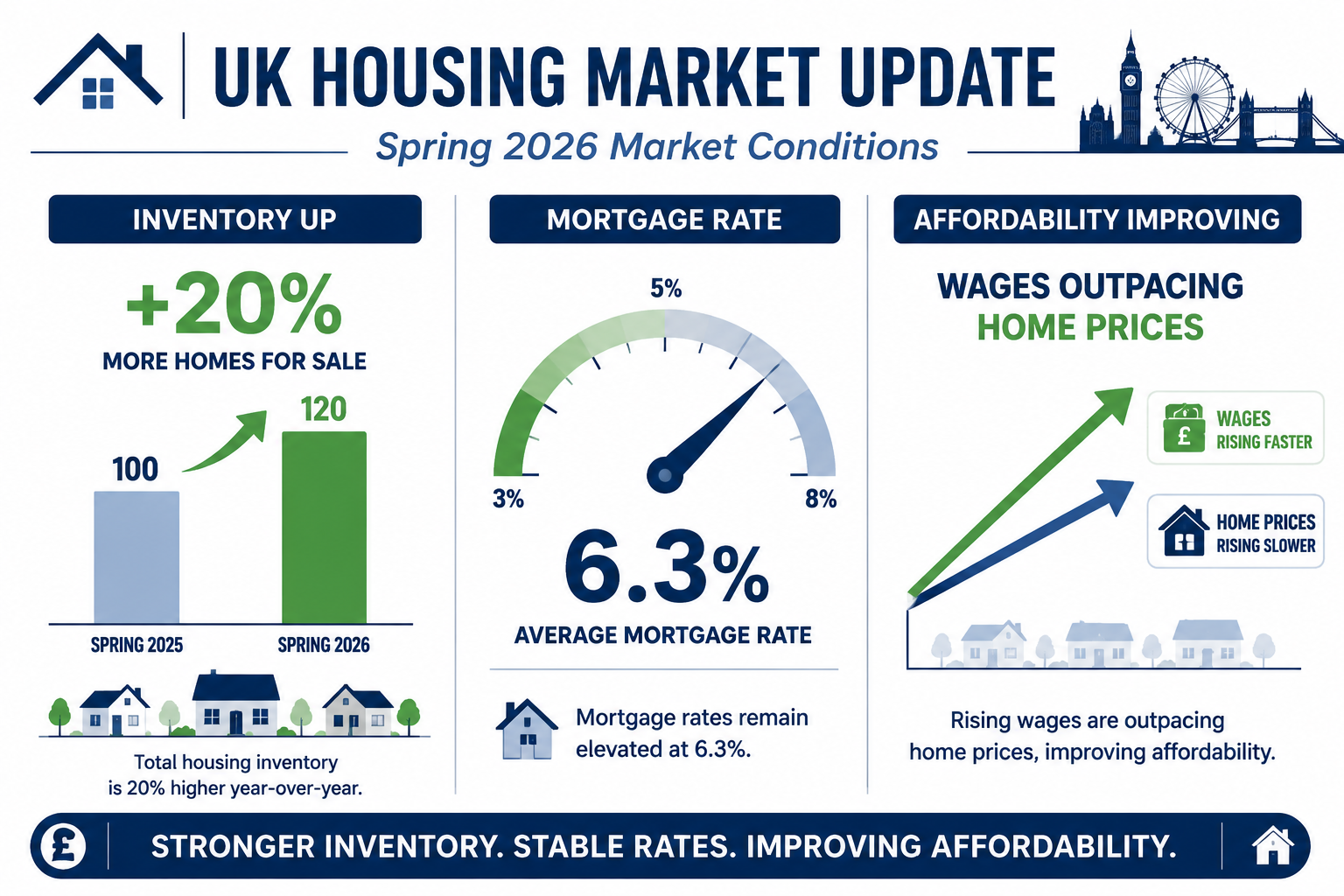
- Spring 2026 is a genuine buyer's market: inventory is up ~20%, homes are sitting longer, and mortgage rates have eased to around 6.3% [2][3].
- A building survey is not optional — it is the single most important tool a first-time buyer has to avoid costly surprises.
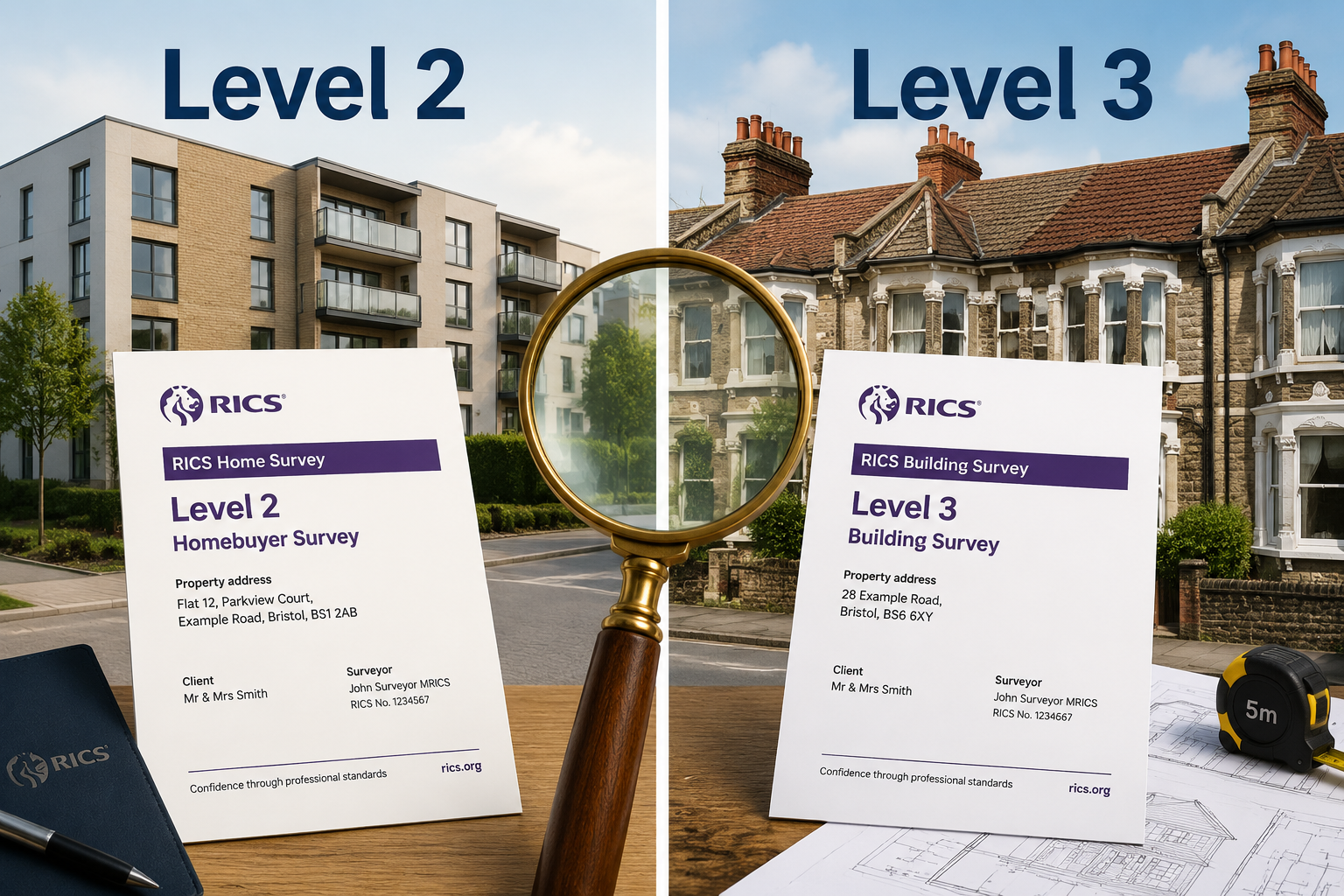
- Choosing the right survey level matters: Level 2 (Homebuyer) suits modern, well-maintained properties; Level 3 suits older, larger, or unusual homes.
- Market recovery creates negotiating leverage: survey findings can now be used to renegotiate price or request repairs — something rarely possible in a bidding-war market.
- Act in Q2 2026: the window between the winter lull and the summer rush offers the best combination of choice, time, and affordability [3].
Why Spring 2026 Is a Turning Point for First-Time Buyers
For several years, first-time buyers faced a brutal combination: soaring prices, scarce inventory, and mortgage rates that peaked above 7%. That landscape has shifted meaningfully heading into spring 2026.
The numbers tell a compelling story:
| Market Indicator | Spring 2025 | Spring 2026 | Change |
|---|---|---|---|
| Average mortgage rate | ~6.8% | ~6.3% | ▼ 0.5 pp [2] |
| Available inventory | Near historic lows | Up ~20% from lows [3] | ▲ Significant |
| Home price growth (YoY) | Volatile | ~1–1.2% [2][4] | ▼ Stabilised |
| Days on market | Elevated | Longest in a decade [3] | ▲ More time |
| Wage growth vs prices | Prices ahead | Wages ahead [2] | ✅ Shifted |
Existing home sales are predicted to reach 4.2 million annualised — up roughly 3% from 2025 levels [2]. New listings are trending upward, with builders adding more affordable options like townhomes and duplexes [4]. Analysts at First American describe December 2025 as the first month in over three years that buyer purchasing power exceeded median list prices [1].
💬 "Q2 2026 presents a 'Goldilocks' window — past the winter lull, before the summer rush, with inventory improvements and better affordability creating genuinely balanced conditions." [3]
What does this mean in practice? Homes are sitting on the market longer than at any point in the past decade [3]. Sellers are more willing to negotiate. Bidding wars — which once made thorough due diligence feel like a luxury — are far less common. This is precisely the environment where a well-commissioned building survey becomes a powerful financial tool, not just a precautionary formality.
Understanding Building Survey Options: A First-Time Buyer's Roadmap
Choosing the right survey is one of the most consequential decisions in the buying process. The RICS building surveys framework provides three main levels, each suited to different property types and buyer needs.
RICS Level 1: Condition Report
This is the most basic option — a traffic-light summary of visible condition. It is appropriate for new-build or near-new properties in excellent condition where the buyer simply wants documented reassurance. For most first-time buyers purchasing older stock, it provides insufficient detail.
RICS Level 2: Homebuyer Survey
The RICS Home Survey (Level 2) is the most popular choice for first-time buyers. It covers:
- ✅ Visible structural elements (walls, roof, floors)
- ✅ Damp, timber condition, and insulation
- ✅ Services (plumbing, heating, electrics) — visually inspected only
- ✅ A market valuation (if requested)
- ✅ Condition ratings (1 = no concern, 3 = urgent action needed)
Best suited for: Conventional properties built after 1900, in reasonable condition, without significant alterations or extensions.
RICS Level 3: Building Survey
The RICS Building Survey Level 3 is the most thorough option available. It provides:
- ✅ In-depth inspection of all accessible areas, including roof spaces and under-floor voids
- ✅ Detailed analysis of construction methods and materials
- ✅ Assessment of non-standard construction
- ✅ Specific advice on repair options and likely costs
- ✅ Recommendations for further specialist investigations
Best suited for: Pre-1900 properties, listed buildings, properties with extensions, conversions, or visible defects, and any home where the buyer has concerns.
🔑 Not sure which level you need? The guide to choosing the right property survey walks through the decision in plain language.
Level 2 vs Level 3: Quick Decision Guide
| Factor | Choose Level 2 | Choose Level 3 |
|---|---|---|
| Property age | Post-1900, standard build | Pre-1900 or unusual construction |
| Visible defects | None obvious | Cracks, damp, sagging roof |
| Extensions/conversions | No | Yes |
| Listed building | No | Yes |
| Price | Lower cost | Higher cost, but greater protection |
For a deeper comparison, see the difference between Level 2 and Level 3 surveys explained in full.
How Building Surveys for First-Time Buyers in Spring 2026 Create Real Financial Leverage
The improved market conditions of spring 2026 do not just make buying easier — they make acting on survey findings easier too. Here is why that matters.
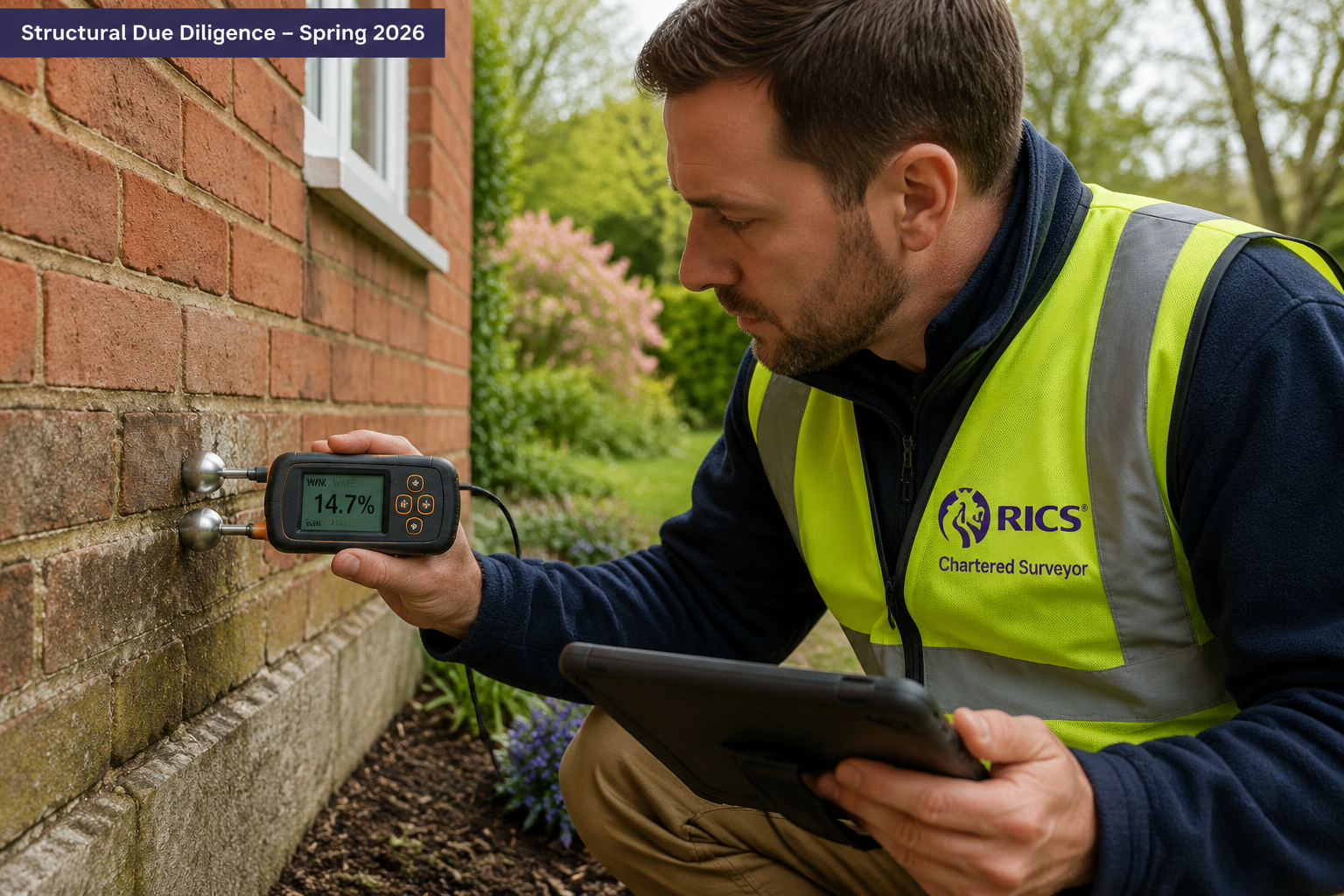
Using Survey Findings to Renegotiate
In a competitive market, buyers who raised concerns based on survey findings risked losing the property to another bidder willing to proceed unconditionally. In spring 2026, with homes sitting longer and inventory up 20% [3], sellers have far less leverage. A survey that identifies:
- Significant damp penetration → grounds for a price reduction or seller-funded remediation
- Roof defects → roof survey findings can support a specific cost-based reduction
- Drainage issues → a drainage survey can quantify repair costs precisely
- Subsidence indicators → a subsidence survey provides documented evidence for renegotiation
The rule of thumb: A Level 3 survey costing £700–£1,500 can identify defects worth £10,000–£50,000 or more. In a buyer-friendly market, those findings translate directly into negotiating power.
What Surveyors Are Finding in 2026
RICS February 2026 insights note buyer demand dips in certain regional markets alongside price flatness — particularly outside prime urban centres [6]. This means surveyors are encountering properties where deferred maintenance has accumulated during years of low transaction volumes. Common findings include:
- 🔴 Damp and timber decay — especially in Victorian terraces and inter-war semis
- 🔴 Flat roof deterioration — common in 1960s–1980s extensions
- 🔴 Outdated electrical systems — properties not rewired since the 1970s
- 🔴 Chimney stack movement — particularly in older properties with shared chimney stacks
- 🟡 Asbestos-containing materials — in properties built before 1985 (see asbestos surveys)
Understanding Survey Costs in Context
Many first-time buyers hesitate at the cost of a comprehensive survey. Here is a realistic breakdown:
| Survey Type | Typical Cost Range | Properties Suited |
|---|---|---|
| Level 1 Condition Report | £250–£400 | New builds only |
| Level 2 Homebuyer Survey | £400–£700 | Standard post-1900 homes |
| Level 3 Building Survey | £700–£1,500+ | Older/complex properties |
| Specialist Defect Survey | Variable | Targeted single issues |
For detailed cost guidance, the structural survey pricing guide provides current market rates. The damp survey cost guide is also useful for buyers concerned about moisture issues.
💬 "The cost of a survey is fixed. The cost of an undiscovered defect is not."
Navigating Market Recovery with Confidence: Practical Steps for Spring 2026
Building Surveys for First-Time Buyers in Spring 2026: Navigating Market Recovery with Confidence is not just about picking the right survey — it is about integrating that survey into a smart, sequenced buying strategy.
Step 1: Get Mortgage Agreement in Principle First
Before commissioning a survey, secure a mortgage agreement in principle. With rates forecast at 6–6.5% for spring 2026 [4], locking in a rate early prevents surprises. Note that a lender's valuation is not a survey — it protects the lender, not the buyer.
Step 2: Commission the Survey Immediately After Offer Acceptance
Do not wait. The sooner a survey is commissioned, the more time there is to:
- Obtain specialist follow-up reports if needed
- Renegotiate based on findings
- Walk away if serious defects are found — before legal costs escalate
For guidance on timing, the article on how long a homebuyers survey takes sets realistic expectations.
Step 3: Read the Report Carefully — and Ask Questions
Survey reports can be dense. Key actions:
- Focus on Condition Rating 3 items (urgent action required)
- Request clarification from the surveyor on any technical language
- Ask specifically: "What would you do if this were your home?"
- Obtain specialist quotes for any flagged items before proceeding
Step 4: Use Findings Strategically
In spring 2026's buyer-friendly conditions [3], survey findings are a legitimate negotiating tool. Options include:
- Price reduction equal to estimated repair costs
- Seller completing repairs before exchange
- Retention — a sum held back from completion until works are done
- Walking away — always a valid option if defects are too severe
Step 5: Consider Specialist Surveys Where Flagged
A Level 3 survey may recommend further investigations. Common specialist surveys include:
- Structural surveys for suspected movement or cracking
- Drainage surveys for older properties with clay pipes
- Asbestos surveys for pre-1985 construction
Common Mistakes First-Time Buyers Make — and How to Avoid Them
Even in a buyer-friendly market, errors in the survey process can be costly. Here are the most frequent pitfalls:
❌ Relying on the mortgage valuation — This is not a survey. It is a lender protection document.
❌ Choosing the cheapest survey automatically — A Level 2 on a Victorian terrace with obvious damp is a false economy.
❌ Not reading the full report — Many buyers skim to the summary. Detailed observations in the body of the report often contain critical information.
❌ Ignoring "further investigation recommended" flags — These are not optional suggestions. They indicate areas of genuine uncertainty.
❌ Delaying survey commissioning — Every week of delay is a week of legal costs accumulating on a potentially defective property.
❌ Not using findings to negotiate — In spring 2026's market, this leverage exists. Use it.
Conclusion: Make Spring 2026 Work for You
The convergence of rising inventory, stabilising prices, improving affordability, and longer days-on-market means that spring 2026 genuinely rewards careful, well-prepared first-time buyers [1][2][3][4]. The pressure to "move fast or miss out" that defined the post-pandemic market has eased substantially.
This is the moment to invest in proper due diligence. A comprehensive building survey — whether a Level 2 Homebuyer Survey for a modern flat or a Level 3 Building Survey for a Victorian terrace — is not an added cost. It is the most reliable financial protection available in a property transaction.
Actionable Next Steps ✅
- Identify your property type and match it to the correct survey level using the choosing the right survey guide.
- Budget for a survey from day one — include it in your buying costs alongside legal fees and stamp duty.
- Commission a RICS-qualified surveyor as soon as an offer is accepted.
- Read the full report and request a follow-up call with your surveyor to discuss findings.
- Use the findings — in spring 2026's market, sellers are negotiating. Survey evidence is your strongest tool.
The market recovery is real. Navigate it with the confidence that only thorough, professional building surveys can provide.
References
[1] Why The Spring Home Buying Season Slump May Break In 2026 – https://blog.firstam.com/economics/why-the-spring-home-buying-season-slump-may-break-in-2026
[2] Housing Market Predictions 2026 – https://www.redfin.com/news/housing-market-predictions-2026/
[3] Home Buyer Advice Spring 2026 – https://themortgagereports.com/129452/home-buyer-advice-spring-2026
[4] Buying A Home This Spring 2026 – https://mortgagecenter.com/buying-a-home-this-spring-2026/
[6] Valuation Adjustments For Cautious Spring 2026 Housing Market RICS February Insights On Buyer Demand Dips And Regional Price Flatness – https://nottinghillsurveyors.com/blog/valuation-adjustments-for-cautious-spring-2026-housing-market-rics-february-insights-on-buyer-demand-dips-and-regional-price-flatness