

The property surveying industry stands at a pivotal crossroads in 2026. With proposed homebuying reforms threatening to mandate upfront property assessments before homes even reach the market, surveyors across the United Kingdom face an unprecedented surge in demand. Building Survey Protocols Under 2026 Homebuying Reforms: Training for Uplifted Demand has become the central challenge for an industry preparing to scale operations, retrain professionals, and implement cutting-edge digital tools to meet the needs of a transformed property market. 🏠
As government consultations conclude and implementation timelines emerge, surveying firms must act decisively. The shift from optional to mandatory pre-market surveys represents not just a regulatory change but a fundamental restructuring of how property transactions occur. For professionals accustomed to reactive service delivery, this proactive model demands new skills, enhanced capacity, and standardized protocols that maintain quality while dramatically increasing throughput.
Key Takeaways
- Mandatory upfront assessments proposed in 2026 reforms will significantly increase survey volumes, requiring industry-wide capacity expansion
- Digital transformation is essential, with new protocols incorporating aerial imagery, advanced measurement tools, and streamlined reporting systems
- RICS standards require a minimum 24-month implementation period for proper training, capacity building, and quality assurance development[2]
- Talent pipeline strategies including recruitment, certification programs, and professional development are critical to meeting uplifted demand
- Enhanced documentation requirements demand surveyors master new protocols for encroachments, boundary issues, and comprehensive property assessments
Understanding the 2026 Homebuying Reform Landscape
The Shift to Mandatory Pre-Market Surveys
The proposed 2026 homebuying reforms represent the most significant transformation to UK property transactions in decades. Unlike the current system where buyers commission surveys after making offers, the new framework proposes mandatory upfront property assessments completed before properties list on the market. This fundamental shift aims to reduce transaction fall-throughs, speed up completions, and provide transparency from the outset.
The UK Government has been reviewing feedback from consultations that closed at the end of December 2025, though a definitive implementation timeframe has not yet been provided[2]. However, the Royal Institution of Chartered Surveyors (RICS) has emphasized that a minimum 24-month implementation period will be essential to allow for proper capacity building, standards development, and comprehensive guidance creation[2].
This extended timeline acknowledges the substantial infrastructure required to support such a transformation. Current survey capacity—designed for a market where perhaps 30-40% of transactions involve professional surveys—must expand dramatically to accommodate 100% coverage. The implications ripple through every aspect of surveying practice, from RICS building surveys methodology to workforce planning.
Regulatory Uncertainty and Planning Challenges
The extent to which proposed reforms will be subject to further consultation or primary legislation remains unclear[2]. This regulatory uncertainty creates planning challenges for surveying firms attempting to prepare for the transition. However, forward-thinking organizations recognize that regardless of precise implementation dates, the trajectory is clear: demand will increase substantially, and those prepared with robust protocols and trained personnel will capture market share.
Key uncertainties include:
- Survey level requirements: Will all properties require comprehensive Level 3 building surveys, or will tiered approaches based on property age and condition be permitted?
- Quality assurance mechanisms: How will consistent standards be enforced across thousands of surveying professionals?
- Liability frameworks: What responsibilities will surveyors bear for pre-market assessments that inform purchase decisions?
- Technology standards: Which digital tools and reporting formats will meet regulatory requirements?
Despite these uncertainties, Building Survey Protocols Under 2026 Homebuying Reforms: Training for Uplifted Demand initiatives are already underway across the industry, with leading firms investing in training infrastructure before mandates finalize.
Modernizing Survey Protocols: Technical Standards and Digital Integration
Learning from ALTA/NSPS 2026 Standards
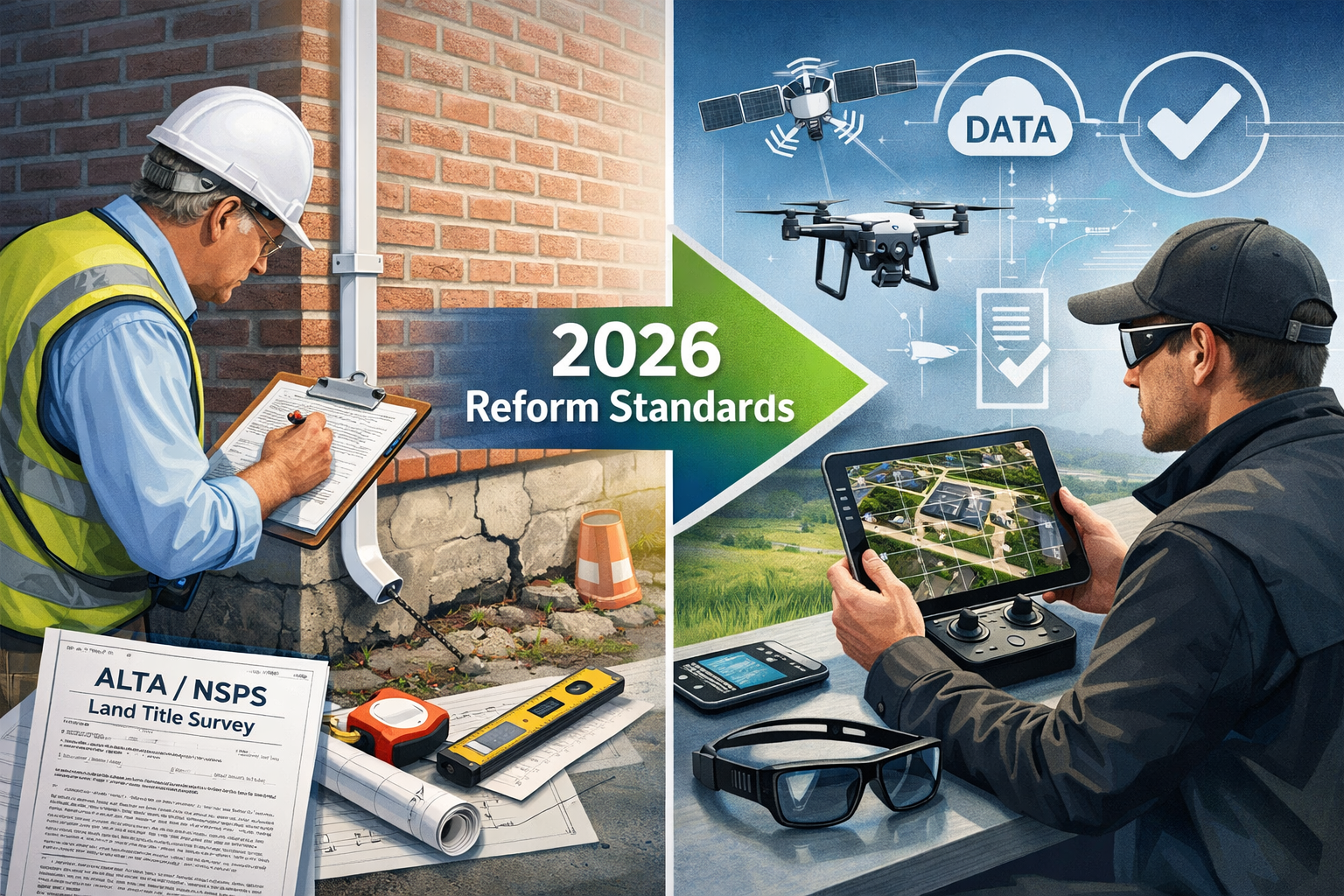
While UK reforms focus on residential property, valuable lessons emerge from the 2026 ALTA/NSPS Land Title Survey standards that became effective February 23, 2026, in the United States[1]. These updated standards, which establish minimum detail requirements for surveys across commercial real estate transactions, demonstrate how professional surveying adapts to contemporary demands while maintaining precision.
Key technical advancements from the ALTA/NSPS 2026 standards include:
| Standard Element | 2026 Requirement | Practical Impact |
|---|---|---|
| Positional Precision | Maximum 2 cm (0.07 feet) plus 50 parts per million[1] | Maintains rigorous accuracy standards while accommodating modern measurement technology |
| Fieldwork Methods | Practices generally recognized as acceptable, including aerial imagery and traditional ground techniques[1] | Enables flexible, efficient data collection without compromising quality |
| Encroachment Documentation | Expanded mandatory requirements with clarified surveyor responsibility[1] | Reduces ambiguity and ensures comprehensive property boundary reporting |
| Records Research | Surveyors now responsible for obtaining adjoining property deeds[1] | Shifts research burden, requiring enhanced due diligence capabilities |
Expanded Fieldwork Flexibility and Technology Adoption
Perhaps the most significant evolution in modern survey protocols is expanded fieldwork flexibility. Surveys may now be performed using practices generally recognized as acceptable by the surveying profession, allowing both traditional "on the ground" techniques and aerial imagery with other tools[1]. This replaces prior requirements for ground-only surveying, opening pathways for drone technology, photogrammetry, and LiDAR integration.
For UK surveyors preparing for uplifted demand, this technological flexibility offers crucial efficiency gains. A single surveyor equipped with drone technology and advanced measurement tools can potentially complete preliminary assessments in a fraction of traditional timeframes, with ground verification focused on areas requiring detailed investigation.
However, technology adoption requires comprehensive training protocols:
✅ Drone operation certification and CAA compliance for aerial property surveys
✅ Photogrammetry software proficiency for converting aerial imagery into accurate measurements
✅ Digital reporting platforms that streamline data collection and client delivery
✅ Quality assurance procedures ensuring technology-assisted surveys meet RICS standards
✅ Cybersecurity protocols protecting sensitive property data throughout digital workflows
Enhanced Documentation Requirements
Modern survey protocols demand more comprehensive documentation than ever before. Requirements for documenting and noting physical access restrictions, encroachments, and discrepancies have been expanded, with surveyor responsibility now clarified rather than discretionary[1].
Additionally, surveyors must now include notation of any parol (verbal) statements by interested landowners or occupants regarding title or boundary issues[1]. This requirement acknowledges that valuable information often emerges through conversation during site visits, and formal documentation protects all parties.
For building surveys conducted under 2026 reforms, enhanced documentation protocols will likely include:
- Photographic evidence with geolocation and timestamp metadata
- Video walkthroughs providing contextual property condition documentation
- Structured data capture enabling database analysis and trend identification
- Standardized defect categorization facilitating comparison across properties
- Digital signature verification ensuring report authenticity and chain of custody
Understanding how long a homebuyers survey takes becomes more complex with these enhanced requirements, as thoroughness must balance against the need for rapid turnaround in high-volume environments.
Building Survey Protocols Under 2026 Homebuying Reforms: Comprehensive Training Frameworks
Developing Competency-Based Training Programs
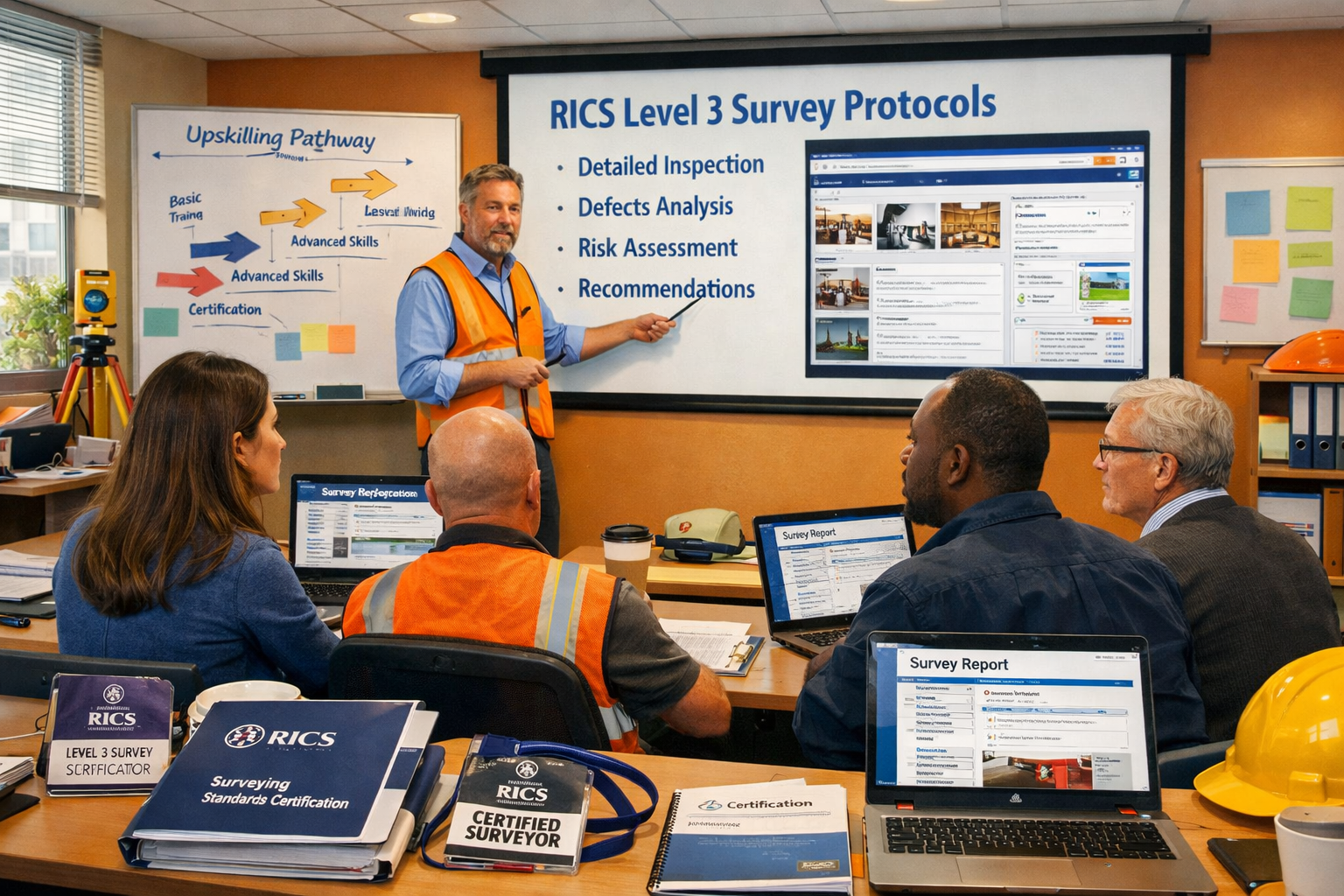
The success of Building Survey Protocols Under 2026 Homebuying Reforms: Training for Uplifted Demand hinges on competency-based training programs that ensure consistent quality across expanded surveyor workforces. Traditional apprenticeship models, while valuable for developing expertise over years, cannot scale quickly enough to meet immediate capacity needs.
Modern training frameworks combine multiple learning modalities:
Foundation Training (4-6 weeks)
- RICS standards and professional ethics
- Building construction fundamentals and defect identification
- Health and safety protocols for site inspections
- Legal frameworks governing property surveys
- Client communication and report writing basics
Technical Skills Development (8-12 weeks)
- Advanced measurement and assessment techniques
- Technology tool proficiency (drones, thermal imaging, moisture meters)
- Specific defect report preparation for targeted issues
- Damp surveys and moisture investigation methodologies
- Structural assessment and risk evaluation
Practical Application (12-16 weeks)
- Supervised field assessments with experienced surveyors
- Progressive responsibility for survey components
- Quality review and feedback cycles
- Client interaction and consultation skills
- Time management and efficiency optimization
Specialization Pathways and Continuing Education
As survey volumes increase, specialization becomes increasingly valuable. Rather than every surveyor attempting to master all property types and conditions, training programs can develop specialists in:
🏘️ Period properties: Victorian, Edwardian, and heritage building assessment
🏗️ Modern construction: New builds, contemporary materials, and warranty inspections
🌊 Environmental concerns: Flood risk, contamination, and sustainability assessments
🔧 Structural issues: Foundation problems, subsidence, and major defect evaluation
🏢 Conversion properties: Flats, subdivided houses, and complex ownership structures
Continuing professional development (CPD) ensures surveyors remain current with evolving standards. The RICS mandates ongoing education, but firms implementing Building Survey Protocols Under 2026 Homebuying Reforms: Training for Uplifted Demand should exceed minimum requirements, providing:
- Quarterly technical updates on emerging construction methods and materials
- Annual refresher training on RICS standards and regulatory changes
- Technology skill enhancement as new tools and platforms emerge
- Case study reviews analyzing challenging surveys and lessons learned
- Peer learning forums facilitating knowledge sharing across the organization
Quality Assurance and Mentorship Models
Quality assurance mechanisms protect both clients and surveying firms during rapid capacity expansion. Newly trained surveyors require structured oversight until they demonstrate consistent competency. Effective mentorship models include:
Tiered Review Systems
- Junior surveyors: 100% of reports reviewed by senior professionals
- Intermediate surveyors: 50% random sample review with targeted feedback
- Senior surveyors: 20% quality audit plus peer review for complex properties
Calibration Exercises
Multiple surveyors independently assess the same property, then compare findings to identify inconsistencies in interpretation or documentation standards. This ensures organizational consistency in applying survey protocols.
Client Feedback Integration
Systematic collection and analysis of client feedback identifies training gaps and protocol refinements needed to improve service delivery.
Understanding the difference between Level 2 and Level 3 surveys becomes particularly important as training programs must prepare surveyors to deliver appropriate assessment levels based on property characteristics and client needs.
Strategic Capacity Building: Meeting Uplifted Demand Through Workforce Development
Talent Acquisition and Pipeline Development
The surveying industry faces a fundamental capacity challenge. Current workforce levels cannot support universal pre-market property assessments without substantial expansion. Strategic talent acquisition requires multiple approaches:
Graduate Recruitment Programs
Partner with universities offering surveying, construction management, and property-related degrees to create direct pipelines. Offer internships, sponsorships, and clear career progression pathways to attract top talent.
Career Conversion Initiatives
Professionals from adjacent fields—construction, architecture, engineering, real estate—possess transferable skills that accelerate training. Targeted recruitment campaigns highlighting career opportunities in surveying can tap this talent pool.
Returner Programs
Chartered surveyors who left the profession for family responsibilities, career changes, or retirement often retain valuable expertise. Flexible working arrangements and refresher training can bring experienced professionals back into active practice.
Apprenticeship Expansion
Government-supported apprenticeship schemes provide structured pathways for new entrants while distributing training costs. Firms should maximize participation in these programs to build sustainable talent pipelines.
Technology as a Force Multiplier
While workforce expansion remains essential, technology serves as a critical force multiplier, enabling existing surveyors to handle increased volumes without proportional time increases. Strategic technology investments include:
Automated Data Capture
Mobile applications that prompt surveyors through standardized checklists ensure comprehensive coverage while reducing on-site time. Voice-to-text functionality enables rapid note-taking during inspections.
AI-Assisted Analysis
Machine learning algorithms can analyze photographic evidence to flag potential defects, prioritizing surveyor attention on areas requiring expert judgment. This doesn't replace professional assessment but enhances efficiency.
Template-Based Reporting
Intelligent reporting platforms that auto-populate standard sections based on property type and captured data reduce report writing time from hours to minutes, allowing surveyors to focus on analysis and recommendations.
Workflow Management Systems
Digital platforms that coordinate scheduling, track progress, manage quality reviews, and facilitate client communication create operational efficiencies that increase organizational capacity.
Firms offering RICS home surveys must balance technology adoption with maintaining the personal, professional service that distinguishes chartered surveyors from automated valuation models.
Geographic Coverage and Service Delivery Models
Uplifted demand will not distribute evenly across regions. High-transaction areas require concentrated capacity, while rural locations need coverage without excessive travel overhead. Flexible service delivery models address these geographic challenges:
Hub-and-Spoke Networks
Regional offices staffed with senior surveyors supervise networks of field assessors who conduct inspections within defined territories. This reduces travel time while maintaining quality oversight.
Collaborative Partnerships
Smaller firms can form consortiums to share resources, cross-train staff, and provide mutual backup during demand surges. This preserves local market knowledge while building collective capacity.
Mobile Survey Teams
Dedicated teams equipped with comprehensive technology kits can deploy to high-demand areas, supplementing local capacity during peak periods.
Remote Assessment Components
Where appropriate, preliminary assessments using client-provided imagery and documentation can triage properties, with on-site visits focused on areas requiring physical inspection.
Organizations must understand choosing the right property survey becomes more complex as service models diversify, requiring clear client communication about methodology and deliverables.
Implementation Roadmap: Preparing for the 2026 Transition
Phase 1: Foundation Building (Months 1-6)
Assessment and Planning
- Conduct capacity analysis comparing current throughput to projected demand
- Evaluate existing training programs and identify enhancement needs
- Audit technology infrastructure and plan digital transformation investments
- Review quality assurance mechanisms and establish baseline metrics
Infrastructure Development
- Procure training facilities and equipment
- Implement digital platforms for workflow management and reporting
- Develop standardized protocols and documentation templates
- Establish partnerships with educational institutions and professional bodies
Phase 2: Pilot Programs (Months 7-12)
Training Launch
- Recruit initial cohorts of trainee surveyors
- Deliver foundation and technical training programs
- Deploy technology tools with comprehensive user training
- Establish mentorship assignments and supervision structures
Process Refinement
- Conduct pilot surveys using new protocols and tools
- Gather feedback from surveyors, clients, and quality reviewers
- Identify bottlenecks and inefficiencies requiring adjustment
- Calibrate training content based on field performance
Phase 3: Scaling Operations (Months 13-18)
Capacity Expansion
- Increase recruitment and training throughput
- Expand geographic coverage through new locations or partnerships
- Optimize technology utilization based on pilot learnings
- Develop specialized teams for complex property types
Quality Assurance
- Implement comprehensive quality review systems
- Conduct calibration exercises ensuring consistency
- Monitor client satisfaction and address service gaps
- Refine protocols based on emerging best practices
Phase 4: Full Implementation (Months 19-24)
Market Readiness
- Achieve target capacity levels across all service areas
- Demonstrate consistent quality metrics meeting RICS standards
- Establish robust operational systems handling peak demand
- Prepare marketing and client education materials
Continuous Improvement
- Institutionalize feedback loops for ongoing refinement
- Maintain CPD programs keeping surveyors current
- Monitor regulatory developments and adapt protocols accordingly
- Invest in emerging technologies enhancing efficiency and quality
This 24-month timeline aligns with RICS recommendations for proper implementation[2], though firms beginning preparation now position themselves advantageously regardless of precise regulatory timelines.
Conclusion: Embracing Transformation Through Strategic Preparation
Building Survey Protocols Under 2026 Homebuying Reforms: Training for Uplifted Demand represents both the greatest challenge and most significant opportunity facing the UK surveying profession in decades. The proposed shift to mandatory pre-market property assessments will fundamentally transform how surveyors operate, requiring unprecedented capacity expansion, technology adoption, and workforce development.
Success demands strategic, proactive preparation rather than reactive scrambling when reforms finalize. Organizations investing now in comprehensive training programs, digital infrastructure, and talent pipelines will capture market share and establish quality standards that define the industry's future. Those delaying risk being overwhelmed by demand they cannot meet, losing clients to better-prepared competitors.
The technical lessons from the 2026 ALTA/NSPS standards demonstrate that modernization need not compromise quality. Enhanced fieldwork flexibility, digital tools, and comprehensive documentation requirements can coexist with rigorous precision standards when supported by proper training and quality assurance mechanisms.
Actionable Next Steps
For Surveying Firms:
- Conduct immediate capacity assessment comparing current throughput to projected post-reform demand
- Develop comprehensive training programs incorporating RICS standards, digital tools, and quality assurance
- Invest in technology infrastructure enabling efficient, high-quality survey delivery at scale
- Establish talent pipelines through graduate recruitment, career conversion programs, and apprenticeships
- Form strategic partnerships with educational institutions, technology providers, and peer organizations
For Individual Surveyors:
- Pursue continuing professional development in digital survey tools and modern methodologies
- Develop specialization expertise in property types or assessment areas with high demand
- Embrace technology adoption viewing digital tools as efficiency enhancers rather than threats
- Engage with professional bodies staying informed about regulatory developments and best practices
- Consider mentorship opportunities helping train the next generation of surveying professionals
For Industry Stakeholders:
- Collaborate on standards development ensuring reforms balance quality with practical implementation
- Support extended implementation timelines allowing proper capacity building and training
- Invest in educational infrastructure expanding surveying programs at universities and technical colleges
- Promote the profession attracting diverse talent to meet workforce expansion needs
- Share best practices facilitating knowledge transfer across the industry
The transformation ahead is substantial, but the surveying profession has repeatedly demonstrated its ability to adapt to changing market needs while maintaining the professional standards that protect consumers and support functioning property markets. By embracing Building Survey Protocols Under 2026 Homebuying Reforms: Training for Uplifted Demand as a strategic priority, the industry can ensure it meets this pivotal moment with the capacity, quality, and professionalism the public expects and deserves.
The foundation for success is being laid today. Organizations and professionals who recognize the urgency and act decisively will not merely survive the transition—they will thrive in the expanded, professionalized property survey market of tomorrow. 🚀
References
[1] Alta Nsps Key Changes And Updates In The 2026 Standards – https://www.beneschlaw.com/insight/alta-nsps-key-changes-and-updates-in-the-2026-standards/
[2] Home Buying And Selling Reform Hub – https://www.rics.org/news-insights/current-topics-campaigns/home-buying-and-selling-reform-hub