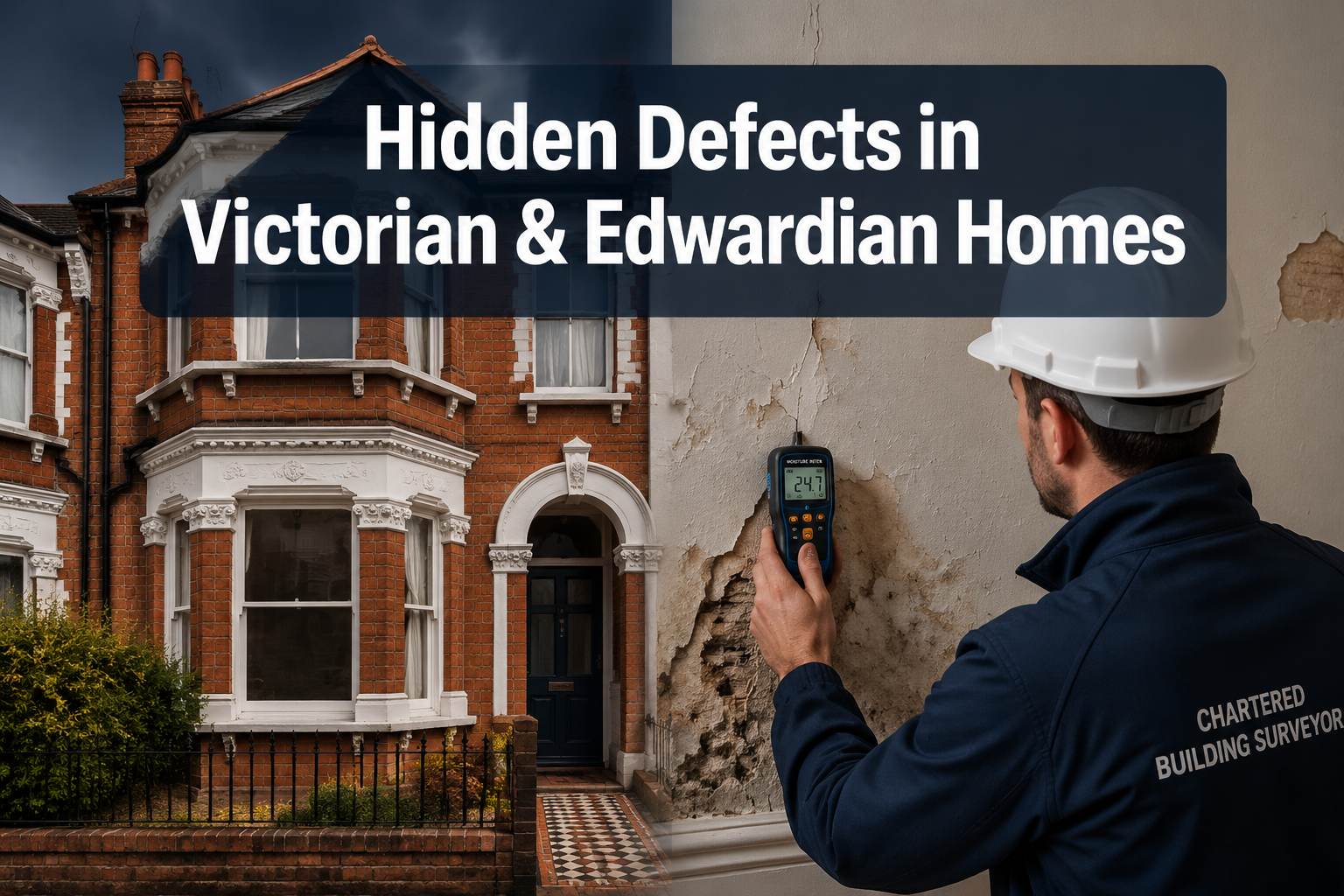

Social housing landlords now face a seismic shift in regulatory compliance: Phase 2 of Awaab's Law, effective from 2026, expands mandatory hazard investigations beyond damp and mould to include excess temperatures, fire risks, and electrical hazards across the Private Rented Sector (PRS). This expansion transforms how chartered surveyors conduct property assessments, requiring enhanced Level 3 building survey protocols that address thermal extremes and fire safety with the same urgency previously reserved for mould-related deaths like that of two-year-old Awaab Ishak.
The Awaab's Law 2026 Hazard Expansions: Level 3 Building Survey Protocols for Excess Temperature and Fire Risks in PRS represent a fundamental evolution in tenant protection standards. Landlords must now respond to a broader spectrum of significant hazards within strict timeframes, while surveyors need specialized inspection methodologies to identify and assess these newly regulated risks. [1]
Key Takeaways
- 🔥 Phase 2 (2026) adds five new hazard categories to Awaab's Law: excess cold, excess heat, fire hazards, electrical risks, and structural collapse requiring urgent investigation
- ⏱️ Emergency hazards demand 24-hour response times for investigation and safety work completion when imminent harm is confirmed
- 📋 Level 3 building surveys must incorporate specialized protocols including thermal imaging, electrical testing, and fire safety assessments tailored to PRS properties
- 👥 Person-centred assessment approach requires surveyors to evaluate hazards based on individual tenant vulnerabilities, not just standard HHSRS scoring
- 📅 Strict compliance deadlines apply: 10 working days for investigation, 3 working days for written tenant summaries, and 5 working days to complete safety works
Understanding Awaab's Law 2026 Hazard Expansions: Level 3 Building Survey Protocols for Excess Temperature and Fire Risks in PRS
What Phase 2 Brings to PRS Compliance
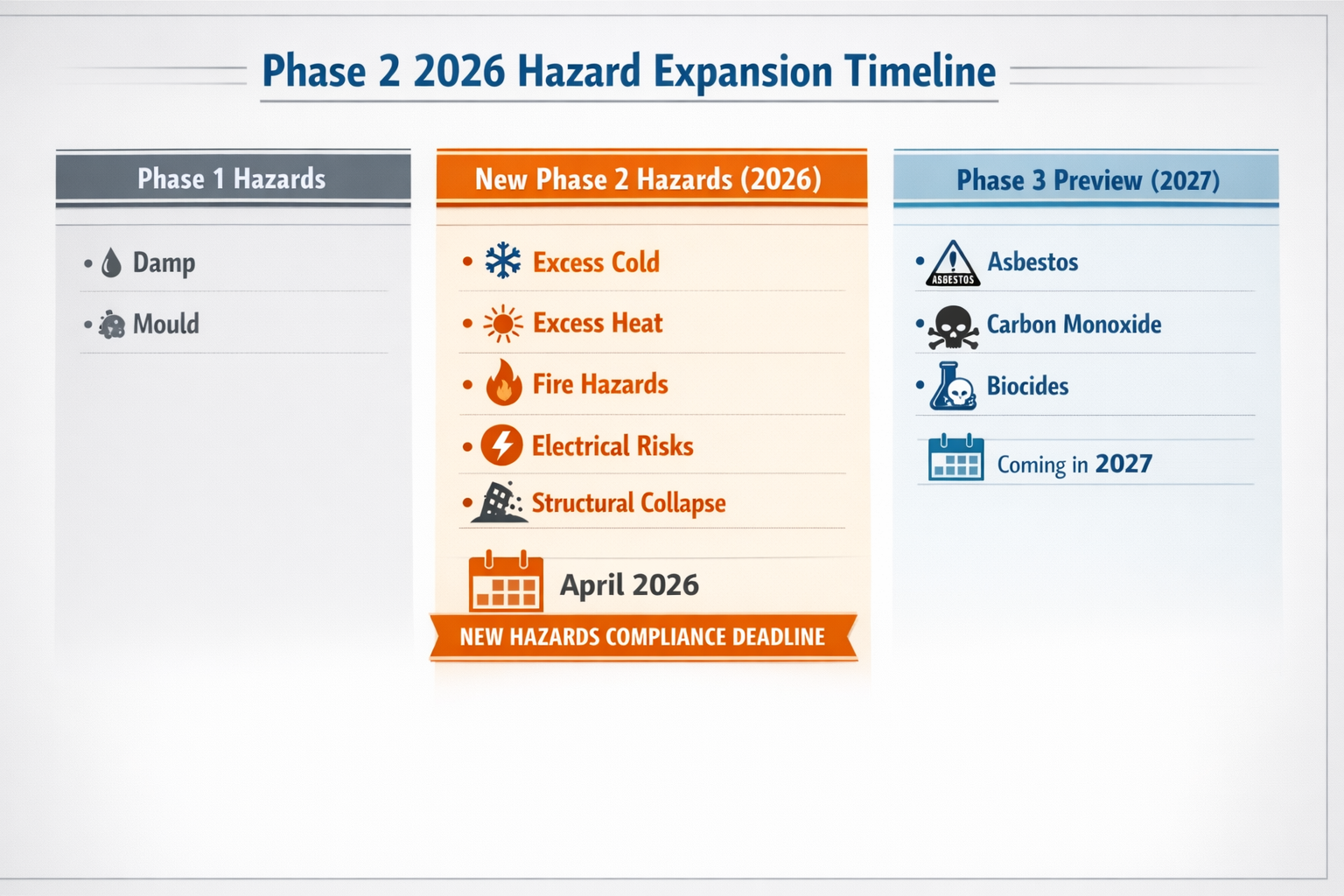
Phase 2 of Awaab's Law, rolling out in 2026, dramatically expands the scope of hazards that social landlords must address under mandatory timeframes. While Phase 1 (implemented in 2024) focused exclusively on damp and mould, the 2026 expansion incorporates five critical hazard categories that present significant risks of harm to tenants. [5]
The newly regulated hazards include:
- Excess cold – inadequate heating systems, poor insulation, or structural defects causing dangerously low temperatures
- Excess heat – overheating from poor ventilation, inadequate cooling, or building design failures
- Fire hazards – defective fire detection systems, blocked escape routes, or combustible materials
- Electrical risks – faulty wiring, overloaded circuits, or defective electrical installations
- Structural collapse risks – compromised load-bearing elements, foundation failures, or deteriorating structural components [1]
These expansions recognize that tenant safety extends far beyond mould-related respiratory issues. Excess temperatures kill vulnerable residents through hypothermia in winter and heat stroke in summer, while electrical and fire hazards pose immediate life-threatening risks. For chartered surveyors conducting Level 3 building surveys, this means developing comprehensive inspection protocols that address thermal performance, fire safety systems, and electrical integrity alongside traditional structural assessments.
The Regulatory Timeline and Phase 3 Preview
Understanding the phased implementation helps landlords and surveyors prepare for evolving compliance requirements:
| Phase | Implementation Date | Hazards Covered | Key Requirements |
|---|---|---|---|
| Phase 1 | 2024 | Damp and mould | 14-day investigation, emergency response protocols |
| Phase 2 | 2026 | Excess cold/heat, fire, electrical, structural collapse | Expanded survey protocols, thermal assessments |
| Phase 3 | 2027 | Remaining HHSRS hazards (excluding overcrowding): asbestos, biocides, carbon monoxide, etc. | Comprehensive hazard management systems |
Phase 3, beginning in 2027, will extend Awaab's Law to cover virtually all Housing Health and Safety Rating System (HHSRS) hazards except overcrowding. This includes asbestos exposure, carbon monoxide poisoning, biocide contamination, and other environmental health risks. [1] Surveyors should begin developing expertise in these areas now to ensure readiness for the complete regulatory framework.
Person-Centred Assessment: A Paradigm Shift
One of the most significant changes introduced by Awaab's Law is the person-centred assessment approach. Unlike traditional HHSRS assessments that apply standardized risk scoring, Awaab's Law requires surveyors to evaluate hazards through the lens of individual tenant circumstances. [1]
This means:
- A heating system that might score as Category 2 (lower risk) under standard HHSRS could be classified as a significant hazard under Awaab's Law if the tenant is elderly, has cardiovascular disease, or cares for young children
- Electrical issues in properties housing disabled residents who rely on medical equipment become emergency hazards
- Fire safety defects take on heightened urgency in buildings with mobility-impaired tenants who cannot quickly evacuate
"Surveyors must now assess hazards not just against generic risk profiles, but against the actual vulnerability of the people living in each property. This requires detailed tenant information and clinical understanding of how environmental hazards affect different populations." [1]
This approach fundamentally changes how RICS building surveys are conducted in the PRS, requiring surveyors to gather tenant demographic data and health information as part of their inspection protocols.
Level 3 Building Survey Protocols for Temperature Hazards in PRS Properties
Assessing Excess Cold Hazards
Excess cold represents one of the most prevalent hazards in the UK's aging rental housing stock. The Awaab's Law 2026 Hazard Expansions: Level 3 Building Survey Protocols for Excess Temperature and Fire Risks in PRS require surveyors to conduct comprehensive thermal performance assessments that go beyond basic visual inspections.
Essential Cold Hazard Survey Components
When conducting a Level 3 building survey focused on excess cold, surveyors should implement these protocols:
1. Thermal Imaging Surveys 🌡️
- Conduct infrared thermography to identify cold bridging, insulation gaps, and heat loss pathways
- Document temperature differentials across wall surfaces, windows, and roof spaces
- Identify areas where internal surface temperatures fall below 10°C during winter months
2. Heating System Assessment
- Evaluate boiler capacity, age, and efficiency ratings
- Test radiator output and distribution throughout the property
- Verify thermostat functionality and placement
- Check for adequate heating in all habitable rooms
3. Insulation Evaluation
- Measure loft insulation depth (minimum 270mm recommended)
- Assess cavity wall insulation presence and condition
- Examine floor insulation in ground-floor rooms
- Identify single-glazed windows requiring upgrade
4. Ventilation vs. Heat Retention Balance
- Assess whether ventilation improvements for mould prevention have compromised thermal retention
- Evaluate trickle vent placement and controllability
- Check for excessive draughts around doors, windows, and service penetrations [3]
The key is identifying whether low temperatures result from landlord-controlled defects rather than tenant behavior. Awaab's Law only applies to hazards arising from disrepair, lack of maintenance, or building defects within the landlord's repair responsibility. [5]
Evaluating Excess Heat Hazards
Excess heat hazards have gained prominence as climate change drives more frequent and intense heatwaves across the UK. Properties with poor ventilation, inadequate shading, or heat-retaining construction materials can become dangerously hot during summer months, particularly affecting top-floor flats and properties with south-facing glazing.
Heat Hazard Survey Methodology
Temperature Monitoring Protocols:
- Record maximum internal temperatures during warm periods (ideally when external temperatures exceed 25°C)
- Identify rooms where temperatures regularly exceed 26°C for sleeping spaces or 28°C for living areas
- Document lack of cooling strategies or ventilation options
Ventilation Assessment:
- Evaluate natural ventilation capacity through openable windows
- Check for adequate cross-ventilation pathways
- Assess mechanical ventilation systems where installed
- Identify rooms with insufficient air changes per hour
Building Fabric Analysis:
- Examine roof insulation that may trap heat in upper floors
- Assess glazing ratios and solar gain through windows
- Evaluate external shading devices (or lack thereof)
- Check for dark-colored roofing materials that absorb excessive heat [3]
Vulnerable Occupant Considerations:
- Prioritize assessments in properties housing elderly residents, young children, or those with heat-sensitive medical conditions
- Consider bedroom locations for vulnerable tenants in relation to heat exposure
- Evaluate access to cooler spaces within the property
For surveyors unfamiliar with thermal performance assessments, understanding the difference between Level 2 and Level 3 surveys helps clarify the enhanced investigation depth required for Awaab's Law compliance.
Fire Safety and Electrical Risk Assessment Under Awaab's Law 2026 Protocols
Fire Hazard Identification and Documentation
Fire hazards represent immediate life-safety risks that demand urgent attention under the Awaab's Law 2026 Hazard Expansions: Level 3 Building Survey Protocols for Excess Temperature and Fire Risks in PRS. Surveyors must adopt a systematic approach to identifying fire risks that extends beyond basic smoke alarm checks.
Comprehensive Fire Safety Survey Elements
Detection and Alarm Systems:
- Verify presence of smoke alarms in all habitable rooms and hallways
- Test alarm functionality and battery condition
- Check for heat detectors in kitchens where appropriate
- Ensure alarms meet current British Standards (BS 5839-6)
Escape Route Assessment:
- Verify all escape routes are clear and unobstructed
- Check escape windows meet size requirements (450mm x 450mm minimum opening)
- Assess stairway fire resistance in multi-story properties
- Identify any locked or blocked emergency exits
Fire Spread Prevention:
- Examine fire doors for proper fitting, seals, and self-closing mechanisms
- Check cavity barriers in walls and roof spaces
- Assess fire-stopping around service penetrations
- Identify combustible materials in escape routes or near heat sources
Electrical Fire Risks:
- Look for overloaded sockets and extension lead daisy-chaining
- Identify aging electrical accessories showing heat damage
- Check for exposed wiring or damaged cable insulation
- Assess consumer unit condition and circuit protection adequacy [1]
Many fire hazards overlap with electrical risks, requiring integrated assessment approaches that address both categories simultaneously.
Electrical Safety Inspection Protocols
Electrical hazards cause approximately 20,000 fires annually in UK homes, making them a critical focus of the 2026 Awaab's Law expansion. While surveyors cannot conduct the detailed testing that qualified electricians perform, they must identify visible electrical defects and recommend specialist inspections where necessary.
Surveyor-Level Electrical Assessment
Visual Inspection Components:
- Consumer unit age and type (check for outdated fuse boxes requiring replacement)
- Presence of RCD (Residual Current Device) protection
- Condition of visible wiring and cable management
- Socket and switch condition, including signs of overheating
- Adequacy of socket provision (insufficient sockets lead to dangerous extension lead use)
Testing Requirements:
- Verify when the last Electrical Installation Condition Report (EICR) was completed
- Recommend EICR if property lacks certification or last inspection exceeds 5 years
- Identify any visible defects requiring immediate electrician attention
Common Electrical Hazards in PRS:
- Aluminum wiring in properties built 1960s-1970s
- Lack of earthing or inadequate bonding
- DIY electrical work not complying with Building Regulations
- Insufficient circuit capacity for modern electrical loads
- Damaged or deteriorating wiring insulation [6]
For properties requiring specialized electrical investigation, surveyors should recommend specialist defect surveys conducted by qualified electrical engineers.
Structural Collapse Risk Assessment
Structural collapse hazards, while less common than temperature or electrical risks, pose catastrophic consequences when present. These hazards typically arise from:
- Foundation movement causing structural cracking and instability
- Roof structure deterioration from rot, beetle infestation, or overloading
- Load-bearing wall removal without proper structural support
- Corrosion of structural elements in steel-frame or reinforced concrete buildings
- Fire or flood damage compromising structural integrity
Surveyors conducting structural surveys should document any signs of structural distress, including progressive cracking, deflection of beams or lintels, or movement in load-bearing elements. Where structural concerns arise, immediate structural engineer involvement is essential.
Compliance Timeframes and Landlord Obligations Under Awaab's Law
Emergency vs. Standard Hazard Response Protocols
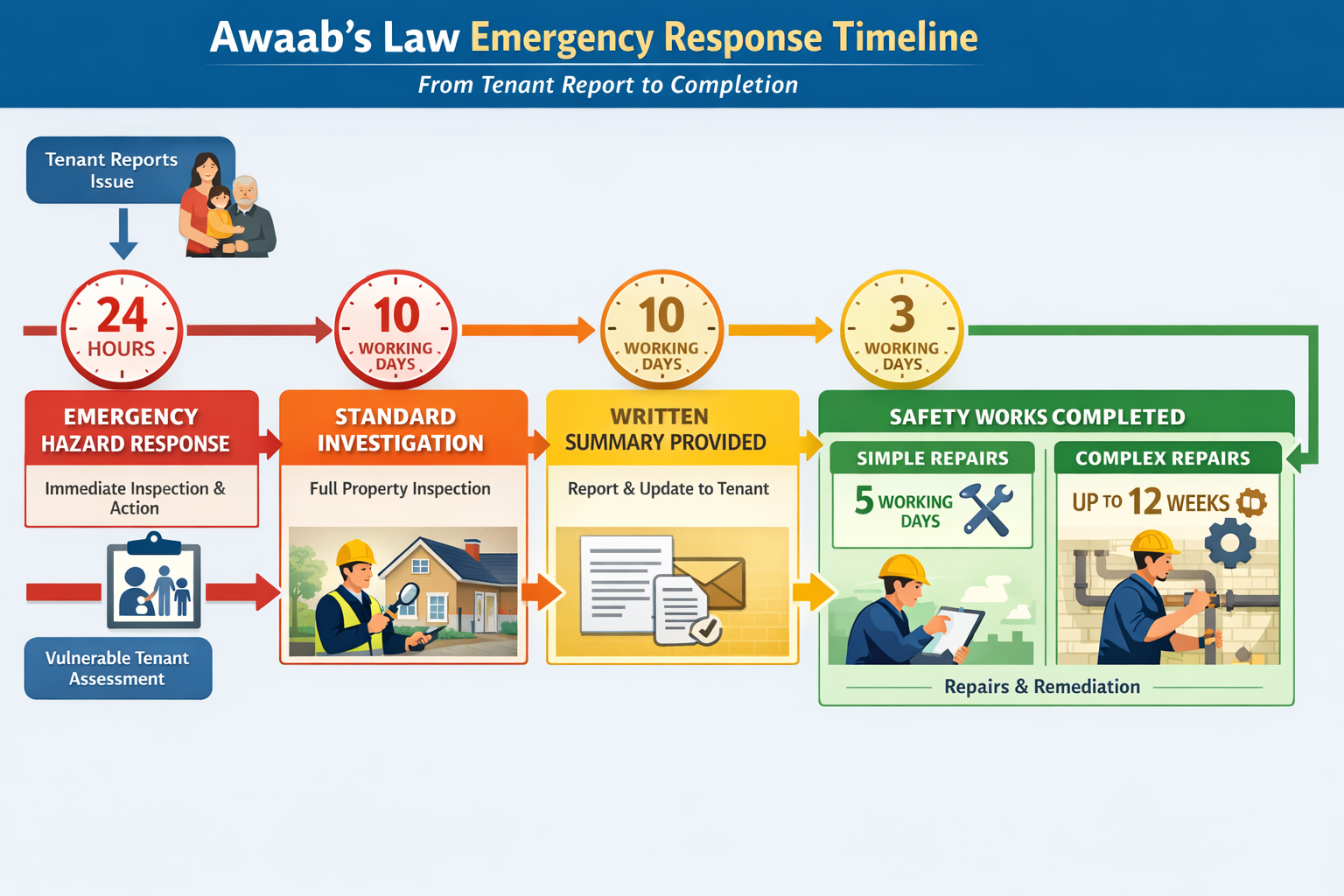
Awaab's Law establishes two-tier response timeframes based on hazard severity, fundamentally changing how quickly landlords must act when tenants report problems. [5]
Emergency Hazard Response (24-Hour Protocol)
An emergency hazard is defined as one posing imminent and significant risk of harm to occupants. Examples include:
- Electrical faults causing arcing or fire risk
- Complete heating system failure during winter months in properties with vulnerable occupants
- Structural damage creating immediate collapse risk
- Gas leaks or carbon monoxide exposure (Phase 3)
- Fire detection system complete failure
Timeline Requirements:
- Investigation begins: Within 24 hours of report
- Safety works completed: Within 24 hours of confirming the emergency hazard
- Temporary measures: If permanent repair cannot be completed within 24 hours, landlord must implement temporary safety measures and complete permanent works urgently [1]
Standard Significant Hazard Response
For hazards that present significant risk but not imminent danger:
Investigation Phase:
- 10 working days from tenant report to complete investigation
- Investigation must determine whether a significant hazard exists
- Surveyor assessment required for technical hazards
Communication Requirements:
- 3 working days after investigation concludes to provide written summary to tenant
- Summary must explain findings, whether hazard exists, and planned remedial action [5]
Remedial Works Timeline:
- 5 working days to complete safety works for straightforward repairs
- For complex works: must begin within 5 working days and start no later than 12 weeks after investigation
- Landlord must provide clear timeline and keep tenant informed of progress [1]
Documentation and Record-Keeping Requirements
Proper documentation is essential for demonstrating Awaab's Law compliance and defending against potential enforcement action. Landlords should maintain:
📋 Hazard Report Logs
- Date and time of tenant report
- Description of reported issue
- Tenant contact information and vulnerability factors
📋 Investigation Records
- Surveyor inspection reports with photographic evidence
- Thermal imaging data for temperature hazards
- Electrical testing certificates where applicable
- HHSRS assessment scores and person-centred evaluation notes
📋 Tenant Communication Records
- Written summaries provided within 3 working days
- Copies of all correspondence regarding remedial works
- Timeline updates for complex repairs
📋 Works Completion Documentation
- Contractor invoices and completion certificates
- Before and after photographs
- Verification testing results (e.g., post-repair thermal imaging)
- Tenant confirmation of satisfactory completion
This documentation becomes critical evidence if disputes arise or if local authorities investigate potential breaches. For landlords managing multiple properties, implementing digital hazard management systems streamlines compliance tracking.
Preparing for Phase 3 and Future Regulatory Developments
Phase 3 Hazard Categories (2027 Implementation)
While Phase 2 focuses on temperature, fire, and electrical hazards, Phase 3 will extend Awaab's Law to virtually all HHSRS hazards beginning in 2027. Surveyors should begin developing expertise in these additional areas:
Environmental Hazards:
- Asbestos exposure from damaged or disturbed asbestos-containing materials
- Carbon monoxide from faulty combustion appliances
- Lead contamination from old paint or plumbing
- Biocide exposure from treated timber or pesticide residues [1]
Safety Hazards:
- Falls on stairs, steps, or level surfaces
- Falls between levels (inadequate balcony railings, unprotected edges)
- Collision and entrapment risks
- Explosions from gas leaks or improper fuel storage
Hygiene and Sanitation:
- Inadequate sanitation facilities
- Water supply contamination
- Food safety hazards in communal kitchens
Surveyors conducting comprehensive RICS home surveys should already be identifying many of these hazards, but Phase 3 will impose the same strict timeframes currently applied to damp, mould, and Phase 2 hazards.
Technology and Training Investments
Meeting the demands of the Awaab's Law 2026 Hazard Expansions: Level 3 Building Survey Protocols for Excess Temperature and Fire Risks in PRS requires surveyors to invest in both equipment and professional development.
Essential Equipment Upgrades:
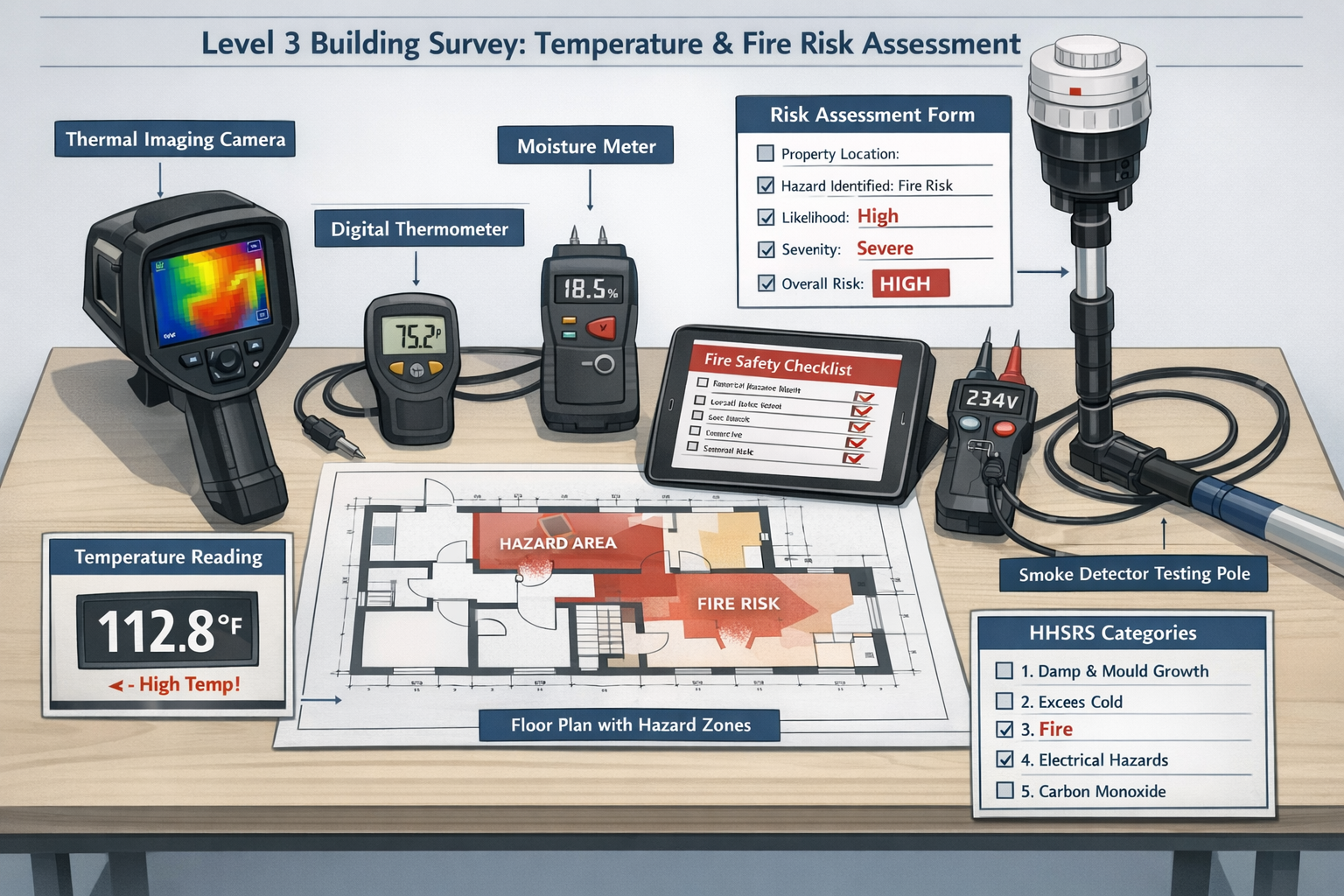
- Thermal imaging cameras (£300-£3,000 depending on specification)
- Moisture meters with deep-wall probes
- Digital thermometers for ambient temperature recording
- Electrical testing equipment for basic socket and RCD testing
- Air quality monitors for Phase 3 preparation
- Tablet-based inspection software for efficient documentation [2]
Professional Development Priorities:
- HHSRS assessment training with person-centred approach emphasis
- Thermal performance and building physics courses
- Fire safety awareness training
- Understanding vulnerable occupant health impacts
- Legal compliance and expert witness preparation for potential disputes [6]
For surveyors seeking to position themselves as Awaab's Law specialists, developing expert witness capabilities may prove valuable as disputes between tenants and landlords inevitably arise.
Practical Implementation Checklist for Surveyors and Landlords
For Chartered Surveyors Conducting Level 3 Surveys
✅ Pre-Inspection Preparation:
- Request tenant demographic information and vulnerability factors
- Review previous inspection reports and EICR certificates
- Confirm scope includes all Phase 2 hazard categories
- Prepare specialized equipment (thermal camera, moisture meter, etc.)
✅ On-Site Assessment:
- Conduct room-by-room hazard identification
- Perform thermal imaging in winter months for cold hazards
- Document all electrical defects and fire safety issues
- Photograph evidence of all identified hazards
- Interview tenants about heating adequacy, overheating, and safety concerns
✅ Reporting and Recommendations:
- Classify hazards as emergency, significant, or low-risk
- Apply person-centred assessment considering tenant vulnerabilities
- Provide clear remedial action recommendations with urgency levels
- Specify compliance timeframes under Awaab's Law
- Recommend specialist surveys where expertise limitations exist
For Landlords and Property Managers
✅ System Setup:
- Implement hazard reporting system with clear tenant communication channels
- Establish relationships with qualified surveyors, electricians, and contractors
- Create response protocols for emergency vs. standard hazards
- Set up documentation and record-keeping systems
✅ Proactive Compliance:
- Schedule regular property inspections before tenants report issues
- Maintain up-to-date EICR certificates (5-year maximum intervals)
- Address known thermal performance issues proactively
- Ensure all fire detection systems are tested annually
- Keep detailed maintenance records demonstrating due diligence
✅ Response Procedures:
- Acknowledge tenant reports within 24 hours
- Commission surveyor investigations within required timeframes
- Provide written summaries to tenants within 3 working days
- Complete or commence remedial works within 5 working days
- Maintain communication throughout complex repair processes
For landlords managing commercial rental properties, similar principles apply, though specific regulations may differ. Understanding commercial building surveys helps ensure comprehensive compliance across all property types.
Conclusion
The Awaab's Law 2026 Hazard Expansions: Level 3 Building Survey Protocols for Excess Temperature and Fire Risks in PRS represent a watershed moment in tenant protection regulation. By extending mandatory investigation and remediation timeframes to excess cold, excess heat, fire hazards, electrical risks, and structural collapse concerns, the legislation acknowledges that tenant safety encompasses far more than damp and mould alone.
For chartered surveyors, this expansion demands enhanced technical capabilities, specialized equipment, and a fundamental shift toward person-centred hazard assessment. The traditional HHSRS scoring system no longer suffices—surveyors must evaluate how each hazard affects the specific individuals living in each property, considering age, health status, and vulnerability factors.
Landlords face heightened compliance obligations with strict timeframes that leave little room for delay. The 24-hour emergency response requirement and 10-day investigation deadline necessitate robust systems, reliable contractor relationships, and proactive property management approaches.
Actionable Next Steps
For Surveyors:
- Invest in thermal imaging equipment and electrical testing tools
- Complete HHSRS training with person-centred assessment emphasis
- Develop standardized inspection checklists covering all Phase 2 hazards
- Build relationships with specialist engineers for complex referrals
- Prepare for Phase 3 by developing expertise in asbestos, carbon monoxide, and other HHSRS hazards
For Landlords:
- Commission comprehensive Level 3 building surveys on all rental properties
- Address identified thermal performance and fire safety defects proactively
- Ensure all EICR certificates are current and compliant
- Implement tenant reporting systems with clear communication protocols
- Train property management staff on Awaab's Law response timeframes
For Tenants:
- Report heating inadequacy, overheating, electrical faults, and fire safety concerns immediately
- Document issues with photographs and written descriptions
- Understand your rights under Awaab's Law, including response timeframes
- Escalate to local authority environmental health if landlords fail to respond
- Seek legal advice if significant hazards remain unaddressed beyond statutory deadlines
The 2026 hazard expansions elevate rental property standards across England, ensuring that preventable tragedies like Awaab Ishak's death drive meaningful regulatory change. By embracing comprehensive Level 3 survey protocols and prioritizing tenant safety above all else, the property sector can transform compliance obligations into genuine improvements in housing quality and occupant wellbeing.
References
[1] Awaabs Law Is Here The Surveyors Guide For Compliance – https://www.surventrix.com/blog/awaabs-law-is-here-the-surveyors-guide-for-compliance
[2] Awaabs Law Surveyors – https://goreport.com/awaabs-law-surveyors/
[3] Awaabs Law Technical Compliance Hvac Ventilation – https://www.arm-environments.com/resources/awaabs-law-technical-compliance-hvac-ventilation
[5] Awaabs Law Guidance For Social Landlords Timeframes For Repairs In The Social Rented Sector – https://www.gov.uk/government/publications/awaabs-law-guidance-for-social-landlords/awaabs-law-guidance-for-social-landlords-timeframes-for-repairs-in-the-social-rented-sector
[6] Expert Witness Preparation For Awaabs Law 2026 Expansions Testifying On New Rental Hazards Like Fire And Electrical Risks – https://nottinghillsurveyors.com/blog/expert-witness-preparation-for-awaabs-law-2026-expansions-testifying-on-new-rental-hazards-like-fire-and-electrical-risks