
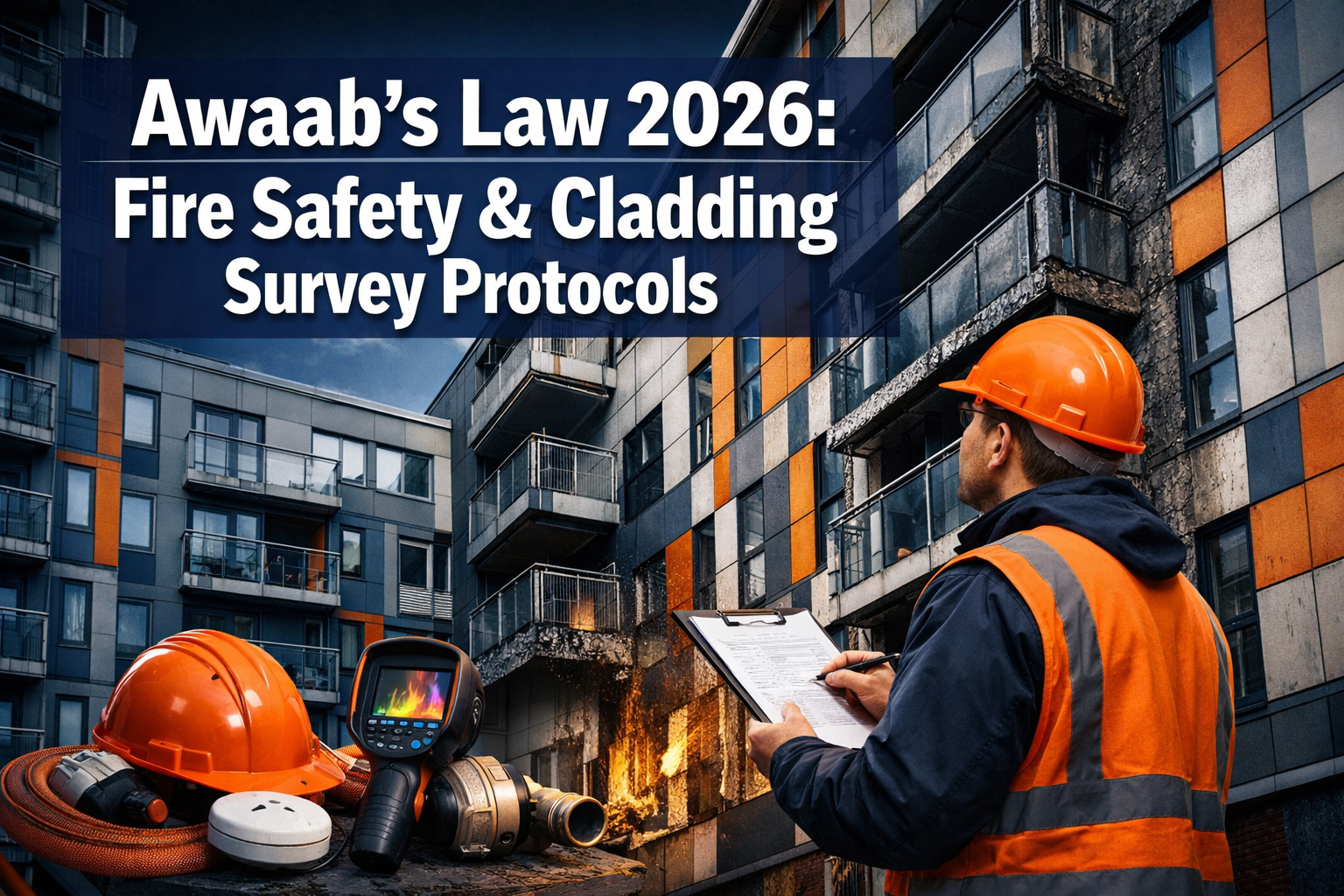
The tragic death of two-year-old Awaab Ishak from prolonged exposure to mould in 2020 sparked legislative change that now extends far beyond damp and mould concerns. In 2026, Phase 2 of Awaab's Law introduces mandatory timeframes for fire safety hazards, fundamentally transforming how building surveyors approach cladding remediation and fire risk assessments in multi-occupancy residential blocks.[1][2] This expansion creates urgent compliance obligations for social landlords and establishes new RICS-compliant inspection protocols that surveyors must implement immediately.
Key Takeaways
- 🔥 Fire hazards now covered: Phase 2 of Awaab's Law extends beyond damp and mould to include fire safety risks, electrical hazards, and structural defects in 2026
- ⏱️ Strict timeframes: Fire door replacements must occur within 15 days, while significant fire hazards require investigation within 10 working days and remediation within 5 days of investigation completion
- 📋 RICS compliance essential: Building surveyors must implement comprehensive inspection checklists covering cladding materials, fire barriers, cavity barriers, and party wall fire-stopping
- 🏢 Multi-occupancy focus: Shared structures present unique challenges requiring coordinated surveys across multiple dwellings and common areas
- ⚖️ Legal consequences: Non-compliance can result in enforcement action, unlimited fines, and potential criminal prosecution for social landlords
Understanding Awaab's Law 2026 Fire Safety Extensions
The Legislative Evolution
Awaab's Law initially focused on damp and mould hazards when it came into force in 2023, establishing clear timeframes for social landlords to investigate and remedy these specific health risks. The 2026 Phase 2 expansion represents a significant broadening of scope, now encompassing fire safety risks, electrical hazards, excess cold and heat, falls on stairs and level surfaces, and hygiene hazards.[1][8]
This legislative evolution reflects growing awareness that housing hazards extend far beyond moisture-related issues. The inclusion of fire safety provisions directly addresses concerns raised by the Grenfell Tower tragedy and subsequent building safety investigations that revealed widespread cladding defects across the UK housing stock.
Fire Hazards Under Phase 2 Coverage
The fire safety provisions within Awaab's Law Phase 2 specifically target hazards that pose immediate or significant risk to occupants. These include:
- Defective fire doors and fire-stopping measures
- Compromised cladding systems with combustible materials
- Failed fire barriers in cavity walls and compartmentation
- Inadequate means of escape from fire
- Faulty fire detection and alarm systems
- Blocked or obstructed fire exits
Social landlords must now respond to these hazards within prescribed timeframes, creating unprecedented urgency for comprehensive building surveys that identify and document fire safety defects.[2][5]
Mandatory Response Timeframes
The legislation establishes a tiered response system based on hazard severity:
| Hazard Category | Investigation Timeline | Remediation Timeline |
|---|---|---|
| Emergency hazards (immediate risk) | Immediate action required | Within 24 hours |
| Significant fire hazards | Within 10 working days of report | Within 5 working days of investigation completion |
| Fire door defects | Assessment within standard timeframe | Replacement within 15 days |
These timeframes create substantial pressure on building surveyors to conduct rapid yet thorough assessments. Emergency hazards—those posing immediate risk to life—demand action within 24 hours, while significant fire hazards follow the 10-day investigation and 5-day remediation framework.[5]
Building Survey Protocols for Cladding Remediation in Multi-Occupancy Blocks
RICS-Compliant Inspection Frameworks
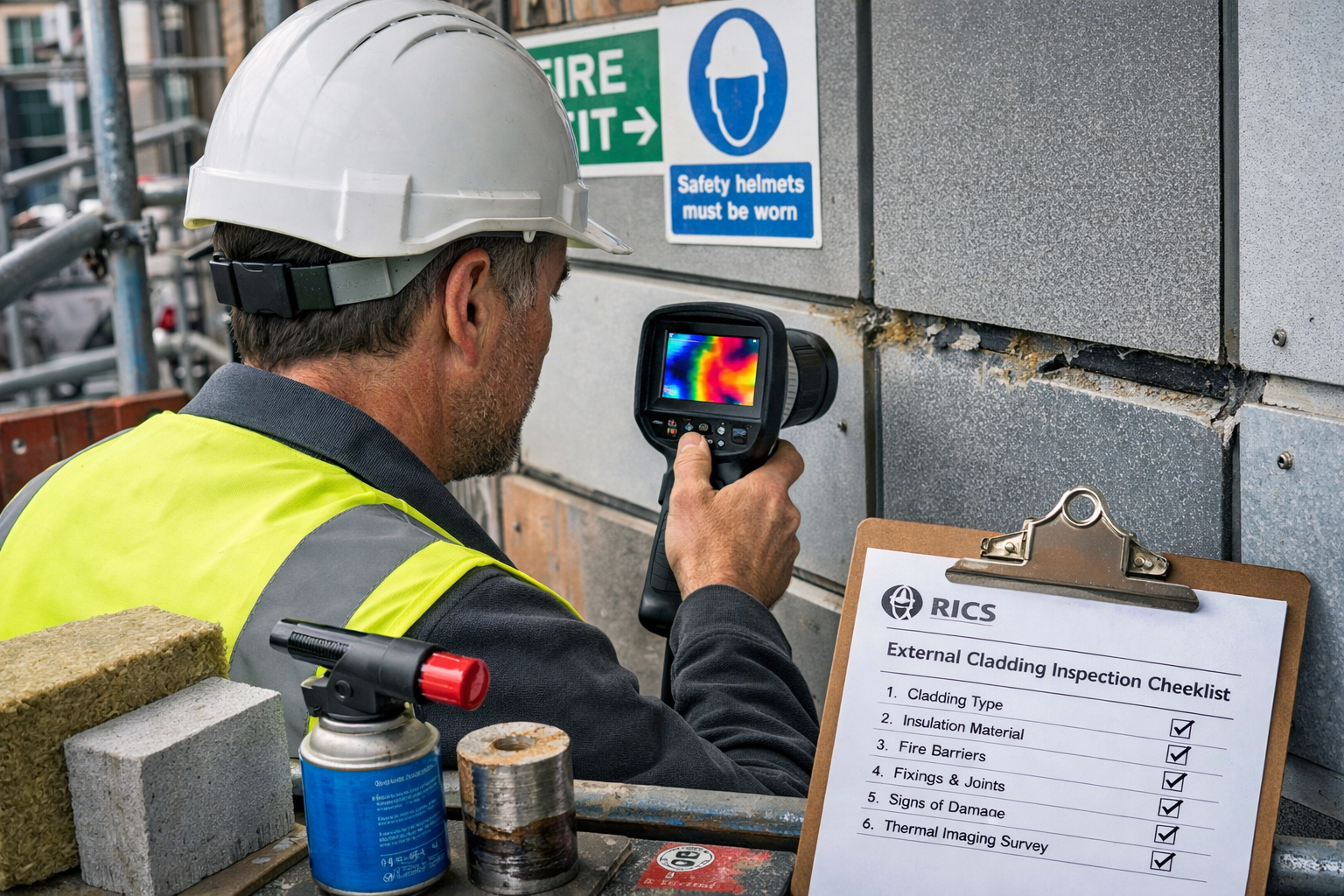
Professional building surveyors must adopt comprehensive inspection protocols that align with RICS standards while meeting Awaab's Law compliance requirements. A RICS Level 3 Building Survey provides the detailed investigation necessary for multi-occupancy blocks, though specialized fire safety assessments may require additional expertise.
Essential inspection components include:
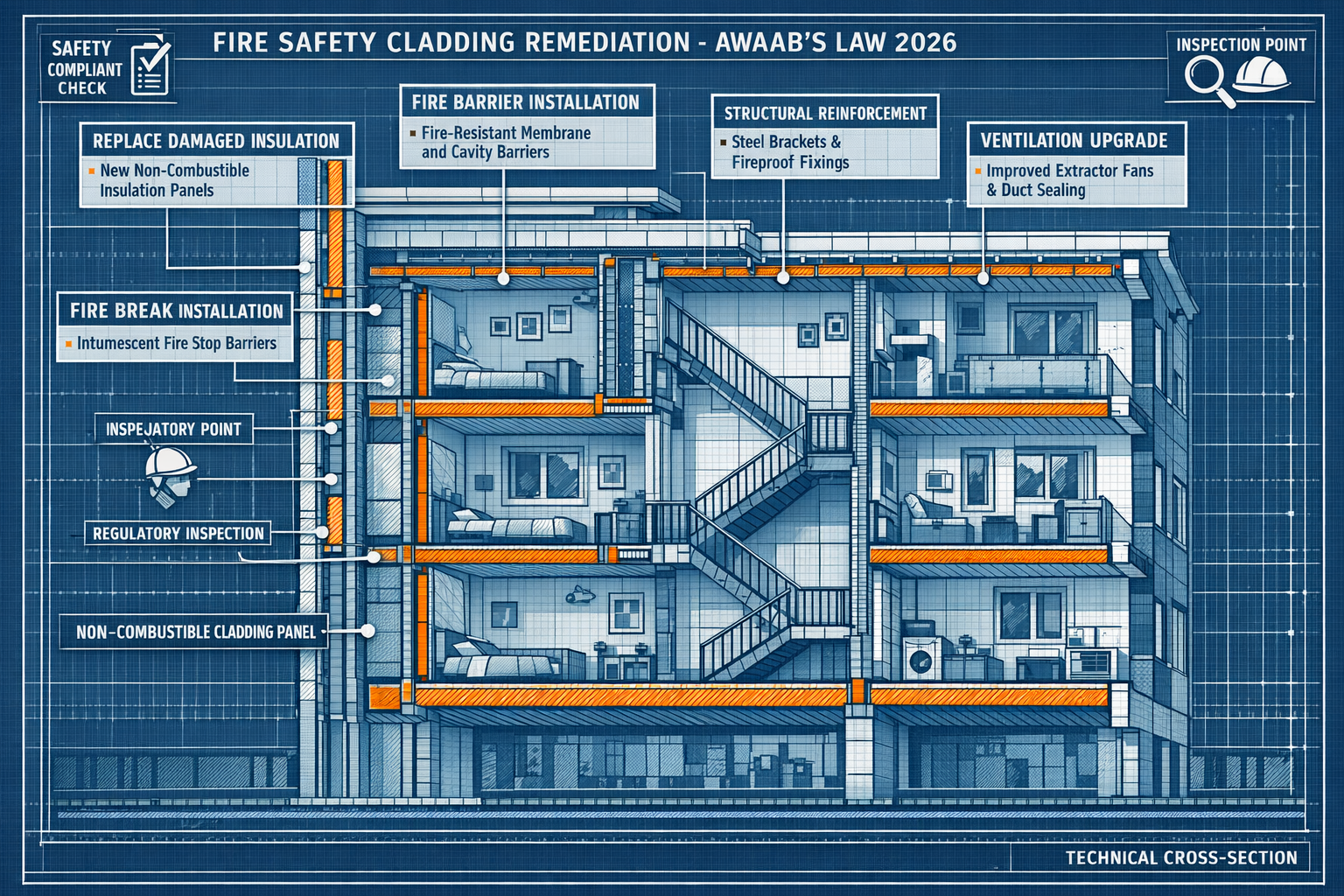
✅ External envelope assessment: Complete examination of cladding materials, fixings, and substrate conditions
✅ Thermal imaging surveys: Detection of hidden defects, moisture ingress, and insulation failures that compromise fire barriers
✅ Cavity barrier verification: Confirmation that fire barriers are correctly installed and functional throughout the building envelope
✅ Fire door integrity testing: Assessment of fire door condition, gaps, seals, and hardware functionality
✅ Compartmentation review: Verification that fire-stopping measures maintain compartmentation between dwellings
✅ Party wall fire-stopping: Detailed examination of shared walls between properties to ensure fire resistance ratings are maintained
Cladding Material Assessment Protocols
The identification and documentation of cladding materials represents a critical component of fire safety surveys. Surveyors must determine:
- Material composition: Whether cladding incorporates combustible materials (ACM, HPL, timber) or non-combustible alternatives
- Fire classification: BS 8414 test results and European classification ratings (A1, A2-s1,d0, etc.)
- Installation methodology: Correct use of fire barriers, cavity closers, and fire-stopping around openings
- Condition assessment: Evidence of deterioration, damage, or previous modification that compromises fire performance
For buildings over 11 meters in height, the Building Safety Act 2022 already prohibits combustible materials in external walls. However, Awaab's Law 2026 extensions create additional obligations for social landlords to remediate defects within prescribed timeframes regardless of building height.[4]
Multi-Occupancy Specific Considerations
Multi-occupancy blocks present unique survey challenges that require coordinated approaches:
Access coordination: Surveyors must arrange access to multiple dwellings, common areas, and external elevations, often requiring scaffolding or rope access equipment.
Party wall implications: Shared structural elements between dwellings necessitate careful examination of fire-stopping measures. Understanding party wall procedures becomes essential when remediation works affect shared structures.
Common area responsibilities: Landlords maintain responsibility for communal spaces, requiring comprehensive surveys of corridors, stairwells, and shared facilities.
Resident communication: Effective tenant engagement ensures hazards are reported promptly and access is granted for inspections.
Documentation and Reporting Standards
Comprehensive documentation forms the foundation of effective compliance. Survey reports must include:
📄 Photographic evidence: High-resolution images documenting defects, materials, and conditions
📄 Material specifications: Detailed records of cladding types, manufacturers, and installation dates
📄 Risk categorization: Clear classification of hazards as emergency, significant, or routine
📄 Remediation recommendations: Specific, actionable steps required to address identified defects
📄 Timeline compliance tracking: Documentation showing adherence to Awaab's Law timeframes
Professional surveyors should consider specialist defect surveys when complex fire safety issues require focused investigation beyond standard building survey scope.
Implementation Challenges and Practical Solutions for Survey Professionals
Resource Constraints and Survey Capacity
The 2026 expansion of Awaab's Law creates immediate capacity challenges for building surveyors. Social landlords managing large portfolios must rapidly assess thousands of properties, while the pool of qualified surveyors remains limited. This supply-demand imbalance has several practical implications:
Prioritization strategies: Surveyors must help landlords develop risk-based prioritization frameworks that address the highest-risk properties first while maintaining compliance with statutory timeframes.
Technology integration: Digital survey tools, including thermal imaging, drone inspections, and building information modeling (BIM), can accelerate assessment processes without compromising quality.
Collaborative approaches: Multi-disciplinary teams combining building surveyors, fire safety engineers, and structural specialists deliver comprehensive assessments more efficiently than sequential investigations.
Technical Competency Requirements
The complexity of cladding remediation surveys demands specialized knowledge beyond traditional building survey expertise. Surveyors must develop competency in:
- Fire engineering principles: Understanding fire spread mechanisms, compartmentation theory, and performance-based design
- Material science: Knowledge of cladding material properties, combustibility testing, and fire classification systems
- Building regulations: Current understanding of Approved Document B, Building Safety Act requirements, and relevant British Standards
- Remediation methodologies: Familiarity with practical remediation options, costs, and installation requirements
Professional development through CPD courses focused on fire safety and cladding assessment has become essential for surveyors working in this specialized field.[6]
Cost Implications and Funding Mechanisms
Cladding remediation represents substantial financial investment, with costs varying dramatically based on building height, cladding type, and remediation approach. Typical cost ranges include:
- Material replacement: £50-150 per square meter for non-combustible cladding systems
- Fire barrier installation: £20-40 per linear meter for cavity barriers
- Fire door replacement: £500-1,500 per door including installation
- Scaffolding and access: £15-30 per square meter of facade
Social landlords can access various funding streams, including government remediation funds, though surveyors should focus on technical assessment rather than financial advice. Understanding cost implications helps landlords prioritize remediation strategies within available budgets.
Coordinating Remediation in Occupied Buildings
Unlike new construction, remediation work occurs in occupied residential buildings, creating significant logistical challenges:
Resident displacement: Major external works may require temporary relocation, necessitating careful planning and communication.
Phased approaches: Surveyors can design remediation programs that minimize disruption by addressing buildings in phases or prioritizing specific elevations.
Safety during works: Maintaining fire safety during remediation requires temporary measures such as fire watches, enhanced detection systems, or interim compartmentation.
Quality assurance: Ongoing inspection during remediation ensures work meets specifications and maintains fire performance standards.
Legal and Regulatory Compliance Framework
Beyond Awaab's Law timeframes, surveyors must navigate a complex regulatory landscape:
Building Safety Act 2022: Establishes the Building Safety Regulator and creates additional obligations for higher-risk buildings.
Housing Health and Safety Rating System (HHSRS): Provides the assessment framework for identifying and categorizing hazards, including fire risks.
Regulatory Reform (Fire Safety) Order 2005: Places duties on "responsible persons" to conduct fire risk assessments and implement preventive measures.
Landlord and Tenant Act 1985: Establishes repair obligations that intersect with Awaab's Law requirements.
Professional surveyors must ensure their assessments align with all applicable legislation, not merely Awaab's Law provisions. Commercial building surveys for mixed-use developments may require additional considerations beyond residential-focused protocols.
Data Management and Compliance Tracking
Effective compliance requires robust data management systems that track:
✔️ Hazard reporting dates: When tenants or inspectors first identified defects
✔️ Investigation timelines: Documentation of assessment activities within statutory timeframes
✔️ Remediation progress: Tracking of works from commencement to completion
✔️ Re-inspection schedules: Planned follow-up surveys to verify remediation effectiveness
Digital platforms that integrate survey data with asset management systems enable landlords to demonstrate compliance and identify patterns across their portfolios. Surveyors should provide reports in formats compatible with these systems.
Conclusion
Awaab's Law 2026 Fire Safety Extensions represent a watershed moment for building survey practice in multi-occupancy residential blocks. The inclusion of fire hazards within mandatory response timeframes creates unprecedented urgency for comprehensive cladding assessments and remediation programs.[1][2][8] Building surveyors now occupy a critical position in protecting resident safety while helping social landlords navigate complex compliance obligations.
The prescribed timeframes—24 hours for emergency hazards, 10 working days for investigation, and 5 days for remediation commencement—demand efficient, well-organized survey protocols that maintain professional standards while meeting statutory deadlines.[5] RICS-compliant inspection frameworks must encompass external cladding systems, fire barriers, compartmentation measures, and party wall fire-stopping across shared structures.
Actionable Next Steps for Building Surveyors
Immediate actions:
- Review current survey protocols to ensure alignment with Awaab's Law Phase 2 requirements and fire safety assessment standards
- Invest in specialized training covering fire engineering principles, cladding material assessment, and remediation methodologies
- Upgrade technology capabilities including thermal imaging equipment, digital reporting systems, and drone inspection capabilities
- Establish relationships with fire safety engineers and remediation specialists for multi-disciplinary collaboration
Medium-term strategies:
- Develop standardized checklists specific to multi-occupancy cladding assessments that ensure consistent, comprehensive inspections
- Create template reporting formats that document compliance with statutory timeframes and provide clear remediation recommendations
- Build capacity through recruitment or partnerships to handle increased demand for fire safety surveys
- Implement quality assurance processes that verify survey accuracy and completeness before report delivery
For property owners and landlords requiring comprehensive fire safety assessments, engaging qualified professionals who understand both RICS building survey standards and Awaab's Law compliance requirements is essential. The stakes—resident safety, legal compliance, and financial liability—have never been higher.
The 2026 extensions transform building surveying from a primarily technical discipline into a critical public safety function. Surveyors who embrace this responsibility, develop specialized expertise, and implement rigorous inspection protocols will not only ensure compliance but contribute meaningfully to preventing future housing tragedies. The legacy of Awaab Ishak demands nothing less than professional excellence in identifying and remedying hazards that threaten resident wellbeing.
References
[1] Awaabs Law Timeline – https://www.glplaw.com/2026/01/23/awaabs-law-timeline/
[2] The Key Changes In 2026 That You Need To Be Aware Of – https://selo.global/the-key-changes-in-2026-that-you-need-to-be-aware-of/
[3] How Awaabs Law Will Be Stress Tested In 2026 – https://theintermediary.co.uk/2026/02/how-awaabs-law-will-be-stress-tested-in-2026/
[4] Awaabs Law Phase 2 Is Coming What Social Landlords Need To Know About Additional Hazard Compliance In 2026 – https://www.mobysoft.com/resources/blogs/awaabs-law-phase-2-is-coming-what-social-landlords-need-to-know-about-additional-hazard-compliance-in-2026/
[5] Awaabs Law Comes Into Force What Does It Mean For Construction – https://www.trowers.com/insights/2025/november/awaabs-law-comes-into-force-what-does-it-mean-for-construction
[6] Awaabs Law Technical Compliance Hvac Ventilation – https://www.arm-environments.com/resources/awaabs-law-technical-compliance-hvac-ventilation
[7] Awaabs Law Private Landlords 2026 – https://www.idealresponse.co.uk/blog/awaabs-law-private-landlords-2026/
[8] Awaabs Law – https://www.apizee.com/awaabs-law.php
[9] Awaabs Law Guidance For Social Landlords Timeframes For Repairs In The Social Rented Sector – https://www.gov.uk/government/publications/awaabs-law-guidance-for-social-landlords/awaabs-law-guidance-for-social-landlords-timeframes-for-repairs-in-the-social-rented-sector