

A poll of Legal & General surveyors found that 34% identified damp as the single most likely defect to go unnoticed without a professional home survey [3]. Yet damp is also one of the most frequently misdiagnosed conditions in residential property — and one of the most contentious when disputes arise. Understanding how surveyors assess damp and mould claims without overstating certainty is therefore critical for property owners, buyers, landlords, and legal professionals alike.
The challenge is not simply technical. It is also a matter of professional language, diagnostic discipline, and honest reporting. A surveyor who overstates certainty risks misleading clients into unnecessary remediation. One who understates it risks missing a serious defect. This article examines the methodology, tools, limitations, and reporting standards that characterise a rigorous, balanced damp and mould assessment in 2026.
Key Takeaways
- Visual inspection and moisture meter readings are starting points, not definitive diagnoses — surveyors must interpret findings within a broader context.
- Rising damp is widely over-diagnosed; many low-level damp symptoms have other causes including condensation, penetrating damp, or bridged damp-proof courses.
- Occupant behaviour — ventilation habits, cooking, drying clothes indoors — is a legitimate and frequently overlooked contributing factor.
- Non-invasive survey methods mean concealed damp can go undetected; surveyors must communicate this limitation clearly in their reports.
- In disputed cases, independent forensic damp surveys provide court-compliant, evidence-based documentation that carries significant weight.
The Diagnostic Framework: Starting With Evidence, Not Assumptions
The question of how surveyors assess damp and mould claims without overstating certainty begins with the diagnostic framework itself. A competent surveyor does not arrive at a property with a predetermined conclusion. The process is iterative, building from observable evidence toward a probability — not a certainty.
Visual Inspection as the Foundation
Every damp assessment begins with a systematic visual inspection. Surveyors look for tide marks, salt deposits (efflorescence), peeling or bubbling paint, staining, mould growth patterns, and musty odours. These indicators narrow the field of possible causes but do not, on their own, confirm a diagnosis [1].
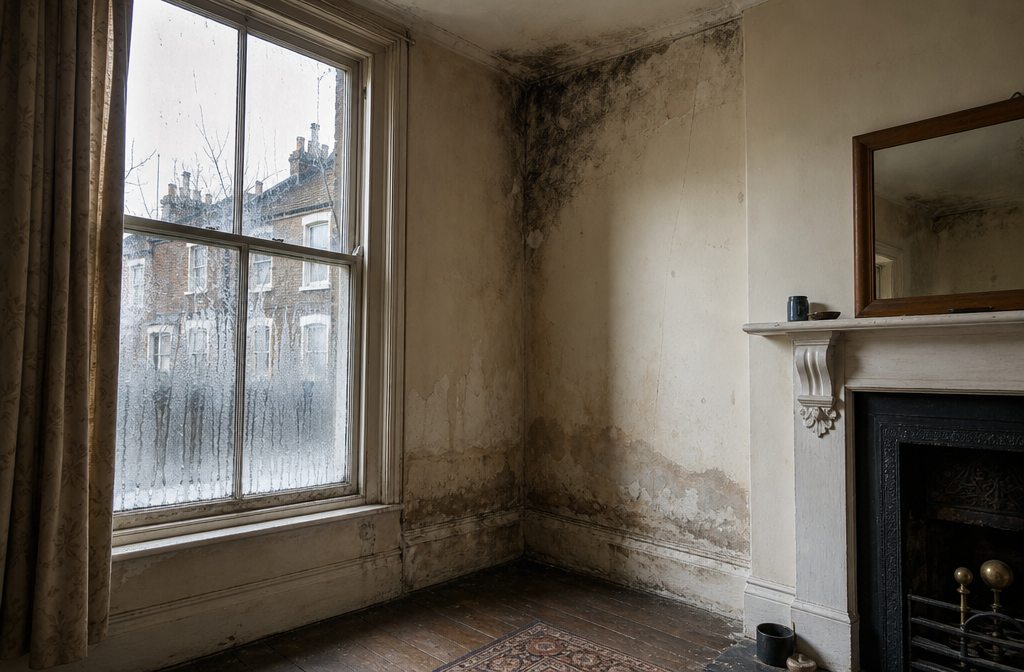
The pattern and location of symptoms matter enormously. Mould concentrated at ceiling level and in corners is more consistent with condensation than with rising damp. Staining that follows the line of a window frame or parapet suggests penetrating damp from a specific defect. Tide marks at low level with associated salt crystallisation may suggest rising damp — but only after other causes have been ruled out.
Key visual indicators and their possible causes:
| Symptom | Possible Causes |
|---|---|
| Mould in corners and on cold surfaces | Condensation, poor ventilation, thermal bridging |
| Tide marks at low level | Rising damp, bridged DPC, penetrating damp |
| Staining around window frames | Penetrating damp, failed sealant, defective lintel |
| Ceiling staining | Roof leak, plumbing leak, condensation in roof void |
| Salt deposits on walls | Previous or active rising damp, historical flood |
Moisture Meters: Useful but Misunderstood
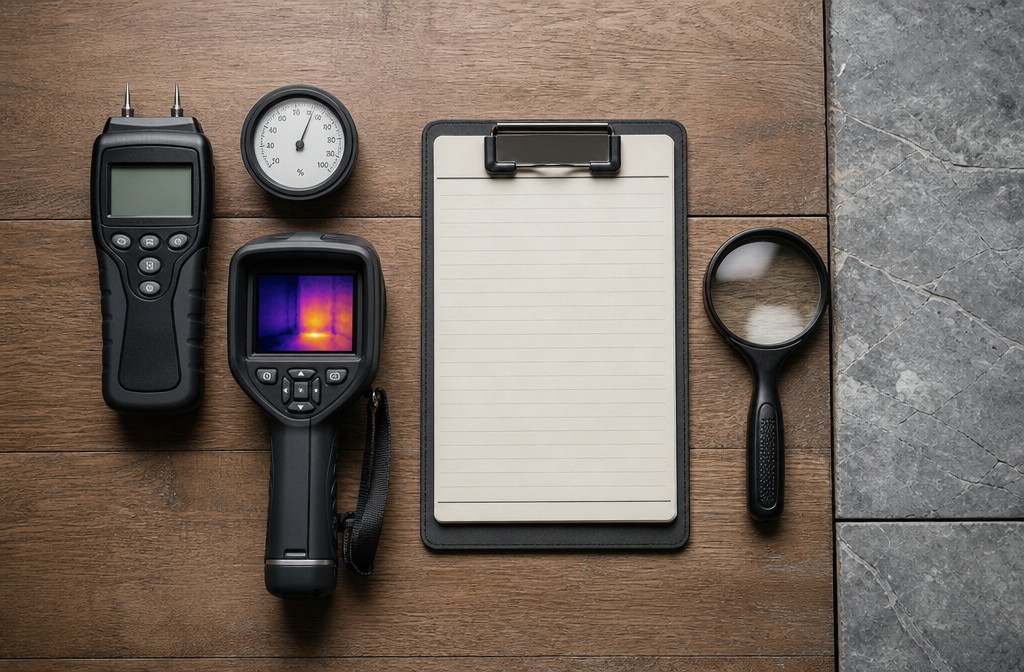
Pin-type moisture meters measure electrical resistance between two probes inserted into a surface. Lower resistance indicates higher moisture content. These instruments are standard survey tools, but their limitations are significant and often underestimated [1].
Readings can be distorted by:
- Residual salts from previous damp episodes, which remain hygroscopic and attract moisture even after the original source is resolved
- Foil-backed plasterboard, which conducts electricity and produces false high readings
- Metal fixings and pipes within or behind the wall
- Certain plaster types, including renovating plasters that contain hygroscopic additives
A high moisture meter reading therefore indicates the presence of moisture or a moisture-attracting substance — it does not confirm active rising damp, penetrating damp, or any specific cause. Surveyors who report high readings as definitive evidence of rising damp without further investigation are overstating their certainty.
"Moisture meter readings should be treated as a prompt for further investigation, not as a diagnosis in themselves."
Responsible practice involves comparing readings across multiple locations, noting whether readings diminish with height (consistent with rising damp) or are localised (consistent with a specific leak or penetrating source), and cross-referencing with visual and contextual evidence.
The Most Common Diagnostic Errors in Damp Assessment
Understanding how surveyors assess damp and mould claims without overstating certainty requires an honest account of where assessments most commonly go wrong. Three failure modes stand out.
Over-Diagnosis of Rising Damp
Rising damp — where groundwater travels upward through capillary action in masonry — is a real phenomenon, but it is widely over-diagnosed [6]. Many symptoms attributed to rising damp at low levels are caused by other mechanisms that produce similar visual patterns:
- Bridged damp-proof courses (DPCs): High external ground levels, render applied below the DPC line, or internal floor screeds that bypass the DPC can all allow moisture to bypass the membrane without true capillary rise.
- Penetrating damp: Defective rainwater goods, saturated masonry, or failed pointing can introduce moisture at low levels, particularly in solid-wall construction.
- Condensation at low level: Cold floors, poor underfloor ventilation, and thermal bridging at wall-floor junctions can cause condensation that mimics rising damp visually.
The commercial incentive to diagnose rising damp — given that treatment involves installing a chemical DPC and replastering, both of which generate significant revenue for remediation contractors — means that independent chartered surveyors play a vital role in providing objective second opinions.
For a detailed professional assessment, a specialist damp survey conducted by a chartered surveyor offers an independent view that is not tied to any remediation product or service.
Ignoring Occupant Behaviour
RICS guidance is explicit on this point: where no construction or design fault is causing dampness and mould, occupier activities may be the primary driver [7]. Poor ventilation, overcrowding, and everyday activities — cooking, washing, drying clothes indoors — generate significant volumes of water vapour. In poorly ventilated or thermally inefficient properties, this moisture condenses on cold surfaces and creates mould growth.
This does not mean surveyors should default to blaming occupants. It means they must consider occupancy patterns as part of a complete diagnostic picture. A property with functioning extract ventilation, adequate heating, and no construction defects that nonetheless shows widespread mould growth warrants a different conclusion than one with blocked air bricks, failed window seals, and no mechanical ventilation.
Failing to consider occupancy factors is as much an error as ignoring structural defects. Both lead to incomplete and potentially misleading reports.
Concealed Defects and the Limits of Non-Invasive Surveys
Standard RICS Level 2 and Level 3 surveys are non-intrusive by design. Surveyors will not move furniture, lift carpets, or remove skirting boards [4]. This means that early-stage or concealed damp — particularly where a property has been recently redecorated — may go undetected.
This is not a failure of competence; it is an inherent limitation of the survey type. The professional obligation is to communicate this limitation clearly in the report, to flag areas where access was restricted, and to recommend further investigation where visual indicators suggest a problem may exist behind finished surfaces.
Clients who understand the difference between a Level 2 homebuyer survey and a Level 3 building survey are better placed to choose the appropriate level of investigation for their property type and risk profile. Older, solid-wall properties with a history of damp issues warrant a more thorough approach. For guidance on choosing between survey levels, the difference between Level 2 and Level 3 surveys is worth reviewing before instructing a surveyor.
Reporting Language, Specialist Referrals, and Disputed Claims
The final dimension of how surveyors assess damp and mould claims without overstating certainty is how findings are communicated. Diagnostic skill is only valuable if it is translated into clear, calibrated reporting language.
Calibrated Language in Survey Reports
A well-written damp report distinguishes between what is observed, what is inferred, and what remains uncertain. The language should reflect the level of confidence the evidence supports:
- Observed: "Moisture meter readings of [X]% were recorded at low level on the north-facing wall."
- Inferred: "The pattern of readings and associated salt deposits is consistent with moisture ingress, though the precise mechanism requires further investigation."
- Recommended action: "A specialist damp and timber survey is recommended prior to exchange of contracts."
Reports that state "rising damp is present" without qualification, or that attribute mould growth definitively to structural defects without considering ventilation and occupancy, are examples of overstated certainty. Conversely, reports that note high readings but offer no interpretation or recommendation fail the client in a different way.
When a Specialist Damp and Timber Survey Is Needed
If damp is flagged during a home survey, a specialist damp and timber survey provides a more detailed investigation. This typically includes assessment of penetrating damp above and below ground level, timber decay, woodworm infestation, sub-floor ventilation, and solid floors [9]. It produces specific recommendations for management and repair rather than a general flag for further investigation.
Understanding the cost of a damp survey and what it includes helps clients make informed decisions about whether to commission one before or after an initial home survey flags concerns. Similarly, the cost of a damp and timber report varies depending on property size and the scope of investigation required.
Forensic Investigations and Disputed Claims
Where damp and mould become the subject of a legal dispute — between landlord and tenant, buyer and seller, or insured and insurer — the standard of evidence required rises significantly. Independent chartered building surveyors provide impartial, evidence-based investigations to support insurers, loss adjusters, legal teams, and building owners [8].
Courts place significant weight on properly prepared expert evidence [5]. An independent forensic damp survey provides:
- Objective findings based on documented methodology
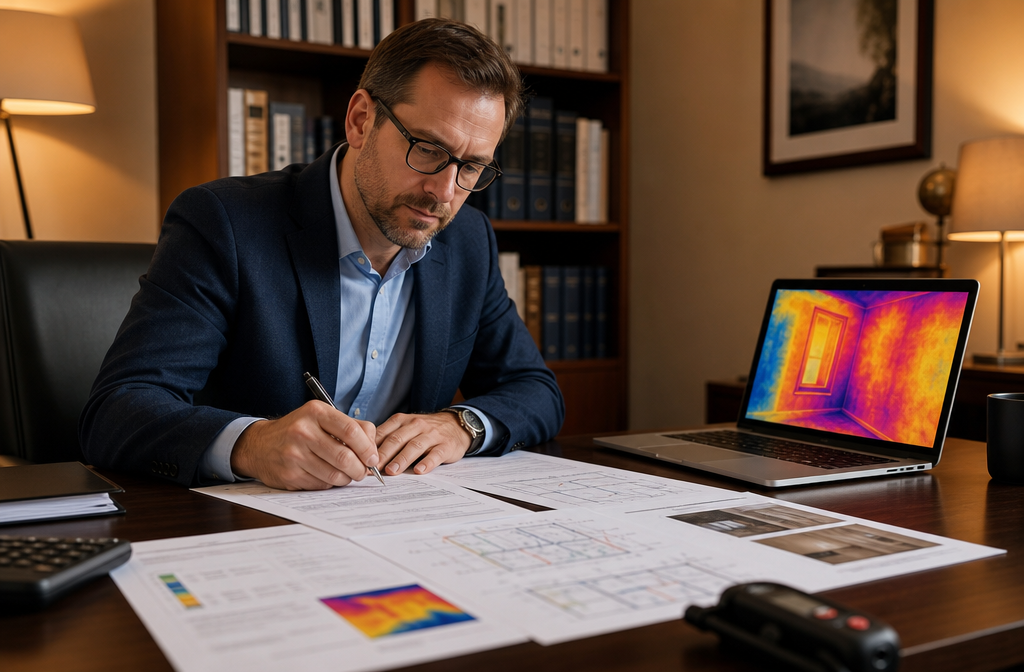
- Technical evidence including moisture readings, thermal imaging, and material sampling where appropriate
- Clear separation of observed fact from professional opinion
- Court-compliant documentation structured to meet Civil Procedure Rules requirements
For cases that may reach litigation, the expert witness services offered by chartered surveyors are specifically structured to meet these standards. The distinction between a standard survey report and an expert witness report is significant — the latter must meet specific procedural requirements and the surveyor must be prepared to defend their findings under cross-examination.
The Role of Thermal Imaging and Additional Tools
Where budget and access allow, thermal imaging cameras add a valuable dimension to damp investigations. They detect surface temperature differences that can indicate moisture presence, cold bridges, or air infiltration — none of which are visible to the naked eye or detectable by a moisture meter alone. Thermal imaging does not replace other methods; it supplements them.
Hygrometers measuring relative humidity and dew point can help distinguish between condensation-driven mould and moisture from structural sources. In complex cases, calcium carbide testing (Speedy test) provides a more accurate measure of actual moisture content in wall materials than pin-type meters alone.
The key principle is that no single tool provides a definitive answer. Competent damp assessment is a process of triangulation — using multiple data sources to build a coherent picture of what is happening and why.
Conclusion
Damp and mould assessment is one of the most technically and professionally demanding areas of building surveying. The temptation to reach for a simple diagnosis — "rising damp," "condensation," "structural defect" — is understandable, but it rarely serves clients well when the reality is more complex.
How surveyors assess damp and mould claims without overstating certainty comes down to three disciplines: rigorous evidence-gathering using multiple tools and methods, honest acknowledgement of the limitations of non-invasive inspection, and calibrated reporting language that distinguishes observation from inference.
Actionable next steps for property owners and buyers:
- Commission a RICS home survey appropriate to the age and condition of the property — older solid-wall properties warrant a Level 3 building survey.
- If damp is flagged, instruct an independent specialist damp and timber survey before committing to any remediation work recommended by a contractor.
- In disputed cases involving landlords, insurers, or legal proceedings, instruct a chartered surveyor experienced in forensic investigations and expert witness reporting.
- Do not accept a diagnosis of rising damp without evidence that other causes — condensation, penetrating damp, bridged DPC — have been systematically ruled out.
- Ensure survey reports clearly state what was and was not inspected, and what further investigation is recommended.
The goal of every damp assessment should be the same: to give clients the most accurate, honest, and useful account of what is happening in their property — and to be transparent about the boundaries of what the evidence can and cannot confirm.
References
[1] How Surveyors Diagnose Damp Moisture Meter Reliability – https://residentialsurveying.co.uk/blog/damp-problems-in-houses/how-surveyors-diagnose-damp-moisture-meter-reliability?utm_source=openai
[2] Will A Level 2 Survey Check For Damp – https://howorth.uk/2026/01/29/will-a-level-2-survey-check-for-damp/?utm_source=openai
[3] Surveying Surveyors Most Common Issues – https://group.legalandgeneral.com/asset/493705/globalassets/group/newsroom/press-releases/pdfs/2023/01/surveying-surveyors-most-common-issues.pdf/?utm_source=openai
[4] Surveyor Missed Damp What Can I Do – https://weatherdry.co.uk/surveyor-missed-damp-what-can-i-do/?utm_source=openai
[5] Damp And Mould Survey – https://www.ansteyhorne.co.uk/news/damp-and-mould-survey?utm_source=openai
[6] Rising Damp Misdiagnosis – https://www.lembuildingsurveying.co.uk/guides/damp/rising-damp-misdiagnosis?utm_source=openai
[7] The Role Of Surveyors In Dealing With Damp In Homes – https://ww3.rics.org/uk/en/journals/property-journal/the-role-of-surveyors-in-dealing-with-damp-in-homes.html?utm_source=openai
[8] Forensic Legal And Insurance Investigations – https://www.durndelldampsurveys.co.uk/forensic-legal-and-insurance-investigations?utm_source=openai
[9] Do House Surveyors Check For Damp – https://www.samconveyancing.co.uk/news/house-survey/do-house-surveyors-check-for-damp?utm_source=openai