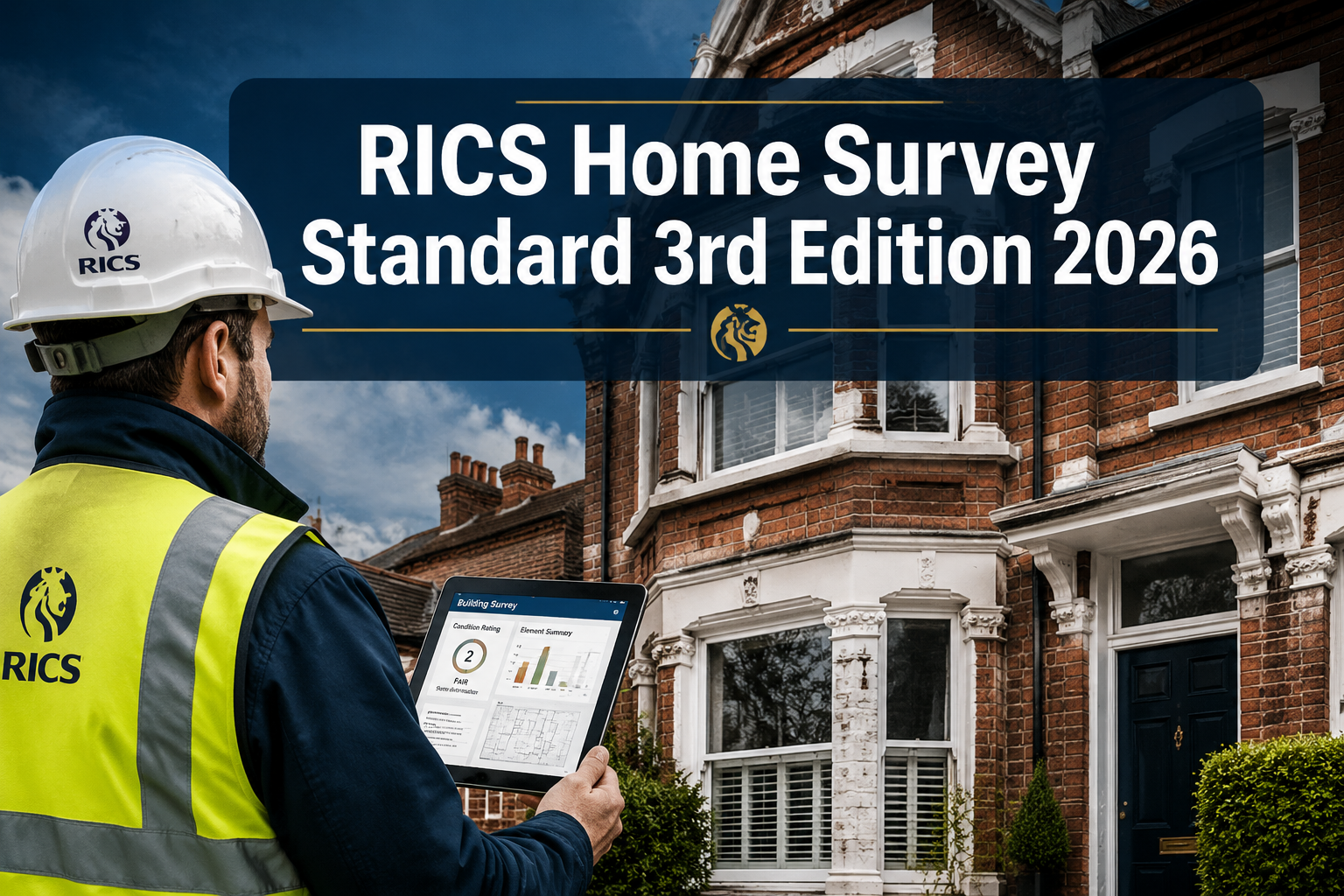
Only one in five UK homebuyers commissions a survey before completing a property purchase — a stubbornly low figure that has frustrated regulators and industry bodies for years [9]. Against this backdrop, the RICS Home Survey Standard 3rd Edition 2026: Critical Updates for Building Surveyors and Valuation Accuracy arrives as the most significant overhaul of residential surveying practice in over a decade. For building surveyors, compliance professionals, and property valuation specialists, understanding these changes is no longer optional — it is a professional obligation.
This article unpacks what the updated standard means in practice, which areas of surveying and reporting are most affected, and how practitioners can adapt their workflows to stay compliant and deliver greater value to clients in 2026 and beyond.
Key Takeaways 📋
- The RICS Home Survey Standard 3rd Edition 2026 introduces six priority reform areas, including AI integration, clearer survey level definitions, and optional valuation across all tiers.
- A minimum 24-month implementation window was required by RICS before reforms could take effect — placing full compliance squarely in 2026. [4]
- Upfront property information — including a potential Digital Property Pack — is central to the government's reform agenda, but no primary legislation has yet been enacted. [4]
- Drone inspections and retrofit building assessments are now formally recognised as additional service categories under the updated framework. [9]
- Surveyors who fail to adapt risk compliance gaps, client complaints, and professional indemnity exposure.
Understanding the Road to the 3rd Edition
The journey toward a revised Home Survey Standard began long before the 2025 consultation period. RICS has been under pressure from government, consumer groups, and its own membership to modernise a framework that many felt was no longer fit for purpose in an era of digital property transactions and climate-related building risks.
The 2025 Consultation: What Happened
A formal public consultation on updating the Home Survey Standard ran for six weeks, closing on 30 September 2025 [7]. This followed extensive stakeholder engagement involving:
- Over 325 RICS professionals contributing to reform discussions
- More than 1,400 homeowners sharing their survey experiences
- Separate consultation streams addressing both the technical standard and a proposed home survey regulatory scheme [7]
💬 "The consultation process was unusually broad by RICS standards — drawing in not just surveyors but the very consumers the standard is designed to protect." — Industry commentary, 2025 [9]
The dual-track consultation — one stream for the technical standard, one for regulation — signals that RICS is treating the professional and consumer dimensions of reform as distinct but interconnected challenges [7].
Why a 24-Month Implementation Window Matters
RICS explicitly required a minimum 24-month implementation period before any reforms involving upfront property condition information could be mandated [4]. This was not bureaucratic caution — it reflects the genuine complexity of retraining thousands of surveyors, updating software platforms, and aligning client-facing documentation across the industry. That 24-month clock, starting from the consultation's close in late 2025, positions mid-2026 as the critical compliance threshold.
Six Priority Areas Shaping the RICS Home Survey Standard 3rd Edition 2026
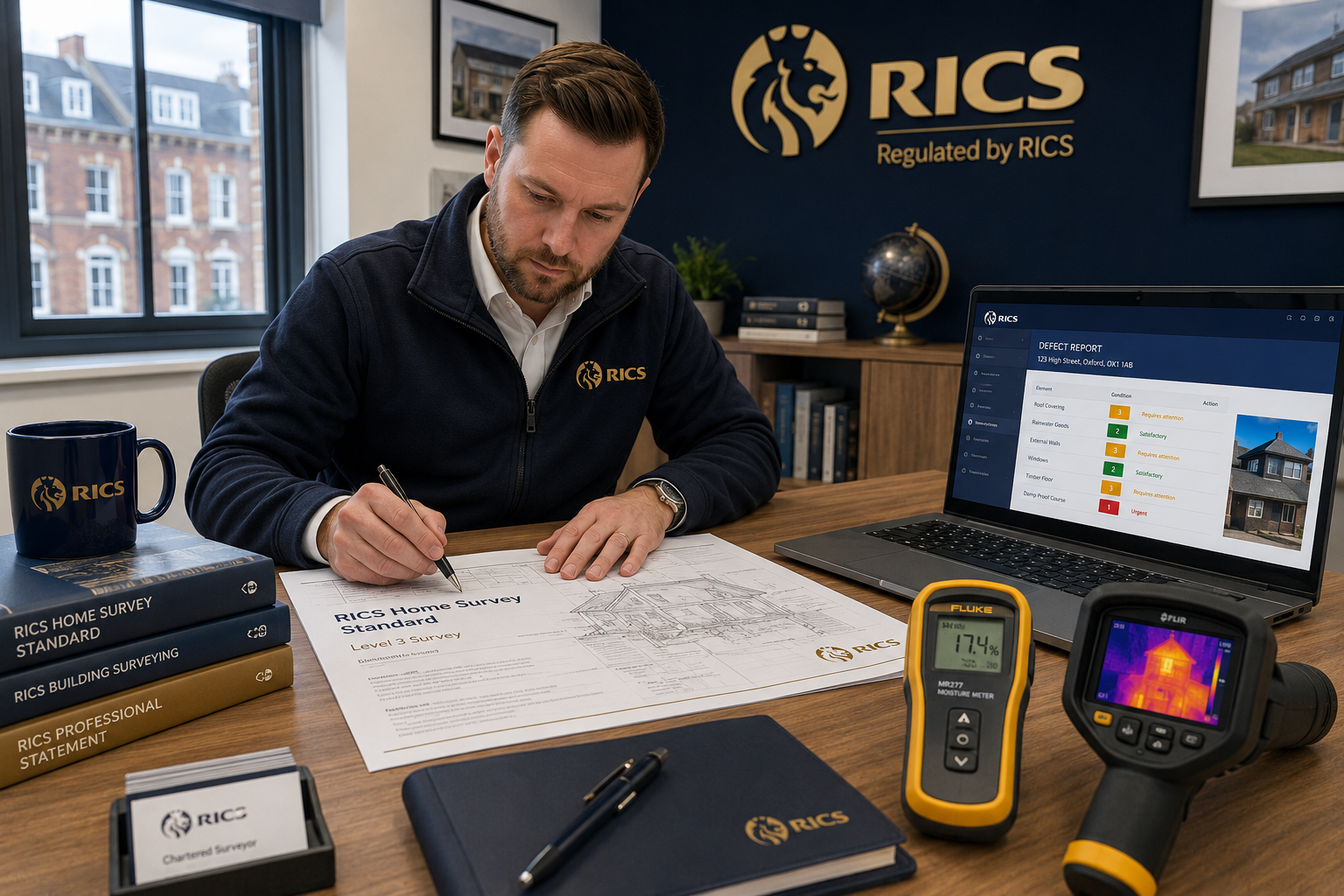
The RICS Home Survey Standard 3rd Edition 2026: Critical Updates for Building Surveyors and Valuation Accuracy is structured around six key improvement areas identified through the consultation process [9]. Each area carries direct implications for how surveys are conducted, reported, and delivered to clients.
1. 🏛️ Updating Legislation and Regulatory Practices
The government's broader reform vision centres on a Digital Property Pack — a bundle of upfront property information provided to buyers at the point of listing [4]. While this is compelling in theory, no primary legislation has yet been enacted to make such packs mandatory [4]. A parliamentary "Roadmap" is expected, but surveyors should not wait for legislation to begin aligning their practices with the direction of travel.
Key compliance action: Review client engagement letters and terms of service to ensure they reflect the possibility of upfront survey commissioning, not just post-offer instruction.
2. 🤖 Technology and AI Integration
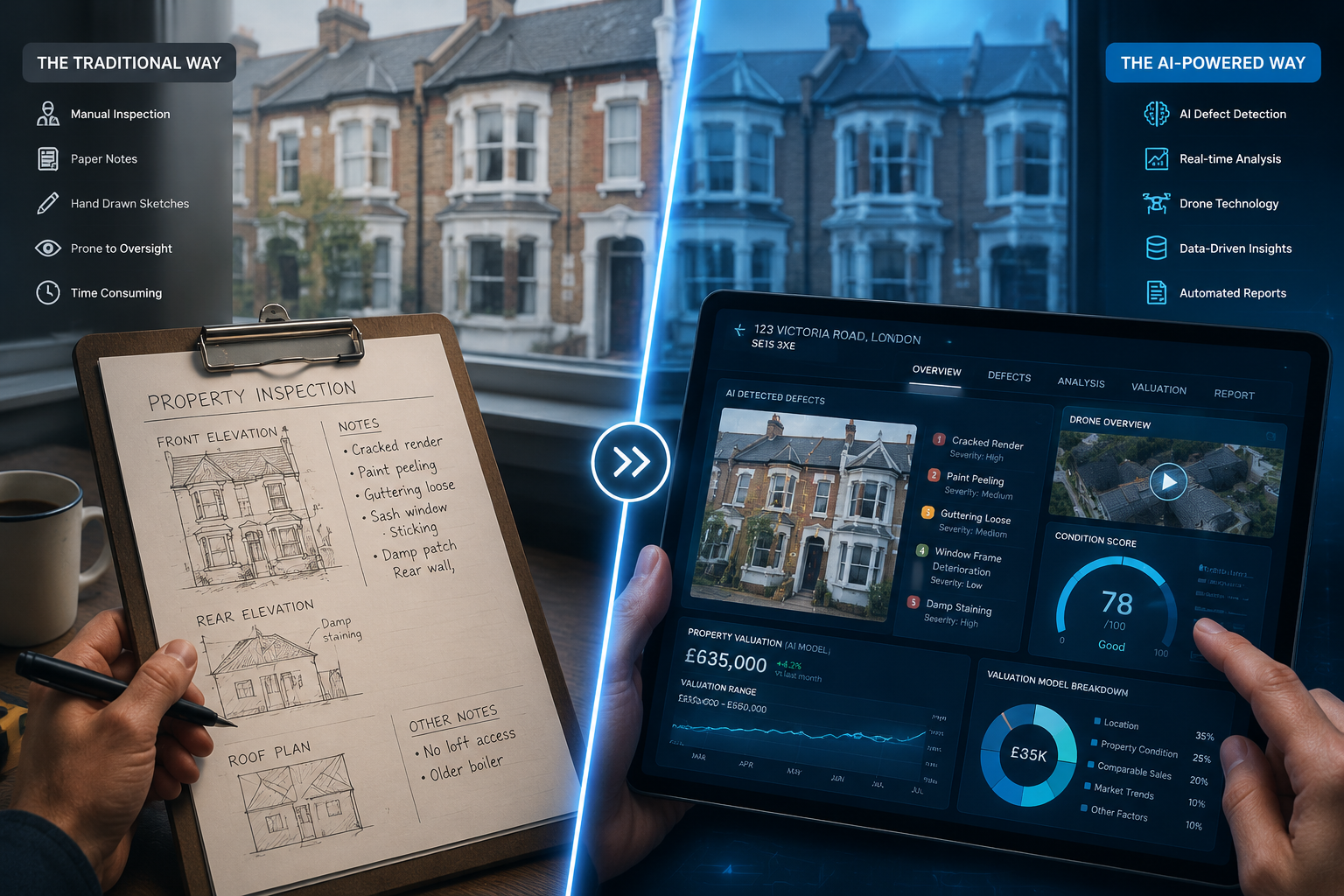
Perhaps the most forward-looking of the six areas, the inclusion of AI and technology integration within the Home Survey Standard framework marks a genuine shift in how RICS views the surveyor's toolkit [9]. Specific applications under consideration include:
| Technology | Application in Surveying |
|---|---|
| AI-assisted defect detection | Automated flagging of cracks, damp, and structural anomalies from photographs |
| Machine learning valuation tools | Comparable evidence aggregation and market adjustment modelling |
| Drone inspection platforms | Roof and high-level element inspection without access equipment |
| Digital reporting software | Condition rating automation and client-facing report generation |
Surveyors should note that AI tools are positioned as aids to professional judgement, not replacements for it. The standard makes clear that the RICS-accredited surveyor retains full responsibility for all condition ratings and valuations.
For properties with complex roof structures or limited access, drone surveys are now formally recognised as an additional service category — a significant step toward mainstream adoption.
3. 📊 Greater Clarity on Survey Levels
One of the most consumer-facing changes involves clearer definitions of what each survey level delivers. The existing three-tier structure (Level 1, Level 2, Level 3) has caused persistent confusion among homebuyers who struggle to understand the difference between a Level 2 HomeBuyer Survey and a Level 3 Building Survey.
The 3rd Edition introduces:
- Standardised plain-English descriptions of each level's scope
- Explicit statements of what is NOT included at each level
- Guidance on which property types are appropriate for each survey level
- Clearer signposting for 'additional risk' dwellings — older properties, non-standard construction, or those with known defect histories
For guidance on choosing the right property survey, this clarity is long overdue and will help reduce post-survey disputes about scope.
4. 💷 Optional Valuation at All Survey Levels
This is arguably the most commercially significant change for many surveying firms. The updated standard proposes optional valuation services across all three survey levels [9] — meaning clients commissioning even a Level 1 Condition Report could request a market valuation as an add-on.
RICS has been vocal in challenging UK government proposals that exclude residential valuations from upfront property information requirements, arguing that a condition assessment without a valuation provides an incomplete picture for consumers [4]. The Scottish model — which integrates valuations into the Home Report system — is frequently cited as evidence that this approach works in practice.
For surveyors already delivering Red Book valuations, this change opens new revenue streams while aligning with RICS's consumer protection objectives.
5. 🏚️ Guidance for 'Additional Risk' Dwellings
The 3rd Edition introduces specific guidance for properties that carry elevated inspection risk — a category that encompasses:
- Pre-1919 construction with solid walls and original materials
- Non-standard construction including timber frame, concrete panel, and prefabricated systems
- Properties with known or suspected subsidence
- Dwellings subject to flood risk or coastal erosion
- Listed buildings and those in conservation areas
For surveyors working with non-standard construction properties, the new guidance provides clearer frameworks for risk communication and referral to specialist investigations — reducing the professional indemnity exposure that has historically made these properties challenging to survey.
6. 🔧 Additional Services: Retrofit and Drone Inspections
The final priority area reflects the UK's net-zero commitments and the growing retrofit market. The updated standard formally recognises:
- Retrofit building assessments — evaluating properties for energy efficiency improvements, insulation upgrades, and heat pump compatibility
- Drone inspections — for high-level elements including roofs, chimneys, and parapet walls
- Specialist defect investigations as a distinct service category
This is particularly relevant for surveyors offering specialist defect surveys or roof surveys as standalone products.
Valuation Accuracy: What Changes for Surveyors in 2026
The RICS Home Survey Standard 3rd Edition 2026: Critical Updates for Building Surveyors and Valuation Accuracy places valuation methodology under renewed scrutiny. Several changes affect how surveyors approach market value assessments within survey reports.
Condition Ratings and Their Impact on Valuation
The updated standard strengthens the link between condition ratings (the 1-2-3 traffic light system) and valuation adjustments. Surveyors are now expected to:
- Provide explicit commentary on how significant defects affect market value
- Reference comparable evidence that accounts for condition, not just location and size
- Flag where a condition rating of 3 (Urgent) materially affects the property's mortgageability or insurability
The Valuation Inclusion Debate
RICS has taken a clear position: excluding valuations from upfront property information leaves buyers exposed [4]. The 3rd Edition addresses this by making valuation an opt-in service at every level, rather than restricting it to Level 2 and Level 3 surveys. This aligns with the broader push for transparency at the point of listing.
💬 "An upfront condition assessment without a valuation is like a medical diagnosis without a prognosis — technically accurate but practically incomplete." — RICS position on government reform proposals [4]
Practical Compliance Checklist for Building Surveyors ✅
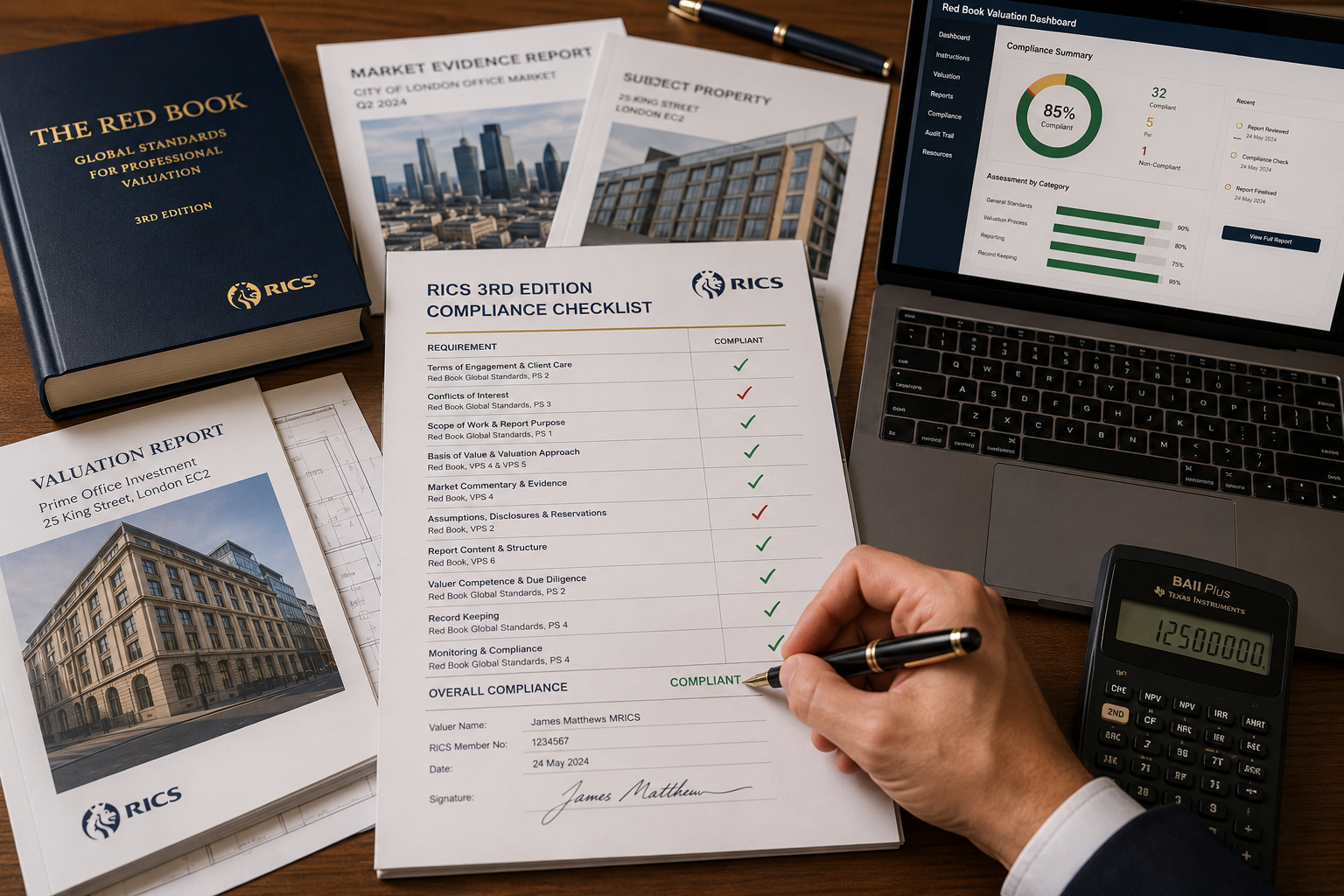
Implementing the 3rd Edition requirements demands systematic changes to practice management. Use this checklist to assess readiness:
Pre-Survey Stage
- Update client care letters to reflect new survey level descriptions
- Add optional valuation service to all survey instruction forms
- Confirm drone inspection capability or referral partnerships for high-level elements
- Review PI insurance cover for retrofit assessment services
During Survey
- Apply updated condition rating criteria, particularly for 'additional risk' dwellings
- Document all limitations of inspection explicitly (access, weather, coverings)
- Use AI-assisted tools only as a secondary check — primary judgement remains the surveyor's
- Record evidence for any condition rating that may affect valuation
Report Preparation
- Include plain-English survey level description on page one
- Explicitly state what is NOT covered by the survey level commissioned
- Link condition ratings to valuation commentary where ratings are 2 or 3
- Provide retrofit/energy efficiency commentary where relevant to the property type
Post-Report
- Retain all inspection notes and photographs for PI purposes
- Follow up on any specialist referrals recommended in the report
- Review client feedback against updated consumer expectation standards
Regional Implications: Where Compliance Pressure Is Highest
The impact of the 3rd Edition varies by geography. Markets with high volumes of pre-1919 housing stock — which includes much of London, the South East, and historic market towns — face the greatest compliance challenge given the new 'additional risk' dwelling guidance.
Surveyors operating across central London, Surrey, Hampshire, and Sussex will encounter a disproportionate share of properties falling into the 'additional risk' category — making familiarity with the new guidance essential, not aspirational.
What Remains Unchanged
Amid significant reform, several core elements of the Home Survey Standard remain stable:
- The three-tier survey level structure (Level 1, 2, 3) is retained
- RICS Red Book valuation methodology continues to apply to all formal valuations
- The duty of care to clients remains unchanged — surveyors are not protected from negligence claims by compliance with the standard alone
- Professional indemnity insurance requirements are unaffected by the 3rd Edition
Conclusion: Actionable Next Steps for Surveyors in 2026
The RICS Home Survey Standard 3rd Edition 2026: Critical Updates for Building Surveyors and Valuation Accuracy is not a minor revision — it is a structural realignment of how residential surveying is practised, communicated, and valued in the UK market. The six priority areas identified through consultation provide a clear roadmap, but the responsibility for implementation lies with individual practitioners and their firms.
Immediate actions for building surveyors:
- Audit current report templates against the new survey level clarity requirements — outdated language creates consumer confusion and complaint risk.
- Introduce optional valuation as a standard add-on across all survey levels — this is both a commercial opportunity and a compliance expectation.
- Invest in technology partnerships — whether AI-assisted defect tools, drone inspection providers, or digital reporting platforms.
- Upskill on retrofit assessment — the net-zero agenda is not going away, and clients will increasingly expect energy performance commentary within survey reports.
- Review PI cover to ensure it extends to all new service categories being offered under the updated framework.
The surveyors who treat the 3rd Edition as an opportunity — rather than a compliance burden — will be best positioned to capture market share as the industry modernises. Those who delay risk not just regulatory exposure, but irrelevance in a rapidly evolving property market.
References
[1] Home Survey Standards – https://www.rics.org/profession-standards/rics-standards-and-guidance/sector-standards/building-surveying-standards/home-surveys/home-survey-standards
[2] Understanding The Rics Home Survey Standard Proposal – https://www.rics.org/news-insights/understanding-the-rics-home-survey-standard-proposal
[4] What The Rics Home Buying And Selling Reform Hub Means For Surveyors – https://www.surventrix.com/blog/what-the-rics-home-buying-and-selling-reform-hub-means-for-surveyors
[5] Rics Launches Consultation On Changes To The Homes Survey Standard – https://beale-law.com/article/rics-launches-consultation-on-changes-to-the-homes-survey-standard/
[6] 250922 The Home Survey Standard And Regulatory Scheme A Guide To The Rics Consultations – https://hqnetwork.co.uk/wp-content/uploads/2025/09/250922-The-Home-Survey-Standard-and-regulatory-scheme-A-guide-to-the-RICS-consultations.pdf
[7] Rics Launches Consultation On Updates To Uk Home Survey Standard – https://theintermediary.co.uk/2025/08/rics-launches-consultation-on-updates-to-uk-home-survey-standard/
[8] The New Rics Home Survey Standard Explained – https://www.surveymerchant.com/blog/the-new-rics-home-survey-standard-explained
[9] Rics Reveals Latest Plans For Home Survey Shake Up – https://thenegotiator.co.uk/news/associations-bodies-news/rics-reveals-latest-plans-for-home-survey-shake-up/