Electrical faults cause approximately 14,000 house fires every year in England — yet until recently, private landlords faced no statutory duty to investigate or remediate these hazards within defined timeframes. That gap is closing fast. With Phase 2 of Awaab's Law extending to the private rented sector (PRS) from 2026, the legal landscape for landlords has shifted dramatically. Awaab's Law electrical and fire hazard surveys: Level 3 protocols for PRS properties post-2026 extensions are no longer optional best practice — they are fast becoming the primary evidence tool landlords need to demonstrate compliance and avoid serious liability.
This article breaks down exactly what those Level 3 survey protocols look like in practice, which hazard categories now fall under the expanded law, and how landlords can build a defensible compliance record before enforcement action arrives at their door.
Key Takeaways 📋
- Phase 2 of Awaab's Law extends to PRS properties from 2026, adding electrical hazards, fire risks, and structural dangers to the original damp and mould provisions.
- Level 3 building surveys are the most thorough survey type available and provide the detailed hazard evidence needed for legal compliance.
- Landlords face strict remediation timelines — failure to act within prescribed periods can trigger enforcement and civil liability.
- A structured surveyor checklist covering electrical systems, fire detection, means of escape, and structural integrity is essential for every PRS property.
- Documented survey evidence is a landlord's strongest defence against tenant complaints, local authority enforcement, and tribunal claims.
Understanding the 2026 PRS Extension: What Has Changed?
Awaab's Law was originally introduced through the Social Housing (Regulation) Act 2023, named after two-year-old Awaab Ishak, who died in 2020 as a direct result of prolonged mould exposure in a social housing property. The initial regulations focused on damp, mould, and condensation hazards in the social housing sector, requiring landlords to investigate and begin remediation within fixed timeframes.
Phase 2 changes everything for private landlords. From 2026, the law's reach extends into the private rented sector and significantly broadens the categories of hazard that trigger mandatory action [1]. These now include:
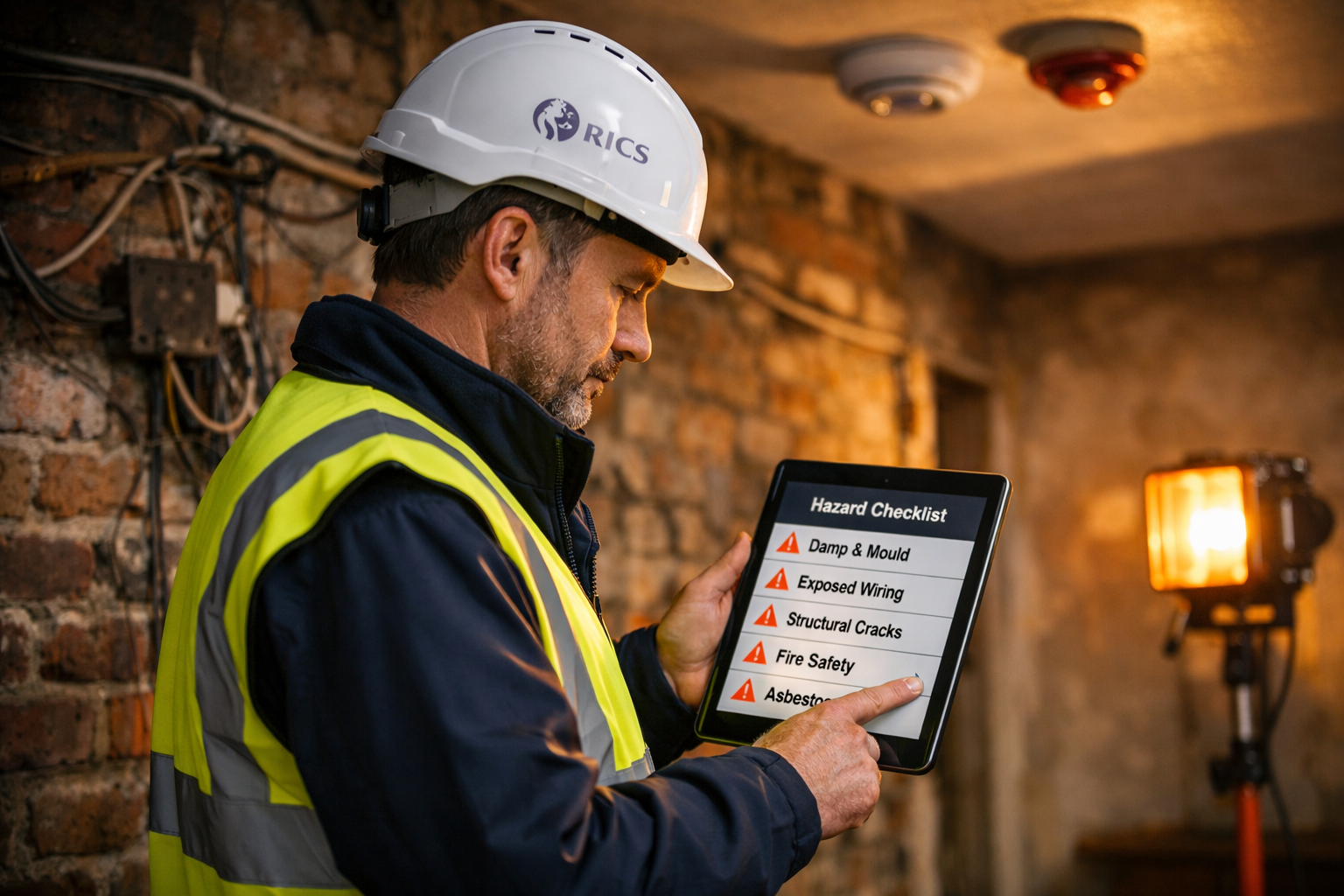
- ⚡ Electrical hazards — faulty wiring, overloaded circuits, non-compliant consumer units
- 🔥 Fire risks — inadequate detection systems, blocked escape routes, combustible materials
- 🏚️ Structural collapse risks — deteriorating load-bearing elements, unsafe ceilings and floors
- 🌡️ Excess cold and heat — inadequate heating systems, poor insulation
- 💧 Persistent damp and mould — retained from Phase 1 provisions
"The extension of Awaab's Law to the PRS is not merely a regulatory update — it represents a fundamental shift in how landlord liability for hazardous conditions will be assessed and enforced."
For private landlords managing single properties or large portfolios, the question is no longer whether to commission hazard surveys — it is which survey level provides sufficient evidence of due diligence [1].
Why Level 3 Building Surveys Are the Right Tool for PRS Compliance
Not all surveys are equal. A Level 1 condition report or a Level 2 homebuyer survey will not provide the depth of investigation that Awaab's Law compliance now demands. A RICS Level 3 building survey is the most comprehensive residential survey available, covering the full construction, condition, and defect profile of a property.
What Makes Level 3 Surveys Suitable for Awaab's Law?
| Feature | Level 1 | Level 2 | Level 3 |
|---|---|---|---|
| Visible defect reporting | ✅ | ✅ | ✅ |
| Detailed construction analysis | ❌ | Partial | ✅ |
| Electrical system commentary | ❌ | Basic | ✅ |
| Fire safety assessment | ❌ | Limited | ✅ |
| Structural integrity review | ❌ | Partial | ✅ |
| Remediation cost guidance | ❌ | ❌ | ✅ |
| Legal compliance evidence | ❌ | Weak | ✅ |
Level 3 surveys include detailed written commentary on all accessible elements, including roof structures, floor voids, electrical installations, heating systems, and fire safety provisions [1]. This creates a written record that can be submitted as evidence in tribunal proceedings, enforcement hearings, or civil claims.
Landlords managing older stock — particularly Victorian or Edwardian terraced properties common across the PRS — should treat a Level 3 survey as the baseline compliance document for each property. For those unsure which survey type is appropriate, a guide to choosing the right property survey can help clarify the options.
Awaab's Law Electrical and Fire Hazard Surveys: Level 3 Protocols for PRS Properties Post-2026 Extensions — The Surveyor Checklist
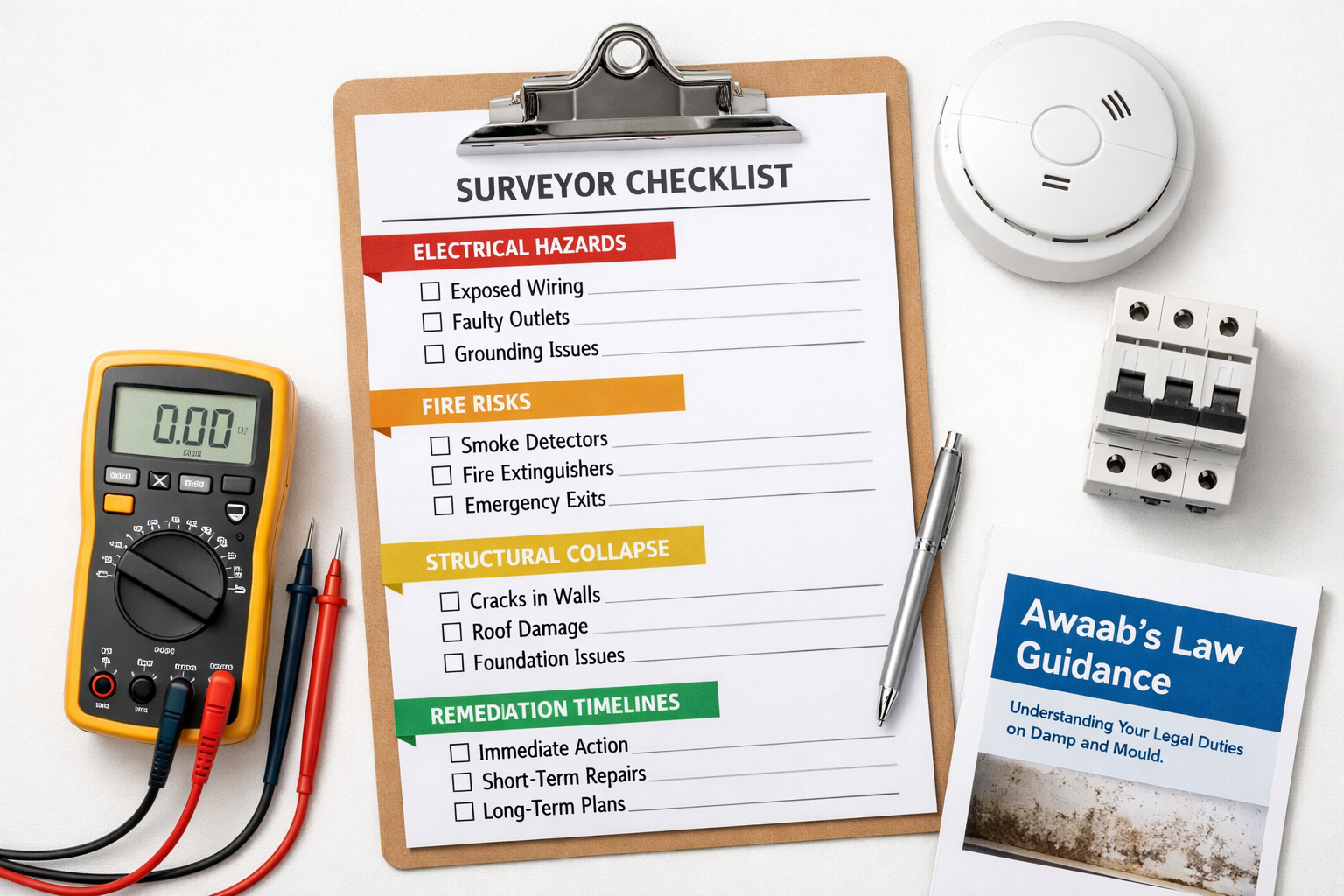
The practical heart of compliance lies in the surveyor's checklist. Under Awaab's Law electrical and fire hazard surveys: Level 3 protocols for PRS properties post-2026 extensions, surveyors must systematically assess every relevant hazard category. Below is a structured breakdown of what a compliant Level 3 inspection must cover [2].
⚡ Electrical Hazard Assessment
Consumer unit and wiring:
- Age and condition of consumer unit (fuse board)
- Presence of RCD (Residual Current Device) protection
- Evidence of DIY or non-compliant wiring modifications
- Condition of visible wiring — insulation degradation, overheating marks
- Socket and switch condition throughout all rooms
Installation certification:
- Date of last Electrical Installation Condition Report (EICR)
- Outstanding C1 (danger present) or C2 (potentially dangerous) codes
- Compliance with BS 7671 (18th Edition Wiring Regulations)
Risk indicators to flag:
- Aluminium wiring in pre-1970s properties
- Single-pole fuse boards without RCDs
- Evidence of water ingress near electrical fittings
- Extension lead dependency replacing fixed sockets
💡 Key point: An EICR alone does not satisfy Awaab's Law requirements. The Level 3 survey must contextualise electrical findings within the broader property condition — for example, identifying whether structural damp is compromising electrical safety [2].
🔥 Fire Risk Assessment Components
Detection and suppression:
- Number, type, and placement of smoke alarms (interlinked vs standalone)
- Carbon monoxide detector presence where applicable
- Heat detector installation in kitchens
- Sprinkler systems (HMO and multi-storey properties)
Means of escape:
- Width and obstruction status of hallways and stairwells
- Self-closing fire doors on key rooms
- Window egress dimensions in upper-floor bedrooms
- External escape routes and signage
Combustible materials and fire separation:
- Condition of party wall fire stops (relevant to insulation in a party wall)
- Loft insulation type and fire rating
- Under-stair storage areas — enclosed or open?
- Condition of boiler cupboard and surrounding materials
🏚️ Structural Collapse Risk Indicators
Structural hazards now fall within the expanded Awaab's Law categories. Level 3 surveyors must assess [3]:
- Roof structure: Rafter condition, ridge board integrity, purlin support
- Ceiling joists: Evidence of overloading, water damage, or beetle infestation
- Floor structures: Bounce, deflection, or rot in suspended timber floors
- Load-bearing walls: Cracking patterns, lintel failure, bulging masonry
Where structural concerns are identified, a specialist residential structural engineering survey may be recommended as a follow-up to the Level 3 report.
Remediation Timelines: What Landlords Must Know
Awaab's Law does not simply require landlords to identify hazards — it mandates action within specific timeframes. These timelines apply from the point a hazard is reported by a tenant or identified through inspection [1].
| Hazard Severity | Investigation Deadline | Remediation Start | Emergency Repairs |
|---|---|---|---|
| Emergency (imminent danger) | Immediate | Within 24 hours | Within 24 hours |
| Urgent hazard | Within 14 days | Within 7 days of investigation | — |
| Standard hazard | Within 14 days | Within defined programme | — |
Critical point for landlords: The clock starts when a hazard is known or ought reasonably to have been known. A landlord who has not commissioned a survey cannot claim ignorance as a defence if a hazard was discoverable through reasonable inspection [2].
This is precisely why proactive Level 3 surveys — rather than reactive responses to tenant complaints — represent the most robust compliance strategy. Landlords with documented survey evidence can demonstrate they identified hazards, assessed severity, and initiated remediation within the required windows.
Awaab's Law Electrical and Fire Hazard Surveys: Level 3 Protocols for PRS Properties Post-2026 Extensions — Building a Compliance Evidence File
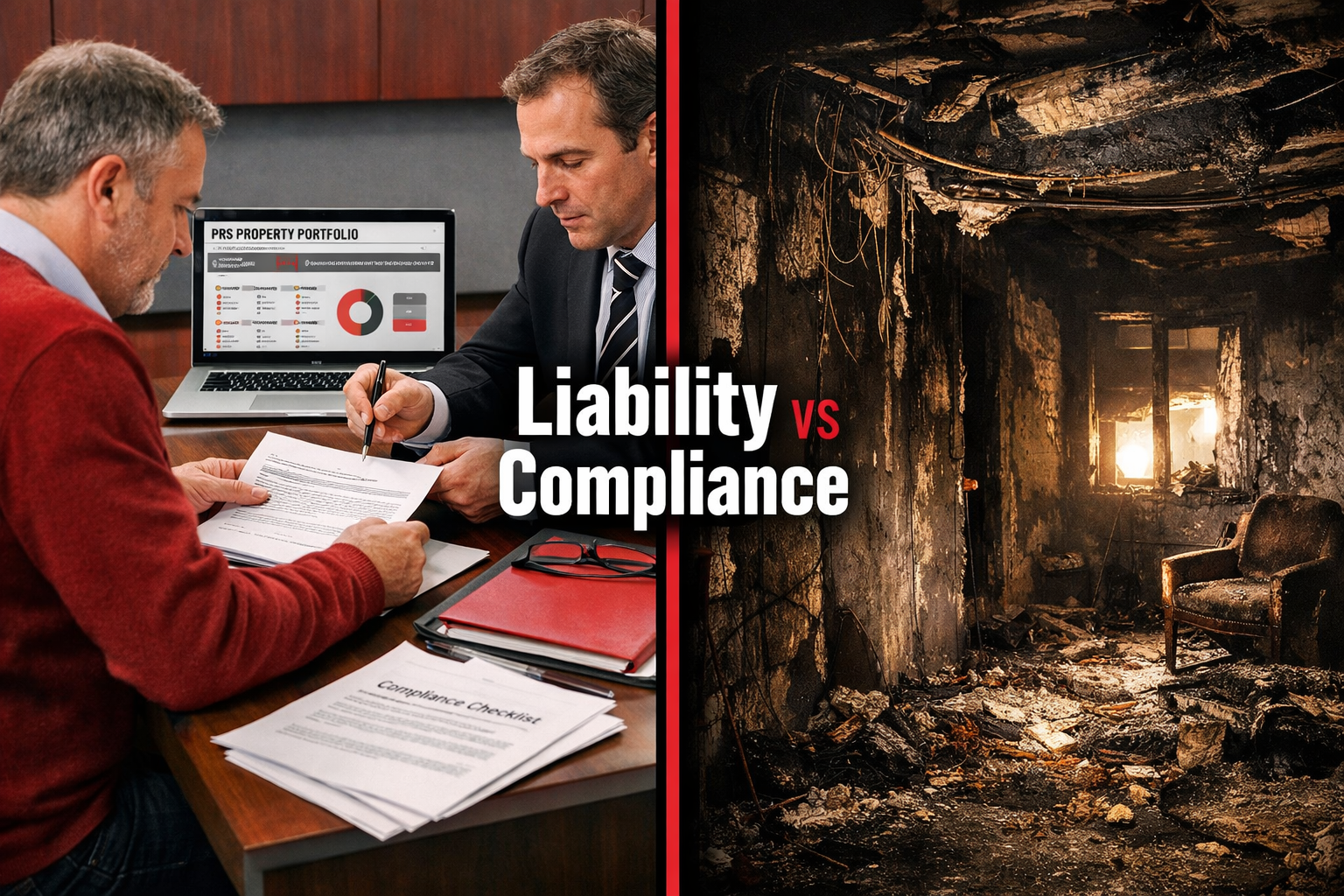
A survey report alone is not sufficient. Landlords need a structured compliance evidence file for each property, maintained and updated at regular intervals. This file should contain [2]:
📁 Essential Documents for Every PRS Property
- Level 3 building survey report — dated within the last 5 years or following any significant works
- Current EICR — valid for up to 5 years in PRS properties
- Gas Safety Certificate — renewed annually
- Fire alarm testing log — monthly test records
- Remediation records — contractor invoices, completion certificates, photographic evidence
- Tenant communication log — records of all hazard reports and landlord responses
- Schedule of condition — baseline property condition at tenancy commencement
For landlords managing leasehold properties, additional documentation relating to building-wide fire safety — particularly in blocks of flats — should be maintained alongside individual unit records. Understanding structural surveys can help identify when specialist reports are needed to supplement the standard Level 3 findings.
Asbestos: The Hidden Hazard
Properties built before 2000 may contain asbestos-containing materials (ACMs), which become a fire and health hazard when disturbed during remediation works. A Level 3 survey should flag suspected ACM locations, and a separate asbestos survey may be required before any intrusive works begin. This is particularly relevant when upgrading electrical systems in older properties, where disturbing ceiling voids or wall cavities is unavoidable.
Liability Avoidance: The Legal Stakes for PRS Landlords
The consequences of non-compliance with Awaab's Law are not theoretical. Enforcement mechanisms available to local authorities and tenants include [3]:
- Improvement Notices issued by local housing authorities
- Prohibition Orders preventing occupation of hazardous properties
- Civil claims by tenants for damages arising from hazard-related harm
- Rent Repayment Orders (RROs) — tenants can reclaim up to 12 months' rent
- Prosecution for serious or repeated breaches
The financial exposure is substantial. A single Rent Repayment Order on a London property could represent £15,000–£30,000 or more in returned rent, before legal costs or damages are considered.
"Landlords who treat Awaab's Law compliance as a box-ticking exercise rather than a genuine risk management process will find the tribunals unsympathetic."
The most effective liability avoidance strategy combines:
- ✅ Proactive Level 3 survey commissioning
- ✅ Structured remediation with documented timelines
- ✅ Clear tenant communication records
- ✅ Regular re-inspection cycles
For landlords with commercial or mixed-use portfolios, the principles extend beyond residential stock. A commercial building survey applies comparable hazard assessment rigour to non-residential premises, and similar compliance logic applies where tenants occupy the space.
Practical Steps for PRS Landlords in 2026
Given the post-2026 extension landscape, here is a prioritised action plan for private landlords:
🗓️ Immediate Actions (Within 30 Days)
- Commission a Level 3 building survey on any PRS property without a recent inspection
- Review all existing EICRs for outstanding C1 or C2 codes — remediate immediately
- Test all smoke and CO alarms; replace any non-functioning units
- Audit tenant communication records for any unreported or unresolved hazard complaints
📅 Short-Term Actions (Within 90 Days)
- Instruct a local chartered surveyor to assess properties built before 1970 for electrical system age and asbestos risk
- Establish a property-by-property compliance evidence file
- Brief managing agents on Awaab's Law timelines and reporting obligations
- Review lease terms for any provisions affecting landlord access for inspection purposes
📆 Ongoing Obligations
- Repeat Level 3 surveys every 5 years or following significant works, tenancy changes, or reported hazards
- Maintain annual gas safety and periodic electrical certification cycles
- Log all tenant hazard reports with date, description, and response action
- Update compliance files following any remediation works
Conclusion: Compliance Is a Process, Not a One-Off Event
The 2026 extension of Awaab's Law to the private rented sector marks a watershed moment for landlord obligations in England. Awaab's Law electrical and fire hazard surveys: Level 3 protocols for PRS properties post-2026 extensions are now the most reliable mechanism for identifying hazards, evidencing compliance, and protecting against enforcement action.
The key message is straightforward: waiting for a tenant to report a problem is no longer a defensible position. Proactive Level 3 surveys, structured remediation timelines, and maintained compliance evidence files are the three pillars of a robust PRS compliance strategy in 2026 and beyond.
Actionable next steps:
- Book a Level 3 building survey for every PRS property that lacks a recent comprehensive inspection — prioritise pre-2000 stock.
- Audit your EICR records today and address any outstanding codes before the next tenancy renewal.
- Create a compliance evidence file for each property, combining survey reports, certification, and remediation records.
- Seek specialist advice from a qualified chartered surveyor experienced in PRS compliance and hazard assessment.
- Monitor regulatory updates as secondary legislation under Awaab's Law continues to develop through 2026.
The cost of a Level 3 survey is a fraction of the cost of a Rent Repayment Order, a prohibition notice, or a civil damages claim. The investment in proactive compliance is, quite simply, the most cost-effective risk management decision a private landlord can make in 2026.
References
[1] Building Surveys And Awaabs Law 2026 Extensions Identifying Electrical Fire And Temperature Hazards In Prs Properties – https://nottinghillsurveyors.com/blog/building-surveys-and-awaabs-law-2026-extensions-identifying-electrical-fire-and-temperature-hazards-in-prs-properties
[2] Building Survey Checklists For Electrical And Fire Hazards Under Extended Awaabs Law Prs Compliance In 2026 Rental Portfolios – https://nottinghillsurveyors.com/blog/building-survey-checklists-for-electrical-and-fire-hazards-under-extended-awaabs-law-prs-compliance-in-2026-rental-portfolios
[3] Awaabs Law Extensions To Prs In 2026 Party Wall And Building Survey Protocols For New Hazard Categories – https://nottinghillsurveyors.com/blog/awaabs-law-extensions-to-prs-in-2026-party-wall-and-building-survey-protocols-for-new-hazard-categories