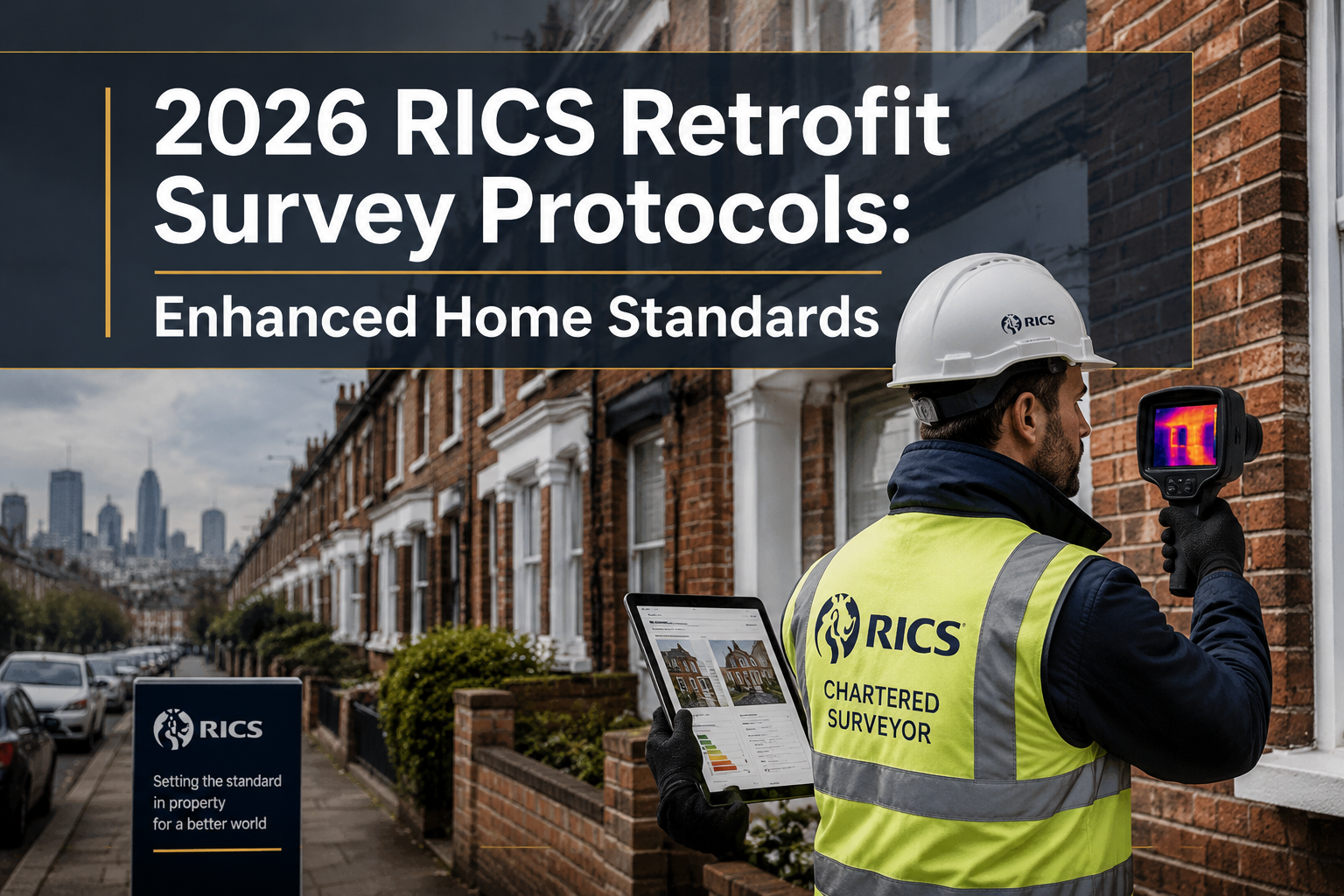
Subsidence-related insurance claims surged to £153 million in the first half of 2025 alone, with nearly 9,000 households receiving an average payout of £17,264 per claim[2]. As climate change intensifies the shrink-swell cycle in clay-rich soils across the UK, property buyers and homeowners face unprecedented challenges when assessing buildings with potential ground movement issues. Level 3 Building Surveys for Properties with Subsidence Risks: 2026 Tree Root Protocols and Underpinning Valuations have become essential tools for protecting investments and ensuring structural integrity in high-risk areas.
This comprehensive guide explores the critical intersection of advanced building surveys, modern tree root assessment protocols, and the complex valuation adjustments required for properties affected by subsidence or heave. Whether evaluating a Victorian terrace in a clay soil region or assessing remediation costs for an underpinned property, understanding these protocols is vital for making informed decisions in 2026.
Key Takeaways
- 🏚️ Subsidence claims reached record levels in 2025, with soil moisture deficits mirroring severe drought years from 2018 and 2022, making Level 3 surveys essential for at-risk properties
- 🌳 2026 tree root protocols require visual assessment of high-water-demand species within critical proximity zones, with specialist arborist reports costing £200–£500+ for comprehensive risk evaluation
- 💰 Underpinning significantly impacts property valuations, with remediated homes requiring insurance-backed guarantees and adjusted market prices reflecting both repair costs and future marketability
- 📋 Defect diagnosis checklists now integrate party wall considerations, enabling proper legal frameworks for stabilisation works affecting adjoining properties
- 🔍 Visual damage indicators including diagonal cracks wider than 3mm, sticking doors and windows, and external wall separation demand immediate professional investigation
Understanding Level 3 Building Surveys for Subsidence-Prone Properties
What Makes Level 3 Surveys Essential for Ground Movement Assessment
A Level 3 RICS Building Survey represents the most comprehensive property inspection available, providing detailed analysis of structural condition, defects, and repair recommendations. For properties with suspected or confirmed subsidence risks, this survey level becomes absolutely critical.
Unlike basic homebuyer reports, Level 3 surveys include:
- Detailed structural analysis of foundations, walls, and load-bearing elements
- Comprehensive crack mapping with measurements, orientation analysis, and severity grading
- Visual assessment of vegetation including trees, hedges, and large shrubs near the property
- Drainage evaluation to identify leaks that could contribute to soil saturation or erosion
- Historical movement indicators such as previous repairs, monitoring evidence, or underpinning work
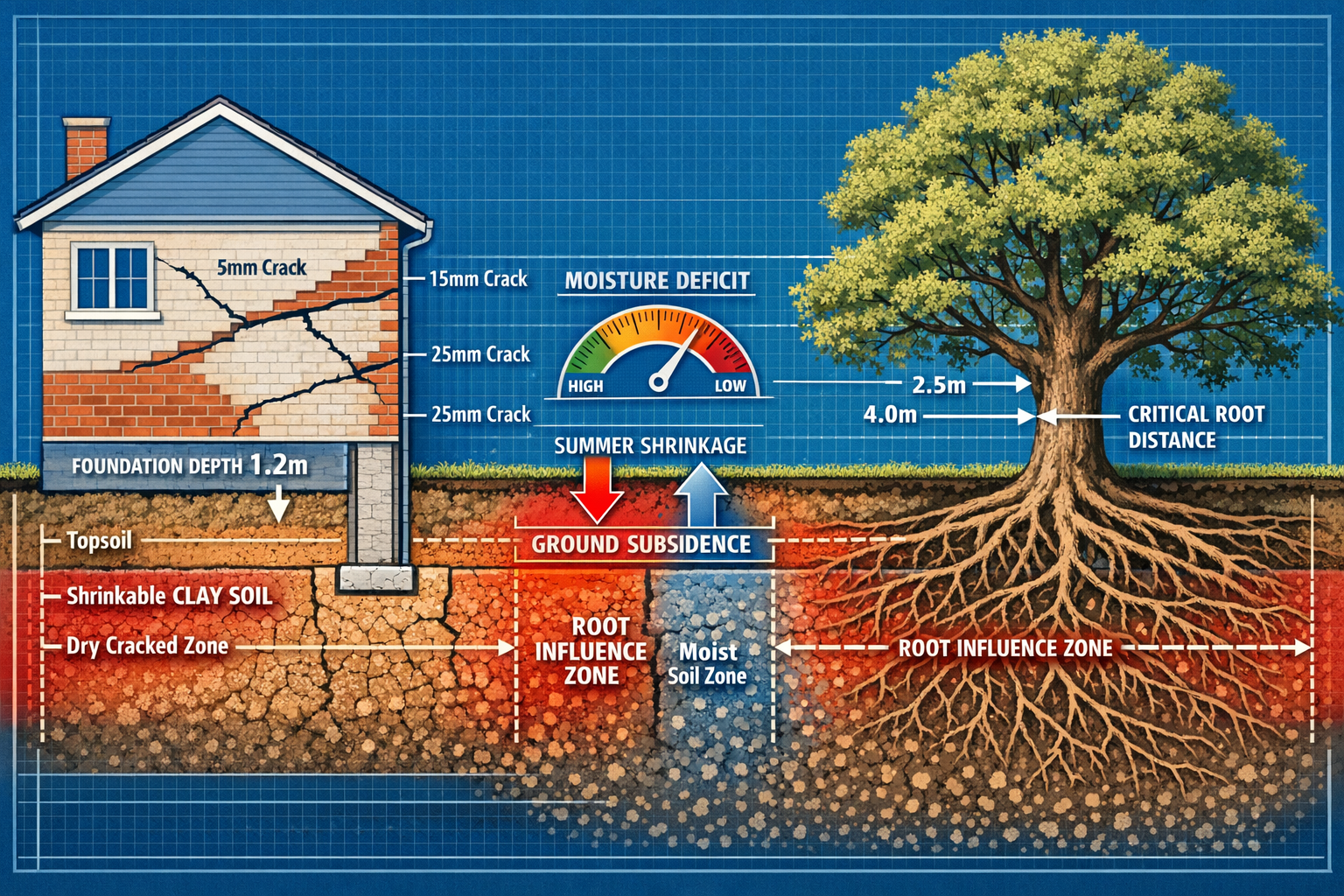
The British Geological Survey (BGS) has identified shrink-swell clay soils, inadequate foundation structures, and tree proximity as leading causes of financial loss for property owners[2]. A thorough subsidence survey addresses all these factors systematically.
How Level 3 Surveys Differ from Standard Property Inspections
The distinction between survey levels becomes crucial when dealing with potential ground movement. Understanding the difference between Level 2 and Level 3 surveys helps buyers select appropriate investigation depth.
Level 3 surveys provide:
| Feature | Level 2 Survey | Level 3 Survey |
|---|---|---|
| Structural detail | Standard inspection | Comprehensive analysis |
| Crack assessment | Basic identification | Detailed mapping & measurement |
| Foundation evaluation | Limited visual | Extensive assessment |
| Vegetation analysis | General observations | Specific tree risk evaluation |
| Repair cost guidance | Approximate ranges | Detailed estimates |
| Specialist recommendations | General suggestions | Specific referrals with scope |
For properties built on clay soils or those showing visible movement signs, the additional detail provided by Level 3 surveys justifies the higher investment. Surveyors conduct visual assessments of trees, vegetation, and site layout, specifically looking for trees very close to houses, garages, or walls, roots near drains, paths, or driveways, and evidence of subsidence or heave linked to vegetation[1].
When to Commission Specialist Defect Investigations
While Level 3 surveys are comprehensive, surveyors do not dig or measure roots directly[1]. When visual assessment reveals significant concerns, commissioning a specialist defect survey becomes necessary.
Triggers for specialist investigation include:
- 🔴 Diagonal cracks wider than 3mm visible both inside and outside
- 🔴 Progressive crack widening observed over recent months
- 🔴 Doors and windows sticking or failing to close properly
- 🔴 Visible separation between walls and ceilings or floors
- 🔴 Large, mature trees within critical proximity to foundations
- 🔴 Previous underpinning work with inadequate documentation
Specialist investigations typically involve arborist reports (£200–£500+) and root investigations that can exceed £1,000 depending on complexity[1]. These costs represent essential investments for properties where subsidence risks could affect structural integrity or property values significantly.
2026 Tree Root Protocols: Risk Assessment and Management Strategies
Identifying High-Risk Tree Species and Critical Proximity Zones
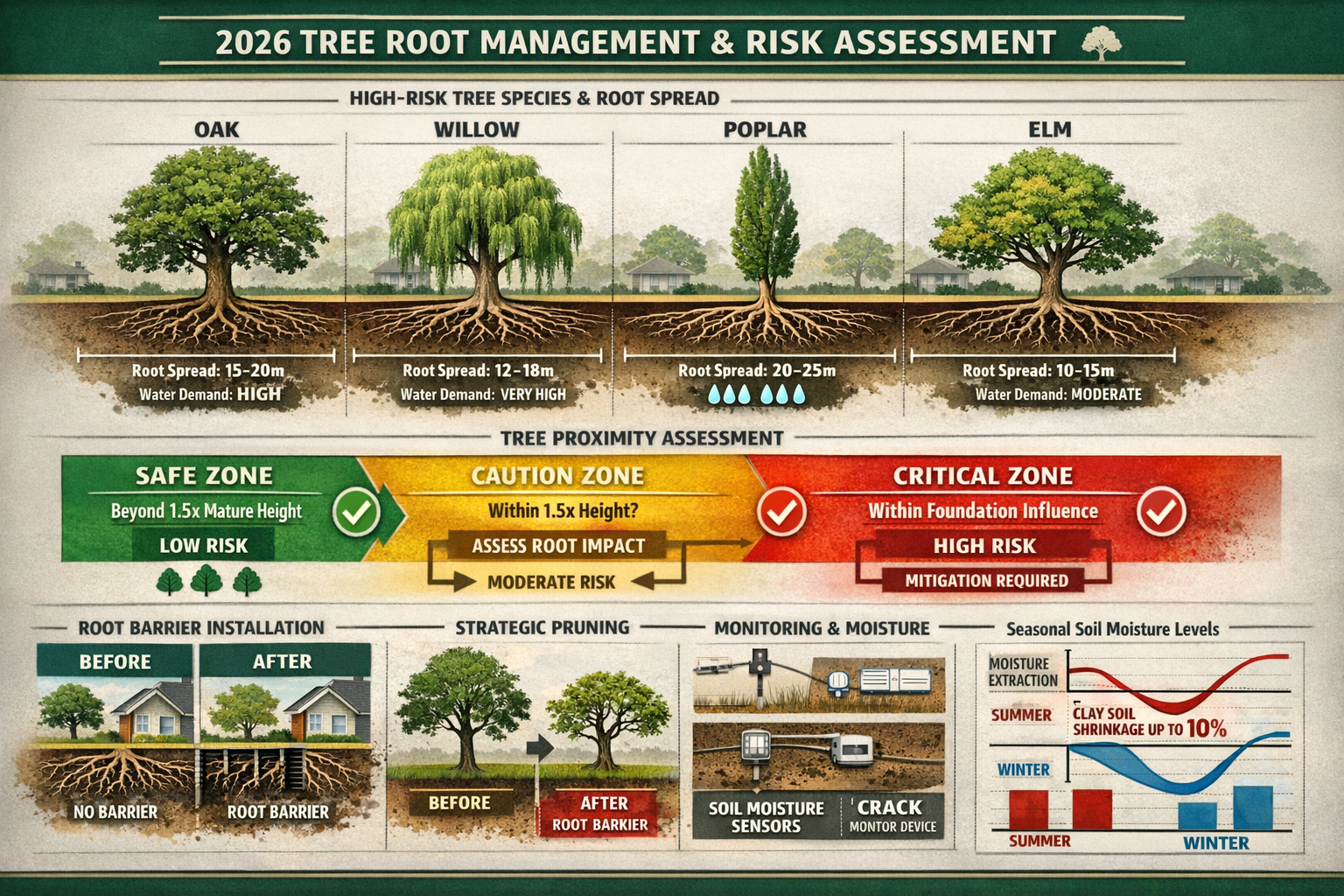
The 2026 tree root protocols establish clear frameworks for assessing vegetation-related subsidence risks. High-water-demand species pose the greatest threat to properties on clay soils, particularly during prolonged dry periods when soil moisture deficits increase.
High-risk tree species include:
- Oak (Quercus) – Extensive root systems, very high water demand
- Willow (Salix) – Aggressive root growth, extremely high water consumption
- Poplar (Populus) – Fast-growing roots, substantial moisture extraction
- Elm (Ulmus) – Wide-spreading roots, high water requirements
- Ash (Fraxinus) – Deep root penetration, significant water demand
Industry guidance recommends consulting qualified arborists to assess proximity of large, high-water-demand trees, implementing strategic pruning or installing root barriers to control moisture extraction from soil near foundations[2].
Critical proximity calculations:
The general rule establishes risk zones based on mature tree height:
- Critical zone: Within 1.0x mature tree height from foundations
- High-risk zone: Between 1.0x and 1.5x mature tree height
- Moderate-risk zone: Between 1.5x and 2.0x mature tree height
- Low-risk zone: Beyond 2.0x mature tree height
For example, a mature oak reaching 20 metres height creates a critical zone extending 20 metres from the trunk, where subsidence risk becomes substantial on clay soils.
Visual Assessment Protocols for Tree Root Impact
Surveyors conducting Level 3 Building Surveys for Properties with Subsidence Risks follow systematic visual assessment protocols when evaluating tree-related risks. These protocols avoid invasive investigation while identifying indicators requiring specialist attention.
Visual assessment checklist:
✅ Tree location mapping – Document all trees within 30 metres of the property
✅ Species identification – Classify by water demand and root characteristics
✅ Size and maturity assessment – Measure height and canopy spread
✅ Health evaluation – Note signs of disease, decay, or recent pruning
✅ Root exposure evidence – Check for visible roots near foundations, paths, or drains
✅ Soil displacement indicators – Look for raised paving, cracked driveways, or lifted kerbs
✅ Building damage correlation – Map crack patterns relative to tree positions
✅ Historical vegetation changes – Identify recently removed trees that may cause heave
Soil moisture deficit levels recorded in July and August 2025 mirrored those seen during previous high-impact years in 2018 and 2022[2], emphasising the importance of thorough vegetation assessment during survey work.
Root Barrier Installation and Strategic Pruning Recommendations
When Level 3 surveys identify trees posing subsidence risks, several management strategies can mitigate damage without requiring complete tree removal.
Root barrier systems:
Modern root barrier installation involves:
- Physical barriers – High-density polyethylene sheets installed vertically to 2-3 metres depth
- Strategic placement – Positioned between tree and foundation at optimal distances
- Depth requirements – Must extend below foundation level to prevent root penetration
- Installation timing – Best performed during dormant winter months
- Cost considerations – Typically £1,500–£5,000 depending on length and depth
Strategic pruning protocols:
Professional arborists implement crown reduction and selective pruning to:
- Reduce overall water demand by decreasing canopy size
- Limit root system expansion through controlled growth management
- Maintain tree health while protecting nearby structures
- Comply with Tree Preservation Orders (TPOs) and conservation requirements
Regular drain surveys and thorough maintenance of gutters, pipes and plumbing can help prevent leaks that either saturate soil or wash away underlying structures, causing instability[2].
Defect Diagnosis Checklist: Subsidence vs. Heave Indicators
Distinguishing between subsidence (downward movement) and heave (upward movement) requires careful analysis of crack patterns, locations, and associated circumstances.
Subsidence diagnostic indicators:
| Indicator | Description | Severity Rating |
|---|---|---|
| Diagonal cracks | Tapering cracks wider at top, following mortar lines | High if >3mm |
| External wall cracks | Vertical separation near corners or openings | High if progressive |
| Internal plaster cracks | Matching external patterns, often near doors/windows | Moderate to high |
| Floor level changes | Sloping floors away from affected walls | High |
| Door/window distortion | Sticking, gaps, or operational difficulties | Moderate |
| Extension separation | Gaps between original structure and additions | High |
Heave diagnostic indicators:
Heave typically occurs after tree removal or following prolonged wet periods when clay soils re-expand:
- Upward-tapering cracks – Wider at foundation level, narrowing upward
- Floor lifting – Solid floors showing upward movement or cracking
- Door frame compression – Frames becoming compressed rather than distorted
- Horizontal cracking – Cracks running horizontally along wall courses
- Recent tree removal – Vegetation removed within previous 5-10 years
Both conditions require professional assessment through residential structural engineering services to determine appropriate remediation strategies.
Underpinning Valuations and Market Impact in Clay Soil Regions
Understanding Underpinning Methods and Associated Costs
When Level 3 Building Surveys for Properties with Subsidence Risks identify significant ground movement, underpinning often becomes necessary to stabilise foundations and prevent further damage.
Common underpinning methods:
1. Mass concrete underpinning (traditional method)
- Sequential excavation beneath existing foundations
- Concrete poured in controlled sections
- Cost: £1,000–£2,000 per linear metre
- Duration: 6-12 weeks for typical property
- Best for: Localised subsidence, accessible foundations
2. Beam and base underpinning
- Reinforced concrete beams spanning between mass concrete bases
- Distributes loads more effectively
- Cost: £1,500–£2,500 per linear metre
- Duration: 8-14 weeks
- Best for: Longer wall sections, uneven settlement
3. Mini-piled underpinning
- Steel or concrete piles driven to stable strata
- Minimal excavation required
- Cost: £2,000–£3,500 per linear metre
- Duration: 4-8 weeks
- Best for: Deep-seated movement, difficult access
4. Resin injection (modern alternative)
- Expanding resin injected beneath foundations
- Rapid installation with minimal disruption
- Cost: £1,200–£2,000 per linear metre
- Duration: 1-2 weeks
- Best for: Minor settlement, suitable soil conditions
Total underpinning costs for a typical semi-detached property range from £10,000 to £50,000+ depending on severity, access, and method selected.
Property Valuation Adjustments for Underpinned Buildings
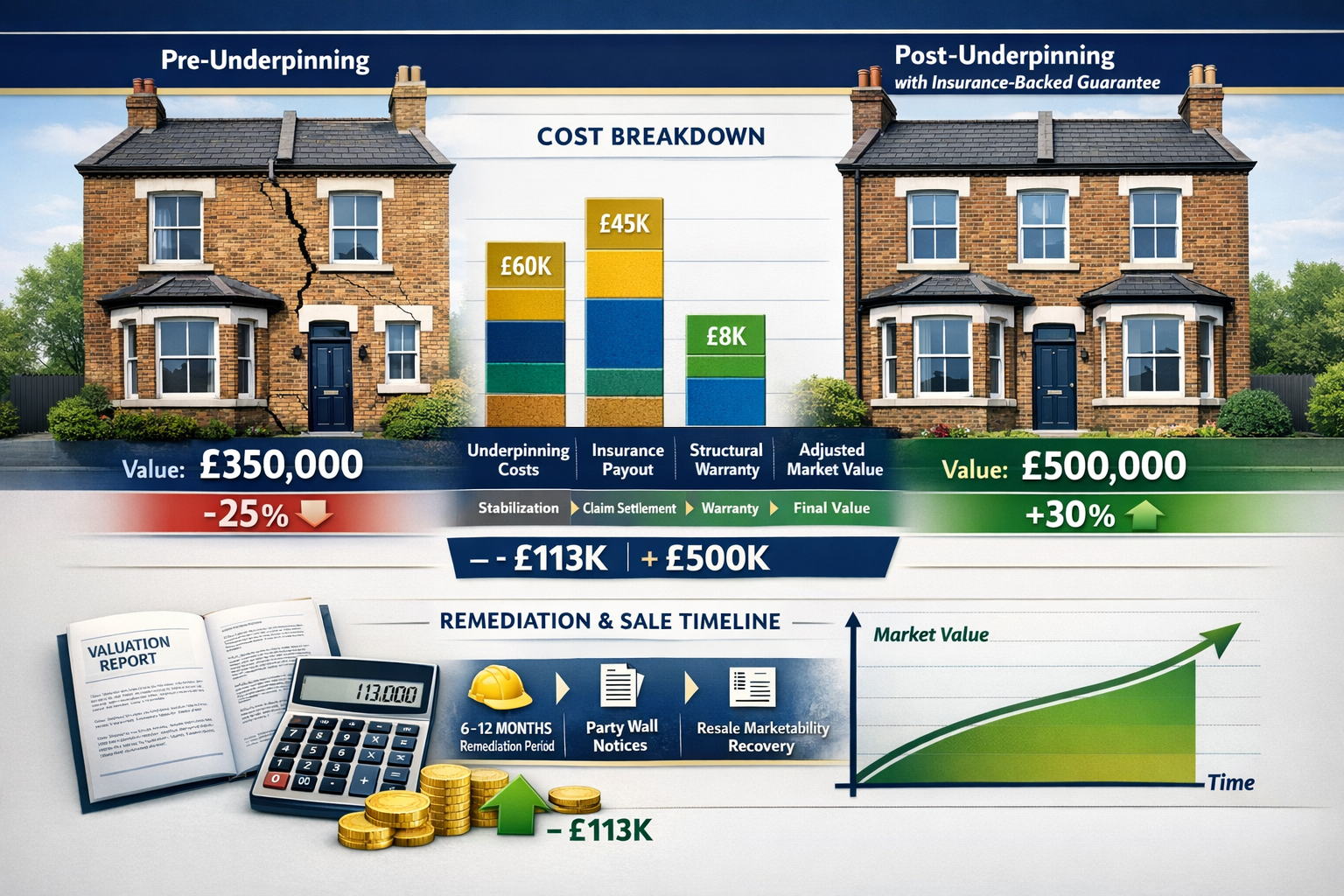
Properties with subsidence history or completed underpinning work face significant valuation challenges. Understanding these adjustments helps buyers and sellers negotiate realistic prices.
Valuation impact factors:
📉 Immediate post-underpinning period (0-2 years):
- Market value reduction: 20-30% below comparable properties
- Limited mortgage availability
- Higher insurance premiums (£200-£500+ additional annually)
- Buyer resistance due to stigma
📊 Established underpinning with guarantees (2-10 years):
- Market value reduction: 10-15% below comparable properties
- Improved mortgage access with insurance-backed guarantees
- Normalising insurance costs
- Growing buyer confidence
📈 Long-term stabilisation (10+ years):
- Market value reduction: 5-10% below comparable properties
- Near-normal mortgage availability
- Standard insurance terms (with disclosure)
- Minimal buyer resistance with proper documentation
Essential documentation for valuation:
- ✅ Structural engineer's completion certificate
- ✅ 10-year insurance-backed guarantee
- ✅ Building Control approval certificates
- ✅ Detailed specification of works completed
- ✅ Post-completion monitoring reports
- ✅ Photographic evidence of repairs
Properties lacking comprehensive documentation face steeper valuation discounts, sometimes rendering them unmortgageable through mainstream lenders.
Insurance-Backed Guarantees and Mortgage Lending Considerations
The availability of insurance-backed guarantees significantly influences both property valuations and mortgage lending decisions for underpinned properties.
Insurance-backed guarantee requirements:
Most mortgage lenders require:
- Minimum 10-year coverage from guarantee issue date
- Transferable protection to subsequent owners
- Comprehensive scope covering structural integrity and further movement
- Reputable insurer with strong financial ratings
- Independent assessment confirming work quality and completion
Guarantees typically cost £500–£2,000 depending on property value and work extent, representing essential investment for maintaining marketability.
Mortgage lending criteria for underpinned properties:
| Lender Category | Typical Approach | Key Requirements |
|---|---|---|
| Mainstream lenders | Consider with conditions | 10-year guarantee, 2+ years post-completion, engineer's certificate |
| Specialist lenders | More flexible | May accept recent work, higher rates apply |
| Building societies | Case-by-case assessment | Strong documentation, local knowledge |
| Buy-to-let lenders | Generally cautious | Extended guarantees, higher deposits (30-40%) |
Properties currently undergoing underpinning work typically face mortgage refusals until completion and monitoring confirm stabilisation.
Party Wall Considerations for Stabilisation Works
When underpinning or other stabilisation works affect shared boundaries, proper party wall procedures become legally essential. Failure to serve appropriate notices can result in costly disputes and project delays.
Party Wall Act 1996 requirements:
Properties requiring underpinning near shared boundaries must:
- Serve notice on adjoining owners at least two months before work commences
- Appoint surveyors if neighbours dissent or fail to respond within 14 days
- Prepare schedules of condition documenting pre-existing conditions in neighbouring properties
- Agree party wall awards detailing work scope, timing, and protection measures
- Provide appropriate insurance covering potential damage to adjoining properties
The primary cause of subsidence in the UK is climate change's effect on clay-rich soils, which expand when saturated and contract aggressively when dry[2], making stabilisation works increasingly common in affected regions.
Party wall costs for underpinning projects:
- Building owner's surveyor fees: £800–£1,500
- Adjoining owner's surveyor fees: £600–£1,200 (paid by building owner)
- Schedule of condition preparation: £300–£600 per property
- Party wall award documentation: Included in surveyor fees
Total party wall costs typically add £2,000–£4,000 to underpinning projects affecting shared boundaries, but provide essential legal protection and neighbour relations management.
Regional Valuation Variations in Clay Soil Areas
Properties located in regions with extensive clay soil coverage face different market dynamics compared to those on stable geological formations.
High-risk clay soil regions in the UK:
- London and Southeast England – London Clay formation
- East Midlands – Mercia Mudstone and Lias Clay
- West Midlands – Mercia Mudstone
- East Anglia – Boulder Clay deposits
- Yorkshire and Humber – Vale of York clay
In these regions, baseline property valuations already reflect subsidence risk, with:
- Standard building insurance premiums 15-25% higher than low-risk areas
- Routine Level 3 surveys expected for most transactions
- Greater buyer sophistication regarding ground movement issues
- Established local expertise in remediation and monitoring
Properties demonstrating proactive risk management through tree maintenance, drainage improvements, and monitoring systems may command premium prices within high-risk regions, as buyers value evidence of responsible ownership.
Comprehensive Defect Diagnosis Checklists for Ground Movement
Pre-Purchase Assessment Protocol
Buyers considering properties in clay soil regions should follow systematic assessment protocols before committing to purchase.
Initial visual inspection checklist:
🔍 External assessment:
- Examine all external walls for diagonal or stepped cracking
- Check for separation between walls and extensions or conservatories
- Inspect ground-level brickwork for horizontal cracking
- Look for distorted door frames or window openings
- Note any previous repair work or repointing patterns
- Identify trees within 30 metres, particularly large specimens
- Check for raised or sunken paving adjacent to foundations
- Examine boundary walls for tilting or cracking
🔍 Internal assessment:
- Check internal plaster for crack patterns matching external damage
- Test doors and windows for sticking or operational issues
- Look for gaps between walls and ceilings or floors
- Examine skirting boards for separation from walls
- Note any sloping floors using a spirit level
- Check for previous repair work or decorative concealment
When visual inspection reveals concerning indicators, commissioning a professional RICS home survey becomes essential before proceeding.
Monitoring and Documentation Requirements
Properties showing minor movement signs may require monitoring periods before determining appropriate remediation strategies.
Crack monitoring protocols:
Professional monitoring typically involves:
- Tell-tale installation – Glass or plastic strips bridging cracks to reveal ongoing movement
- Graduated studs – Precision measurement points for tracking crack width changes
- Digital monitoring – Electronic sensors providing continuous movement data
- Photographic records – Dated images showing crack progression over time
- Seasonal assessment – Minimum 12-month monitoring capturing wet/dry cycles
Monitoring costs range from £500–£1,500 for basic tell-tale installation and quarterly inspections, to £3,000–£8,000 for comprehensive digital monitoring systems with remote data access.
Documentation best practices:
Maintain comprehensive records including:
- ✅ Dated photographs with measurement scales
- ✅ Surveyor reports and specialist assessments
- ✅ Monitoring data and interpretation summaries
- ✅ Correspondence with insurance companies
- ✅ Quotations for remediation works
- ✅ Completion certificates and guarantees
Thorough documentation protects property values and facilitates future transactions by demonstrating responsible management and transparent disclosure.
Adjusted Market Valuation Methodology
Professional valuers employ specific methodologies when assessing properties with subsidence history or ongoing risks.
Comparative method adjustments:
The standard approach compares the subject property with similar properties, applying adjustments for:
- Structural condition – Deductions for visible damage requiring repair
- Remediation history – Adjustments based on underpinning age and documentation
- Insurance status – Premiums and excess levels compared to standard policies
- Marketability – Reduced buyer pool affecting sale speed and negotiation leverage
- Location factors – Regional clay soil prevalence and subsidence claim frequency
Cost-to-cure approach:
For properties requiring remediation:
- Establish value assuming good structural condition
- Deduct estimated remediation costs (underpinning, repairs, professional fees)
- Apply additional discount for disruption, uncertainty, and stigma (typically 10-20%)
- Consider impact on mortgage availability and insurance costs
- Adjust for time required to complete works and monitoring
Investment method for rental properties:
Buy-to-let investors assess subsidence-affected properties by:
- Calculating rental yield based on adjusted purchase price
- Factoring higher insurance costs into net rental income
- Considering tenant concerns and potential void periods
- Evaluating long-term capital appreciation prospects
- Assessing remediation works' impact on rental value
Properties with completed underpinning and comprehensive guarantees may actually offer attractive investment opportunities when purchased at appropriate discounts, as structural stability often exceeds original construction standards post-remediation.
Practical Implementation: Case Study Scenarios
Scenario 1: Victorian Terrace with Active Subsidence
Property profile:
- 1890s mid-terrace, London Clay area
- Diagonal cracking to rear elevation, 5mm maximum width
- Mature oak tree 8 metres from rear wall (tree height: 15 metres)
- No previous underpinning work
Level 3 survey findings:
- Progressive movement over 18-month period
- Tree within critical proximity zone (0.5x mature height)
- Clay soil confirmed through local geological records
- Inadequate foundation depth (estimated 600mm)
Recommended action plan:
- Immediate: Commission arborist report (cost: £400)
- Short-term: Install crack monitoring (cost: £800)
- Medium-term: Structural engineer assessment (cost: £600-£1,200)
- Long-term: Likely underpinning requirement (estimated £15,000-£25,000)
Valuation impact:
- Market value (no issues): £650,000
- Adjusted value (with defects): £520,000-£550,000 (20-25% reduction)
- Post-remediation value: £585,000-£605,000 (10% reduction with guarantees)
Scenario 2: 1960s Detached with Completed Underpinning
Property profile:
- 1965 detached house, clay soil region
- Underpinning completed 2020 (4 years ago)
- 10-year insurance-backed guarantee in place
- Structural engineer completion certificate provided
Valuation considerations:
Positive factors:
- ✅ Sufficient time elapsed since completion (4 years)
- ✅ Comprehensive guarantee with reputable insurer
- ✅ Full documentation package available
- ✅ No ongoing movement indicators
- ✅ Improved foundation depth exceeding Building Regulations
Negative factors:
- ❌ Disclosure requirement affects buyer psychology
- ❌ Slightly elevated insurance premiums (£300/year additional)
- ❌ Some mainstream lenders remain cautious
- ❌ Reduced buyer pool compared to equivalent properties
Market positioning:
- Comparable property value: £480,000
- Appropriate listing price: £432,000-£456,000 (10-15% reduction)
- Realistic sale timeframe: 8-12 weeks (vs. 6-8 weeks for comparable)
Conclusion
Level 3 Building Surveys for Properties with Subsidence Risks: 2026 Tree Root Protocols and Underpinning Valuations represent essential components of property due diligence in an era of increasing climate-driven ground movement challenges. With subsidence claims reaching £153 million in just six months during 2025, and soil moisture deficits mirroring severe drought conditions from previous high-impact years, comprehensive assessment protocols have never been more critical.
The integration of systematic tree root evaluation, detailed defect diagnosis checklists, and adjusted valuation methodologies provides buyers, sellers, and property owners with frameworks for managing subsidence risks effectively. Understanding the distinction between subsidence and heave, recognising high-risk tree species and critical proximity zones, and appreciating the market impact of underpinning work enables informed decision-making in complex property transactions.
Actionable Next Steps
For prospective buyers:
- Commission appropriate surveys – Select Level 3 building surveys for properties showing any movement indicators or located in clay soil regions
- Request comprehensive documentation – Obtain all remediation records, guarantees, and monitoring reports for previously underpinned properties
- Factor realistic costs – Budget for specialist investigations (£500-£2,000+) and potential remediation works when assessing affordability
- Secure appropriate insurance – Obtain subsidence cover quotations before committing to purchase
For current homeowners:
- Implement proactive monitoring – Install crack monitoring systems if minor movement appears, documenting changes seasonally
- Manage vegetation strategically – Consult qualified arborists regarding high-risk trees within critical proximity zones
- Maintain drainage systems – Conduct regular drain surveys and repair leaks promptly to prevent soil saturation or erosion
- Document everything – Maintain comprehensive records of assessments, works, and monitoring to protect property values
For properties requiring remediation:
- Engage qualified professionals – Commission structural engineers and specialist contractors with proven subsidence expertise
- Obtain insurance-backed guarantees – Ensure 10-year transferable guarantees from reputable insurers to maintain marketability
- Address party wall requirements – Serve appropriate notices and complete party wall procedures before commencing stabilisation works
- Plan for valuation impact – Understand realistic market positioning and timing considerations for future sale
The convergence of climate change impacts, evolving assessment protocols, and sophisticated valuation methodologies creates both challenges and opportunities in property markets. Those equipped with comprehensive knowledge of Level 3 Building Surveys for Properties with Subsidence Risks: 2026 Tree Root Protocols and Underpinning Valuations position themselves to navigate these complexities successfully, protecting investments while making informed decisions about property acquisition, management, and disposal.
For expert guidance on choosing the right property survey for your specific circumstances, or to discuss subsidence concerns with qualified professionals, contact experienced chartered surveyors who understand the nuances of ground movement assessment and remediation in 2026.
References
[1] Do Surveyors Check Trees And Roots – https://surveymatch.co.uk/do-surveyors-check-trees-and-roots/
[2] The Rising Threat Of Subsidence And The Need For Proactive Resilience – https://www.ajg.com/uk/news-and-insights/the-rising-threat-of-subsidence-and-the-need-for-proactive-resilience/