

Solar panel installations on UK properties have surged by 43% since 2024, yet more than 60% of homeowners remain unaware that retrofitting photovoltaic systems to terraced or semi-detached properties may trigger formal Party Wall Act obligations—particularly when neighboring properties have existing solar leases or when structural loads affect shared boundaries.
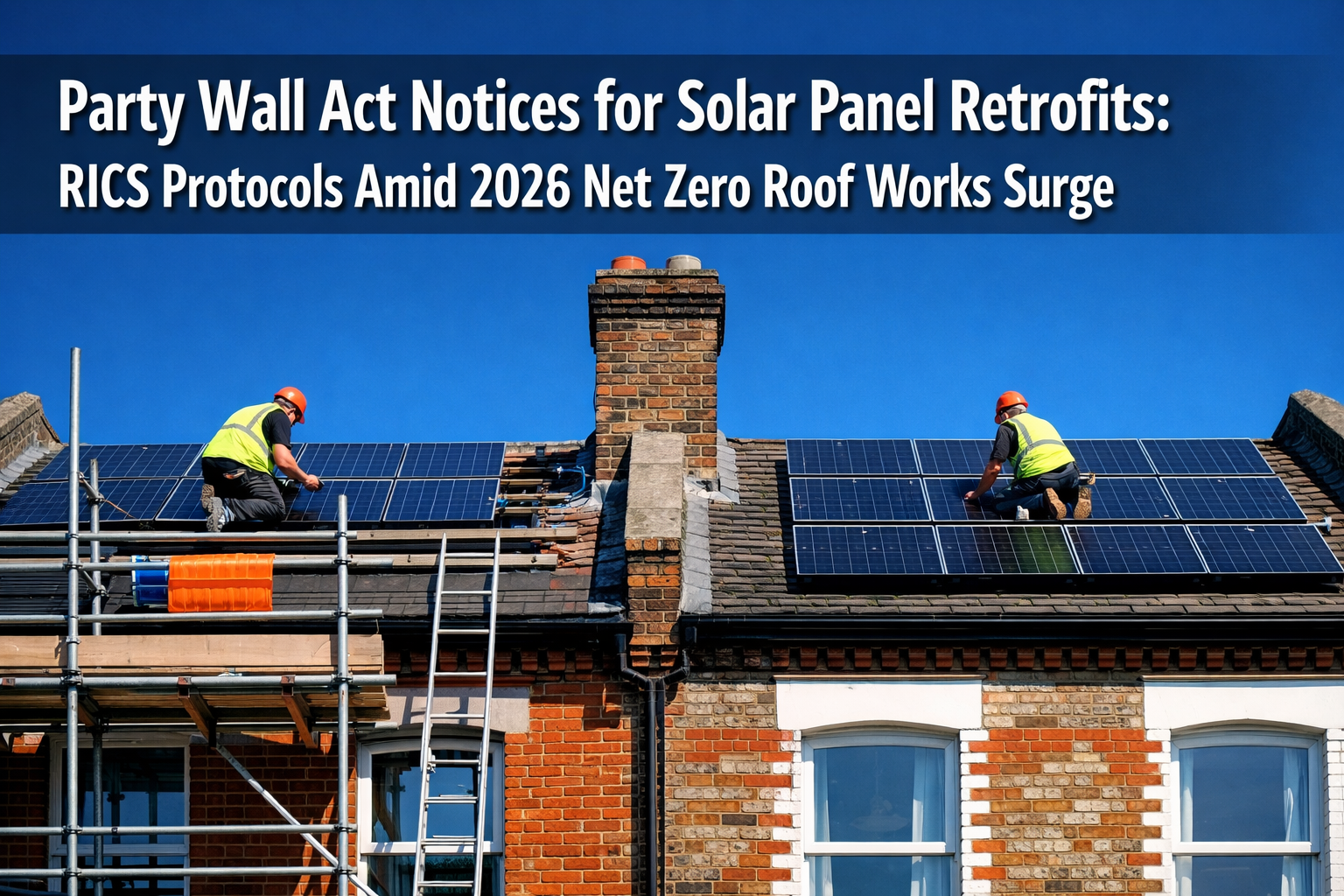
As the UK accelerates toward its net zero targets in 2026, the intersection of renewable energy retrofits and party wall legislation has created a complex regulatory landscape. Understanding Party Wall Act Notices for Solar Panel Retrofits: RICS Protocols Amid 2026 Net Zero Roof Works Surge is now essential for property owners, surveyors, and contractors navigating this evolving field. The Royal Institution of Chartered Surveyors (RICS) has established clear protocols to manage these installations, particularly in urban terraces where shared boundaries and roof access create potential disputes.
Key Takeaways
- 🏘️ Solar panel companies with leases exceeding 12 months qualify as "owners" under the Party Wall Act, requiring formal notice service before commencing adjacent works
- 📋 RICS protocols mandate detailed schedules of condition before solar installations to document existing party wall status and prevent disputes
- ⚖️ Roof access rights and structural load considerations on shared boundaries require specific notice types under Sections 1, 2, and 6 of the Party Wall Act
- 📈 The RICS Residential Retrofit Standard (effective October 2024) provides comprehensive guidance for solar retrofits affecting party structures
- ⏰ Notice periods range from 2 months for major works to 1 month for minor installations, with specific requirements for urban terraced properties
Understanding Party Wall Act Obligations for Solar Panel Retrofits
The Party Wall etc. Act 1996 governs building works affecting shared boundaries between properties in England and Wales. While many property owners associate party wall procedures with extensions or loft conversions, solar panel installations frequently trigger these same obligations—especially in densely populated urban areas with terraced housing.
When Do Solar Panels Require Party Wall Notices?
Solar panel retrofits may require party wall notices under several circumstances:
Section 1 Works involve building a new wall at the boundary line. While solar panels themselves don't constitute new walls, mounting systems attached to shared chimney stacks or boundary walls may trigger this section.
Section 2 Works cover work to existing party walls, including cutting into party structures for cable runs, installing mounting brackets that penetrate shared walls, or increasing loads on party structures. This is particularly relevant when solar panel mounting systems transfer structural loads through shared roof structures or party walls.[1]
Section 6 Works address excavations within 3 meters of neighboring structures. Ground-mounted solar arrays or foundation work for battery storage systems adjacent to party boundaries fall under this category, requiring notice for excavation near a neighbour.
The Solar Lease Complication: Companies as "Owners"
A critical but often overlooked aspect of Party Wall Act Notices for Solar Panel Retrofits: RICS Protocols Amid 2026 Net Zero Roof Works Surge involves solar panel leasing arrangements. When neighbors have leased their roof space to solar companies under agreements exceeding 12 months, these companies qualify as "owners" for Party Wall Act purposes.[2]
This means property owners planning works must serve notice not only to the neighboring homeowner but also to the solar panel company. Failure to identify and serve all relevant owners can invalidate the entire party wall process, potentially leading to injunctions halting work.
Important: Always conduct thorough title searches to identify all parties with ownership interests, including solar lease companies, before commencing party wall procedures.
RICS Protocols and Notice Requirements for 2026 Solar Retrofits
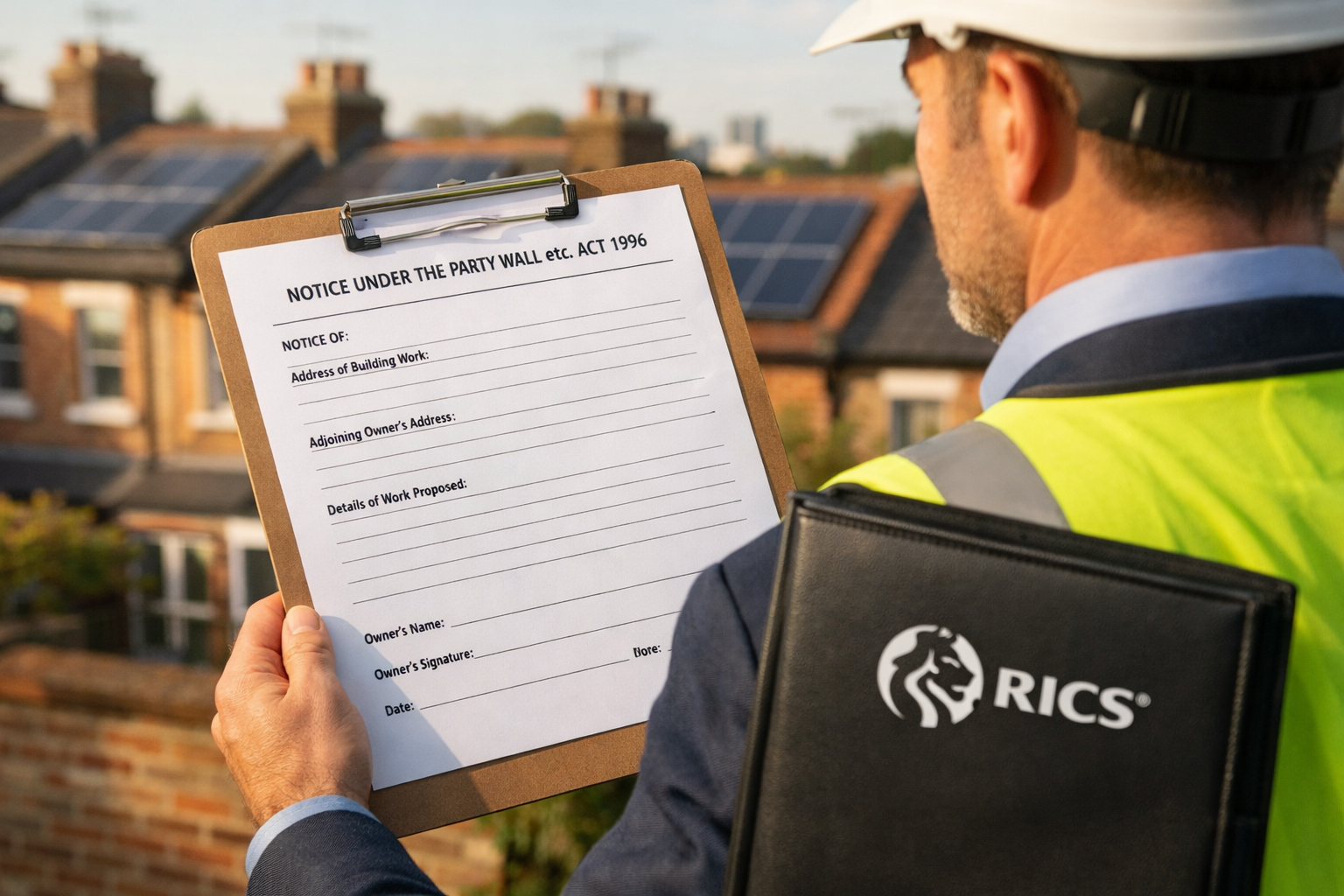
The RICS provides professional standards guidance through its "Party Wall Legislation and Procedure" document, most recently updated in May 2023.[1] These protocols establish clear requirements for notices, surveys, and dispute resolution specifically applicable to solar panel retrofits.
Notice Content and Timing Requirements
According to RICS guidance, party wall notices must contain sufficient detail for adjoining owners to properly assess the proposal's potential impacts.[3] For solar panel installations, notices should include:
Technical Specifications:
- Panel dimensions, weight, and mounting system details
- Structural load calculations showing forces transferred to party structures
- Cable routing plans, particularly where penetrating party walls
- Access requirements during installation and maintenance
Timing Considerations:
- 2 months' notice for works under Section 2 (existing party structures)
- 1 month's notice for works under Section 1 (new structures at boundaries)
- At least 1 month's notice for Section 6 excavations (ground-mounted systems)
The notice period begins when the adjoining owner receives the notice, not when it's sent. Using recorded delivery provides proof of service—essential if disputes arise.
The Role of Schedules of Condition
Schedules of condition form a cornerstone of party wall procedures for solar retrofits. These detailed photographic and written records document the existing condition of neighboring properties before work commences, protecting both building owners and adjoining owners.
For solar panel installations, schedules should specifically document:
| Area | Documentation Required |
|---|---|
| Roof Structure | Existing tiles, flashing, ridge condition, any pre-existing damage |
| Party Walls | Internal and external condition, existing cracks, dampness, structural integrity |
| Chimney Stacks | Condition of shared stacks, pointing, flaunching, pot stability |
| Ceilings Below | Existing cracks, staining, plaster condition in rooms beneath roof work |
| Access Routes | Condition of shared pathways, scaffolding attachment points |
Professional surveyors typically prepare these schedules, with costs usually borne by the building owner. Understanding party wall cost implications helps property owners budget appropriately for compliant solar installations.
Structural Load Considerations and Engineering Calculations
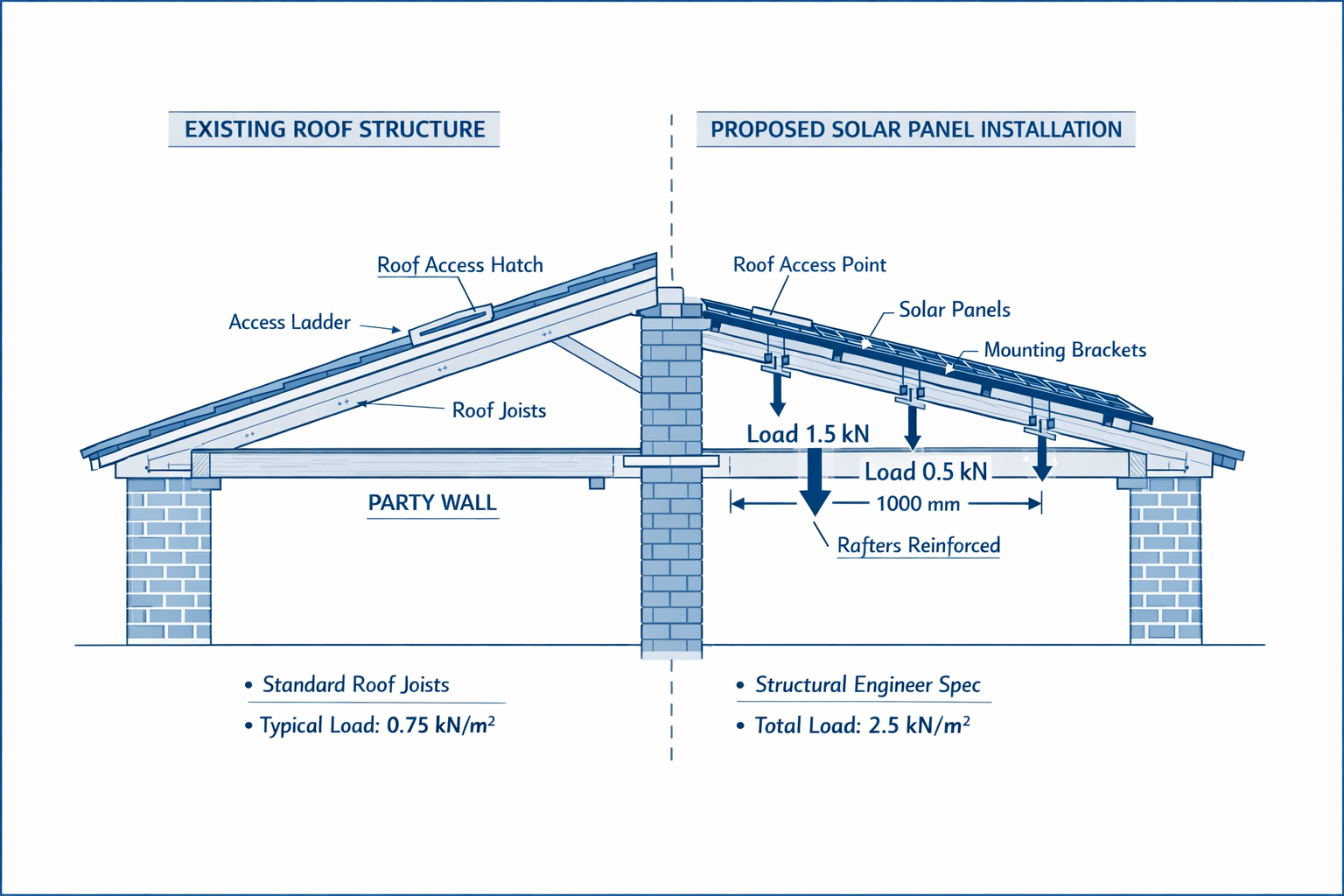
Solar panels add significant weight to roof structures—typically 10-15 kg per square meter for panels plus mounting systems. When this load transfers through or affects party walls, engineer calculations for a solar panel roof become essential.
RICS protocols require that party wall notices include evidence that proposed works won't compromise structural integrity. For solar retrofits, this means:
✅ Structural calculations demonstrating adequate load-bearing capacity
✅ Load distribution analysis showing how weight transfers through party structures
✅ Wind loading assessments for exposed urban locations
✅ Connection details for mounting systems attached to or near party walls
These calculations protect both parties: building owners demonstrate due diligence, while adjoining owners gain assurance that their property won't suffer structural damage.
Common Disputes and Resolution Strategies in Urban Terraces
Urban terraced properties present unique challenges for solar panel retrofits under the Party Wall Act. Shared roof valleys, interconnected structures, and limited access create friction points that frequently escalate into disputes without proper protocols.
Roof Access Disputes
The most common conflict in Party Wall Act Notices for Solar Panel Retrofits: RICS Protocols Amid 2026 Net Zero Roof Works Surge involves access rights. Installing solar panels often requires scaffolding, crane access, or workers traversing neighboring roofs.
Access Rights Under the Act:
The Party Wall Act grants building owners the right to access neighboring land when reasonably necessary for party wall works—but this right isn't unlimited. RICS protocols emphasize:
- 14 days' written notice before accessing neighboring property
- Reasonable hours for access (typically 8am-6pm weekdays)
- Minimizing disruption through efficient work scheduling
- Making good any damage caused by access activities
When neighbors refuse reasonable access despite proper notice, building owners can apply for an access order under the Access to Neighbouring Land Act 1992. However, this legal route adds time and expense—emphasizing the importance of early, clear communication.
Structural Load Disputes
Disagreements over whether solar installations will damage party structures frequently arise, particularly in older terraced properties with aging roof timbers. These disputes typically center on:
Load-Bearing Capacity Concerns:
Adjoining owners may question whether existing structures can safely support additional solar panel weight. Independent structural surveys can resolve these disputes by providing objective assessments of load capacity.
Differential Settlement:
Adding significant weight to one side of a shared structure may cause differential settlement, potentially cracking party walls. Structural engineers can model these effects and recommend mitigation measures.
Long-Term Degradation:
Concerns about accelerated wear on shared structures under increased loads require careful assessment. Party wall awards can specify monitoring regimes to track any developing issues.
The Party Wall Award Process
When adjoining owners dissent to proposed works—or fail to respond within 14 days—a dispute is deemed to exist. This triggers the party wall award process:
1️⃣ Surveyor Appointment: Each party appoints a surveyor (or both agree on a single "agreed surveyor")
2️⃣ Site Inspection: Surveyors inspect both properties and review technical documentation
3️⃣ Award Preparation: Surveyors prepare a detailed award specifying how works will proceed
4️⃣ Award Service: The award is served on both parties, becoming legally binding
The award typically addresses:
- Detailed work descriptions and methodologies
- Access arrangements and timing
- Schedule of condition findings
- Monitoring and inspection protocols
- Cost allocation for surveys and awards
For complex solar retrofits affecting multiple terraced properties, the award process provides structure and certainty, reducing the risk of mid-project disputes that could halt installation.
Preventing Disputes Through Early Engagement
The RICS Residential Retrofit Standard, effective from October 31, 2024, emphasizes early stakeholder engagement as key to successful solar retrofits.[6] This guidance, developed specifically to support the 2026 net zero push, recommends:
Pre-Notice Consultation:
Before serving formal notices, building owners should discuss plans informally with neighbors. Explaining benefits (such as shared renewable energy infrastructure) and addressing concerns early often prevents formal disputes.
Clear Communication:
Technical jargon confuses non-professional property owners. Providing plain-English explanations of proposed works, supported by diagrams and visualizations, improves understanding and acceptance.
Professional Representation:
Engaging RICS-qualified surveyors from the outset demonstrates professionalism and commitment to proper procedures. Many disputes arise from poorly prepared notices or inadequate technical documentation—problems that qualified professionals prevent.
Compromise and Flexibility:
When neighbors raise legitimate concerns, willingness to modify plans (adjusting installation timing, enhancing protection measures, or improving access arrangements) often resolves issues without formal dispute resolution.
The 2026 Net Zero Context and Retrofit Standards
The UK government's commitment to achieving net zero emissions by 2050 has created intense focus on residential energy efficiency in 2026. Solar panel retrofits form a cornerstone of this strategy, with government incentives and regulatory frameworks actively encouraging installations.
RICS Residential Retrofit Standard
The RICS Residential Retrofit Standard, published in 2024 and now fully operational in 2026, provides the first comprehensive professional standard for residential retrofit projects across the UK.[6] This standard directly addresses party wall considerations for solar installations, establishing:
Assessment Requirements:
Retrofit professionals must conduct thorough pre-installation assessments, including party wall implications. This ensures solar installations comply with both energy performance standards and party wall legislation.
Quality Assurance:
The standard provides assurance to consumers and mortgage lenders that retrofit works meet professional standards. For solar installations affecting party structures, this quality framework reduces risk for all parties.
Consumer Protection:
By establishing clear professional standards, the RICS framework protects homeowners from substandard installations that might trigger party wall disputes or structural problems.
Increased Scrutiny and Compliance
As solar retrofits surge in 2026, local authorities and building control bodies have intensified scrutiny of party wall compliance. Several factors drive this trend:
📊 Higher Installation Volumes: More installations mean more potential party wall breaches
🏛️ Regulatory Enforcement: Local authorities face pressure to ensure net zero targets don't compromise building safety
⚖️ Legal Precedents: Recent court cases have clarified party wall obligations for solar retrofits, raising awareness
💰 Insurance Implications: Insurers increasingly require party wall compliance evidence for solar-equipped properties
Property owners who proceed without proper party wall procedures face significant risks, including:
- Injunctions halting work mid-installation
- Removal orders requiring expensive panel removal and reinstallation
- Damage claims from neighbors for party wall breaches
- Reduced property values due to non-compliant installations
Understanding what happens when party wall notice not served helps property owners appreciate the importance of compliance.
Integration with Other Retrofit Works
Solar panel installations rarely occur in isolation. Many 2026 retrofit projects combine solar panels with:
- Loft insulation improvements (potentially requiring party wall loft conversion procedures)
- Battery storage systems (requiring foundation work near boundaries)
- Heat pump installations (potentially affecting party walls through vibration or structural modifications)
- Roof repairs and upgrades (often necessitated by the need to support solar panel loads)
Coordinating party wall procedures across multiple retrofit elements requires careful planning. A comprehensive approach serving all necessary notices simultaneously proves more efficient than piecemeal procedures for each element.
Practical Implementation Guide for Property Owners and Professionals
Successfully navigating Party Wall Act Notices for Solar Panel Retrofits: RICS Protocols Amid 2026 Net Zero Roof Works Surge requires systematic planning and professional expertise. This practical guide outlines the step-by-step process.
Step 1: Pre-Installation Assessment (4-6 Weeks Before Installation)
Identify Party Wall Implications:
- Determine whether your property shares walls, boundaries, or roof structures with neighbors
- Assess whether solar panel mounting will affect party structures
- Identify all "owners" including solar lease companies on neighboring properties
Engage Professionals:
- Commission engineer calculations for a solar panel roof to confirm structural adequacy
- Appoint a RICS-qualified party wall surveyor to advise on notice requirements
- Arrange preliminary discussions with solar installation contractors about party wall considerations
Title Searches:
- Conduct Land Registry searches for neighboring properties
- Identify any registered solar leases or other third-party interests
- Compile complete list of parties requiring notice service
Step 2: Notice Preparation and Service (2-3 Months Before Installation)
Prepare Comprehensive Notices:
Your party wall notice should include:
✔️ Your name and address as building owner
✔️ Details of proposed works with technical specifications
✔️ Structural calculations and load assessments
✔️ Installation timeline and expected duration
✔️ Access requirements during installation
✔️ Contact details for your appointed surveyor
Serve Notices Correctly:
- Use recorded delivery to all identified owners
- Retain proof of service for all notices
- Serve notices within required timeframes (2 months for Section 2 works)
- Include clear explanation of neighbors' rights and response options
Informal Engagement:
- Accompany formal notices with friendly explanatory letters
- Offer to meet neighbors to discuss plans and address concerns
- Provide visualizations showing how installations will appear
- Emphasize benefits such as property value enhancement
Step 3: Response Management and Award Process (1-2 Months Before Installation)
If Neighbors Consent:
- Obtain written consent from all adjoining owners
- Proceed with installation while respecting agreed conditions
- Maintain communication throughout installation process
- Document completion and any variations from original plans
If Neighbors Dissent or Don't Respond:
- Treat non-response after 14 days as deemed dissent
- Initiate party wall award process through appointed surveyors
- Cooperate fully with surveyor site inspections and information requests
- Budget for surveyor fees (typically £700-1,500 per property)
During Award Preparation:
- Commission detailed schedule of condition documentation
- Provide all requested technical information promptly
- Consider reasonable modifications suggested by surveyors
- Review draft award carefully before finalization
Step 4: Installation Phase (Duration Varies)
Comply with Award Conditions:
- Adhere strictly to working hours specified in the award
- Implement protection measures for neighboring properties
- Maintain access arrangements as agreed
- Keep neighbors informed of progress and any issues
Documentation:
- Photograph all stages of installation
- Record any deviations from planned methodology
- Document any unexpected conditions discovered during work
- Maintain daily work logs for reference if disputes arise
Ongoing Communication:
- Provide regular updates to neighbors on progress
- Address concerns promptly and professionally
- Minimize disruption through efficient work practices
- Demonstrate respect for neighbors' property and privacy
Step 5: Post-Installation Compliance (1-2 Weeks After Completion)
Final Inspections:
- Arrange joint inspection with neighbors and surveyors
- Compare final condition against pre-work schedule of condition
- Address any damage or concerns identified during inspection
- Obtain sign-off from surveyors confirming satisfactory completion
Making Good:
- Repair any damage to neighboring properties promptly
- Restore access routes and shared areas to original condition
- Clean and remove all installation debris
- Fulfill all making-good obligations specified in party wall award
Documentation Retention:
- Maintain complete party wall records for future reference
- Provide copies to neighbors and surveyors as required
- Update property files with compliance documentation
- Ensure records transfer with property if sold
Conclusion
The convergence of net zero ambitions and party wall legislation in 2026 has created a complex but navigable landscape for solar panel retrofits on shared boundaries. Understanding Party Wall Act Notices for Solar Panel Retrofits: RICS Protocols Amid 2026 Net Zero Roof Works Surge is no longer optional—it's essential for compliant, dispute-free installations.
Key principles for success include:
🎯 Early identification of party wall implications and all affected owners
📋 Comprehensive notice preparation with full technical specifications
🤝 Proactive neighbor engagement to prevent disputes before they arise
👷 Professional surveyor involvement ensuring RICS protocol compliance
📸 Detailed condition documentation protecting all parties' interests
The RICS Residential Retrofit Standard provides robust frameworks supporting compliant solar installations, while the Party Wall Act ensures fair processes protecting both building owners' rights to improve their properties and adjoining owners' rights to structural protection.
As solar adoption accelerates toward 2026 net zero targets, property owners who invest time and resources in proper party wall procedures will avoid costly disputes, delays, and legal complications. The alternative—proceeding without compliance—risks injunctions, removal orders, and damaged neighbor relations that can persist for years.
Next Steps
For property owners planning solar panel retrofits:
- Consult a RICS-qualified surveyor to assess party wall implications for your specific property
- Commission structural calculations confirming your roof can safely support proposed solar panels
- Conduct title searches identifying all parties requiring notice service
- Serve compliant notices well in advance of planned installation dates
- Engage neighbors early to build support and address concerns proactively
For professional surveyors and contractors, staying current with evolving RICS protocols and case law ensures you provide clients with accurate, compliant advice in this rapidly developing field.
The path to net zero runs through millions of residential roofs across the UK. By following established party wall protocols, we can achieve renewable energy goals while maintaining the legal protections that have governed shared boundaries for over two centuries. Understanding and implementing these procedures isn't just regulatory compliance—it's good neighborliness supporting our collective environmental future.
For expert guidance on party wall procedures for solar retrofits, consult with qualified party wall surveyors who understand both the technical and legal complexities of 2026's net zero retrofit surge.
References
[1] Party Wall Legislation And Procedure – https://www.rics.org/profession-standards/rics-standards-and-guidance/sector-standards/building-surveying-standards/party-wall-legislation-and-procedure
[2] Building Survey Problems With Solar Panels – https://collier-stevens.co.uk/advice-hub/party-wall/building-survey-problems-with-solar-panels/
[3] Jan 22 Party Wall Legislation And Procedure 7th Edition – https://www.rics.org/content/dam/ricsglobal/documents/standards/jan_22_party_wall_legislation_and_procedure_7th_edition.pdf
[6] Retrofit – https://www.rics.org/profession-standards/rics-standards-and-guidance/sector-standards/real-estate-standards/retrofit