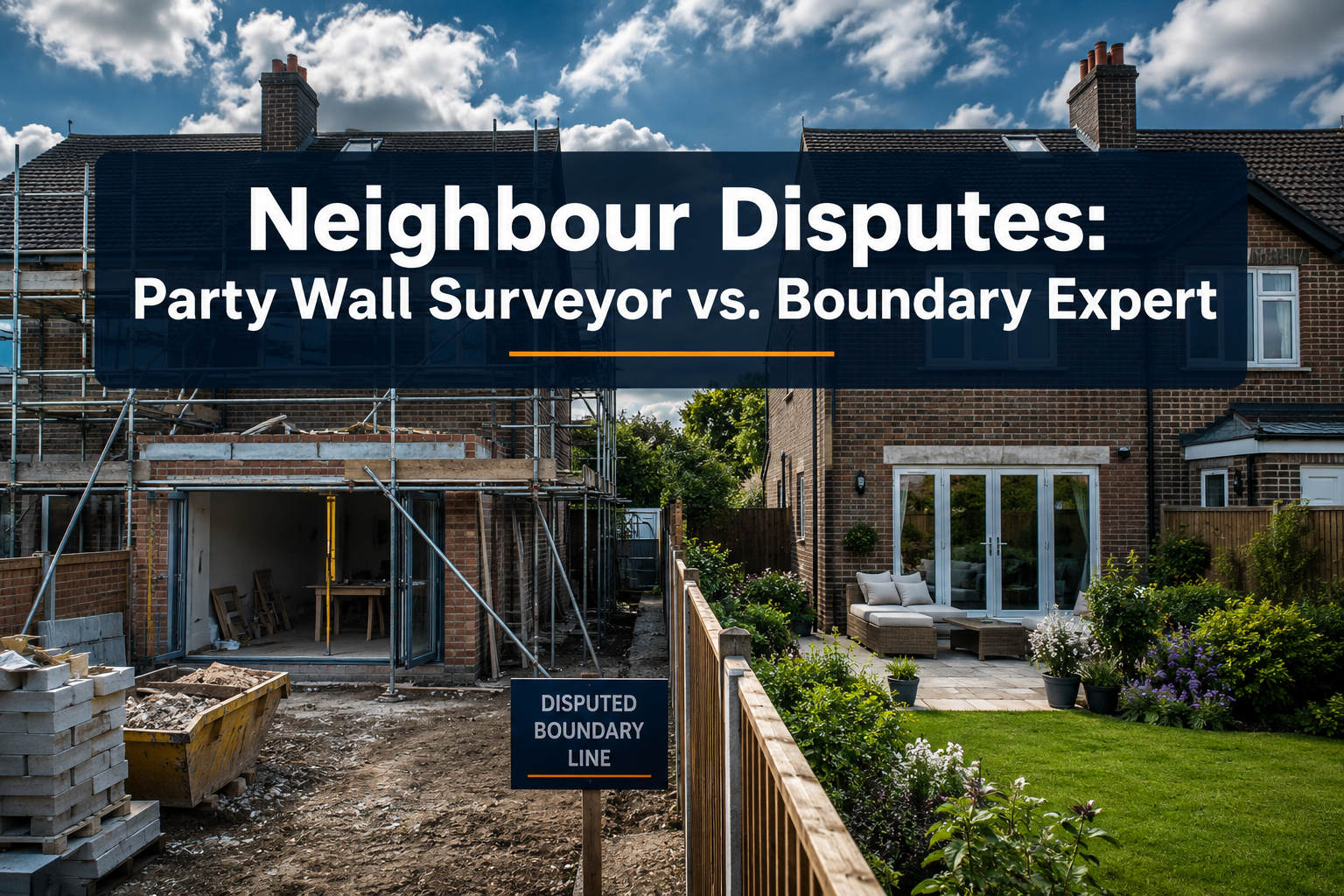
The Northern England property market is experiencing a remarkable resurgence in 2026, with tenant demand climbing sharply across Manchester, Leeds, Liverpool, and Sheffield. For buy-to-let landlords, this recovery presents a golden opportunity: extending existing properties to capture surging rental yields. However, ambitious extension projects—whether adding an extra bedroom, converting a loft, or building a rear extension—require meticulous attention to Party Wall Surveys for Buy-to-Let Extensions in Northern England: Capturing Rental Demand Amid 2026 Recovery protocols. Understanding these legal requirements isn't just about compliance; it's about protecting your investment, maintaining positive neighbour relations, and maximising rental returns in a competitive market.

Key Takeaways
- 🏘️ Northern England rental demand surged in early 2026, creating lucrative opportunities for landlords to extend properties and increase rental yields by 15-25%
- 📋 Party wall compliance is mandatory for loft conversions, rear extensions, and structural work affecting shared walls, with costs typically ranging £150-£200 per hour for surveyors
- ⚡ 2026 regulations require sustainable extensions to meet specific thermal transmittance standards (U-value not exceeding 0.15 W/m²K) when serving party wall notices
- 🤝 Proper party wall procedures protect landlords from costly disputes, delays, and potential damage claims while maintaining tenant occupancy during works
- 💰 Strategic extensions in Northern cities can transform two-bedroom terraced properties into three or four-bedroom rental units, significantly boosting monthly rental income
Understanding Party Wall Surveys for Buy-to-Let Extensions in Northern England
What Makes Buy-to-Let Extensions Different?
Buy-to-let property extensions in Northern England differ fundamentally from standard residential projects. Landlords face unique challenges: maintaining tenant occupancy during construction, minimising void periods, and ensuring extensions deliver measurable rental yield improvements. Unlike homeowners extending for personal use, buy-to-let investors must justify every pound spent against potential rental income increases.
Northern England's housing stock—dominated by Victorian and Edwardian terraced properties—presents specific party wall considerations. These properties typically share structural walls with neighbours on both sides, meaning virtually every extension project triggers party wall legislation. The Party Wall etc. Act 1996 governs all work affecting shared walls, boundaries, and excavations near neighbouring properties.
For buy-to-let landlords, understanding party wall procedures is non-negotiable. The legislation requires serving formal notices to adjoining owners before commencing work. Failure to comply can result in injunctions, costly legal disputes, and project delays that devastate rental income projections.
The 2026 Rental Recovery Context
The RICS January 2026 tenant demand survey revealed striking regional variations. While some areas of the UK experienced flat or declining rental demand, Northern England—particularly the North West—reported substantial increases. Manchester, Leeds, and Liverpool saw tenant enquiries rise by double digits, driven by:
- Young professionals relocating from expensive Southern cities
- Universities expanding post-pandemic, increasing student accommodation demand
- Remote work flexibility enabling people to choose more affordable Northern cities
- Government regeneration initiatives improving infrastructure and employment opportunities
This demand surge has pushed rental yields in Northern England to attractive levels, often exceeding 6-8% gross yields compared to 3-4% in London. For landlords, extending properties to create additional bedrooms or self-contained units represents a strategic response to this market opportunity.
However, the 2026 recovery also brings heightened scrutiny. Tenants increasingly expect modern, energy-efficient accommodation. Extensions must not only comply with party wall legislation but also meet stringent sustainability standards[2]. The Building Regulations 2025 amendments require new extensions to achieve U-values not exceeding 0.15 W/m²K for walls—a significant thermal performance improvement that affects party wall notice specifications.
Essential Party Wall Requirements for Buy-to-Let Extensions

Types of Work Requiring Party Wall Notices
Not all extension work triggers party wall procedures, but most buy-to-let projects in Northern England's terraced housing will. The Act covers three main categories:
1. Building on or at the Line of Junction (Section 1)
When constructing a new wall exactly on the boundary line between properties, or building up to the boundary, landlords must serve a Line of Junction Notice. This commonly applies to side extensions on semi-detached buy-to-lets or boundary walls for rear extensions.
2. Work to Existing Party Walls (Section 2)
This covers the majority of buy-to-let extensions:
- Loft conversions requiring structural work to shared walls[1]
- Cutting into party walls to insert steel beams for rear extensions
- Raising party walls to accommodate additional storeys
- Underpinning party walls for basement conversions
- Installing damp-proof courses affecting shared structures
The 2026 compliance requirements specify that loft conversions affecting shared walls must include party wall notices[1], even for seemingly minor structural alterations.
3. Excavation Near Neighbouring Buildings (Section 6)
Digging within three metres of a neighbour's structure, or within six metres if excavating below their foundation level, requires notice. This frequently applies to:
- Basement extensions popular in Manchester and Leeds buy-to-lets
- Deep foundation work for substantial rear extensions
- Underpinning projects to stabilise older terraced properties
Understanding what is the three meter rule helps landlords determine when excavation notices become necessary.
Serving Party Wall Notices: Timeline and Process
Timing is critical for buy-to-let landlords managing tenancy agreements and construction schedules. The Act specifies minimum notice periods:
- Two months for Section 2 notices (work to existing party walls)
- One month for Section 1 and Section 6 notices (new walls and excavations)
Smart landlords serve notices well before these minimums, anticipating potential disputes or delays. For a typical buy-to-let loft conversion in Leeds starting in June 2026, serving notices in March provides adequate buffer time.
The notice must include:
- Detailed descriptions of proposed work
- Architectural drawings showing party wall implications
- Commencement dates for construction
- Thermal performance specifications for sustainable extensions[2]
- Contact details for the building owner's surveyor
Neighbours have 14 days to respond. They can:
- Consent to the work (ideal scenario)
- Dissent or fail to respond (triggering the party wall award process)
- Request modifications to protect their property
If neighbours dissent or don't respond, landlords cannot simply proceed. The Act requires appointing party wall surveyors to produce a Party Wall Award—a legally binding document specifying how work will proceed, protective measures required, and dispute resolution mechanisms.
What Happens If You Don't Serve Notice?
The consequences of ignoring party wall requirements can devastate buy-to-let investment returns. Without proper notices, neighbours can:
- Obtain injunctions stopping construction immediately
- Sue for damages if their property suffers harm
- Force retrospective compliance at significantly higher costs
For landlords with tenants in situ, construction delays directly impact rental income. A three-month injunction delay on a property generating £1,200 monthly rent costs £3,600 in lost income—far exceeding typical party wall surveyor fees.
More seriously, damage to property in party wall disputes without proper awards can result in unlimited liability. If your loft conversion causes cracking in your neighbour's property and you have no party wall agreement, you'll face expensive remedial work and potential legal costs.
The situation worsens if party wall notice not served before work commences. Courts consistently rule against building owners who bypass the Act, even if no actual damage occurred.
Maximising Rental Yields Through Strategic Extensions in 2026
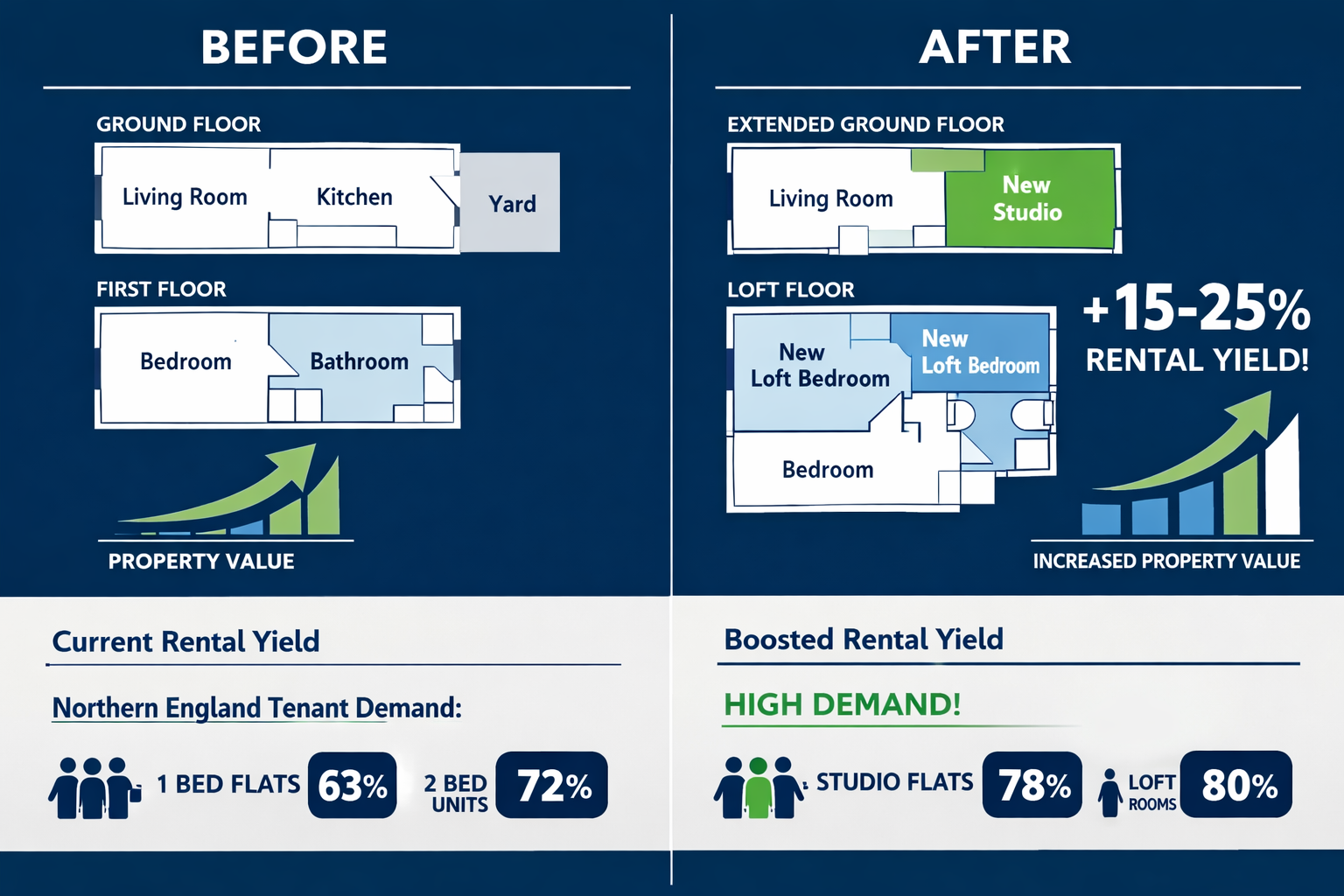
Popular Buy-to-Let Extension Types in Northern England
Northern England's property stock lends itself to specific extension strategies that deliver strong rental yield improvements:
Loft Conversions (Most Popular)
Converting unused attic space into an additional bedroom represents the highest return-on-investment extension for Northern terraced properties. Typical costs range £25,000-£45,000, while adding a bedroom can increase monthly rent by £150-£300.
Example: A two-bedroom terraced property in Manchester renting for £900/month becomes a three-bedroom at £1,150/month after a £35,000 loft conversion. The annual rental increase of £3,000 delivers an 8.6% return on extension investment—before considering capital value appreciation.
Loft conversions almost always require party wall compliance when affecting shared gable walls or party walls supporting roof structures[1].
Rear Extensions
Single or double-storey rear extensions add valuable living space and additional bedrooms. In Northern England's competitive rental market, properties with modern open-plan kitchen-diners command premium rents from young professional tenants.
Costs typically range £30,000-£60,000 for single-storey extensions, potentially increasing rental values by 15-20%. These projects frequently require cutting into party walls to install supporting steel beams, triggering Section 2 notices.
Basement Conversions
Less common but increasingly popular in Manchester and Leeds city centres, basement conversions create self-contained studio flats or additional bedrooms. These complex projects always require party wall excavation notices due to deep foundation work near neighbouring properties.
Side Extensions and Annexes
For semi-detached buy-to-lets or properties with side access, extensions can create entirely separate rental units. This strategy—converting one property into two rental incomes—delivers exceptional yields but requires careful planning permission and party wall compliance.
Calculating Extension ROI for Buy-to-Let Properties
Savvy landlords approach extensions with rigorous financial analysis:
| Extension Type | Average Cost | Monthly Rent Increase | Annual ROI | Payback Period |
|---|---|---|---|---|
| Loft Conversion (1 bed) | £35,000 | £200 | 6.9% | 14.6 years |
| Single-Storey Rear | £45,000 | £180 | 4.8% | 20.8 years |
| Double-Storey Rear | £75,000 | £350 | 5.6% | 17.9 years |
| Basement Conversion | £65,000 | £300 | 5.5% | 18.1 years |
These calculations assume no void periods during construction—achievable with proper planning and party wall compliance preventing delays.
The 2026 recovery context improves these projections. With tenant demand surging and rental growth accelerating in Northern England, landlords extending now position themselves to capture both immediate rental increases and ongoing market appreciation.
Sustainable Extensions and 2026 Compliance
The 2026 regulatory landscape adds complexity but also opportunity. Extensions must now meet enhanced thermal performance standards, with U-values not exceeding 0.15 W/m²K for walls[2]. This requirement applies to party wall notices—surveyors must verify that proposed work meets sustainability criteria.
For buy-to-let landlords, sustainable extensions deliver multiple benefits:
- Higher rental values: Tenants increasingly prioritise energy-efficient properties
- Lower void periods: Modern, eco-friendly accommodation attracts more enquiries
- Reduced maintenance costs: Better insulation and construction quality minimise repairs
- Future-proofing: Properties meet likely future regulatory requirements
- EPC improvements: Extensions can boost Energy Performance Certificate ratings, essential for rental compliance
The additional upfront cost of sustainable construction—typically 8-12% premium—pays dividends through higher rents and tenant retention in Northern England's competitive 2026 market.
Working with Party Wall Surveyors: Costs and Process
Appointing the Right Surveyor for Buy-to-Let Projects
Party wall surveyor costs typically range £150-£200 per hour[3], with complete party wall awards averaging approximately £1,000 for straightforward projects. Complex buy-to-let extensions involving multiple neighbours or intricate structural work may cost £2,000-£3,500.
When selecting surveyors, buy-to-let landlords should prioritise:
Experience with Rental Properties
Surveyors familiar with buy-to-let projects understand the critical importance of minimising delays and maintaining tenant relations. They can structure awards to permit phased construction, reducing disruption.
Local Northern England Knowledge
Surveyors experienced with Victorian and Edwardian terraced properties in Manchester, Leeds, or Liverpool understand regional construction methods, common issues, and local authority requirements.
RICS Accreditation
Royal Institution of Chartered Surveyors membership ensures professional standards and insurance coverage. For significant buy-to-let investments, this protection is essential.
Communication Skills
Good surveyors facilitate neighbour cooperation, explaining technical matters clearly and resolving disputes before they escalate. This soft skill dramatically affects project timelines.
Many landlords ask about using the Agreed Surveyor approach, where both parties appoint a single surveyor to produce the award. This typically reduces costs by 30-40% and speeds up the process—ideal for buy-to-let projects where time equals money.
The Party Wall Award: What It Covers
A comprehensive party wall award documents:
- Schedule of Condition: Detailed photographic and written record of the neighbour's property before work commences, protecting landlords from spurious damage claims
- Working Methods: Specific construction techniques, protective measures, and access requirements
- Timing: Permitted working hours, project duration, and notification requirements
- Dispute Resolution: Procedures for addressing concerns during construction
- Cost Allocation: Who pays for what (typically the building owner covers all party wall costs)
For buy-to-let landlords, the schedule of condition provides crucial protection. If neighbours later claim your extension caused damage, the pre-work survey establishes baseline conditions, limiting liability to genuine construction-related issues.
Managing Neighbour Relations During Extensions
Successful buy-to-let extensions depend on maintaining positive neighbour relationships. Disputes can delay projects for months, destroying rental yield projections.
Best practices include:
- Early informal discussions before serving formal notices
- Clear communication about project timelines and disruption
- Considerate construction scheduling avoiding early mornings and weekends where possible
- Prompt responses to concerns or complaints
- Professional contractors who respect neighbouring properties and minimise noise
Remember that neighbours have legitimate concerns about construction disruption, potential damage, and property values. Addressing these proactively—rather than hiding behind legal minimums—creates smoother projects.
For common questions about the process, landlords should review comprehensive party wall FAQs covering typical scenarios and concerns.
Regional Considerations for Northern England Buy-to-Let Extensions
Market-Specific Factors in Key Cities
Manchester
The city's booming tech sector and expanding universities drive strong rental demand for quality accommodation. Loft conversions adding home office space command premium rents from remote workers. Party wall compliance is particularly important in densely packed areas like Chorlton, Didsbury, and the Northern Quarter.
Leeds
Financial services and healthcare sectors support robust rental markets. Properties near the city centre and university campuses benefit most from extensions. Victorian terraced properties in Headingley and Hyde Park offer excellent extension potential, though party wall procedures are essential given tight property spacing.
Liverpool
Regeneration initiatives and cultural attractions draw young professionals and students. Rental yields remain among the UK's highest, making extension investments particularly attractive. Terraced properties in Baltic Triangle and Georgian Quarter areas require careful party wall management due to heritage considerations.
Sheffield
Affordable property prices and strong universities create opportunities for buy-to-let investors. Extensions in student-heavy areas like Crookes and Broomhill deliver strong returns, though party wall compliance is critical given dense terraced housing.
Planning Permission and Building Regulations
Party wall compliance operates separately from planning permission and building regulations—landlords need all three for legal extensions.
Permitted Development Rights allow many extensions without planning permission, including:
- Single-storey rear extensions up to 6 metres (terraced properties) or 8 metres (detached/semi-detached)
- Loft conversions within height limits
- Small side extensions
However, permitted development doesn't eliminate party wall requirements. Even if planning permission isn't needed, party wall notices remain mandatory for work affecting shared structures.
Building regulations approval ensures structural safety, fire protection, and energy efficiency. The 2026 sustainability requirements[2] mean extensions must achieve specific thermal performance standards, affecting design and construction methods.
Smart landlords coordinate all three regulatory streams—party wall, planning, and building control—from project inception, preventing conflicts and delays.
Common Pitfalls and How to Avoid Them
Mistake #1: Assuming Tenant Consent Equals Neighbour Consent
Landlords sometimes confuse their tenant's agreement to construction disruption with party wall compliance. These are entirely separate issues. Even if your tenant accepts the extension work, you must still serve party wall notices to adjoining owners and follow the Act's procedures.
Mistake #2: Underestimating Timelines
Party wall procedures add minimum two months to project timelines. Landlords planning extensions around tenancy changeovers must account for:
- Notice periods (1-2 months)
- Award preparation (2-4 weeks if neighbours dissent)
- Potential disputes (additional weeks or months)
Starting the party wall process at least four months before planned construction provides adequate buffer time.
Mistake #3: Choosing the Cheapest Contractor
Buy-to-let extensions demand experienced contractors familiar with party wall requirements. The cheapest quote often comes from builders lacking this expertise, leading to:
- Damage to neighbouring properties
- Non-compliance with party wall awards
- Delays from correcting mistakes
- Strained neighbour relations
Investing in quality contractors saves money long-term through faster completion, fewer disputes, and better construction quality that commands higher rents.
Mistake #4: Ignoring Sustainable Building Requirements
The 2026 regulatory environment penalises landlords who ignore sustainability standards[2]. Extensions failing to meet thermal performance requirements may:
- Require expensive retrofitting
- Fail building control inspections
- Achieve poor EPC ratings, limiting rental potential
- Face future compliance issues as regulations tighten
Incorporating sustainability from design stage—not as an afterthought—ensures compliance and maximises rental values.
Mistake #5: Poor Documentation
Successful buy-to-let extensions require meticulous records:
- Party wall notices and responses
- Surveyor correspondence and awards
- Photographic evidence of pre-construction conditions
- Contractor agreements and warranties
- Building control approvals and completion certificates
This documentation protects landlords in disputes, supports insurance claims, and proves compliance when selling properties.
Conclusion: Capitalising on Northern England's 2026 Rental Recovery
Party Wall Surveys for Buy-to-Let Extensions in Northern England: Capturing Rental Demand Amid 2026 Recovery represents a strategic imperative for landlords seeking to maximise returns in surging rental markets. The confluence of rising tenant demand, attractive Northern England yields, and modern sustainability requirements creates exceptional opportunities for those who navigate party wall compliance effectively.
Key success factors include:
✅ Starting early: Begin party wall procedures 3-4 months before planned construction
✅ Investing in expertise: Appoint experienced party wall surveyors and quality contractors
✅ Prioritising relationships: Maintain positive neighbour relations through clear communication
✅ Embracing sustainability: Meet 2026 thermal performance standards for future-proof properties
✅ Calculating carefully: Ensure extension costs deliver measurable rental yield improvements
The 2026 recovery won't last forever. Northern England's rental market advantages—affordable property prices, strong yields, and growing tenant demand—create a limited window for strategic extensions. Landlords who act now, armed with proper party wall compliance and quality construction, position themselves to capture premium rents for years ahead.
Next Steps
- Assess your portfolio: Identify properties where extensions could significantly boost rental yields
- Consult professionals: Engage architects and party wall surveyors for feasibility assessments
- Serve notices promptly: Don't let party wall procedures delay your projects
- Plan for sustainability: Ensure designs meet 2026 thermal performance requirements
- Monitor the market: Track rental demand trends in your specific Northern England location
For landlords ready to capitalise on Northern England's rental recovery, proper party wall compliance isn't an obstacle—it's the foundation for successful, profitable extensions that deliver returns for decades.
References
[1] Party Wall Surveying Surge In 2026 Loft Conversions Navigating High Demand Compliance During Housing Uptick – https://nottinghillsurveyors.com/blog/party-wall-surveying-surge-in-2026-loft-conversions-navigating-high-demand-compliance-during-housing-uptick
[2] Party Wall Notices For Sustainable Home Extensions In 2026 Eco Compliance Clauses – https://nottinghillsurveyors.com/blog/party-wall-notices-for-sustainable-home-extensions-in-2026-eco-compliance-clauses
[3] Party Wall Agreement – https://hoa.org.uk/advice/guides-for-homeowners/i-am-improving/party-wall-agreement/