
{"cover":"Professional landscape format (1536x1024) hero image featuring bold text overlay 'Level 3 Building Surveys for Buy-to-Let: Spotting Risks as Institutional Landlords Ramp Up in 2026' in extra large 72pt white sans-serif font with dark shadow and semi-transparent navy overlay box, positioned in upper third. Background shows detailed architectural inspection scene with surveyor examining Victorian brick property facade with clipboard and moisture meter, visible structural defects including cracks and damp patches, modern apartment buildings in background representing institutional buy-to-let portfolio. Color scheme: deep navy blue, white, orange warning accents. High contrast, magazine cover quality, editorial style with professional composition following rule of thirds, sharp focus on inspection details.","content":["Landscape format (1536x1024) editorial image showing detailed comparison infographic of three survey types side-by-side: Level 1 (Condition Report), Level 2 (HomeBuyer Report), and Level 3 (Building Survey) with visual icons representing depth of inspection. Center panel highlights Level 3 with magnifying glass examining cross-section of multi-let property showing hidden defects: subsidence cracks in foundation, rising damp in walls, roof timber decay, outdated electrical systems. Professional color-coded risk indicators (red, amber, green) marking each defect category. Clean white background with technical blueprint aesthetic, detailed annotations and measurement callouts, surveying equipment visible in corners, modern infographic style with data visualization elements.","Landscape format (1536x1024) detailed scene inside multi-occupancy buy-to-let property during professional Level 3 survey inspection. Chartered surveyor in high-visibility vest using thermal imaging camera on wall revealing hidden moisture patterns shown in blue-purple heat map overlay, second surveyor taking detailed notes on tablet showing digital floor plan with defect markers. Visible issues: peeling paint indicating damp, exposed pipework, outdated electrical consumer unit, structural cracks marked with measurement tape. Multiple tenant doors along corridor suggesting HMO configuration. Natural lighting from window, professional inspection equipment scattered (moisture meters, laser levels, endoscope camera), clipboard with RICS survey documentation visible, realistic documentary photography style emphasizing thoroughness of institutional-grade inspection process.","Landscape format (1536x1024) professional business scene showing investment analysis meeting focused on buy-to-let portfolio assessment. Modern conference room with large wall-mounted screen displaying detailed Level 3 survey report with highlighted defect costs, repair schedules, and ROI calculations. Foreground shows polished table with spread documents including: building survey report with red-flagged issues, comparative market valuation spreadsheet, institutional landlord investment proposal, calculator showing repair cost estimates. Hands pointing to specific defect photographs (subsidence, damp, structural issues) overlaid with cost projections. Background shows property portfolio map with multiple pins indicating multi-let investments. Clean corporate aesthetic, natural office lighting, professional financial planning atmosphere, charts showing rental yield projections versus remediation costs, modern business setting emphasizing data-driven investment decisions."]}
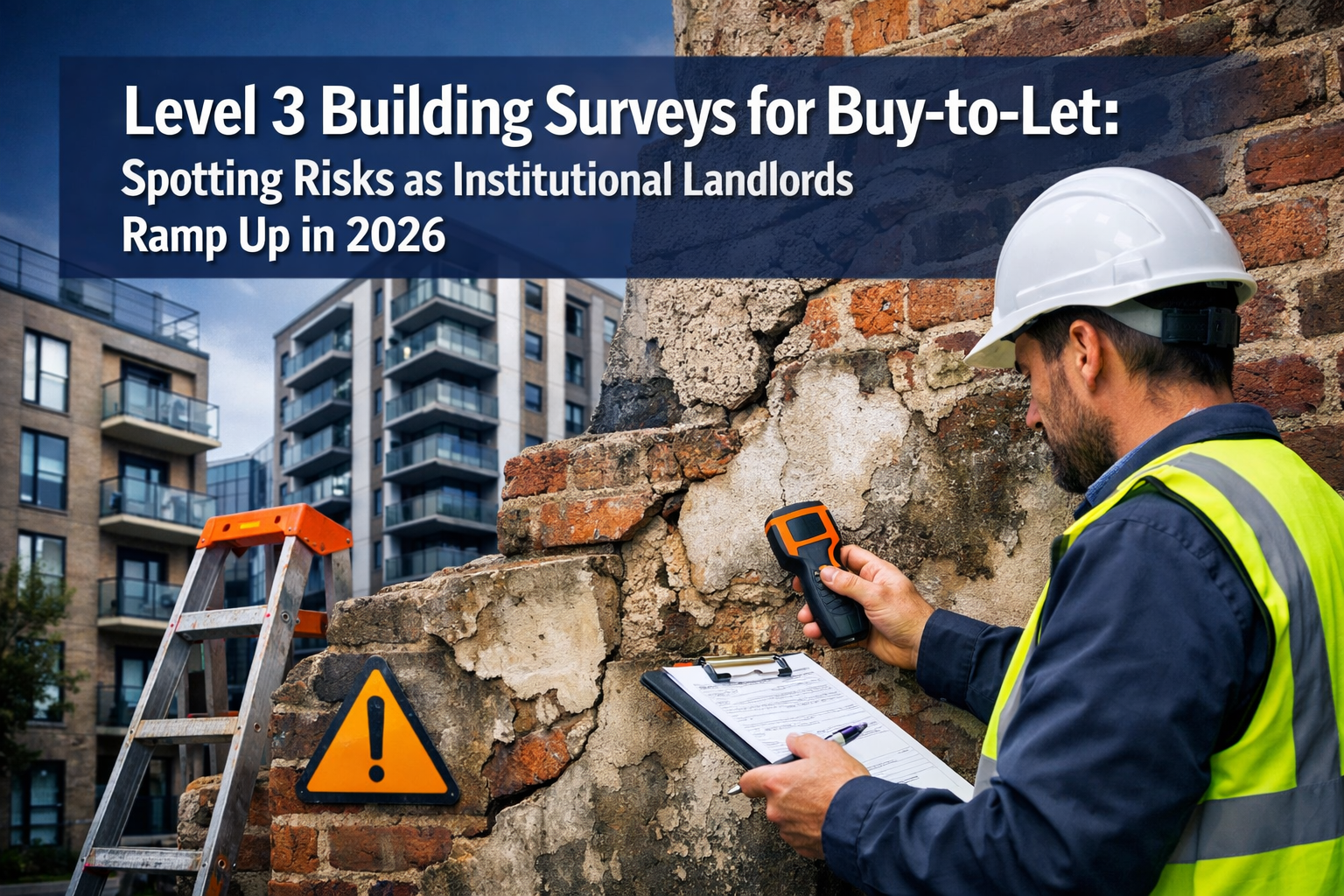
The buy-to-let market in 2026 is experiencing a dramatic transformation. Institutional landlords are flooding into the sector with unprecedented capital, snapping up multi-let properties and entire portfolios at record speeds. But beneath this investment frenzy lies a critical question: are these properties hiding costly defects that could devastate returns?
Level 3 Building Surveys for Buy-to-Let Investments: Spotting Risks as Institutional Landlords Ramp Up in 2026 has become the essential due diligence tool for serious property investors. Unlike basic homebuyer reports, these comprehensive surveys dig deep into a property's structural integrity, uncovering hidden problems that could cost tens of thousands in unexpected repairs. As competition intensifies and prices climb, the difference between a profitable investment and a financial disaster often comes down to what your surveyor finds—or misses—during inspection.
This guide reveals exactly how Level 3 surveys protect buy-to-let investors from catastrophic mistakes, especially when dealing with multi-occupancy properties where defects multiply across multiple units. 🏘️
Key Takeaways
- Level 3 Building Surveys provide the most comprehensive inspection available, essential for older properties and multi-let investments where hidden defects pose significant financial risks
- Institutional landlords entering the market in 2026 are driving up competition, making thorough defect detection critical to avoid overpaying for problem properties
- Multi-let properties (HMOs, apartment blocks) require enhanced survey scrutiny due to multiplied repair costs across multiple units and complex building systems
- ROI protection depends on cross-referencing survey findings against market valuations to negotiate price reductions or walk away from properties with excessive repair liabilities
- Post-reform compliance with updated building safety and energy efficiency standards makes identifying non-compliant elements during surveys more important than ever
Understanding Level 3 Building Surveys in the Buy-to-Let Context
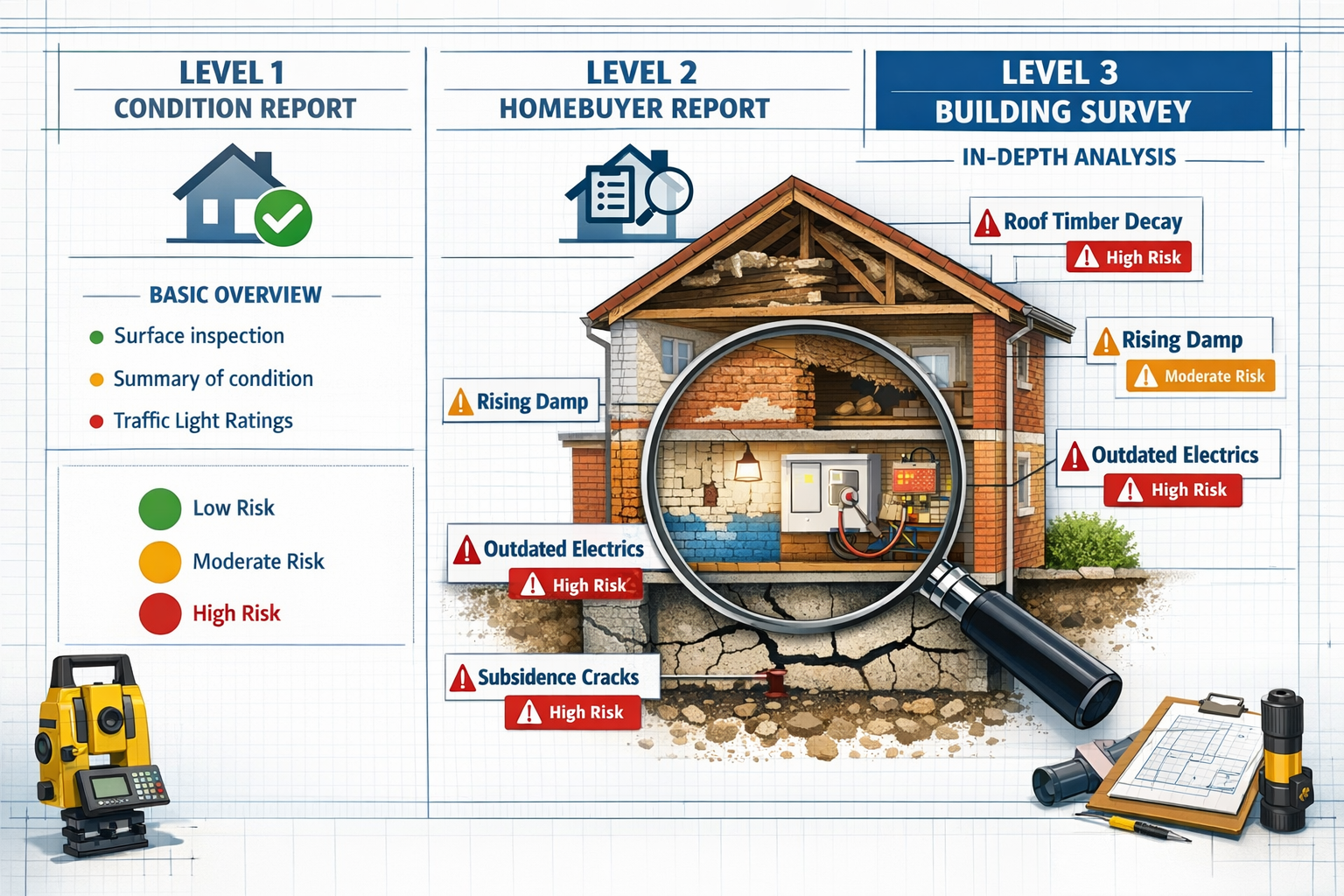
A Level 3 Building Survey (formerly known as a Full Structural Survey) represents the gold standard of property inspection. For buy-to-let investors, particularly those targeting multi-occupancy properties, this comprehensive assessment goes far beyond what standard surveys offer.
What Makes Level 3 Surveys Different?
Level 3 surveys provide an exhaustive analysis of a property's condition, examining every accessible element from foundations to roof timbers. Unlike Level 2 HomeBuyer Reports that focus on major visible defects, Level 3 building surveys investigate:
- Structural integrity including foundations, load-bearing walls, and floor joists
- Hidden defects requiring invasive inspection techniques
- Building materials and construction methods with detailed analysis
- Maintenance requirements with prioritized repair schedules
- Future deterioration risks based on current condition trends
Understanding the difference between Level 2 and Level 3 surveys becomes crucial when the property represents a significant capital investment.
Why Buy-to-Let Investors Need Level 3 Surveys
The buy-to-let sector faces unique challenges that make comprehensive surveys non-negotiable:
Multi-Tenant Impact 🏢
When defects exist in multi-let properties, repair costs multiply. A single damp problem affecting three flats costs three times more to remediate than in a single-occupancy home. Structural issues can render multiple units uninhabitable simultaneously, creating catastrophic rental income losses.
Institutional Competition
With large-scale landlords entering the market in 2026, individual investors face pressure to make quick decisions. However, rushing due diligence on a property with hidden structural problems can destroy years of potential returns. Level 3 surveys provide the detailed intelligence needed to compete intelligently rather than recklessly.
Regulatory Compliance
Modern buy-to-let properties must meet stringent safety and energy efficiency standards. A thorough survey identifies non-compliant elements—outdated electrical systems, inadequate fire safety measures, poor insulation—before they become expensive mandatory upgrades.
Investment Leverage
Most buy-to-let purchases involve significant mortgage financing. Lenders increasingly require detailed surveys for older or non-standard properties. Survey findings directly impact mortgage offers and insurance availability.
When Level 3 Surveys Are Essential
Certain property types and scenarios demand the comprehensive approach of Level 3 surveys:
| Property Type | Why Level 3 Is Critical |
|---|---|
| Pre-1900 Buildings | Complex construction methods, likely alterations, higher defect probability |
| HMOs (Houses in Multiple Occupation) | Shared building systems, fire safety requirements, multiple repair zones |
| Converted Flats | Structural modifications, shared services, building regulation compliance questions |
| Properties with Known Issues | Subsidence history, previous flooding, visible structural movement |
| Portfolio Acquisitions | Multiple properties requiring consistent assessment standards |
| Properties Over £400,000 | Investment size justifies comprehensive due diligence |
For investors targeting these property types, the survey cost (typically £800-£1,500) represents insurance against far larger potential losses.
Spotting Critical Risks in Multi-Let Properties Through Level 3 Surveys
Multi-let properties present unique risk profiles that standard surveys often miss. Level 3 Building Surveys for Buy-to-Let Investments: Spotting Risks as Institutional Landlords Ramp Up in 2026 requires understanding how defects manifest differently in properties with multiple occupancy units.
Structural Defects That Multiply Across Units
Subsidence and Settlement Issues 💥
Foundation problems in multi-let buildings affect every unit simultaneously. What might cost £15,000 to repair in a single dwelling could escalate to £50,000+ when underpinning must extend beneath an entire converted Victorian house with four flats.
A comprehensive subsidence survey integrated into your Level 3 inspection identifies:
- Crack patterns indicating progressive movement
- Differential settlement between building sections
- Soil type and drainage issues contributing to subsidence
- Previous repair quality and ongoing movement risk
Roof and Envelope Failures
Roof defects in multi-occupancy buildings create cascading problems. A failing roof over a three-story conversion can cause:
- Water ingress affecting multiple flats
- Ceiling damage across several units
- Mold and damp spreading through the building
- Simultaneous loss of multiple rental incomes during repairs
Professional roof surveys as part of Level 3 inspections examine not just visible roof coverings but underlying timber condition, insulation adequacy, and water management systems.
Damp and Moisture: The Silent Investment Killer
Rising Damp in Multi-Let Properties
Damp problems represent one of the costliest defects in buy-to-let investments. In multi-occupancy buildings, moisture issues often stem from:
- Failed or absent damp-proof courses
- Bridged cavity walls from poor construction
- Condensation from inadequate ventilation with multiple occupants
- Penetrating damp from shared pipework failures
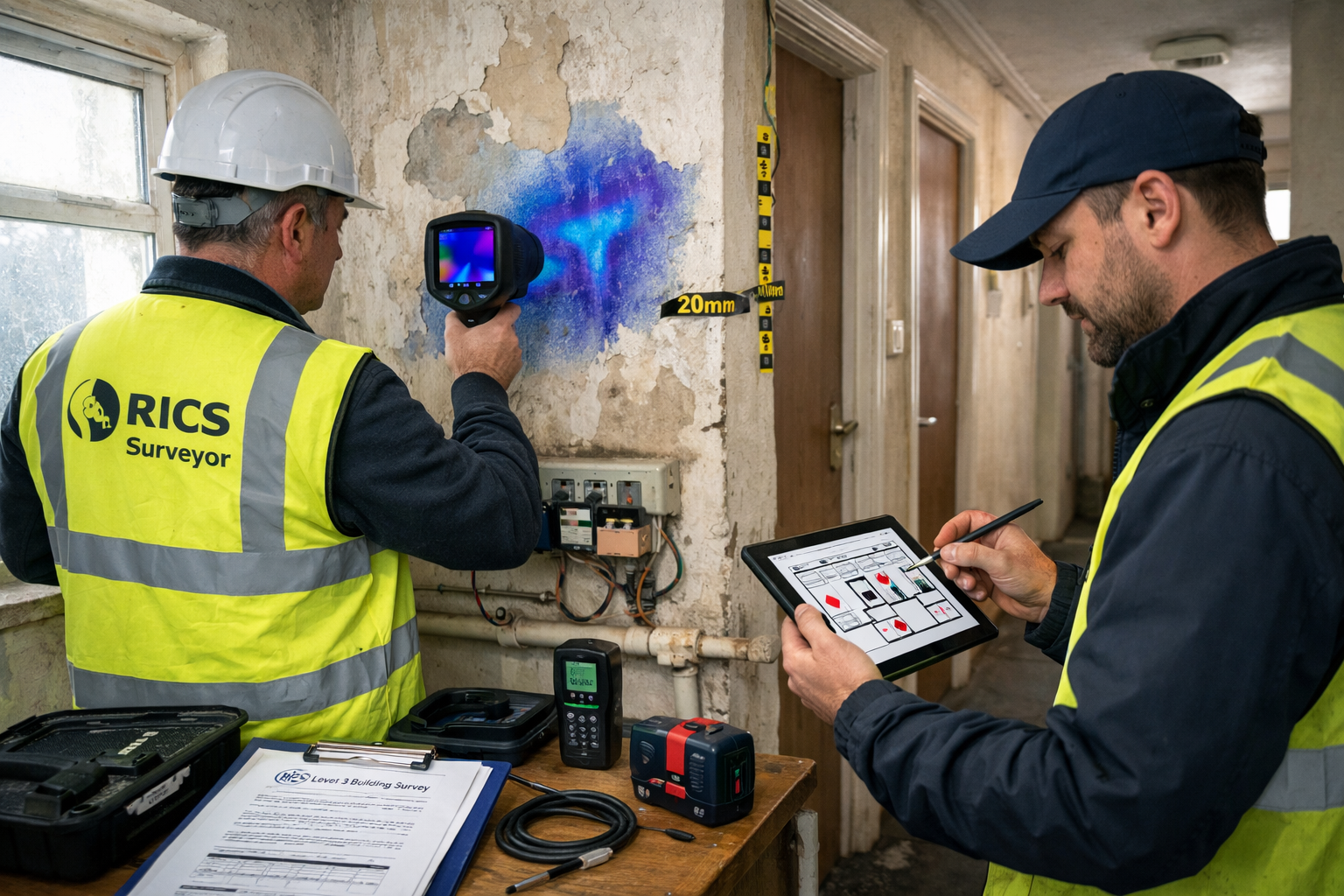
Specialized damp surveys use moisture meters and thermal imaging to detect hidden dampness that visual inspection misses. In 2026's competitive market, undiscovered damp can mean:
- £3,000-£8,000 per affected unit for damp-proofing
- Months of lost rental income during remediation
- Tenant health complaints and potential legal liabilities
- Reduced property value if discovered later
Building Services and Shared Systems
Multi-let properties rely on complex shared systems that require specialized assessment:
Electrical Infrastructure ⚡
Older properties converted to multiple units often have electrical systems never designed for current loads. Level 3 surveys should identify:
- Consumer unit capacity and condition
- Wiring age and safety compliance
- Earth bonding adequacy
- Individual metering arrangements
- Fire detection system integration
Non-compliant electrical systems can cost £5,000-£15,000 to upgrade across a multi-let property—a significant hit to investment returns if discovered after purchase.
Plumbing and Drainage
Shared drainage systems in converted properties frequently cause disputes and expensive failures. Surveys must examine:
- Soil stack condition and capacity
- Shared waste pipe arrangements
- Water supply adequacy for multiple units
- Boiler and heating system condition
Fire Safety Compliance 🔥
Since the regulatory reforms, fire safety in multi-occupancy buildings has become paramount. Level 3 surveys should specifically assess:
- Fire door specifications and condition
- Escape route adequacy
- Fire alarm and detection systems
- Compartmentation between units
- External wall construction and cladding
Bringing a non-compliant HMO up to current fire safety standards can easily exceed £20,000, making this a critical survey focus area.
Structural Alterations and Building Regulation Compliance
Many multi-let properties have undergone conversions or alterations. A thorough structural survey investigates:
- Whether structural walls have been removed or altered
- If proper steel beams support modified structures
- Building regulation approval for conversions
- Load-bearing capacity for current use
Properties with unapproved alterations face:
- Difficulty obtaining mortgage financing
- Insurance complications
- Potential enforcement action requiring costly remediation
- Reduced market value and saleability
External Elements and Shared Spaces
Boundary and Access Issues
Multi-let properties often have complex ownership and access arrangements. Surveys should clarify:
- Shared access rights and maintenance responsibilities
- Boundary definitions and disputes
- Parking and external storage provisions
- Garden and external area maintenance obligations
Defect Detection Technologies
Modern Level 3 surveys employ advanced diagnostic tools:
| Technology | Application | Benefits for Buy-to-Let |
|---|---|---|
| Thermal Imaging | Heat loss, moisture detection, insulation gaps | Identifies hidden damp and energy efficiency issues |
| Moisture Meters | Precise dampness measurement | Quantifies extent of damp problems for repair costing |
| Endoscope Cameras | Cavity wall inspection, under-floor examination | Reveals hidden defects without destructive investigation |
| Laser Levels | Structural movement measurement | Detects settlement and structural distortion |
| Electrical Testing | Circuit safety verification | Confirms compliance and identifies rewiring needs |
Maximizing ROI: Using Level 3 Survey Findings for Investment Decisions
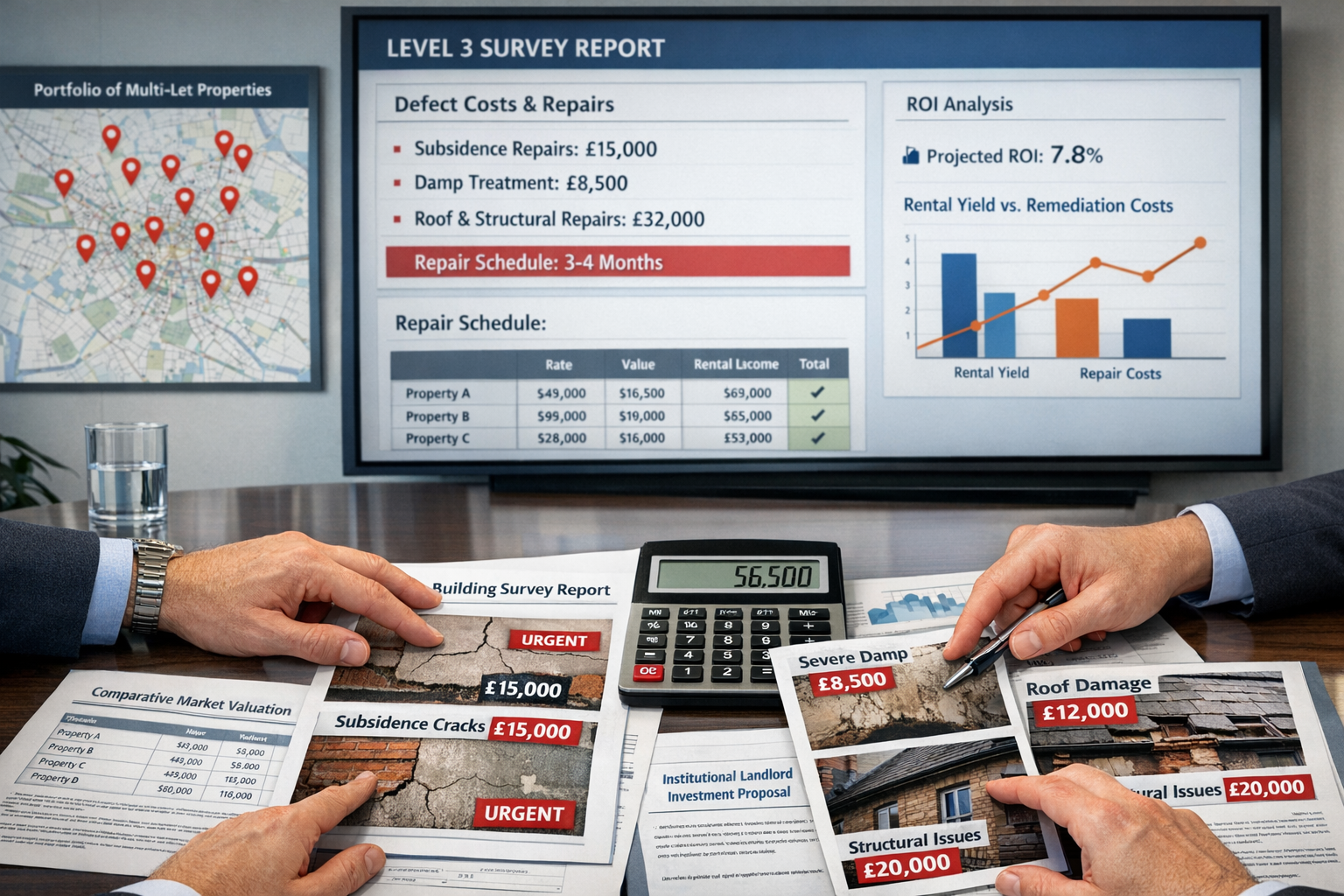
The true value of Level 3 Building Surveys for Buy-to-Let Investments: Spotting Risks as Institutional Landlords Ramp Up in 2026 lies not just in identifying defects, but in leveraging findings to protect and enhance investment returns.
Valuation Cross-Checks Against Market Appraisals
Survey findings often reveal significant discrepancies with estate agent valuations. In 2026's heated market, properties with serious defects may still receive optimistic appraisals based on comparable sales of defect-free properties.
Creating Accurate Investment Models
A comprehensive survey enables realistic financial modeling:
- Identify all repair costs from survey findings
- Prioritize repairs into immediate, short-term, and long-term categories
- Calculate total remediation costs with professional quotes
- Adjust purchase price to reflect true property condition
- Recalculate yield based on realistic costs and potential rental income
For example, a property marketed at £450,000 with an estimated 6% gross yield might have:
- £35,000 in immediate structural repairs
- £15,000 in fire safety upgrades
- £8,000 in damp remediation
- Total: £58,000 in hidden costs
The true investment becomes £508,000, reducing the actual yield to 5.3%—potentially making the investment unviable compared to alternatives.
Negotiation Leverage and Price Adjustments
Armed with detailed survey findings, investors gain substantial negotiation power:
Effective Negotiation Strategies 💰
- Quantified defect costs: Present professional repair quotations based on survey findings
- Risk premiums: Argue for additional discounts on properties with ongoing deterioration risks
- Completion delays: Factor in lost rental income during necessary pre-letting repairs
- Financing impacts: Highlight how defects affect mortgage availability and insurance costs
Successful investors in 2026's competitive market use surveys not to walk away from every imperfect property, but to purchase at prices that maintain target returns despite necessary remediation work.
Decision Framework: Repair, Renegotiate, or Reject
Level 3 survey findings should feed into a structured decision framework:
Green Light Properties ✅
- Minor defects requiring less than 5% of purchase price to remedy
- Good structural condition with routine maintenance needs only
- Compliant building services and safety systems
- Clear ownership and no boundary disputes
Amber Light Properties ⚠️
- Moderate defects requiring 5-15% of purchase price for repairs
- Structural issues that are stabilized or easily remediated
- Non-compliant elements that can be upgraded within budget
- Action: Renegotiate purchase price or request vendor repairs
Red Light Properties 🛑
- Major defects exceeding 15% of purchase price
- Progressive structural failure requiring extensive underpinning
- Multiple building regulation breaches
- Uncertain repair costs or feasibility
- Action: Walk away unless exceptional price reduction justifies risk
Portfolio Acquisition Strategies
Institutional landlords acquiring multiple properties in 2026 use Level 3 surveys differently than individual investors:
Standardized Assessment Protocols
Large-scale investors implement consistent survey standards across portfolios, enabling:
- Comparative risk analysis between properties
- Prioritized capital expenditure planning
- Portfolio-wide maintenance budgeting
- Risk-adjusted pricing for bulk acquisitions
Defect Reserves and Capital Planning
Professional landlords establish defect reserves based on survey findings:
- Immediate repairs: Funded before completion or from purchase price reductions
- Year 1-3 repairs: Budgeted from operational cash flow
- Long-term capital expenditure: Reserved from rental income for major works
This approach prevents the cash flow crises that destroy returns for unprepared investors.
Insurance and Lender Requirements
Survey findings directly impact:
Mortgage Availability
Lenders increasingly require Level 3 surveys for:
- Properties built before 1900
- Non-standard construction
- Properties over certain values
- Known defect histories
Serious structural issues can result in:
- Mortgage offer withdrawal
- Reduced loan-to-value ratios
- Requirements for retention (funds held until repairs completed)
- Higher interest rates reflecting increased risk
Insurance Implications
Buildings insurance for multi-let properties with known defects may face:
- Higher premiums reflecting increased risk
- Specific exclusions for pre-existing conditions
- Requirements for remediation before coverage
- Difficulty obtaining landlord insurance altogether
Compliance with 2026 Regulatory Environment
The regulatory landscape for buy-to-let properties continues evolving. Level 3 surveys must specifically address:
Energy Performance Requirements
- EPC ratings and improvement pathways
- Insulation adequacy
- Heating system efficiency
- Window and door performance
Safety Standards
- Electrical installation condition reports (EICR) recommendations
- Gas safety compliance
- Fire safety measures in HMOs
- Carbon monoxide and smoke detector provisions
Properties requiring extensive compliance upgrades may need:
- £10,000-£30,000 for energy efficiency improvements
- £5,000-£15,000 for electrical upgrades
- £15,000-£25,000 for HMO fire safety compliance
Identifying these costs before purchase prevents post-completion financial shocks.
Working with Specialist Surveyors
Not all surveyors have equal expertise in multi-let properties. Investors should seek:
RICS Chartered Surveyors with specific experience in:
- Multi-occupancy residential buildings
- Period property construction
- Building regulation compliance
- HMO and conversion assessments
For complex properties, consider commissioning specialist defect surveys focusing on specific concerns identified during initial inspection.
Commercial Building Expertise
Larger multi-let investments may benefit from commercial building survey approaches that apply commercial property assessment standards to residential investments.
Conclusion
Level 3 Building Surveys for Buy-to-Let Investments: Spotting Risks as Institutional Landlords Ramp Up in 2026 represents far more than a pre-purchase formality—it's the foundation of successful property investment in an increasingly competitive and complex market.
As institutional landlords deploy unprecedented capital into the buy-to-let sector, individual investors cannot afford to compete on speed alone. The winners in 2026's market will be those who combine decisive action with comprehensive due diligence, using Level 3 surveys to identify both risks and opportunities that others miss.
The comprehensive inspection approach reveals hidden defects that could devastate returns, from structural failures affecting multiple units to non-compliant building systems requiring expensive upgrades. More importantly, detailed survey findings provide the intelligence needed to negotiate realistic purchase prices, create accurate investment models, and plan capital expenditure that protects long-term profitability.
Your Next Steps
For investors currently evaluating buy-to-let opportunities:
- Commission Level 3 surveys for all properties built before 1980, converted buildings, or multi-let investments regardless of age
- Engage RICS Chartered Surveyors with specific multi-occupancy and buy-to-let experience
- Request detailed costings for all identified defects to inform negotiation strategies
- Cross-reference findings against market valuations to identify overpriced properties
- Build defect reserves into investment models before committing capital
- Verify compliance with current building safety and energy efficiency regulations
- Obtain specialist surveys for specific concerns like subsidence, damp, or structural alterations
Remember: In 2026's bullish market, the most expensive survey is the one you didn't commission. A £1,200 Level 3 survey that reveals £50,000 in hidden defects has delivered a 4,000% return on investment before you've even completed the purchase.
The buy-to-let sector offers substantial returns for informed investors who understand that comprehensive due diligence isn't a cost—it's the most profitable investment you'll make in the entire transaction. As institutional landlords raise the bar for professional property acquisition, Level 3 surveys separate sustainable investment strategies from expensive mistakes.
Don't let competitive pressure force you into uninformed decisions. Invest in knowledge first, and properties second. Your future returns depend on what you discover before you buy, not what you hope to find afterward. 🏆