{"cover":"Professional landscape format (1536x1024) hero image featuring bold text overlay 'Expert Witness in Property Valuation Disputes: UK Surveyors Building Court-Ready Evidence' in extra large 70pt white sans-serif font with dark shadow and semi-transparent navy overlay box, positioned in upper third. Background shows split composition: left side displays modern UK courtroom with wooden benches and legal documents, right side shows chartered surveyor examining property blueprints with tablet and measuring tools. Color scheme: deep navy blue, white, gold accents. High contrast, magazine cover quality, editorial style with professional gravitas.","content":["Detailed landscape format (1536x1024) image showing close-up of RICS-compliant expert witness report document on mahogany desk with 'CPR Part 35' heading visible, surrounded by property valuation charts, red-sealed legal documents, fountain pen, and reading glasses. Background shows blurred UK property market graphs trending upward for 2026 recovery context. Professional lighting with warm tones, depth of field effect, legal documentation aesthetic with forensic detail focus.","Wide-angle landscape format (1536x1024) courtroom scene showing expert witness surveyor in professional attire standing in witness box, gesturing toward large display screen showing property boundary dispute diagrams, comparable sales data tables, and valuation methodology flowcharts. Judge and barristers visible in background, courtroom setting authentically British with oak paneling. Dramatic but professional lighting, serious atmosphere, focus on evidence presentation and cross-examination preparation.","Detailed landscape format (1536x1024) infographic-style image displaying UK property market recovery indicators for 2026: split-screen showing 'before and after' property valuations with percentage change arrows, calendar highlighting critical April 2026 deadline, stacked comparison charts of residential versus commercial property values, RICS professional standards badge, and surveyor's toolkit including laser measure and inspection camera. Clean, modern design with data visualization elements, blue and green color scheme representing growth and stability."]}
When property valuations clash in court, the difference between winning and losing often hinges on one critical factor: the quality of expert witness evidence. In 2026, as the UK property market shows signs of recovery after years of uncertainty, Expert Witness in Property Valuation Disputes: How UK Surveyors Build Court‑Ready Evidence in a Recovering Market has become more crucial than ever. Whether it's a boundary disagreement between neighbors, a commercial lease dilapidation claim, or a contested compulsory purchase order, chartered surveyors must navigate complex legal frameworks while translating technical property data into compelling courtroom testimony.
The stakes are high. A poorly prepared expert witness report can crumble under cross-examination, leaving clients exposed to significant financial losses. Conversely, a meticulously crafted, CPR-compliant report backed by robust market evidence can settle disputes before they ever reach trial—saving time, money, and reputational damage.
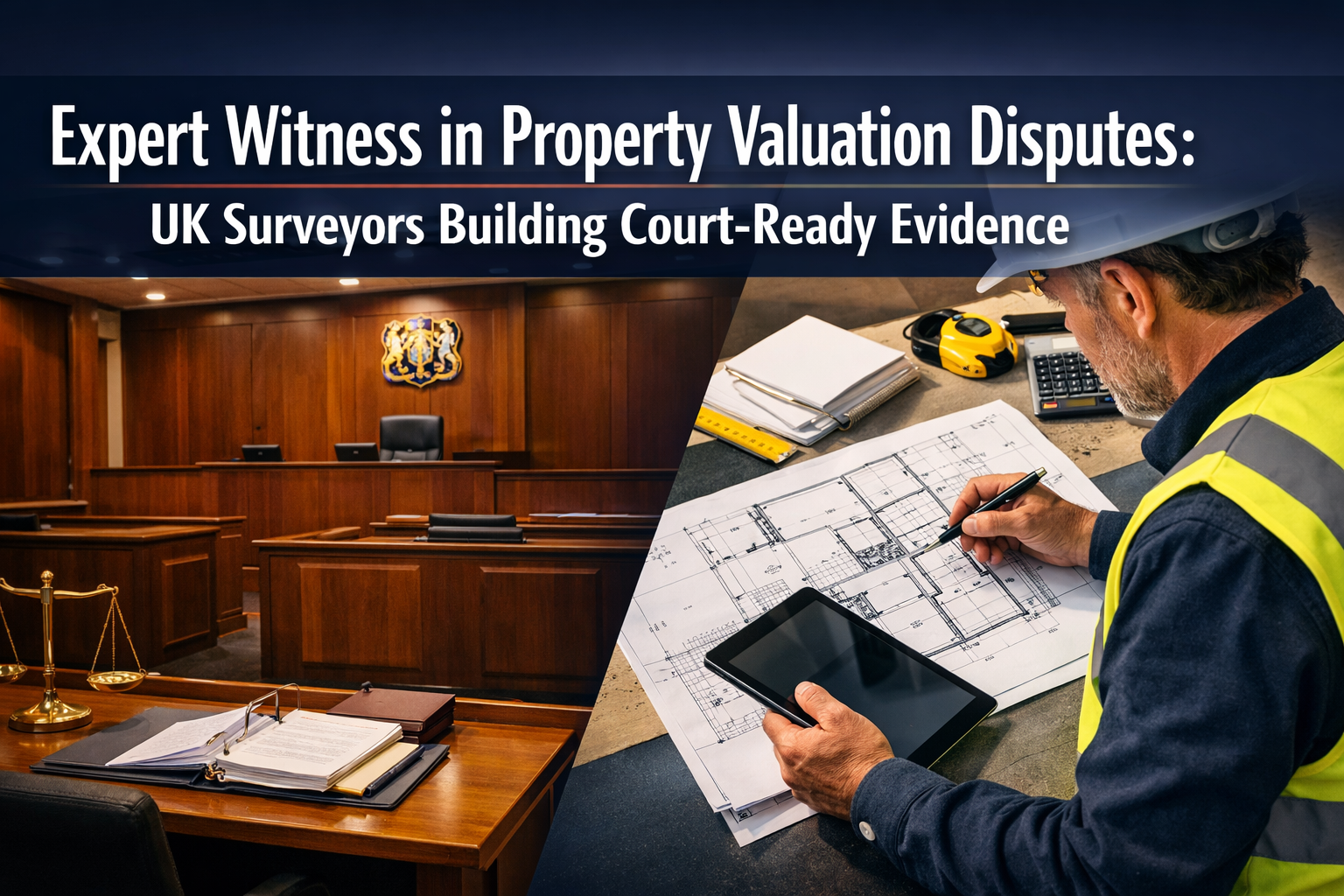
Key Takeaways
- 🏛️ CPR Part 35 compliance is non-negotiable: Expert witnesses owe their primary duty to the court, not the client, requiring complete independence and transparency in all property valuation evidence.
- 📊 2026 market recovery affects valuation evidence: Shifting property values, the critical April 2026 rateable value deadline, and emerging market trends directly impact how surveyors build defensible evidence for disputes.
- 🔍 Methodology matters more than conclusions: Courts scrutinize the valuation approach, comparable evidence, and adjustment rationale more closely than the final figure itself.
- ⚖️ Cross-examination preparation is essential: Expert witnesses must anticipate challenges to their assumptions, defend their methodology, and remain composed under adversarial questioning.
- 📋 Comprehensive documentation prevents disputes: Detailed inspection notes, photographic evidence, market research, and clear audit trails strengthen expert witness credibility and reduce litigation risk.
Understanding the Expert Witness Role in Property Valuation Disputes
The Legal Framework: CPR Part 35 and Expert Duties
Expert witnesses in property valuation disputes operate under strict legal obligations defined by the Civil Procedure Rules (CPR) Part 35. Unlike standard property valuation services, expert witness work requires surveyors to serve the court first and foremost—not the party instructing them.
This fundamental principle shapes every aspect of Expert Witness in Property Valuation Disputes: How UK Surveyors Build Court‑Ready Evidence in a Recovering Market. Chartered surveyors must:
- Maintain complete independence from the instructing party
- Provide objective opinions based solely on professional expertise
- Clearly identify assumptions and limitations in their analysis
- Stay within their area of competence and acknowledge when specialist input is needed
- Prepare reports that assist the court in understanding technical property matters
RICS (Royal Institution of Chartered Surveyors) regulation adds another layer of professional standards. Expert witness surveyors must be RICS-regulated and work according to their professional guidance [4]. This dual accountability—to both the court and the professional body—ensures rigorous quality control.
Types of Property Disputes Requiring Expert Evidence
Property valuation disputes span a wide spectrum of scenarios, each requiring specialized knowledge and evidence-building approaches:
Boundary and Easement Disputes 🏡
Neighbors clash over fence lines, right of way access, or encroachments. Expert witnesses provide measured surveys, historical title analysis, and valuation impact assessments.
Commercial Lease Dilapidations 🏢
Landlords and tenants disagree on repair obligations and associated costs. Commercial property surveyors prepare schedules of condition, assess diminution in value, and quantify reasonable repair costs.
Compulsory Purchase and Compensation 🚧
When public authorities acquire private property, disputes arise over fair compensation. Expert witnesses determine market value, disturbance costs, and severance impacts.
Matrimonial and Probate Valuations 💍
Divorce settlements and estate distributions require independent probate valuations that withstand legal scrutiny from multiple parties with competing interests.
Professional Negligence Claims ⚠️
When surveyors are accused of providing incorrect valuations or missing critical defects, expert witnesses evaluate whether professional standards were met and quantify resulting losses.
Rating and Tax Appeals 📊
Business rate assessments and capital gains tax valuations often lead to disputes with HMRC or the Valuation Office Agency, requiring expert evidence on appropriate valuation methodology.
According to industry data, expert witnesses assist courts across multiple areas including commercial property, compulsory purchase orders, planning, development, retail, and valuation matters [2]. This breadth demands versatility and continuous professional development.
The Shift Toward Alternative Dispute Resolution
An important trend in 2026 is the increasing preference for mediation and alternative dispute resolution (ADR) over full court proceedings. Mediation is becoming the preferred method for settling property disputes, with qualifications in mediation becoming more common among expert witnesses [2].
This shift affects how surveyors build evidence. Rather than preparing solely for adversarial cross-examination, expert witnesses now frequently participate in:
- Joint expert meetings where opposing experts identify areas of agreement and narrow disputes
- Mediation sessions requiring flexible, solution-oriented approaches
- Expert determination where the surveyor acts as decision-maker rather than advisor
- Pre-action protocols encouraging early disclosure and settlement discussions
"The best expert witness report is one that never sees a courtroom—because it's so thorough and defensible that it facilitates early settlement."
Building CPR-Compliant Expert Witness Reports for Property Disputes
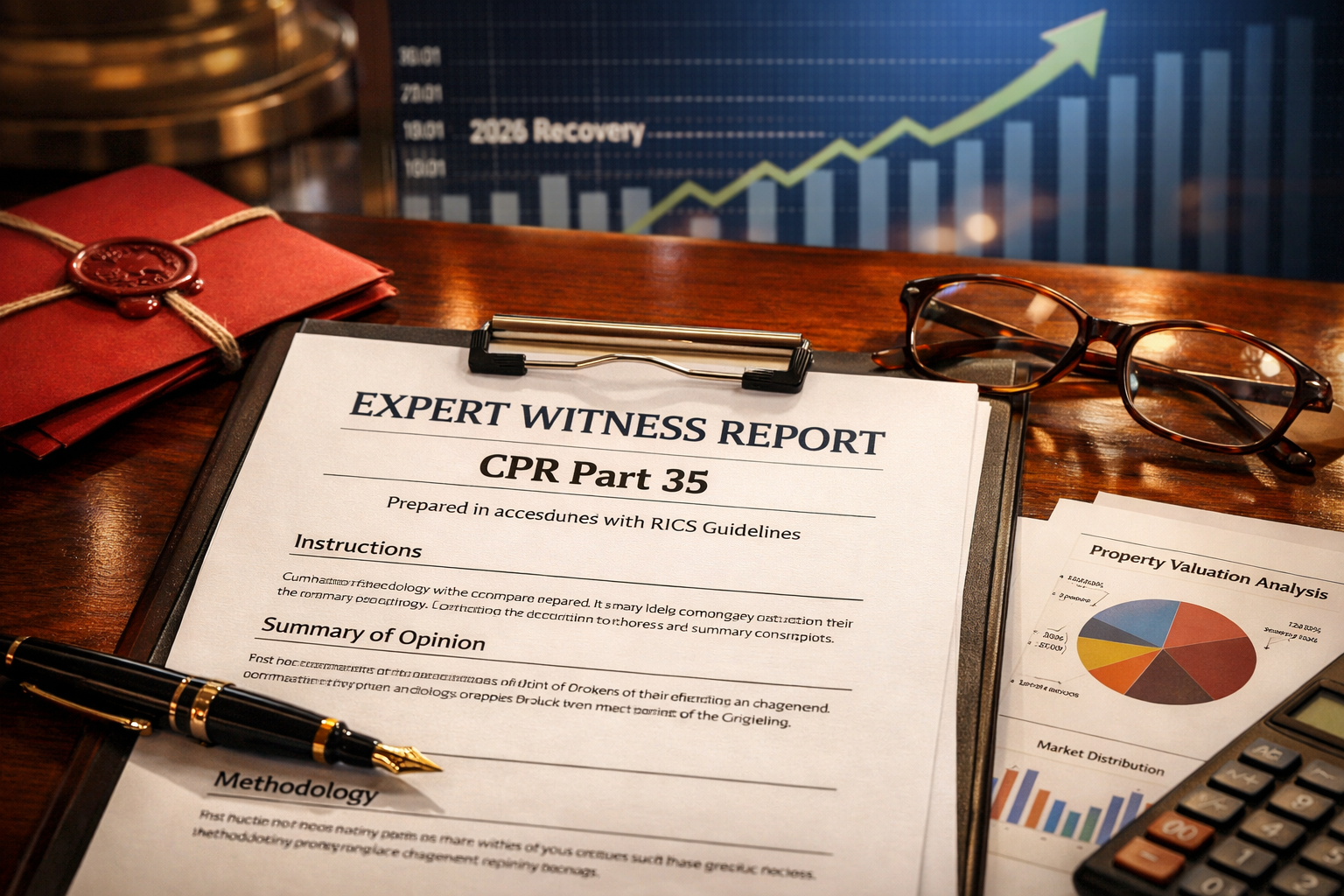
Essential Components of a Court-Ready Valuation Report
A CPR-compliant expert witness report follows a structured format that courts expect and opposing counsel will scrutinize. Expert Witness in Property Valuation Disputes: How UK Surveyors Build Court‑Ready Evidence in a Recovering Market requires mastering these essential components:
1. Statement of Truth and Expert Declaration ✍️
Every report must include a declaration that the expert understands their duty to the court, has complied with that duty, and is aware of the consequences of failing to do so. This isn't mere formality—it's a legal requirement that can invalidate evidence if omitted.
2. Qualifications and Experience 🎓
Courts need to assess the expert's credibility. This section should detail:
- Professional qualifications (MRICS, FRICS)
- Years of experience in the specific property sector
- Relevant expert witness experience
- Specialist knowledge applicable to the dispute
3. Instructions and Background 📋
Transparency about what the expert was asked to do and what information they received is crucial. This includes:
- Letter of instruction and any subsequent clarifications
- Documents reviewed (contracts, plans, photographs, previous reports)
- Site inspections undertaken
- Assumptions made (especially about facts not personally verified)
4. Property Description and Inspection Findings 🏠
Detailed observations from site visits form the factual foundation. For commercial building surveys or residential inspections, this should include:
- Location, access, and surrounding area characteristics
- Construction type, age, and condition
- Floor areas and accommodation schedule
- Defects, repairs, or unusual features
- Photographic evidence with clear labeling
5. Valuation Methodology and Approach 📐
This is where technical expertise becomes transparent. Experts must explain:
- Which valuation method was selected (comparative, investment, residual, profits, depreciated replacement cost)
- Why that method is appropriate for this property and dispute
- How comparable evidence was selected and adjusted
- Market conditions at the relevant valuation date
For instance, in a 2026 recovering market context, experts might need to explain how they've accounted for rising values, whether they've adjusted for post-pandemic trends, and how recent comparable transactions reflect current market sentiment.
6. Comparable Evidence and Analysis 📊
The heart of most property valuations lies in comparable transactions. Expert witnesses must:
- Present relevant sales, lettings, or rental evidence
- Explain adjustments for differences in location, size, condition, timing
- Provide source references that can be independently verified
- Address any gaps or weaknesses in the comparable evidence
A useful format is a comparison table:
| Property | Date | Price/Rent | Size | Adjustment Factors | Adjusted Value |
|---|---|---|---|---|---|
| Comparable A | Jan 2026 | £450,000 | 1,200 sq ft | -5% (condition) | £427,500 |
| Comparable B | Nov 2025 | £480,000 | 1,350 sq ft | +3% (market movement), -10% (location) | £447,120 |
| Subject Property | Mar 2026 | £445,000 | 1,250 sq ft | Analysis reconciliation | £445,000 |
7. Opinion and Conclusions 💡
The expert's professional opinion should be clearly stated, with:
- The valuation figure or range
- Confidence level and any caveats
- Alternative scenarios if appropriate
- Response to any counter-arguments already raised
8. Statement of Compliance ✅
The report must confirm compliance with CPR Part 35 and RICS professional standards, including the expert's understanding that their duty is to the court.
Common Pitfalls That Undermine Expert Credibility
Even experienced surveyors can fall into traps that damage their expert witness effectiveness:
❌ Advocacy Creep
Gradually adopting the client's position rather than maintaining independence. Courts quickly detect when experts become advocates, destroying credibility.
❌ Insufficient Comparable Evidence
Relying on too few comparables, using outdated transactions, or failing to adequately explain adjustments. In a recovering 2026 market, using 2024 comparables without market movement adjustments is particularly problematic.
❌ Assumptions Without Disclosure
Making critical assumptions (about planning permission, structural condition, or market trends) without clearly flagging them as assumptions rather than verified facts.
❌ Overstepping Expertise Boundaries
Offering opinions on legal matters, structural engineering, or other specialist areas without appropriate qualifications. When complex defects arise, coordinating with specialist defect surveys is essential.
❌ Inconsistent Methodology
Applying different valuation approaches to similar properties without justification, or changing methodology between draft and final reports without explanation.
❌ Poor Documentation
Failing to keep detailed inspection notes, contemporaneous records, or audit trails that support the final opinion. If you can't reconstruct how you reached your conclusion, neither can the court.
Integrating Market Recovery Context into 2026 Evidence
The UK property market's recovery trajectory in 2026 creates specific challenges for Expert Witness in Property Valuation Disputes: How UK Surveyors Build Court‑Ready Evidence in a Recovering Market. Surveyors must address:
Time-Sensitive Valuation Dates ⏰
When disputes involve valuations from 2023-2024 (during market uncertainty) versus 2026 (during recovery), experts must clearly distinguish between retrospective and current valuations. The valuation date determines which market conditions apply.
The April 2026 Rateable Value Deadline 📅
After April 1, 2026, only future rateable values can be modified, creating a critical window for property owners seeking adjustments on their current valuations [3]. Expert witnesses involved in rating appeals must account for this deadline's impact on strategy and evidence.
Sector-Specific Recovery Patterns 🏘️
Commercial, residential, and industrial sectors are recovering at different rates. Expert evidence must reflect sector-specific trends rather than applying broad market generalizations.
Inflation and Construction Cost Impacts 💷
Rising construction costs affect depreciated replacement cost valuations and dilapidation assessments. Experts should reference current BCIS indices and explain cost movement since the relevant date.
Preparing for Cross-Examination and Courtroom Testimony
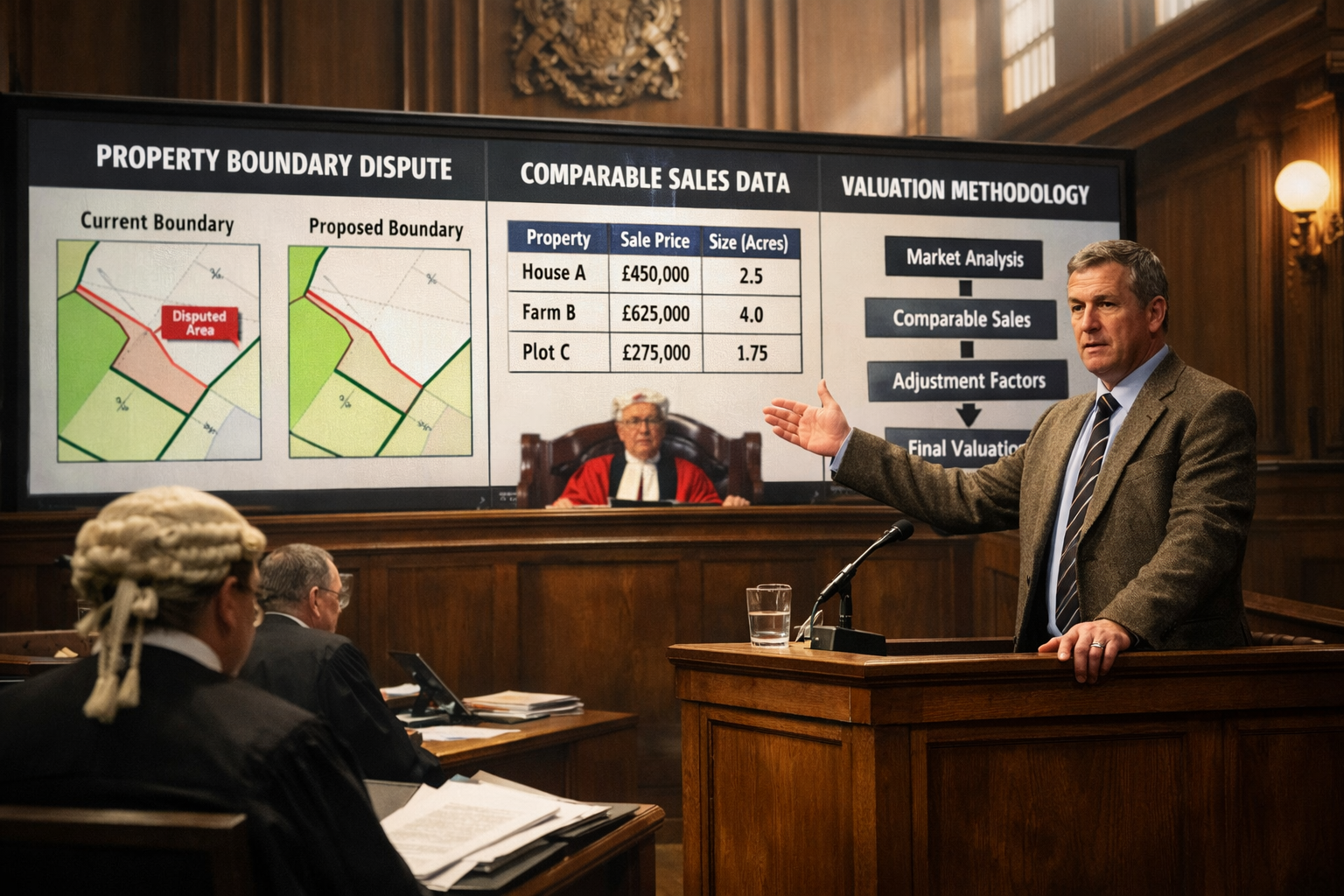
Anticipating Challenges to Valuation Evidence
Cross-examination is where expert witness credibility is truly tested. Opposing counsel will probe every assumption, challenge every comparable, and test the expert's knowledge and composure. Expert Witness in Property Valuation Disputes: How UK Surveyors Build Court‑Ready Evidence in a Recovering Market demands thorough preparation for these challenges.
Common Cross-Examination Tactics ⚔️
The Comparable Challenge
"Why did you use a property 2 miles away when there's a sale next door?"
Experts must be prepared to explain why certain comparables were excluded (different property type, distressed sale, non-arm's length transaction) and why selected comparables are more relevant.
The Methodology Attack
"Isn't the investment method more appropriate than the comparative method for this property?"
Understanding alternative methodologies and articulating why your chosen approach is superior for this specific dispute is essential.
The Assumption Trap
"You assumed planning permission would be granted, but that's speculation, isn't it?"
Clear disclosure of assumptions in the report provides protection. Experts should explain the basis for assumptions (planning history, policy compliance, professional judgment) without overstating certainty.
The Credentials Question
"Have you ever valued a property exactly like this before?"
While exact experience is rare, experts should demonstrate relevant transferable experience and explain how their broader expertise applies.
The Inconsistency Probe
"In your report for another case, you said X, but here you're saying Y. Which is correct?"
Consistency across cases matters, but context-specific differences are legitimate. Experts must explain why different circumstances justify different approaches.
Maintaining Independence Under Pressure
The duty to the court doesn't end when the report is filed. During testimony, experts must:
✅ Acknowledge Limitations
Admitting when information is unavailable or when an opinion is uncertain actually strengthens credibility. "I don't know" is sometimes the most honest and defensible answer.
✅ Concede Valid Points
When opposing counsel makes a fair criticism, acknowledging it demonstrates objectivity. "That's a valid observation, and I've adjusted my opinion accordingly" shows professional integrity.
✅ Avoid Defensive Reactions
Cross-examination is adversarial by design. Remaining calm, professional, and focused on assisting the court—rather than "winning" arguments—maintains expert credibility.
✅ Explain Technical Concepts Clearly
Judges and juries aren't property professionals. Experts must translate technical valuation concepts into accessible language without oversimplifying or condescending.
✅ Reference the Report
The written report is the foundation. Experts should refer to specific sections, tables, or photographs when answering questions, reinforcing that testimony is consistent with documented analysis.
Joint Expert Meetings and Narrowing Disputes
Before trial, courts often order joint expert meetings where opposing experts discuss the case without lawyers present. These meetings aim to:
- Identify agreed facts (property description, market conditions, legal framework)
- Narrow areas of disagreement (specific comparable adjustments, methodology choices)
- Produce a joint statement documenting agreements and remaining disputes
- Facilitate settlement by showing parties where expert opinion converges
Effective participation in joint meetings requires:
Preparation and Openness 📖
Reviewing the opposing expert's report thoroughly, identifying genuine technical disagreements versus client-driven positions, and approaching discussions professionally.
Focus on Methodology 🔬
Discussing why each expert selected their approach, what evidence supports it, and whether alternative methodologies might be equally defensible.
Realistic Valuation Ranges 📏
Recognizing that property valuation involves professional judgment, not mathematical precision. A range of defensible values often exists, and acknowledging this can facilitate resolution.
Documentation 📝
Taking detailed notes during meetings and ensuring the joint statement accurately reflects discussions. Ambiguous joint statements can create problems at trial.
How 2026 Market Conditions Shape Expert Witness Strategy
Leveraging Recovery Data in Valuation Evidence
The UK property market's 2026 recovery provides both opportunities and challenges for expert witnesses. Understanding how to incorporate current market intelligence strengthens evidence quality.
Transaction Volume and Velocity 📈
Increased market activity in 2026 means more comparable evidence is available. Experts can demonstrate value conclusions with robust transaction data rather than relying on sparse evidence from slower periods.
Price Trend Analysis 📊
Recovery markets show upward price momentum. Experts must decide whether to:
- Apply time adjustments to older comparables
- Weight recent transactions more heavily
- Explain whether current trends are sustainable or speculative
For disputes involving retrospective valuations (e.g., a 2024 valuation date disputed in 2026), experts must resist hindsight bias—valuing the property as it would have been perceived in 2024, not with 2026 knowledge.
Sector-Specific Considerations 🏗️
Different property sectors are experiencing varied recovery patterns:
| Sector | 2026 Recovery Status | Expert Witness Implications |
|---|---|---|
| Residential | Strong recovery in prime locations; regional variation | Location adjustments critical; micro-market analysis essential |
| Commercial Office | Hybrid work impact continuing; flight to quality | Specification and amenity adjustments significant |
| Industrial/Logistics | Sustained demand; supply constraints | Scarcity value; location premium near transport hubs |
| Retail | Bifurcated market; experiential vs. traditional | Tenant covenant and footfall data crucial |
| Student Housing | Recovery following pandemic disruption | Occupancy rates and university enrollment trends relevant |
Expert witnesses must demonstrate sector-specific knowledge and explain how their valuation reflects current market dynamics.
Addressing High-Value Property Challenges
Properties valued over £2 million face particular challenges in 2026, including:
Limited Comparable Evidence 🏰
Fewer transactions at the high end mean experts must sometimes look further afield geographically or temporally, requiring more substantial adjustment explanations.
Unique Features and Bespoke Elements ✨
High-value properties often have distinctive characteristics (architectural significance, exceptional views, extensive grounds) that don't appear in typical comparables. Experts must explain how they've valued these elements.
Buyer Pool Considerations 👥
The market for high-value properties is thinner and more susceptible to individual buyer preferences. Expert evidence should acknowledge this while maintaining objectivity.
Tax and Regulatory Factors 💼
Capital gains tax, stamp duty land tax, and inheritance tax considerations affect high-value property markets. While experts shouldn't provide tax advice, understanding how these factors influence buyer behavior is important for market analysis.
For specialized valuations like capital gains tax valuation or divorce valuation, experts must ensure their methodology aligns with the specific legal and tax framework governing the dispute.
Technology and Data in Modern Expert Evidence
2026 expert witnesses increasingly leverage technology to strengthen evidence:
Digital Inspection Tools 📱
Laser measurement devices, thermal imaging, drone photography, and 3D scanning provide precise, verifiable data that enhances report credibility.
Market Data Platforms 💻
Subscription databases (Land Registry, CoStar, EGi) provide comprehensive transaction evidence with search and filtering capabilities that support systematic comparable selection.
Visualization and Presentation 🖼️
Heat maps, comparable location maps, timeline graphics, and interactive presentations help courts understand complex valuation evidence. Visual aids must be accurate and not misleading.
Audit Trails and Metadata 🔍
Digital workflows create automatic documentation of when inspections occurred, when data was accessed, and how analysis evolved—providing transparent evidence of the expert's process.
However, technology doesn't replace professional judgment. Automated valuation models (AVMs) and algorithm-driven valuations lack the nuance and property-specific insight that expert witnesses provide. Courts recognize this distinction, particularly in complex disputes.
Conclusion: Excellence in Expert Witness Practice
Expert Witness in Property Valuation Disputes: How UK Surveyors Build Court‑Ready Evidence in a Recovering Market demands a unique combination of technical expertise, legal understanding, communication skills, and professional integrity. As the UK property market recovers in 2026, the quality of expert evidence becomes even more critical—with shifting values, emerging market trends, and critical regulatory deadlines affecting how disputes are resolved.
The most effective expert witnesses understand that their role transcends simply providing an opinion. They educate courts, facilitate settlement, narrow disputes through professional dialogue, and maintain unwavering independence even under adversarial pressure.
Actionable Next Steps for Property Professionals
For Surveyors Developing Expert Witness Capabilities 🎯
- Invest in CPR Part 35 training and RICS expert witness guidance to understand legal obligations
- Build sector-specific expertise in commercial, residential, or specialist property types
- Develop clear, accessible writing skills that translate technical concepts for legal audiences
- Practice cross-examination scenarios through mock trials or mentorship with experienced experts
- Maintain detailed records of all inspections, research, and analysis to support future expert work
For Property Owners and Legal Teams Instructing Experts 📋
- Select RICS-regulated surveyors with relevant sector experience and demonstrated expert witness credentials
- Provide comprehensive instructions including all relevant documents, clear valuation dates, and specific questions to be addressed
- Allow adequate time for thorough inspection, research, and report preparation—rushed expert reports are vulnerable to challenge
- Understand the independence requirement and avoid pressuring experts toward particular conclusions
- Consider early expert involvement to assess dispute strength before committing to litigation
For Those Facing Property Disputes ⚖️
- Obtain independent expert advice early to understand the strength of your position
- Preserve evidence including photographs, correspondence, and contemporaneous records
- Consider alternative dispute resolution before committing to full litigation—mediation often achieves better outcomes at lower cost
- Understand valuation methodology so you can assess whether expert opinions are reasonable
- Be realistic about valuation ranges rather than expecting absolute precision
The property market's 2026 recovery creates both opportunities and complexities for valuation disputes. Expert witnesses who combine rigorous methodology, market knowledge, and professional integrity will continue to play an essential role in achieving fair, evidence-based resolutions.
Whether you're a surveyor building expert witness capabilities, a legal professional instructing experts, or a property owner navigating a dispute, understanding how chartered surveyors build court-ready evidence in today's market is essential for success. The investment in quality expert evidence—through proper RICS home surveys, comprehensive commercial valuations, and thorough dispute preparation—pays dividends in credible, defensible outcomes that withstand legal scrutiny.
References
[1] Property Valuation Surveyors – https://www.comparemymove.com/guides/surveying/property-valuation-surveyors
[2] Expert Witness Valuations – https://winfieldssurveyors.co.uk/rics-valuations/expert-witness-valuations/
[3] Post Budget 2026 Valuation Challenges Surveyor Strategies For High Value Properties Over 2 Million – https://nottinghillsurveyors.com/blog/post-budget-2026-valuation-challenges-surveyor-strategies-for-high-value-properties-over-2-million
[4] Expert Witness – https://www.ricsfirms.com/residential/legal-issues/expert-witness/?search=true&location=SE26&service=105