
The UK property market stands on the brink of its most significant transformation in decades. As 2026 unfolds, the Government Property Condition Assessment Reforms 2026: How Mandatory Upfront Surveys Will Transform Building Survey Practice represents a fundamental shift that will reshape when, how, and why building surveys are conducted. For surveying firms, property professionals, and the broader real estate sector, these reforms signal the end of the traditional reactive survey model and the beginning of a proactive, upfront assessment era that promises to revolutionize transaction timelines, reduce fall-through rates, and elevate professional standards across the industry. 🏗️
The proposed mandatory upfront property condition assessments will fundamentally alter the surveying landscape. No longer will building surveys occur after offers are accepted—instead, they'll become a prerequisite for marketing properties. This operational pivot carries profound implications for surveying capacity, business models, pricing structures, and professional standards.
Key Takeaways
- Extended Implementation Timeline: RICS has confirmed that Government Property Condition Assessment Reforms 2026 require a minimum 24-month implementation period to allow for capacity building and standards development [1]
- Operational Shift: Surveying firms must transition from reactive, post-offer surveys to proactive, pre-marketing assessments, fundamentally changing workflow and resource allocation
- Capacity Challenges: The industry faces significant workforce and training requirements to meet anticipated demand for mandatory upfront condition assessments
- Business Model Evolution: Traditional fee structures and client relationships will transform as sellers, rather than buyers, become the primary commissioning parties
- Quality Standardization: New frameworks will establish consistent reporting standards across RICS building surveys and condition assessments
Understanding the Government Property Condition Assessment Reforms 2026
The Regulatory Framework Taking Shape
The Government Property Condition Assessment Reforms 2026: How Mandatory Upfront Surveys Will Transform Building Survey Practice stems from years of consultation aimed at addressing chronic inefficiencies in the UK property transaction process. The current system—where surveys typically occur after offers are accepted—has long been criticized for contributing to high transaction fall-through rates, extended completion times, and unnecessary costs for buyers who discover defects late in the process.
Key Reform Elements Include:
- Mandatory Pre-Marketing Assessments: Property condition surveys must be completed before properties are actively marketed
- Standardized Reporting Formats: Consistent templates and quality benchmarks across all condition assessments
- Seller Responsibility: Property sellers will commission and pay for initial condition assessments
- Enhanced Transparency: Survey findings must be disclosed to prospective buyers early in the transaction
- Professional Accreditation: Stricter requirements for surveyors conducting upfront assessments
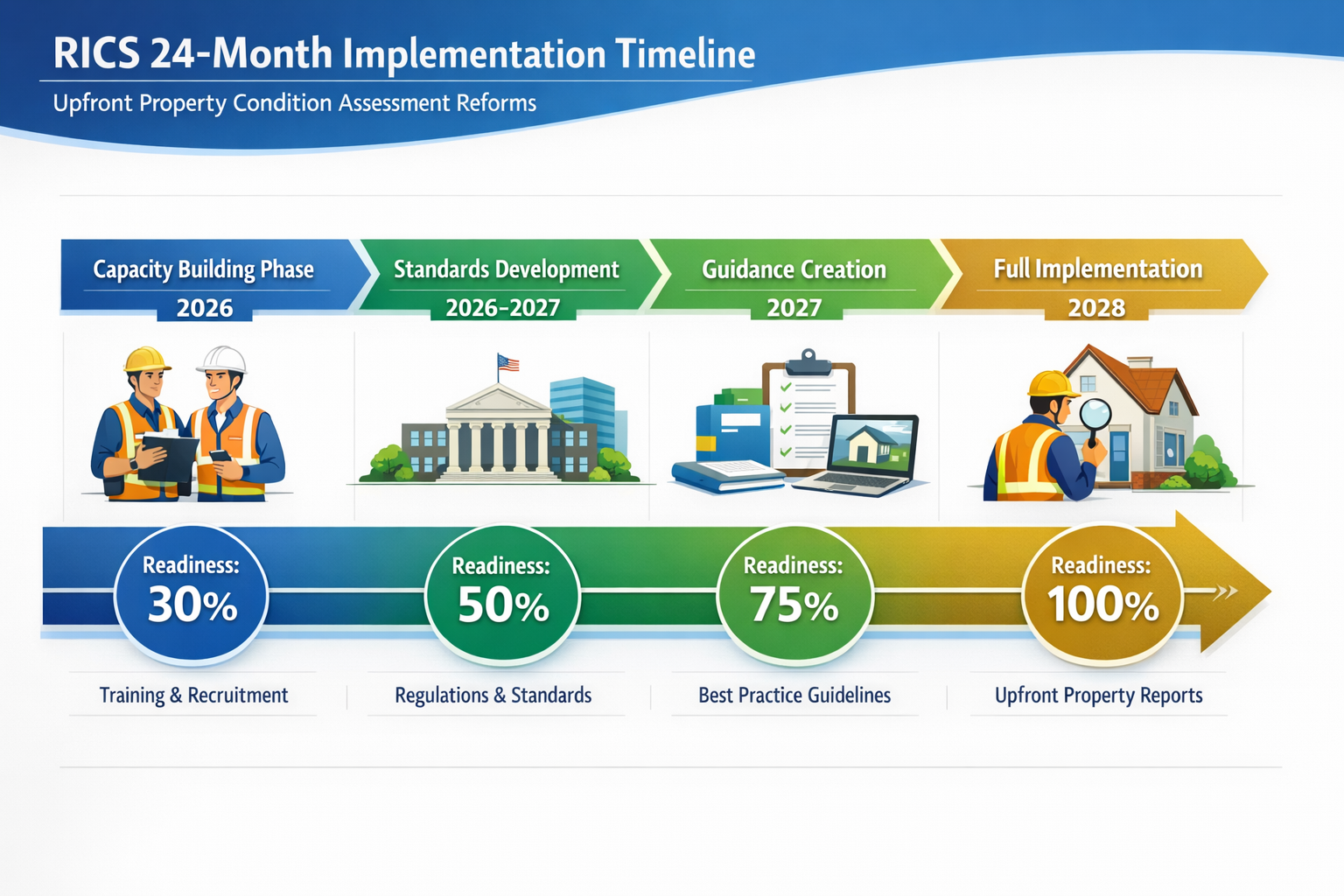
The Royal Institution of Chartered Surveyors (RICS) has been instrumental in shaping these reforms and has advised the government that implementation will require a minimum 24-month timeline to allow for capacity building, standards development, and comprehensive guidance creation [1]. This realistic timeframe acknowledges the substantial operational adjustments required across the surveying profession.
Why These Reforms Matter Now
The UK property market has experienced persistent challenges that these reforms aim to address:
| Current Problem | Reform Solution | Expected Outcome |
|---|---|---|
| 30% transaction fall-through rate | Upfront defect disclosure | Reduced failed transactions |
| 12-16 week average completion time | Pre-marketing surveys | Faster completion timelines |
| Buyer bears survey costs for failed purchases | Seller commissions initial assessment | Reduced buyer financial risk |
| Inconsistent survey quality | Standardized reporting frameworks | Improved professional standards |
| Limited property condition transparency | Mandatory disclosure requirements | Better-informed purchasing decisions |
These reforms align with broader government objectives to modernize property transactions and bring the UK in line with international best practices observed in countries like Australia and New Zealand, where vendor-commissioned reports are standard.
How Mandatory Upfront Surveys Will Transform Building Survey Practice
The Operational Shift for Surveying Firms
The transition from reactive to proactive surveying represents the most significant operational change in modern surveying history. Traditional practice has centered on buyers commissioning structural surveys after making offers, creating a demand pattern that follows property sales activity. Under the reformed model, surveying demand will precede marketing activity, fundamentally altering workflow management.
Traditional Survey Model:
- Property listed for sale
- Buyer views property
- Buyer makes offer
- Offer accepted
- Buyer commissions survey
- Survey reveals defects
- Renegotiation or transaction collapse
Reformed Survey Model:
- Seller commissions condition assessment
- Survey completed and defects identified
- Property marketed with survey available
- Buyer reviews existing survey
- Buyer makes informed offer
- Faster progression to completion
This shift requires surveying firms to develop new client relationships with sellers and estate agents rather than primarily serving buyers. Marketing strategies, fee structures, and service delivery models must all adapt accordingly.
Capacity Building and Workforce Requirements
RICS's insistence on a 24-month implementation period reflects genuine concerns about industry capacity [1]. The surveying profession currently lacks sufficient workforce to handle the anticipated surge in upfront assessments, particularly during the transition period when both traditional buyer-commissioned surveys and new seller-commissioned assessments will coexist.
Capacity Challenges Include:
- Surveyor Shortage: Existing workforce may need to expand by an estimated 20-30% to meet demand
- Training Requirements: Surveyors must be trained on new standardized reporting frameworks and quality benchmarks
- Geographic Coverage: Rural and underserved areas may face particular capacity constraints
- Specialization Needs: Increased demand for specialist defect surveys and damp surveys as upfront assessments identify issues requiring deeper investigation
Surveying firms that invest early in recruitment, training, and systems development will gain competitive advantages as reforms take effect. Partnerships with local chartered surveyors across different regions may help address geographic capacity gaps.
Standards Development and Quality Assurance
The Government Property Condition Assessment Reforms 2026: How Mandatory Upfront Surveys Will Transform Building Survey Practice necessitates comprehensive standards development to ensure consistency and quality across all upfront assessments. RICS is developing detailed guidance covering:
Technical Standards:
- Minimum inspection requirements for different property types
- Standardized condition rating systems
- Consistent defect categorization (Category 1, 2, and 3 defects)
- Required photographic documentation
- Reporting templates and formats
Quality Assurance Mechanisms:
- Surveyor accreditation requirements
- Continuing professional development (CPD) mandates
- Audit and compliance frameworks
- Professional indemnity insurance standards
- Complaint and redress procedures
These standards will likely draw from existing frameworks used in stock condition surveys and commercial building surveys, adapted for the residential upfront assessment context.
Business Implications for Surveying Practices
Fee Structures and Pricing Models
The shift from buyer-commissioned to seller-commissioned surveys fundamentally changes pricing dynamics. Sellers commissioning upfront assessments have different priorities and price sensitivities than buyers seeking detailed surveys for specific properties they intend to purchase.
Emerging Pricing Considerations:
💰 Volume Discounts: Estate agencies may negotiate bulk rates for multiple properties, creating pressure on per-survey fees
💰 Tiered Service Levels: Basic mandatory assessments versus enhanced comprehensive surveys offering greater detail
💰 Package Pricing: Combined offerings including homebuyer surveys, valuations, and specialist investigations
💰 Subscription Models: Monthly or annual arrangements with estate agencies or property developers for ongoing survey services
💰 Buyer Supplement Options: Additional fees for buyers wanting more detailed investigations beyond the mandatory upfront assessment
Surveying firms must carefully balance competitive pricing to win seller and agency business while maintaining quality standards and professional margins. The difference between Level 2 and Level 3 surveys may become more pronounced as mandatory upfront assessments establish a baseline level of investigation.
Client Relationship Management
Traditional surveying practice has centered on serving buyers—individuals making significant financial decisions who value detailed, comprehensive assessments. The reformed model introduces new primary clients:
Property Sellers:
- Motivated by cost minimization and speed
- May prefer less detailed assessments that meet minimum requirements
- Concerned about defect disclosure impacting sale price
- May commission surveys for multiple properties simultaneously
Estate Agents:
- Seek reliable, consistent survey partners
- Prioritize fast turnaround times
- Value clear, accessible reporting for prospective buyers
- May become significant referral sources
Property Developers:
- Require surveys for multiple units in developments
- Need standardized reporting across property portfolios
- May integrate surveys into marketing materials
Successful surveying firms will develop relationship management strategies tailored to these different client types while maintaining professional independence and quality standards.
Technology and Digital Transformation
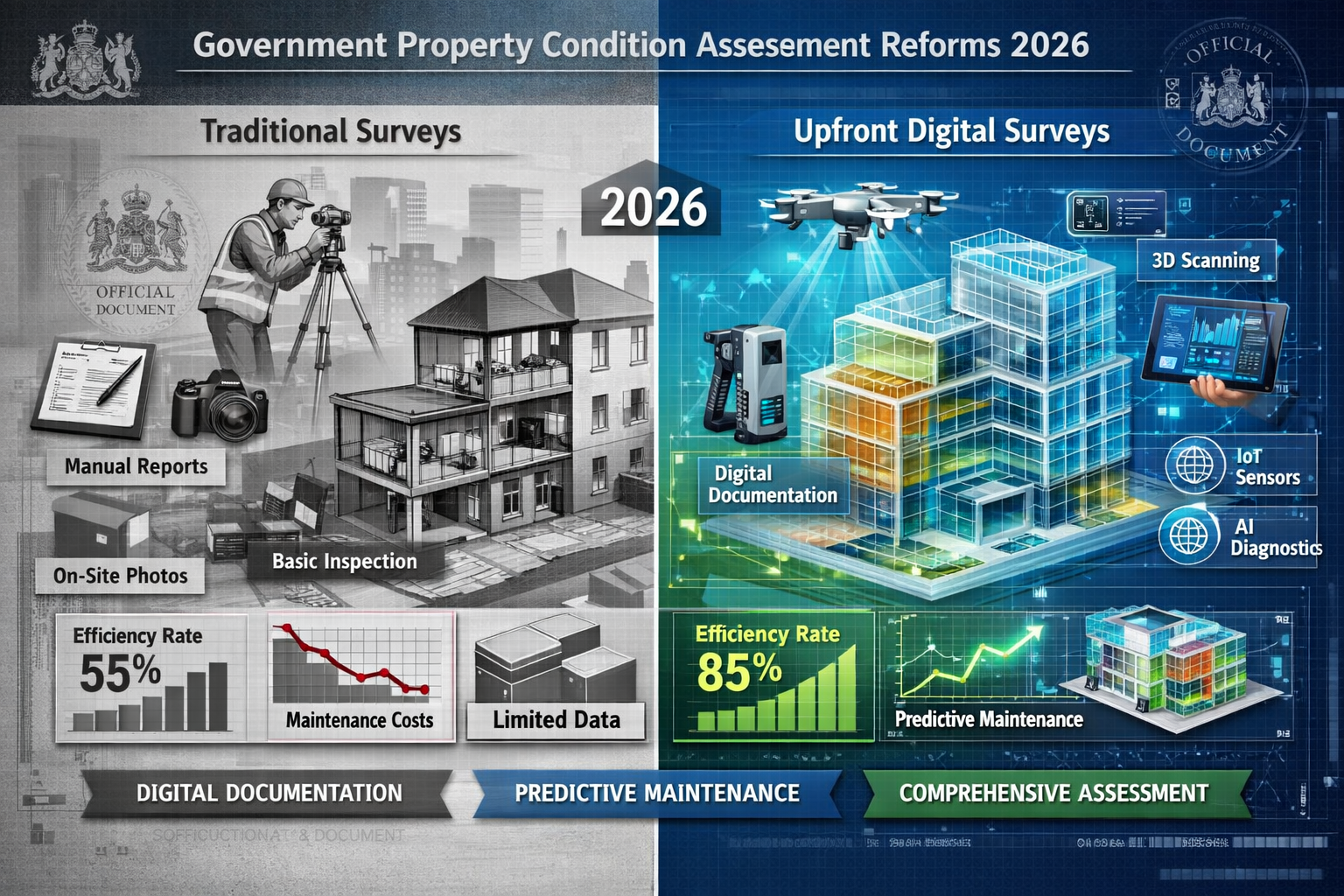
The Government Property Condition Assessment Reforms 2026: How Mandatory Upfront Surveys Will Transform Building Survey Practice accelerates the need for digital transformation within surveying practices. Manual, paper-based processes cannot efficiently handle the increased volume and standardization requirements.
Technology Investments Required:
📱 Digital Inspection Tools: Tablets and mobile apps for on-site data collection and photography
📱 Reporting Software: Automated systems generating standardized reports from inspection data
📱 Client Portals: Secure online platforms for survey delivery and buyer access
📱 Scheduling Systems: Efficient appointment booking and surveyor allocation tools
📱 Integration Platforms: Connections with estate agency systems and property portals
📱 Data Analytics: Quality monitoring and performance tracking capabilities
Firms that embrace technology will achieve faster turnaround times, more consistent quality, and better scalability than those relying on traditional methods.
Commercial Property Considerations
While much reform discussion focuses on residential properties, the UK Law Commission is conducting a parallel review of laws governing commercial building maintenance and repair [2]. This review examines dilapidations, service charges, and alignment between environmental frameworks and commercial leasehold law.
The commercial sector presents unique opportunities and challenges:
Commercial Survey Opportunities:
- Increased demand for dilapidation surveys as lease frameworks evolve
- Enhanced requirements for commercial building surveys aligned with environmental compliance
- Growing need for ongoing condition monitoring beyond point-of-sale assessments
Specialized Commercial Services:
- Roof surveys for commercial properties with complex roofing systems
- Drainage surveys addressing commercial property infrastructure
- Environmental assessments including asbestos surveys
Commercial property reforms may follow different timelines than residential reforms, but the overall trajectory toward enhanced transparency and upfront disclosure remains consistent across sectors.
Preparing for the Transition: Strategic Actions for Surveying Firms
Immediate Priorities (2026)
1. Workforce Planning and Development
- Assess current capacity against projected demand
- Develop recruitment strategies for qualified surveyors
- Implement training programs on new standards and reporting frameworks
- Establish mentoring systems for junior surveyors
2. Standards Familiarization
- Monitor RICS guidance development closely
- Participate in industry consultations and pilot programs
- Review and update internal quality assurance procedures
- Align inspection protocols with emerging standards
3. Technology Infrastructure
- Evaluate and select digital inspection and reporting platforms
- Implement client portal and document management systems
- Train staff on new technology tools
- Develop data security and privacy protocols
Medium-Term Strategies (2026-2027)
4. Business Development and Marketing
- Build relationships with estate agencies and property developers
- Develop marketing materials targeting sellers rather than buyers
- Create service packages aligned with different client needs
- Establish pricing structures for upfront assessment services
5. Process Optimization
- Streamline workflows for high-volume survey delivery
- Develop standardized templates and checklists
- Implement quality control checkpoints
- Establish performance metrics and monitoring systems
6. Professional Development
- Pursue specialized accreditations for upfront assessment work
- Maintain continuing professional development (CPD) compliance
- Stay current with regulatory developments
- Build expertise in emerging survey technologies
Long-Term Positioning (2027-2028)
7. Service Diversification
- Develop complementary services (valuations, specialist investigations)
- Expand geographic coverage through partnerships
- Consider commercial property survey expansion
- Explore maintenance monitoring and ongoing assessment services
8. Quality Differentiation
- Build reputation for superior reporting and customer service
- Develop case studies and testimonials
- Pursue industry awards and recognition
- Establish thought leadership through content and education
Challenges and Considerations
Professional Independence and Conflicts of Interest
The shift to seller-commissioned surveys raises important questions about professional independence. When sellers pay for assessments that may reveal defects affecting sale prices, surveyors must maintain rigorous professional standards to avoid pressure to minimize or overlook issues.
Safeguards Include:
- Strong professional codes of conduct
- Robust quality assurance and audit mechanisms
- Clear disclosure requirements
- Professional indemnity insurance protecting against negligence claims
- Buyer rights to commission additional surveys if concerns arise
Transition Period Complexity
During the implementation period, the market will operate under hybrid conditions with both traditional buyer-commissioned surveys and new seller-commissioned upfront assessments occurring simultaneously. This creates complexity for:
- Buyers uncertain whether to rely solely on upfront assessments or commission additional surveys
- Sellers unclear on timing and requirements for commissioning assessments
- Surveyors managing different service models concurrently
- Estate agents navigating mixed expectations from different clients
Clear communication and education will be essential to manage this transition effectively.
Market Adaptation and Behavioral Change
Property market participants must adapt long-established behaviors and expectations. Sellers accustomed to minimal upfront costs must budget for condition assessments. Buyers accustomed to commissioning their own surveys must learn to evaluate and trust seller-commissioned reports. These behavioral changes will take time and may encounter resistance.
Conclusion

The Government Property Condition Assessment Reforms 2026: How Mandatory Upfront Surveys Will Transform Building Survey Practice represents a watershed moment for the UK property sector. For surveying firms, these reforms present both significant challenges and substantial opportunities. The transition from reactive, buyer-commissioned surveys to proactive, seller-commissioned upfront assessments will fundamentally reshape business models, client relationships, operational workflows, and professional standards.
Success in this transformed landscape requires strategic preparation across multiple dimensions: workforce development, technology investment, standards compliance, business development, and quality differentiation. Firms that begin preparing now—during the critical 24-month implementation period identified by RICS [1]—will position themselves as industry leaders, while those that delay risk being overwhelmed by the operational demands of the new regime.
Actionable Next Steps
✅ Assess Your Current Capacity: Conduct a thorough evaluation of your firm's ability to handle increased survey volumes and new client types
✅ Invest in Training: Begin preparing your team for new standards, reporting frameworks, and client relationship models
✅ Upgrade Technology: Implement digital tools that enable efficient, high-quality, high-volume survey delivery
✅ Build Strategic Relationships: Develop connections with estate agencies, property developers, and other potential referral sources
✅ Monitor Regulatory Developments: Stay informed about RICS guidance, government timelines, and industry consultations
✅ Diversify Service Offerings: Consider expanding into complementary areas like specific defect reports, subsidence surveys, and specialist investigations
✅ Communicate Your Readiness: Market your firm's preparation for and understanding of the coming reforms to build confidence with prospective clients
The reforms ahead will undoubtedly disrupt established practices, but they also promise to elevate professional standards, improve market efficiency, and create new opportunities for forward-thinking surveying firms. By understanding the changes, preparing strategically, and maintaining unwavering commitment to professional quality, surveying practices can not only survive this transformation but thrive in the reformed property assessment landscape of 2026 and beyond.
References
[1] Home Buying And Selling Reform Hub – https://www.rics.org/news-insights/current-topics-campaigns/home-buying-and-selling-reform-hub
[2] Real Estate Update And 2026 Expectations – https://chambers.com/articles/real-estate-update-and-2026-expectations