The surveying profession stands at a critical crossroads in 2026. As construction projects grow more complex and technology reshapes every aspect of property assessment, the industry faces an unprecedented challenge: a severe shortage of qualified professionals equipped with both traditional expertise and cutting-edge digital skills. Training the Next Generation of Surveyors: Bridging the Skills Gap in a Digital-First 2026 Landscape has become more than an educational priority—it's an existential necessity for the profession's survival and evolution.
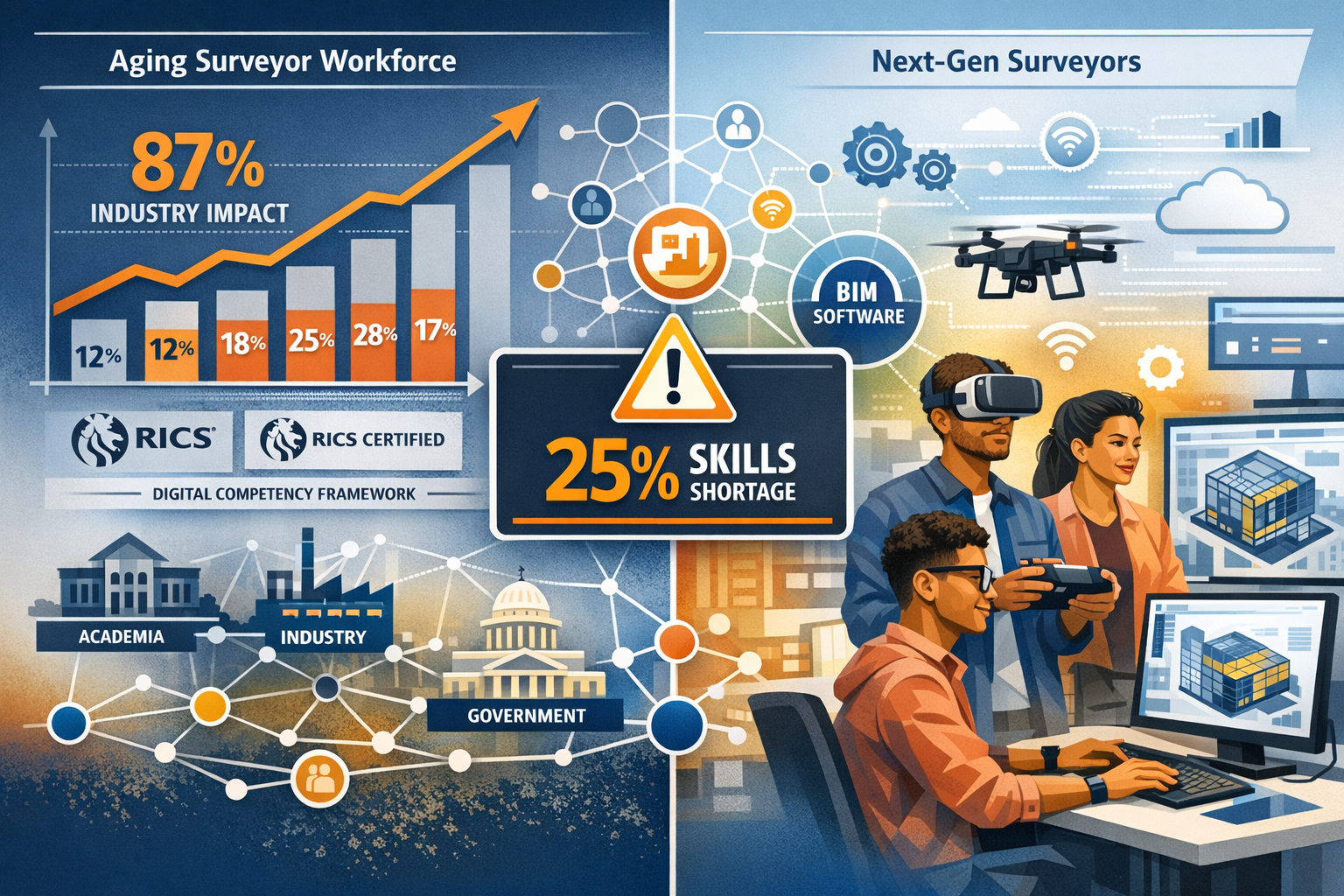
The numbers paint a stark picture. 87% of surveying professionals report that the skills gap is actively impacting their work, while over 25% believe the shortage has reached critical levels, affecting everything from project costs to innovation capacity.[1] Meanwhile, the demands on surveyors continue to multiply, with new responsibilities spanning decarbonisation assessments, advanced building information modelling (BIM), drone-based surveys, and AI-powered defect detection.
This comprehensive guide explores the multifaceted approach needed to recruit, train, and retain the next generation of surveying talent. From reimagined certification pathways to hands-on curricula featuring drones and artificial intelligence, and from innovative mentorship models to strategic industry-academia partnerships, the solutions exist—but they require coordinated action across the entire professional ecosystem.
Key Takeaways
- The surveying skills gap has reached critical levels, with 87% of professionals reporting direct impacts and 25% describing the shortage as severe, driven by an aging workforce and insufficient new entrants[1]
- Digital-first training programs must integrate emerging technologies like drones, AI, BIM, and laser scanning alongside traditional surveying fundamentals to prepare graduates for 2026 practice demands
- Modernized certification pathways including micro-credentials, apprenticeships, and flexible learning routes can attract diverse talent pools and accelerate professional development timelines
- Strategic mentorship programs connecting experienced chartered surveyors with trainees create vital knowledge transfer while addressing the generational divide in digital competency
- Collaborative industry action involving RICS, employers, universities, and government is essential to create unified training standards, funding mechanisms, and career pathway clarity
Understanding the Current Surveying Skills Crisis
The Scale and Scope of the Problem
The surveying profession's skills shortage represents one of the most significant workforce challenges facing the built environment sector in 2026. This isn't merely a temporary recruitment difficulty—it's a structural crisis that threatens the industry's capacity to meet growing demands across residential, commercial, and infrastructure projects.
Research from the Royal Institution of Chartered Surveyors (RICS) confirms that 87% of surveying professionals acknowledge the skills gap is impacting the profession.[1] This near-universal recognition signals that the challenge extends across all practice areas, from RICS building surveys to specialized commercial property assessments.
Even more concerning, over 25% of surveyors classify the shortage as critical, meaning it's already constraining their ability to deliver services effectively.[1] The practical implications include:
- 📉 Reduced capacity to take on new projects and clients
- 💰 Increased costs as firms compete for limited talent
- ⏱️ Extended project timelines due to resource constraints
- 🚫 Limited innovation as teams focus on maintaining current operations rather than developing new capabilities
- 😰 Burnout risks for existing staff managing excessive workloads
Root Causes: Why Training the Next Generation of Surveyors Has Become Urgent
Several interconnected factors have created this perfect storm, making Training the Next Generation of Surveyors: Bridging the Skills Gap in a Digital-First 2026 Landscape an immediate priority:
1. Demographic Challenges
The surveying profession faces an aging workforce with significant numbers approaching retirement. Many experienced practitioners who entered the field in the 1980s and 1990s are now leaving, taking decades of specialized knowledge with them. Unlike some professions where this transition has been gradual and manageable, surveying has seen an acceleration of retirements without corresponding replacement rates.
2. Insufficient New Entrants
Universities and training programs haven't produced enough graduates to replace retiring professionals, let alone expand capacity to meet growing market demands.[1] Several factors contribute to this recruitment challenge:
- Limited awareness among young people about surveying as a career option
- Competition from seemingly more glamorous technology and finance sectors
- Perception of surveying as outdated or low-tech (despite reality being quite different in 2026)
- Lengthy qualification pathways that deter candidates seeking faster career progression
3. Evolving Industry Demands
The surveying profession in 2026 looks dramatically different from even a decade ago. New responsibilities include:
- Decarbonisation assessments evaluating buildings' environmental performance and retrofit potential
- Housing development challenges requiring surveyors to navigate complex planning, sustainability, and community impact considerations
- Digital twin creation demanding expertise in 3D modeling and data integration
- ESG (Environmental, Social, Governance) reporting for commercial properties
These expanded requirements mean that simply replacing retiring surveyors isn't sufficient—new professionals must possess broader and more technologically sophisticated skill sets.[1]
4. Technology Acceleration
The rapid adoption of digital tools has created a dual skills gap. Organizations need professionals who understand both traditional surveying principles and cutting-edge technologies. This challenge mirrors broader industry trends, where 77% of organizations across sectors report being impacted by IT skills gaps.[4] In surveying specifically, this means finding candidates comfortable with:
- Drone operation and photogrammetry
- AI-assisted defect detection
- Building Information Modelling (BIM) platforms
- Laser scanning and point cloud processing
- Virtual and augmented reality for client presentations
Geographic and Practice-Area Variations
The skills shortage doesn't affect all regions or specializations equally. RICS's "Shaping the Future" tour aims to understand these geographical and practice-specific variations.[1] For example:
- Urban centers like London may struggle to attract talent due to high living costs despite greater job opportunities
- Regional markets in areas like Surrey or Hertfordshire face different challenges attracting young professionals who prefer metropolitan lifestyles
- Specialized practice areas such as dilapidation surveys or party wall matters require niche expertise that's particularly difficult to develop
Understanding these variations is crucial for developing targeted training and recruitment strategies rather than one-size-fits-all approaches.
Digital-First Curricula: What Tomorrow's Surveyors Must Learn
Balancing Traditional Fundamentals with Emerging Technologies
Training the Next Generation of Surveyors: Bridging the Skills Gap in a Digital-First 2026 Landscape requires a carefully calibrated curriculum that honors the profession's foundational principles while embracing technological transformation. The challenge lies in avoiding two extremes: becoming so focused on new technologies that fundamental surveying knowledge suffers, or remaining so traditional that graduates lack the digital competencies modern practice demands.
Core Traditional Competencies That Remain Essential:
- 🏗️ Building pathology and defect identification
- 📐 Measurement and quantification techniques
- 📋 Construction technology and materials knowledge
- ⚖️ Legal and regulatory frameworks governing property and construction
- 💼 Professional ethics and RICS standards
- 📊 Valuation principles and methodologies
- 🔍 Inspection techniques for various property types
These fundamentals cannot be shortchanged. A surveyor who understands drone operation but can't identify structural movement or damp issues provides little value to clients seeking building surveys or subsidence assessments.
Critical Digital Competencies for 2026 Practice:
However, these traditional skills must now be augmented and enhanced by digital capabilities:
| Technology Area | Practical Applications | Training Priority |
|---|---|---|
| Drone Technology & Photogrammetry | Roof inspections, large-site surveys, inaccessible areas, 3D site modeling | High |
| Laser Scanning & Point Clouds | Precise measurements, as-built documentation, heritage recording | High |
| Building Information Modelling (BIM) | Collaboration with design teams, facility management integration, clash detection | High |
| AI-Powered Analysis | Automated defect detection, pattern recognition, predictive maintenance | Medium-High |
| Thermal Imaging | Energy efficiency assessments, moisture detection, insulation evaluation | Medium |
| Virtual/Augmented Reality | Client presentations, remote inspections, training simulations | Medium |
| Cloud-Based Platforms | Data management, collaborative reporting, mobile access | High |
| Geographic Information Systems (GIS) | Spatial analysis, planning context, environmental factors | Medium |
Hands-On Technology Training Models
Effective digital skills development requires experiential learning rather than purely theoretical instruction. Leading training programs in 2026 incorporate:
1. Simulation-Based Learning
Virtual environments allow trainees to practice complex scenarios without real-world consequences. For example, students can:
- Conduct virtual damp surveys identifying moisture issues in digital building models
- Practice drone flight operations in simulated conditions before handling actual equipment
- Navigate party wall negotiations in role-playing scenarios
2. Industry-Standard Equipment Access
Training institutions must invest in the same tools professionals use daily:
- Professional-grade drones with high-resolution cameras
- Laser scanners and total stations
- Thermal imaging cameras
- BIM software licenses (Revit, ArchiCAD, etc.)
- Mobile survey applications and tablets
Many programs establish equipment-sharing partnerships with surveying firms, allowing students to train on industry-standard tools while reducing institutional costs.
3. Real-World Project Integration
The most effective curricula include live projects where students work on actual properties under supervision. This might involve:
- Conducting stock condition surveys for social housing providers
- Assisting with Level 2 homebuyer surveys under chartered surveyor guidance
- Contributing to boundary surveys for local authorities
- Supporting commercial building surveys as part of project teams
These experiences provide invaluable context for how technologies integrate into professional workflows rather than existing as isolated skills.
Addressing the Broader Digital Skills Challenge
The surveying profession's technology training needs reflect a wider pattern across industries. Research shows that organizations increasingly recognize that digital skill-building must become continuous rather than episodic.[3] In practical terms, this means:
- Ongoing learning pathways rather than one-time training events
- Micro-learning modules that professionals can complete alongside daily work
- Just-in-time training aligned with specific project needs
- Peer learning communities where practitioners share emerging best practices
For surveying education, this translates to curricula that teach learning agility—the ability to rapidly acquire new technical skills as technologies evolve—rather than assuming any particular tool set will remain current throughout a career.
Specialization Pathways Within Digital-First Training
Not every surveyor needs identical digital competencies. Training programs should offer specialization tracks aligned with different practice areas:
Residential Property Track:
- Advanced defect diagnosis using thermal imaging
- Energy performance assessment tools
- Residential valuation software
- Consumer-friendly reporting platforms
Commercial Property Track:
- Large-scale laser scanning for complex buildings
- BIM coordination and facility management integration
- ESG assessment frameworks
- Investment analysis tools
Building Pathology & Structural Track:
- Advanced moisture detection technologies
- Structural analysis software
- Materials testing equipment
- Remediation specification systems
This specialization approach allows deeper expertise development while maintaining core competencies across all tracks.
Modernizing Certification Pathways and Professional Development
Reimagining the Route to Chartered Status
Traditional pathways to becoming a chartered surveyor—while rigorous and valuable—often span several years and follow relatively inflexible structures. In 2026's fast-paced environment, Training the Next Generation of Surveyors: Bridging the Skills Gap in a Digital-First 2026 Landscape requires more diverse and accessible routes to professional qualification.
Current RICS Assessment of Competence (APC) Process:
The established pathway typically involves:
- Completing a RICS-accredited degree (3-4 years)
- Securing structured training employment (2+ years)
- Maintaining a detailed competency development log
- Completing a final assessment interview
- Total timeline: 5-7 years from starting university to chartered status
While this ensures thorough preparation, the lengthy timeline can deter potential entrants who see faster progression in other professions. Technology sectors, for instance, often offer senior positions to talented individuals within 3-4 years of starting their careers.
Alternative Certification Models for 2026
1. Apprenticeship Pathways
Degree apprenticeships offer a compelling alternative that addresses multiple challenges simultaneously:
- ✅ Earn while learning eliminates student debt concerns
- ✅ Immediate practical experience from day one
- ✅ Employer commitment to development
- ✅ Structured progression combining academic and workplace learning
- ✅ Faster route to professional competence (typically 4-5 years to chartered status)
These programs integrate university study with workplace training, often following a block-release or day-release model. Employers benefit from developing talent specifically aligned with their practice needs, while apprentices gain financial stability and guaranteed experience.
2. Micro-Credentials and Stackable Qualifications
Rather than viewing qualification as a single endpoint, modular certification systems allow professionals to build competency progressively:
- Foundation credentials covering core surveying principles
- Technology-specific certifications (drone operation, laser scanning, BIM)
- Practice-area specializations (residential, commercial, industrial)
- Advanced expert credentials (expert witness, arbitration, specialized valuation)
This approach offers several advantages:
- Professionals can demonstrate competency earlier in their careers
- Continuous development becomes more visible and marketable
- Career changes between practice areas become more feasible
- Technology evolution can be accommodated through new micro-credentials without redesigning entire qualification frameworks
3. Accelerated Routes for Career Changers
The profession needs to attract mid-career professionals from related fields who bring valuable transferable skills. Accelerated programs might target:
- Construction professionals (project managers, quantity surveyors) seeking to transition
- Engineers with relevant technical backgrounds
- Property professionals from estate agency or facilities management
- Technology specialists interested in applying digital skills to built environment challenges
These individuals don't need the same foundational education as school leavers but require bridging programs addressing surveying-specific knowledge gaps while recognizing their existing expertise.
Continuous Professional Development in a Digital-First Era
Achieving chartered status is merely the beginning. In 2026's rapidly evolving landscape, lifelong learning becomes essential rather than optional. RICS already requires members to complete continuing professional development (CPD), but the nature of that development must evolve.
Emerging CPD Models:
Digital Skills Refresher Cycles:
Technology competencies require regular updating. A surveyor who learned BIM software in 2020 needs exposure to 2026's AI-enhanced versions. Structured refresher programs might include:
- Annual technology update workshops
- Quarterly webinars on emerging tools
- Peer learning groups exploring new applications
- Vendor-provided training on updated platforms
Cross-Generational Learning:
Younger professionals often possess stronger digital skills, while experienced surveyors bring deeper building pathology knowledge. Reverse mentoring programs where junior staff teach senior colleagues about new technologies create mutual value while fostering collaboration.
Competency-Based Rather Than Time-Based CPD:
Instead of simply logging hours, professionals might demonstrate competency through:
- Completed project portfolios showcasing new skills
- Peer-reviewed case studies
- Technology implementation success stories
- Client feedback on service delivery improvements
This shift emphasizes outcomes over inputs, ensuring CPD genuinely enhances professional capability.
Addressing Institutional Barriers
RICS acknowledges that current initiatives are not progressing fast enough to address the pace of industry change.[1] Several institutional adjustments could accelerate progress:
Streamlined Assessment Processes:
Technology can make competency assessment more efficient through:
- Digital portfolio submission and review
- Video-recorded final assessments reducing geographical barriers
- AI-assisted preliminary evaluation of competency logs
- More frequent assessment windows rather than fixed annual cycles
Recognition of Prior Learning:
Formal systems to assess and credit relevant experience from other industries or international qualifications can reduce barriers for diverse candidates.
Financial Support Mechanisms:
The profession should explore:
- Industry-funded bursaries for students from underrepresented backgrounds
- Employer tax incentives for training investment
- Shared training consortiums where smaller firms pool resources
- Government partnerships addressing skills shortages in critical sectors
These changes require coordination among RICS, employers, educational institutions, and government—precisely the collaborative approach RICS is working to establish through its skills initiative.[1]
Strategic Mentorship and Knowledge Transfer Programs
The Critical Role of Mentorship in Bridging Generational Divides
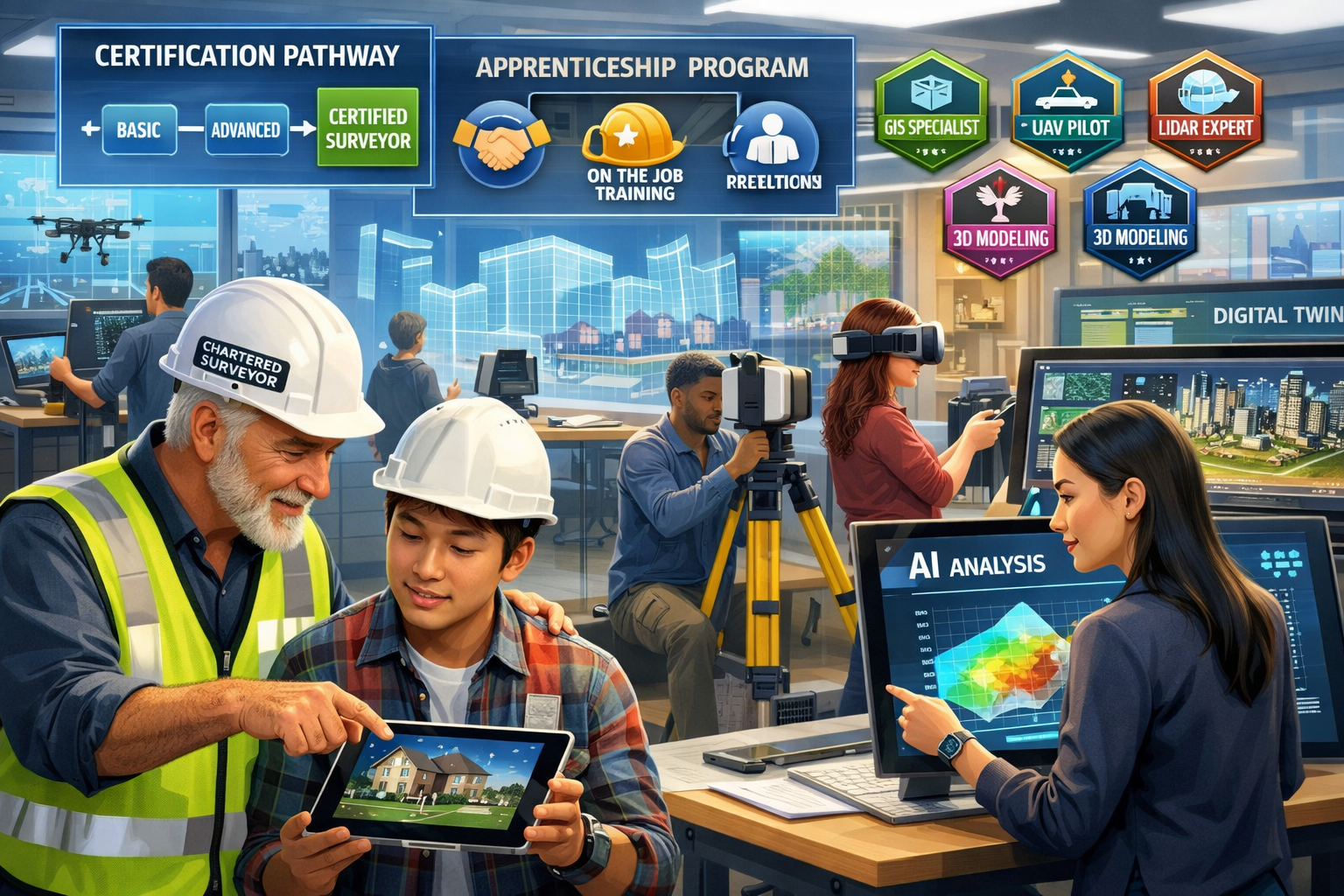
Training the Next Generation of Surveyors: Bridging the Skills Gap in a Digital-First 2026 Landscape cannot succeed through formal education alone. Mentorship programs provide the crucial bridge between academic knowledge and professional practice, while also facilitating essential knowledge transfer from experienced practitioners approaching retirement.
The surveying profession faces a particular mentorship challenge: the dual knowledge transfer requirement. Senior surveyors must pass on decades of building pathology expertise, client relationship skills, and professional judgment, while simultaneously learning digital competencies from younger colleagues who grew up with technology.
Structured Mentorship Models for 2026
1. Traditional One-to-One Mentorship
The classic model pairs an experienced chartered surveyor with a trainee, providing:
- Regular guidance on technical challenges encountered in daily work
- Career development advice navigating the pathway to chartered status
- Professional network access introducing trainees to industry contacts
- Real-time feedback on survey reports, client interactions, and professional conduct
- Contextual learning explaining why certain approaches work in specific situations
For maximum effectiveness, these relationships should be:
- Formally structured with clear objectives and regular meeting schedules
- Documented with progress tracking against competency frameworks
- Supported by organizational resources (time allocation, training for mentors)
- Evaluated to ensure both parties derive value
Many chartered surveying practices now make mentorship participation a formal expectation for senior staff, recognizing it as essential professional service rather than optional goodwill.
2. Reverse Mentorship for Digital Skills
Younger professionals mentor senior colleagues on technology applications, creating reciprocal learning relationships. A junior surveyor might teach an experienced colleague about:
- Drone operation and aerial survey techniques
- Advanced BIM software features
- AI-powered defect detection tools
- Social media for professional marketing
- Cloud-based collaboration platforms
This approach offers multiple benefits:
- ✨ Accelerates digital adoption across the entire organization
- 🤝 Builds mutual respect between generations
- 💡 Empowers junior staff by valuing their expertise
- 🔄 Creates balanced relationships where both parties contribute
- 📈 Improves retention as younger professionals feel valued
3. Group Mentorship and Communities of Practice
Rather than exclusively relying on one-to-one relationships, group learning models create broader support networks:
Cohort-Based Programs:
Groups of trainees progress together through structured learning experiences, supported by rotating mentors. This approach:
- Reduces isolation for trainees in smaller firms
- Builds peer support networks
- Allows exposure to diverse perspectives
- Creates economies of scale for training delivery
Practice-Area Communities:
Specialists in particular fields (e.g., party wall matters, valuation, commercial surveys) form communities sharing knowledge through:
- Regular technical discussion forums
- Case study presentations
- Problem-solving workshops
- Emerging issue briefings
These communities preserve specialized knowledge that might otherwise be lost when individual experts retire.
Technology-Enabled Mentorship at Scale
Digital platforms can extend mentorship beyond geographical limitations and time constraints:
Virtual Mentorship Platforms:
Purpose-built systems facilitate:
- Asynchronous communication allowing mentors and mentees to engage despite busy schedules
- Resource libraries where mentors share templates, guides, and reference materials
- Progress tracking documenting competency development
- Matching algorithms connecting mentors and mentees based on specializations, locations, and learning goals
Remote Observation and Feedback:
Technology enables new forms of practical training:
- Trainees can record survey inspections for mentor review and feedback
- Live video connections allow remote guidance during complex assessments
- Annotated reports facilitate detailed feedback on written work
- Virtual site visits enable mentors to observe trainee techniques without physical presence
This technological augmentation proves particularly valuable for trainees in regional areas where local mentorship options may be limited.
Knowledge Capture Before Retirement
With significant numbers of experienced surveyors approaching retirement, systematic knowledge capture becomes urgent. Organizations should implement:
Documented Case Study Libraries:
Senior practitioners document complex or unusual cases they've handled, creating permanent learning resources covering:
- Challenging defect diagnoses
- Difficult client situations
- Unusual property types
- Complex valuation scenarios
- Professional dilemma resolutions
Video Knowledge Transfer:
Recording experienced surveyors explaining their thought processes while reviewing survey evidence creates powerful learning tools. These videos capture:
- How experts prioritize observations during inspections
- Decision-making processes for investigation recommendations
- Client communication strategies
- Risk assessment approaches
Shadowing and Observation Programs:
Before retirement, senior surveyors should dedicate time to being shadowed by multiple junior colleagues, maximizing the number of professionals who benefit from their expertise.
Measuring Mentorship Effectiveness
To ensure mentorship programs genuinely bridge the skills gap, organizations should track:
- Competency development rates for mentored vs. non-mentored trainees
- Retention rates comparing those with strong mentorship support to those without
- Time to chartered status for different mentorship models
- Mentor satisfaction ensuring experienced professionals find the role rewarding
- Knowledge transfer outcomes assessing whether critical expertise is successfully passed on
Regular evaluation allows continuous improvement of mentorship approaches, ensuring they remain effective as the profession evolves.
Industry-Academia-Government Collaboration: Building Unified Solutions
The Need for Coordinated Action
Individual organizations cannot solve the surveying skills crisis alone. Training the Next Generation of Surveyors: Bridging the Skills Gap in a Digital-First 2026 Landscape requires unprecedented collaboration among stakeholders who have traditionally operated in separate spheres. RICS has recognized this imperative, establishing initiatives to accelerate cooperation among membership, industry employers, professional bodies, academia, and government.[1]
This collaborative approach mirrors successful models in other sectors facing similar challenges. Research indicates that organizations across industries are increasingly recognizing that skills gaps require systemic solutions rather than isolated interventions.[7]
RICS's Coordinating Role and Strategic Initiatives
The Royal Institution of Chartered Surveyors has positioned itself as the central convening authority bringing disparate stakeholders together. Key initiatives include:
The "Shaping the Future" Tour:
RICS is conducting extensive consultation to understand geographical and practice-specific challenges affecting surveyor development.[1] This data-gathering exercise ensures solutions address real-world variations rather than imposing uniform approaches that may not fit local contexts.
For instance, challenges facing chartered surveyors in Hammersmith may differ significantly from those in Hertfordshire or Essex, requiring tailored recruitment and training strategies.
Data-Led Roadmap Development:
Rather than relying on anecdotal evidence, RICS is creating a comprehensive, evidence-based strategy informed by:
- Workforce demographic analysis
- Skills gap quantification across practice areas
- Technology adoption rates and training needs
- Educational pipeline assessment
- Regional variation mapping
- International comparison studies
This data foundation ensures interventions target actual needs rather than perceived problems.
Multi-Stakeholder Working Groups:
RICS has established collaborative forums bringing together:
- Employers from large national firms to small regional practices
- Universities delivering surveying education
- Training providers offering CPD and specialist courses
- Government representatives from relevant departments
- Professional body partners in related disciplines
- Student and early-career representatives providing grassroots perspectives
These groups develop practical solutions with buy-in from all parties required for successful implementation.
University-Industry Partnership Models
Academic institutions and surveying practices must forge deeper, more strategic partnerships than traditional placement arrangements:
Co-Designed Curricula:
Rather than universities independently determining course content, collaborative curriculum design ensures graduates possess skills employers actually need. This involves:
- Regular industry advisory board meetings reviewing program content
- Employer input on technology priorities and training sequences
- Joint development of project briefs for student assignments
- Industry guest lecturers providing real-world context
- Employer validation of assessment methods
Embedded Industry Experience:
Extended placement programs integrate students into professional practice:
- Year-long placements providing substantial experience
- Part-time employment during studies building gradual competency
- Summer internships exposing students to different practice areas
- Live project partnerships where student teams tackle real client challenges under supervision
These arrangements benefit all parties: students gain practical skills, universities enhance employability outcomes, and firms develop talent pipelines.
Shared Facilities and Equipment:
High-cost technology investments can be shared through:
- University equipment available for industry CPD training
- Firm-owned specialized tools accessible for student projects
- Joint research facilities exploring emerging technologies
- Shared innovation labs testing new survey methodologies
Research Collaboration:
Universities and practices can jointly investigate:
- Effectiveness of new survey technologies
- Building pathology research improving defect understanding
- Client needs and service delivery innovation
- Professional development effectiveness studies
These partnerships advance the profession while providing research opportunities for academic staff and students.
Government's Role in Addressing the Skills Gap
Public sector involvement is essential for creating the policy environment and financial support needed to scale solutions:
Funding Mechanisms:
Government can support training through:
- Apprenticeship levy optimization ensuring funds support surveying programs
- Skills bootcamp funding for intensive training in high-demand areas
- Research grants for innovation in surveying education
- Tax incentives for employer training investment
- Bursaries targeting underrepresented groups in surveying
Regulatory Framework:
Policy adjustments can facilitate skills development:
- Visa policies allowing international talent where domestic shortages are acute
- Professional recognition streamlining qualification for overseas-trained surveyors
- Planning requirements that create demand for surveying services
- Building standards that necessitate professional expertise
Strategic Workforce Planning:
Government departments responsible for housing, infrastructure, and construction should incorporate surveying workforce needs into broader planning, ensuring supply aligns with anticipated demand from major projects.
Creating Industry-Wide Standards and Resources
Collaborative initiatives should produce shared resources benefiting the entire profession:
Standardized Competency Frameworks:
Clear, consistent definitions of required competencies at different career stages help:
- Students understand learning objectives
- Employers design training programs
- Universities align curricula
- Assessors evaluate readiness for chartered status
Open-Source Training Materials:
Collectively developed resources reduce duplication and improve quality:
- Technology training modules
- Building pathology reference libraries
- Case study databases
- Assessment preparation materials
- Professional ethics scenarios
Shared Placement Networks:
Centralized systems matching students with placement opportunities, particularly benefiting smaller firms that lack dedicated recruitment infrastructure.
Benchmarking and Best Practice Sharing:
Regular forums where organizations share successful training approaches, allowing the profession to collectively identify and scale effective methods.
Measuring Collaborative Impact
The success of these partnerships should be evaluated through:
- Graduate employment rates and time-to-employment metrics
- New entrant numbers tracking whether initiatives increase profession entry
- Diversity metrics assessing whether collaboration improves representation
- Employer satisfaction with graduate preparedness
- Skills gap closure measuring whether critical shortages are being addressed
- Innovation indicators tracking adoption of new technologies and methods
Regular assessment ensures collaborative efforts produce tangible results rather than merely creating additional meetings and bureaucracy.
Attracting Diverse Talent: Recruitment Strategies for 2026
Expanding the Talent Pipeline Beyond Traditional Sources
Historically, surveying has recruited from a relatively narrow demographic: predominantly white, male graduates from specific university programs. Training the Next Generation of Surveyors: Bridging the Skills Gap in a Digital-First 2026 Landscape requires dramatically expanding recruitment to include:
- Women, who remain significantly underrepresented despite comprising half the potential talent pool
- Ethnic minorities bringing diverse perspectives and cultural competencies
- Career changers from related professions who can accelerate into surveying
- Non-traditional educational backgrounds including those without university degrees
- International talent addressing immediate shortages while enriching the profession
Diversifying recruitment isn't merely about equity—it's a business necessity. Homogeneous teams produce narrower solutions, while diverse perspectives drive innovation and better serve increasingly diverse client bases.
Modern Recruitment Marketing Strategies
Digital-First Outreach:
Young people in 2026 discover careers primarily through digital channels, requiring surveying firms and institutions to:
- Maintain strong social media presence showcasing the profession's technology aspects
- Create engaging video content featuring young surveyors using drones, AI tools, and other compelling technologies
- Develop interactive career exploration tools allowing potential candidates to experience surveying virtually
- Optimize for mobile since career research increasingly happens on smartphones
- Leverage influencer partnerships with construction and property content creators
Repositioning Surveying's Image:
The profession must counter outdated perceptions by emphasizing:
- 🚁 Technology leadership rather than clipboard-and-tape-measure stereotypes
- 🌍 Sustainability impact through decarbonisation and environmental work
- 💼 Entrepreneurial opportunities in an independent profession
- 🏗️ Variety and challenge across diverse property types and problems
- 💰 Strong earning potential and career progression
Targeted Outreach Programs:
Rather than generic recruitment, specialized initiatives might target:
- Secondary schools in underrepresented areas introducing surveying as a career option
- STEM programs attracting students with relevant interests
- Women in construction initiatives highlighting female role models
- Military transition programs leveraging transferable skills from service members
- Mid-career professional networks reaching potential career changers
Creating Inclusive Work Environments
Recruitment alone is insufficient—the profession must retain diverse talent through genuinely inclusive cultures:
Flexible Working Arrangements:
2026 professionals expect:
- Remote work options for desk-based tasks like report writing and analysis
- Flexible hours accommodating different life circumstances
- Part-time pathways to chartered status for those with caring responsibilities
- Job-sharing opportunities in senior positions
Mentorship for Underrepresented Groups:
Targeted support helps diverse entrants navigate challenges:
- Affinity groups connecting professionals with shared backgrounds
- Sponsorship programs where senior leaders actively advocate for diverse talent
- Cultural competency training helping all staff create inclusive environments
- Bias awareness in assessment and promotion processes
Clear Progression Pathways:
Transparent criteria and support mechanisms ensure diverse talent can advance:
- Published competency requirements removing ambiguity
- Structured development programs rather than informal "tap on the shoulder" advancement
- Regular feedback helping all staff understand their progress
- Equitable project allocation ensuring diverse staff receive high-visibility opportunities
Addressing Financial Barriers to Entry
The cost of qualification can deter talented candidates from less affluent backgrounds:
Apprenticeship Expansion:
Earn-while-learning models eliminate student debt concerns while providing income from day one. The profession should advocate for:
- Increased apprenticeship funding allocations
- More employers offering apprenticeship positions
- Clear progression from apprenticeship to chartered status
- Parity of esteem between degree and apprenticeship routes
Financial Support Programs:
Industry-funded initiatives might include:
- Bursaries for students from underrepresented backgrounds
- Equipment grants providing necessary technology for studies
- Exam fee support reducing barriers to professional qualification
- Living cost supplements for placement periods in high-cost areas
Employer Investment:
Firms should view training investment as strategic rather than discretionary:
- Funded qualification pathways where employers cover course and assessment fees
- Paid study time rather than expecting qualification pursuit outside working hours
- Retention bonuses recouping investment while providing career stability
- Transparent return-of-service agreements clarifying mutual commitments
Showcasing Career Diversity Within Surveying
Many potential candidates don't realize the breadth of opportunities within surveying. Effective recruitment highlights:
Varied Practice Areas:
From residential building surveys to commercial property, from valuation work to structural engineering, surveying offers remarkable variety.
Geographic Flexibility:
Qualified surveyors can work anywhere from central London to regional markets like Guildford or Buckinghamshire, or even internationally.
Employment Models:
Careers span large corporate firms, small partnerships, sole practice, public sector, and academia—offering options for different personality types and life stages.
Specialization Opportunities:
Deep expertise in niche areas like party wall matters, lease extensions, or expert witness work provides intellectual challenge and market differentiation.
By showcasing this diversity, recruitment efforts can appeal to candidates with varied interests and strengths rather than presenting surveying as a monolithic career path.
Practical Implementation: Action Steps for Stakeholders
For Surveying Firms and Employers
Immediate Actions (Next 3 Months):
- Audit current training capacity and identify gaps in digital skills development
- Establish or strengthen mentorship programs pairing experienced staff with trainees
- Review recruitment materials to ensure they showcase technology and diversity
- Commit to apprenticeship programs or expand existing schemes
- Allocate dedicated training budget as percentage of revenue rather than discretionary spending
Medium-Term Initiatives (6-12 Months):
- Develop partnership with local university offering placements and curriculum input
- Implement reverse mentorship pairing junior digital natives with senior staff
- Create documented case study library capturing expertise before retirements
- Establish flexible working policies improving retention and attracting diverse talent
- Join industry collaborative initiatives like RICS working groups
Long-Term Strategies (1-3 Years):
- Build comprehensive digital training program covering drones, AI, BIM, and emerging technologies
- Develop specialization pathways allowing staff to build deep expertise
- Create succession planning framework ensuring knowledge transfer before retirements
- Establish innovation lab testing new technologies and methods
- Build employer brand as training leader attracting top talent
For Educational Institutions
Immediate Actions:
- Survey industry partners about current skills gaps and technology priorities
- Review curriculum ensuring digital competencies are integrated throughout
- Establish industry advisory board if not already in place
- Audit equipment and software identifying technology investment needs
- Connect with RICS initiatives participating in collaborative planning
Medium-Term Initiatives:
- Redesign practical components incorporating more hands-on technology training
- Expand placement opportunities building relationships with more employers
- Develop micro-credential offerings for CPD and specialist skills
- Create online learning modules improving access for part-time and distance students
- Establish research partnerships with industry on surveying innovation
Long-Term Strategies:
- Develop apprenticeship degree programs offering earn-while-learning routes
- Build shared facilities for equipment and innovation labs
- Create accelerated programs for career changers from related fields
- Establish international partnerships bringing global perspectives
- Develop thought leadership in surveying education innovation
For Professional Bodies (RICS and Related Organizations)
Immediate Actions:
- Accelerate data collection on skills gaps through surveys and consultation
- Publish interim findings maintaining momentum and stakeholder engagement
- Establish working groups on specific challenges (technology training, diversity, etc.)
- Create resource hub sharing best practices across the profession
- Advocate with government for funding and policy support
Medium-Term Initiatives:
- Develop standardized competency frameworks for digital skills
- Create shared training resources reducing duplication across organizations
- Establish placement matching service connecting students with opportunities
- Launch diversity initiatives with measurable targets and support programs
- Pilot alternative certification pathways testing micro-credentials and accelerated routes
Long-Term Strategies:
- Implement data-led roadmap based on consultation findings
- Establish sustainable funding mechanisms for profession-wide training
- Build international collaboration sharing solutions across markets
- Create innovation awards recognizing training excellence
- Develop predictive workforce planning anticipating future skills needs
For Government and Policy Makers
Immediate Actions:
- Review apprenticeship funding ensuring adequate support for surveying programs
- Consult with RICS on regulatory barriers to skills development
- Include surveying in skills shortage occupation lists where appropriate
- Allocate research funding for construction sector skills innovation
- Establish cross-departmental coordination on built environment workforce
Medium-Term Initiatives:
- Create tax incentives for employer training investment
- Fund skills bootcamps in high-demand surveying specializations
- Support university-industry partnerships through grants and facilitation
- Streamline international qualification recognition addressing immediate shortages
- Integrate surveying workforce planning into infrastructure and housing strategies
Long-Term Strategies:
- Develop national construction skills strategy including surveying
- Establish sustainable funding model for sector skills development
- Create career pathway visibility in education system from secondary level
- Support diversity initiatives through targeted funding and policy
- Build workforce data infrastructure enabling evidence-based planning
For Individuals Considering Surveying Careers
Exploration Phase:
- Research the profession through RICS resources and practitioner interviews
- Attend open days at universities offering surveying programs
- Seek informational interviews with practicing surveyors
- Explore different pathways comparing degree, apprenticeship, and career-change routes
- Assess financial options including bursaries, apprenticeships, and employer sponsorship
Entry Phase:
- Choose appropriate pathway based on circumstances and preferences
- Develop digital skills through online courses and self-study
- Build professional network joining student chapters and industry events
- Seek placement opportunities gaining practical experience
- Document learning maintaining portfolio from the start
Development Phase:
- Engage actively with mentors seeking guidance and feedback
- Pursue specialization interests building expertise in chosen areas
- Participate in CPD staying current with technology and methods
- Contribute to profession through committees, research, or writing
- Plan progression toward chartered status and beyond
Conclusion: Building a Sustainable Future for the Surveying Profession
The surveying profession stands at a defining moment in 2026. The skills gap is real, significant, and growing—with 87% of professionals reporting impacts and 25% describing the situation as critical.[1] Yet this challenge also presents an extraordinary opportunity to reimagine how the profession develops talent, embraces technology, and positions itself for the future.
Training the Next Generation of Surveyors: Bridging the Skills Gap in a Digital-First 2026 Landscape requires coordinated action across multiple fronts:
🎓 Educational transformation integrating digital competencies with traditional fundamentals, delivered through diverse pathways including degrees, apprenticeships, and micro-credentials that accommodate different circumstances and learning styles.
🤝 Strategic mentorship facilitating bidirectional knowledge transfer where experienced practitioners pass on building pathology expertise while learning digital skills from younger colleagues, ensuring critical knowledge isn't lost to retirement.
🔗 Unprecedented collaboration among RICS, employers, universities, and government creating unified standards, shared resources, and coordinated strategies that no single stakeholder could achieve alone.
🌍 Inclusive recruitment expanding beyond traditional talent sources to attract women, ethnic minorities, career changers, and non-traditional candidates, building a profession that reflects and serves diverse communities.
💻 Technology leadership positioning surveying as a cutting-edge profession utilizing drones, AI, BIM, and emerging tools rather than perpetuating outdated stereotypes of clipboard-carrying technicians.
The pathway forward is clear, though implementation will require sustained commitment and investment. Organizations that act decisively—whether surveying firms investing in comprehensive training programs, universities redesigning curricula, RICS accelerating collaborative initiatives, or government providing policy and funding support—will shape the profession's future while gaining competitive advantage.
For the profession collectively, success means not merely filling current vacancies but building sustainable talent pipelines that continuously develop the skills needed for evolving market demands. It means creating career pathways attractive enough to compete with technology, finance, and other sectors for top talent. And it means establishing the surveying profession as essential to addressing society's critical challenges around housing, sustainability, and built environment quality.
The skills gap is daunting, but not insurmountable. With coordinated effort, innovative approaches, and sustained commitment, the profession can bridge this gap while emerging stronger, more diverse, and better equipped for the digital-first landscape of 2026 and beyond.
Next Steps: Taking Action Today
If you're a surveying firm or employer:
- Evaluate your current training capacity and identify immediate improvement opportunities
- Commit to hiring and developing at least one apprentice or graduate in the next year
- Join RICS collaborative initiatives or establish partnerships with local universities
- Invest in digital training infrastructure and mentorship programs
If you're an educational institution:
- Engage industry partners in curriculum review and enhancement
- Expand hands-on technology training components
- Develop flexible learning pathways accommodating diverse student circumstances
- Create stronger placement and employment connections for graduates
If you're considering a surveying career:
- Explore the diverse opportunities within the profession through RICS resources and informational interviews
- Investigate different entry pathways including apprenticeships and degree programs
- Develop foundational digital skills through online learning
- Connect with practicing surveyors to understand day-to-day realities
If you're a policy maker:
- Consult with RICS and industry representatives on regulatory and funding needs
- Include surveying in skills shortage planning and support mechanisms
- Create incentives for employer training investment
- Support diversity initiatives removing barriers to profession entry
The future of surveying depends on actions taken today. By working together across traditional boundaries, the profession can transform its greatest challenge into a catalyst for positive change, ensuring that the next generation of surveyors is ready to meet the demands of a digital-first 2026 landscape and beyond.
References
[1] Rics Skills Report – https://www.rics.org/news-insights/current-topics-campaigns/rics-skills-report
[2] Survey Confirms Technology Pressures And Skills Gaps In Engineering – https://set.kellyservices.us/resource-center/survey-confirms-technology-pressures-and-skills-gaps-in-engineering
[3] We Are All Techies Now Digital Skill Building For The Future – https://www.mckinsey.com/capabilities/people-and-organizational-performance/our-insights/we-are-all-techies-now-digital-skill-building-for-the-future
[4] Survey Reveals 77 Of Organizations Have Been Impacted By The It Skills Gap – https://www.revature.com/insights/survey-reveals-77-of-organizations-have-been-impacted-by-the-it-skills-gap
[5] ciodive – https://www.ciodive.com/news/demand-tech-talent-robert-half-IT/812261/
[6] Global Digital Trust Insights – https://www.pwc.com/us/en/services/consulting/cybersecurity-risk-regulatory/library/global-digital-trust-insights.html
[7] hrdive – https://www.hrdive.com/news/hiring-skills-gaps-are-more-pronounced/812013/
[8] 9 Trends Shaping Work In 2026 And Beyond – https://hbr.org/2026/02/9-trends-shaping-work-in-2026-and-beyond