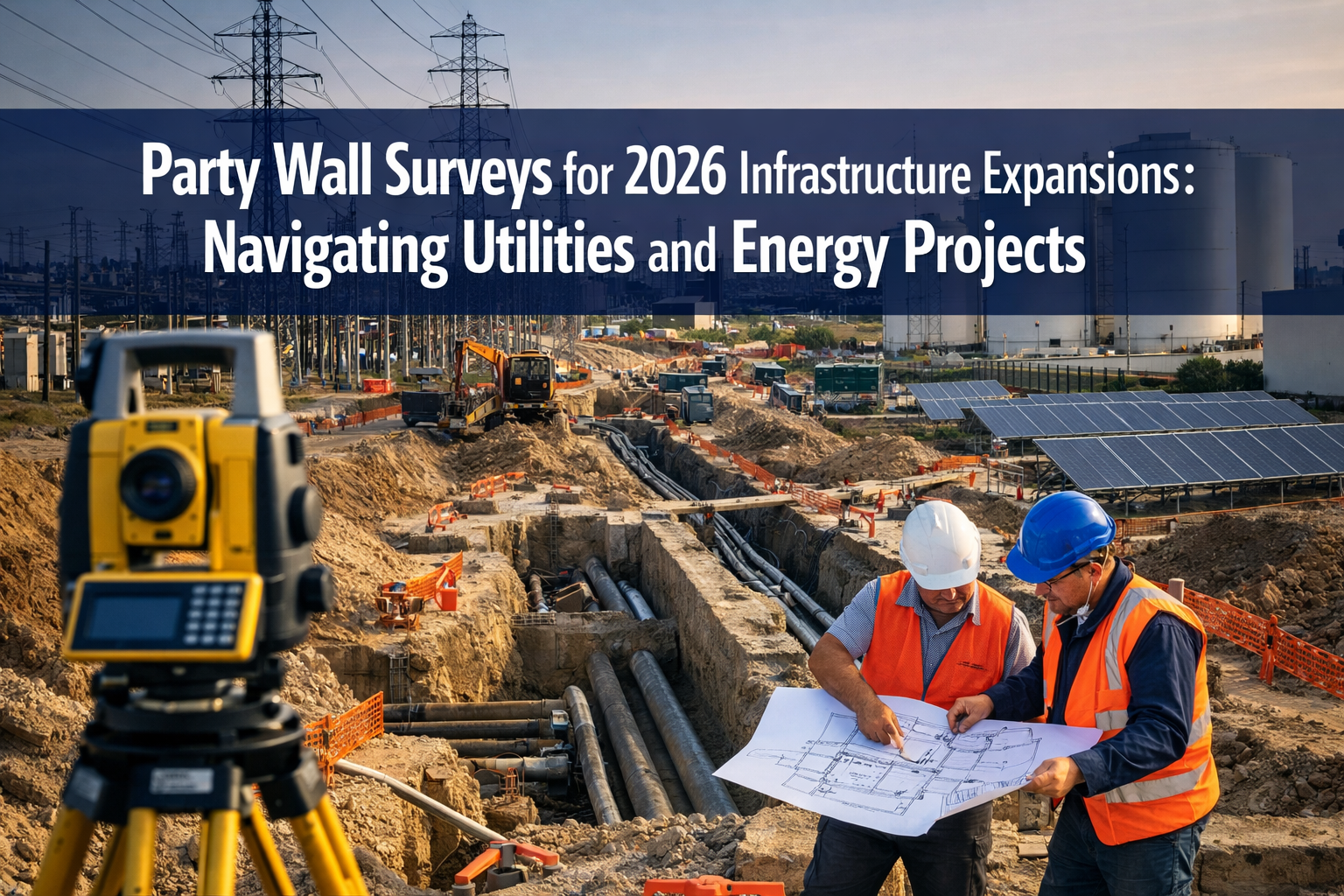

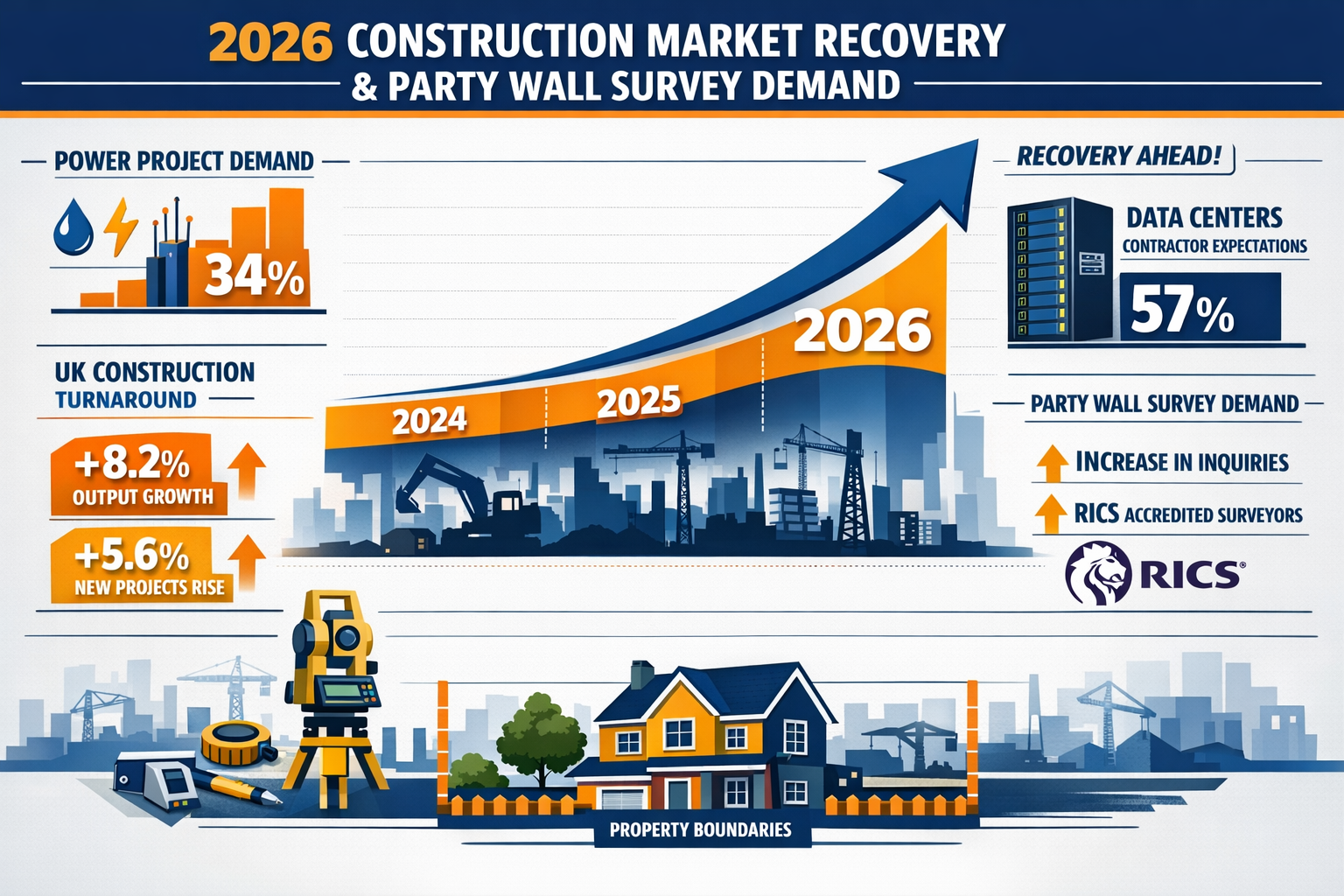
As the United Kingdom experiences a significant turnaround in construction activity after several challenging years, infrastructure development is accelerating across utilities and energy sectors[3]. Property owners, developers, and utility companies now face a critical question: how do party wall requirements intersect with the ambitious infrastructure expansions planned for 2026? Understanding Party Wall Surveys for 2026 Infrastructure Expansions: Navigating Utilities and Energy Projects has never been more essential as power projects show strong demand with a net reading of 34%, and data centers surge ahead at 57% in contractor expectations[1].
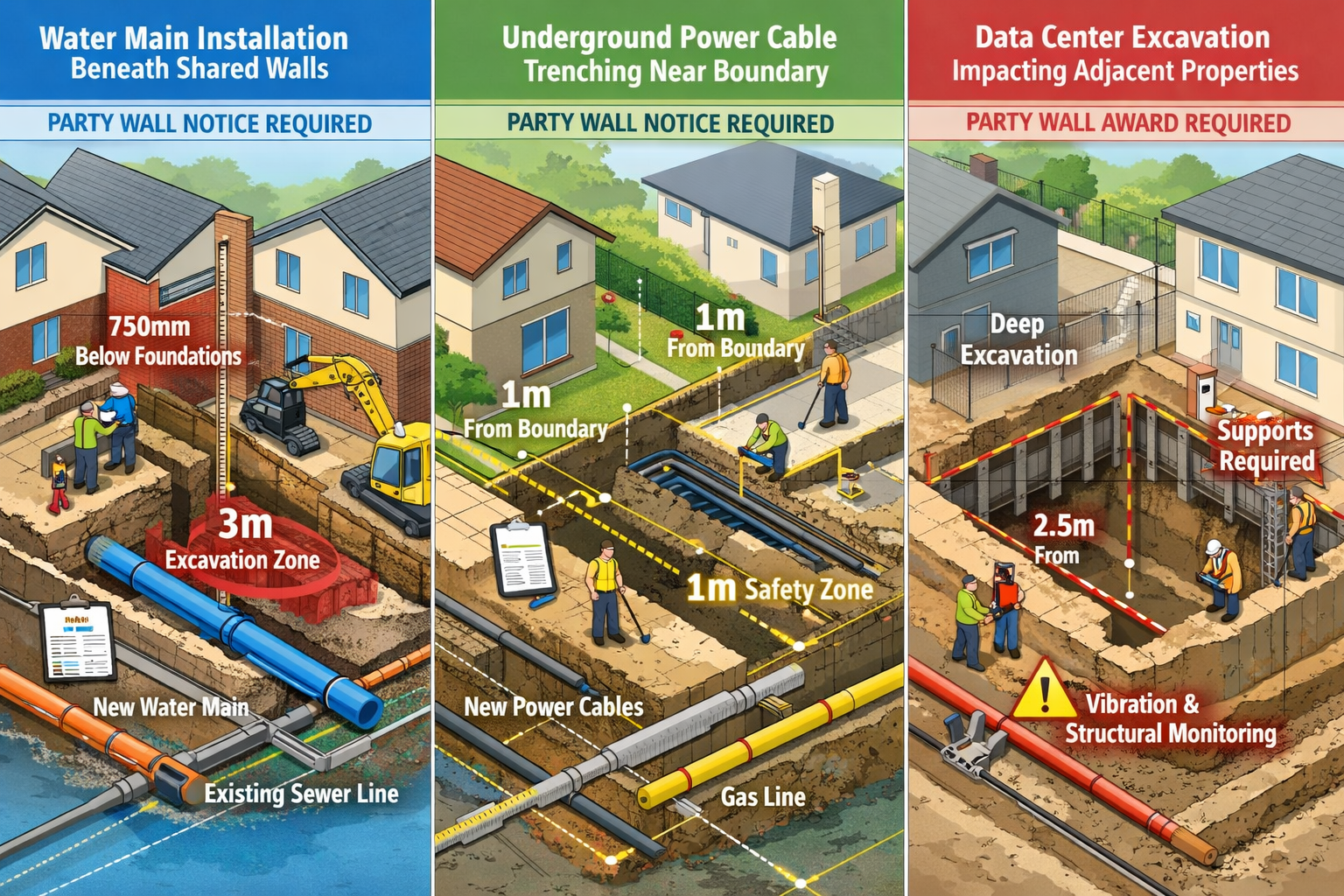
The convergence of infrastructure growth and property law creates unique challenges. When utility companies need to install water mains beneath shared walls, when energy providers must excavate near property boundaries for power cables, or when telecommunications firms require access to install fiber optic networks, party wall legislation becomes a critical compliance framework. This comprehensive guide explores how to navigate these complex requirements while maintaining legal compliance and protecting property rights.
Key Takeaways
- Infrastructure demand is surging: Power projects and data centers are driving significant construction activity in 2026, with contractor expectations reaching 34% and 57% respectively, creating increased party wall survey requirements[1].
- Compliance is non-negotiable: Party wall surveys are legally required when work involves cutting into party walls, excavation within 3-6 meters of neighboring properties, or any structural modifications affecting shared boundaries[4].
- Proper documentation protects all parties: Comprehensive schedules of condition, proper notice periods, and RICS-compliant surveys safeguard both building owners and adjoining owners throughout infrastructure projects.
- Early engagement prevents disputes: Proactive party wall agreements and professional surveyor involvement significantly reduce conflicts and project delays in utilities and energy expansions.
- Specialized expertise matters: Infrastructure projects require surveyors with specific knowledge of utilities, energy systems, and large-scale construction compliance frameworks.
Understanding Party Wall Legislation in Infrastructure Context
What Constitutes a Party Wall in Infrastructure Projects? 🏗️
Party walls in infrastructure contexts extend beyond traditional residential boundaries. These structures include any wall standing on the boundary between two properties, walls separating buildings owned by different parties, and even walls within a single building divided into separate ownership units. For utilities and energy projects, the definition becomes particularly important when infrastructure installations affect:
- Shared basement walls where utility conduits must pass through
- Boundary walls adjacent to excavation zones for underground cables
- Structural walls supporting both residential and commercial properties
- Garden walls marking property lines where trenching occurs
The Party Wall Act 1996 governs most of these situations in England and Wales, establishing clear procedures for notifying adjoining owners and resolving disputes. When infrastructure projects involve work on these structures, compliance becomes mandatory rather than optional.
Legal Requirements for Infrastructure Developers
Infrastructure developers face specific legal obligations under party wall legislation. These requirements include serving proper notices to adjoining owners, allowing reasonable time for responses, and appointing qualified party wall surveyors when disputes arise. The legislation recognizes three main types of notices:
- Party Structure Notice: Required when work directly affects a party wall or structure
- Line of Junction Notice: Needed when building a new wall on or at the boundary line
- Notice of Adjacent Excavation: Mandatory when excavating within specific distances of neighboring structures
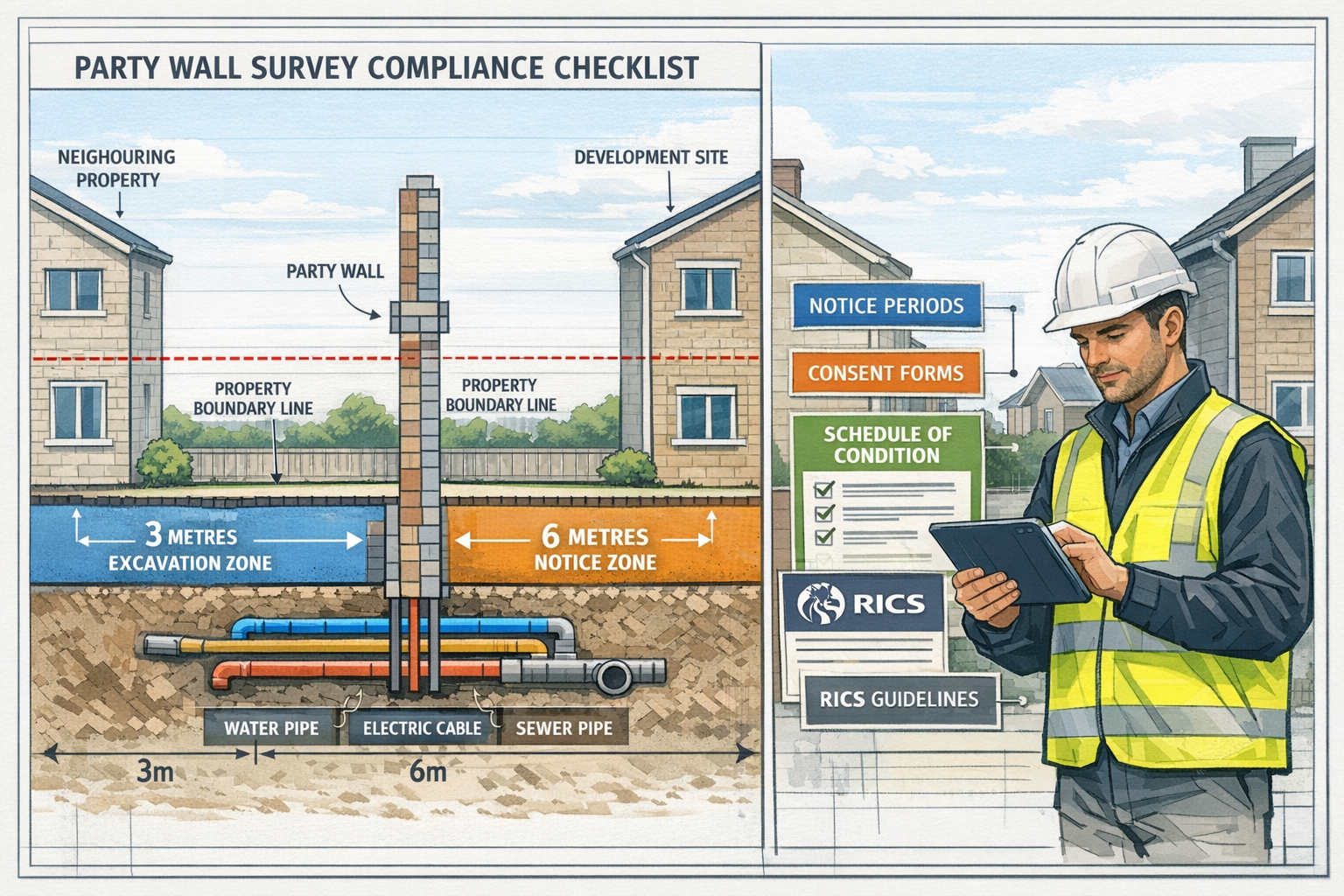
For party wall work involving utilities and energy projects, the Notice of Adjacent Excavation becomes particularly relevant. This notice must be served when excavation occurs within three meters of a neighboring building's foundation and goes deeper than that foundation, or within six meters when the excavation extends below a 45-degree plane from the bottom of the neighbor's foundation[4].
The Role of RICS Standards in 2026
The Royal Institution of Chartered Surveyors (RICS) provides professional standards that guide party wall surveyors through complex infrastructure projects. In 2026, these standards have evolved to address modern construction challenges, including sustainable energy installations, smart utility networks, and high-density data infrastructure.
RICS-qualified surveyors bring specialized knowledge to infrastructure projects, understanding both traditional party wall principles and contemporary construction methods. Their expertise ensures that awards properly balance the building owner's right to develop with the adjoining owner's right to protection from damage.
Party Wall Surveys for 2026 Infrastructure Expansions: Compliance Checklists for Utilities Projects
Water Infrastructure Expansion Requirements 💧
Water infrastructure projects represent a significant portion of 2026's utility expansions. Whether installing new water mains, upgrading sewer systems, or creating sustainable drainage solutions, these projects frequently trigger party wall requirements. A comprehensive compliance checklist for water infrastructure includes:
Pre-Construction Phase:
- Identify all properties within six meters of planned excavation routes
- Conduct preliminary boundary surveys to determine exact property lines
- Review land registry documents to confirm ownership of walls and structures
- Assess whether existing party wall agreements cover proposed work
- Prepare detailed technical drawings showing excavation depths and distances
Notice and Documentation Phase:
- Serve notices for excavation near a neighbor at least one month before work begins (two months for party structure work)
- Include comprehensive plans showing excavation extent, depth, and methodology
- Specify proposed working hours and estimated project duration
- Detail protective measures to prevent damage to adjoining properties
- Provide contact information for the building owner and their surveyor
Survey and Assessment Phase:
- Commission professional schedules of condition documenting pre-work property status
- Photograph all potentially affected structures from multiple angles
- Record existing cracks, settlement, or structural issues in neighboring properties
- Document utility connections, drainage systems, and underground services
- Establish monitoring protocols for properties at higher risk
Award and Agreement Phase:
- Appoint agreed surveyors or arrange for separate surveyors representing each party
- Negotiate fair awards addressing access rights, working hours, and compensation
- Establish clear dispute resolution procedures
- Define acceptable noise and vibration limits
- Specify insurance requirements and indemnification provisions
Power and Energy Project Protocols ⚡
Power projects showing 34% net demand in contractor expectations require meticulous party wall compliance[1]. Energy infrastructure—from underground power cables to transformer installations—often involves significant excavation and structural work affecting multiple properties.
Specialized Considerations for Power Projects:
Energy installations introduce unique challenges beyond traditional construction. High-voltage equipment requires specific safety zones, electromagnetic field considerations may affect neighboring properties, and emergency access provisions must be negotiated carefully.
| Project Type | Typical Excavation Depth | Notice Period Required | Special Considerations |
|---|---|---|---|
| Underground Power Cables | 1.2-2.5 meters | 1 month minimum | EMF shielding, emergency access |
| Transformer Substations | 2-4 meters | 2 months minimum | Vibration monitoring, noise limits |
| Solar Panel Foundations | 0.5-1.5 meters | 1 month minimum | Roof loading, structural assessment |
| Wind Turbine Bases | 3-6 meters | 2 months minimum | Deep excavation protocols, vibration |
| Battery Storage Facilities | 2-3.5 meters | 2 months minimum | Fire safety, ventilation requirements |
The compliance checklist for power projects must address:
- Electromagnetic compatibility assessments for sensitive neighboring equipment
- Vibration monitoring during excavation and installation phases
- Emergency access provisions for utility maintenance and repairs
- Long-term maintenance rights affecting party walls and boundaries
- Decommissioning obligations when infrastructure reaches end-of-life
Data Center and Telecommunications Compliance 📡
With data centers showing remarkable 57% contractor expectations in 2026[1], these projects represent the fastest-growing infrastructure category requiring party wall surveys. Data centers demand substantial foundations, extensive underground cabling, and significant utility connections—all potentially triggering party wall requirements.
Data Center-Specific Compliance Elements:
Modern data centers require cooling systems, backup power generators, and fiber optic connections that frequently affect neighboring properties. The compliance framework must address:
- Foundation Excavation: Data centers require deep, stable foundations often extending 4-6 meters below ground level
- Cooling Infrastructure: External cooling towers and underground coolant pipes may cross property boundaries
- Power Redundancy: Multiple utility connections increase the number of excavation points
- Fiber Optic Trenching: High-capacity data connections require extensive underground cable routes
- Backup Generator Installations: Emergency power systems may affect party walls through vibration and noise
Telecommunications Infrastructure Checklist:
For fiber optic installations and 5G infrastructure, party wall considerations include:
- Serving notices for trenching within prescribed distances of boundaries
- Documenting existing underground services to prevent damage
- Establishing reinstatement standards for excavated areas
- Negotiating access rights for future maintenance and upgrades
- Addressing concerns about electromagnetic radiation near residential properties
Understanding party wall FAQs helps infrastructure developers anticipate common questions and concerns from adjoining owners.
Navigating the Party Wall Survey Process for Large-Scale Infrastructure
Appointing Qualified Surveyors for Infrastructure Projects
The complexity of infrastructure projects demands surveyors with specialized expertise. While residential party wall work requires solid foundational knowledge, utilities and energy projects introduce additional technical considerations. When selecting surveyors for infrastructure expansions, consider:
Essential Qualifications:
- RICS membership demonstrating professional competency
- Specific experience with utilities and energy infrastructure
- Understanding of relevant health and safety regulations
- Knowledge of environmental impact assessment requirements
- Familiarity with local authority planning procedures
Surveyor Appointment Options:
The Party Wall Act allows for three appointment scenarios:
- Agreed Surveyor: Both parties appoint a single surveyor to act impartially
- Two Surveyors: Each party appoints their own surveyor, who then select a third surveyor
- Third Surveyor: Selected by the two appointed surveyors to resolve disagreements
For infrastructure projects, the two-surveyor approach often provides the most balanced outcome, ensuring both the developer's technical requirements and the adjoining owner's protection receive proper consideration.
Conducting Comprehensive Schedules of Condition
A thorough schedule of condition forms the foundation of party wall protection. For infrastructure projects affecting multiple properties, these surveys must be exceptionally detailed. Professional surveyors document:
- Structural Elements: Walls, foundations, floors, ceilings, and load-bearing components
- Exterior Features: Facades, roofing, drainage systems, and boundary structures
- Interior Conditions: Plasterwork, decorative finishes, and visible crack patterns
- Mechanical Systems: Heating, ventilation, plumbing, and electrical installations
- Underground Services: Known locations of utilities, drains, and foundations
High-quality photographic documentation with date stamps and location references proves invaluable if damage to property occurs during construction. Digital documentation systems now allow surveyors to create interactive 3D models of properties, providing unprecedented detail for pre-construction condition records.
Preparing and Serving Party Wall Awards
The party wall award represents the legally binding agreement governing infrastructure work. This document must address specific concerns relevant to utilities and energy projects:
Core Award Components:
- Scope of Work: Detailed description of all activities affecting party walls or requiring excavation
- Access Provisions: Specific rights to enter adjoining properties for surveys, monitoring, or emergency repairs
- Working Hours: Permitted times for noisy or disruptive activities
- Protective Measures: Required safeguards such as shoring, underpinning, or vibration dampening
- Monitoring Protocols: Frequency and methodology for condition inspections during construction
- Dispute Resolution: Procedures for addressing disagreements during project execution
- Cost Allocation: Responsibility for survey fees, protective work costs, and potential remediation
For guidance on obtaining proper consent for party wall work, infrastructure developers should engage surveyors early in the planning process.
Managing Disputes and Objections
Despite careful planning, infrastructure projects sometimes face objections from adjoining owners. Common concerns include:
- Property value impact from proximity to utilities or energy installations
- Health concerns regarding electromagnetic fields or noise pollution
- Privacy issues when infrastructure requires ongoing access to private land
- Construction disruption affecting businesses or residential quality of life
- Long-term maintenance obligations creating perpetual access requirements
Professional party wall surveyors navigate these concerns by:
- Providing transparent information about project scope, duration, and impacts
- Offering reasonable accommodations such as modified working hours or additional protective measures
- Demonstrating compliance with health, safety, and environmental regulations
- Negotiating fair compensation for genuine inconvenience or property impacts
- Establishing clear communication channels throughout the construction period
When no party wall agreement can be reached through negotiation, the Act provides for dispute resolution through the surveyor appointment process, ensuring projects can proceed while protecting adjoining owners' rights.
2026 Market Trends Driving Infrastructure Party Wall Demand
Construction Industry Recovery and Infrastructure Investment
The UK construction industry's significant turnaround in 2026 follows several challenging years of economic uncertainty[3]. This recovery manifests particularly strongly in infrastructure sectors, where deferred maintenance and capacity upgrades create urgent demand for utilities and energy projects.
Key Market Drivers:
- Government infrastructure commitments supporting net-zero carbon targets
- Private sector investment in renewable energy and data infrastructure
- Urban densification requiring upgraded utility capacity in established areas
- Technology advancement driving demand for high-speed connectivity and computing power
- Climate resilience necessitating improved water management and flood prevention
These trends directly impact party wall survey demand. As infrastructure projects increasingly occur in built-up urban areas where property boundaries are tightly constrained, proper party wall compliance becomes essential for project success.
Regional Variations in Infrastructure Development
Infrastructure expansion occurs unevenly across the UK, with certain regions experiencing particularly intense development activity. Understanding regional patterns helps infrastructure developers anticipate party wall requirements:
High-Growth Infrastructure Regions:
- London and Southeast: Data center expansion, fiber optic networks, and electric vehicle charging infrastructure
- Northern Powerhouse: Renewable energy projects, industrial utility upgrades, and transportation electrification
- Midlands Manufacturing Belt: Power supply enhancements supporting advanced manufacturing
- Scottish Renewables Corridor: Wind, tidal, and hydroelectric installations requiring grid connections
- Welsh Valleys Regeneration: Sustainable drainage, broadband expansion, and community energy projects
Each region presents unique party wall challenges based on property types, ownership patterns, and existing infrastructure density.
Emerging Technologies and Party Wall Implications
New technologies introduced in 2026 create novel party wall scenarios that traditional legislation didn't anticipate. Forward-thinking surveyors now address:
Battery Storage Systems: Large-scale battery installations for grid stabilization require substantial foundations and may generate heat or electromagnetic fields affecting neighboring properties.
Hydrogen Infrastructure: Emerging hydrogen fuel systems involve underground storage and distribution networks with specific safety requirements near property boundaries.
Smart Grid Technology: Advanced metering and distribution control systems require equipment installations that may affect party walls or require excavation near boundaries.
Geothermal Heating: Ground-source heat pump systems for district heating involve deep drilling that may trigger party wall requirements even when occurring entirely on the building owner's land.
Professional surveyors must stay current with these technological developments to provide appropriate guidance for infrastructure projects incorporating cutting-edge systems.
Best Practices for Infrastructure Developers and Property Owners
Proactive Planning and Early Engagement
Successful infrastructure projects begin with proactive party wall planning long before construction commences. Developers who integrate party wall considerations into early project stages experience fewer delays, reduced costs, and better community relations.
Recommended Timeline:
- 12-18 months before construction: Conduct preliminary boundary surveys and identify potentially affected properties
- 9-12 months before construction: Engage party wall surveyors for initial assessments and strategy development
- 6-9 months before construction: Begin informal discussions with adjoining owners to explain project benefits
- 3-6 months before construction: Serve formal party wall notices and commission schedules of condition
- 1-3 months before construction: Finalize party wall awards and establish monitoring protocols
- During construction: Maintain regular communication and conduct periodic condition inspections
- Post-construction: Complete final condition surveys and address any remediation requirements
This timeline allows adequate opportunity for negotiation, dispute resolution, and protective measure implementation without compromising project schedules.
Communication Strategies for Adjoining Owners
Effective communication transforms potential adversaries into project supporters. Infrastructure developers should:
Establish Clear Communication Channels:
- Designate a specific project liaison for party wall matters
- Provide multiple contact methods (phone, email, in-person meetings)
- Respond promptly to concerns and questions
- Schedule regular updates even when no significant changes occur
Provide Comprehensive Information:
- Explain project purpose and community benefits in accessible language
- Share visual materials showing proposed work and protective measures
- Offer site visits for adjoining owners to understand scope and methodology
- Distribute written summaries of key information for future reference
Demonstrate Respect and Professionalism:
- Acknowledge legitimate concerns without dismissing worries
- Offer reasonable accommodations when possible
- Maintain confidentiality regarding personal or business information
- Follow through consistently on commitments and promises
When party wall notices are not served properly, projects face legal challenges and potential injunctions. Professional communication prevents these costly complications.
Risk Mitigation and Insurance Considerations
Infrastructure projects carry inherent risks that party wall procedures help manage. Comprehensive risk mitigation strategies include:
Insurance Coverage:
- Public liability insurance covering third-party property damage
- Professional indemnity insurance for surveyors and designers
- Contractor's all-risk insurance protecting against construction-related incidents
- Environmental liability coverage addressing contamination or pollution risks
Protective Measures:
- Installing vibration monitoring equipment on sensitive neighboring structures
- Implementing dust suppression systems to prevent property soiling
- Establishing exclusion zones around high-risk excavation areas
- Providing temporary support (shoring or underpinning) for vulnerable structures
- Scheduling particularly disruptive work during periods of minimal impact
Monitoring and Documentation:
- Conducting regular inspections throughout construction phases
- Maintaining detailed photographic records of work progress
- Recording any incidents, complaints, or concerns immediately
- Documenting compliance with award conditions and protective measures
- Preserving all correspondence and formal communications
These practices provide evidence of due diligence if disputes arise and demonstrate commitment to responsible infrastructure development.
Working with Local Authorities and Utility Companies
Infrastructure projects often involve coordination between multiple stakeholders beyond the building owner and adjoining owners. Successful navigation requires understanding how party wall obligations intersect with other regulatory frameworks:
Local Authority Coordination:
- Planning permissions may impose conditions affecting party wall work timing or methodology
- Building control inspections must verify compliance with structural requirements
- Highway authorities regulate work affecting public rights of way or street excavations
- Environmental health departments monitor noise, vibration, and pollution impacts
Utility Company Relationships:
- Existing utility providers must be notified before excavation near their infrastructure
- Statutory undertakers possess specific rights that may supersede some party wall provisions
- Coordination prevents conflicts between multiple infrastructure projects in the same area
- Shared trenching opportunities may reduce overall disruption to adjoining owners
Stakeholder Alignment:
Effective infrastructure developers create coordination frameworks ensuring all parties understand their responsibilities and how different regulatory requirements interact. This holistic approach prevents situations where compliance with one requirement creates non-compliance with another.
Technical Considerations for Specific Infrastructure Types
Underground Utility Installation Methodologies
The excavation method significantly impacts party wall requirements and adjoining owner concerns. Modern infrastructure projects employ various techniques, each with distinct implications:
Traditional Open-Cut Trenching:
- Creates maximum disruption but allows thorough inspection of ground conditions
- Requires extensive party wall notices when occurring near boundaries
- Enables comprehensive protective measure implementation
- Facilitates easier remediation if unexpected conditions arise
Directional Drilling:
- Minimizes surface disruption by creating underground pathways without continuous trenching
- May still trigger party wall requirements if drill entry/exit points occur near boundaries
- Reduces vibration and noise compared to open excavation
- Requires specialized monitoring to ensure accurate pathway and avoid existing services
Pipe Jacking and Tunneling:
- Allows utility installation beneath existing structures without surface excavation
- May affect party wall foundations through ground movement or vibration
- Requires sophisticated monitoring of settlement and structural movement
- Typically involves specialized party wall awards addressing subsurface rights
Micro-Trenching:
- Emerging technique for fiber optic installation using narrow, shallow cuts
- Reduces party wall impacts but still requires proper notice for boundary work
- Enables faster installation with less disruption
- May have implications for future maintenance access
Understanding these methodologies helps surveyors assess appropriate protective measures and monitoring requirements for party wall awards.
Structural Protection Measures for Energy Projects
Energy infrastructure often involves heavy equipment, significant vibration, or deep excavation requiring robust protective measures. Party wall awards for energy projects should specify:
Foundation Protection:
- Underpinning adjacent structures when excavation undermines existing foundations
- Installing sheet piling or secant pile walls to prevent ground movement
- Implementing dewatering controls to maintain groundwater levels
- Providing temporary support during construction phases
Vibration Management:
- Establishing baseline vibration levels before work commences
- Installing continuous monitoring equipment on sensitive structures
- Defining acceptable vibration thresholds and response protocols
- Selecting construction methods and equipment to minimize vibration transmission
Structural Monitoring:
- Installing crack monitoring gauges on existing structural cracks
- Conducting periodic level surveys to detect settlement
- Monitoring building plumbness and alignment during construction
- Documenting any changes immediately and implementing remedial measures
These protective measures demonstrate commitment to preserving adjoining properties while enabling essential infrastructure development.
Sustainable Infrastructure and Party Wall Considerations
The 2026 focus on sustainable development introduces new party wall considerations. Green infrastructure projects often involve:
Renewable Energy Installations:
- Solar panel arrays requiring roof structural assessments
- Ground-source heat pumps involving deep drilling near boundaries
- Wind turbines creating vibration and electromagnetic considerations
- Biomass facilities requiring fuel delivery access across boundaries
Sustainable Drainage Systems:
- Permeable paving affecting groundwater flow to neighboring properties
- Rain gardens and bioswales potentially impacting foundations
- Attenuation tanks requiring excavation near boundaries
- Green roofs increasing structural loading on party walls
Energy Efficiency Upgrades:
- External wall insulation systems potentially affecting party wall junctions
- Cavity wall insulation requiring access to party walls
- Window replacements in party wall openings
- Ventilation systems penetrating party structures
For guidance on insulation in party walls, property owners should consult qualified surveyors familiar with both thermal performance requirements and party wall legislation.
Case Studies: Infrastructure Party Wall Success Stories
Case Study 1: Urban Power Cable Installation
Project Overview:
A regional power company needed to install high-capacity underground cables through a densely populated urban area to serve a new data center development. The route affected 47 properties, including residential homes, commercial buildings, and historic structures.
Party Wall Challenges:
- Multiple property types requiring different approaches
- Listed buildings with strict heritage protection requirements
- Businesses concerned about disruption to operations
- Residential owners worried about property value impacts
Solution Approach:
The developer appointed an experienced party wall surveyor six months before planned construction. The surveyor:
- Conducted comprehensive boundary surveys identifying all affected properties
- Organized community consultation sessions explaining project benefits
- Offered flexible working schedules accommodating business operations
- Commissioned detailed schedules of condition for all properties
- Negotiated awards including vibration monitoring and accelerated dispute resolution
Outcome:
The project completed on schedule with zero formal disputes. Three minor claims for cosmetic damage were resolved quickly through the established award procedures. The proactive approach cost an additional £45,000 in surveyor fees but avoided an estimated £200,000 in potential delay costs and legal expenses.
Case Study 2: Data Center Foundation Excavation
Project Overview:
A technology company planned a 15,000 square meter data center requiring foundations extending 5.5 meters below ground level. The site adjoined a residential estate with properties built on shallow foundations within the party wall notification zone.
Party Wall Challenges:
- Deep excavation triggering six-meter notification requirements
- Concerns about settlement affecting 23 neighboring homes
- Continuous vibration from pile driving operations
- Long construction period (18 months) creating extended disruption
Solution Approach:
The developer implemented a comprehensive party wall strategy:
- Served notices four months before construction providing detailed technical information
- Installed continuous vibration monitoring on all properties within 20 meters
- Commissioned independent structural engineers to design protective underpinning
- Established a dedicated community liaison office with daily availability
- Created a compensation framework for proven inconvenience
Outcome:
Initial objections from 15 homeowners were resolved through the surveyor appointment process. Awards included provisions for temporary accommodation if vibration exceeded thresholds (never required) and guaranteed remediation of any structural damage. Post-construction surveys identified minor settlement in two properties, both successfully remediated under award provisions. The comprehensive approach maintained community relations and enabled the data center to commence operations on schedule.
Case Study 3: Regional Water Main Upgrade
Project Overview:
A water utility company needed to replace aging water mains serving a suburban area, involving excavation along a 2.3-kilometer route affecting approximately 180 properties.
Party Wall Challenges:
- Scale of project requiring efficient notice and survey processes
- Varied property types from Victorian terraces to modern developments
- Coordination with highway authority and other utilities
- Budget constraints limiting available resources for party wall compliance
Solution Approach:
The utility company developed a streamlined but compliant approach:
- Created standardized notice packages with project-specific route information
- Appointed a team of three surveyors to manage the volume efficiently
- Implemented a tiered survey approach based on proximity and risk
- Established clear protocols for emergency situations requiring rapid response
- Developed a digital tracking system monitoring all notices, responses, and awards
Outcome:
The systematic approach enabled compliant party wall procedures across the entire route. High-risk properties received comprehensive individual attention while lower-risk properties benefited from efficient standardized processes. The project experienced only seven formal disputes, all resolved through the surveyor appointment mechanism. Total party wall compliance costs represented 2.3% of project value, within industry norms for infrastructure projects.
Future-Proofing Infrastructure Party Wall Compliance
Anticipated Regulatory Changes
The party wall legislative framework continues evolving to address modern construction challenges. Infrastructure developers should monitor potential changes including:
Digital Notice Requirements:
Proposals to allow electronic service of party wall notices may streamline processes but require careful attention to proof of delivery and accessibility for all property owners.
Environmental Impact Integration:
Increasing focus on sustainability may introduce requirements for party wall awards to address environmental considerations such as embodied carbon, waste management, and ecological protection.
Extended Notification Zones:
Some jurisdictions are considering expanded notification distances for particularly disruptive activities like deep geothermal drilling or large-scale tunneling.
Standardized Award Templates:
Industry bodies are developing standardized award frameworks for common infrastructure scenarios, potentially reducing surveyor costs while maintaining protection standards.
Technology Integration in Party Wall Surveys
Technological advancement transforms how party wall surveys are conducted and documented. Emerging tools include:
3D Laser Scanning:
Creates precise digital models of properties for schedules of condition, enabling accurate measurement of any changes during construction.
Drone Surveys:
Provides comprehensive photographic documentation of roofs, upper floors, and other difficult-to-access areas without requiring intrusive access.
Continuous Monitoring Systems:
IoT sensors track vibration, settlement, crack width, and environmental conditions in real-time, providing early warning of potential issues.
Digital Award Management:
Cloud-based platforms enable all parties to access award documents, inspection reports, and correspondence from any location, improving transparency and communication.
Artificial Intelligence Analysis:
AI systems can analyze pre- and post-construction surveys to identify subtle changes that human inspectors might miss, improving damage detection accuracy.
These technologies enhance party wall compliance while potentially reducing costs and improving outcomes for all parties.
Building Collaborative Relationships
Long-term infrastructure development benefits from collaborative approaches to party wall compliance. Progressive developers are:
Creating Stakeholder Forums:
Regular meetings bringing together developers, utility companies, local authorities, and community representatives to discuss upcoming projects and share best practices.
Developing Framework Agreements:
Establishing pre-negotiated terms for common party wall scenarios, reducing negotiation time for individual projects while maintaining fair protections.
Investing in Community Benefits:
Linking infrastructure projects to community improvements such as public realm enhancements, creating goodwill that facilitates party wall negotiations.
Supporting Professional Development:
Funding training for party wall surveyors in emerging technologies and infrastructure-specific challenges, building a more capable professional community.
Sharing Data and Insights:
Contributing to industry knowledge about effective party wall practices, helping the entire sector improve compliance and reduce conflicts.
These collaborative approaches recognize that infrastructure development succeeds best when all stakeholders benefit from improved utilities and energy systems.
Conclusion: Navigating Party Wall Surveys for 2026 Infrastructure Success
The intersection of Party Wall Surveys for 2026 Infrastructure Expansions: Navigating Utilities and Energy Projects represents both challenge and opportunity. As the UK construction industry experiences significant recovery[3], and power projects and data centers drive unprecedented infrastructure demand[1], proper party wall compliance becomes essential for project success.
The comprehensive compliance checklists, best practices, and strategic approaches outlined in this guide provide infrastructure developers with the tools needed to navigate party wall requirements effectively. From water main installations to power cable trenching, from data center foundations to telecommunications networks, each project type presents unique challenges requiring specialized knowledge and careful planning.
Success in Party Wall Surveys for 2026 Infrastructure Expansions: Navigating Utilities and Energy Projects depends on several critical factors:
✅ Early engagement with party wall requirements during project planning phases
✅ Professional expertise from RICS-qualified surveyors experienced in infrastructure projects
✅ Comprehensive documentation through detailed schedules of condition and monitoring protocols
✅ Effective communication building trust and understanding with adjoining owners
✅ Robust protective measures safeguarding neighboring properties throughout construction
✅ Collaborative approaches recognizing shared interests in successful infrastructure development
Actionable Next Steps
For infrastructure developers planning utilities or energy projects in 2026:
- Conduct preliminary boundary assessments identifying all properties potentially requiring party wall notices
- Engage qualified party wall surveyors at least six months before planned construction commencement
- Review our comprehensive party wall guidance to understand award requirements
- Develop project-specific compliance checklists addressing your infrastructure type's unique requirements
- Establish communication protocols ensuring adjoining owners receive clear, timely information
- Budget appropriately for party wall surveys, protective measures, and monitoring programs
- Consider monitoring surveys for high-risk neighboring structures
For property owners affected by infrastructure projects:
- Understand your rights under party wall legislation when receiving notices
- Respond promptly to notices, appointing your own surveyor if concerns exist
- Request comprehensive schedules of condition documenting your property's current state
- Communicate concerns clearly to surveyors and developers early in the process
- Review proposed awards carefully ensuring adequate protection and fair compensation
- Maintain records of all correspondence, inspections, and agreements
The infrastructure expansions driving 2026's construction recovery will shape communities for decades to come. By approaching Party Wall Surveys for 2026 Infrastructure Expansions: Navigating Utilities and Energy Projects with professionalism, expertise, and commitment to fair processes, developers and property owners together can ensure these essential projects proceed successfully while protecting property rights and maintaining community harmony.
The party wall framework, properly applied, transforms potential conflicts into collaborative processes where infrastructure progress and property protection coexist. As utilities and energy projects accelerate throughout 2026, this balanced approach will prove essential for sustainable development benefiting all stakeholders.
References
[1] 2026 Construction Outlook Mixed Trends – https://dailyreporter.com/2026/01/14/2026-construction-outlook-mixed-trends/
[2] 2026 Construction Outlook – https://sips.premierbuildingsystems.com/blog/2026-construction-outlook
[3] Party Wall Surveys Amid 2026 Construction Boom Handling Disputes In High Demand Uk Housing Markets – https://nottinghillsurveyors.com/blog/party-wall-surveys-amid-2026-construction-boom-handling-disputes-in-high-demand-uk-housing-markets
[4] Party Wall Maintenance Tips For Keeping Your Property In Compliance – https://www.adamjoseph.co.uk/party-wall-maintenance-tips-for-keeping-your-property-in-compliance
[5] Why Party Wall Agreement Is Important – https://geoinfotech.ng/geoinfotech-blog/why-party-wall-agreement-is-important/
[6] Building Surveying – https://www.rba.ltd.uk/building-surveying/