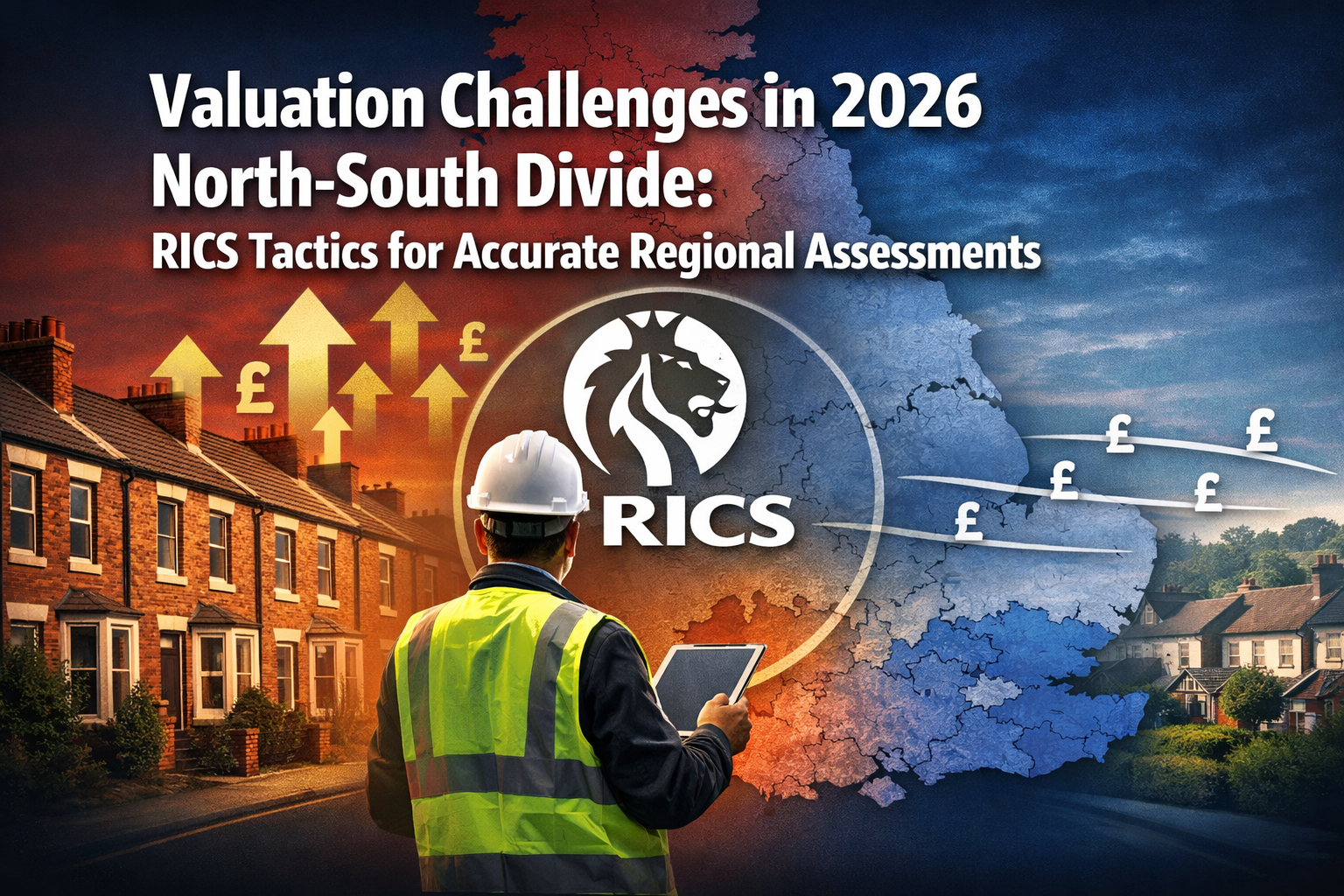

When residential property markets begin to stabilize after periods of volatility, disputes inevitably emerge. Buyers question valuations, sellers contest appraisals, and recovery disputes require expert testimony to resolve conflicts fairly. In 2026, as the UK housing market shows signs of renewed buyer confidence and improving sales expectations, Expert Witness Roles in 2026 Residential Recovery Disputes: RICS Guidelines for Sales and Valuation Conflicts have never been more critical for chartered surveyors navigating this complex landscape.
The Royal Institution of Chartered Surveyors (RICS) has introduced comprehensive updates to its professional standards for expert witnesses, marking the first major revision since 2014. These updated guidelines, published in late 2025 and taking effect in early 2026, provide surveyors with the framework needed to deliver credible, independent testimony in an era of market stabilization, digital evidence, and evolving legal requirements.[2]
Key Takeaways
⚖️ Primary Duty to Tribunal: Expert witnesses must prioritize their duty to the court or tribunal over client interests, ensuring all evidence remains independent and unbiased regardless of who pays the fees.[1]
🌍 Global Standards with Local Flexibility: The 5th edition RICS standards apply worldwide while recognizing regional legal differences, expanding from the previous UK-only framework.[2]
🔍 Enhanced Conflict Disclosure: Stricter requirements for identifying and disclosing conflicts of interest protect professional integrity and ensure compliance with legal consequences for violations.[1]
💻 Modern Practice Integration: New provisions address AI use, digital evidence presentation, and contemporary legal procedures relevant to 2026 residential disputes.[1]
📊 Market Context Matters: Expert witnesses must understand emerging market stabilization trends, improving buyer enquiries, and sales expectations when providing valuation testimony in recovery disputes.
Understanding the Updated RICS Framework for Expert Witnesses
The Evolution from 4th to 5th Edition Standards
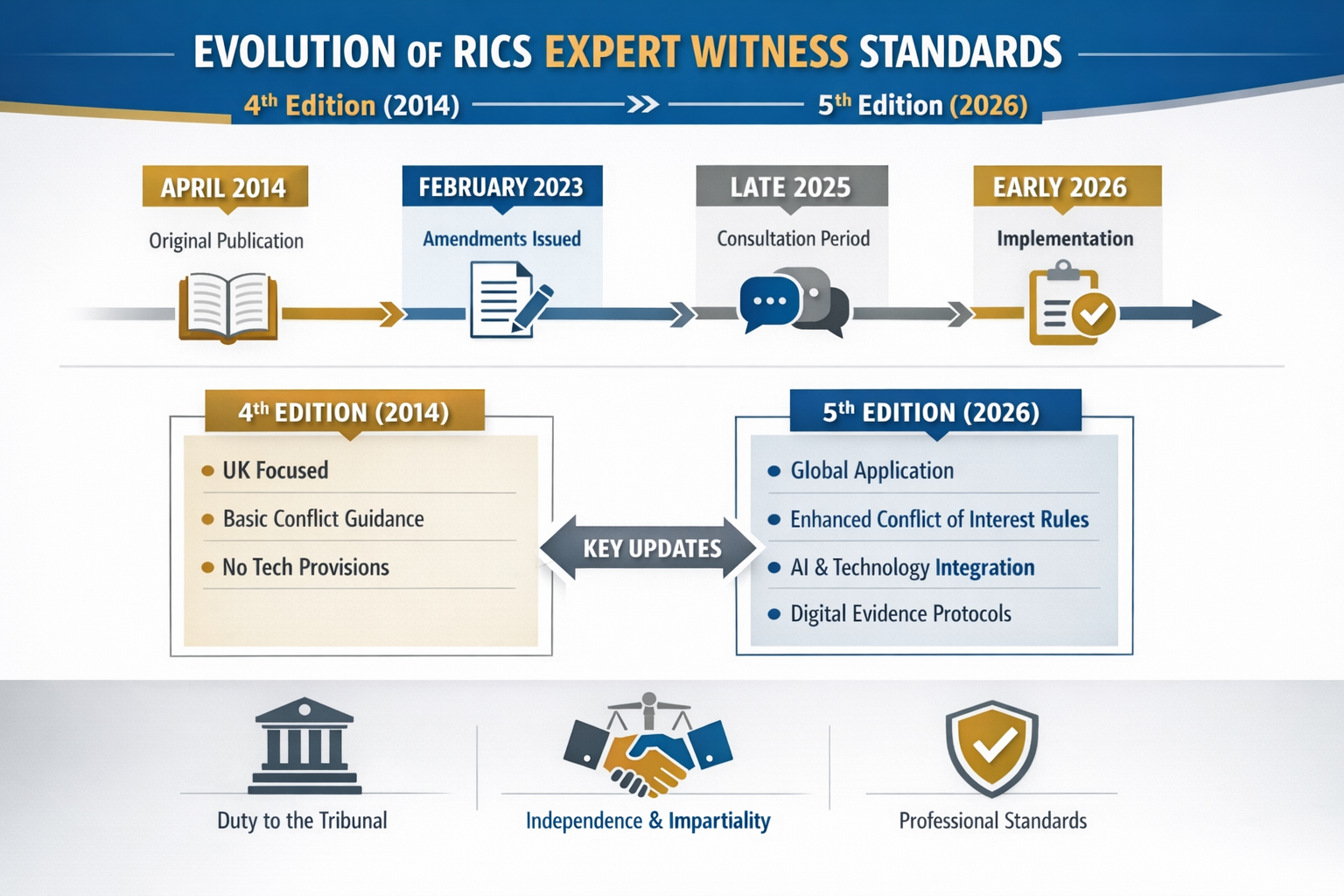
The RICS professional standard for surveyors acting as expert witnesses has undergone significant transformation. The 4th edition, originally published in April 2014 and amended in February 2023, served the profession well but required modernization to address contemporary challenges.[4] The 5th edition, published in late 2025 with a short transition period before becoming effective in 2026, represents the first major update in over a decade.[2]
This evolution reflects changing market dynamics, technological advancement, and lessons learned from residential recovery disputes following previous market corrections. For surveyors providing expert witness services, understanding these changes is essential for maintaining professional credibility and legal compliance.
Key Changes Impacting Residential Dispute Work
The updated standards introduce several critical modifications that directly affect how surveyors approach residential recovery disputes:
Global Application: Unlike its predecessor, the 5th edition applies worldwide while acknowledging local legal variations. This change recognizes the increasingly international nature of property investment and the need for consistent professional standards across jurisdictions.[2]
Primary Duty Reinforcement: The standard explicitly reinforces that expert witnesses owe their primary duty to the tribunal, not the instructing party. This fundamental principle ensures that valuation evidence in residential disputes remains objective, even when market conditions favor one party's position.[1]
Conflict of Interest Protocols: Enhanced requirements demand thorough identification and disclosure of potential conflicts. Surveyors must now understand the legal consequences of non-compliance, which can include evidence being struck from proceedings and professional sanctions.[1]
Fee Structure Transparency: Clear guidance on conditional and deferred fees protects professional independence. This is particularly relevant in residential recovery disputes where payment terms might be tied to case outcomes.[1]
Expert Witness Roles in 2026 Residential Recovery Disputes: Core Responsibilities
Independent Valuation Assessment
In residential recovery disputes, the expert witness's primary function involves providing independent valuation assessments that withstand scrutiny from all parties and the tribunal. This requires surveyors to:
- Conduct thorough property inspections using current RICS methodology
- Analyze comparable sales data within the relevant market context
- Consider market conditions at the specific valuation date
- Document all assumptions and limitations clearly
- Prepare valuations that comply with both RICS standards and legal requirements
For disputes arising from sales and valuation conflicts in 2026's stabilizing market, experts must demonstrate understanding of how improving buyer enquiries and sales expectations affect property values. A comprehensive valuation approach considers both historical market volatility and emerging recovery trends.
Evidence Preparation and Documentation
The quality of expert evidence depends heavily on meticulous preparation and documentation. Under the updated RICS guidelines, expert witnesses must:
Maintain Comprehensive Records: Every step of the valuation process requires documentation, from initial instructions through final report delivery. This includes correspondence, inspection notes, comparable property analysis, and calculation methodologies.
Prepare Clear, Accessible Reports: Expert reports must communicate complex valuation concepts in language accessible to non-specialists, including judges, arbitrators, and jury members. The 2026 standards emphasize clarity and relevance over technical jargon.[1]
Integrate Digital Evidence: Modern disputes increasingly involve digital evidence, including electronic communications, digital property records, and online market data. Experts must understand how to properly collect, authenticate, and present such evidence.[1]
Address AI and Technology Use: When artificial intelligence or automated valuation models contribute to the analysis, experts must disclose this use and explain the technology's role in their conclusions.[1]
Tribunal Testimony and Cross-Examination
Delivering effective testimony represents the culmination of expert witness work. In 2026 residential recovery disputes, this involves:
Pre-Hearing Preparation: Reviewing all case materials, anticipating challenges to methodology, and preparing clear explanations of technical concepts.
Direct Testimony: Presenting findings clearly and confidently while maintaining professional demeanor and demonstrating independence from the instructing party.
Cross-Examination Resilience: Responding to challenging questions without becoming defensive, acknowledging limitations appropriately, and maintaining credibility under pressure.
Post-Hearing Obligations: Providing clarifications if requested and maintaining professional standards throughout the entire dispute resolution process.
Navigating Sales and Valuation Conflicts in 2026's Market Context
Understanding Market Stabilization Dynamics
The residential property market in 2026 presents unique challenges for expert witnesses. After periods of significant volatility, markets typically enter stabilization phases characterized by:
📈 Improving Buyer Confidence: As economic uncertainty diminishes, buyer enquiries increase, creating upward pressure on property values.
📊 Sales Expectation Adjustments: Sellers recalibrate expectations based on recent comparable sales, sometimes creating gaps between asking prices and market reality.
🏘️ Regional Variations: Market recovery rarely occurs uniformly, with some areas experiencing rapid value appreciation while others lag.
⚖️ Dispute Emergence: Conflicts arise when parties disagree about whether property values reflect pre-correction levels, current stabilized values, or anticipated future appreciation.
Expert witnesses must ground their valuations in objective market evidence while explaining how stabilization dynamics affect specific properties. This requires familiarity with local market trends, comparable sales analysis, and the ability to distinguish between temporary market fluctuations and sustainable value changes.
Common Residential Recovery Dispute Scenarios
Purchase Price Disputes: Buyers who contracted during market peaks may dispute valuations when completion occurs during recovery periods, claiming overpayment based on current market conditions.
Development Appraisal Conflicts: Property developers may contest valuations affecting project viability, particularly when market stabilization changes residual land values or development profitability.
Divorce Valuations: Matrimonial property disputes require careful timing considerations, as divorce valuations during market recovery can significantly impact financial settlements.
Lease Extension Valuations: Lease extension disputes intensify during market recovery when landlords and leaseholders disagree about premium calculations based on improving market conditions.
Probate Valuation Challenges: Estate beneficiaries may contest probate valuations when property values change significantly between death and estate distribution.
Applying RICS Valuation Standards
Expert witnesses must apply RICS valuation standards rigorously while explaining their application in the specific dispute context. Key considerations include:
Valuation Date Significance: The valuation date determines which market conditions apply. Experts must clearly establish this date and resist pressure to apply inappropriate retrospective or prospective adjustments.
Market Evidence Selection: Comparable sales must reflect market conditions at the valuation date. In recovering markets, this requires careful analysis of transaction timing and adjustment for market movement.
Special Assumptions Disclosure: When special assumptions are necessary (such as assuming planning permission or vacant possession), these must be clearly stated and their impact on value explained.[3]
Methodology Transparency: Whether using comparable method, investment method, or residual valuation, the chosen approach must be appropriate for the property type and clearly explained in expert reports.
Conflict of Interest Management in Residential Disputes
Identifying Potential Conflicts
The enhanced conflict of interest requirements in the 5th edition RICS standards demand proactive identification of potential conflicts before accepting expert witness instructions. Common conflicts in residential recovery disputes include:
Prior Relationship with Property: Previous involvement with the subject property through building surveys, valuations, or other professional services may create actual or perceived conflicts.
Ongoing Client Relationships: Regular work for one party (such as a mortgage lender, developer, or estate agent) may compromise perceived independence, even if the specific instruction is separate.
Financial Interest: Any financial interest in the dispute outcome, including contingent fees or business relationships with parties, creates conflicts requiring disclosure or declining the instruction.
Personal Relationships: Connections with parties, their representatives, or other experts involved in the dispute must be disclosed and assessed for conflict potential.
Competing Instructions: Simultaneous instructions involving related properties, parties, or issues may create conflicts requiring careful management or instruction refusal.
Disclosure Requirements and Procedures
When potential conflicts are identified, the RICS standards require clear disclosure following specific procedures:
-
Immediate Notification: Inform the instructing party of any potential conflict as soon as it's identified, preferably before accepting the instruction.
-
Written Disclosure: Document the conflict in writing, describing its nature and potential impact on independence.
-
Obtain Consent: If proceeding despite a disclosed conflict, obtain written consent from all relevant parties acknowledging the conflict and agreeing to proceed.
-
Tribunal Notification: Ensure the tribunal is aware of disclosed conflicts, typically through inclusion in the expert report or separate disclosure statement.
-
Ongoing Monitoring: Continue monitoring for emerging conflicts throughout the instruction period, disclosing any new issues promptly.
Legal Consequences of Non-Compliance
The updated RICS standards explicitly address legal consequences for conflict of interest violations, including:
⚠️ Evidence Exclusion: Courts may strike expert evidence from proceedings if undisclosed conflicts undermine credibility.
⚠️ Professional Sanctions: RICS may impose disciplinary measures, including fines, conditions on practice, or removal from membership.
⚠️ Cost Orders: Experts may face personal cost orders if conflict-related issues waste tribunal time or resources.
⚠️ Reputational Damage: Conflict violations damage professional reputation, affecting future instruction opportunities and career progression.
Fee Structures and Professional Independence
Acceptable Fee Arrangements
The 5th edition RICS standards provide clear guidance on fee structures that protect professional independence while ensuring fair compensation:
Fixed Fees: Predetermined fees for specific services (such as report preparation or tribunal attendance) provide certainty and avoid outcome-dependency concerns.
Hourly Rates: Time-based charging remains appropriate for expert witness work, provided rates are reasonable and clearly communicated.
Staged Payments: Breaking fees into stages (instruction acceptance, report delivery, tribunal attendance) helps manage cash flow without compromising independence.
Retainer Arrangements: Advance payments or retainers are acceptable when they don't create pressure to deliver favorable opinions.
Prohibited Fee Structures
Certain fee arrangements compromise professional independence and violate RICS standards:
❌ Contingent Fees: Payment dependent on case outcome (such as percentage of damages awarded) fundamentally conflicts with expert witness duties.
❌ Success Bonuses: Additional payments for favorable outcomes create obvious independence concerns.
❌ Deferred Fees Tied to Results: Delaying payment until case resolution, particularly when payment depends on favorable outcomes, compromises objectivity.
❌ Referral Fees: Payments for referring cases or experts create conflicts and may violate legal and professional standards.
Managing Fee Discussions
Expert witnesses should address fee arrangements professionally and transparently:
- Discuss fees before accepting instructions, documenting agreed terms in writing
- Explain how fees are calculated and what services they cover
- Clarify payment terms, including invoicing schedule and payment deadlines
- Address potential additional costs (such as extended tribunal attendance) upfront
- Maintain fee independence from case outcomes or party satisfaction
Digital Evidence and Technology Integration

AI and Automated Valuation Models
The 2026 RICS standards acknowledge the growing role of artificial intelligence and automated valuation models (AVMs) in property valuation. Expert witnesses must:
Disclose AI Use: When AI tools contribute to valuation analysis, experts must disclose this use, identify the specific tools employed, and explain their role in the valuation process.[1]
Explain Limitations: AVMs and AI tools have limitations, particularly in unique properties or unusual market conditions. Experts must acknowledge these limitations and explain how they've been addressed.
Maintain Professional Judgment: Technology assists but doesn't replace professional judgment. Experts remain responsible for all opinions expressed, regardless of technological input.
Validate AI Outputs: Automated results require professional validation, particularly when market conditions are changing or properties have unique characteristics.
Digital Evidence Presentation
Modern residential recovery disputes increasingly involve digital evidence requiring proper handling:
Electronic Communications: Emails, text messages, and digital correspondence may be relevant to valuation disputes, requiring proper authentication and presentation.
Digital Property Records: Online property databases, digital land registry records, and electronic planning documents must be properly sourced and verified.
Market Data Platforms: Digital market data from property portals, subscription services, and online databases requires appropriate citation and reliability assessment.
Virtual Inspections: When remote or virtual property inspections supplement or replace physical visits, experts must disclose this and explain any resulting limitations.
Housing Disrepair and Residential Recovery Disputes
Evolving Legislation Impact
Expert witnesses working on housing disrepair claims within residential recovery disputes must understand evolving legislation affecting their work:
Awaab's Law: Effective from October 2025, this legislation imposes stricter timelines for addressing health hazards in social housing, affecting valuation considerations in disrepair claims.[1]
Housing Health and Safety Rating System (HHSRS): This risk-based evaluation tool remains central to assessing property conditions in disrepair disputes, requiring expert familiarity with assessment methodology.
Building Safety Act Implications: Post-Grenfell legislation affects valuation of residential properties, particularly flats in buildings requiring remediation work.
Valuation Considerations in Disrepair Cases
When residential recovery disputes involve property condition issues, expert witnesses must:
- Assess the impact of disrepair on property value using appropriate methodology
- Distinguish between normal wear and tear and actionable disrepair
- Consider timing of disrepair emergence relative to market recovery
- Evaluate repair costs and their relationship to diminution in value
- Address health and safety implications in valuation analysis
For properties requiring detailed condition assessment, combining expert witness work with Level 3 building surveys provides comprehensive evidence.
Best Practices for RICS-Compliant Expert Witness Work
Report Preparation Excellence
High-quality expert reports form the foundation of effective testimony. Best practices include:
Clear Structure: Organize reports logically with executive summary, instructions received, property description, methodology, analysis, conclusions, and supporting appendices.
Objective Language: Use neutral, professional language avoiding advocacy or partisan tone. Present facts objectively and opinions based on those facts.
Assumption Documentation: Clearly state all assumptions, special assumptions, and limitations affecting the valuation.
Methodology Explanation: Describe the valuation approach in sufficient detail that another competent surveyor could understand and potentially replicate the analysis.
Supporting Evidence: Include relevant comparable evidence, market data, photographs, plans, and other supporting materials as appendices.
Compliance Statement: Include required RICS compliance statements confirming understanding of expert duties and adherence to professional standards.[4]
Professional Development and Competence
Maintaining competence in expert witness work requires ongoing professional development:
📚 RICS Training: Participate in RICS expert witness training programs covering standards, legal procedures, and best practices.
📚 Market Knowledge: Maintain current understanding of residential property markets, including regional variations and emerging trends.
📚 Legal Updates: Stay informed about legal developments affecting expert witness work, including procedural changes and case law.
📚 Technical Skills: Develop presentation skills, cross-examination resilience, and effective communication abilities.
📚 Peer Review: Engage with professional peers through forums, conferences, and informal networks to share experiences and learn from others.
Quality Assurance Procedures
Implementing quality assurance procedures protects professional standards and reduces error risk:
✅ Internal Review: Establish internal review processes for expert reports before submission, ideally involving senior colleagues or specialists.
✅ Checklist Compliance: Use checklists ensuring all RICS requirements are met, including conflict disclosure, fee transparency, and duty statements.
✅ File Documentation: Maintain comprehensive files documenting all aspects of the instruction, from initial contact through final testimony.
✅ Feedback Integration: Learn from each instruction, incorporating feedback and lessons learned into future work.
✅ Professional Indemnity Insurance: Maintain appropriate professional indemnity insurance covering expert witness work, understanding policy terms and exclusions.
Regional Considerations and Market Variations
Understanding Local Market Dynamics
Residential recovery disputes require expert witnesses to understand regional market variations affecting property values:
Urban vs. Rural Markets: Recovery patterns differ significantly between urban centers and rural areas, affecting comparable selection and valuation methodology.
Regional Economic Factors: Local employment, infrastructure investment, and demographic trends influence property values and recovery trajectories.
Planning and Development: Regional planning policies, development activity, and regeneration schemes affect property values and dispute contexts.
Market Liquidity: Transaction volumes and market liquidity vary regionally, affecting comparable evidence availability and reliability.
Expert witnesses serving specific regions should develop deep local market knowledge. For example, understanding Surrey property markets or Essex market dynamics enhances credibility and analysis quality.
Comparable Evidence Selection
Selecting appropriate comparable evidence represents a critical skill in residential recovery disputes:
Geographic Proximity: Comparables should be geographically close to the subject property, ideally within the same neighborhood or development.
Temporal Relevance: Transaction dates should align with the valuation date, requiring adjustment for market movement when necessary.
Property Similarity: Comparables should share key characteristics with the subject property (size, type, condition, location quality).
Transaction Reliability: Evidence should come from arm's-length transactions, excluding distressed sales, family transfers, or other non-market transactions.
Adjustment Transparency: When comparables require adjustment for differences, these adjustments must be clearly explained and justified.
Preparing for Tribunal Testimony
Pre-Hearing Preparation Strategies
Effective tribunal testimony begins with thorough preparation:
Case Mastery: Understand all case materials thoroughly, including opposing expert reports, witness statements, and documentary evidence.
Methodology Defense: Anticipate challenges to valuation methodology and prepare clear explanations of approach selection and application.
Weakness Acknowledgment: Identify potential weaknesses in analysis or evidence and prepare honest, professional responses.
Visual Aids: Prepare clear visual aids (maps, photographs, charts) supporting testimony and enhancing communication.
Mock Cross-Examination: Practice responding to challenging questions, maintaining composure and clarity under pressure.
Delivering Credible Testimony
During tribunal proceedings, expert witnesses should:
Speak Clearly: Use clear, accessible language avoiding unnecessary jargon while maintaining technical accuracy.
Address the Tribunal: Direct responses to the judge, arbitrator, or tribunal panel rather than the questioning lawyer.
Listen Carefully: Ensure complete understanding of questions before responding, requesting clarification when necessary.
Admit Limitations: Acknowledge the limits of expertise honestly, avoiding speculation beyond professional competence.
Maintain Independence: Demonstrate independence from the instructing party through objective, balanced testimony.
Stay Professional: Maintain professional demeanor regardless of aggressive cross-examination or challenging questions.
Post-Hearing Responsibilities
Expert witness duties extend beyond testimony delivery:
- Respond promptly to tribunal requests for clarification or additional information
- Maintain confidentiality regarding case details and tribunal deliberations
- Preserve case files according to professional standards and legal requirements
- Reflect on performance, identifying areas for improvement in future instructions
- Maintain professional relationships with instructing parties while preserving independence
Emerging Trends in Residential Dispute Resolution
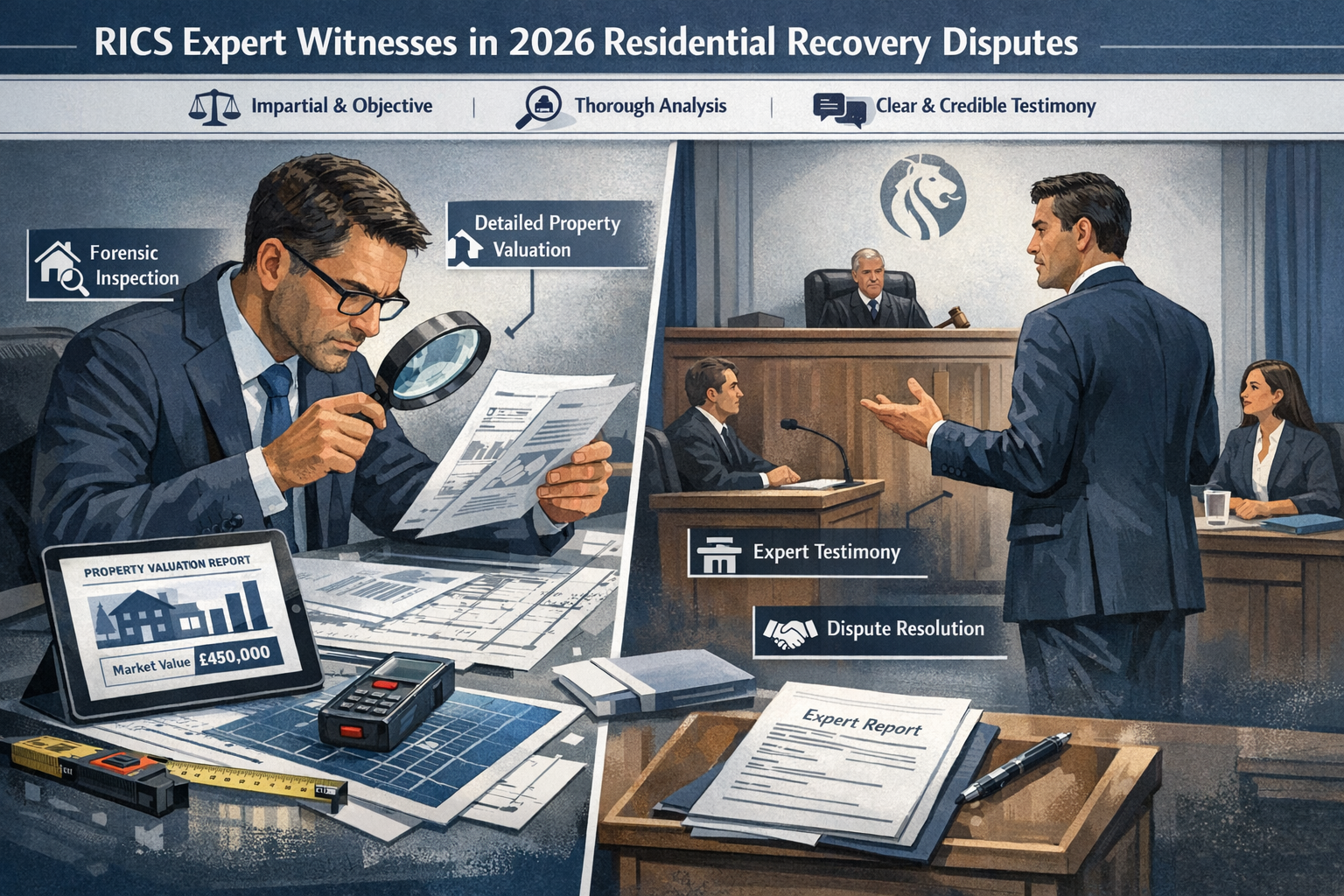
Alternative Dispute Resolution Growth
The 2026 landscape shows increasing use of alternative dispute resolution (ADR) methods in residential conflicts:
Mediation: Expert witnesses may support mediation processes, providing valuation opinions that help parties reach negotiated settlements.
Arbitration: Residential arbitration offers faster, more flexible dispute resolution than traditional litigation, requiring experts to adapt to different procedural frameworks.
Expert Determination: Some disputes are resolved through expert determination, where a single expert's decision binds the parties, requiring different skills than traditional expert witness work.
Online Dispute Resolution: Digital platforms increasingly facilitate residential dispute resolution, requiring experts to adapt to virtual proceedings and electronic evidence presentation.
Sustainability and Environmental Considerations
Environmental factors increasingly affect residential valuations and disputes:
🌱 Energy Performance: EPC ratings and energy efficiency affect property values, particularly as regulatory requirements tighten.
🌱 Climate Risk: Flood risk, climate change vulnerability, and environmental hazards influence valuations and dispute contexts.
🌱 Sustainability Features: Green building features, renewable energy systems, and sustainable construction methods affect property values and marketability.
🌱 Regulatory Compliance: Evolving environmental regulations create new dispute categories requiring expert valuation input.
Expert witnesses must understand these factors and their valuation implications, particularly in 2026's increasingly environmentally conscious market.
Technology-Driven Market Changes
Technological advancement continues reshaping residential property markets and disputes:
PropTech Innovation: Digital platforms, blockchain property records, and smart home technology affect property values and transaction processes.
Data Analytics: Big data and advanced analytics provide new tools for market analysis and valuation, requiring expert understanding and appropriate application.
Virtual Reality: VR property viewings and digital twins create new evidence types and valuation considerations.
Cryptocurrency Transactions: Digital currency property purchases create unique valuation and dispute challenges requiring expert adaptation.
Practical Case Studies and Applications
Case Study 1: Purchase Price Dispute in Recovering Market
Scenario: A buyer contracted to purchase a residential property at £750,000 during a market downturn. By completion six months later, the market had begun recovering, with comparable properties selling for £800,000-£825,000. The buyer disputed the original contract price, claiming the seller misrepresented market conditions.
Expert Witness Role: The expert witness was instructed to value the property at both the contract date and completion date, explaining market movement and whether the original price reflected market value at contract.
RICS Compliance Considerations:
- Disclosed previous work for the buyer's mortgage lender in a different transaction
- Established clear fee structure independent of case outcome
- Prepared separate valuations for each relevant date using contemporaneous market evidence
- Explained market recovery dynamics objectively without advocating for either party
Outcome: The expert's clear explanation of market conditions at contract date, supported by comparable evidence, helped the tribunal understand that the original price reflected market value when agreed, despite subsequent market improvement.
Case Study 2: Leasehold Valuation Conflict
Scenario: A leaseholder sought a lease extension during market stabilization. The freeholder's valuation assumed continued market growth, while the leaseholder's valuation assumed static values, creating a £45,000 premium dispute.
Expert Witness Role: Appointed as a single joint expert, the surveyor valued the lease extension premium using appropriate methodology and realistic market assumptions.
RICS Compliance Considerations:
- Ensured no conflicts of interest with either party
- Applied RICS valuation standards for lease extension valuations
- Used market evidence to support growth assumptions rather than party preferences
- Prepared detailed report explaining methodology and assumptions transparently
Outcome: The expert's independent analysis, grounded in market evidence rather than party advocacy, provided a credible premium valuation that both parties accepted, avoiding tribunal proceedings.
Case Study 3: Development Appraisal Dispute
Scenario: A property developer disputed a valuation affecting a development loan, claiming the valuation underestimated residual land value by failing to account for market recovery and improving sales expectations.
Expert Witness Role: The expert was instructed to review the original valuation and provide an independent opinion on whether it reflected market conditions and followed appropriate methodology.
RICS Compliance Considerations:
- Reviewed the original valuer's methodology and assumptions
- Conducted independent market research on development sales and costs
- Considered market recovery evidence objectively
- Prepared report explaining areas of agreement and disagreement with original valuation
Outcome: The expert identified that while the original valuation was conservative, it fell within an acceptable range given market uncertainty at the valuation date. This balanced analysis helped parties reach a negotiated settlement.
Resources and Support for Expert Witnesses
RICS Guidance and Standards
Expert witnesses should regularly consult official RICS resources:
- Professional Standards: The 5th edition expert witness standard provides comprehensive guidance on all aspects of expert witness work.[4]
- Practice Information: RICS publishes practice information on specific valuation topics and dispute types.
- Guidance Notes: Technical guidance notes address specialized valuation scenarios and methodologies.
- Case Law Updates: RICS monitors relevant case law and provides updates on legal developments affecting expert witnesses.
Professional Development Opportunities
Continuing professional development supports expert witness competence:
RICS Training Courses: Specialized expert witness training covering legal procedures, report writing, and testimony delivery.
Webinars and Seminars: Regular educational events addressing emerging issues and best practices.
Conferences: Industry conferences provide networking opportunities and exposure to current thinking.
Mentorship Programs: Learning from experienced expert witnesses accelerates skill development and professional growth.
Professional Networks and Support
Engaging with professional networks enhances expert witness practice:
- RICS Dispute Resolution Professional Group: Connects professionals working in dispute resolution and expert witness roles.
- Local RICS Branches: Regional networks provide peer support and local market knowledge sharing.
- Specialist Forums: Online and in-person forums facilitate discussion of technical issues and case experiences.
- Practice Groups: Specialized practice groups focus on specific property sectors or dispute types.
Conclusion: Excellence in Expert Witness Practice for 2026 and Beyond
The landscape of Expert Witness Roles in 2026 Residential Recovery Disputes: RICS Guidelines for Sales and Valuation Conflicts demands professional excellence, technical competence, and unwavering commitment to independence. As residential property markets stabilize and buyer confidence returns, disputes over sales and valuations will continue requiring expert testimony grounded in rigorous RICS standards.
The 5th edition RICS professional standards provide a comprehensive framework for delivering credible, independent expert evidence in this evolving environment. By understanding and applying these standards, chartered surveyors can fulfill their crucial role in dispute resolution while maintaining professional integrity and advancing their careers.
Actionable Next Steps
For surveyors seeking to excel in expert witness work during 2026's residential recovery period:
-
Review the 5th Edition Standards: Thoroughly study the updated RICS professional standards for expert witnesses, understanding all changes from previous editions.[2]
-
Assess Current Practice: Evaluate existing expert witness procedures against new standards, identifying areas requiring adjustment or enhancement.
-
Enhance Conflict Procedures: Implement robust conflict identification and disclosure procedures ensuring compliance with enhanced requirements.[1]
-
Update Fee Structures: Review fee arrangements to ensure compliance with RICS guidance on professional independence.
-
Develop Technology Competence: Build skills in digital evidence handling, AI disclosure, and modern presentation techniques.[1]
-
Strengthen Market Knowledge: Develop deep understanding of local residential markets, recovery dynamics, and emerging trends affecting valuations.
-
Invest in Training: Participate in RICS expert witness training and continuing professional development opportunities.
-
Build Quality Systems: Implement quality assurance procedures ensuring consistent excellence in report preparation and testimony delivery.
-
Network Professionally: Engage with RICS professional groups and local networks to share experiences and learn from peers.
-
Maintain Professional Insurance: Ensure professional indemnity insurance adequately covers expert witness work with appropriate policy terms.
The role of expert witnesses in residential recovery disputes extends beyond technical valuation skills. It requires professional judgment, ethical integrity, effective communication, and unwavering commitment to the tribunal's needs over party interests. By embracing the 2026 RICS standards and continuously developing professional competence, chartered surveyors can provide the high-quality expert evidence that supports fair dispute resolution and maintains public confidence in the property profession.
Whether addressing purchase price disputes, lease extension conflicts, development appraisal disagreements, or housing disrepair claims, expert witnesses serve a vital function in the property market's proper functioning. As markets stabilize and sales expectations improve, this role becomes even more critical in resolving conflicts fairly and efficiently.
For surveyors considering expert witness work or seeking to enhance existing practice, the comprehensive expert witness services framework provides a foundation for professional excellence. Combined with thorough understanding of RICS standards, market knowledge, and commitment to independence, expert witnesses can navigate 2026's residential recovery disputes with confidence and credibility.
References
[1] Rics Launches Global Consultation On Updated Expert Witness Standard – https://www.rics.org/news-insights/rics-launches-global-consultation-on-updated-expert-witness-standard
[2] Rics Consultation On Professional Standard For Surveyors Acting As Expert Witnesses 5th Edition 2025 – https://www.ewi.org.uk/News/Case-Updates/rics-consultation-on-professional-standard-for-surveyors-acting-as-expert-witnesses-5th-edition-2025
[3] Dispute Resolution Standards – https://www.rics.org/profession-standards/rics-standards-and-guidance/sector-standards/dispute-resolution-standards
[4] Surveyors Acting As Expert Witnesses – https://www.rics.org/profession-standards/rics-standards-and-guidance/sector-standards/dispute-resolution-standards/surveyors-acting-as-expert-witnesses