More than 64,250 build-to-rent (BTR) units were under active construction across the United States as of January 2026 — a figure that signals not just a housing trend, but a structural shift in how communities are planned, built, and managed [2]. Behind that pipeline sits an equally significant demand: the need for precise, purpose-built surveying practice that can keep pace with master-planned rental communities at scale. Surveying for Build-to-Rent Communities: Navigating Land Banking and New Construction Challenges is no longer a niche specialty. It has become a core discipline for any surveyor, developer, or institutional investor operating in today's housing market.

Key Takeaways
- The BTR sector has over 64,250 units under construction in 2026, demanding surveying workflows that match the scale and speed of master-planned development.
- Land banking — acquiring and holding large land parcels before development — creates specific boundary, title, and environmental surveying requirements that differ from traditional residential purchases.
- New construction BTR communities require phased survey strategies, from pre-acquisition due diligence through to post-completion stock condition assessments.
- Proposed federal legislation in the United States threatens to disrupt BTR financing and slow pipeline activity, adding regulatory uncertainty that surveyors must account for in their advice.
- Sustainability checks, structural compliance, and shared infrastructure surveys are increasingly expected components of any BTR surveying instruction.
What Makes BTR Surveying Different from Standard Residential Work
Traditional residential surveying focuses on individual properties — a single buyer, a single transaction, a defined building. BTR surveying operates at a fundamentally different scale and with a different set of objectives. Developers are not acquiring one home; they are acquiring land parcels, infrastructure corridors, and sometimes entire neighborhoods simultaneously.
The purpose-built nature of BTR communities means surveyors engage at multiple stages of a project lifecycle. A full building survey for a single completed unit is only one part of the picture. Surveyors working on BTR schemes also provide pre-acquisition land assessments, phased construction monitoring, shared infrastructure reviews, and post-completion stock condition surveys across entire neighborhoods.
Key differences between BTR and standard residential surveying include:
| Factor | Standard Residential | BTR Community |
|---|---|---|
| Scale | Single unit | 50 to 500+ units |
| Instruction type | Buyer-led | Developer or investor-led |
| Survey timing | Pre-purchase | Multi-phase, pre and post construction |
| Infrastructure scope | Individual building | Roads, drainage, shared amenities |
| Regulatory complexity | Standard | Planning, environmental, and tenancy law |
| Repeat instruction | Rare | Common — ongoing portfolio management |
Institutional investors, who now control a growing share of BTR stock, expect surveyors to deliver consistent, scalable reporting rather than one-off assessments. This requires standardized methodologies, digital reporting tools, and a deep understanding of how new construction defects differ from defects in older housing stock [8].
Surveying for Build-to-Rent Communities: Navigating Land Banking and New Construction Challenges in Practice
The Land Banking Phase: Due Diligence Before a Single Brick Is Laid
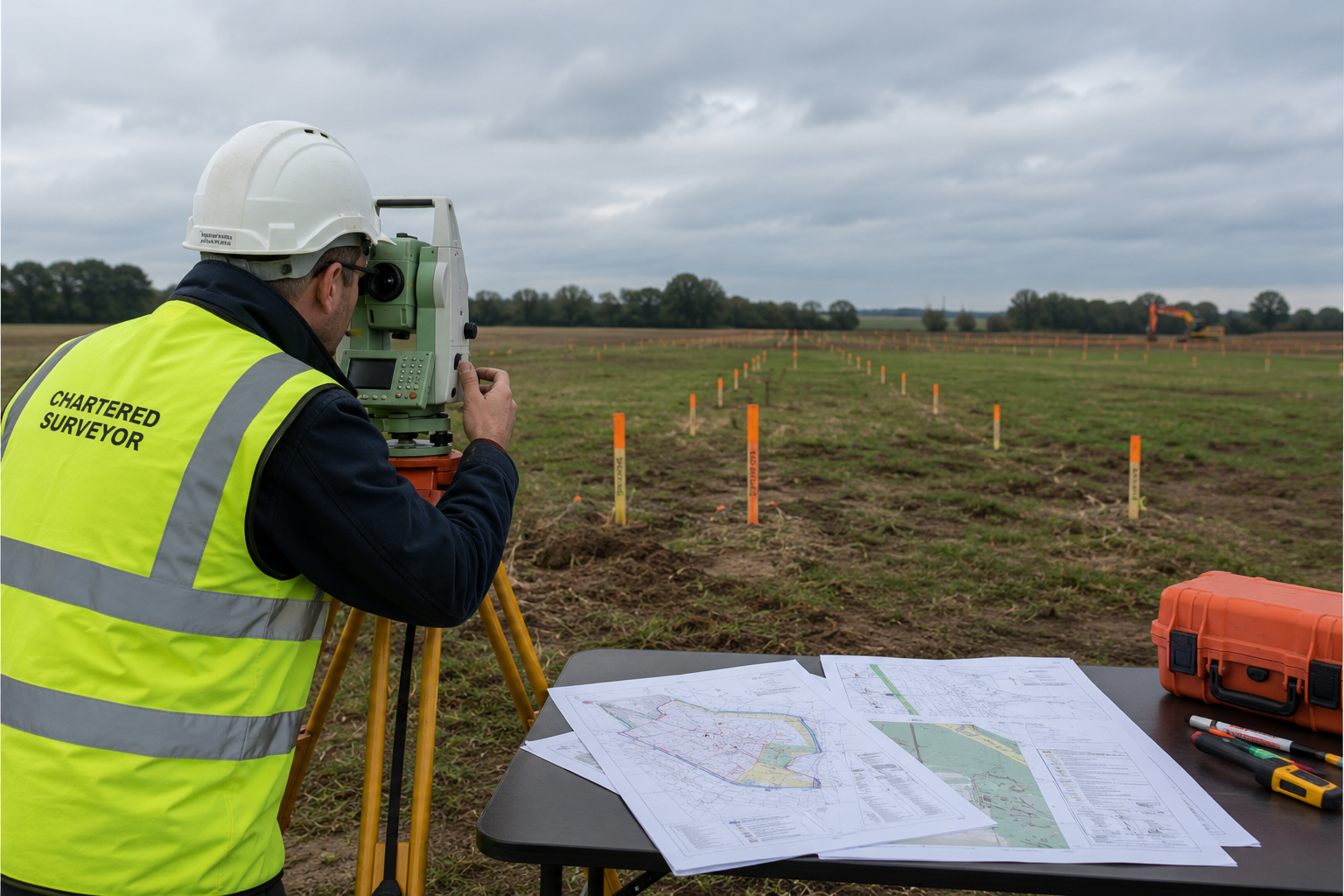
Land banking — the practice of purchasing and holding land ahead of development — is central to the BTR business model. BTR developers are increasingly outbidding traditional homebuilders for prime land parcels, particularly in high-growth regions. Their long-term investment horizon and expectation of sustained rental income allow them to justify higher land acquisition prices [6].
For surveyors, this creates a demanding pre-construction brief. Before any planning application is submitted, a comprehensive land assessment must address:
- Boundary verification: Large parcels often have historic or disputed boundaries. Accurate boundary surveys are essential to confirm the legal extent of the site and avoid costly disputes during construction.
- Topographical surveys: Ground levels, drainage patterns, and existing features must be mapped in detail to inform infrastructure design.
- Environmental and contamination screening: Brownfield sites, which are increasingly targeted for BTR due to urban infill opportunities, may carry legacy contamination requiring specialist investigation.
- Ground-bearing capacity assessments: BTR communities often include roads, shared car parks, and communal buildings. A solid floor slab survey or geotechnical review helps establish whether the ground can support the planned structures.
- Utility mapping: Existing underground services must be located and recorded before any groundworks begin.
The land banking phase can last months or years. During that time, surveyors may be asked to provide updated assessments as planning conditions evolve or as the development brief changes. This requires a working relationship with developers that goes beyond a single instruction.
Construction Phase Monitoring: Keeping Pace with Scale
Once development begins, the surveying challenge shifts from assessment to monitoring. BTR schemes are typically built in phases, with early units handed over to tenants while later phases remain under construction. This creates a complex operational environment where surveyors must work alongside contractors without disrupting occupied homes.
Construction phase surveying for BTR typically includes:
- Phased snagging inspections as each batch of units reaches practical completion
- Structural monitoring of shared walls, foundations, and infrastructure elements
- Review of non-standard construction methods — many BTR developers use modular or timber-frame systems to accelerate delivery, which requires specialist knowledge of non-standard construction assessment
- Party wall considerations where BTR developments adjoin existing properties
- Damp and moisture monitoring in newly completed units, particularly in ground-floor and basement-level homes
"The rapid growth of BTR communities necessitates that property surveying evolves to meet unique technical, legal, and logistical demands." [8]
Surveyors who understand the pace pressures facing BTR developers — where delays in handover directly affect rental income — are better placed to deliver timely, actionable reports rather than lengthy documents that slow the process.
Post-Completion: Stock Condition Surveys and Portfolio Management
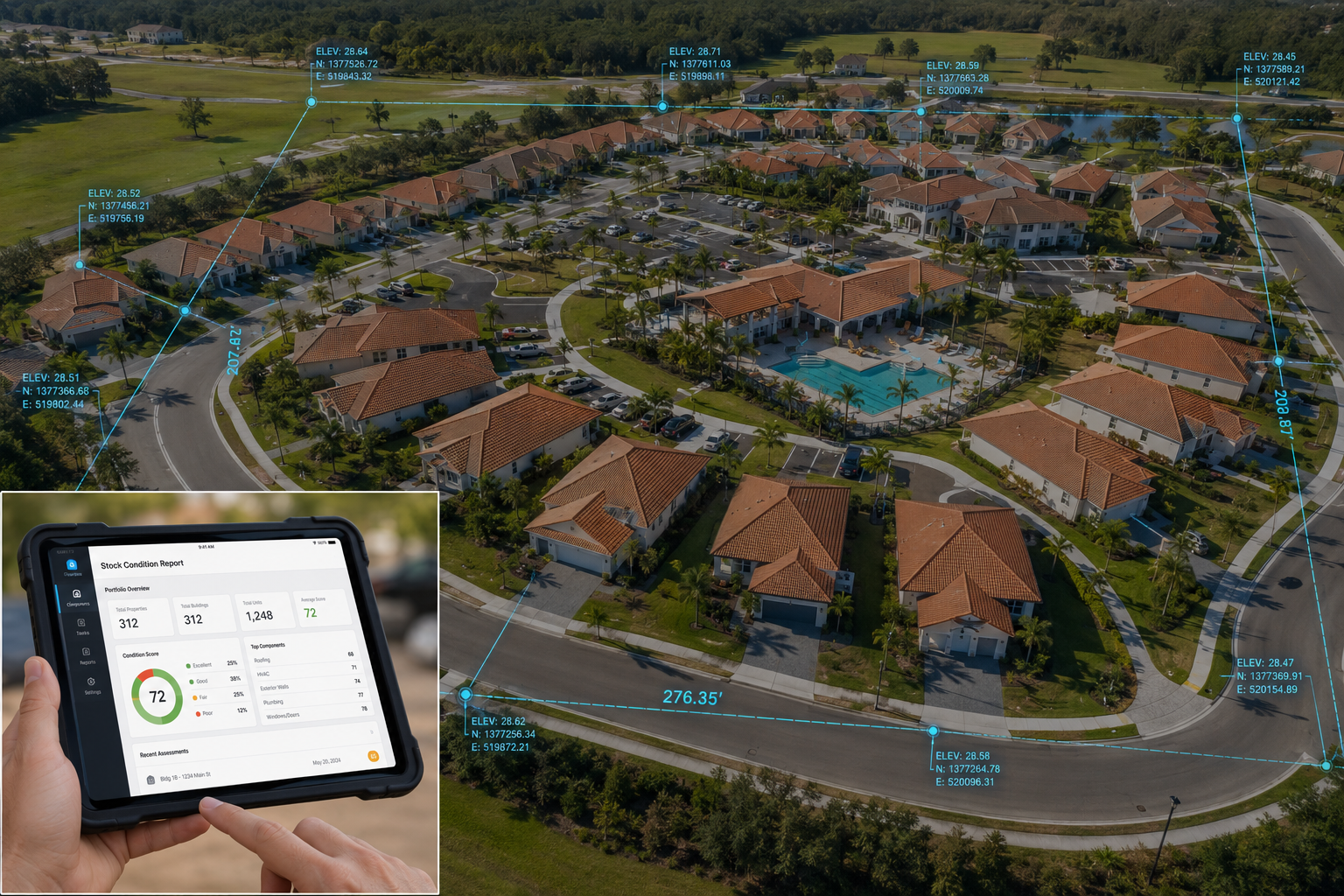
Once a BTR community reaches full occupancy, the surveying requirement does not end — it changes. Institutional landlords managing hundreds of units need a clear picture of the condition of their entire portfolio. A stock condition survey provides a systematic assessment of every unit and shared space, identifying maintenance liabilities, planned replacement cycles, and compliance issues.
This type of survey is particularly important for BTR operators because:
- Maintenance planning: Knowing when roofs, windows, kitchens, and bathrooms will need replacement allows operators to budget accurately over a 10- to 20-year horizon.
- Regulatory compliance: Fire safety, energy performance, and building safety regulations require documented evidence of condition.
- Asset valuation: Lenders and investors rely on condition data when refinancing or selling BTR portfolios.
Regulatory and Legislative Challenges Shaping BTR Surveying in 2026
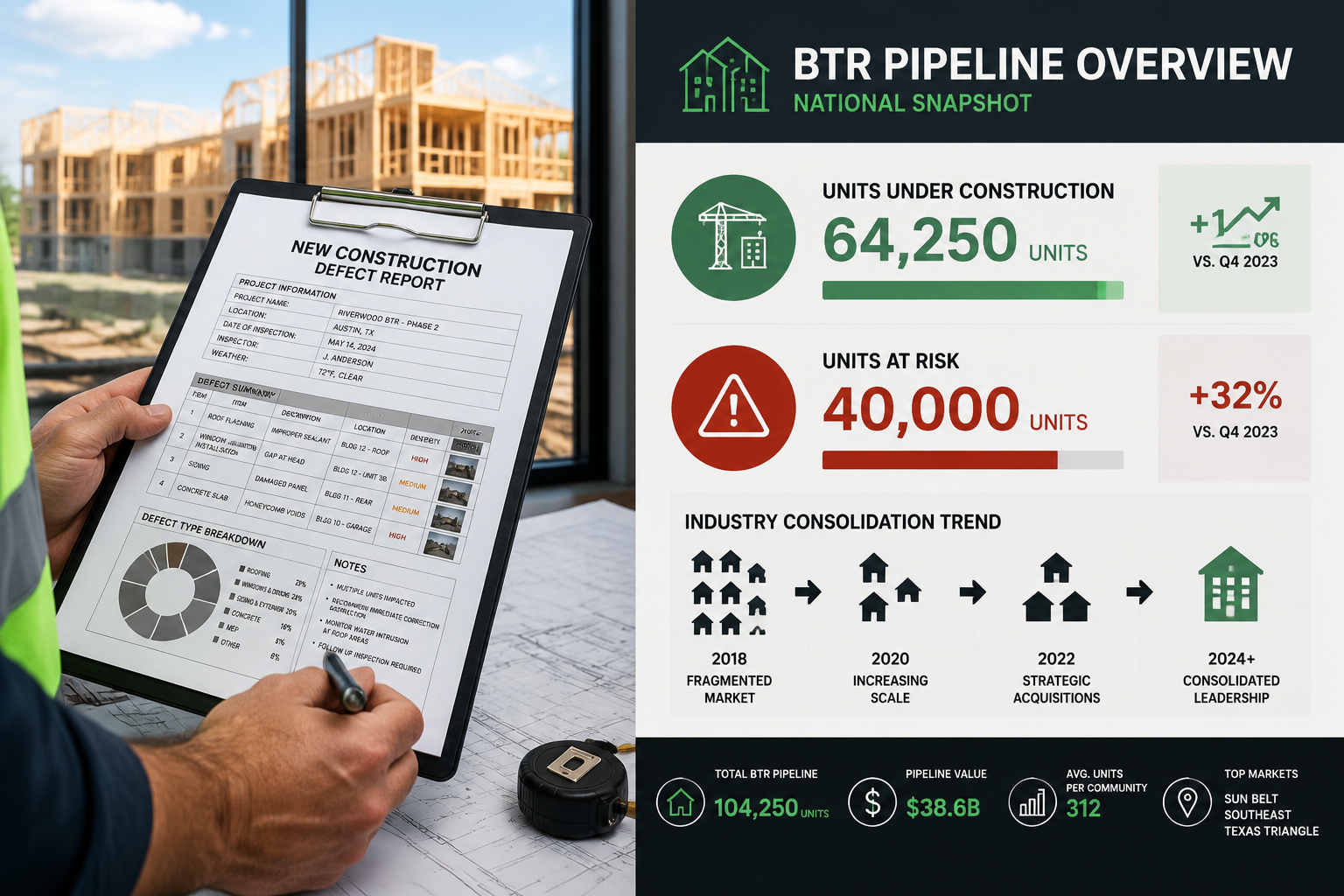
The BTR sector is not operating in a stable regulatory environment. In the United States, proposed federal legislation — the 21st Century ROAD to Housing Act — includes a provision that would require BTR developers to sell homes to individual buyers within seven years of construction. This has caused major lenders including Fannie Mae and Freddie Mac to pause new BTR financing while they await legislative clarity [1].
The National Association of Home Builders estimates that this seven-year sale requirement could put approximately 40,000 BTR units at risk annually, potentially deepening the housing shortage the sector was designed to address [1]. Texas, which led the nation in BTR development in 2025, has seen a marked slowdown in new project starts as investor partners wait for regulatory certainty [7].
What this means for surveyors:
- Instructions may be delayed or cancelled as developers pause projects
- Surveyors advising BTR clients should understand the financing structures involved — purpose-built rental developments have their own institutional financing infrastructure that differs from standard mortgage lending [4]
- Exit strategy surveys may become more common if developers are ultimately required to sell units individually — at that point, individual RICS home surveys or Level 2 HomeBuyer Surveys would be needed for each unit
In the UK context, the BTR market faces its own regulatory pressures, including changes to tenancy law, energy performance certificate requirements, and building safety obligations under the Building Safety Act. Surveyors operating in this space must stay current with both planning policy and property law.
Surveying for Build-to-Rent Communities: Navigating Land Banking and New Construction Challenges — Sustainability and Structural Compliance
Sustainability Checks as a Standard Survey Component
Sustainability is no longer an optional add-on in BTR surveying. Institutional investors increasingly require environmental, social, and governance (ESG) compliance as a condition of financing. This means surveyors are expected to assess:
- Energy performance: New BTR homes should meet current energy efficiency standards, but construction quality varies. Surveyors checking insulation installation, air tightness, and heating system specification add real value here.
- Water management: Sustainable drainage systems (SuDS), rainwater harvesting, and permeable surfaces are common in master-planned BTR communities and require technical review.
- Materials and embodied carbon: Some institutional investors now request assessments of construction materials against sustainability benchmarks.
- Green space and amenity quality: BTR communities are marketed on lifestyle as well as accommodation. Surveyors assessing shared amenity spaces — gyms, communal gardens, co-working areas — provide evidence that supports rental valuation.
Structural Compliance in New-Build BTR Homes
New construction does not mean defect-free construction. BTR schemes built at speed carry specific structural risks, including:
- Thermal bridging at junctions between walls, floors, and roofs
- Inadequate fire compartmentation in terraced or semi-detached configurations
- Settlement cracking in homes built on made-up ground or near drainage infrastructure
- Flat roof defects on single-storey garage or amenity buildings within the community
A structural survey or specific defect report can identify these issues before they become costly claims. For BTR operators, identifying defects during the developer's liability period — typically two years from practical completion — is critical to ensuring remediation costs fall on the builder rather than the landlord.
Operational Challenges Surveyors Must Understand
Beyond the technical demands, surveyors working in BTR must understand the operational pressures their clients face. BTR operators report slower construction paces, difficulty identifying optimal land acquisition targets, staffing challenges, and flatter rent growth as key concerns in 2026 [5].
These pressures affect how surveying instructions are scoped and delivered:
- Slower construction paces mean phased handover timelines shift, requiring flexible survey scheduling
- Land acquisition competition means pre-acquisition surveys must be turned around quickly to support competitive bids [6]
- Flatter rent growth increases the importance of accurate condition data to control maintenance costs
- Staffing challenges at BTR operators mean surveyors who can communicate clearly and simply — without jargon — are more valued
The consolidation trend among leading BTR operators is also relevant. With Empire Group and Taylor Morrison each managing over 2,000 BTR units under construction, larger operators are developing preferred supplier relationships with surveying firms [2]. Surveyors who can demonstrate consistent quality across multiple sites and regions are better placed to secure these panel appointments.
Conclusion: Actionable Steps for Surveyors Entering the BTR Market
The BTR sector represents one of the most significant growth opportunities in property surveying in 2026. With over 64,250 units under construction in the US alone, and a comparable pipeline developing across the UK and other markets, the demand for skilled, specialist surveyors is substantial [2].
Practical next steps for surveyors and firms looking to serve BTR clients:
- Develop a phased survey framework — create standardized templates for pre-acquisition, construction monitoring, snagging, and post-completion stock condition surveys that can be applied consistently across large sites.
- Build knowledge of BTR financing structures — understanding how institutional investors underwrite BTR deals helps surveyors frame their reports in terms that matter to decision-makers [4].
- Stay current on legislation — the proposed US federal legislation and UK building safety regulations both have direct implications for survey scope and liability. Monitor updates closely [1][7].
- Invest in sustainability assessment skills — ESG compliance is becoming a standard expectation in institutional property transactions. Surveyors who can assess energy performance, drainage, and materials are more competitive.
- Prioritize speed and clarity — BTR developers operate on tight timelines. Reports that are clear, actionable, and delivered promptly are more valuable than exhaustive documents that arrive too late to influence decisions.
- Consider specialist training — choosing the right property survey type for each stage of a BTR project requires a broad technical foundation. Continuing professional development in new construction, structural engineering, and environmental assessment strengthens a surveyor's BTR offering.
The intersection of housing affordability pressures, institutional investment, and legislative uncertainty makes BTR surveying one of the most dynamic and demanding areas of practice today. Surveyors who invest in the right skills and systems now will be well-positioned as the sector continues to mature.
References
[1] Build To Rent Uncertainty Halts Market Activity – https://www.credaily.com/briefs/build-to-rent-uncertainty-halts-market-activity/?utm_source=openai
[2] Build To Rent Pipelines Consolidate Under Leading Operators – https://www.credaily.com/briefs/build-to-rent-pipelines-consolidate-under-leading-operators/?utm_source=openai
[3] Houstons Build Rent Market Keeps Growing Will Federal Legislation Bring It Down – https://kinder.rice.edu/urbanedge/houstons-build-rent-market-keeps-growing-will-federal-legislation-bring-it-down?utm_source=openai
[4] What To Know About Build To Rent Financing – https://www.builderscapital.com/blog/what-to-know-about-build-to-rent-financing?utm_source=openai
[5] 10 Challenges Facing The Build To Rent Sector – https://www.probuilder.com/business-management/build-to-rent/article/55229206/10-challenges-facing-the-build-to-rent-sector?utm_source=openai
[6] The Build To Rent Land Grab: Why BTR Developers Are Outbidding Rooftops – https://cooperlandcompany.com/details/2865/The_%27Build-to-Rent%27_Land_Grab%3A_Why_BTR_Developers_are_Outbidding_Rooftops?utm_source=openai
[7] Texas BTR Development Slow Amid Pending Legislation – https://therealdeal.com/texas/2026/05/11/texas-btr-development-slow-amid-pending-legislation/?utm_source=openai
[8] Surveying Demands For Build To Rent Communities Navigating New Development Trends – https://www.canterburysurveyors.com/blog/surveying-demands-for-build-to-rent-communities-navigating-new-development-trends/?utm_source=openai
[9] Build To Rent A Smart Solution To Americas Housing Challenge – https://www.cbcworldwide.com/blog/build-to-rent-a-smart-solution-to-america-s-housing-challenge?utm_source=openai