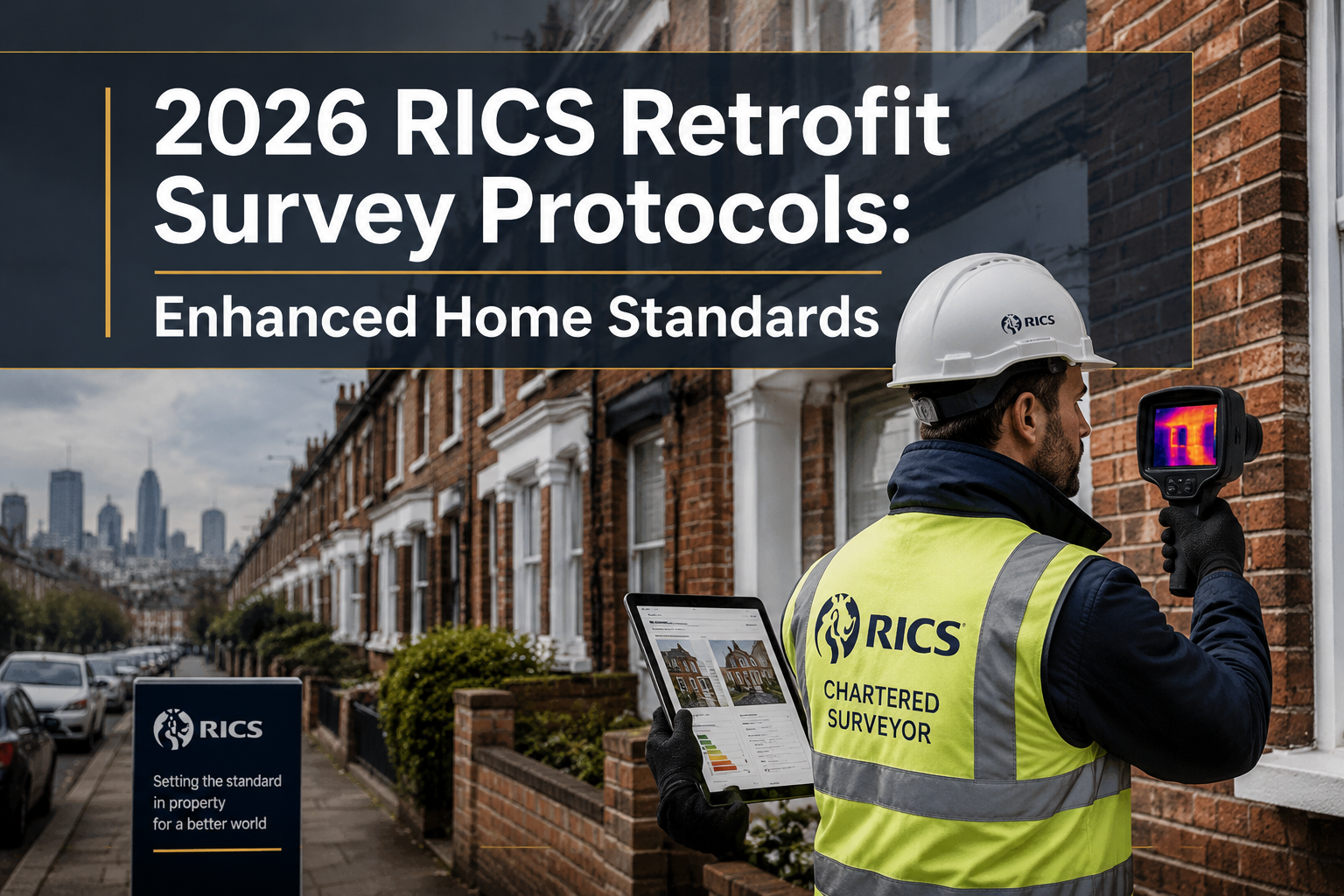
Every 0.25% drop in mortgage rates historically unlocks tens of thousands of latent buyers who had been sitting on the sidelines. In 2026, that dynamic is playing out in real time across the UK property market, and the consequences for building survey demand are significant. The Impact of Falling Mortgage Rates on 2026 Building Survey Demand: Protocols for Accelerated Transactions is not merely an academic concern — it is a practical challenge that buyers, sellers, solicitors, and chartered surveyors must navigate daily. As lender products become more competitive and transaction volumes rise, the pressure on survey pipelines intensifies, raising a critical question: how do you maintain thoroughness when speed is the commercial imperative?
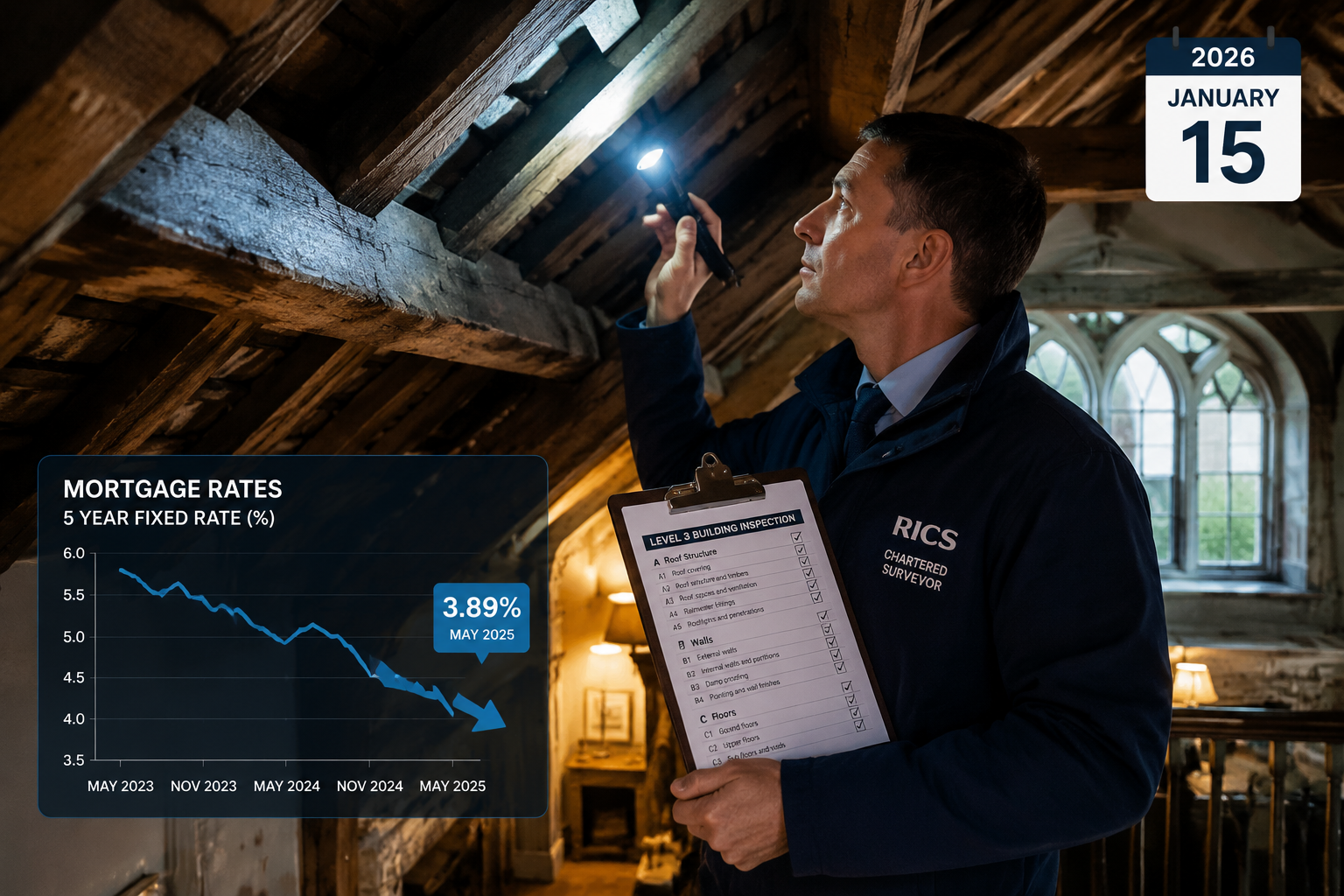
Key Takeaways
- Falling mortgage rates in 2026 are directly increasing buyer activity and building survey demand across most UK regions, with notable surges outside prime London postcodes.
- Accelerated transaction timelines create genuine risk if survey protocols are compressed without proper pre-instruction preparation.
- RICS Level 3 Building Surveys remain the gold standard for older and non-standard properties, even under time pressure.
- Regional variation in demand means survey availability and turnaround times differ considerably by location.
- Buyers and solicitors who prepare documentation and access arrangements in advance can reduce survey-to-report turnaround by several days without sacrificing quality.
Why Falling Mortgage Rates Are Reshaping the 2026 Property Market
The relationship between mortgage rates and housing market activity is well established, but the 2026 context carries specific nuances. Builder confidence in the United States fell to its lowest point since September 2025, with the NAHB index dropping four points to 34 in April 2026, driven by economic uncertainty and mortgage rate volatility [2]. Housing starts declined by 18% year-to-date in 2026, compounded by a 32% rise in lumber costs attributable to tariffs [3]. In the UK, a parallel story is unfolding: lenders competing for market share have begun offering more attractive fixed-rate products, drawing buyers who had deferred decisions during the period of elevated rates.
When mortgage rates climb above 5%, as they did by March 2026, lenders conduct more conservative valuations [8]. This makes independent surveys not just useful but strategically essential. A comprehensive RICS building survey gives buyers documented evidence to support price renegotiation, identify latent defects before exchange, and reduce the risk of costly post-completion surprises.
The key dynamic in 2026 is this: as rates ease even modestly, buyer confidence returns faster than survey capacity can scale. The result is a compressed transaction environment where survey slots are contested and turnaround expectations are unrealistic without structured preparation.
Regional Demand Is Uneven — and That Matters
Building survey demand in Q2 2026 surged in the Midlands, the North, and coastal commuter belts, while prime London postcodes experienced relative stagnation [7]. This regional divergence has practical implications. Surveyors operating in high-demand corridors face backlogs, while those in slower markets have greater scheduling flexibility. Buyers in areas like South East London or Bromley are competing for survey slots in markets that have seen meaningful upticks in transaction volumes.
Understanding regional demand before instructing a surveyor is therefore a practical first step, not an administrative formality.
Understanding the Impact of Falling Mortgage Rates on 2026 Building Survey Demand: Protocols for Accelerated Transactions
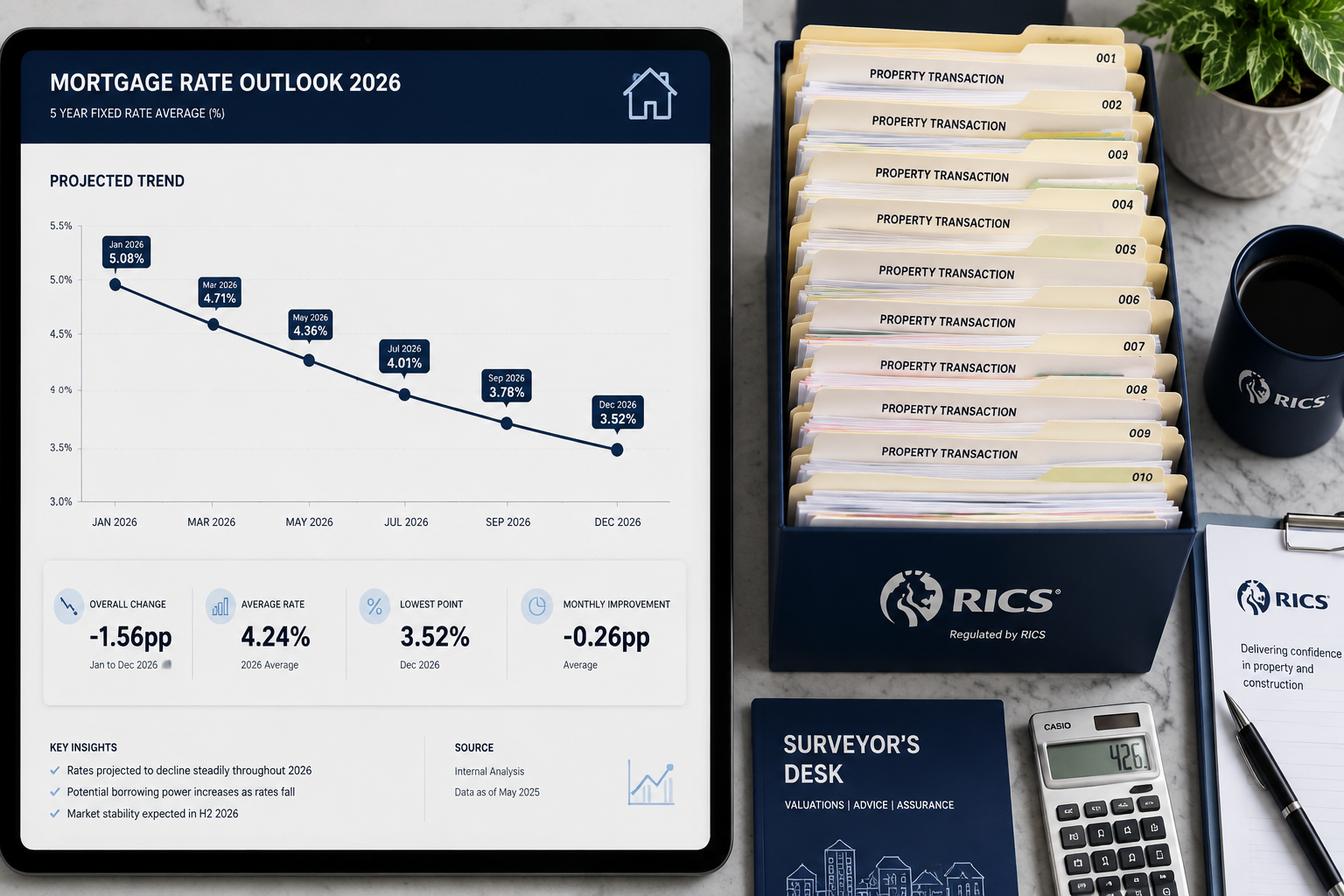
The mechanics of how lower rates translate into survey demand are straightforward. Lower rates reduce monthly repayment costs, making more properties affordable to more buyers. As affordability improves, the pool of active buyers expands. More offers are made, more sales are agreed, and more surveys are commissioned. The challenge is that the survey supply chain — qualified RICS-registered surveyors — cannot scale as quickly as buyer demand.
This creates what might be called a survey bottleneck risk: a period where transaction timelines are extended not because of legal delays or mortgage processing, but because survey availability is constrained. For buyers in competitive markets, a delayed survey can mean losing a property to a rival bidder.
The RICS Framework for Accelerated Surveys
RICS (the Royal Institution of Chartered Surveyors) sets the professional standards that govern building surveys in England and Wales. Those standards do not change based on market conditions — and nor should they. However, the RICS framework does allow for efficient, well-prepared inspections that can be completed without unnecessary delay when all parties cooperate.
The three primary survey levels under the current RICS Home Survey Standard are:
| Survey Level | Best Suited For | Typical Turnaround |
|---|---|---|
| Level 1 (Condition Report) | New builds, conventional modern homes | 2-4 working days |
| Level 2 (HomeBuyer Report) | Standard construction, reasonable condition | 3-5 working days |
| Level 3 (Building Survey) | Older, larger, or non-standard properties | 5-10 working days |
For properties with complex histories, unusual construction, or visible defects, a RICS Level 3 Building Survey remains the appropriate choice regardless of time pressure. Downgrading the survey level to save a few days is a false economy that can expose buyers to significant financial risk.
Pre-Instruction Preparation: The Single Biggest Time Saver
The most effective way to accelerate a building survey without compromising quality is to prepare thoroughly before the surveyor is even instructed. This means:
- Confirming property access with the seller or estate agent before the survey is booked, not after.
- Gathering available documentation including planning permissions, building regulations certificates, guarantees for previous works (damp-proofing, underpinning, roofing), and any existing survey reports.
- Identifying known issues and communicating them to the surveyor in advance so specific attention can be directed appropriately during the inspection.
- Confirming utilities access — gas, electricity, and water should be live and accessible for testing during the inspection.
When buyers and their solicitors complete these steps before instruction, surveyors can plan their inspection more efficiently and produce reports faster. This is not about cutting corners; it is about eliminating the administrative delays that account for the majority of extended turnaround times.
Mandatory Upfront Assessment Preparations for Fast-Track Building Surveys
Accelerated transactions require a disciplined approach to upfront preparation. The Impact of Falling Mortgage Rates on 2026 Building Survey Demand: Protocols for Accelerated Transactions is most effectively managed when all parties treat the survey not as a reactive step but as a proactive risk management tool integrated from the earliest stage of the transaction.
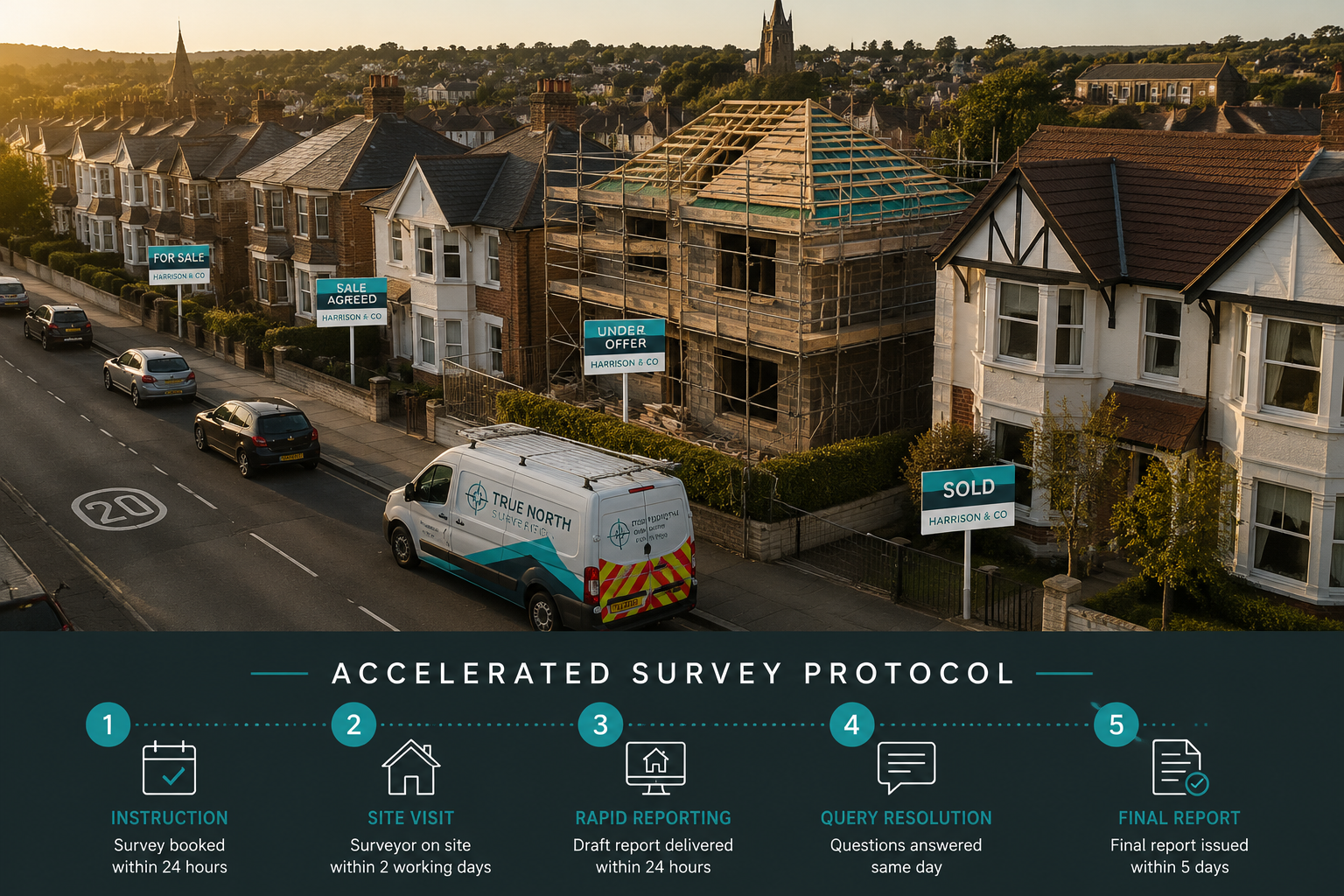
Step 1: Choose the Right Survey Type Early
Selecting the correct survey type at the outset avoids the costly and time-consuming process of upgrading mid-transaction. Buyers should consult a guide to choosing the right property survey before making any decisions. For Victorian terraces, Edwardian semis, or any property with visible signs of movement, damp, or non-standard construction, a Level 3 survey is almost always the correct choice.
For leasehold properties, additional considerations apply. A schedule of condition report may be required alongside the main survey, particularly where lease terms impose repair obligations on the incoming tenant or buyer.
Step 2: Instruct a Local, Experienced Surveyor
Local knowledge is not a luxury — it is a professional advantage. A surveyor who regularly works in a specific area will be familiar with common construction types, local planning constraints, historic flooding zones, and subsidence risks. For buyers in areas such as Islington, Leatherhead, or Enfield, instructing a surveyor with genuine local experience can meaningfully improve both the quality and the speed of the survey process.
Step 3: Address Specialist Concerns in Parallel
Where a property has known or suspected specialist issues — subsidence, damp, drainage problems — buyers should consider instructing specialist assessments in parallel with the main building survey rather than sequentially. A damp survey or subsidence survey can run concurrently with the Level 3 inspection, consolidating findings into a single decision-making window rather than extending the timeline by weeks.
"In a rising-demand market, the buyers who complete fastest are not those who skip due diligence — they are those who front-load it."
Step 4: Understand Regulatory Context
The regulatory environment for property transactions has evolved in 2026. In the United States, the Financial Crimes Enforcement Network (FinCEN) implemented a rule effective March 1, 2026, requiring federal reporting of certain residential real estate transactions involving legal entities and trusts [4]. Although this rule was subsequently vacated by a US District Court on March 19, 2026, advisors recommend that reporting persons continue collecting and maintaining relevant data in case the rule is reinstated [9]. While this specific regulation applies to US transactions, it signals a broader global trend toward greater transparency in property transfers — a trend that UK buyers and conveyancers should monitor.
In the UK context, anti-money laundering checks, source of funds verification, and enhanced due diligence requirements already add procedural steps to transactions. Buyers who prepare this documentation in advance — rather than waiting for solicitor requests — reduce delays that can otherwise push back survey instruction dates.
Step 5: Budget Accurately for Survey Costs
Cost uncertainty is a common source of delay. Buyers who have not researched surveyor pricing often experience sticker shock when quotes arrive, leading to unnecessary comparison shopping at a critical stage of the transaction. Understanding the cost range for Level 2 and Level 3 surveys before agreeing a purchase price allows buyers to budget accurately and instruct without hesitation.
Survey fees vary based on property size, age, construction type, and location. A Level 3 Building Survey on a large Victorian property in a high-demand urban area will cost more than a Level 2 report on a modern flat — and that difference is justified by the depth of investigation required.
Managing Survey Quality Under Time Pressure
The core tension in accelerated transactions is between speed and thoroughness. RICS standards are non-negotiable, but there are legitimate ways to improve efficiency without compromising the quality of the survey report.
Efficient inspection planning means the surveyor arrives prepared, having reviewed available documentation, satellite imagery, planning history, and any prior survey reports. This pre-inspection desk study reduces the time spent on-site identifying issues that could have been anticipated.
Structured reporting templates aligned to RICS standards allow experienced surveyors to produce comprehensive reports more quickly than those working from bespoke formats. This is not a quality compromise — it is a professional efficiency.
Clear communication protocols between the surveyor, buyer, solicitor, and estate agent reduce the back-and-forth that typically extends turnaround times. Designating a single point of contact for access coordination and query resolution can save several days in a typical transaction.
For properties where specific structural concerns are identified during the inspection, a specialist defect survey may be recommended as a follow-up. Buyers should factor this possibility into their timeline planning from the outset.
What Surveyors Cannot Compress
Certain elements of a building survey cannot be accelerated without professional risk:
- The physical inspection itself must be thorough and methodical. Roof spaces, subfloor voids, and outbuildings all require direct inspection where accessible.
- Photographic documentation must be comprehensive to support report findings.
- Condition ratings must reflect the surveyor's professional judgment, not client preference for speed.
- Recommendations for further specialist investigation must be included where warranted, even if they extend the overall transaction timeline.
Buyers who pressure surveyors to omit sections or soften findings in the interest of speed are creating legal and financial risk for themselves. A survey report is a professional document that may be relied upon in future disputes — its integrity is non-negotiable.
Conclusion: Actionable Next Steps for Buyers, Solicitors, and Surveyors in 2026
The Impact of Falling Mortgage Rates on 2026 Building Survey Demand: Protocols for Accelerated Transactions is a challenge that rewards preparation. Lower rates are bringing buyers back to the market in meaningful numbers, and survey demand is rising accordingly. The buyers who navigate this environment most successfully will be those who treat the survey as a strategic tool rather than a procedural hurdle.
Actionable next steps:
-
Instruct early. As soon as an offer is accepted, contact a RICS-registered surveyor to check availability and begin pre-instruction preparation. Do not wait for the mortgage offer to arrive.
-
Choose the right survey level. Resist the temptation to downgrade to a cheaper survey to save time or money. The cost of an inadequate survey is always higher than the cost of a thorough one.
-
Prepare documentation in advance. Gather planning certificates, guarantees, and access arrangements before the surveyor is instructed. This single step can reduce turnaround time by three to five working days.
-
Commission specialist surveys in parallel. Where damp, subsidence, or drainage concerns are anticipated, arrange specialist assessments to run concurrently with the main survey.
-
Budget accurately from the outset. Research survey costs before agreeing a purchase price so that instruction can proceed without delay.
-
Maintain regulatory compliance. Stay current with anti-money laundering and source of funds requirements to avoid solicitor-driven delays that push back survey instruction dates.
The property market in 2026 rewards the prepared buyer. A well-executed building survey, delivered on an accelerated but professionally rigorous timeline, is not just a due diligence exercise — it is a competitive advantage.
References
[1] 2026 04 13 Housing Starts Mortgage Rates Framing Lumber Nar – https://lumberflow.com/en/news/2026-04-13-housing-starts-mortgage-rates-framing-lumber-nar?utm_source=openai
[2] Homebuilder Sentiment April 2026 – https://www.housingwire.com/articles/homebuilder-sentiment-april-2026/?utm_source=openai
[3] Housing Starts 2026 – https://uspollingdata.com/news/housing-starts-2026/?utm_source=openai
[4] Fincen Residential Real Estate Reporting Rule Now In Effect – https://www.swlaw.com/publication/fincen-residential-real-estate-reporting-rule-now-in-effect/?utm_source=openai
[5] Builder Sentiment Slips As Affordability Strains New Home Demand – https://www.mpamag.com/us/mortgage-industry/industry-trends/builder-sentiment-slips-as-affordability-strains-newhome-demand/562253?utm_source=openai
[6] Lumber Market Analysis 2026 Macro Demand – https://lumberflow.com/en/news/lumber-market-analysis-2026-macro-demand?utm_source=openai
[7] Building Survey Demand Surge In Q2 2026 Capitalising On Market Recovery While Managing Regional Price Divergence – https://wimbledonsurveyors.com/building-survey-demand-surge-in-q2-2026-capitalising-on-market-recovery-while-managing-regional-price-divergence/?utm_source=openai
[8] Navigating RICS February 2026 Market Volatility Building Survey Demand Strategies When Buyer Enquiries Drop 26 And Regional Price Divergence Widens – https://www.canterburysurveyors.com/blog/navigating-rics-february-2026-market-volatility-building-survey-demand-strategies-when-buyer-enquiries-drop-26-and-regional-price-divergence-widens/?utm_source=openai
[9] Fincen Requirements For Real Estate Transactions – https://www.bilzin.com/insights/publications/2026/03/fincen-requirements-for-real-estate-transactions?utm_source=openai