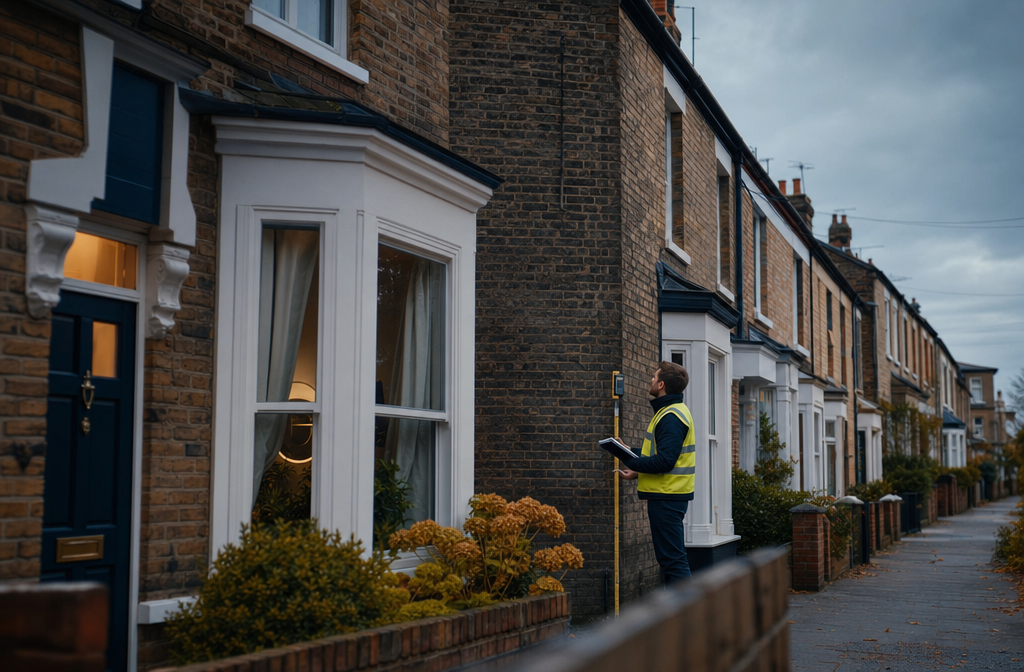

New buyer enquiries in the UK housing market recorded a net balance of -34% in April 2026 — a market so quiet that agreed sales sat at -36%, and the headline house price indicator fell sharply to -34% from -25% the previous month [2]. For surveyors managing party wall instructions and property valuations, these are not abstract statistics. They translate directly into thinner instruction pipelines, longer decision timelines, and clients who scrutinise every professional recommendation more carefully than they did eighteen months ago.
The RICS May 2026 Housing Signals: Adjusting Party Wall and Valuation Protocols for Subdued Activity is therefore not simply a market commentary exercise. It is a practical framework question: how should chartered surveyors recalibrate their workflows, fee structures, and client communications when the volume of transactions that normally drives instruction flow is compressed by sustained economic headwinds?

Key Takeaways
- The UK housing market remains materially subdued in 2026, with buyer enquiries, agreed sales, and house prices all recording negative net balances in April 2026.
- Rising interest rates, elevated inflation, and geopolitical uncertainty are the primary drivers of reduced transaction volumes and dampened buyer sentiment.
- Party wall surveyors should expect lower instruction volumes from discretionary renovation projects and must prioritise thorough schedule of condition documentation to protect all parties.
- RICS updated its cladding valuation guidance in May 2026, with the new standard effective from November 2026, directly affecting secured lending valuations for multi-storey residential buildings.
- The rental sector continues to show resilience, with tenant demand rising and rents expected to increase, offering an alternative instruction stream for valuers.
Reading the RICS May 2026 Housing Signals for Subdued Activity
The April 2026 RICS UK Residential Market Survey paints a consistent picture of caution. Regional disparities are pronounced: London, the South East, East Anglia, and the South West are experiencing sharper price declines, while Northern England, Scotland, and Northern Ireland are showing greater resilience [2]. This geographic split matters for surveyors because it affects both the volume and the complexity of instructions in different parts of the country.
What is driving the subdued conditions?
| Driver | Effect on Market |
|---|---|
| Interest rate expectations | Rates more likely to rise than fall in 2026 [3] |
| Inflation above Bank of England target | Reduces real purchasing power for buyers |
| Energy price spikes | Halved economic growth expectations [3] |
| Geopolitical uncertainty (Middle East conflict) | Higher mortgage rates, weaker demand [4] |
| Affordability pressures in southern England | Disproportionate impact on London and South East [2] |
Near-term sales expectations remain cautious at a net balance of -32% for the next three months, and twelve-month sales expectations have softened to -6% [2]. This is not a market in freefall, but it is one where surveyors cannot rely on transaction volume to sustain instruction levels at pre-2025 rates.
"Until there is a clearer path for inflation and borrowing costs, activity and sentiment are likely to remain subdued, particularly in southern England and London, where affordability pressures are most acute." [4]
For surveyors, the practical implication is straightforward: instructions that do arrive carry greater weight. Every valuation report and every party wall award must be defensible, proportionate, and clearly communicated to clients who are already anxious about market conditions.
How Party Wall Protocols Must Adapt Under Low-Volume Market Conditions
When transaction volumes fall, the composition of party wall instructions shifts. Homeowners who cannot sell or who are waiting for market conditions to improve often redirect capital into home improvement projects — loft conversions, rear extensions, basement excavations. This creates a paradox: party wall surveyors may see a relative uptick in renovation-driven instructions even as the broader market slows.
However, the nature of those instructions changes. Clients undertaking works in a subdued market are typically more cost-conscious and more risk-averse. Disputes over minor matters become more common when neighbours feel financially exposed. The surveyor's role in preventing and resolving those disputes becomes correspondingly more important.
Strengthening Schedule of Condition Documentation
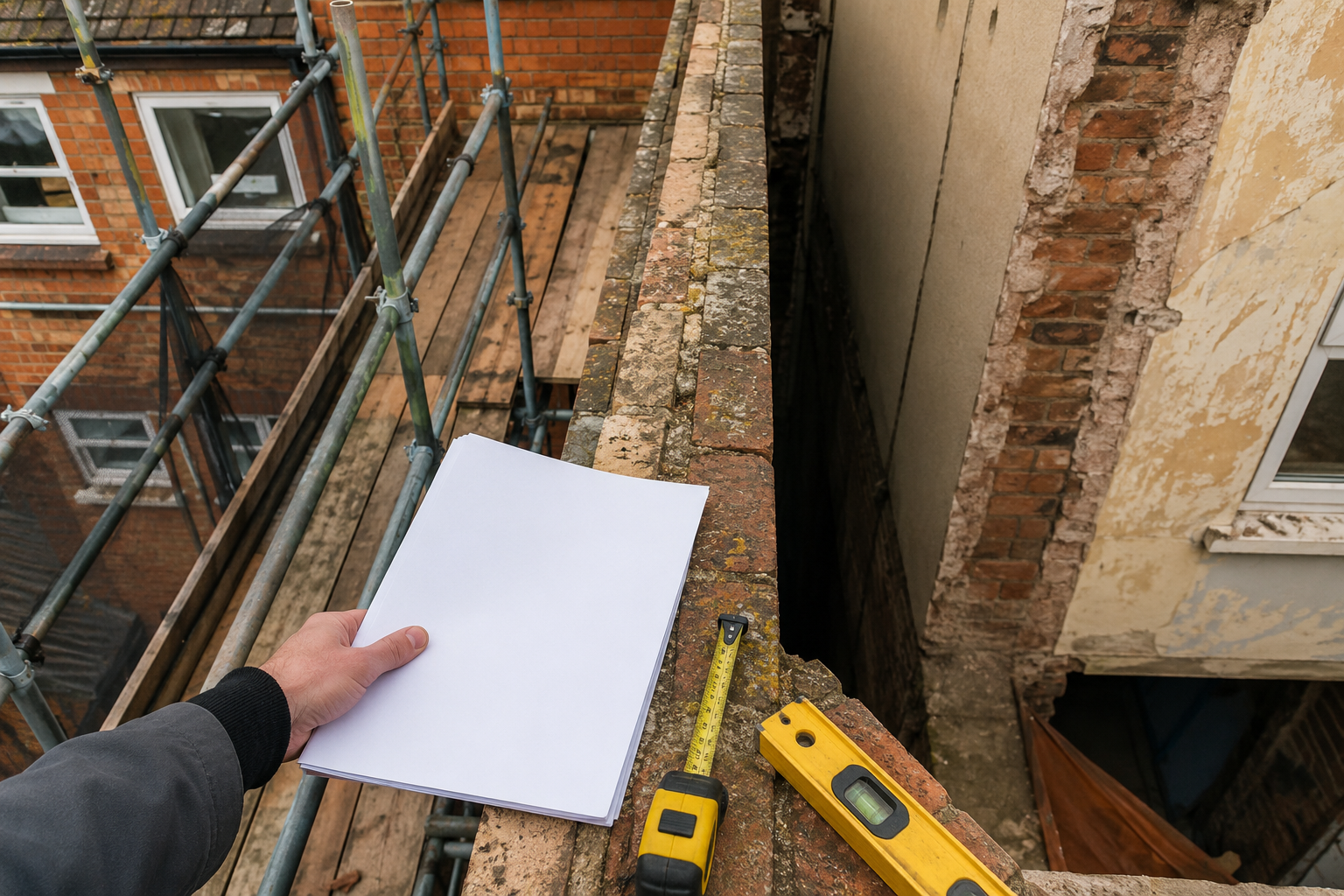
The single most effective risk-management tool available to party wall surveyors in a subdued market is a thorough schedule of condition for party wall work. When property values are under downward pressure, any pre-existing defect that goes undocumented can become a contested liability once works are complete.
A robust schedule of condition should:
- Record all visible cracks, staining, and structural movement with dated photographs
- Note the condition of shared chimneys and chimney stacks, which are a frequent source of post-works disputes (see guidance on shared chimneys and chimney stacks)
- Document the state of insulation within the party wall, particularly relevant where energy efficiency upgrades are planned (see insulation in a party wall)
- Be agreed and signed by both parties before any works commence
For leasehold properties, a schedule of condition for leasehold premises provides an additional layer of protection, particularly where lease terms impose dilapidations obligations on tenants.
Excavation Near Neighbouring Properties
One instruction category that tends to remain active even in subdued sales markets is excavation work — basement conversions, underpinning, and deep foundation projects. These carry significant risk to neighbouring structures and require formal notice under the Party Wall etc. Act 1996. Surveyors should ensure clients understand the process for serving notice for excavation near a neighbour well before works begin.
In a market where neighbours are financially stressed and property values are declining, the consequences of inadequate notice or poor documentation can be severe. Damage to property in party wall claims are more likely to be pursued vigorously when the adjoining owner feels their asset has been diminished.
Consent and Award Procedures
Surveyors should also revisit their client briefings on consent for party wall work and the process for obtaining a party wall award. In a slower market, the temptation for building owners to cut corners on formal procedures increases. A clear, early explanation of legal obligations — and the cost implications of disputes that arise from ignoring them — is the most effective way to protect both the client and the surveyor's professional standing.
Valuation Protocols Under the RICS May 2026 Housing Signals Framework
The valuation side of surveying practice faces its own set of adjustments in response to current market conditions. The RICS May 2026 Housing Signals: Adjusting Party Wall and Valuation Protocols for Subdued Activity framework requires valuers to be especially precise about the basis, scope, and purpose of every valuation they produce.
Updated Cladding Valuation Guidance
On 14 May 2026, RICS published the second edition of its UK professional standard for secured lending valuation of properties in multi-storey, multi-occupancy residential buildings with cladding [1]. This updated guidance, effective from 1 November 2026, clarifies when an EWS1 form should be requested during the valuation process. The standard is designed to provide a consistent and proportionate approach, reducing unnecessary delays for buyers, sellers, and homeowners seeking to remortgage [1].
For registered RICS valuers working in urban markets — particularly London and the South East, where high-rise residential stock is concentrated — this update is directly operational. Key points include:
- Proportionality: Not every multi-storey building will require an EWS1 form; the updated standard provides clearer criteria for when one is genuinely necessary.
- Consistency: Lenders and valuers should apply the same thresholds, reducing the variation in practice that has caused delays and disputes since the original guidance was introduced.
- Remortgage efficiency: Homeowners in cladding-affected buildings have faced particular difficulties; the new standard aims to reduce unnecessary valuation holds.
Scope and Purpose of Valuations
A May 2026 RICS journal article reinforces a point that becomes especially important in a subdued market: the difference between a formal valuation and a figure provided for indicative purposes must be clearly defined in every engagement [6]. When market conditions are volatile and prices are under downward pressure, clients are more likely to challenge valuations that do not meet their expectations.
The Red Book Global Standards require clear terms of engagement that specify:
- The basis of value (market value, fair value, etc.)
- The purpose of the valuation (secured lending, probate, capital gains tax, etc.)
- The effective date
- Any material assumptions or special assumptions
For surveyors handling capital gains tax valuations or probate valuations, the subdued market creates genuine complexity. Comparable evidence is thinner, transaction volumes are lower, and the gap between asking prices and achieved prices is wider. Each of these factors must be addressed explicitly in the valuation report.
Valuation in the Rental Sector
The rental market presents a contrasting picture. Tenant demand rose to a net balance of +14% in April 2026, while landlord instructions remained negative at -17%, and a net balance of +25% of respondents expect rents to rise over the coming months [2]. This supply-demand imbalance creates active instruction opportunities for valuers working in the rental sector.
Surveyors providing rent review valuations and commercial property valuations should note that the rental market's resilience does not insulate it from the broader economic pressures. Affordability constraints on tenants, combined with rising landlord costs, create a complex environment in which valuation evidence must be interpreted carefully.
The Global Valuation Conference 2026
RICS is hosting the Global Valuation Conference on 9 June 2026, with a focus on shaping the future of valuation in an uncertain world [5]. The conference agenda covers global standards, emerging risks, sustainability, and the practical application of new technologies. For valuers navigating the current subdued market, the conference represents a timely opportunity to benchmark practice against international peers and to engage with the evolving standards framework.
Practical Adjustments for Surveyors in 2026
The RICS May 2026 Housing Signals: Adjusting Party Wall and Valuation Protocols for Subdued Activity analysis points to several concrete adjustments that surveyors should consider implementing now.
For party wall surveyors:
- Increase the detail and photographic coverage in all schedules of condition, given the heightened risk of post-works disputes in a financially stressed market
- Proactively brief clients on their legal obligations under the Party Wall etc. Act 1996 before instructions are formally received
- Review fee structures to reflect the additional time required for thorough documentation in complex cases
- Maintain clear records of all communications with adjoining owners, particularly where consent is given informally
For valuers:
- Ensure every instruction begins with a clearly documented scope of engagement, specifying basis of value and purpose
- Apply the updated RICS cladding guidance from 14 May 2026 to all relevant secured lending instructions, in preparation for the November 2026 effective date
- Widen the range of comparable evidence used in subdued markets, and document the rationale for any adjustments made to comparables
- Consider the geographic disparities identified in the April 2026 RICS survey when assessing market conditions: a valuation in the South East requires different contextual commentary than one in Northern England
For practice management:
- Diversify instruction streams to include rental market valuations, which are showing greater resilience than the sales market
- Monitor the RICS economic update series closely, as interest rate and inflation developments will directly affect market conditions for the remainder of 2026 [3]
- Invest in continuing professional development, including the June 2026 Global Valuation Conference, to stay current with evolving standards

Conclusion
The RICS May 2026 Housing Signals: Adjusting Party Wall and Valuation Protocols for Subdued Activity framework presents a clear challenge and a clear opportunity for chartered surveyors. The challenge is that lower transaction volumes, falling house prices, and sustained economic uncertainty compress instruction pipelines and increase the likelihood of disputes. The opportunity is that surveyors who respond with higher-quality documentation, clearer client communication, and rigorous adherence to updated RICS standards will differentiate themselves in a market where professional credibility matters more than ever.
Actionable next steps for surveyors:
- Review all current schedule of condition templates against the heightened documentation standards appropriate for a subdued, dispute-prone market.
- Familiarise with the updated RICS cladding valuation standard published 14 May 2026 and prepare to implement it fully by the November 2026 effective date.
- Audit terms of engagement for all valuation instructions to ensure compliance with Red Book requirements on scope, purpose, and basis of value.
- Engage with RICS market survey data monthly to maintain an accurate, evidence-based picture of local market conditions for use in valuation reports.
- Explore the rental sector as an active instruction stream, given the continued supply-demand imbalance and rising rent expectations.
Surveyors who treat the current subdued conditions as a prompt for process improvement — rather than simply a period to endure — will be better positioned when transaction volumes recover. The professional standards framework that RICS continues to develop and update in 2026 provides the tools to do exactly that.
References
[1] Rics Releases Updated Guidance On Home Valuations – https://propertyindustryeye.com/rics-releases-updated-guidance-on-home-valuations/?utm_source=openai
[2] Uk Residential Survey April 2026 – https://www.rics.org/news-insights/uk-residential-survey-april-2026?utm_source=openai
[3] Uk Economy And Property Market Update – https://www.rics.org/news-insights/market-surveys/uk-economy-and-property-market-update?utm_source=openai
[4] Gloom In Uk Housing Market Shows No Sign Of Lifting Rics Survey Shows 4686910 – https://www.investing.com/news/economy-news/gloom-in-uk-housing-market-shows-no-sign-of-lifting-rics-survey-shows-4686910?utm_source=openai
[5] Global Valuation Conference 2026 – https://academy.rics.org/global-valuation-conference-2026?utm_source=openai
[6] When Are Figures Valuations – https://ww3.rics.org/uk/en/journals/property-journal/when-are-figures-valuations.html?utm_source=openai