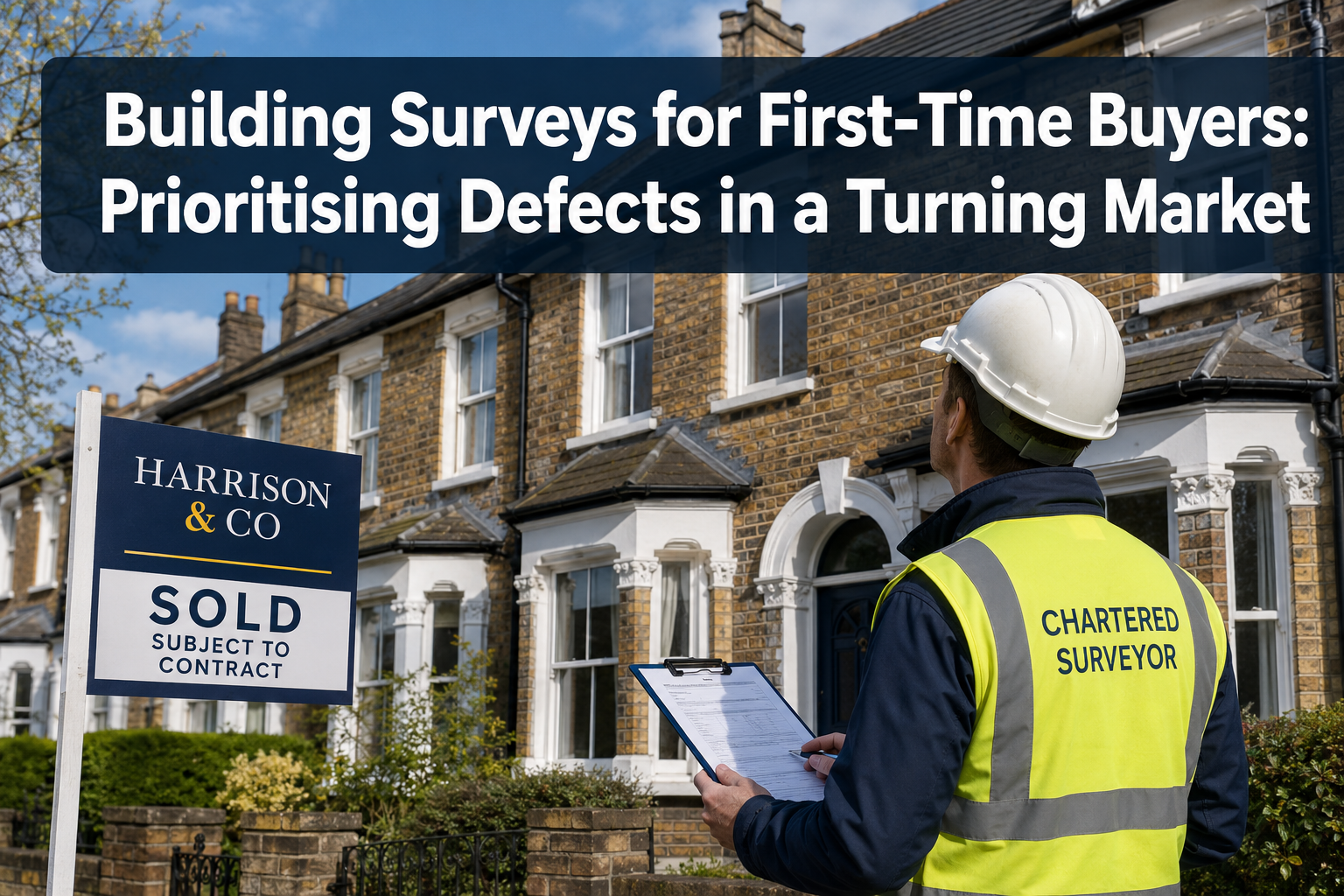
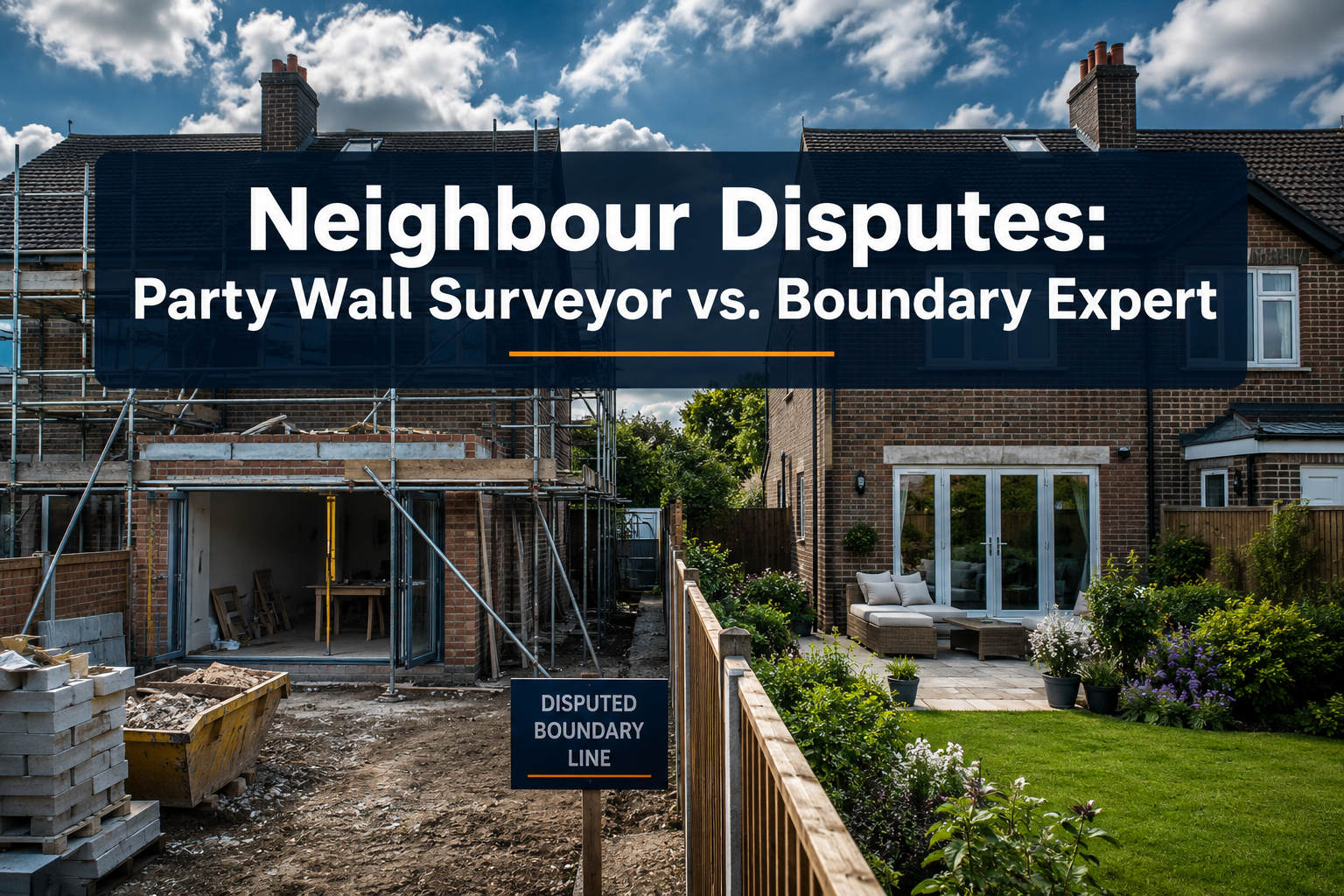
Agreed property sales in the UK fell by approximately 12% in early 2026 — not because buyers disappeared, but because uncertainty crept into every stage of the transaction. Surveys came back with surprises. Buyers panicked. Chains collapsed. The Sellers' Survey Strategy: Building Survey as Transaction Acceleration Tool in Spring 2026's Cautious Market is the response to exactly this problem — a proactive, seller-led approach that uses an upfront building assessment to strip friction from the process before it can derail a deal.
This strategy is gaining traction fast. With 74% of potential sellers believing now is a good time to sell [1], yet 39% already expecting to make concessions [1][5], the gap between seller optimism and buyer hesitation has never been more important to bridge. An upfront building survey is one of the most powerful tools available to close that gap.
Key Takeaways 📋
- Agreed sales are down ~12% in early 2026, largely driven by post-survey uncertainty and buyer hesitation — not lack of demand.
- An upfront building survey commissioned by the seller removes the element of surprise, reducing renegotiation and fall-throughs.
- 39% of sellers expect to make concessions in 2026, up from 30% in 2025 — proactive transparency can reduce the need for reactive price cuts.
- Transaction timelines can be significantly shortened when buyers receive survey data upfront, removing weeks of back-and-forth.
- Sellers in competitive regions (particularly the Northeast) can use survey transparency as a genuine differentiator in a still-active market.

Why Spring 2026 Demands a Different Seller Mindset
The spring 2026 property market is not broken — but it is cautious. J.P. Morgan Global Research predicts U.S. house prices will remain broadly flat in 2026, with demand only slightly improving [2][3]. The UK picture mirrors this: stabilising rather than surging. Sellers who treat this as a normal spring market will be disappointed. Those who adapt their strategy will move property faster and with fewer headaches.
Consider the data: 53% of potential sellers have been thinking about moving for one to three years [5]. These are not impulsive decisions. They are planned, deliberate, and emotionally invested. The last thing a considered seller needs is a transaction collapsing at week ten because a buyer's surveyor flagged damp in the basement — something the seller could have addressed or disclosed months earlier.
💬 "The sellers who win in a cautious market are not the ones who price lowest — they are the ones who remove doubt fastest."
Meanwhile, 40% of sellers describe the current market as a sellers' market, 33% see it as balanced, and 27% view it as a buyers' market [1]. This fragmentation means strategy cannot be one-size-fits-all. Regional nuance matters enormously. Sellers in the Northeast, where nearly half (49%) view conditions as favouring sellers [1], can leverage survey transparency as a premium signal. Sellers in the South and West, where buyer-market sentiment is stronger [1], may find it an essential defensive tool.
The Concession Trap — And How to Avoid It
39% of potential sellers in 2026 expect to make concessions, up 9 points from 30% in 2025 [1][5]. This is a significant shift. Seller-funded rate buydowns are among the top incentives being offered to attract offers in elevated-cost environments [2]. But there is a smarter form of concession: transparency itself.
When a seller commissions an upfront RICS building survey before listing, they control the narrative. Instead of a buyer's surveyor discovering a cracked lintel and demanding a £4,000 reduction at exchange, the seller has already obtained quotes, disclosed the issue, and either fixed it or priced it in. The concession becomes a calculated decision — not a panicked reaction.
Understanding the Sellers' Survey Strategy: Building Survey as Transaction Acceleration Tool in Spring 2026's Cautious Market
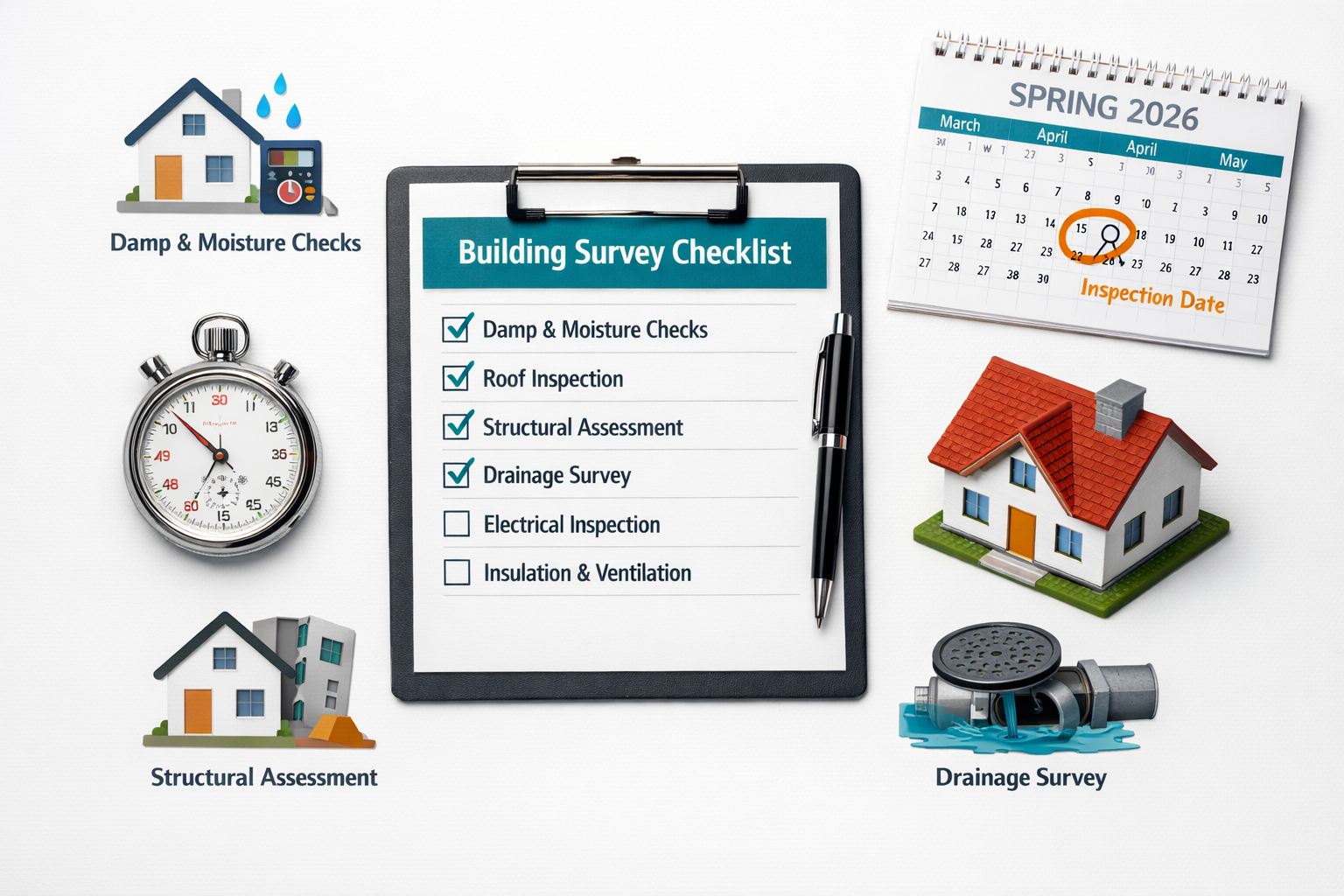
At its core, The Sellers' Survey Strategy: Building Survey as Transaction Acceleration Tool in Spring 2026's Cautious Market involves one fundamental shift: the seller pays for and commissions a professional building survey before the property goes to market, rather than waiting for the buyer to do so after an offer is accepted.
This is not yet standard practice in the UK — which is precisely why it works as a competitive differentiator.
What an Upfront Building Survey Covers
A comprehensive RICS building survey — sometimes called a Level 3 survey — is the most thorough residential property assessment available. It typically examines:
| Survey Area | What Is Assessed |
|---|---|
| Structure | Foundations, walls, beams, lintels |
| Roof | Condition of coverings, gutters, flashings |
| Damp & Timber | Rising damp, penetrating damp, rot, woodworm |
| Drainage | Drainage runs, condition of pipes and gullies |
| Services | Electrical, plumbing, heating (visual inspection) |
| External | Pointing, render, windows, outbuildings |
Sellers with specific known concerns can also commission targeted assessments. A damp survey addresses moisture-related concerns specifically, while a roof survey focuses exclusively on the roof structure and coverings — both common trigger points for buyer renegotiation.
For sellers of older or more complex properties, a subsidence survey may be worth commissioning proactively, particularly if there is any visible cracking that a buyer's surveyor will inevitably flag.
The Timeline Advantage 🕐
Here is where the numbers get compelling. A typical UK property transaction from offer acceptance to exchange takes 12–16 weeks. A significant portion of that time is consumed by:
- Buyer arranging their survey (often 2–4 weeks after offer)
- Survey report being produced (1–2 weeks)
- Buyer reviewing and seeking advice (1–2 weeks)
- Renegotiation or remediation discussions (1–6 weeks, if issues arise)
An upfront seller's survey eliminates steps 1–4 entirely for the majority of buyers. Those who wish to commission their own independent survey still can — but they do so with a baseline of information that reduces the likelihood of shock findings. How long a homebuyers survey takes is a question buyers ask constantly — sellers who have already answered it on their behalf gain an immediate trust advantage.
📊 Three-quarters of potential sellers anticipate being under contract within four months [4] — an upfront survey is one of the most reliable ways to make that timeline a reality rather than a hope.
Choosing the Right Survey Type
Not every property needs the same level of assessment. Sellers should compare different types of survey to match the survey scope to the property's age, construction type, and known condition. A modern flat may need only a targeted specific defect report on a particular concern, while a Victorian terrace warrants a full Level 3 building survey. The investment should be proportionate — but it is almost always proportionate to the risk of a collapsed chain.
Implementing The Sellers' Survey Strategy: Building Survey as Transaction Acceleration Tool in Spring 2026's Cautious Market

Knowing the strategy is sound is one thing. Executing it effectively requires a clear process. Here is a practical implementation framework for sellers entering the spring 2026 market.
Step 1: Commission the Survey Before Listing
Engage a RICS-qualified chartered surveyor at least four to six weeks before the intended listing date. This allows time for the report to be produced, for the seller to review findings, and for any quick remediation work to be completed before viewings begin.
Sellers in specific regions should seek locally experienced surveyors. Those in the South East and Home Counties can engage specialists across Berkshire, Oxfordshire, Hertfordshire, and Surrey — all active spring 2026 markets where transaction speed is a genuine competitive advantage.
Step 2: Review and Respond to Findings
When the report arrives, sellers face three options for each identified issue:
- ✅ Fix it — address the defect before listing, then reference the remediation in marketing
- 📄 Disclose it — include the issue in the survey pack with contractor quotes, showing transparency
- 💰 Price it in — adjust the asking price to reflect the condition, removing any basis for post-offer renegotiation
This three-option framework converts survey findings from threats into negotiating tools. Over 8 in 10 sellers expect to achieve asking price or above [4] — maintaining that position is far easier when there is no hidden ammunition for buyers to use at exchange.
Step 3: Create a Survey Pack for Buyers
Compile the survey report, any remediation receipts, contractor quotes for unresolved issues, and relevant warranties or guarantees into a Seller's Survey Pack. This document becomes a marketing asset as much as a legal disclosure.
Estate agents can reference it in listings: "Full building survey available for prospective buyers." This single line filters out casual, uncommitted viewers and attracts serious buyers who appreciate transparency — exactly the buyers most likely to exchange quickly.
Step 4: Make It Available at First Viewing
Do not bury the survey pack in the legal process. Make it available digitally from the first viewing. Buyers who fall in love with a property and immediately receive a comprehensive, honest survey report are buyers who make offers with confidence — and confident buyers do not renegotiate without genuine cause.
Regional Considerations for Spring 2026 🗺️
Market conditions vary significantly by region. Key dynamics to factor into the seller's survey strategy:
- Northeast markets: Strong seller sentiment (49% view as sellers' market) [1] — survey transparency reinforces premium positioning
- Southern and Western markets: Buyer-favourable conditions [1] — survey transparency becomes a defensive necessity, not just an advantage
- London and commuter belt: High-value transactions where survey surprises carry the greatest financial risk — upfront surveys provide the greatest ROI
The Commercial Angle
The sellers' survey strategy is not limited to residential property. Commercial sellers facing cautious buyers in 2026 can apply the same logic. A commercial building survey commissioned before marketing a commercial asset demonstrates institutional-grade due diligence and can significantly accelerate transactions with corporate buyers who have their own internal approval processes to navigate.
The Numbers Behind the Strategy
It is worth quantifying the financial logic of the sellers' survey approach in the context of spring 2026's market data.
Scenario A — Traditional approach:
- Seller lists without survey
- Buyer makes offer, commissions survey at week 4
- Survey reveals damp issue and roof concerns
- Buyer demands £8,000 reduction at week 10
- Seller, now 10 weeks invested, reluctantly agrees
- Net cost: £8,000 reduction + 10 weeks of mortgage payments, stress, and uncertainty
Scenario B — Sellers' Survey Strategy:
- Seller commissions building survey at cost of ~£800–£1,500
- Damp and roof concerns identified and disclosed upfront
- Seller obtains contractor quotes (£2,200 total)
- Seller either fixes issues or prices in at £2,200 reduction from day one
- Buyer makes informed offer, no post-survey renegotiation
- Exchange achieved 4–6 weeks faster
- Net cost: ~£1,500 survey fee + controlled £2,200 adjustment = £3,700 total vs. £8,000 reactive reduction
The maths are compelling. The survey pays for itself many times over when it prevents a reactive, emotionally charged renegotiation at exchange.
Objections — And Why They Don't Hold Up
"What if the survey reveals something serious?"
It will reveal it either way. The only question is whether the seller finds out first — or the buyer does, at the worst possible moment in the transaction.
"Won't buyers just commission their own survey anyway?"
Some will. But many will rely on the seller's survey, particularly if it is from a reputable RICS-registered firm. Even those who commission independently benefit from reduced anxiety going in — which means fewer panicked withdrawals.
"Is it worth the cost?"
With the average UK property transaction costing thousands in legal fees, estate agent commissions, and mortgage arrangement costs, a survey fee of £800–£1,500 is a modest insurance premium against a collapsed chain. Sellers can understand structural survey pricing before committing to ensure the investment is proportionate.
Conclusion: Transparency Is the New Competitive Advantage
Spring 2026's cautious market rewards sellers who lead with honesty and preparation. With agreed sales down, buyer confidence fragile, and 39% of sellers already expecting to make concessions [1][5], the sellers who hold their price and close quickly will be those who removed uncertainty before it could become a problem.
The Sellers' Survey Strategy: Building Survey as Transaction Acceleration Tool in Spring 2026's Cautious Market is not a radical concept — it is a logical response to a market that punishes surprises and rewards transparency. Commissioning an upfront building survey is arguably the single highest-return action a seller can take before listing in the current environment.
Actionable Next Steps for Sellers 🎯
- Book a RICS building survey at least 4–6 weeks before your intended listing date
- Review findings with your estate agent and decide which issues to fix, disclose, or price in
- Compile a Seller's Survey Pack and make it available from the first viewing
- Use the survey as a marketing tool — reference it in listings and with your agent
- Engage a local specialist with knowledge of your specific market conditions
The spring market will not wait. Sellers who move first with transparency will move their properties fastest.
References
[1] 2026 04 14 Realtor Com R Survey Finds Sellers Are Optimistic Heading Into The 2026 Spring Market – https://mediaroom.realtor.com/2026-04-14-Realtor-com-R-Survey-Finds-Sellers-Are-Optimistic-Heading-Into-the-2026-Spring-Market
[2] Article315278253 – https://www.sacbee.com/news/business/article315278253.html
[3] Article315278253 – https://www.charlotteobserver.com/news/business/article315278253.html
[4] Watch – https://www.youtube.com/watch?v=-rM6KRxOR7g
[5] 2026 Sellers Survey Btts – https://www.realtor.com/research/2026-sellers-survey-btts/