
The Private Rented Sector (PRS) faces a fundamental shift in 2026: landlords can no longer automatically refuse pet requests from existing tenants, yet only 7% of UK rental properties currently advertise as pet-friendly[1]. This legislative change creates urgent valuation challenges as property owners must now balance tenant rights against documented financial risks from pet-related damage—risks that professional building surveys must quantify with unprecedented precision.
Understanding the Renters' Rights Act 2026 Pet Damage Risks: Building Survey Checklists for Valuation Adjustments in PRS becomes essential for landlords, property managers, and surveyors navigating this new regulatory landscape. The intersection of tenant pet ownership rights and property valuation methodology demands systematic approaches to damage assessment and financial protection.
Key Takeaways
- Landlords cannot automatically refuse pet requests from existing tenants but retain the right to deny based on reasonable grounds documented through proper assessment procedures[1]
- Building surveys must establish baseline property conditions before pet occupancy to enable accurate valuation adjustments and damage attribution
- No pet insurance requirements are permitted under the Act, making comprehensive pre-occupancy surveys and security deposits the primary financial protection mechanisms[1]
- Systematic inspection checklists covering flooring, walls, doors, carpets, and outdoor spaces provide defensible evidence for valuation adjustments
- Security deposit regulations cap total deposits at specific limits, requiring precise damage cost documentation for legitimate deductions
Understanding Tenant Pet Request Rights and Landlord Obligations Under the Renters' Rights Act 2026
The Renters' Rights Act 2026 fundamentally restructures the landlord-tenant dynamic regarding pet ownership in rental properties. Existing tenants now possess the right to request permission to keep pets, and landlords must respond within specific timeframes with written decisions[1].
The Pet Request Process Framework
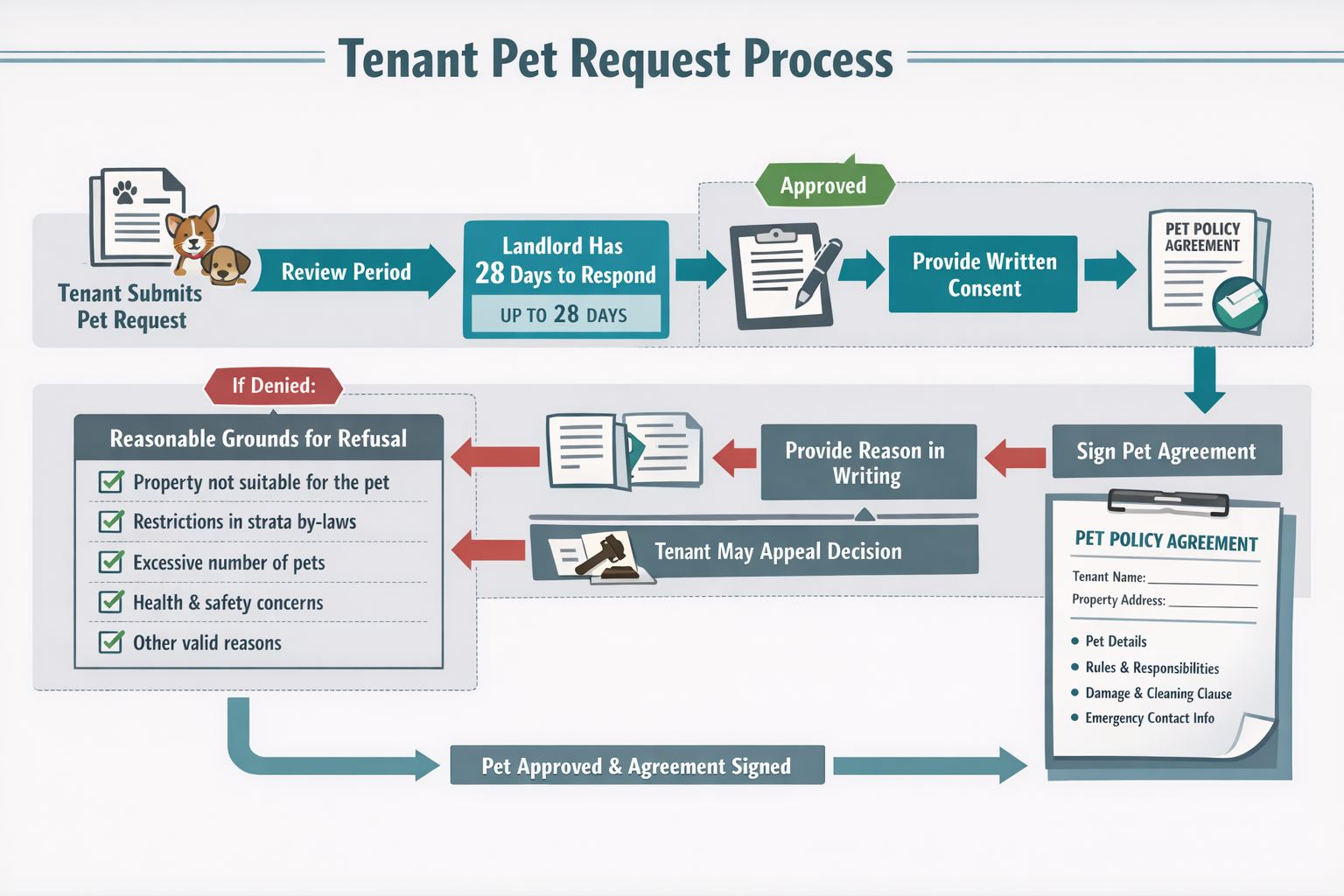
When a tenant submits a pet request, landlords have 28 days to provide written consent or refusal. This consent cannot be unreasonably withheld, though "reasonable grounds" for refusal remain legally permissible[1]. These grounds typically include:
- Property unsuitability (size constraints, lack of outdoor space)
- Insurance policy restrictions explicitly prohibiting certain animals
- Building regulations in leasehold properties with pet prohibitions
- Documented evidence of previous pet-related property damage
- Breed-specific concerns related to aggressive or dangerous animals
Critically, the Act only applies to existing tenants, not prospective applicants. Landlords retain full discretion to refuse rental applications from pet owners and can maintain "No Pets" designations in property advertisements[1]. This distinction creates a two-tier system where acquisition and retention policies differ substantially.
Prohibited Requirements and Permitted Protections
The final Act version explicitly prohibits landlords from requiring tenants to purchase pet insurance or reimbursing insurance costs—doing so violates the Tenant Fees Act 2019[1]. This prohibition eliminates a key risk mitigation tool landlords previously relied upon.
However, landlords can require tenants to carry renter's insurance with pet liability coverage, typically ranging from £100,000 to £300,000 in coverage limits. This distinction matters: landlords cannot mandate pet-specific policies but can require general renter's insurance that includes pet liability components.
For professional guidance on property assessment before accepting pet requests, consider consulting registered RICS valuers who understand valuation implications.
Enforcement and Eviction Grounds
When pet-related issues arise, landlords possess specific eviction grounds:
- Ground 14: Anti-social behaviour from disruptive or aggressive pets
- Ground 12: Breach of pet policy terms incorporated into tenancy agreements[1]
Tenants who bring unauthorized pets into properties face eviction through breach of covenant proceedings. The Act strengthens tenant rights for approved pets but maintains consequences for policy violations.
Building Survey Protocols to Assess Pre-Existing Damage for Accurate Rental Valuations
Establishing baseline property conditions before pet occupancy represents the cornerstone of defensible Renters' Rights Act 2026 Pet Damage Risks: Building Survey Checklists for Valuation Adjustments in PRS. Without comprehensive pre-occupancy documentation, landlords face significant challenges attributing damage to specific tenancies or pets.
Comprehensive Pre-Occupancy Survey Requirements
Professional building surveys must document property conditions with forensic detail before granting pet permission. A RICS Building Survey Level 3 provides the most thorough assessment, though targeted inspections may suffice for specific pet-related concerns.
Essential survey components include:
- Photographic documentation with timestamp metadata for every room
- Detailed written descriptions of existing wear, damage, or defects
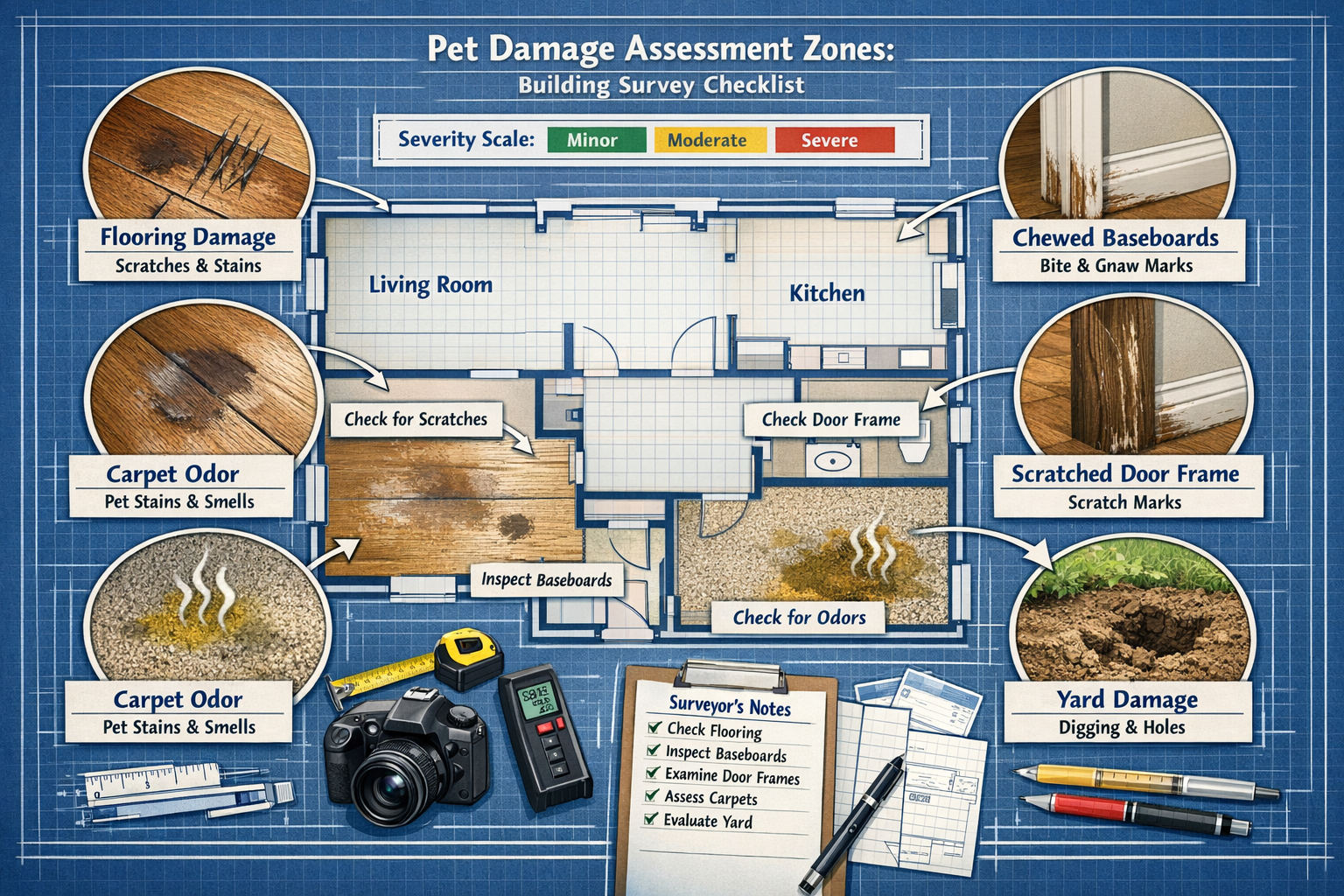
- Flooring condition assessments noting scratches, stains, or structural issues
- Wall and baseboard integrity documenting existing marks or damage
- Door and frame condition recording scratches, dents, or operational issues
- Carpet and soft furnishing status including odor assessments
- Garden and outdoor space condition for properties with exterior access
The survey should employ standardized condition ratings (excellent, good, fair, poor) with specific criteria definitions to ensure consistency across multiple inspections.
Specialized Pet Damage Assessment Zones
Certain property areas experience disproportionate pet-related wear. Surveyors should apply enhanced scrutiny to:
| Property Zone | Common Pet Damage Types | Assessment Priority |
|---|---|---|
| Entrance hallways | Scratched doors, damaged frames, flooring wear | ⭐⭐⭐ Critical |
| Living areas | Carpet stains, furniture damage, wall marks | ⭐⭐⭐ Critical |
| Kitchens | Flooring scratches, cabinet damage, appliance wear | ⭐⭐ High |
| Bedrooms | Carpet damage, door scratches, window sill wear | ⭐⭐ High |
| Bathrooms | Door damage, flooring issues | ⭐ Moderate |
| Gardens/patios | Digging damage, fence deterioration, lawn destruction | ⭐⭐⭐ Critical |
For properties with suspected structural issues that could complicate damage attribution, consider specialized assessments like damp surveys or subsidence surveys to establish pre-existing conditions.
Documentation Standards and Legal Defensibility
Survey documentation must meet evidentiary standards for potential deposit disputes or tribunal proceedings. Best practices include:
- High-resolution photographs (minimum 12 megapixels) with clear focus
- Consistent lighting conditions to enable accurate comparison photography
- Scale references in images (rulers, coins) for damage size documentation
- Written descriptions using objective, non-judgmental language
- Signed acknowledgment from tenants confirming accuracy of baseline survey
- Secure storage of documentation for minimum retention periods (typically 6+ years)
Professional surveyors should provide landlords with comprehensive reports suitable for choosing the right property survey methodology based on property type and risk factors.
Periodic Inspection Protocols
Beyond initial baseline surveys, landlords should implement periodic inspection schedules during pet tenancies:
- 6-month intervals for high-risk pets (large dogs, multiple animals)
- Annual inspections for standard pet occupancy
- Immediate inspections following noise complaints or neighbor reports
These inspections should reference the baseline survey, documenting any changes or deterioration attributable to pet occupancy. Maintaining consistent inspection personnel and methodology improves reliability and defensibility.
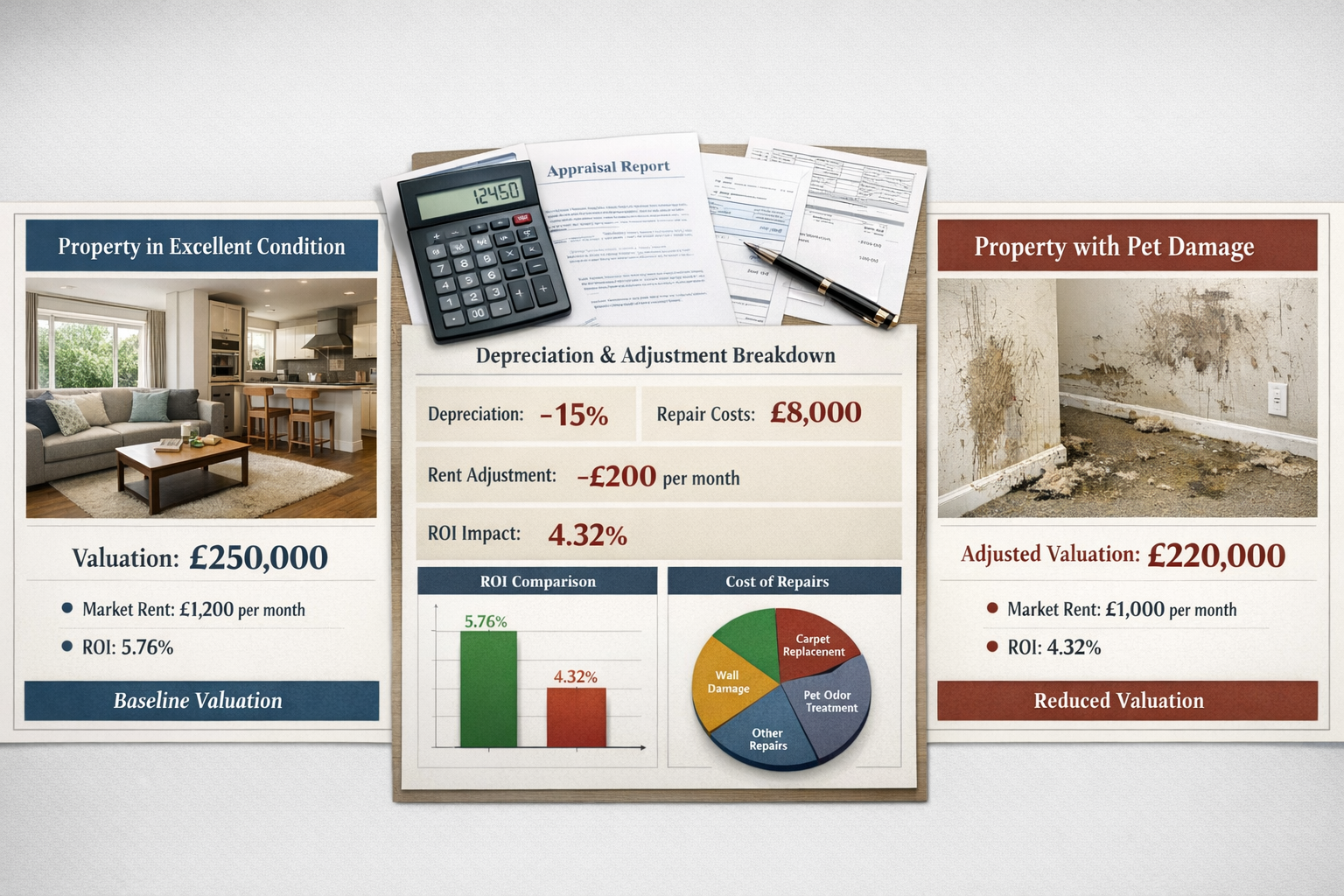
Valuation Adjustment Methodologies for Pet-Related Property Depreciation in PRS
Quantifying pet damage impact on rental property valuations requires systematic methodologies that translate physical deterioration into financial adjustments. The Renters' Rights Act 2026 Pet Damage Risks: Building Survey Checklists for Valuation Adjustments in PRS demands precision in these calculations.
Depreciation Assessment Frameworks
Professional valuers employ several approaches to quantify pet-related depreciation:
1. Repair Cost Method
This direct approach calculates the actual cost to restore the property to pre-pet condition:
- Professional carpet cleaning: £150-£400 per property
- Carpet replacement: £15-£40 per square meter
- Hardwood floor refinishing: £25-£50 per square meter
- Door replacement: £200-£600 per door
- Repainting (pet odor sealing): £800-£1,500 per property
2. Market Rent Adjustment Method
This approach assesses how pet damage affects achievable rental income:
- Minor cosmetic damage: 0-2% rent reduction
- Moderate damage requiring repairs: 3-5% rent reduction
- Severe damage affecting habitability: 6-10%+ rent reduction
- Persistent odor issues: 5-15% rent reduction (difficult to eliminate)
3. Capital Value Impact Method
For properties held as investments, pet damage affects overall property value:
- Well-maintained pet occupancy: 0-1% value impact
- Moderate pet damage: 1-3% value reduction
- Severe structural or odor damage: 3-7% value reduction
These methodologies should be applied by qualified professionals familiar with valuation factors specific to rental properties.
Security Deposit Calculations and Limitations
Security deposits represent the primary financial protection mechanism for landlords under the new framework. However, deposit caps create significant constraints.
In jurisdictions with deposit limitations (similar to California's one-month rent cap implemented in 2024), landlords face scenarios where pet damage costs exceed available deposit funds. Consider this example:
Property Details:
- Monthly rent: £1,200
- Maximum security deposit: £1,200 (one month)
- Pet damage costs: £2,400 (carpet replacement, door repairs, deep cleaning)
The landlord can only recover £1,200 from the deposit, absorbing a £1,200 loss unless pursuing separate legal action—a costly and time-consuming process.
Risk-Based Valuation Adjustments
Sophisticated landlords implement risk-adjusted valuation models that incorporate pet occupancy probability:
Formula: Adjusted Property Value = Base Value – (Expected Damage Cost × Probability × Recovery Gap)
Example Calculation:
- Base property value: £250,000
- Expected pet damage over 3-year tenancy: £3,000
- Probability of pet damage exceeding deposit: 25%
- Recovery gap (unrecoverable costs): £1,500
- Risk adjustment: £3,000 × 0.25 × 0.50 = £375
This £375 reduction reflects the expected unrecoverable loss from pet damage, informing purchase decisions for investment properties.
Commercial Property Considerations
For landlords managing commercial rental properties or mixed-use buildings, pet damage risks require specialized assessment. Commercial building surveys address unique concerns like:
- Public liability from pets in commercial spaces
- Health and safety compliance in food service or healthcare settings
- Insurance implications for commercial policies with pet exclusions
- Lease covenant breaches in properties with superior landlord restrictions
Professional commercial property surveyors can provide specialized guidance for these complex scenarios.
Implementing Comprehensive Pet Damage Prevention and Mitigation Strategies
Beyond documentation and valuation, landlords must implement proactive strategies to minimize pet-related risks while complying with the Renters' Rights Act 2026.
Pet Policy Development and Integration
Comprehensive written pet policies should be incorporated into tenancy agreements as enforceable terms. Effective policies include:
✅ Specific pet descriptions (species, breed, size, age)
✅ Behavioral requirements (training, vaccination, neutering)
✅ Damage prevention obligations (nail trimming, supervision)
✅ Cleaning standards (professional cleaning at tenancy end)
✅ Garden maintenance (repairing digging damage, waste removal)
✅ Noise and nuisance provisions (quiet hours, complaint procedures)
✅ Insurance requirements (renter's insurance with pet liability)
These provisions create enforceable obligations that support eviction proceedings under Ground 12 if violated[1].
Property Modification for Pet Resilience
Strategic property modifications reduce pet damage vulnerability:
Flooring Upgrades:
- Replace carpets with luxury vinyl tile (LVT) or laminate flooring
- Install scratch-resistant hardwood with enhanced finish coatings
- Use sealed concrete or tile in high-traffic areas
Protective Installations:
- Door frame guards and kick plates on lower door sections
- Wall corner protectors in hallways and living areas
- Washable paint with stain-resistant properties
- Reinforced screening on windows and doors
These modifications increase upfront costs but reduce long-term damage expenses and improve marketability to pet-owning tenants.
Tenant Selection and Pet Assessment
While landlords cannot refuse existing tenant pet requests without reasonable grounds, they can implement rigorous assessment procedures:
📋 Pet reference requests from previous landlords
📋 Veterinary records confirming vaccinations and health status
📋 Behavioral assessments or training certifications
📋 Meet-and-greet sessions to observe pet temperament
📋 Trial periods with enhanced inspection frequency
These assessments provide evidence supporting reasonable refusal decisions if significant risks are identified.
Professional Survey Integration
Landlords should establish relationships with qualified surveyors who understand pet-related valuation challenges. For comprehensive property assessments, consider:
- RICS Home Surveys for residential rental properties
- Specialist defect surveys for targeted pet damage assessment
- Stock condition surveys for portfolio landlords managing multiple properties
Regular professional assessments provide defensible documentation and early identification of developing issues before they escalate.
Financial Protection Beyond Deposits
Given deposit limitations, landlords should explore supplementary protection mechanisms:
Landlord Insurance Enhancements:
- Policies with pet damage coverage (typically £1,000-£5,000 limits)
- Malicious damage protection covering intentional pet-related harm
- Loss of rent coverage during repair periods
Rent Guarantor Requirements:
- Guarantors provide additional recovery options for damage exceeding deposits
- Particularly valuable for tenants with limited financial resources
Incremental Rent Adjustments:
- Where legally permissible, modest rent increases (2-5%) for pet occupancy
- Must be clearly disclosed and agreed upon in writing
Navigating Eviction Grounds and Dispute Resolution for Pet-Related Issues
Understanding enforcement mechanisms ensures landlords can address serious pet-related problems while maintaining compliance with the Renters' Rights Act 2026.
Ground 14: Anti-Social Behaviour
This ground applies when pets create nuisance or disturbance affecting neighbors or the property:
Qualifying Behaviors:
- Persistent excessive barking or noise
- Aggressive behavior toward neighbors or visitors
- Property damage affecting common areas in multi-unit buildings
- Unsanitary conditions from inadequate waste management
Landlords must document complaints with dates, times, and specific incidents. Witness statements from neighbors strengthen eviction proceedings.
Ground 12: Breach of Tenancy Terms
When tenants violate incorporated pet policy provisions, landlords can pursue eviction under breach of covenant[1]:
Common Breaches:
- Acquiring unauthorized additional pets beyond approved animals
- Failing to maintain required renter's insurance
- Refusing access for scheduled pet-related inspections
- Neglecting agreed cleaning or maintenance obligations
Landlords should issue formal written warnings documenting specific breaches and providing reasonable cure periods before initiating eviction proceedings.
Deposit Dispute Resolution
Pet damage disputes frequently arise during deposit deduction processes. Successful claims require:
🔍 Baseline survey evidence showing pre-occupancy condition
🔍 Exit survey documentation demonstrating deterioration
🔍 Repair cost estimates from qualified contractors
🔍 Photographic comparisons clearly showing damage progression
🔍 Professional cleaning invoices for odor or sanitation issues
Deposit protection schemes require clear evidence that damage exceeds normal wear and tear—a higher standard for pet-related claims given the Act's pro-tenant orientation.
Proactive Dispute Prevention
The most effective dispute resolution is dispute prevention through:
- Mid-tenancy inspections with tenant participation and acknowledgment
- Early intervention when minor issues are identified
- Professional mediation for disagreements about damage attribution
- Clear communication documenting all pet-related concerns in writing
Maintaining professional, documented communication creates favorable conditions for resolving disputes without formal proceedings.
Regional Variations and Jurisdiction-Specific Considerations
While the Renters' Rights Act 2026 establishes national frameworks, regional variations affect implementation:
England and Wales Distinctions
The Act applies primarily to England, with Wales maintaining separate rental legislation. Landlords operating across borders must understand jurisdictional differences in:
- Deposit protection scheme requirements
- Eviction notice periods and grounds
- Pet policy enforceability standards
- Tribunal procedures and precedents
Scotland's Separate Framework
Scotland's rental regulations differ substantially, with the Private Housing (Tenancies) (Scotland) Act 2016 governing pet provisions. Scottish landlords face:
- Different eviction grounds for pet-related issues
- Unique deposit cap calculations
- Separate tribunal systems for dispute resolution
Northern Ireland Considerations
Northern Ireland maintains distinct rental legislation with varying pet ownership provisions. Landlords should consult jurisdiction-specific legal guidance.
Local Authority Variations
Individual councils may impose additional requirements:
- Licensing conditions for Houses in Multiple Occupation (HMOs) with pets
- Environmental health standards for pet-occupied properties
- Planning restrictions in conservation areas or listed buildings
Landlords should verify local authority requirements before implementing pet policies.
Conclusion: Strategic Approaches to Pet Damage Risk Management in the New Regulatory Environment
The Renters' Rights Act 2026 Pet Damage Risks: Building Survey Checklists for Valuation Adjustments in PRS represents a fundamental shift requiring landlords to balance tenant rights with financial protection. Success in this new environment demands systematic approaches combining comprehensive documentation, professional survey integration, and proactive risk management.
Key action steps for landlords include:
-
Commission baseline building surveys before granting pet permission, establishing defensible documentation of pre-occupancy conditions through professional RICS surveys
-
Develop comprehensive written pet policies incorporating specific behavioral requirements, damage prevention obligations, and enforcement mechanisms
-
Implement periodic inspection schedules with consistent documentation standards enabling accurate damage attribution
-
Calculate risk-adjusted property valuations accounting for expected pet damage costs and deposit recovery limitations
-
Enhance properties with pet-resilient modifications reducing damage vulnerability and long-term maintenance costs
-
Establish professional surveyor relationships ensuring access to qualified experts for complex valuation and damage assessment scenarios
-
Maintain meticulous documentation of all pet-related communications, inspections, and incidents supporting potential eviction or deposit deduction proceedings
The Act's prohibition on pet insurance requirements[1] places greater emphasis on security deposits and baseline surveys as primary protection mechanisms. Given deposit caps in many jurisdictions, landlords must view pet damage risk as an operational cost requiring strategic mitigation rather than complete elimination.
Properties with existing structural concerns should undergo specialized assessments—such as structural surveys or drainage surveys—before pet occupancy to prevent attribution disputes.
The rental market's evolution toward greater pet accommodation reflects broader social trends recognizing pet ownership's importance to tenant wellbeing. Landlords who develop sophisticated risk management frameworks will maintain competitive advantages while protecting their property investments in this transformed regulatory landscape.
References
[1] Renters Rights Pets 2 – https://theindependentlandlord.com/renters-rights-pets-2/
[2] Pet Laws Regulations Rental Properties California – https://www.steadily.com/blog/pet-laws-regulations-rental-properties-california
[3] California Pet Rental Rights 2026 Landlord Rules Pet Fees Assistance Animal Protections – https://www.pawsclaws.cn/blogs/blog/california-pet-rental-rights-2026-landlord-rules-pet-fees-assistance-animal-protections
[4] California Pet Housing Laws Recent Changes And What They Mean – https://samlaw.net/resources/blog/california-pet-housing-laws-recent-changes-and-what-they-mean/
[5] California Pet Rent Laws – https://castelblanco.com/california-pet-rent-laws/
[6] California Pet Rent Laws – https://www.hemlane.com/resources/california-pet-rent-laws/