
When a building owner initiates construction work affecting a shared boundary, the financial implications extend far beyond the immediate project costs. Recent data shows that party wall surveyor fees can reach £5,400 for complex projects, yet many property owners and valuers fail to adequately account for these expenses when assessing property values. Understanding Valuation Adjustments for Party Wall Award Costs: How to Factor Surveyor Fees and Compensation into Property Value is essential for accurate property assessments and financial planning in 2026's competitive housing market.
The Party Wall etc. Act 1996 creates legal obligations that generate measurable costs—costs that directly impact property valuations, sale prices, and investment returns. Whether you're a homeowner planning renovations, a property investor evaluating acquisitions, or a professional valuer preparing formal assessments, comprehending how to properly adjust valuations for party wall expenses ensures financial accuracy and protects against unexpected liabilities.
Key Takeaways
- Party wall surveyor fees range from £900 to £5,400 depending on project complexity, with the building owner typically responsible for both parties' costs[2]
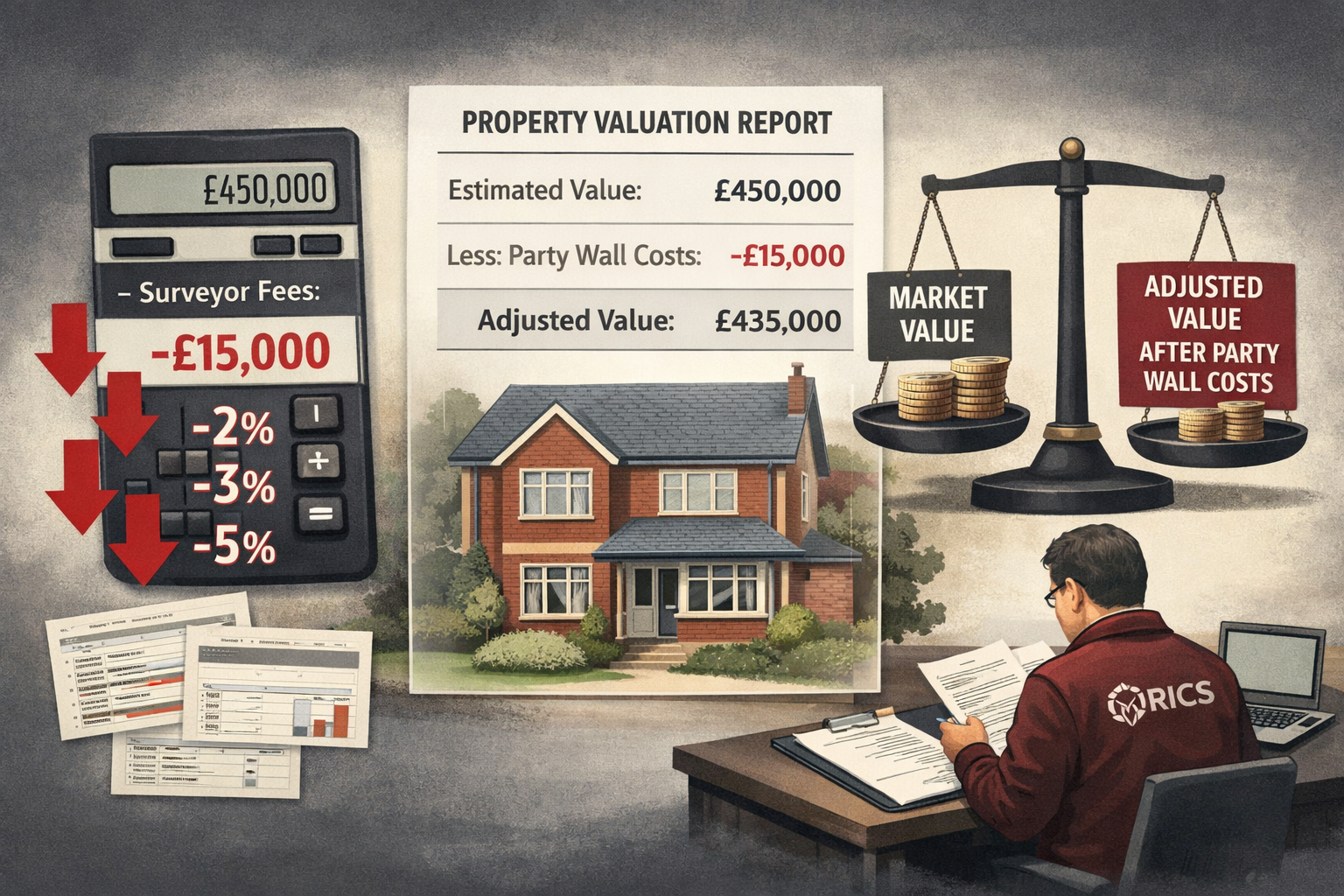
- Property valuations should be adjusted downward by 2-5% when significant party wall liabilities are anticipated or ongoing disputes exist
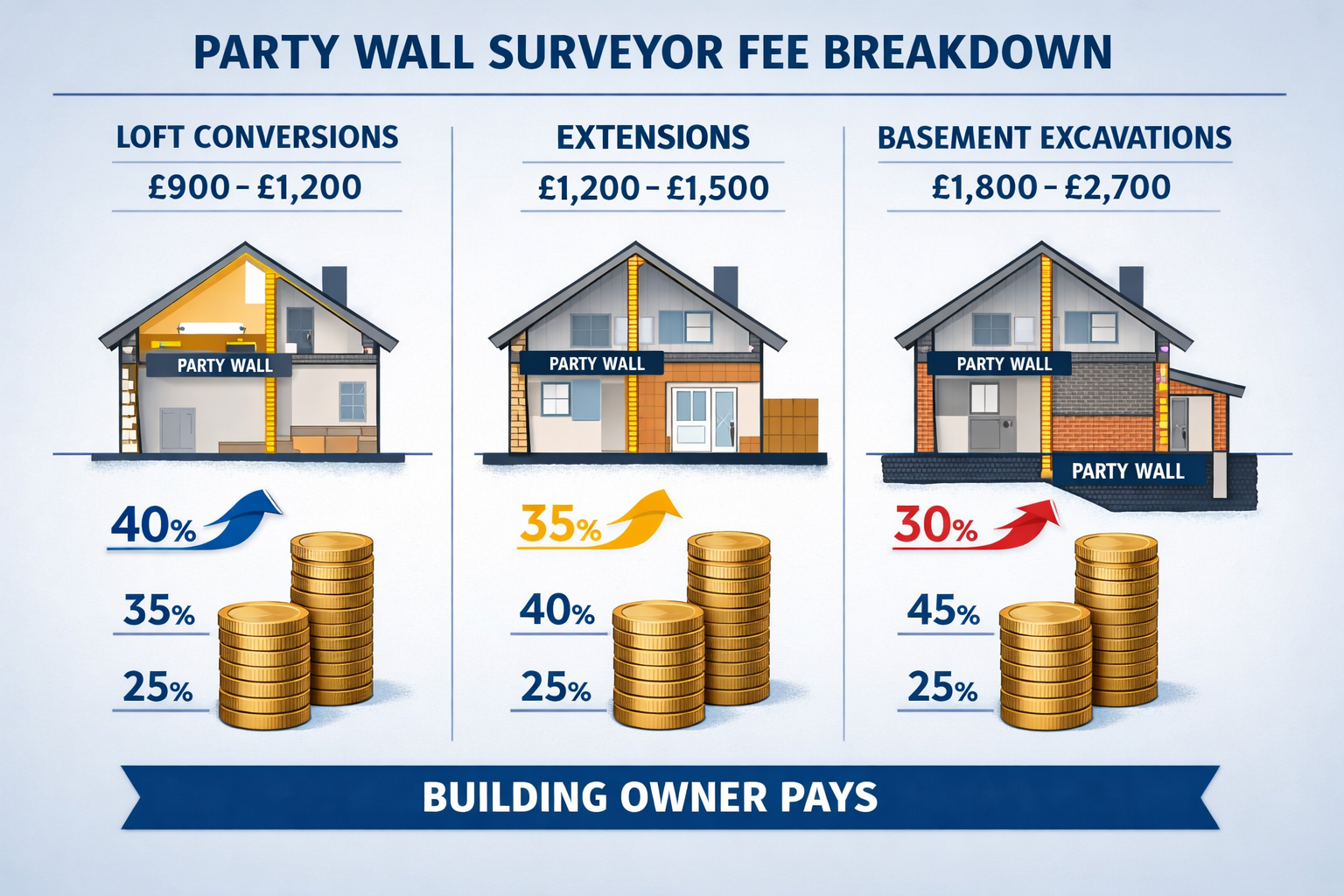
- Basement excavations carry the highest surveyor costs (£1,800-£2,700), requiring proportionally larger valuation adjustments than loft conversions or extensions[2]
- Multiple affected neighbours exponentially increase costs, as each adjoining owner may appoint their own surveyor
- Proper documentation of party wall expenses enables potential cost recovery and supports accurate property valuation adjustments
Understanding Party Wall Award Costs and Their Components
Party wall procedures generate several distinct cost categories that must be understood before making accurate valuation adjustments. These expenses aren't merely administrative—they represent real financial obligations that affect property equity and marketability.
Primary Cost Categories in Party Wall Procedures
Surveyor Appointment Fees form the foundation of party wall costs. When one impartial surveyor acts for both parties (the agreed surveyor approach), fees typically range from £900 to £2,700[2]. However, when both neighbours exercise their right to appoint separate surveyors—a common scenario in contentious situations—total costs escalate to £1,800 to £5,400[2].
The building owner initiating the work bears responsibility for paying both their own surveyor and the adjoining owner's surveyor fees[3]. This legal obligation creates a substantial financial burden that many property owners underestimate during project planning.
Award Preparation Costs cover the formal documentation process. Surveyors must prepare comprehensive party wall awards that detail:
- Scope of permitted works
- Working hours and access arrangements
- Protective measures and construction methods
- Dispute resolution procedures
- Cost allocation frameworks
Schedule of Condition Documentation represents another essential expense. Before construction begins, surveyors photograph and document the adjoining property's condition to establish a baseline for potential damage claims. This protective measure costs between £300 and £800 depending on property size and complexity[1].
Project-Specific Cost Variations
Different construction projects generate vastly different party wall expenses. Understanding these variations is crucial for accurate valuation adjustments.
Loft Conversions typically incur the lowest party wall costs, ranging from £900 to £1,200[2]. These projects usually involve minimal structural intervention to shared walls, requiring fewer inspections and less complex awards.
Extensions increase complexity and costs to £1,200 to £1,500[2]. Side extensions, rear extensions, and two-storey additions often require foundation work near party boundaries, triggering more extensive surveyor involvement and monitoring.
Basement Excavations command premium surveyor fees of £1,800 to £2,700[2]. These projects pose the highest risk to neighbouring properties through potential subsidence, structural movement, and foundation undermining. Surveyors must conduct multiple site visits, detailed structural assessments, and ongoing monitoring throughout excavation phases.
For property owners navigating these requirements, understanding what happens when no party wall agreement exists becomes critically important for avoiding legal complications.
Hidden and Contingent Costs
Beyond standard surveyor fees, property owners must budget for potential additional expenses that can significantly impact valuations.
Third Surveyor Appointments occur when the two appointed surveyors cannot reach agreement on award terms. A third independent surveyor steps in to make binding decisions, with fees determined by that third party and typically shared between both property owners[2].
Legal Dispute Costs can dwarf surveyor fees when disagreements escalate. Solicitor hourly rates range from £250 to £600[3], and contentious party wall disputes can consume dozens of billable hours. These legal expenses represent pure value destruction with no corresponding property improvement.
Compensation Claims arise when construction work causes damage to adjoining properties. While party wall awards should prevent or minimize damage, claims for cracked plasterwork, structural movement, or noise disruption can add thousands to total costs. These liabilities must be factored into property valuations, particularly when party wall disputes remain unresolved.
Multiple Neighbour Scenarios multiply costs exponentially. A semi-detached property has one party wall, but a mid-terrace property has two. When extensions or excavations affect multiple neighbours, each may appoint their own surveyor, potentially tripling or quadrupling total fees[1].
Valuation Adjustments for Party Wall Award Costs: Methodologies and Calculations
Professional valuers must employ systematic approaches to account for party wall costs when preparing property assessments. These adjustments protect buyers, lenders, and investors from overpaying for properties with hidden liabilities.
Direct Cost Deduction Method
The most straightforward approach involves directly deducting known or estimated party wall costs from the property's market value. This method works best when:
- Construction work is planned but not yet commenced
- Surveyor fee estimates are available
- The scope of work is clearly defined
- No disputes exist between parties
Calculation Example:
| Valuation Component | Amount |
|---|---|
| Base Market Value | £650,000 |
| Estimated Surveyor Fees (basement excavation) | -£2,500 |
| Schedule of Condition | -£500 |
| Contingency (10%) | -£300 |
| Adjusted Valuation | £646,700 |
This £3,300 reduction represents approximately 0.5% of property value—a modest but meaningful adjustment that reflects real financial obligations.
Risk-Adjusted Valuation Approach
When party wall procedures are ongoing or disputes exist, valuers should apply risk-weighted adjustments that account for potential adverse outcomes.
Low-Risk Scenarios (cooperative neighbours, straightforward work, agreed surveyor):
- Valuation reduction: 0.5-1% of property value
- Reflects standard surveyor fees with minimal complications
Medium-Risk Scenarios (separate surveyors appointed, moderately complex work):
- Valuation reduction: 1-3% of property value
- Accounts for higher fees, potential delays, minor dispute resolution
High-Risk Scenarios (contentious disputes, legal involvement, damage claims pending):
- Valuation reduction: 3-5% of property value
- Reflects substantial legal costs, compensation exposure, project delays
For a £500,000 property, these adjustments range from £2,500 (low risk) to £25,000 (high risk)—differences that significantly impact investment decisions and mortgage lending.
Comparative Market Analysis Adjustments
Professional valuers using comparable sales must adjust for party wall situations when comparing properties. A property with resolved party wall matters holds greater value than an identical property with ongoing disputes.
Adjustment Factors:
✅ Positive Adjustments (increase comparable property value):
- Recent party wall award successfully completed
- Cooperative neighbour relationships documented
- All construction work finished and signed off
⚠️ Negative Adjustments (decrease comparable property value):
- Active party wall disputes
- Party wall notice not served for completed work
- Outstanding damage claims or compensation issues
Working with registered RICS valuers ensures these adjustments follow professional standards and withstand lender scrutiny.
Time-Value Considerations
Party wall procedures introduce project delays that carry financial costs beyond direct surveyor fees. Valuers should consider:
Holding Costs during extended party wall negotiations:
- Mortgage interest on empty properties
- Council tax and utility expenses
- Insurance premiums
- Opportunity cost of delayed rental income
Market Risk Exposure when projects extend beyond anticipated timelines:
- Property price fluctuations during delays
- Interest rate changes affecting refinancing
- Construction cost inflation
A three-month delay on a £400,000 property with a £300,000 mortgage at 5% interest rate costs approximately £3,750 in interest alone—an expense that should inform valuation adjustments for properties with anticipated party wall complications.
Strategic Approaches to Cost Recovery and Value Protection
Property owners can implement proactive strategies to minimize party wall costs and protect property values. These approaches reduce the magnitude of necessary valuation adjustments and preserve equity.
Pre-Purchase Due Diligence
Buyers should investigate party wall histories before completing property purchases. Key due diligence steps include:
🔍 Review Planning Records: Check local authority records for neighbouring properties' planning applications that might trigger party wall obligations
🔍 Request Party Wall Documentation: Ask sellers to provide copies of any party wall awards, notices, or correspondence
🔍 Inspect for Unauthorized Work: Look for evidence of construction work that should have triggered party wall procedures but didn't—this creates potential liability
🔍 Assess Neighbour Relations: Contentious neighbour relationships increase party wall costs and complicate future development
Buyers discovering unresolved party wall issues can negotiate purchase price reductions reflecting the estimated cost of regularization. This protects investment value and provides capital to address outstanding obligations.
Escrow and Security Arrangements
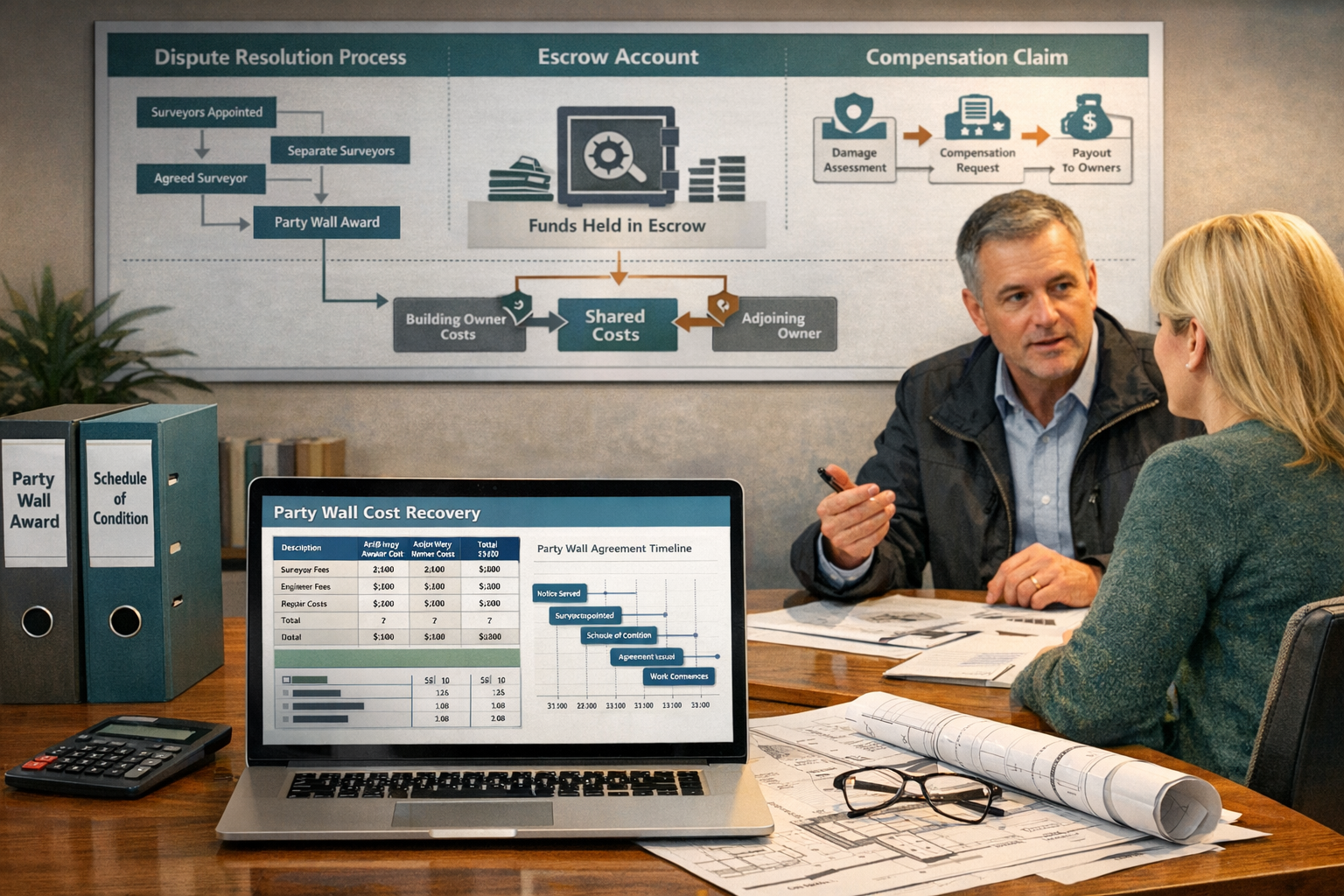
The Party Wall Act allows adjoining owners to request security for expenses—financial guarantees that funds will be available to cover surveyor fees and potential damage compensation[4].
Escrow Account Benefits:
For Building Owners:
- Demonstrates financial credibility to neighbours
- Reduces dispute likelihood
- Facilitates faster award agreement
- Protects against cost escalation claims
For Adjoining Owners:
- Guarantees payment of surveyor fees
- Provides compensation fund if damage occurs
- Reduces financial risk of participation
- Enables professional representation without upfront costs
Typical escrow amounts range from £3,000 to £10,000 depending on project scope. While this represents an upfront cost, it often reduces total expenses by preventing disputes and legal escalation[4].
Proportional Cost Allocation Strategies
When construction work benefits both properties, cost-sharing arrangements can reduce the building owner's financial burden and minimize necessary valuation adjustments.
Benefit-Based Allocation Example:
A building owner constructs a new party wall that replaces a deteriorating shared boundary. The new wall benefits both properties by:
- Improving structural integrity
- Enhancing thermal performance with proper insulation
- Increasing property values
In this scenario, surveyors may recommend the adjoining owner contribute 30-50% of costs proportional to benefits received[3]. This reduces the building owner's net expense and correspondingly decreases the valuation adjustment required.
Documentation for Cost Recovery
Meticulous record-keeping enables property owners to recover party wall costs through increased property value or tax deductions.
Essential Documentation:
📄 All Party Wall Notices and Responses: Proves compliance with legal obligations
📄 Surveyor Appointment Letters: Establishes professional credentials and fee agreements
📄 Party Wall Awards: Formal legal documents governing construction work
📄 Schedule of Condition Reports: Baseline evidence preventing fraudulent damage claims
📄 Inspection Reports: Documents construction compliance and completion
📄 Payment Receipts: Proves all fees paid and obligations discharged
This documentation serves multiple purposes:
- Supports property value claims when selling
- Provides evidence for tax deduction of improvement costs
- Protects against future liability claims
- Demonstrates professional project management to lenders
Professional Representation Value
While appointing a surveyor generates costs, professional representation typically reduces total expenses through efficient dispute resolution and accurate award preparation.
Cost-Benefit Analysis:
| Scenario | DIY Approach | Professional Surveyor |
|---|---|---|
| Initial Cost | £0 | £900-£1,500 |
| Dispute Likelihood | High (60%) | Low (15%) |
| Average Legal Costs | £3,500 | £500 |
| Time Investment | 40+ hours | 5 hours |
| Total Expected Cost | £2,100 | £1,125 |
Professional surveyors understand the three-meter rule and other technical requirements that prevent costly mistakes. Their expertise in obtaining consent for party wall work streamlines procedures and reduces conflict.
Regional Variations and Market Context in 2026
Party wall cost implications vary significantly across UK property markets, affecting valuation adjustments differently depending on location and market conditions.
High-Demand Urban Markets
In London and major urban centers, property values absorb party wall costs more readily due to strong demand and limited supply. A £2,500 party wall expense represents just 0.25% of a £1,000,000 property—a negligible adjustment in competitive markets[6].
However, 2026's construction boom in high-demand areas has created surveyor capacity constraints, driving fees upward and extending timelines[6]. Valuers in these markets should apply higher cost estimates reflecting current market conditions.
Regional Growth Areas
Northern England's infrastructure development has triggered increased construction activity and corresponding party wall procedures[5]. Properties in these growth regions require careful valuation adjustments because:
- Relative property values are lower (£200,000-£400,000 typical)
- Party wall costs represent larger percentage of value (0.5-1.5%)
- Surveyor availability varies by location
- Neighbour awareness of party wall rights is increasing
Rural and Low-Density Markets
Properties in rural areas face unique party wall valuation challenges:
Limited Surveyor Availability: Fewer local party wall specialists increases travel costs and fees
Larger Properties: Extensive boundaries and complex structures (like shared chimneys) increase surveyor time requirements
Agricultural Considerations: Farm buildings and commercial structures complicate residential party wall procedures
Valuers must account for these regional factors when determining appropriate adjustment percentages.
Integration with Broader Property Valuation Processes
Party wall cost adjustments don't exist in isolation—they form part of comprehensive property valuation methodologies employed by professional surveyors.
Relationship to Other Valuation Adjustments
Professional valuations incorporate multiple adjustment categories:
Structural Issues: Properties requiring structural surveys for subsidence, movement, or defects receive larger valuation reductions than party wall costs alone
Legal Encumbrances: Restrictive covenants, easements, and boundary disputes create value impacts similar to party wall complications
Remediation Costs: Damp survey findings or other defects require deductions that may dwarf party wall expenses
Party wall adjustments should be considered cumulatively with these other factors. A property with both significant structural issues and contentious party wall disputes requires proportionally larger total adjustments than either factor alone would suggest.
Lender and Mortgage Implications
Mortgage lenders increasingly scrutinize party wall situations when assessing lending risk. Properties with unresolved party wall disputes may face:
❌ Reduced Loan-to-Value Ratios: Lenders limit exposure by requiring larger deposits
❌ Higher Interest Rates: Risk premiums reflect potential value volatility
❌ Retention of Funds: Lenders withhold portions of mortgage advances until party wall matters resolve
❌ Declined Applications: Severe disputes may render properties unmortgageable
Valuers preparing mortgage valuations must clearly document party wall situations and their impact on property value and marketability.
Tax and Capital Gains Considerations
Party wall costs may qualify as allowable deductions when calculating capital gains tax on property sales. The key distinction:
✅ Capital Improvements: Party wall costs associated with extensions, conversions, or structural enhancements that increase property value may be deductible
❌ Repairs and Maintenance: Routine party wall procedures for maintenance work typically don't qualify
Property owners should consult tax advisors about documenting party wall expenses for potential tax benefits, particularly for significant projects like basement excavations or major extensions.
Practical Implementation: Case Studies and Examples
Real-world scenarios illustrate how valuation adjustments for party wall costs work in practice.
Case Study 1: Semi-Detached Loft Conversion
Property Profile:
- Semi-detached Victorian house, London
- Market value: £750,000
- Planned loft conversion affecting party wall
Party Wall Costs:
- Agreed surveyor fee: £1,000
- Schedule of condition: £400
- Award preparation: Included
- Total: £1,400
Valuation Adjustment:
- Direct cost deduction: £1,400
- Risk contingency (10%): £140
- Total adjustment: £1,540 (0.2% of value)
Outcome: Minimal impact on property value due to straightforward work, cooperative neighbour, and efficient agreed surveyor process. Property remained highly mortgageable and marketable.
Case Study 2: Terraced House Basement Excavation
Property Profile:
- Mid-terrace Georgian townhouse, Bath
- Market value: £550,000
- Basement excavation affecting two party walls
Party Wall Costs:
- Two separate surveyors (neighbours declined agreed surveyor): £3,200 each = £6,400
- Two schedules of condition: £600 each = £1,200
- Third surveyor (minor dispute resolution): £1,800
- Legal consultation: £900
- Total: £10,300
Valuation Adjustment:
- Direct costs: £10,300
- Project delay costs (2 months): £2,200
- Residual dispute risk: £1,500
- Total adjustment: £14,000 (2.5% of value)
Outcome: Substantial valuation impact due to complex work, multiple neighbours, and dispute escalation. Buyer negotiated £12,000 purchase price reduction based on valuer's report.
Case Study 3: Extension with Damage Compensation
Property Profile:
- Semi-detached house, Manchester
- Market value: £320,000
- Side extension with foundation work
Party Wall Costs:
- Separate surveyors: £2,800
- Schedule of condition: £450
- Damage compensation (cracked plaster): £3,200
- Remediation work: £2,100
- Total: £8,550
Valuation Adjustment:
- Actual costs incurred: £8,550
- Reputational impact on resale: £1,500
- Total adjustment: £10,050 (3.1% of value)
Outcome: Significant value impact from damage compensation. Property required disclosure of party wall dispute history to future buyers, creating ongoing marketability concerns. Professional party wall surveyor services could have prevented escalation.
Conclusion
Valuation Adjustments for Party Wall Award Costs: How to Factor Surveyor Fees and Compensation into Property Value represents a critical competency for property owners, investors, and professional valuers in 2026's active construction market. Party wall procedures generate real financial obligations ranging from £900 for straightforward projects to over £10,000 for complex, contentious situations—costs that directly impact property equity and marketability.
Professional valuers must systematically account for these expenses through direct cost deductions, risk-adjusted methodologies, and comparative market analysis adjustments. The magnitude of appropriate adjustments ranges from 0.5% for low-risk scenarios to 5% for high-risk situations with active disputes and legal involvement.
Property owners can minimize valuation impacts through proactive strategies: conducting thorough pre-purchase due diligence, establishing escrow arrangements, negotiating proportional cost allocation, maintaining meticulous documentation, and engaging professional surveyors who prevent costly disputes. These approaches not only reduce immediate expenses but also protect long-term property values and marketability.
Actionable Next Steps
🎯 For Property Owners Planning Construction:
- Obtain party wall surveyor fee estimates before commencing projects
- Budget 15-20% above estimated costs for contingencies
- Consider agreed surveyor appointments to minimize expenses
- Document all party wall procedures for future value protection
🎯 For Property Buyers:
- Request party wall documentation during due diligence
- Commission professional valuations that explicitly address party wall situations
- Negotiate purchase price reductions reflecting unresolved party wall liabilities
- Verify compliance with party wall obligations for recent construction work
🎯 For Professional Valuers:
- Develop standardized party wall cost assessment protocols
- Maintain current fee benchmarks for different project types
- Document party wall adjustments clearly in valuation reports
- Consider regional variations and market context when determining adjustments
🎯 For Mortgage Lenders:
- Implement party wall disclosure requirements in lending processes
- Train valuation panels on party wall risk assessment
- Establish clear policies for properties with unresolved disputes
- Consider retention arrangements for properties with ongoing procedures
The integration of party wall cost considerations into property valuations protects all stakeholders from financial surprises and ensures accurate assessment of property values. As construction activity continues expanding across UK markets in 2026, professional competency in valuation adjustments for party wall expenses becomes increasingly essential for successful property transactions and investment decisions.
References
[1] Party Wall Award Costs Explained What You Should Budget For – https://thepartywallguru.com/party-wall-award-costs-explained-what-you-should-budget-for/
[2] Party Wall Surveyor Cost – https://hoa.org.uk/advice/guides-for-homeowners/i-am-improving/party-wall-surveyor-cost/
[3] Surveyors Fees For A Party Wall – https://www.oakfieldsurveyors.co.uk/surveyors-fees-for-a-party-wall/
[4] Understanding Party Wall Escrow And Security For Expenses – https://www.dos.co/articles/understanding-party-wall-escrow-and-security-for-expenses
[5] Party Wall Surveys For Northern Englands Infrastructure Boom Managing Agreements Amid Regional Growth – https://nottinghillsurveyors.com/blog/party-wall-surveys-for-northern-englands-infrastructure-boom-managing-agreements-amid-regional-growth
[6] Party Wall Surveys Amid 2026 Construction Boom Handling Disputes In High Demand Uk Housing Markets – https://nottinghillsurveyors.com/blog/party-wall-surveys-amid-2026-construction-boom-handling-disputes-in-high-demand-uk-housing-markets