The UK property market is showing its first genuine signs of recovery in months. According to the latest RICS UK Residential Survey, agreed sales reached a net balance of -9% in January 2026—the least negative reading since June 2025 and a significant improvement from the depths of late 2025.[1] This turning point signals renewed momentum in transaction activity and presents a critical opportunity for property professionals, buyers, and investors to capitalize on improving market conditions.
As transaction volumes begin to rise and buyer confidence strengthens, the role of comprehensive building surveys becomes increasingly vital. With 2026 forecast to bring an anticipated uplift in volumes across both lending and surveys,[7] property professionals must adapt their assessment protocols to meet growing demand while maintaining the rigorous standards that protect buyers and support informed decision-making.
This article explores how Building Surveys for 2026 Agreed Sales Recovery: Checklists for Least Negative Readings Since June 2025 per RICS can help surveyors, buyers, and industry professionals navigate this pivotal recovery phase with confidence and precision.
Key Takeaways
✅ Market recovery confirmed: Agreed sales improved to -9% in January 2026, the strongest reading in seven months, signaling genuine momentum in transaction activity.[1]
✅ Enhanced survey protocols essential: Rising transaction volumes require comprehensive checklists that address both traditional structural concerns and emerging market-specific considerations.
✅ Regional variations persist: Scotland and Northern Ireland lead price growth while London and the South East continue facing affordability challenges, requiring location-specific survey approaches.[1]
✅ Digital transformation accelerating: Modern survey methodologies incorporating thermal imaging, moisture detection, and digital reporting are becoming standard practice in 2026's competitive market.[7]
✅ Buyer confidence growing: Twelve-month sales outlook sentiment surged to +35%, the strongest reading since December 2024, creating increased demand for professional survey services.[1]
Understanding the 2026 Market Recovery Context
The Significance of RICS January 2026 Data
The Royal Institution of Chartered Surveyors (RICS) January 2026 survey data represents more than just statistical improvement—it marks a fundamental shift in market sentiment after months of declining activity. The agreed sales net balance of -9% demonstrates that while the market remains technically in negative territory, the trajectory has reversed dramatically from the -19% reading recorded in October 2025.[1]
Several key indicators support this recovery narrative:
- New buyer enquiries improved to -15% in January 2026, up from -21% in December 2025 and -29% in November 2025[1]
- House prices stabilizing nationally with a net balance of -10% over the past three months[1]
- Twelve-month sales outlook reached +35%, reflecting growing confidence among property professionals[1]
- Price expectations for the year ahead hit +43%, the most positive outlook since February 2025[1]
This data creates a compelling case for increased survey activity. As transaction volumes rise, the demand for thorough, reliable building surveys intensifies, particularly as buyers seek to make informed decisions in a recovering but still cautious market.
Regional Market Variations Requiring Tailored Survey Approaches
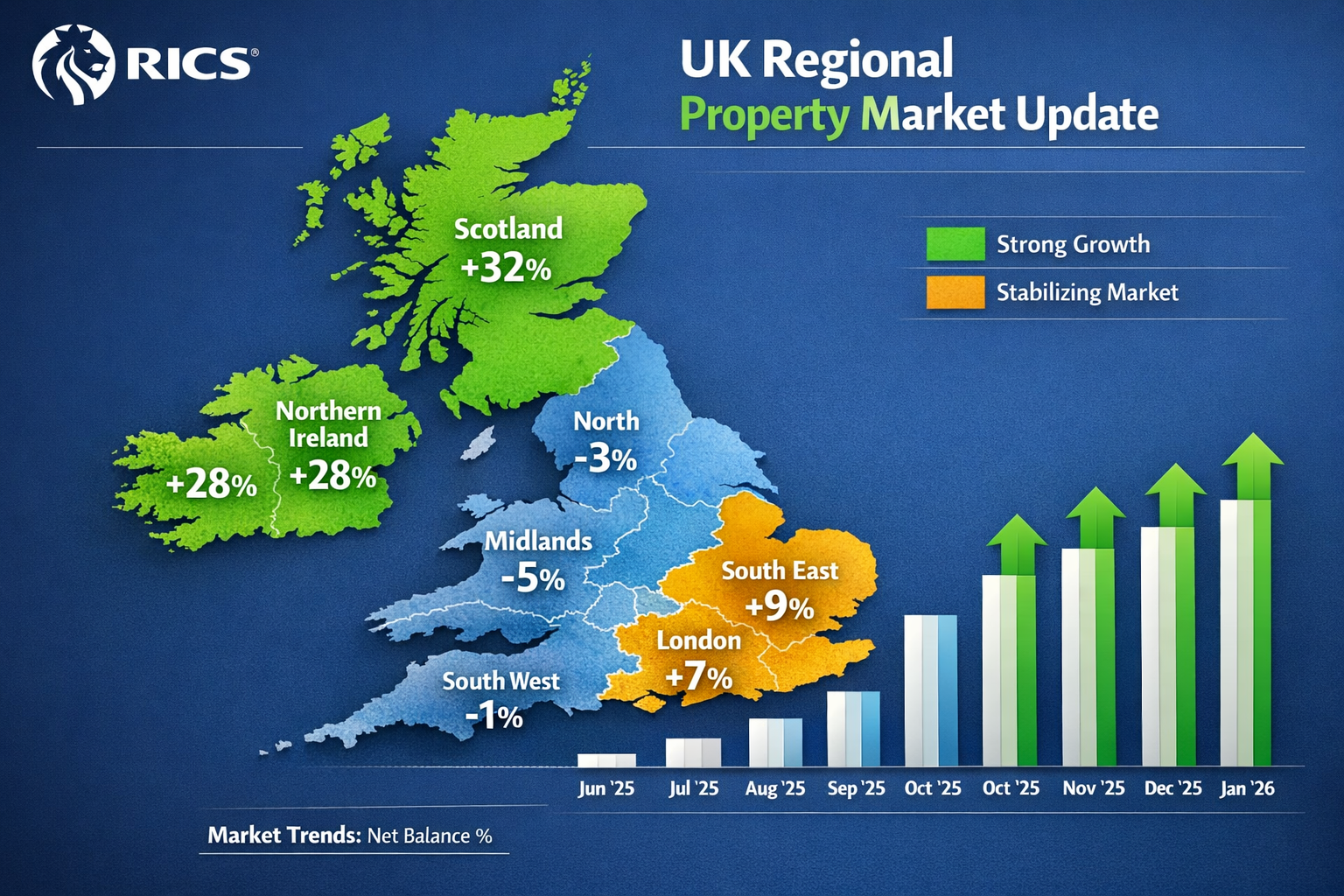
The RICS data reveals significant geographic disparities in market performance that directly impact survey requirements and priorities. Understanding these regional variations enables surveyors to adapt their assessment protocols appropriately.
| Region | Market Performance | Survey Focus Areas |
|---|---|---|
| Scotland & Northern Ireland | Strongest price growth | Standard structural assessments, expansion potential |
| North West & North England | Upward trends emerging | Traditional building concerns, climate considerations |
| London & South East | Lagging behind national average | Value optimization, space efficiency, renovation potential |
| South West & East Anglia | Ongoing affordability challenges | Long-term maintenance costs, energy efficiency |
For properties in high-performing regions like Scotland, surveys may emphasize growth potential and investment value. Conversely, in affordability-constrained areas like London and the South East, buyers require detailed assessments of immediate repair costs and long-term maintenance obligations to justify premium prices.[1]
Professional RICS building surveys must account for these regional nuances while maintaining consistent quality standards across all locations.
Building Surveys for 2026 Agreed Sales Recovery: Essential Checklist Components
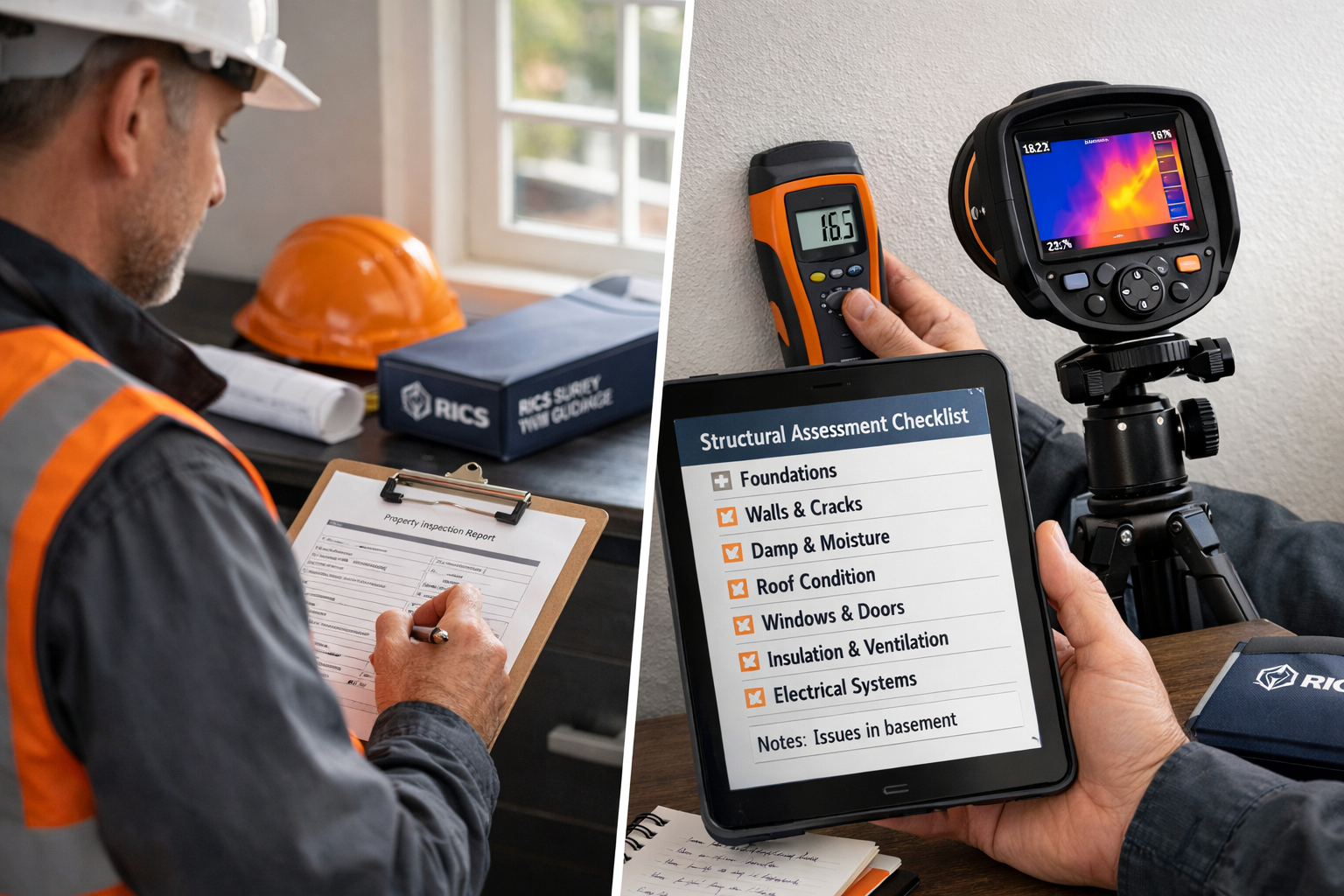
As transaction activity increases throughout 2026, surveyors must implement comprehensive checklists that address both traditional structural concerns and emerging market-specific considerations. The following framework provides a systematic approach to conducting thorough building surveys aligned with current RICS standards and market conditions.
Pre-Survey Preparation Checklist
Before arriving at the property, thorough preparation ensures efficient use of time and comprehensive coverage:
📋 Documentation Review
- Obtain property deeds and title information
- Review previous survey reports if available
- Examine planning permissions and building regulation approvals
- Check local authority records for enforcement notices
- Research property history and previous ownership
🔧 Equipment Verification
- Digital moisture meters calibrated and tested
- Thermal imaging cameras charged and operational
- Binoculars for high-level external inspection
- Measuring tools (laser distance meters, tape measures)
- Digital camera or tablet for photographic documentation
- Personal protective equipment (PPE) compliant with RICS health and safety standards[6]
📱 Digital Tools Preparation
- Survey software loaded with property-specific templates
- Cloud backup systems verified and accessible
- Client communication platforms ready for real-time updates
- Reference materials (RICS guidance, building regulations) downloaded
This preparation phase aligns with the anticipated uplift in volumes across the surveying sector in 2026,[7] ensuring efficiency without compromising thoroughness.
Structural Assessment Checklist
The foundation of any comprehensive building survey remains the structural integrity assessment. With market recovery underway, buyers are increasingly willing to invest in properties requiring work, making detailed structural analysis more critical than ever.
🏗️ Foundation and Substructure
- Visual inspection of external ground levels and drainage
- Assessment of foundation movement indicators (cracking patterns)
- Evaluation of subsidence risk factors
- Inspection of basement or cellar conditions if present
- Moisture ingress evaluation at ground level
🧱 Walls and Structural Elements
- External wall condition (brickwork, rendering, cladding)
- Internal wall structural integrity
- Load-bearing wall identification and assessment
- Cavity wall tie condition (where applicable)
- Structural crack analysis with severity ratings
- Chimney stack stability and condition
🏠 Roof Structure and Covering
- Roof survey including structure, covering, and weatherproofing
- Rafter and purlin condition assessment
- Ridge and hip tile security
- Flashing and valley gutter integrity
- Roof void insulation and ventilation
- Evidence of previous or ongoing water penetration
🪟 Windows, Doors, and Joinery
- Window frame condition and operation
- Glazing unit integrity (double/triple glazing seal failure)
- Door alignment and security features
- External joinery decay assessment
- Internal joinery and fitted elements
For properties showing signs of structural concern, surveyors should recommend specialist defect surveys or structural engineering assessments to provide buyers with comprehensive information.
Services and Systems Evaluation
Modern buyers in 2026's recovering market place significant emphasis on services efficiency and running costs, particularly given ongoing energy price concerns and environmental consciousness.
⚡ Electrical Systems
- Consumer unit age and compliance with current regulations
- Evidence of recent electrical inspection (EICR)
- Socket and lighting circuit functionality
- Earthing and bonding arrangements
- Smart home integration compatibility
🔥 Heating and Hot Water
- Boiler age, type, and service history
- Central heating system operation and efficiency
- Radiator condition and heat distribution
- Hot water cylinder condition (if present)
- Thermostat and control system functionality
- Alternative heating systems (underfloor, heat pumps)
💧 Plumbing and Drainage
- Water supply pipe material and condition
- Internal plumbing accessibility and condition
- Bathroom and kitchen fixture operation
- Drainage survey requirements identification
- Evidence of leaks or previous water damage
- Water pressure adequacy
🌡️ Ventilation and Insulation
- Mechanical ventilation system operation
- Natural ventilation adequacy
- Insulation levels (loft, walls, floors)
- Condensation risk assessment
- Air quality considerations
Damp, Timber, and Environmental Hazards
Moisture-related issues remain among the most common and costly defects discovered during building surveys. With institutional and professional landlords remaining bullish on buy-to-let investments in 2026,[7] thorough assessment of these concerns protects both residential buyers and investment purchasers.
💧 Damp Assessment
- Rising damp indicators and damp-proof course effectiveness
- Penetrating damp from external sources
- Condensation patterns and causes
- Moisture meter readings with interpretation
- Recommendation for specialist damp surveys where appropriate
🪵 Timber Condition
- Structural timber decay (wet rot, dry rot)
- Woodworm infestation evidence
- Floor joist condition and deflection
- Roof timber structural integrity
- Treatment history documentation
⚠️ Environmental Hazards
- Asbestos survey requirements for pre-2000 properties
- Lead paint presence in older properties
- Radon risk assessment based on location
- Japanese knotweed or invasive species presence
- Contaminated land considerations
The comprehensive nature of these assessments aligns with RICS professional standards and provides buyers with the detailed information necessary to make confident purchasing decisions in 2026's recovering market.
Adapting Survey Protocols for 2026 Market Conditions
The Building Surveys for 2026 Agreed Sales Recovery: Checklists for Least Negative Readings Since June 2025 per RICS must reflect not only technical assessment requirements but also the unique characteristics of the current market environment. Several factors distinguish 2026's recovery phase from previous market cycles.
Addressing Buyer Confidence Through Enhanced Reporting
With buyer enquiries improving significantly but many purchasers remaining cautious after the challenging 2025 market,[1] survey reports must provide exceptional clarity and actionable guidance. Modern buyers expect:
📊 Traffic Light Rating Systems
- Clear categorization of defects by severity (Red/Amber/Green)
- Immediate action requirements highlighted prominently
- Medium-term maintenance planning guidance
- Long-term considerations for property improvement
💰 Cost Implications and Prioritization
- Estimated repair cost ranges for identified defects
- Prioritization of works by urgency and impact
- Budget planning guidance for first-year ownership
- Potential negotiation points with sellers
📸 Comprehensive Visual Documentation
- High-quality photographs of all significant defects
- Annotated images highlighting specific concerns
- Thermal imaging results where moisture or insulation issues identified
- Comparative images showing normal vs. defective conditions
🎯 Executive Summary for Quick Decision-Making
- One-page overview of critical findings
- Clear recommendation on property suitability
- Summary of major cost implications
- Key risk factors highlighted
This enhanced reporting approach supports the growing confidence reflected in the +35% twelve-month sales outlook sentiment,[1] providing buyers with the detailed information they need to proceed with purchases confidently.
Commercial and Buy-to-Let Survey Considerations
The 2026 market recovery shows particular strength in the buy-to-let sector, with institutional and professional landlords remaining bullish on investments.[7] Survey protocols for investment properties require additional considerations beyond standard residential assessments.
Investment Property Survey Enhancements:
🏢 Rental Yield Optimization
- Space utilization efficiency assessment
- Potential for additional bedrooms or living areas
- Compliance with HMO regulations (if applicable)
- Tenant appeal factors and marketability
📋 Regulatory Compliance
- Energy Performance Certificate (EPC) rating and improvement potential
- Electrical safety standards compliance
- Gas safety requirements
- Fire safety regulations (especially for HMOs)
- Minimum energy efficiency standards (MEES) compliance
💼 Maintenance Cost Projections
- Five-year maintenance budget forecasting
- Major component replacement timelines
- Void period implications of major works
- Management company responsibilities (if leasehold)
For commercial properties, RICS commercial building surveys provide specialized assessment protocols addressing business-specific requirements and regulatory frameworks.
Integration of Digital Survey Technologies
The surveying sector in 2026 is experiencing significant digital transformation,[7] with technology enhancing both survey accuracy and client communication. Modern building survey checklists should incorporate:
🔬 Advanced Diagnostic Tools
- Thermal imaging for insulation defects and moisture detection
- Electronic moisture meters with data logging capabilities
- Drone photography for roof and high-level inspections
- 3D scanning for accurate dimensional recording
- Borescope cameras for cavity and concealed space inspection
📱 Digital Reporting Platforms
- Cloud-based survey software with real-time updates
- Client portals for progress monitoring
- Interactive reports with embedded photographs and videos
- Mobile-responsive formats for on-the-go review
- Integration with property transaction platforms
🤖 Data Analytics and Benchmarking
- Comparative analysis against similar properties
- Regional defect pattern recognition
- Predictive maintenance algorithms
- Historical data integration for repeat surveys
These technological enhancements align with RICS initiatives to enhance CPD platforms with improved digital tools and the new RICS member app,[7] supporting surveyors in delivering superior service quality during the market recovery.
Regional Survey Priorities for 2026 Recovery Markets
The geographic variations in market performance identified in the RICS January 2026 survey[1] require surveyors to adapt their assessment priorities based on location-specific factors and buyer concerns.
High-Growth Markets: Scotland and Northern Ireland
In regions experiencing the strongest price growth, buyers often focus on investment potential and long-term value appreciation. Survey priorities should emphasize:
- Expansion potential: Loft conversion feasibility, extension possibilities, garden development opportunities
- Energy efficiency: Insulation standards, heating system efficiency, renewable energy integration potential
- Future-proofing: Structural capacity for modifications, services upgrade feasibility
- Market positioning: Features that support continued value appreciation
Stabilizing Southern Markets: London and South East
For properties in affordability-constrained areas where the market lags behind national averages, buyers require detailed cost analysis to justify premium prices. Survey focus areas include:
- Immediate repair requirements: Clear identification of essential works and costs
- Space optimization: Assessment of layout efficiency and improvement potential
- Running costs: Detailed evaluation of heating, maintenance, and service charge implications
- Value engineering: Identification of cost-effective improvements that enhance property value
Surveyors operating in these markets should reference valuation adjustments for stabilising southern markets to provide comprehensive guidance aligned with current market conditions.[4]
Emerging Recovery Markets: North West and Northern England
Regions showing upward trends but not yet at peak performance require balanced survey approaches addressing both opportunity and risk:
- Traditional building stock: Thorough assessment of Victorian and Edwardian properties common in these regions
- Climate considerations: Enhanced focus on damp, weatherproofing, and drainage given regional rainfall patterns
- Renovation potential: Identification of properties suitable for improvement and value addition
- Community factors: Assessment of property condition relative to neighborhood standards
Future-Proofing Building Surveys for Continued Recovery

As 2026 progresses and market recovery continues, surveyors must anticipate evolving requirements and regulatory changes that will shape the profession's future.
Preparing for Proposed Homebuying Process Reforms
Government-proposed reforms to the homebuying process could make property condition assessments a standard upfront requirement,[7] fundamentally changing when and how surveyors operate. This potential transformation requires:
📋 Standardized Assessment Protocols
- Development of consistent pre-listing survey frameworks
- Integration with seller information packs
- Streamlined reporting formats for multiple stakeholder access
- Quality assurance mechanisms for upfront surveys
⚡ Rapid Turnaround Capabilities
- Enhanced efficiency in survey scheduling and execution
- Accelerated reporting timelines without compromising quality
- Scalable service delivery models for volume increases
- Technology integration for faster data collection and analysis
🤝 Multi-Party Communication Systems
- Platforms enabling simultaneous access for buyers, sellers, and agents
- Clear liability frameworks for upfront assessment reports
- Update mechanisms for properties remaining on market extended periods
- Integration with conveyancing and mortgage lending processes
Addressing the Surveyor Skills Gap
RICS is actively working on clearer pathways for graduates to gain qualifications[7] to build the talent pipeline needed to meet increased activity. Established surveyors can support sector growth by:
- Mentoring junior professionals through structured development programs
- Embracing continuing professional development (CPD) through RICS enhanced digital platforms
- Sharing best practices within professional networks and local associations
- Adopting new technologies that enhance service delivery and attract younger talent
Sustainability and Energy Efficiency Focus
With price expectations reaching +43% for the year ahead,[1] buyers increasingly recognize that energy-efficient properties command premium values. Building survey checklists must expand to address:
🌱 Environmental Performance Assessment
- Detailed EPC rating analysis with improvement recommendations
- Renewable energy system feasibility (solar panels, heat pumps)
- Insulation upgrade potential and cost-benefit analysis
- Smart home technology integration opportunities
- Electric vehicle charging infrastructure provision
♻️ Sustainable Materials and Construction
- Assessment of sustainable building materials and techniques
- Embodied carbon considerations for renovation projects
- Circular economy principles in repair recommendations
- Future regulatory compliance projections
Specialized Survey Services for Complex Properties
As the market diversifies and professional landlords remain active,[7] demand grows for specialized survey expertise addressing unique property types:
- Schedule of condition reports for commercial leases and party wall matters
- Dilapidations surveys for commercial property transactions
- Specific defect reports for targeted issue investigation
- Monitoring surveys for properties with ongoing structural concerns
- Expert witness services for dispute resolution
Quality Assurance and Professional Standards
Maintaining rigorous professional standards becomes increasingly important as transaction volumes rise and time pressures intensify. Building Surveys for 2026 Agreed Sales Recovery: Checklists for Least Negative Readings Since June 2025 per RICS must incorporate robust quality assurance mechanisms.
RICS Compliance and Best Practice
All building surveys must adhere to RICS professional standards including:
- RICS Home Survey Standard compliance for residential properties
- Health and safety protocols as outlined in RICS guidance[6]
- Professional indemnity insurance with adequate coverage levels
- Conflicts of interest identification and management
- Complaints handling procedures aligned with RICS requirements
Peer Review and Continuous Improvement
Implementing systematic quality assurance processes ensures consistent high standards:
✅ Internal Review Mechanisms
- Peer review of complex or high-value survey reports
- Regular calibration exercises for moisture meter and thermal imaging interpretation
- Photographic evidence quality standards
- Report clarity and readability assessments
✅ Client Feedback Integration
- Structured post-survey feedback collection
- Analysis of client satisfaction trends
- Identification of common concerns or confusion points
- Continuous improvement based on user experience
✅ Professional Development Tracking
- CPD activity documentation and reflection
- Attendance at RICS technical seminars and webinars
- Engagement with sector publications and research
- Participation in professional networks and forums
Risk Management and Liability Protection
As survey volumes increase throughout 2026's recovery, robust risk management protects both surveyors and clients:
- Clear scope definition in terms of engagement
- Limitation statements regarding inaccessible areas
- Recommendation for specialist investigations where expertise boundaries reached
- Photographic evidence of property conditions at survey date
- Contemporaneous notes supporting report conclusions
Conclusion: Positioning for Success in 2026's Market Recovery
The Building Surveys for 2026 Agreed Sales Recovery: Checklists for Least Negative Readings Since June 2025 per RICS represent more than technical assessment protocols—they embody a strategic response to a transforming market landscape. With agreed sales reaching -9% in January 2026, the least negative reading since June 2025,[1] and twelve-month outlook sentiment surging to +35%,[1] the property market stands at a pivotal recovery point.
Professional surveyors who adapt their methodologies to address current market conditions while maintaining rigorous RICS standards will position themselves for success in this expanding market. The comprehensive checklists outlined in this article provide a framework for delivering exceptional value to clients navigating the 2026 recovery with confidence.
Actionable Next Steps for Property Professionals
For Surveyors:
- Review and update your survey checklists to incorporate 2026 market-specific considerations
- Invest in digital tools that enhance diagnostic accuracy and reporting quality
- Engage with RICS CPD platforms to stay current with evolving standards and best practices
- Develop regional expertise understanding local market dynamics and buyer priorities
- Build strategic partnerships with estate agents, mortgage brokers, and conveyancers to capture growing transaction volumes
For Property Buyers:
- Commission comprehensive building surveys rather than basic valuations for informed decision-making
- Select RICS-qualified surveyors with local market knowledge and proven track records
- Review survey reports thoroughly and seek clarification on any unclear findings
- Use survey findings strategically in purchase negotiations and renovation planning
- Consider specialist surveys for specific concerns identified in initial assessments
For Property Investors:
- Implement enhanced due diligence protocols for buy-to-let acquisitions
- Factor survey findings into yield calculations and investment return projections
- Prioritize energy efficiency assessments given regulatory trends and tenant preferences
- Engage registered RICS valuers for accurate market value assessments
- Develop long-term maintenance strategies based on comprehensive survey recommendations
The 2026 property market recovery presents significant opportunities for those equipped with thorough knowledge, robust processes, and commitment to professional excellence. By implementing comprehensive building survey checklists aligned with current RICS standards and market conditions, property professionals can navigate this recovery phase with confidence, supporting informed decision-making and successful transactions across all market segments.
As transaction volumes continue to rise throughout 2026, the demand for high-quality survey services will intensify. Those who invest in enhanced capabilities, embrace digital transformation, and maintain unwavering commitment to professional standards will thrive in this evolving landscape, contributing to a more transparent, efficient, and successful property market for all stakeholders.
References
[1] Uk Resi Survey Jan 2026 Report Shows Early Signs Market Recovery Despite Caution – https://www.rics.org/news-insights/uk-resi-survey-jan-2026-report-shows-early-signs-market-recovery-despite-caution
[2] Building Survey Protocols For Professional Landlord Acquisitions Assessing Yields In 2026s Bullish Buy To Let Recovery – https://nottinghillsurveyors.com/blog/building-survey-protocols-for-professional-landlord-acquisitions-assessing-yields-in-2026s-bullish-buy-to-let-recovery
[3] Modus By Rics January 2026 – https://www.rics.org/content/dam/ricsglobal/documents/to-be-sorted/MODUS-by-RICS-January-2026.pdf
[4] Valuation Adjustments For Stabilising Southern Markets Rics Tactics From January 2026 Survey Improvements – https://nottinghillsurveyors.com/blog/valuation-adjustments-for-stabilising-southern-markets-rics-tactics-from-january-2026-survey-improvements
[5] Q4 Rics Survey Shows Us Real Estate Market Well Recovery – https://www.capitaleconomics.com/publications/us-commercial-property-update/q4-rics-survey-shows-us-real-estate-market-well-recovery
[6] Health And Safety Checklist – https://www.rics.org/profession-standards/rics-standards-and-guidance/sector-standards/building-surveying-standards/home-surveys/health-and-safety-checklist
[7] Surveying In 2026 Reform Recovery And Renewed Demand – https://www.lrg.co.uk/news-and-insights/surveying-in-2026-reform-recovery-and-renewed-demand/