Northern England's property market is experiencing an unexpected renaissance in 2026. As house prices surge across Manchester, Leeds, Liverpool, and Newcastle, buyers are rushing to secure properties before values climb further. Yet beneath this optimism lies a critical challenge: Level 3 Building Surveys for Northern England Price Surge: Identifying Hidden Defects in Rapidly Appreciating Markets have become more essential than ever. When markets heat up, the temptation to skip thorough inspections grows—but rapidly appreciating properties often hide costly defects that can devastate unprepared buyers.
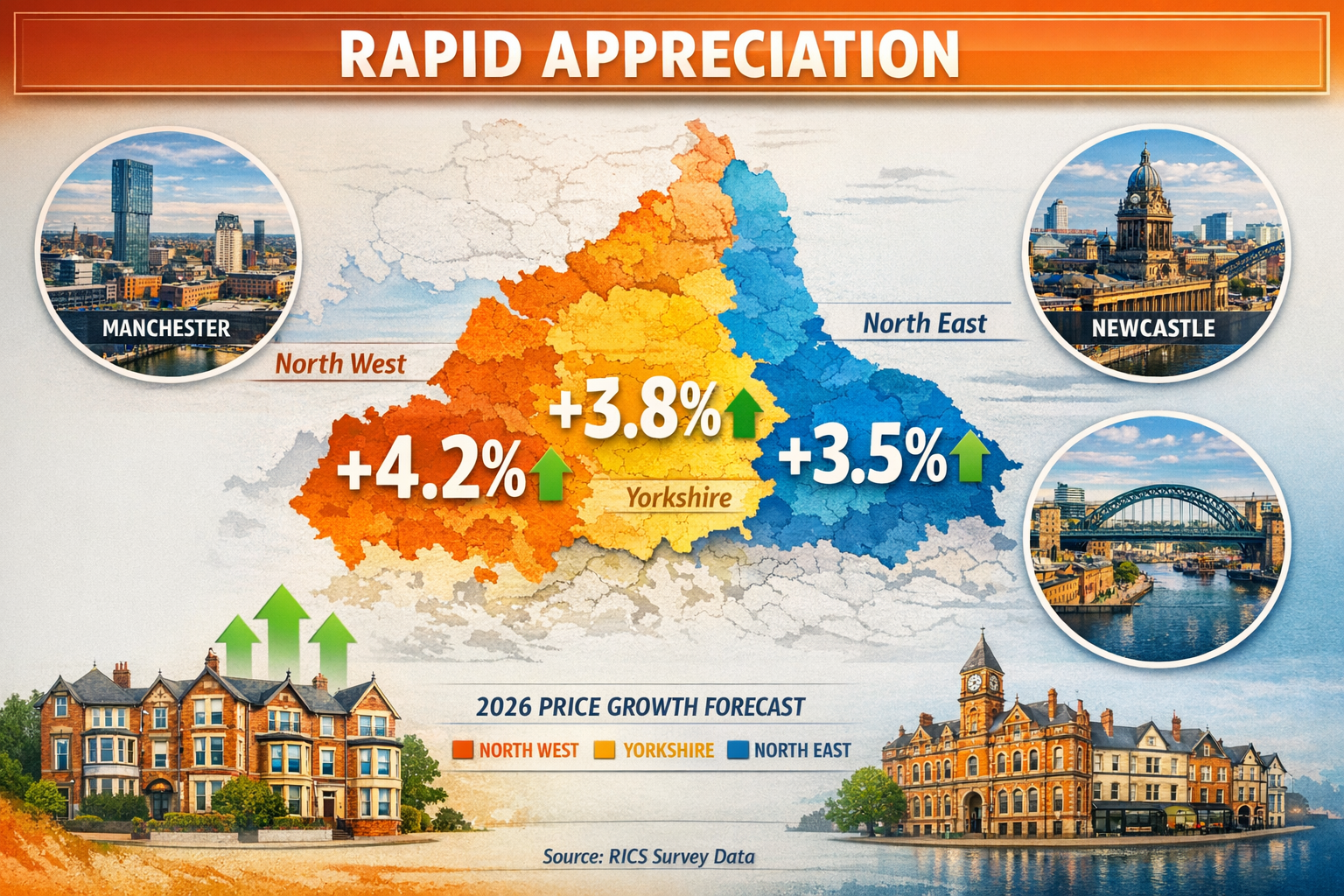
The North West and Northern regions are leading the UK's property recovery, with RICS data showing the strongest price growth nationwide [6]. This acceleration creates a perfect storm where buyer enthusiasm meets aging Victorian and Edwardian housing stock, making comprehensive RICS building surveys absolutely critical for protecting investments.
Key Takeaways
- Northern England is experiencing the UK's strongest property price growth in 2026, with the North West and North leading recovery, creating urgent demand for thorough Level 3 surveys
- Level 3 Building Survey costs range from £750–£1,500+ in 2026, with pricing dependent on property value, size, and complexity—a worthwhile investment when purchasing rapidly appreciating properties [4]
- Victorian and Edwardian properties dominate Northern England's housing stock, making detailed structural assessments essential for identifying hidden defects like subsidence, damp, and outdated systems
- Rapidly appreciating markets increase buyer pressure to skip surveys, but hidden defects can cost £15,000–£50,000+ to remedy—far exceeding survey costs
- Professional Level 3 surveys provide negotiating power and legal protection, enabling price reductions or withdrawal from problematic purchases before contracts exchange
Understanding Level 3 Building Surveys for Northern England Price Surge: Identifying Hidden Defects in Rapidly Appreciating Markets
What Makes Level 3 Surveys Essential in Hot Markets
A Level 3 Building Survey represents the most comprehensive property inspection available to UK homebuyers. Unlike basic mortgage valuations or Level 2 homebuyer surveys, Level 3 surveys provide exhaustive analysis of a property's condition, structure, and hidden defects.
Why Level 3 surveys matter specifically in Northern England's 2026 market:
- 🏘️ Aging housing stock: Much of Northern England's property inventory consists of Victorian and Edwardian buildings (1837-1910), now 115-185 years old
- 📈 Rapid appreciation masks problems: When prices rise quickly, sellers may rush transactions before addressing known issues
- ⚡ Competitive bidding pressure: Hot markets encourage buyers to waive contingencies or skip inspections—a dangerous gamble
- 🔍 Complex construction methods: Period properties used lime mortar, solid walls, and construction techniques requiring specialist knowledge
- 💰 Investment protection: With properties appreciating 3-5% annually, protecting your purchase becomes paramount [1]
The UK property market is showing early recovery signs in 2026, with the national house price aggregate net balance improving to -10% from -19% in October 2025 [6]. This stabilization, combined with regional strength in Northern England, creates conditions where thorough due diligence separates successful purchases from financial disasters.
Level 3 Survey Pricing Structure in 2026
Understanding what you'll pay for a comprehensive Level 3 survey helps budget appropriately and recognize value. Current pricing reflects both property characteristics and market conditions.
2026 Level 3 Building Survey Cost Breakdown:
| Property Value | Typical Survey Cost | Property Size Consideration |
|---|---|---|
| £150,000–£250,000 | £750–£950 | Standard 2-3 bedroom terraced/semi-detached |
| £250,000–£350,000 | £900–£1,100 | Larger 3-4 bedroom properties |
| £350,000–£500,000 | £1,000–£1,250 | Substantial family homes |
| £500,000–£1,000,000+ | £1,100–£1,500+ | Large or complex properties |
Source: Survey Match [4]
Full structural surveys typically cost £630–£1,500, with exact pricing dependent on property size, value, and location [2]. Properties exceeding £1 million can command fees above £1,500 due to extended inspection time and increased liability [4].
Factors influencing Level 3 survey costs:
- Property size: Larger homes require more inspection time
- Age and construction type: Period properties need specialist knowledge
- Accessibility issues: Properties with difficult-to-access areas (tall chimneys, complex roof structures)
- Location: Urban Manchester or Leeds properties may cost more than rural equivalents
- Additional testing: Specialist investigations like damp surveys or subsidence assessments increase costs
When considering whether a Level 3 survey represents value, compare the £750–£1,500 investment against potential repair costs. Undiscovered structural issues in Victorian properties routinely cost £15,000–£50,000 to remedy—making the survey fee trivial by comparison.
Northern England's 2026 Property Market Dynamics
Regional Price Growth Patterns
Northern England is defying national trends in 2026, with the region experiencing the strongest property price growth across the UK. This localized boom creates unique challenges for buyers seeking to identify hidden defects amid transaction urgency.
Key regional performance indicators:
The North West and North of England are leading the UK's housing market recovery, with RICS data showing the strongest price growth momentum nationwide [6]. Broader UK market forecasts predict modest 2-5% price growth across most regions in 2026 [1], but Northern England is outperforming these national averages.
Major Northern England property markets in 2026:
- Manchester: Continued regeneration and infrastructure investment driving demand
- Leeds: Strong employment growth in professional services sector
- Liverpool: Waterfront development and cultural renaissance attracting buyers
- Newcastle: Affordability compared to Southern England attracting relocators
- Sheffield: Manufacturing resurgence and university expansion supporting prices
This regional strength creates a seller's market dynamic where properties receive multiple offers within days of listing. Such competition pressures buyers to act quickly—often before completing thorough due diligence through comprehensive structural surveys.
Why Rapid Appreciation Increases Defect Risk
When property markets heat up, several factors conspire to increase the likelihood of buyers purchasing properties with hidden defects:
1. Reduced inspection periods: Sellers receive multiple offers and favor buyers willing to proceed quickly without lengthy survey contingencies.
2. Emotional decision-making: Fear of missing out (FOMO) overrides rational analysis of property condition.
3. Cosmetic improvements mask problems: Sellers invest in superficial updates (fresh paint, new carpets) that hide underlying structural issues.
4. Limited property supply: Fewer available properties mean buyers compromise on condition to secure any purchase.
5. Optimism bias: Rising prices create false confidence that "everything will work out" even if warning signs exist.
Understanding the difference between Level 2 and Level 3 surveys becomes critical in these conditions. While Level 2 surveys suit modern properties in good condition, Northern England's Victorian and Edwardian stock demands the comprehensive analysis only Level 3 surveys provide.
Critical Hidden Defects in Northern England Properties
Common Structural Issues in Period Properties
Northern England's housing stock presents unique challenges due to its age and construction methods. Level 3 Building Surveys for Northern England Price Surge must specifically address these regional characteristics.
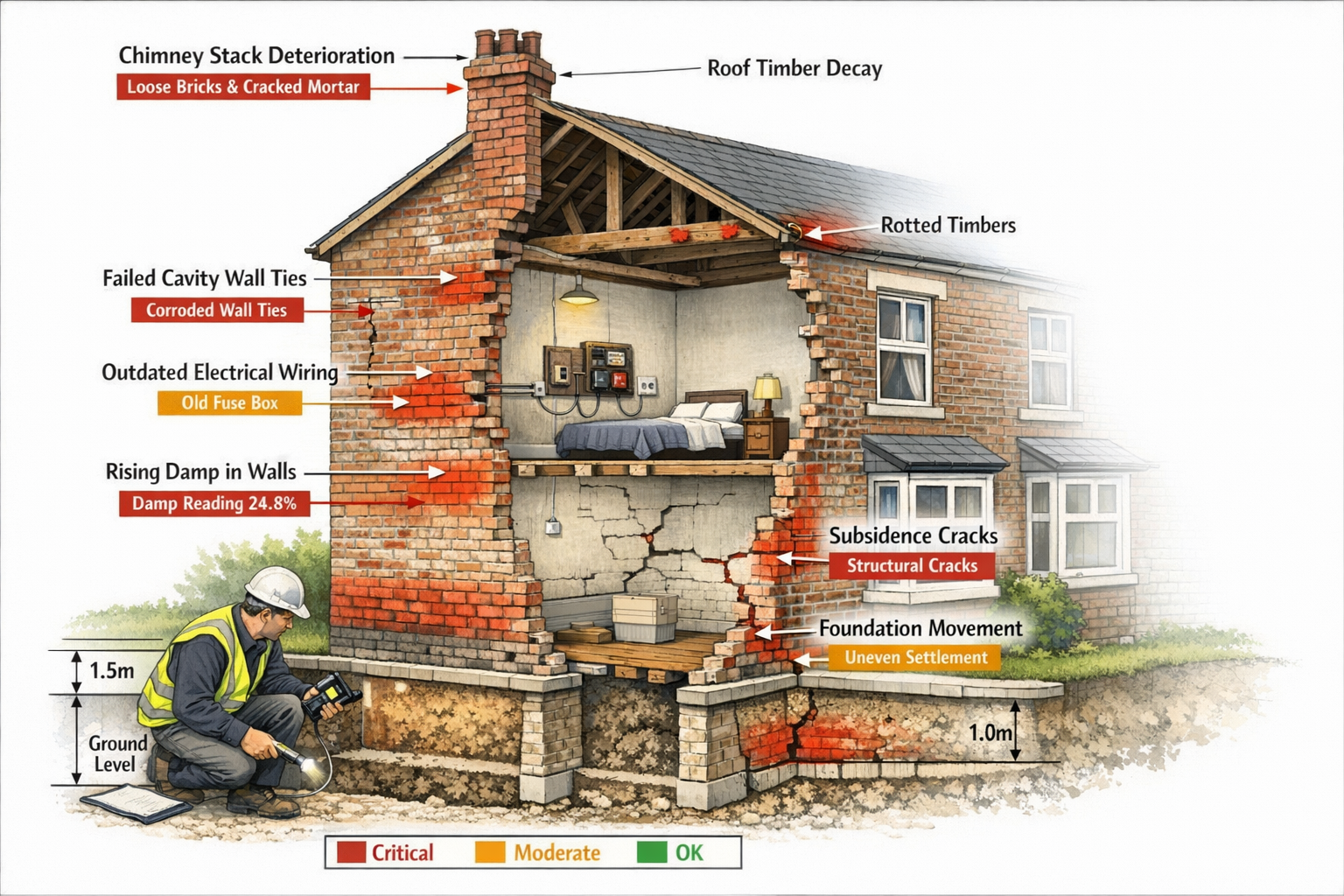
Top hidden defects found in Northern England properties:
Subsidence and Foundation Movement
Victorian properties were often built with shallow foundations on clay soils common throughout Lancashire, Yorkshire, and the North East. Climate change and tree root activity cause ground movement, leading to:
- Diagonal cracking in walls (especially near doors and windows)
- Doors and windows that stick or won't close properly
- Gaps between walls and ceilings or floors
- Visible leaning in external walls
Professional subsidence surveys can identify early warning signs before catastrophic failure occurs.
Rising and Penetrating Damp
Solid wall construction (no cavity) allows moisture penetration, while failed damp-proof courses (DPCs) permit rising damp:
- Tide marks on internal walls with flaking paint or wallpaper
- Musty odors and black mold growth
- Rotting skirting boards and floor joists
- Salt deposits (efflorescence) on masonry surfaces
Roof Structure Deterioration
Original slate roofs may be 100+ years old, with timber structures suffering from:
- Rafter rot from condensation or previous leaks
- Failed roof coverings allowing water ingress
- Chimney stack instability and pointing failure
- Inadequate or compressed loft insulation
Outdated Electrical and Plumbing Systems
Many Northern England properties retain original or mid-20th-century services:
- Obsolete wiring lacking modern safety features
- Lead pipes requiring replacement
- Cast iron drainage systems with corrosion and blockages
- Inadequate heating systems for modern comfort standards
Cavity Wall Tie Failure
Properties built 1920-1980 used metal wall ties that corrode over time, causing:
- Horizontal cracking in external walls
- Bulging brickwork
- Structural instability requiring expensive remediation
Specialized Defect Detection Methods
Modern Level 3 surveys employ advanced diagnostic tools to identify hidden problems invisible to casual inspection:
Thermal Imaging
Infrared cameras reveal:
- Hidden moisture penetration
- Missing insulation
- Air leakage points
- Heating system inefficiencies
Moisture Meters
Electronic detection identifies:
- Rising damp extent and severity
- Penetrating damp sources
- Condensation problems
- Timber moisture content (rot risk assessment)
Structural Monitoring
For properties showing movement signs:
- Crack monitoring over time
- Settlement pattern analysis
- Seasonal movement tracking
Invasive Investigation
When surface inspection proves insufficient:
- Lifting floorboards to inspect joists
- Removing sections of plaster to examine wall construction
- Accessing concealed roof spaces
- Inspecting beneath property (where accessible)
A comprehensive RICS specialist defect survey provides targeted investigation when specific concerns arise during initial inspection.
Maximizing Your Level 3 Survey Investment
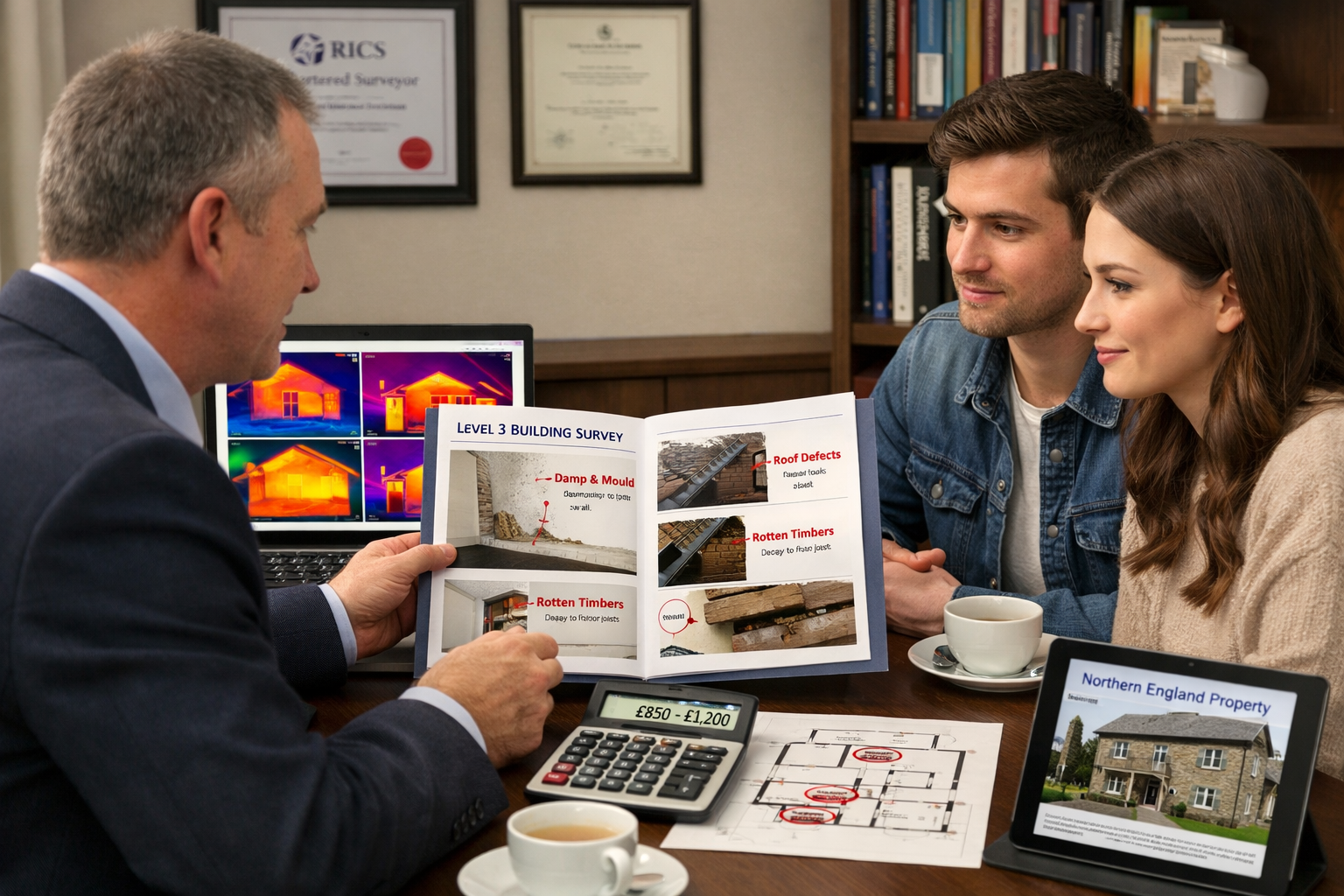
Selecting the Right Surveyor for Northern England Properties
Not all surveyors possess equal expertise with Northern England's distinctive housing stock. Choosing the right professional dramatically impacts the value you receive from your Level 3 survey investment.
Essential qualifications and experience:
✅ RICS Chartered Surveyor status: Ensures professional standards and insurance protection
✅ Local market knowledge: Familiarity with regional construction methods, common defects, and local contractors
✅ Period property expertise: Specific experience with Victorian, Edwardian, and inter-war construction
✅ Comprehensive reporting: Clear, detailed reports with photographic evidence and repair cost estimates
✅ Professional indemnity insurance: Protection if defects are missed or misreported
When researching surveyors, ask specific questions about their experience with properties similar to yours. A surveyor who primarily inspects modern new-builds may lack the specialized knowledge required for a 130-year-old Manchester terraced house.
Finding local chartered surveyors with regional expertise ensures your surveyor understands Northern England's unique challenges.
Interpreting Survey Results and Taking Action
Receiving your Level 3 survey report represents just the beginning. Understanding how to interpret findings and take appropriate action protects your investment.
Survey reports typically categorize defects by severity:
Condition Rating 1 (Green): No repair currently needed. Normal maintenance required.
Condition Rating 2 (Amber): Defects requiring future repair or replacement. Not urgent but should be monitored.
Condition Rating 3 (Red): Serious defects requiring immediate attention. May affect property value or safety.
Strategic responses to survey findings:
Minor Issues (Rating 1-2)
- Proceed with purchase
- Budget for future maintenance
- Use findings to negotiate minor price reduction
- Plan renovation timeline and costs
Moderate Issues (Rating 2)
- Obtain specialist quotes for repairs
- Negotiate price reduction equivalent to repair costs
- Request seller completes repairs before completion
- Ensure adequate budget reserves for upcoming work
Serious Issues (Rating 3)
- Commission specific defect reports for detailed analysis
- Obtain multiple contractor quotes
- Negotiate substantial price reduction (£10,000-£50,000+)
- Consider walking away if costs exceed your budget
- Reassess mortgage viability (lenders may refuse loans on severely defective properties)
Negotiation strategies in hot markets:
Even in rapidly appreciating markets, serious defects provide legitimate grounds for renegotiation. Present survey findings professionally with supporting contractor quotes. Many sellers prefer reducing price over delaying sale to complete repairs themselves.
If sellers refuse reasonable adjustments for significant defects, be prepared to walk away. The short-term disappointment of losing a property pales compared to the long-term financial burden of undisclosed structural problems.
Understanding Survey Costs vs. Repair Costs
The true value of a Level 3 survey becomes apparent when comparing survey fees against potential repair costs for undiscovered defects.
Common repair cost ranges for Northern England properties:
| Defect Type | Typical Repair Cost Range |
|---|---|
| Subsidence underpinning | £15,000–£50,000+ |
| Complete rewiring (3-bed) | £3,500–£6,000 |
| Damp-proof course installation | £2,000–£5,000 |
| Roof replacement (terraced house) | £5,000–£10,000 |
| Cavity wall tie replacement | £1,500–£3,000 per elevation |
| Structural crack repair | £1,000–£15,000 depending on severity |
| Drainage system replacement | £3,000–£8,000 |
| Timber treatment (rot/infestation) | £1,500–£5,000 |
Note: Costs vary significantly based on property size, access, and local contractor rates
A £1,000 Level 3 survey that identifies £25,000 of hidden structural repairs delivers 2,400% return on investment—before you've even negotiated price reductions. Even if the survey reveals no significant issues, the peace of mind and legal protection justify the expense.
For detailed cost breakdowns, review our guide on structural survey pricing.
Legal and Financial Protections
Survey Reports as Negotiating Tools
A comprehensive Level 3 survey report provides powerful leverage in purchase negotiations, even in competitive seller's markets. Understanding how to deploy survey findings strategically protects your financial interests.
Effective negotiation approaches:
1. Quantify all defects financially
Obtain contractor quotes for every significant issue identified. Present sellers with documented evidence of repair costs rather than subjective concerns.
2. Prioritize critical issues
Focus negotiations on serious structural defects (Rating 3) rather than minor cosmetic issues. Sellers respond more favorably to legitimate safety or structural concerns.
3. Propose reasonable solutions
Offer multiple resolution paths:
- Price reduction equivalent to repair costs
- Seller completes repairs before completion with certification
- Retention of funds in escrow until repairs completed post-purchase
- Combination of price reduction and seller-completed repairs
4. Maintain professional tone
Present findings as objective facts discovered through professional inspection, not personal complaints. This approach maintains goodwill while protecting your interests.
5. Be prepared to walk away
Your willingness to abandon the purchase if terms aren't acceptable strengthens your negotiating position. Sellers recognize serious buyers who won't overpay for defective properties.
Professional Indemnity and Buyer Protection
RICS Chartered Surveyors carry professional indemnity insurance protecting clients if negligent surveys miss significant defects. This insurance provides financial recourse if you discover major problems after purchase that should have been identified during inspection.
Professional indemnity coverage typically includes:
- Compensation for repair costs of missed defects
- Legal expenses pursuing claims
- Diminution in property value
- Additional survey costs for remedial investigation
To preserve your rights:
- Ensure your surveyor is RICS qualified with current insurance
- Retain all survey documentation and correspondence
- Report any discovered defects to your surveyor immediately
- Document all repair costs with receipts and contractor invoices
- Seek legal advice promptly if considering a claim
While professional indemnity provides important protection, preventing problems through thorough initial surveys remains preferable to pursuing claims after purchase.
Conclusion
Level 3 Building Surveys for Northern England Price Surge: Identifying Hidden Defects in Rapidly Appreciating Markets represent an essential safeguard for property buyers in 2026. As the North West and Northern regions lead the UK's property recovery with the strongest price growth nationwide, the temptation to rush purchases without thorough inspection grows dangerous.
Northern England's distinctive housing stock—dominated by Victorian and Edwardian properties with solid wall construction, aging infrastructure, and period-specific defects—demands comprehensive professional assessment. The £750–£1,500 investment in a Level 3 survey pales against the £15,000–£50,000+ costs of undiscovered structural problems like subsidence, damp, or roof failure.
Key actions for Northern England property buyers in 2026:
- Commission Level 3 surveys for all pre-1950 properties regardless of market pressure to proceed quickly
- Select RICS Chartered Surveyors with specific Northern England period property experience and local market knowledge
- Use survey findings strategically to negotiate price reductions or repairs before exchange of contracts
- Budget appropriately for both survey costs (£750–£1,500) and potential repairs identified during inspection
- Be prepared to walk away from properties with serious defects if sellers won't negotiate reasonably
- Understand your legal protections through professional indemnity insurance if defects are negligently missed
The rapidly appreciating Northern England property market creates tremendous opportunities for buyers willing to conduct proper due diligence. While competitors rush into purchases without adequate inspection, informed buyers who invest in comprehensive RICS building surveys protect their investments and negotiate from positions of knowledge and strength.
Don't let market enthusiasm override prudent decision-making. A thorough Level 3 survey transforms property purchase from a leap of faith into an informed investment decision backed by professional expertise and comprehensive structural analysis.
References
[1] Building Survey Protocols For New Build Properties In 2026 Spotting Defects Amid 2 5 Price Growth Forecasts – https://nottinghillsurveyors.com/blog/building-survey-protocols-for-new-build-properties-in-2026-spotting-defects-amid-2-5-price-growth-forecasts
[2] How Much Does A House Survey Cost – https://hoa.org.uk/advice/guides-for-homeowners/i-am-buying/how-much-does-a-house-survey-cost/
[3] Structural Survey Cost – https://www.comparemymove.com/guides/surveying/structural-survey-cost
[4] Level 3 Survey Cost 2025 – http://surveymatch.co.uk/level-3-survey-cost-2025/
[5] Building Survey Priorities In 2026 Market Recovery Raac Cladding And Latent Defects For Stabilising Prices – https://nottinghillsurveyors.com/blog/building-survey-priorities-in-2026-market-recovery-raac-cladding-and-latent-defects-for-stabilising-prices
[6] housingtoday.co.uk – https://www.housingtoday.co.uk/news/rics-hails-early-signs-of-housing-market-improvement-in-latest-survey/5140683.article