The dream of owning a brand-new home can quickly turn into a nightmare when hidden defects emerge months after moving in. With the UK property market showing signs of recovery in 2026 and forecasts predicting modest price growth of 2-5% across most regions, buyers are returning to the new build market with renewed confidence. However, this optimism must be balanced with caution—comprehensive Level 3 Surveys for New Build Snags in Recovering Markets: Buyer Protection Checklists for 2-5% Growth have become essential tools for protecting what may be the largest investment of your lifetime.
Despite the allure of pristine, never-lived-in properties, research shows that 88% of new build homeowners want a system to withhold funds until construction problems are fixed [1]. This striking statistic reveals a fundamental truth: new builds are not immune to defects, and buyers need robust protection mechanisms. Understanding how Level 3 surveys and specialized snagging inspections work together provides the comprehensive buyer protection necessary in today's recovering market.

Key Takeaways
- Level 3 surveys provide the most comprehensive property analysis available, but specialized snagging surveys are specifically recommended for new build properties to identify construction defects and workmanship issues [4]
- The UK property market is experiencing 2-5% growth in 2026, making thorough pre-purchase inspections more critical than ever to protect your investment in recovering markets [6]
- Snagging surveys can identify both minor cosmetic issues and major structural problems before you exchange contracts, shifting repair responsibility to developers rather than buyers [1]
- Comprehensive buyer protection checklists should include pre-exchange surveys, NHBC warranty verification, and post-completion inspections within the defects liability period
- Professional Level 3 surveys typically cost £630-£1,500 but can save thousands in undiscovered repair costs [2]
Understanding Level 3 Surveys and New Build Snagging Inspections
What Makes Level 3 Surveys Comprehensive? 🏗️
Level 3 surveys, also known as RICS Building Surveys, represent the gold standard in property inspections. These detailed assessments provide extensive in-depth analysis of property condition with advice on defects, repairs, and maintenance options [4]. Unlike basic valuation surveys or Level 2 HomeBuyer Reports, Level 3 surveys leave no stone unturned.
A comprehensive Level 3 Building Survey includes:
- Detailed examination of all accessible areas of the property
- Analysis of construction methods and materials used
- Identification of structural movement or subsidence concerns
- Assessment of damp, timber defects, and drainage systems
- Evaluation of roof condition, chimneys, and guttering
- Review of electrical, plumbing, and heating installations
- Advice on repair priorities and cost implications
- Guidance on maintenance requirements
The thoroughness of Level 3 surveys means they can take up to a full day to complete, significantly longer than Level 1 (approximately 1 hour) or Level 2 surveys (up to 4 hours) [2]. This time investment translates directly into comprehensive protection for buyers.
Why New Builds Require Specialized Snagging Surveys
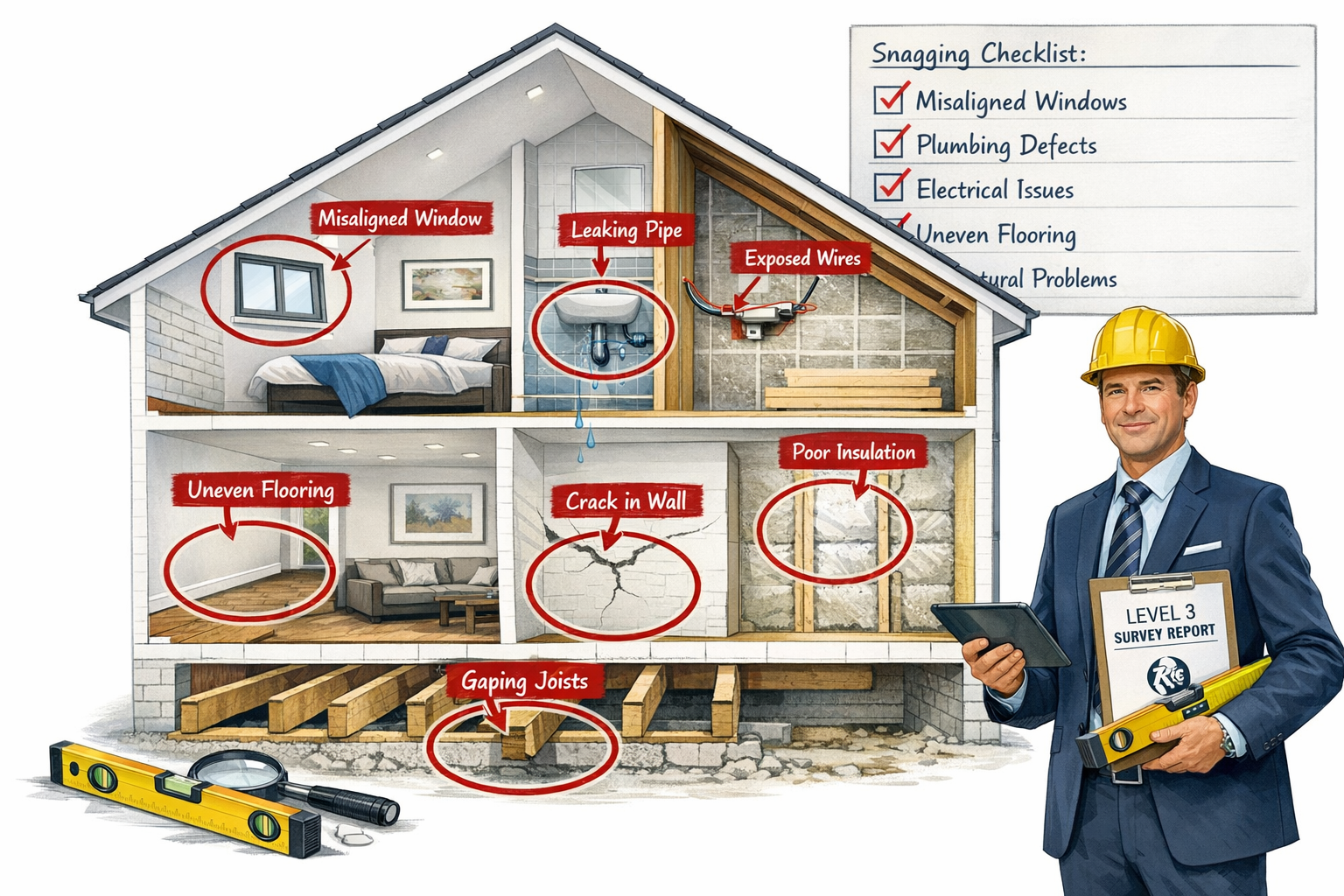
While Level 3 surveys excel at assessing older properties, new builds require a different approach. For new build properties specifically, snagging surveys are the RICS-recommended method rather than standard Level 3 surveys, as they focus on identifying defects in workmanship and construction quality against agreed standards and building regulations [1].
Snagging surveys identify two categories of issues:
Minor Snags:
- Misaligned door handles and hardware
- Paint splashes and surface damage
- Scratched fixtures and fittings
- Poor cleanliness and finishing
- Cosmetic imperfections in tiling or flooring
Major Snags:
- Walls not built to specification
- Incorrectly installed ventilation ports
- Structural elements not meeting building regulations
- Electrical installations with safety concerns
- Plumbing defects causing leaks or poor drainage
- Inadequate insulation or damp-proofing
The distinction matters because instructing a chartered surveyor before exchanging contracts ensures any identified issues become the developer's responsibility to fix rather than requiring out-of-pocket buyer expenses [1]. This timing is crucial for maximum buyer protection.
For those considering different survey options, understanding the difference between Level 2 and Level 3 surveys can help determine which approach best suits your specific property and circumstances.
Level 3 Surveys for New Build Snags in Recovering Markets: Market Context for 2026
Understanding the 2-5% Growth Recovery
The UK property market has entered a recovery phase in 2026, with forecasts predicting modest price growth of 2-5% across most regions [6]. This recovery follows a period of market uncertainty, and several factors are driving renewed buyer confidence:
Key Market Drivers:
| Factor | Impact on New Builds | Buyer Implications |
|---|---|---|
| Interest Rate Stabilization | Developers resuming construction projects | More inventory available |
| Government Incentives | Help to Buy schemes supporting first-time buyers | Increased new build demand |
| Housing Supply Constraints | Limited existing stock drives new build interest | Competition for quality properties |
| Economic Recovery | Improved buyer confidence and mortgage availability | Higher purchase prices |
| Build Quality Focus | Industry response to past snagging issues | Variable quality standards |
This 2-5% growth environment creates both opportunities and risks for buyers. While property values are appreciating, the rush to capitalize on recovery can sometimes lead to construction shortcuts or rushed completions. This makes comprehensive surveys more critical than ever.
Why Buyer Protection Matters More in Recovery Markets
During market recovery periods, several factors increase the importance of thorough pre-purchase inspections:
-
Price Appreciation Pressure 💰 – With properties increasing in value by 2-5%, buyers may feel pressured to complete purchases quickly, potentially skipping crucial inspection steps
-
Developer Volume Increases – As demand rises, developers accelerate construction timelines, which can sometimes compromise quality control
-
Investment Protection – A 2-5% annual appreciation means your property value grows significantly; protecting that investment from the start is essential
-
Competitive Market Dynamics – In recovering markets, buyers may waive contingencies to secure properties, but this increases risk exposure
-
Long-term Value Preservation – Undiscovered defects can erode the value gains from market appreciation, making upfront surveys cost-effective
Working with experienced local chartered surveyors who understand regional market conditions ensures your survey addresses location-specific concerns and building practices.
Comprehensive Buyer Protection Checklists for New Build Properties
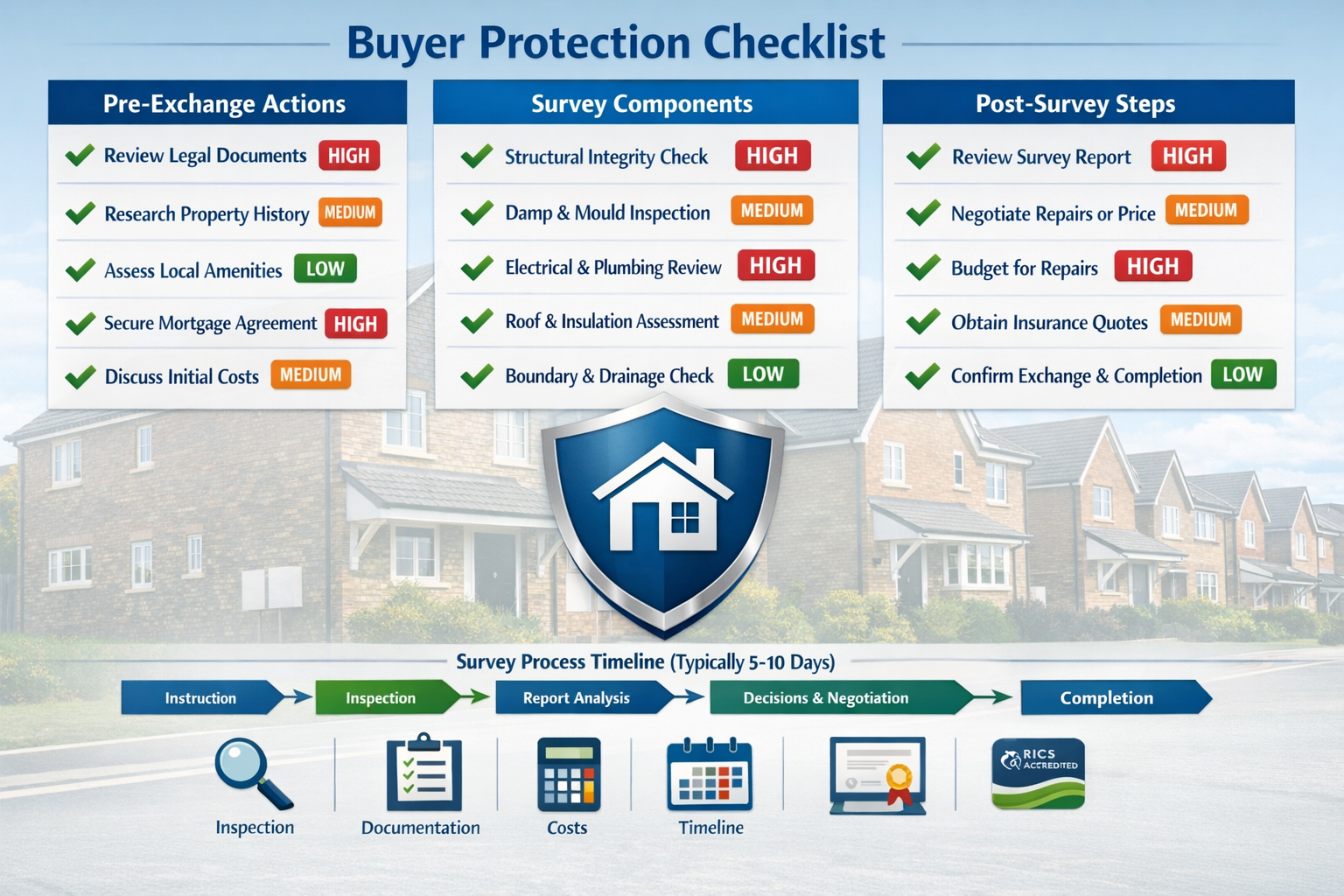
Pre-Exchange Contract Checklist ✅
Before you commit to purchasing a new build property, complete these essential protection steps:
1. Commission a Professional Snagging Survey
- Engage a RICS-qualified surveyor experienced in new build inspections
- Schedule the survey before exchange of contracts (not after completion)
- Request a comprehensive snagging list documenting all identified defects
- Ensure the surveyor provides photographic evidence of issues
- Typical timeframe: Allow 7-10 days for scheduling and report delivery
2. Verify Building Regulations Compliance
- Request Building Control completion certificates
- Confirm all work meets current building standards
- Check for any outstanding compliance issues
- Verify proper certification for electrical, gas, and structural work
3. Review NHBC or Similar Warranty Coverage
- Confirm 10-year structural warranty is in place
- Understand what the warranty covers and excludes
- Note the defects liability period (typically 2 years)
- Verify warranty is transferable if you sell
- Keep all warranty documentation secure
4. Examine Developer Reputation and Track Record
- Research the developer's history with previous projects
- Check online reviews from other buyers
- Investigate any complaints with regulatory bodies
- Assess financial stability of the development company
5. Review Contract Terms Carefully
- Identify clauses related to defect rectification
- Understand your rights during the defects liability period
- Note any retention clauses or snagging funds
- Clarify completion standards and specifications
- Engage a solicitor experienced in new build transactions
During Survey Inspection: What to Expect
Understanding how long a homebuyers survey takes helps you plan appropriately. For new builds, expect:
Survey Duration: 3-6 hours depending on property size
Report Delivery: 5-10 working days after inspection
Cost Range: £400-£800 for snagging surveys; £630-£1,500 for full Level 3 surveys [2]
The surveyor will examine:
- 🏠 External Structure – Walls, foundations, roof, chimneys, guttering
- 🚪 Doors and Windows – Operation, sealing, alignment, finishing
- 💡 Electrical Systems – Socket placement, consumer unit, safety compliance
- 🚰 Plumbing – Pressure, drainage, fixture installation, leak testing
- 🌡️ Heating Systems – Boiler operation, radiator function, thermostat placement
- 🎨 Internal Finishes – Plastering, painting, tiling, flooring quality
- 🔧 Fixtures and Fittings – Kitchen units, bathroom installations, built-in wardrobes
- 🏗️ Structural Elements – Load-bearing walls, floor levels, ceiling integrity
For properties with specific concerns, consider additional specialized inspections such as damp surveys or drainage surveys to complement your primary survey.
Post-Survey Action Checklist
Once you receive your survey report:
Immediate Actions (Within 48 Hours):
- Review the report thoroughly with your solicitor
- Categorize defects by severity (critical, major, minor)
- Calculate estimated repair costs for significant issues
- Decide whether to proceed, renegotiate, or withdraw
Negotiation Phase (1-2 Weeks):
- Present survey findings to the developer
- Request rectification of all identified defects before completion
- Negotiate price reduction if developer refuses repairs
- Obtain written commitments for post-completion fixes
- Establish timeline for defect rectification
Pre-Completion (Final Week):
- Conduct a pre-completion inspection (with your surveyor if possible)
- Verify agreed repairs have been completed satisfactorily
- Document any new issues discovered
- Confirm all appliances and systems are operational
- Take detailed photographs of property condition
Post-Completion Protection (First 2 Years):
- Report any defects to developer within defects liability period
- Keep detailed records of all correspondence
- Photograph and document new issues as they arise
- Exercise your warranty rights promptly
- Consider a 12-month post-completion inspection
Specialized Survey Considerations for New Build Properties
When to Combine Level 3 Surveys with Snagging Inspections
While snagging surveys focus on construction quality and finishing, certain new build scenarios benefit from a full Level 3 survey approach:
Consider a comprehensive RICS Building Survey when:
- The property is a conversion or renovation marketed as new build
- The development uses non-standard construction methods
- The property has been standing unsold for extended periods
- You're purchasing a show home that has had extensive visitor traffic
- The development site has known ground conditions issues
- The property is in a flood risk area or has environmental concerns
For properties with unusual construction, a specialist defect survey may identify issues that standard snagging inspections might miss.
Understanding Survey Costs in the Context of Property Value
Investment Perspective:
For a typical new build property valued at £300,000 experiencing 2-5% annual growth:
- Year 1 appreciation: £6,000-£15,000
- Survey cost: £600-£1,200
- Potential undiscovered defects: £3,000-£20,000
- Survey cost as percentage of value: 0.2-0.4%
The mathematics clearly favor comprehensive surveys. Even identifying a single major defect—such as inadequate waterproofing (£5,000-£10,000 to remedy) or structural issues (£15,000+)—justifies the survey investment many times over.
Understanding structural survey pricing helps buyers budget appropriately and recognize the value proposition of professional inspections.
Red Flags That Demand Enhanced Scrutiny 🚩
Certain warning signs during your initial property viewings should trigger more comprehensive survey approaches:
Construction Quality Concerns:
- Visible cracks in walls or ceilings
- Uneven floors or sloping surfaces
- Doors that don't close properly
- Windows with condensation between panes
- Damp patches or musty odors
- Poor paint finish or visible repairs
Developer Behavior Indicators:
- Reluctance to provide Building Control certificates
- Pressure to exchange contracts quickly
- Vague answers about construction specifications
- Limited access to property before completion
- History of disputes with previous buyers
Site-Specific Issues:
- Properties at the edge of developments (often rushed)
- Units completed during winter months (potential weather-related issues)
- Developments with ongoing construction nearby
- Sites with visible drainage or ground stability concerns
When red flags appear, consider engaging surveyors who offer specific defect reports to investigate particular concerns in greater detail.
Maximizing Your Survey Investment: Practical Tips
Preparing for Your Survey Appointment
To ensure your surveyor can conduct the most thorough inspection possible:
- Ensure Full Property Access – Confirm all areas are accessible, including loft spaces, garages, and external perimeters
- Utilities Should Be Connected – Active utilities allow testing of electrical, plumbing, and heating systems
- Request Developer Documentation – Provide your surveyor with specifications, warranties, and building control certificates
- Prepare Your Questions – List specific concerns to discuss with the surveyor during or after inspection
- Plan Your Attendance – Consider attending part of the survey to ask questions and understand findings firsthand
Understanding Survey Report Terminology
Survey reports use specific condition ratings to communicate severity:
Condition Rating System:
- Condition 1 (Green) – No repair currently needed; normal maintenance required
- Condition 2 (Amber) – Defects requiring future repair or replacement; not urgent
- Condition 3 (Red) – Defects requiring urgent repair or significant replacement
For new builds, any Condition 3 ratings are particularly concerning and should be addressed before completion. Even Condition 2 ratings warrant discussion with the developer, as these shouldn't typically appear in newly constructed properties.
Leveraging Survey Findings in Negotiations
Your survey report is a powerful negotiation tool:
Strategy 1: Request Full Rectification
- Present comprehensive snagging list to developer
- Request all defects be fixed before completion
- Obtain written confirmation of completion timeline
- Reserve right to re-inspect after repairs
Strategy 2: Negotiate Price Reduction
- Obtain repair cost estimates from qualified contractors
- Request price reduction equivalent to repair costs
- Add 10-15% contingency for project management and disruption
- Ensure reduction reflects both cost and inconvenience
Strategy 3: Retention Approach
- Negotiate withholding portion of purchase price
- Release funds upon satisfactory defect rectification
- Typically 2-5% of purchase price retained
- Requires solicitor involvement and developer agreement
Strategy 4: Enhanced Warranty Terms
- Request extended defects liability period
- Negotiate enhanced warranty coverage
- Obtain developer commitment to priority response times
- Document all agreements in contract amendments
Legal Protections and Your Rights as a New Build Buyer
Understanding Statutory Protections
UK buyers of new build properties benefit from several legal protections:
Consumer Rights Act 2015:
- Goods (including property) must be of satisfactory quality
- Properties must be fit for purpose
- Defects must be remedied within reasonable timeframe
- Buyers can reject properties with significant defects
Building Regulations:
- All new builds must comply with current building regulations
- Building Control must inspect and certify work
- Non-compliance can be enforced by local authorities
- Buyers can request Building Control completion certificates
NHBC or Similar Warranty Coverage:
- First 2 years: Builder responsible for defects
- Years 3-10: Major structural defects covered
- Independent dispute resolution available
- Coverage includes certain water ingress issues
When to Seek Additional Professional Advice
Certain situations warrant engaging additional specialists beyond your primary surveyor:
- Structural engineers for significant structural concerns or structural surveys
- Solicitors specializing in property disputes if developer refuses reasonable rectification
- Independent building inspectors for Building Regulation compliance verification
- Damp specialists if moisture or condensation issues are identified
- Electrical engineers for complex electrical system concerns
Working with choosing the right property survey professionals ensures you receive appropriate expertise for your specific circumstances.
The Future of New Build Quality and Buyer Protection
Industry Developments in 2026
The construction industry continues evolving its approach to quality assurance and buyer protection:
Emerging Trends:
- Digital Snagging Tools – Developers increasingly using digital platforms for defect reporting and tracking
- Enhanced Warranties – Some developers offering extended warranty periods to differentiate their products
- Third-Party Inspections – Growing acceptance of independent inspections before completion
- Retention Schemes – Industry discussions around standardized retention approaches
- Quality Certifications – New quality marks and certifications emerging for developers
The Role of Technology in Survey Processes
Modern survey techniques enhance accuracy and documentation:
- Thermal imaging cameras detect insulation defects and moisture issues
- Drone surveys assess roof and chimney conditions safely
- Moisture meters provide objective damp readings
- Digital reporting delivers interactive reports with embedded photographs
- 3D modeling helps visualize structural concerns
These technological advances make surveys more comprehensive and findings easier to understand, strengthening buyer protection.
Conclusion: Protecting Your Investment in Recovering Markets
As the UK property market experiences 2-5% growth in 2026, the importance of Level 3 Surveys for New Build Snags in Recovering Markets: Buyer Protection Checklists for 2-5% Growth cannot be overstated. While new build properties offer the appeal of modern design, energy efficiency, and warranties, they are not immune to defects—and the financial stakes are too high to proceed without comprehensive protection.
Key Actions for Buyers:
- Never skip professional surveys – The £600-£1,500 investment protects against thousands in potential repair costs
- Commission surveys before exchange – Timing ensures developers remain responsible for defect rectification
- Use comprehensive checklists – Systematic approaches ensure no protection steps are overlooked
- Understand your legal rights – Knowledge empowers effective negotiation and dispute resolution
- Document everything – Maintain detailed records of all surveys, correspondence, and defect reports
- Work with qualified professionals – RICS-chartered surveyors provide the expertise and credibility needed
The combination of specialized snagging surveys with comprehensive RICS home survey approaches provides the robust protection modern buyers need. In recovering markets where property values are appreciating, protecting your investment from day one ensures you benefit fully from market growth without the erosion caused by undiscovered defects.
Take action today: Commission your pre-purchase survey, implement the buyer protection checklists outlined in this guide, and approach your new build purchase with confidence backed by professional expertise and comprehensive documentation. Your future self—and your investment portfolio—will thank you for the diligence you exercise today.
References
[1] Why Building Survey Essential New Build – https://www.surveyorlocal.co.uk/news/post/why-building-survey-essential-new-build
[2] What Sort Of Survey Should I Have – https://hoa.org.uk/advice/guides-for-homeowners/i-am-buying/what-sort-of-survey-should-i-have/
[3] Level 3 Building Surveys For First Time Buyers In 2026 Spotting Risks Amid Affordability Improvements – https://nottinghillsurveyors.com/blog/level-3-building-surveys-for-first-time-buyers-in-2026-spotting-risks-amid-affordability-improvements
[4] House Surveys Uk The Costs Types And Benefits Of An Rics Home Survey – https://www.rics.org/consumer-guides/house-surveys-uk-the-costs-types-and-benefits-of-an-rics-home-survey
[5] Five Key Updates 2026 Altansps Land Title Survey Standards – https://westwoodps.com/recent-blog-posts/five-key-updates-2026-altansps-land-title-survey-standards
[6] Building Survey Protocols For New Build Properties In 2026 Spotting Defects Amid 2 5 Price Growth Forecasts – https://nottinghillsurveyors.com/blog/building-survey-protocols-for-new-build-properties-in-2026-spotting-defects-amid-2-5-price-growth-forecasts