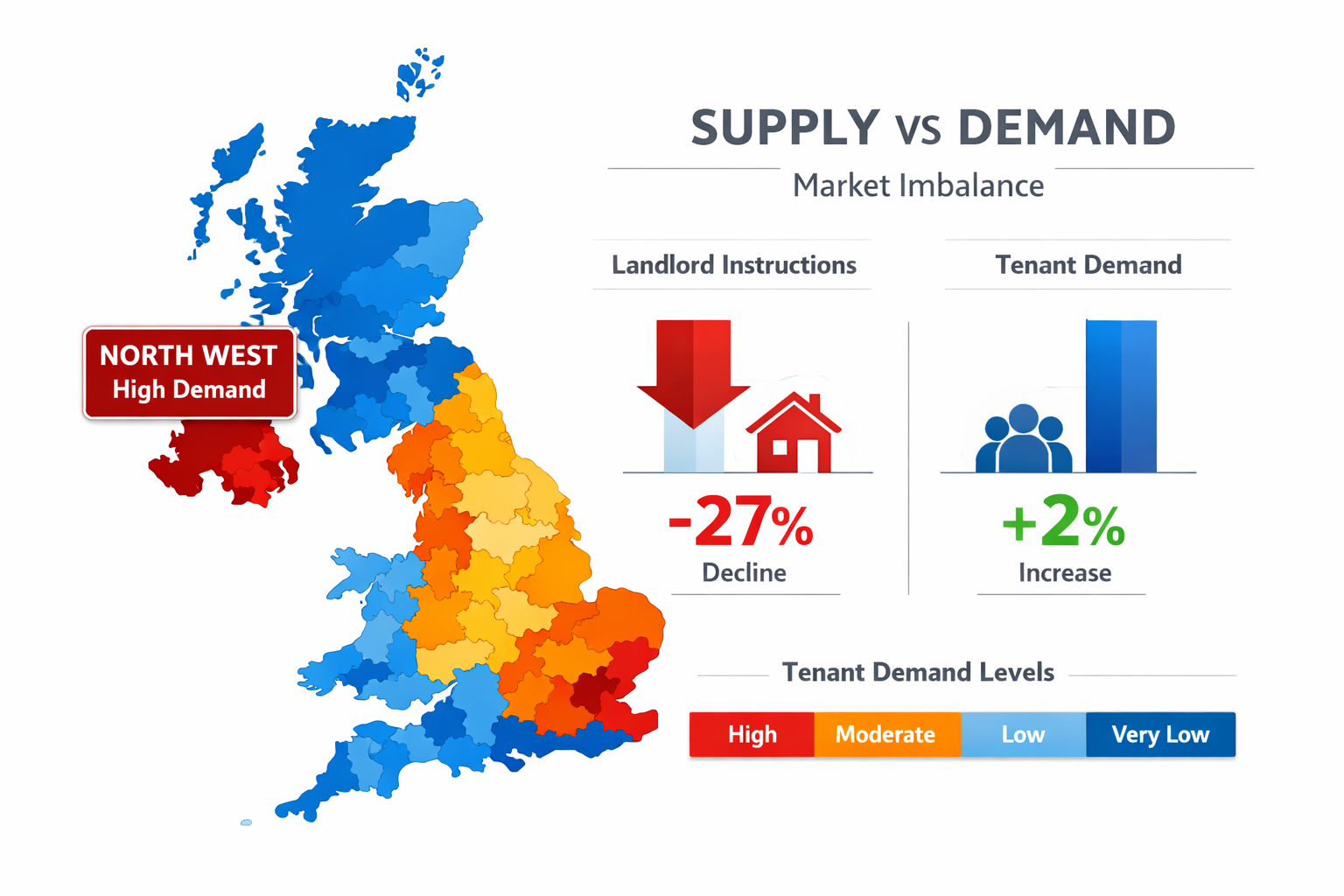
The UK lettings market in 2026 presents a unique challenge for property professionals: how do you accurately value rental properties when supply is severely constrained but tenant demand remains steady? According to the latest RICS UK Residential Market Survey, landlord instructions have plummeted to a -27% net balance, while tenant demand holds at a modest +2%[2]. This imbalance is creating upward pressure on rents and requiring chartered surveyors to adapt their Valuation Techniques for Lettings Market Rises: RICS Guidance on Tenant Demand and Rental Growth in 2026 to reflect these extraordinary market conditions.
For property investors, landlords, and valuation professionals, understanding these dynamics is critical. The traditional methods of rental valuation must now account for unprecedented supply constraints, regulatory changes from the Renters' Rights Act, and significant regional variations in market performance. This comprehensive guide explores the essential valuation techniques that RICS-qualified surveyors are employing to navigate the 2026 lettings landscape.
Key Takeaways
- Supply constraints are driving rental growth: With landlord instructions at -27%, the shortage of available rental properties is the primary factor pushing rents higher across most UK regions[2]
- Valuation adjustments are essential: Traditional comparable evidence must be adjusted for time, supply scarcity, and regulatory impacts to reflect current market realities
- Regional variations matter significantly: The North West shows stronger rental performance while London's 12-month expectations have moderated considerably to +7%[2]
- Institutional investors are gaining advantage: Smaller landlords are exiting the market, creating opportunities for established and corporate landlords to benefit from strengthening rental values[1]
- Short-term rental growth expectations remain positive: +20% of survey participants expect rental prices to rise over the next three months, reflecting the ongoing supply-demand imbalance[2]
Understanding the 2026 Lettings Market Context
The Supply-Demand Imbalance
The fundamental driver of rental valuation adjustments in 2026 is the severe supply shortage facing the UK lettings market. The RICS February 2026 survey reveals that landlord instructions have reached a critically low -27% net balance, representing one of the most constrained supply environments in recent history[2]. This figure indicates that far more surveyors are reporting decreases in available rental stock than increases.
Meanwhile, tenant demand has remained relatively stable at +2% net balance[2]. While this represents only modest growth compared to previous years, the combination of limited supply with steady demand creates significant upward pressure on rental prices. This dynamic fundamentally changes how registered RICS valuers must approach rental property valuations.
Regulatory Impacts on Supply
The Renters' Rights Act has emerged as a significant factor influencing landlord behavior in 2026. According to market analysis, this legislation is causing smaller private landlords to divest from rental properties, with many choosing to sell vacant properties rather than re-let them[1]. This regulatory pressure is fundamentally altering the supply landscape and must be factored into valuation assumptions.
"More established and corporate landlords are positioned to benefit from strengthening rental values as smaller operators exit the market, potentially creating opportunities for larger institutional investors."[1]
This shift toward institutional ownership has implications for valuation professionals, as larger landlords typically operate with different yield expectations and longer-term investment horizons than individual buy-to-let investors.
Regional Performance Variations
Regional differences in rental market performance are particularly pronounced in 2026. The North West is performing more strongly compared to the national picture, with rents expected to rise more sharply in this region[2]. Conversely, London's 12-month price expectations have flattened considerably to +7% (down dramatically from +56% the previous month)[2], suggesting that the capital's rental market may be reaching a plateau.
These regional variations require valuers to apply location-specific adjustments when assessing rental values and growth projections. A one-size-fits-all approach to rental valuation is insufficient in the current market environment.
Core Valuation Techniques for Lettings Market Rises: RICS Guidance on Tenant Demand and Rental Growth in 2026
The Comparative Method with Supply Adjustments
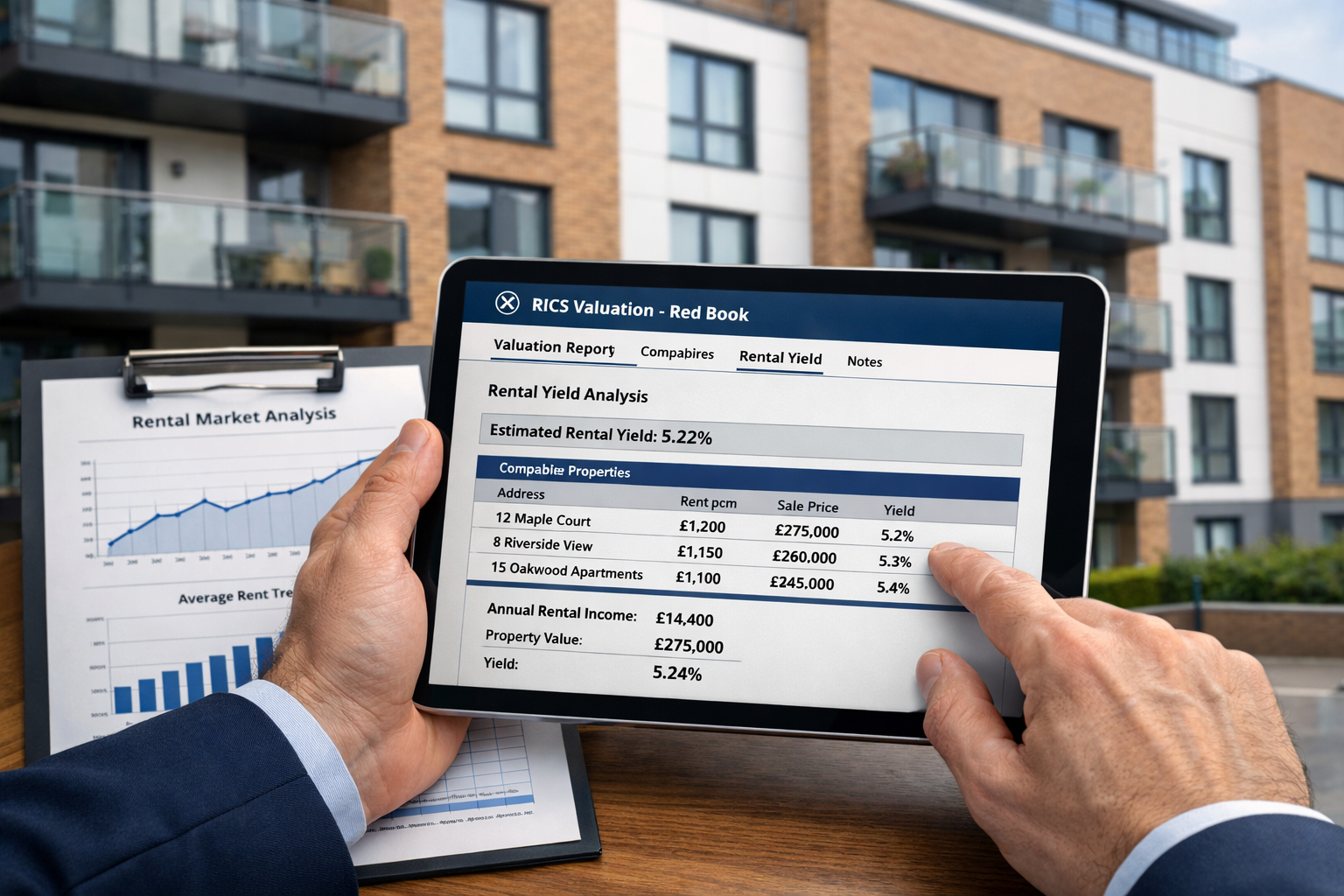
The comparative method remains the foundation of rental property valuation, but in 2026 it requires significant refinement to account for supply constraints. This approach involves analyzing recent lettings of comparable properties to establish a market rent for the subject property.
Key adjustments for 2026 include:
- ✅ Time adjustments: Given that +20% of surveyors expect rental prices to rise over the next three months[2], comparable evidence from even six months ago may undervalue current rental potential
- ✅ Supply scarcity premium: Properties in areas with particularly acute supply shortages may command premiums above historical comparable evidence
- ✅ Tenant demand intensity: Areas with stronger tenant demand metrics warrant higher valuations than those with flat or declining demand
- ✅ Property condition differential: Well-maintained properties command greater premiums in tight markets where tenants have fewer alternatives
When applying the comparative method, valuers must source the most recent comparable evidence possible and apply appropriate time adjustments to reflect the rapidly changing market conditions. Our methods of valuation guide provides additional context on how these techniques are applied across different property types.
Investment Valuation Approach
For landlords and investors, the investment valuation approach considers both current rental income and capital value appreciation potential. In 2026, this method requires careful consideration of:
Rental yield calculations must account for:
- Current market rent based on adjusted comparable evidence
- Void periods (which may be shorter in tight supply markets)
- Management costs and regulatory compliance expenses
- Potential rental growth over the investment horizon
Capital value considerations include:
- The impact of rental growth on property values
- Buyer sentiment toward rental investments (buyer enquiries remain weak at -26% net balance)[2]
- The effect of mortgage rate increases on investor demand
- Long-term market expectations (12-month outlook shows +24% of participants expecting rental growth)[2]
For professional guidance on investment valuations, commercial property surveyors can provide specialized expertise for larger portfolio assessments.
Red Book Compliance in Rental Valuations
All RICS members conducting rental valuations must comply with the RICS Valuation – Global Standards (commonly known as the Red Book). In the context of 2026's unusual market conditions, Red Book compliance requires:
📋 Clear identification of:
- The purpose of the valuation
- The basis of value (typically Market Rent)
- The valuation date (critical given rapid market changes)
- Any special assumptions or departures from standard methodology
📋 Appropriate market analysis including:
- Current supply and demand metrics
- Recent rental growth trends
- Regional market variations
- Regulatory impacts on rental values
📋 Professional judgment on:
- Appropriate comparable evidence selection
- Time and condition adjustments
- Market rent assessment
- Rental growth projections
For detailed information on Red Book requirements, consult our comprehensive guide to Red Book valuation standards.
Residual Valuation for Development Properties
For properties being considered for conversion to rental use or development specifically for the lettings market, the residual valuation method becomes relevant. This technique works backward from the expected rental value to determine the maximum price that can be paid for a property or development opportunity.
The residual calculation for rental properties involves:
| Component | Consideration in 2026 Market |
|---|---|
| Gross Development Value | Based on capitalized rental income using current yields |
| Development Costs | Construction, conversion, and compliance costs |
| Professional Fees | Surveyors, architects, legal costs |
| Finance Costs | Higher mortgage rates affecting viability |
| Profit Margin | Developer's required return |
| Residual Land Value | Maximum price justifiable for the opportunity |
This method is particularly relevant for investors considering whether to convert commercial properties to residential lettings or undertake significant refurbishment to capture higher rents in the constrained supply environment.
Applying Valuation Techniques for Lettings Market Rises: RICS Guidance on Tenant Demand and Rental Growth in 2026
Adjusting for Market Momentum
The 2026 lettings market exhibits clear momentum characteristics that valuers must incorporate into their assessments. With surveyors expecting rents to be pushed higher in the coming quarter due to continued negative landlord instructions and limited rental stock availability[1], valuation reports should reflect this forward-looking perspective.
Momentum adjustments include:
🔄 Short-term rental growth expectations: The +20% net balance expecting rental price rises over three months[2] suggests that current market rents may understate near-term rental potential
🔄 Supply trajectory analysis: Understanding whether landlord instructions are stabilizing or continuing to decline affects medium-term rental projections
🔄 Demand sustainability: Assessing whether current tenant demand levels (+2%)[2] are likely to strengthen, weaken, or remain stable
🔄 Regulatory timeline: Anticipating how ongoing implementation of the Renters' Rights Act may further impact supply
These momentum factors should be explicitly addressed in valuation reports, with clear reasoning provided for any forward-looking adjustments applied to current comparable evidence.
Regional Valuation Strategies
Given the pronounced regional variations in 2026, valuers must adopt location-specific strategies when assessing rental properties:
North West Region:
- Apply stronger rental growth assumptions based on regional outperformance
- Consider supply constraints may be even more acute than national averages
- Factor in potential for sustained rental increases over the next 12 months
London:
- Exercise caution with growth projections given the sharp moderation to +7% expectations[2]
- Consider whether the market is reaching affordability limits
- Assess competition from other regions offering better value
Other Regions:
- Analyze local supply-demand metrics rather than relying solely on national data
- Consider regional economic factors affecting tenant demand
- Evaluate local regulatory enforcement variations
For location-specific expertise, our network includes specialists across key markets, including chartered surveyors in London and other major regions.
Incorporating Tenant Profile Analysis
Understanding tenant demographics and preferences has become increasingly important for accurate rental valuations in 2026. Different tenant segments exhibit varying levels of demand and rental payment capacity:
Professional tenants (highest demand):
- Typically seek quality properties in good locations
- Less price-sensitive in constrained markets
- Longer tenancy duration expectations
- Properties appealing to this segment command premium valuations
Family tenants:
- Require larger properties with outdoor space
- More price-sensitive but stable long-term tenants
- Limited supply of suitable family rental properties
- Strong demand in areas with good schools
Student and young professional tenants:
- More flexible on property specifications
- Price-sensitive segment
- Shorter tenancy durations
- High demand but lower rental values per square meter
Valuation reports should identify the most likely tenant profile for the subject property and adjust rental assessments accordingly based on demand levels within that specific segment.
Yield Compression and Investment Implications
The constrained supply environment is leading to yield compression in many rental markets, meaning that investors are accepting lower rental yields due to expectations of capital appreciation and rental growth. This has important implications for valuation:
Yield considerations for 2026:
- Established and corporate landlords may accept lower initial yields than historical norms[1]
- Properties in high-demand areas with strong rental growth prospects justify tighter yields
- The exit of smaller landlords may reduce competition and support yield compression
- Rising mortgage rates create a countervailing pressure that may limit yield compression
Valuers must carefully assess appropriate yield assumptions based on the specific property type, location, and likely investor profile. Our valuation reports in Canterbury and surrounding areas provide examples of how these factors are analyzed in practice.
Practical Considerations for Valuation Techniques for Lettings Market Rises

Data Sources and Market Intelligence
Accurate rental valuations in 2026 require access to comprehensive and current market data. Key sources include:
📊 RICS Market Surveys: The monthly UK Residential Market Survey provides essential supply-demand metrics and forward-looking indicators[2][3]
📊 Rental listing platforms: Current asking rents and time-to-let data from major property portals
📊 Lettings agent networks: Local market intelligence on tenant demand, void periods, and rental negotiations
📊 Land Registry data: Completed rental transactions (though with time lag considerations)
📊 Local authority data: Information on housing need, planning permissions, and demographic trends
Valuers should triangulate information from multiple sources to develop a robust understanding of current market conditions and validate their assumptions.
Reporting Requirements and Client Communication
Given the complexity of the 2026 lettings market, clear communication in valuation reports is essential. Reports should explicitly address:
✍️ Market context: Summary of current supply-demand dynamics and how they differ from historical norms
✍️ Methodology explanation: Clear description of valuation approach and any adjustments applied
✍️ Comparable evidence: Detailed analysis of comparable properties with time and condition adjustments explained
✍️ Assumptions and limitations: Explicit statement of any assumptions made and limitations of the valuation
✍️ Market outlook: Forward-looking commentary on rental growth expectations and risk factors
✍️ Sensitivity analysis: Where appropriate, scenario analysis showing how valuations might change under different market conditions
This level of detail helps clients understand the reasoning behind valuations and make informed decisions about rental property investments or lettings strategies.
Risk Factors and Valuation Uncertainty
The 2026 market presents several risk factors that create uncertainty in rental valuations:
⚠️ Regulatory risk: Further changes to rental legislation could impact landlord returns and property values
⚠️ Economic uncertainty: Broader economic conditions affect tenant affordability and demand (near-term house price expectations turned more cautious at -18%)[2]
⚠️ Interest rate risk: Rising mortgage rates affect both landlord financing costs and competition from owner-occupiers
⚠️ Supply response risk: If regulatory changes are reversed or modified, landlord supply could return more quickly than anticipated
⚠️ Regional divergence risk: Different regions may experience very different rental market trajectories
Valuation reports should acknowledge these risks and, where material, discuss their potential impact on rental values. In some cases, a range valuation may be more appropriate than a single point estimate.
Special Property Types and Valuation Challenges
Certain property types present unique valuation challenges in the 2026 lettings market:
Houses in Multiple Occupation (HMOs):
- Subject to specific licensing requirements
- Higher management costs but potentially higher yields
- Supply particularly constrained due to regulatory complexity
- Require specialist valuation expertise
Leasehold properties:
- Lease length affects rental value and marketability
- Service charge and ground rent considerations
- Potential for lease extension valuation to enhance rental potential
New-build rental properties:
- May command premium rents due to modern specifications
- Warranty and defect considerations
- Different depreciation profiles than older stock
Properties requiring refurbishment:
- Valuation must consider both current and post-refurbishment rental potential
- Development costs and time to completion affect investment returns
- May benefit from specialist defect survey to identify issues
Each of these property types requires specialized knowledge and careful consideration of market-specific factors affecting rental values.
Future Outlook and Strategic Implications
Medium-Term Rental Market Projections
Looking beyond the immediate three-month horizon, the 12-month outlook for the lettings market shows that +24% of RICS survey participants expect rental growth[2], suggesting that the supply-constrained environment is likely to persist through 2026 and potentially into 2027.
Key factors supporting continued rental growth:
- Limited new supply of rental properties as smaller landlords exit
- Constrained new housing delivery overall
- Demographic trends supporting rental demand (delayed homeownership)
- Weak buyer enquiries (-26%)[2] keeping potential renters in the market longer
Potential moderating factors:
- Affordability constraints may limit rental growth in some markets
- Economic uncertainty affecting tenant income and demand
- Possible regulatory adjustments if rental supply crisis worsens
- Regional variations with some markets reaching saturation
Valuers should incorporate these medium-term perspectives when advising clients on rental property investments and portfolio strategies.
Investment Strategy Implications
The 2026 market dynamics create distinct strategic opportunities and challenges for different investor types:
Institutional and corporate investors:
- Well-positioned to acquire properties from exiting smaller landlords
- Can achieve economies of scale in property management
- Better equipped to navigate regulatory compliance
- May accept lower initial yields for quality assets in strong locations
Individual landlords:
- Should focus on retaining quality properties in high-demand areas
- Consider professional property management to ensure compliance
- Evaluate portfolio consolidation versus diversification
- Assess whether rental income justifies ongoing regulatory burden
New market entrants:
- Face higher barriers to entry due to regulatory complexity
- Should seek professional valuation and investment advice
- Consider joint ventures or investment through funds
- Focus on understanding local market dynamics rather than national trends
The Role of Professional Valuation
In this complex market environment, the importance of professional RICS valuation expertise cannot be overstated. Accurate rental valuations require:
🎓 Deep understanding of current market dynamics and supply-demand factors
🎓 Access to comprehensive comparable evidence and market data
🎓 Ability to apply appropriate adjustments for time, condition, and market momentum
🎓 Knowledge of regulatory impacts and investor behavior
🎓 Professional judgment informed by experience and market intelligence
Whether for purchase decisions, portfolio reviews, refinancing, or strategic planning, engaging registered RICS valuers ensures that rental property valuations reflect current market realities and provide a sound basis for decision-making.
Conclusion
The Valuation Techniques for Lettings Market Rises: RICS Guidance on Tenant Demand and Rental Growth in 2026 reflect an extraordinary period in the UK rental market. With landlord instructions at a severely constrained -27% net balance[2] and tenant demand holding steady at +2%[2], the supply-demand imbalance is creating significant upward pressure on rents across most regions.
For property professionals, investors, and landlords, understanding these dynamics is essential. Traditional valuation methods must be adapted to account for unprecedented supply constraints, regulatory changes, and pronounced regional variations. The comparative method remains foundational but requires careful time adjustments and supply scarcity premiums. Investment valuations must consider both current yields and rental growth potential in a market where +20% of surveyors expect rental price rises over the next three months[2].
The strategic landscape is shifting, with smaller private landlords exiting the market and more established corporate landlords positioned to benefit from strengthening rental values[1]. This transition creates both opportunities and challenges, depending on investor type and market positioning.
Actionable next steps:
- Engage professional valuation expertise: Work with RICS-qualified surveyors who understand current market dynamics and can provide accurate rental valuations
- Monitor regional variations: Don't rely on national trends—understand your specific local market conditions
- Review portfolio strategy: Assess whether your rental properties are positioned to benefit from current market conditions
- Stay informed on regulatory changes: Keep abreast of Renters' Rights Act implementation and other policy developments
- Consider medium-term outlook: Make investment decisions based on the likely 12-24 month market trajectory, not just current conditions
The 2026 lettings market presents complexity, but also opportunity for those who understand the valuation techniques and market dynamics at play. Professional guidance, comprehensive market analysis, and adherence to RICS standards remain the foundation for sound decision-making in this evolving landscape.
References
[1] Rics Update On The Rental Market February 2026 – https://www.oakwoodpropertyservices.co.uk/rics-update-on-the-rental-market-february-2026/
[2] Uk Residential Market Survey February 2026 – https://www.rics.org/content/dam/ricsglobal/documents/market-surveys/uk-residential-market-survey/UK-Residential-Market-Survey_February-2026.pdf
[3] Uk Residential Market Survey January 2026 – https://www.rics.org/content/dam/ricsglobal/documents/market-surveys/uk-residential-market-survey/UK-Residential-Market-Survey_January-2026.pdf
[4] Lettings Tenant Demand Uptick Valuation Surveys For Constrained Rental Supply In Q1 2026 – https://nottinghillsurveyors.com/blog/lettings-tenant-demand-uptick-valuation-surveys-for-constrained-rental-supply-in-q1-2026
[5] Rics Monitor Why 2026 Is A Market Of Specific Opportunities – https://www.commercialsearch.com/news/rics-monitor-why-2026-is-a-market-of-specific-opportunities/