As the UK construction sector experiences a notable recovery in 2026, property owners and developers face renewed challenges in managing Party Wall Act compliance. With RICS data indicating a significant uptick in extension and renovation projects, the potential for neighbour disputes has never been higher. Understanding Party Wall Act Compliance in 2026's Construction Uptick: Preventing Disputes as Building Activity Accelerates has become essential for anyone planning building work that affects shared structures.
The construction boom brings opportunity, but also complexity. More homeowners are investing in loft conversions, basement excavations, and rear extensions—all activities that trigger Party Wall Act requirements. Without proper compliance, what begins as an exciting home improvement project can quickly deteriorate into costly legal disputes and project delays.
Key Takeaways
- 🏗️ Construction activity is accelerating in 2026, creating increased demand for proper Party Wall Act compliance and professional surveyor services
- ⏰ Notice periods are mandatory: 2 months for party wall and boundary work, 1 month for excavations within three meters of neighbouring structures
- 📋 Schedule of condition surveys provide crucial protection by documenting pre-construction property conditions and preventing false damage claims
- 🤝 Professional party wall surveyors facilitate agreements, manage disputes, and ensure legal compliance throughout the construction process
- ⚖️ Non-compliance carries serious consequences, including injunctions, work stoppages, and liability for all damages to neighbouring properties
Understanding the Party Wall Act 1996 Framework
The Party Wall Act 1996 received Royal Assent on July 18, 1996, establishing a comprehensive legal framework for managing construction work affecting shared walls and boundaries between properties [2]. This legislation applies throughout England and Wales, providing clear procedures that protect both building owners undertaking construction and adjoining owners whose properties may be affected.
What Constitutes a Party Wall?
A party wall represents any wall or structure shared between two properties. This includes:
- Walls standing astride boundaries between two properties
- Walls within one property that are used by two owners (common in semi-detached and terraced houses)
- Garden walls built along property boundaries
- Floors and ceilings between flats in converted buildings
Understanding these definitions is crucial because different types of party structures trigger specific notice requirements and procedural obligations under the Act [1].
Types of Work Requiring Party Wall Notices
The Party Wall Act 1996 covers three main categories of construction work:
1. Work Directly to Party Walls (Section 2)
- Cutting into party walls for beam installation
- Raising party walls for extensions
- Demolishing and rebuilding party walls
- Underpinning party wall foundations
2. New Building on or Near Boundaries (Section 1)
- Constructing new walls along property boundaries
- Building structures within specified distances of boundary lines
3. Excavation Near Neighbouring Buildings (Section 6)
- Digging within three meters of a neighbouring structure where excavation goes deeper than the neighbour's foundations
- Excavating within six meters where the work extends below a 45-degree plane from the bottom of the neighbour's foundations
For detailed guidance on excavation requirements, refer to our comprehensive guide on what is the three meter rule.
Party Wall Act Compliance in 2026's Construction Uptick: Notice Requirements and Timelines
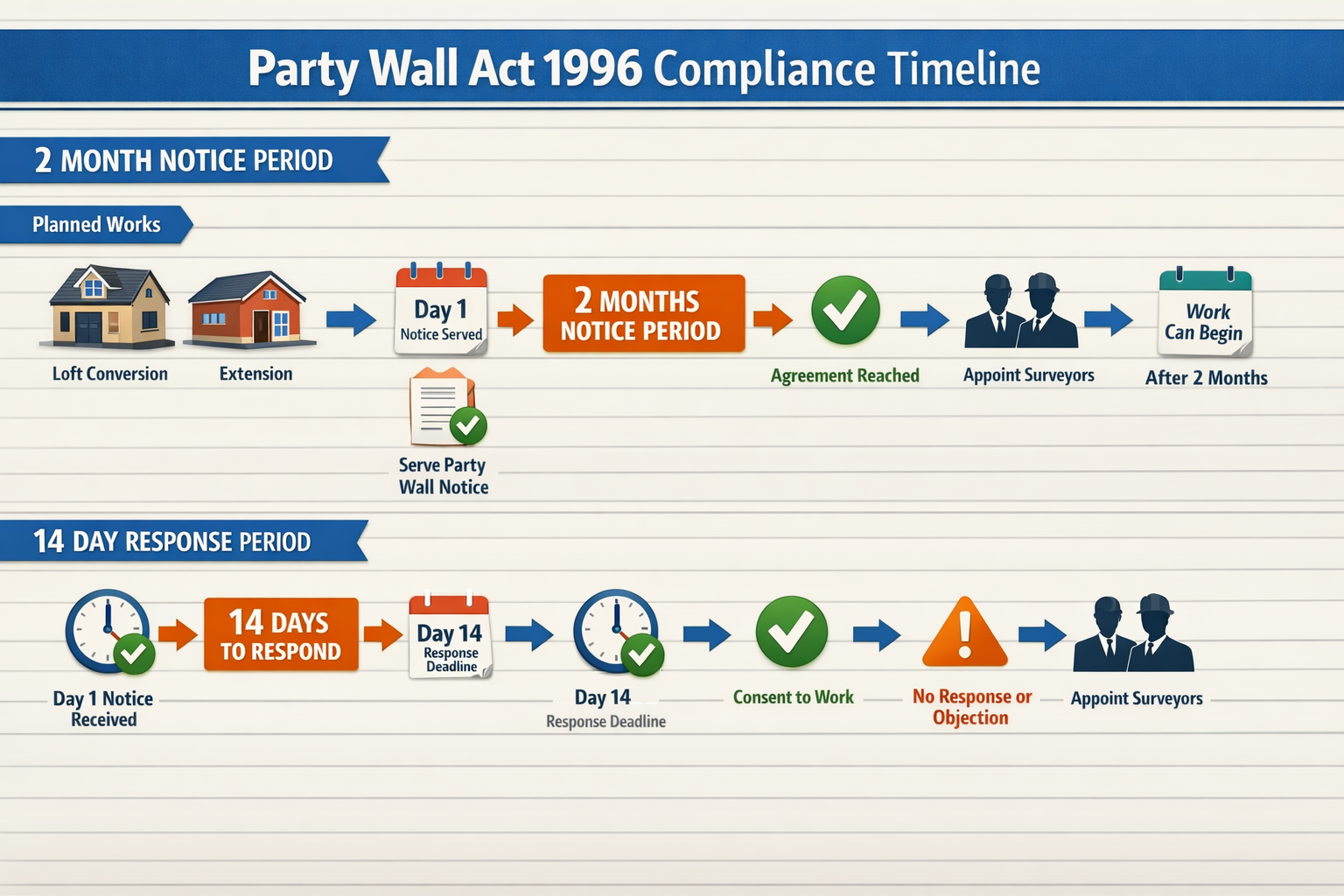
Proper notice procedures form the cornerstone of Party Wall Act compliance. As construction activity accelerates in 2026, understanding these requirements prevents costly delays and maintains positive neighbour relations.
Mandatory Notice Periods
The Act establishes specific timeframes that building owners must observe:
| Work Type | Notice Period | Neighbour Response Time |
|---|---|---|
| Party wall/boundary work (Section 2) | 2 months before work begins | 14 days to consent or dissent |
| Excavation work (Section 6) | 1 month before work begins | 14 days to consent or dissent |
| New walls on boundaries (Section 1) | 1 month before work begins | 14 days to consent or dissent |
These notice periods are non-negotiable under the Act [1]. Starting work without serving proper notices or before the notice period expires constitutes a breach of the Act and can result in injunctions forcing work stoppage.
What Party Wall Notices Must Include
A valid party wall notice must contain:
- ✅ Clear description of proposed works with technical specifications
- ✅ Detailed drawings and plans showing the work's extent
- ✅ Proposed start date (respecting minimum notice periods)
- ✅ Building owner's contact information and property address
- ✅ Statement of rights informing the adjoining owner of their options
Incomplete or ambiguous notices may be challenged, causing delays and requiring re-service of corrected documentation.
Neighbour Response Options
Upon receiving a party wall notice, the adjoining owner has three options within the 14-day response window:
Option 1: Consent to the Works
The adjoining owner provides written agreement, allowing work to proceed without a party wall award. However, this doesn't waive their right to claim for damage caused during construction.
Option 2: Dissent and Trigger the Award Process
The adjoining owner formally dissents, initiating the party wall award procedure. This isn't necessarily adversarial—it simply means formal documentation and surveyor involvement.
Option 3: No Response (Deemed Dissent)
If the adjoining owner fails to respond within 14 days, the law treats this as dissent, automatically triggering the award process [1].
Common Mistakes in Party Wall Compliance
As building activity increases in 2026, several compliance errors have become prevalent:
- 🚫 Serving notices too late or starting work before notice periods expire
- 🚫 Providing insufficient detail about proposed works in notices
- 🚫 Assuming verbal agreements satisfy legal requirements (they don't)
- 🚫 Failing to identify all affected neighbours in multi-property developments
- 🚫 Ignoring loft conversion requirements when work affects party walls
Property owners planning party wall loft conversions must be particularly vigilant about compliance requirements.
Managing Disputes and the Party Wall Award Process
When neighbours dissent to proposed works—or fail to respond—the party wall award process provides a structured mechanism for resolving differences and establishing terms for construction.
Appointing Party Wall Surveyors
The Act provides three surveyor appointment options:
Agreed Surveyor Approach
Both parties jointly appoint a single surveyor who acts impartially. This is typically the most cost-effective option when relations remain amicable.
Two Surveyor Approach
Each party appoints their own surveyor, and these two surveyors then select a third surveyor to act as arbitrator if needed. This approach provides independent representation but increases costs.
Three Surveyor Approach
Less common, this involves each party appointing a surveyor plus a pre-agreed third surveyor from the outset.
Importantly, the building owner typically bears all reasonable surveyor costs under the Act, including fees for the adjoining owner's surveyor [2]. This financial responsibility incentivizes building owners to maintain good neighbour relations and seek consent where possible.
The Party Wall Award Document
The party wall award is a legally binding document that establishes:
- Scope of permitted works with technical specifications
- Working hours and access arrangements to minimize disruption
- Protection measures required during construction
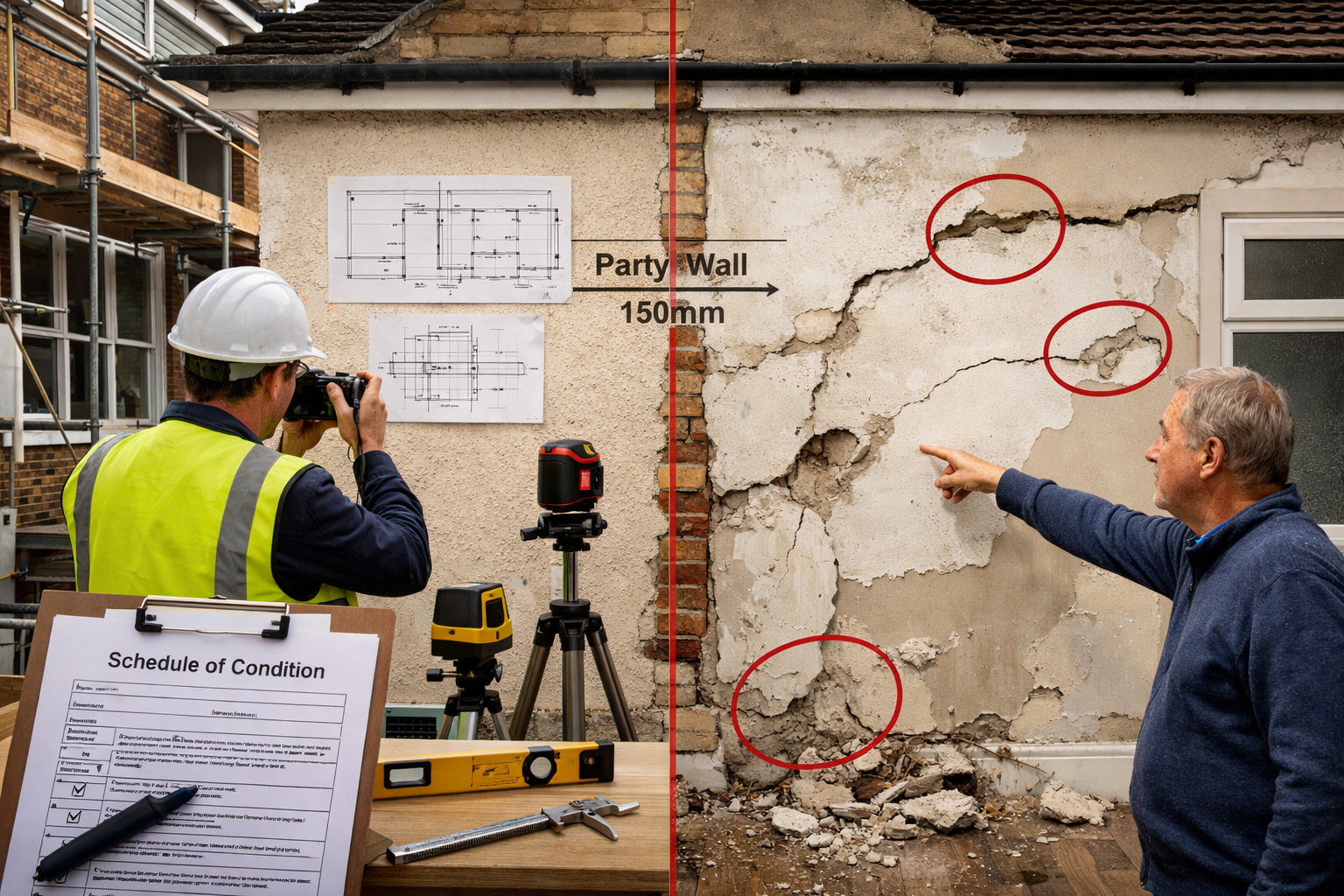
- Schedule of condition documenting pre-work property state
- Dispute resolution procedures if issues arise
- Cost allocation for surveyor fees and potential remedial work
A comprehensive schedule of condition party wall survey forms a critical component of this award, providing photographic and written evidence of the neighbouring property's condition before work commences.
Emerging Dispute Patterns in 2026
As construction activity accelerates, several dispute patterns have become increasingly common:
1. Excavation Disputes
Basement conversions and deep foundations trigger concerns about subsidence and structural stability. Neighbours worry about underpinning requirements and potential damage to their foundations.
2. Loft Conversion Conflicts
Raising party walls for loft conversions often generates disputes over structural loading, noise transmission, and fire safety compliance.
3. Extension Disagreements
Rear and side extensions affecting party walls raise concerns about natural light reduction, privacy loss, and structural integrity.
4. Shared Chimney Complications
Removing or modifying shared chimneys and shared chimney stacks requires careful negotiation and technical assessment.
5. Access Disputes
Contractors requiring access to neighbouring properties for scaffolding or work completion face resistance without proper agreements.
What Happens When Party Wall Notices Are Not Served
The consequences of party wall notice not served can be severe:
- ⚠️ Injunctions forcing immediate work stoppage
- ⚠️ Retrospective party wall awards at increased cost
- ⚠️ Unlimited liability for any damage to neighbouring properties
- ⚠️ Legal costs for both parties' solicitors and surveyors
- ⚠️ Project delays of several months while compliance is achieved
- ⚠️ Damaged neighbour relations potentially affecting future property transactions
Understanding the implications of no party wall agreement underscores the importance of proactive compliance.
Best Practices for Party Wall Act Compliance in 2026's Construction Boom
As building activity reaches new heights, implementing best practices for Party Wall Act compliance protects projects, budgets, and neighbour relationships.

Early Engagement and Planning
Start the Process Early
Begin party wall procedures at least three months before your intended construction start date. This buffer accommodates notice periods, potential disputes, and surveyor appointment processes.
Communicate Proactively
Informal discussions with neighbours before serving formal notices often prevent disputes. Explain your plans, address concerns, and demonstrate consideration for their property and lifestyle.
Integrate with Planning Permission
Coordinate party wall procedures with planning permission applications. While these are separate legal processes, aligning timelines prevents confusion and demonstrates professionalism.
Professional Surveyor Selection
Choosing the right party wall surveyor significantly impacts project success:
Look for RICS Accreditation
Select chartered surveyors with Royal Institution of Chartered Surveyors (RICS) accreditation. These professionals adhere to strict ethical standards and technical competence requirements.
Verify Party Wall Expertise
Not all surveyors specialize in party wall work. Confirm specific experience with Party Wall Act procedures, award preparation, and dispute resolution.
Check Local Knowledge
Surveyors familiar with local building practices, common construction types, and regional property characteristics provide more relevant guidance.
Consider Reputation and References
Request references from previous clients and check professional reviews. Experienced surveyors with strong reputations facilitate smoother processes.
Comprehensive Documentation
Thorough documentation provides protection throughout the construction process:
Pre-Construction Surveys
Commission detailed schedule of condition surveys documenting every aspect of neighbouring properties before work begins. Include:
- High-resolution photographs of all rooms, external walls, and structural elements
- Video walkthroughs capturing property condition
- Detailed written descriptions of existing defects, cracks, and damage
- Measurements of existing cracks for comparison purposes
Maintain Construction Records
Keep comprehensive records throughout the project:
- Daily site diaries noting activities and conditions
- Photographic evidence of construction methods and protective measures
- Correspondence with neighbours and surveyors
- Contractor reports and inspection records
Post-Construction Documentation
After work completion, document final conditions to demonstrate compliance and identify any damage requiring remediation.
Managing Construction to Minimize Disputes
Practical measures during construction reduce dispute risks:
Implement Protective Measures
- Install vibration monitoring equipment
- Use protective boarding and barriers
- Employ dust suppression techniques
- Implement noise reduction strategies
Respect Agreed Working Hours
Strictly adhere to working hours specified in party wall awards. Unauthorized early starts or late finishes generate complaints and potential breach claims.
Provide Regular Updates
Keep neighbours informed about construction progress, upcoming noisy activities, and expected completion dates. Proactive communication prevents misunderstandings.
Address Concerns Immediately
Respond promptly to neighbour complaints or concerns. Quick action demonstrates respect and often prevents minor issues escalating into formal disputes.
Understanding Damage Claims and Liability
Despite careful planning, construction sometimes causes damage to property in party wall scenarios:
Types of Damage
- Structural damage: Cracks in walls, ceilings, or foundations
- Cosmetic damage: Plaster cracks, paint damage, or decoration issues
- Consequential damage: Damage to contents or temporary accommodation costs
- Diminution in value: Reduction in property value due to construction impact
Liability and Remediation
Building owners bear responsibility for damage caused by their construction work. The schedule of condition survey provides crucial evidence distinguishing pre-existing conditions from construction-related damage.
Insurance Considerations
Ensure adequate insurance coverage including:
- Public liability insurance
- Professional indemnity insurance for surveyors
- Contractor's all-risks insurance
- Specific party wall work coverage
Leveraging Technology for Compliance
Modern technology enhances party wall compliance in 2026:
Digital Documentation
Cloud-based platforms enable secure storage and sharing of party wall notices, awards, and condition surveys. Digital systems provide instant access for all parties and create comprehensive audit trails.
Photographic Evidence
High-resolution photography and 360-degree imaging create detailed condition records. Time-stamped digital images provide irrefutable evidence of pre-construction conditions.
Project Management Software
Specialized construction management platforms track notice periods, response deadlines, and compliance milestones, reducing administrative errors.
Communication Platforms
Secure messaging systems facilitate transparent communication between building owners, neighbours, surveyors, and contractors, creating documented evidence of all discussions.
Specific Considerations for Common Projects
Different project types present unique party wall challenges:
Loft Conversions
When planning party wall loft conversions, consider:
- Party wall height increases
- Structural loading on shared walls
- Fire separation requirements
- Roof structure modifications
Basement Excavations
Deep excavations require careful attention to:
- Underpinning requirements
- Temporary support systems
- Groundwater management
- Vibration control during excavation
Extensions
Side and rear extensions affecting party walls need:
- Foundation depth assessments
- Structural connection details
- Weatherproofing at junctions
- Thermal performance considerations including insulation in a party wall
When to Seek Additional Professional Advice
Complex situations may require supplementary expertise:
Structural Engineers
For significant structural alterations, underpinning, or unusual construction methods, engage chartered structural engineers to provide technical assessments and design solutions.
Solicitors
Legal advice becomes necessary when:
- Neighbours refuse reasonable surveyor appointments
- Disputes escalate beyond surveyor resolution
- Injunctions are threatened or served
- Complex property ownership issues arise
Building Surveyors
Comprehensive building surveys provide broader property assessments beyond party wall considerations, identifying potential issues that could complicate construction projects.
Conclusion
Party Wall Act Compliance in 2026's Construction Uptick: Preventing Disputes as Building Activity Accelerates requires proactive planning, professional expertise, and meticulous attention to procedural requirements. As the construction sector experiences robust growth, property owners and developers must prioritize compliance to protect their investments and maintain positive neighbour relations.
The key to successful party wall compliance lies in early engagement, professional surveyor involvement, and comprehensive documentation. By serving proper notices, commissioning detailed condition surveys, and maintaining transparent communication throughout the construction process, building owners minimize dispute risks and ensure smooth project progression.
Actionable Next Steps
If you're planning construction work that may affect party walls in 2026:
- Assess your project against Party Wall Act requirements to determine which notices are necessary
- Engage a qualified party wall surveyor at least three months before your planned construction start date
- Commission a schedule of condition survey to document neighbouring property conditions before work begins
- Serve proper party wall notices respecting mandatory notice periods
- Maintain open communication with neighbours throughout the process
- Implement protective measures during construction to minimize damage risks
- Document everything to create a comprehensive record of compliance and care
The construction boom of 2026 presents exciting opportunities for property improvement and development. With proper Party Wall Act compliance, these projects can proceed smoothly, protecting both your investment and your relationships with neighbouring property owners.
For expert guidance on party wall matters and comprehensive surveying services, contact us to discuss your specific project requirements. Our experienced chartered surveyors provide professional support throughout the party wall process, from initial notices through to project completion.
For additional information about party wall procedures and common questions, visit our party wall FAQs page.
References
[1] Party Wall Agreement – https://hoa.org.uk/advice/guides-for-homeowners/i-am-improving/party-wall-agreement/
[2] What Is Party Wall Award Your 2026 Homeowner S Guide – https://www.harperlatterarchitects.co.uk/post/what-is-party-wall-award-your-2026-homeowner-s-guide