

As the UK property market navigates through 2026, East Anglia stands out—but not for the reasons homeowners might hope. While national markets show signs of recovery, this historic region continues to lag behind, creating unique opportunities and challenges for budget-conscious buyers. Building Surveys for East Anglia Lagging Markets: Identifying Defects in Affordability-Challenged Properties During 2026 Stabilisation has become essential knowledge for anyone looking to purchase property in Norfolk, Suffolk, Cambridgeshire, and Essex during this critical period.
With a 10% increase in homes for sale compared to the previous year and a record 809,000 price reductions logged in 2025, the East Anglia market presents both opportunity and risk[2]. Properties that appear affordable may harbour hidden defects that could transform a bargain into a financial burden. Understanding how to identify these issues through comprehensive building surveys is crucial for making informed purchasing decisions in 2026.
Key Takeaways
- 📊 East Anglia experienced a 10% increase in property supply in 2026, creating downward pressure on prices and increasing buyer opportunities in affordability-challenged segments
- 🔍 Level 3 RICS building surveys are essential for identifying hidden defects in undervalued properties, particularly in older East Anglia housing stock
- 💰 Record price reductions of 809,000 in 2025 signal increased market realism, making thorough defect identification critical before purchase
- 🏠 Subdued buyer demand (net balance of -9% in East Anglia) means properties with unidentified defects remain on the market longer, creating negotiation leverage
- ⚠️ Common defects in affordability-challenged properties include damp penetration, structural movement, and deferred maintenance—all detectable through professional surveys
Understanding East Anglia's 2026 Market Stabilisation Context
The East Anglia property market in 2026 presents a complex picture of stabilisation following years of volatility. Unlike the robust recovery seen in parts of northern England and Scotland, the region's property sector remains subdued, characterised by increased supply and cautious buyer sentiment.
Regional Market Performance Indicators
East Anglia's market dynamics differ significantly from national trends. The region recorded a net balance of -9% for RICS new buyer demand in August, indicating that potential purchasers remain hesitant despite improved affordability[2]. This subdued demand creates a buyer's market, particularly in the lower price segments where affordability challenges have historically been most acute.
Key market factors influencing 2026 stabilisation:
- Supply surplus: 10% more properties available compared to 2025[2]
- Price realism: Sellers increasingly accepting market conditions
- Mortgage accessibility: Improved lending conditions but cautious borrower sentiment
- Economic uncertainty: Regional employment concerns affecting buyer confidence
Why Affordability-Challenged Properties Require Enhanced Scrutiny
Properties at the lower end of the market spectrum often represent older housing stock with deferred maintenance. In East Anglia, this frequently means Victorian and Edwardian terraced houses, post-war semi-detached properties, and rural cottages that have experienced decades of variable upkeep.
"The correlation between affordability and property condition is particularly pronounced in East Anglia's 2026 market. Properties priced below regional averages frequently harbour defects that explain their competitive pricing."
When conducting building surveys in these circumstances, chartered surveyors must adopt a particularly thorough approach. The stabilisation period creates unique conditions where sellers may be motivated to accept offers, but buyers must ensure they're not inheriting costly repair obligations.
Building Surveys for East Anglia Lagging Markets: RICS Level 3 Survey Methodology
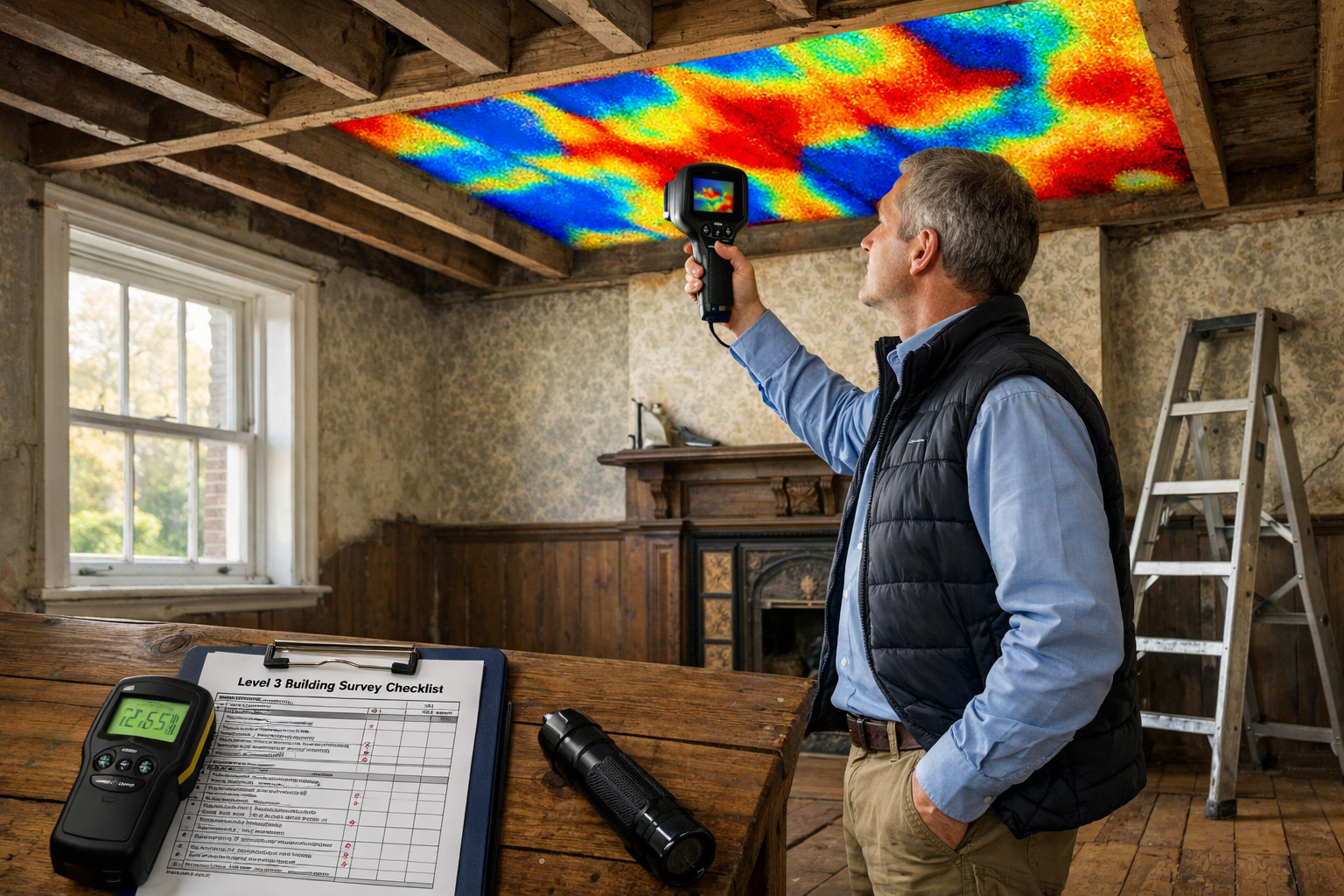
The foundation of effective defect identification in affordability-challenged East Anglia properties lies in comprehensive RICS Building Surveys Level 3 inspections. These detailed assessments provide the most thorough examination available for residential properties, making them particularly valuable in markets where hidden defects could significantly impact value.
What Makes Level 3 Surveys Essential for East Anglia Properties
A Level 3 survey (formerly known as a full building survey) offers the most comprehensive inspection available. For East Anglia's older housing stock—much of which dates from the Victorian era or earlier—this level of scrutiny is invaluable.
Level 3 surveys include:
- ✅ Detailed examination of all accessible areas
- ✅ Assessment of construction methods and materials
- ✅ Identification of defects with severity ratings
- ✅ Advice on repairs and ongoing maintenance
- ✅ Technical information about property construction
- ✅ Recommendations for specialist investigations
Unlike basic homebuyer surveys, Level 3 inspections involve lifting floor coverings (where possible), inspecting roof spaces, examining beneath ground floor levels, and conducting detailed assessments of building fabric and services.
Regional Construction Characteristics Requiring Specialist Knowledge
East Anglia's architectural heritage presents unique surveying challenges. The region's building stock reflects centuries of construction evolution, with materials and techniques specific to local conditions.
| Construction Era | Common Features | Typical Defects |
|---|---|---|
| Pre-1900 | Solid brick walls, lime mortar, timber floors | Damp penetration, structural movement, timber decay |
| 1900-1945 | Cavity walls, slate roofs, suspended timber floors | Cavity wall tie corrosion, roof deterioration, subsidence |
| 1945-1980 | Non-traditional construction, concrete elements | Concrete carbonation, thermal bridging, system build issues |
| Post-1980 | Modern cavity construction, UPVC | Inadequate insulation, condensation, poor workmanship |
Understanding these regional characteristics enables surveyors to focus investigations on the most likely defect locations. For instance, East Anglia's clay soils make subsidence a particular concern, while the region's exposure to North Sea weather systems increases the risk of water penetration in coastal properties.
Survey Techniques for Identifying Hidden Defects
Professional surveyors employ various investigative techniques during specific defect inspections in East Anglia properties:
🔧 Moisture Detection
- Electronic moisture meters for quantifying dampness
- Thermal imaging to identify hidden water ingress
- Visual assessment of staining and efflorescence patterns
🏗️ Structural Assessment
- Spirit levels and plumb lines for detecting movement
- Crack monitoring recommendations for active defects
- Foundation exposure (where accessible) for settlement evaluation
🪵 Timber Condition Analysis
- Probe testing for rot and insect infestation
- Assessment of ventilation adequacy
- Identification of high-risk areas requiring specialist treatment
🏠 Building Services Evaluation
- Visual inspection of electrical installations
- Assessment of heating system age and condition
- Drainage system functionality checks
Identifying Critical Defects in Affordability-Challenged Properties During 2026 Stabilisation
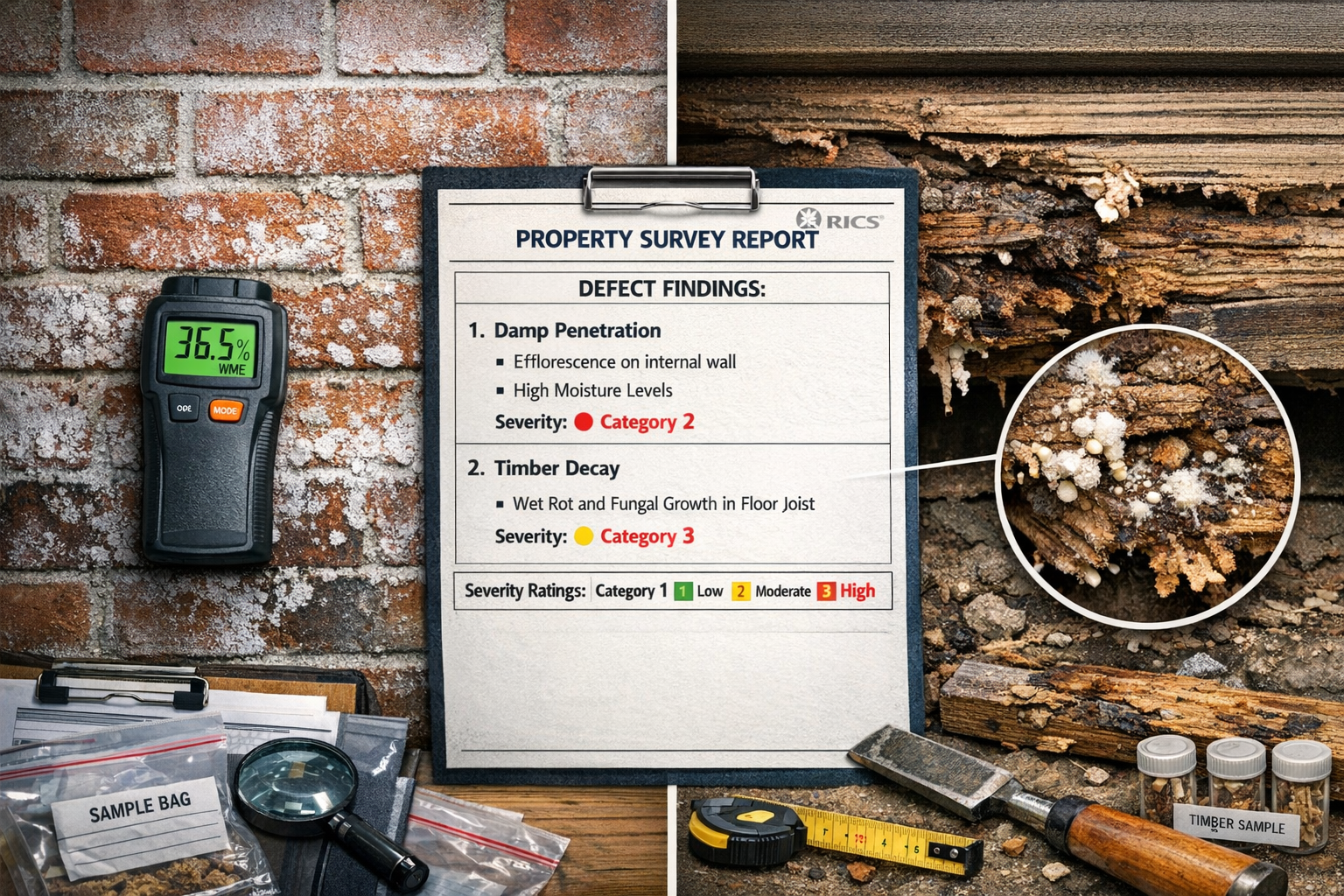
The intersection of market conditions and property condition creates specific defect patterns in affordability-challenged East Anglia properties. Understanding these common issues—and their implications—is essential for buyers navigating the 2026 stabilisation period.
Category 1 Defects: Immediate Action Required
Category 1 defects represent serious issues requiring urgent attention. In affordability-challenged properties, these defects often explain below-market pricing and can significantly impact mortgage availability.
Common Category 1 issues in East Anglia properties:
- Structural movement: Active cracking indicating ongoing settlement or subsidence
- Roof failure: Missing tiles, collapsed sections, or structural timber decay
- Electrical hazards: Outdated wiring systems presenting fire or shock risks
- Severe damp penetration: Extensive water ingress causing timber decay or structural weakness
When structural surveys identify Category 1 defects, buyers must factor immediate remediation costs into their purchase calculations. These issues cannot be deferred and may require specialist contractors to resolve.
Category 2 Defects: Repair and Replacement Needed
Category 2 defects represent issues requiring attention but not necessarily immediate intervention. These are particularly common in affordability-challenged properties where maintenance has been deferred.
Typical Category 2 findings include:
- Pointing deterioration: Mortar joints requiring repointing within 2-3 years
- Roof covering degradation: Tiles or slates nearing end of serviceable life
- Window and door decay: Timber frames showing early rot or paint failure
- Drainage system defects: Cracked gullies or partially blocked drains
- Heating system obsolescence: Boilers approaching replacement age
These defects provide negotiation leverage during the 2026 stabilisation period. With increased supply and subdued demand, buyers can reasonably request price reductions reflecting repair costs or request that sellers address issues before completion.
Category 3 Defects: Ongoing Maintenance Requirements
Category 3 items represent routine maintenance needs that don't significantly impact property value but inform future ownership costs. Understanding these helps buyers budget appropriately for property upkeep.
Common Category 3 observations:
- Minor external decoration requirements
- Gutter cleaning and minor repairs
- Garden boundary maintenance
- Minor plaster cracks from settlement
- Routine servicing of building systems
Damp and Moisture-Related Issues: East Anglia's Primary Concern
Given East Anglia's climate and older housing stock, moisture-related defects represent the most common issue identified during building surveys. Understanding the various manifestations of damp is crucial for buyers.
Types of damp commonly found:
Rising Damp 💧
- Caused by absent or failed damp-proof courses
- Identified by tide marks on internal walls
- Requires specialist damp-proofing installation
- Common in pre-1900 properties
Penetrating Damp 🌧️
- Results from external defects allowing water ingress
- Often caused by pointing failure, roof defects, or blocked gutters
- Identified through moisture meter readings and staining patterns
- Requires external repairs to building fabric
Condensation Damp 💨
- Caused by inadequate ventilation and thermal bridging
- Particularly common in properties with modern double glazing but poor ventilation
- Leads to mould growth and decoration damage
- Requires ventilation improvements and heating upgrades
Professional damp surveys can distinguish between these types and recommend appropriate remediation strategies. This distinction is critical, as treatment costs vary significantly.
Subsidence and Structural Movement in Clay Soil Areas
East Anglia's clay soils make subsidence a particular concern, especially during periods of climatic variation. The 2026 stabilisation period follows several years of variable weather patterns, potentially triggering movement in susceptible properties.
Indicators of subsidence requiring investigation:
- Diagonal cracking wider than 5mm, particularly near corners
- Cracks wider internally than externally
- Cracking that extends through multiple building elements
- Doors and windows binding or failing to close properly
- Visible external wall leaning or bulging
When surveyors identify potential subsidence, they typically recommend specialist structural investigations including trial pit excavations and monitoring periods. These investigations inform repair strategies and insurance considerations.
Building Surveys for East Anglia Lagging Markets: Negotiation and Decision-Making

The 2026 market stabilisation creates unique opportunities for buyers armed with comprehensive survey information. Understanding how to leverage survey findings during negotiations is essential for securing favourable purchase terms in affordability-challenged property segments.
Using Survey Findings to Negotiate Price Reductions
With 809,000 price reductions recorded in 2025—7.8% higher than the previous year—sellers have demonstrated increased willingness to adjust expectations[2]. Survey findings provide objective evidence supporting further negotiations.
Effective negotiation strategies:
Quantify Repair Costs 📊
Obtain contractor quotations for identified defects to support reduction requests. For example, if a survey identifies roof repairs costing £8,000, this provides concrete justification for price adjustment.
Prioritise Critical Issues ⚠️
Focus negotiations on Category 1 and significant Category 2 defects. Sellers are more likely to accommodate requests addressing serious issues than minor maintenance items.
Consider Retention Options 💰
Rather than immediate price reduction, negotiate retention amounts held by solicitors pending defect remediation. This approach can break negotiation deadlocks.
Request Seller Repairs 🔧
In competitive situations, requesting that sellers address specific defects before completion can be more palatable than price reductions.
When to Walk Away: Red Flags in Survey Reports
Despite market opportunities, some properties present risks that outweigh potential benefits. Recognising these situations protects buyers from costly mistakes.
Red flags warranting serious reconsideration:
- 🚩 Multiple Category 1 defects requiring extensive remediation
- 🚩 Evidence of previous structural repairs with ongoing movement
- 🚩 Non-standard construction with known defect patterns
- 🚩 Extensive timber decay affecting structural elements
- 🚩 Unresolved insurance claims or subsidence history
- 🚩 Significant asbestos presence requiring professional removal
Professional surveyors provide recommendations regarding property suitability. When reports advise against purchase, buyers should carefully weigh potential risks against perceived opportunities.
Budgeting for Post-Purchase Remediation
Even when proceeding with purchase, realistic budgeting for identified defects is essential. The 2026 stabilisation period may offer attractive purchase prices, but buyers must ensure they can afford both acquisition and remediation costs.
Creating a remediation budget:
- Categorise defects by urgency: Separate immediate, short-term, and long-term requirements
- Obtain multiple quotations: Secure competitive pricing for significant works
- Include contingency allowances: Add 15-20% for unforeseen complications
- Consider financing options: Explore renovation mortgages or staged improvement plans
- Prioritise safety-critical items: Ensure electrical, structural, and damp issues receive immediate attention
Selecting Appropriate Survey Types for Different Property Categories
Not all affordability-challenged properties require Level 3 surveys. Understanding which survey type suits specific circumstances optimises inspection costs while ensuring adequate protection.
Survey selection guidance:
| Property Type | Recommended Survey | Rationale |
|---|---|---|
| Pre-1900 traditional construction | Level 3 Building Survey | Older properties require comprehensive assessment |
| Standard 1930s-1980s properties | RICS Home Survey Level 2 | Balanced inspection for conventional construction |
| Modern properties (post-1990) | Level 2 with specific investigations | Focus on known system issues and workmanship |
| Properties with known issues | Specific Defect Report | Targeted investigation of identified concerns |
| Commercial conversions | Commercial Building Survey | Specialist assessment of non-residential origins |
For guidance on choosing the right property survey for your specific circumstances, professional surveyors can provide recommendations based on property characteristics and budget considerations.
RICS-Compliant Reporting Standards for Low-Price Growth Regions
Professional building surveys in East Anglia's lagging markets must adhere to rigorous RICS standards while addressing region-specific considerations. Understanding these reporting requirements ensures buyers receive comprehensive, actionable information.
Essential Components of RICS Survey Reports
RICS-compliant survey reports follow standardised formats ensuring consistency and comprehensiveness. These reports provide structured information enabling informed decision-making.
Mandatory report sections include:
Executive Summary 📋
Highlights critical findings and recommendations, enabling quick assessment of major issues without reviewing the entire report.
Property Description 🏠
Details construction type, age, accommodation, services, and site characteristics providing context for condition assessments.
Condition Ratings ⭐
Standardised ratings (Category 1, 2, and 3) for each building element, enabling prioritisation of remediation works.
Detailed Findings 🔍
Element-by-element assessment covering structure, external fabric, internal elements, services, and grounds.
Recommendations ✅
Specific advice regarding necessary investigations, repairs, and ongoing maintenance requirements.
Limitations ⚠️
Clear statement of inspection constraints, inaccessible areas, and recommended further investigations.
Market-Specific Considerations in East Anglia Reports
Professional surveyors operating in East Anglia during 2026 incorporate regional market context into their reporting, helping buyers understand how identified defects relate to local conditions and pricing.
Regional reporting enhancements:
- Comparative market analysis: How identified defects align with typical regional property conditions
- Repair cost context: Local contractor pricing for recommended remediation works
- Insurance implications: Subsidence and flood risk considerations specific to East Anglia
- Resale impact assessment: How defects might affect future marketability in stabilising conditions
Additional Specialist Investigations
Building surveys frequently recommend supplementary investigations where initial findings suggest potential issues requiring specialist expertise. Understanding when these investigations are necessary protects buyers from unforeseen complications.
Common specialist investigations:
Structural Engineering Assessment 🏗️
Required when significant structural movement, unusual construction methods, or proposed alterations necessitate detailed analysis and calculations.
Drainage Surveys 🚰
Drainage investigations using CCTV technology identify underground defects invisible during standard surveys.
Asbestos Surveys ⚠️
Properties constructed before 2000 may contain asbestos requiring professional assessment before renovation works.
Timber and Damp Specialists 🪵
Where extensive timber decay or damp issues are identified, specialist contractors provide detailed remediation specifications and quotations.
Electrical Testing ⚡
Periodic electrical inspection and testing (EICR) assesses installation safety and identifies necessary upgrades.
Future-Proofing Property Purchases in East Anglia's Evolving Market
As East Anglia navigates through 2026 stabilisation, buyers must consider not only current property condition but also future market trajectories and maintenance requirements. Strategic property selection informed by comprehensive surveys positions buyers for long-term success.
Anticipating Market Recovery and Property Value Trajectories
While East Anglia currently lags national recovery trends, understanding potential future scenarios helps buyers make informed decisions about property investment in affordability-challenged segments.
Factors influencing future value:
- Infrastructure development: Planned transport improvements affecting regional connectivity
- Employment patterns: Remote working trends supporting rural and market town locations
- Environmental considerations: Flood risk and climate adaptation requirements
- Energy efficiency: Increasing importance of EPC ratings in property valuation
Properties requiring significant remediation may offer superior long-term value if improvements address future market priorities such as energy efficiency and climate resilience.
Maintenance Planning Based on Survey Findings
Comprehensive building surveys provide the foundation for structured maintenance planning, helping buyers budget appropriately for ongoing property upkeep throughout ownership.
Creating a maintenance schedule:
Years 1-2: Critical Issues 🔴
- Address all Category 1 defects immediately
- Resolve significant Category 2 issues affecting property protection
- Implement emergency repairs identified in survey reports
Years 3-5: Preventative Maintenance 🟡
- Address remaining Category 2 defects before deterioration accelerates
- Implement recommended drainage improvements
- Undertake external redecoration protecting building fabric
Years 5-10: Planned Replacements 🟢
- Replace building elements approaching end of serviceable life
- Upgrade services to modern standards
- Implement energy efficiency improvements
This structured approach prevents deferred maintenance accumulation, maintaining property value and avoiding costly emergency repairs.
Building Survey Investment: Cost vs. Value Analysis
Professional building surveys represent a significant upfront cost, but their value in identifying defects and informing negotiations typically far exceeds inspection fees.
Survey cost considerations for 2026:
- Level 3 Building Survey: £600-£1,500 depending on property size and complexity
- Level 2 Home Survey: £400-£900 for standard properties
- Specialist investigations: £200-£800 per additional assessment
When surveys identify defects enabling £5,000-£15,000 price negotiations—common in affordability-challenged properties—the return on survey investment becomes immediately apparent. Moreover, avoiding properties with catastrophic hidden defects provides immeasurable protection against financial disaster.
Conclusion
Building Surveys for East Anglia Lagging Markets: Identifying Defects in Affordability-Challenged Properties During 2026 Stabilisation represents more than a technical exercise—it's a strategic necessity for buyers navigating one of the UK's most challenging regional property markets. With a 10% increase in available properties and record price reductions, the region offers genuine opportunities for informed purchasers willing to conduct thorough due diligence[2].
The stabilisation period creates unique conditions where comprehensive RICS Level 3 building surveys become invaluable tools for identifying hidden defects in properties that appear attractively priced. From damp penetration in Victorian terraces to structural movement in clay soil areas, East Anglia's housing stock presents specific challenges requiring specialist knowledge and rigorous inspection methodologies.
Buyers who invest in professional surveys gain multiple advantages: negotiating leverage based on objective defect identification, realistic budgeting for remediation works, and protection against catastrophic hidden issues that could transform apparent bargains into financial burdens. As the region's market continues stabilising throughout 2026, those armed with comprehensive survey information will be best positioned to secure value while avoiding costly mistakes.
Actionable Next Steps
✅ Engage a qualified chartered surveyor with specific East Anglia experience before making purchase commitments
✅ Request Level 3 surveys for pre-1900 properties and any buildings showing visible defects or unusual construction
✅ Obtain contractor quotations for identified defects to support price negotiations with realistic cost data
✅ Review specialist investigation recommendations seriously, particularly for structural, damp, and drainage concerns
✅ Create comprehensive budgets including both purchase price and remediation costs before finalising offers
✅ Consider long-term maintenance implications when evaluating properties in affordability-challenged segments
The East Anglia property market's 2026 stabilisation period offers genuine opportunities for buyers who approach purchases strategically. Professional building surveys transform information asymmetry into negotiating advantage, enabling confident decision-making in challenging market conditions. As the region continues its recovery trajectory, properties purchased with full knowledge of their condition—and appropriate pricing adjustments—will ultimately deliver superior value compared to superficially attractive purchases concealing costly defects.
References
[1] Post Regional Property Market Update Spring 2026 Essex Norfolk And Suffolk East 1772633061 – https://www.guildproperty.co.uk/news/post-regional-property-market-update-spring-2026-essex-norfolk-and-suffolk-east-1772633061
[2] East Of England Regional Market Report – https://www.fineandcountry.co.uk/insights/property-market-reports/east-of-england-regional-market-report
[3] Uk Residential Property Market Update Spring 2026 – https://www.vailwilliams.com/uk-residential-property-market-update-spring-2026/
[4] The Property Market In 2026 Britains Top Experts On What You Can Expect And Its Good News All Round – https://www.countrylife.co.uk/property/the-property-market-in-2026-britains-top-experts-on-what-you-can-expect-and-its-good-news-all-round
[5] House Price Forecast – https://hoa.org.uk/advice/guides-for-homeowners/i-am-buying/house-price-forecast/
[6] Uk Real Estate Market Outlook Q1 2026 – https://www.aberdeeninvestments.com/en-gb/professional/insights-and-research/uk-real-estate-market-outlook-q1-2026