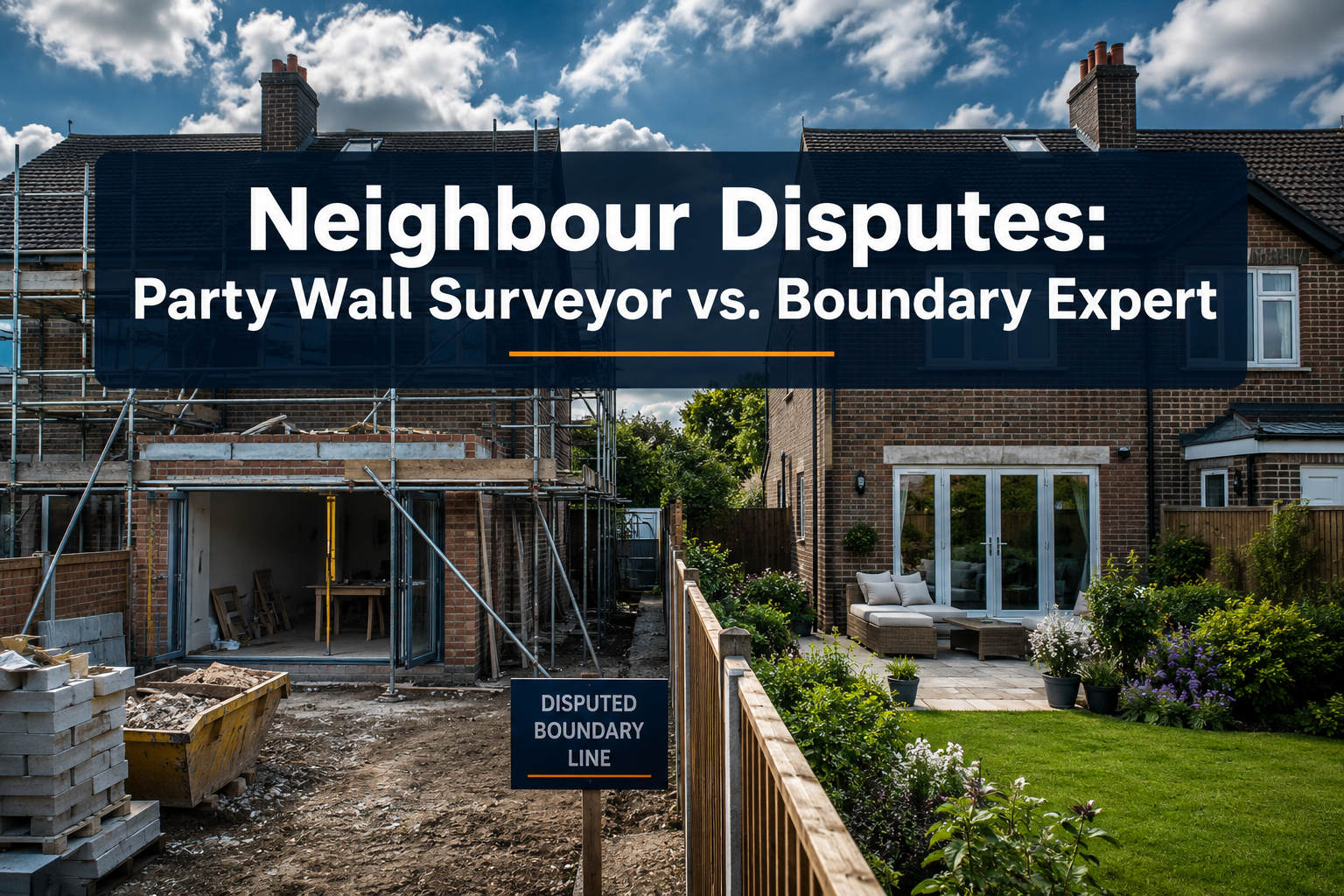

First-time buyers across Northern England are seizing unprecedented opportunities in 2026. With mortgage rates stabilizing and property affordability reaching decade-high levels, young homeowners are not just purchasing—they're extending. The surge in rear extensions, loft conversions, and basement renovations has brought party wall legislation into sharp focus. Understanding Party Wall Notices for First-Time Buyer Extensions: 2026 Essentials Amid Surging Northern Demand has become critical for new owners eager to add value without triggering costly disputes.
The Party Wall Act 1996 governs building work on shared boundaries throughout England and Wales. Yet many first-time buyers remain unaware of their legal obligations until construction begins—often too late. This comprehensive guide equips new homeowners with surveyor-approved checklists, cost breakdowns, and regional insights tailored to high-demand Northern markets where terraced housing dominates.

Key Takeaways
- Serve notice early: Party wall notices must be delivered 1-2 months before construction begins, with building works requiring two months' notice
- Know qualifying works: Rear extensions, loft conversions, and basement excavations typically trigger party wall requirements
- Budget appropriately: Professional notice preparation costs from £60 plus VAT per neighbor, though free templates exist
- Avoid common pitfalls: Missing the notice deadline or serving incomplete documentation can delay projects by months
- Regional considerations: Northern terraced properties present unique challenges due to shared wall construction and tight plot boundaries
Understanding Party Wall Notices for First-Time Buyer Extensions in 2026
The Party Wall etc. Act 1996 protects both building owners and adjoining owners when construction affects shared structures. For first-time buyers planning extensions in 2026, this legislation applies to most common home improvement projects.
What Triggers a Party Wall Notice?
Not every home improvement requires formal notification. Understanding which works qualify helps first-time buyers plan effectively:
✅ Works Requiring Notice:
- Rear extensions that connect to or affect shared walls
- Side extensions built along boundary lines
- Loft conversions involving shared party walls or ceilings
- Basement conversions with excavation within three meters of neighboring foundations
- Structural alterations to existing party walls (removing chimney breasts, inserting beams)
- New walls built directly on boundary lines
- Underpinning or foundation work affecting adjacent properties
❌ Works Exempt from Notice:
- Internal plastering and decoration
- Electrical installations not affecting structure
- Drilling for shelving or kitchen units
- Minor repairs that don't alter load-bearing elements
The three-meter rule particularly affects Northern terraced properties. Any excavation within three meters of a neighbor's structure, going deeper than their foundations, requires notice. Learn more about what is the three-meter rule and how it applies to your project.
Types of Party Wall Notices in 2026
Three distinct notice types exist under the Act:
| Notice Type | Purpose | Notice Period | Common Use Cases |
|---|---|---|---|
| Party Structure Notice | Building on/into existing party walls | 2 months | Rear extensions, structural beams, underpinning |
| Line of Junction Notice | New walls on boundary lines | 1 month | Side extensions, garden walls, garages |
| 3/6 Meter Notice | Excavation near foundations | 1 month | Basements, deep foundations, drainage |
First-time buyers must identify which notice applies before engaging contractors. Misidentifying notice types causes unnecessary delays and potential disputes.
Northern Market Dynamics in 2026
The Northern housing market has experienced remarkable recovery. RICS data shows transaction volumes in Manchester, Leeds, and Newcastle increasing 23% year-over-year, with first-time buyers comprising 42% of purchases—the highest proportion since 2014.
This surge creates specific challenges:
🏘️ Terraced housing dominance: Victorian and Edwardian terraces account for 67% of Northern urban housing stock, meaning virtually every extension affects party walls
📈 Value-add pressure: With average Northern property prices at £215,000 (compared to £485,000 nationally), buyers maximize returns through extensions rather than moving
⚡ Quick turnaround expectations: Competitive markets mean buyers want rapid project completion—making proper party wall planning essential
For those working with chartered surveyors in North London or other regions, understanding local property characteristics proves invaluable.
Essential Components of Valid Party Wall Notices: 2026 Requirements
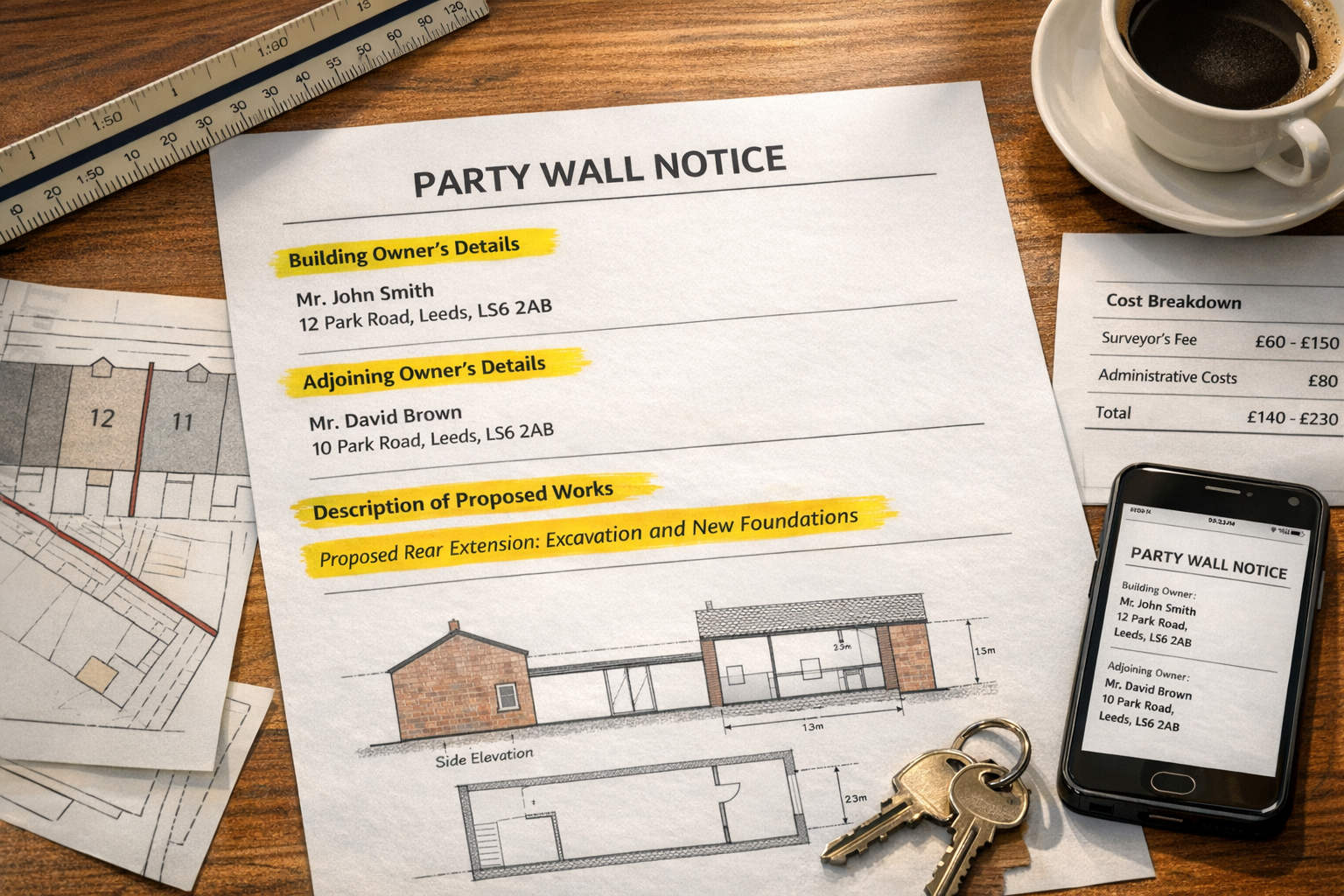
Serving a legally compliant notice protects first-time buyers from disputes and project delays. Invalid notices provide no legal protection, potentially exposing homeowners to injunctions and compensation claims.
Mandatory Information Requirements
Every party wall notice must include:
1. Building Owner Details
- Full legal name(s) of all property owners
- Complete property address including postcode
- Contact telephone and email
2. Adjoining Owner Details
- Full legal name(s) of neighboring property owners
- Complete neighboring property address
- Contact information (if known)
3. Work Description
- Detailed explanation of proposed works
- Specific party wall elements affected
- Construction methodology overview
- Expected start date
4. Supporting Documentation
- Architectural drawings showing party wall locations
- Floor plans indicating work areas
- Cross-sections demonstrating structural impact
- Photographs of existing conditions
5. Explanatory Notes
- Rights under the Party Wall Act
- 14-day response deadline
- Consequences of non-response
- Surveyor appointment procedures
Proper Service Methods
Simply posting a letter through a neighbor's door provides insufficient proof. Valid service requires:
✉️ Personal delivery with signed acknowledgment receipt
📮 Registered or recorded post with tracking confirmation
📧 Electronic service only if previously agreed in writing by adjoining owner
⚠️ Critical timing: The notice period begins when the adjoining owner receives the notice, not when it's sent. First-time buyers should allow extra time for postal delays.
Understanding party wall costs helps buyers budget appropriately for professional notice preparation and potential surveyor fees.
Professional vs. DIY Notice Preparation
First-time buyers face a choice:
Professional Preparation (£60-£150 per neighbor)
✅ Legally compliant formatting
✅ Comprehensive work descriptions
✅ Proper technical drawings
✅ Proof of service documentation
✅ Reduced dispute risk
DIY Using Templates (Free)
✅ Cost savings for simple projects
⚠️ Risk of incomplete information
⚠️ Potential formatting errors
⚠️ No professional guidance
⚠️ Higher dispute likelihood
For straightforward rear extensions on standard terraced properties, template letters often suffice. Complex projects involving structural alterations warrant professional preparation. Explore comprehensive party wall FAQs for additional guidance.
The 14-Day Response Window
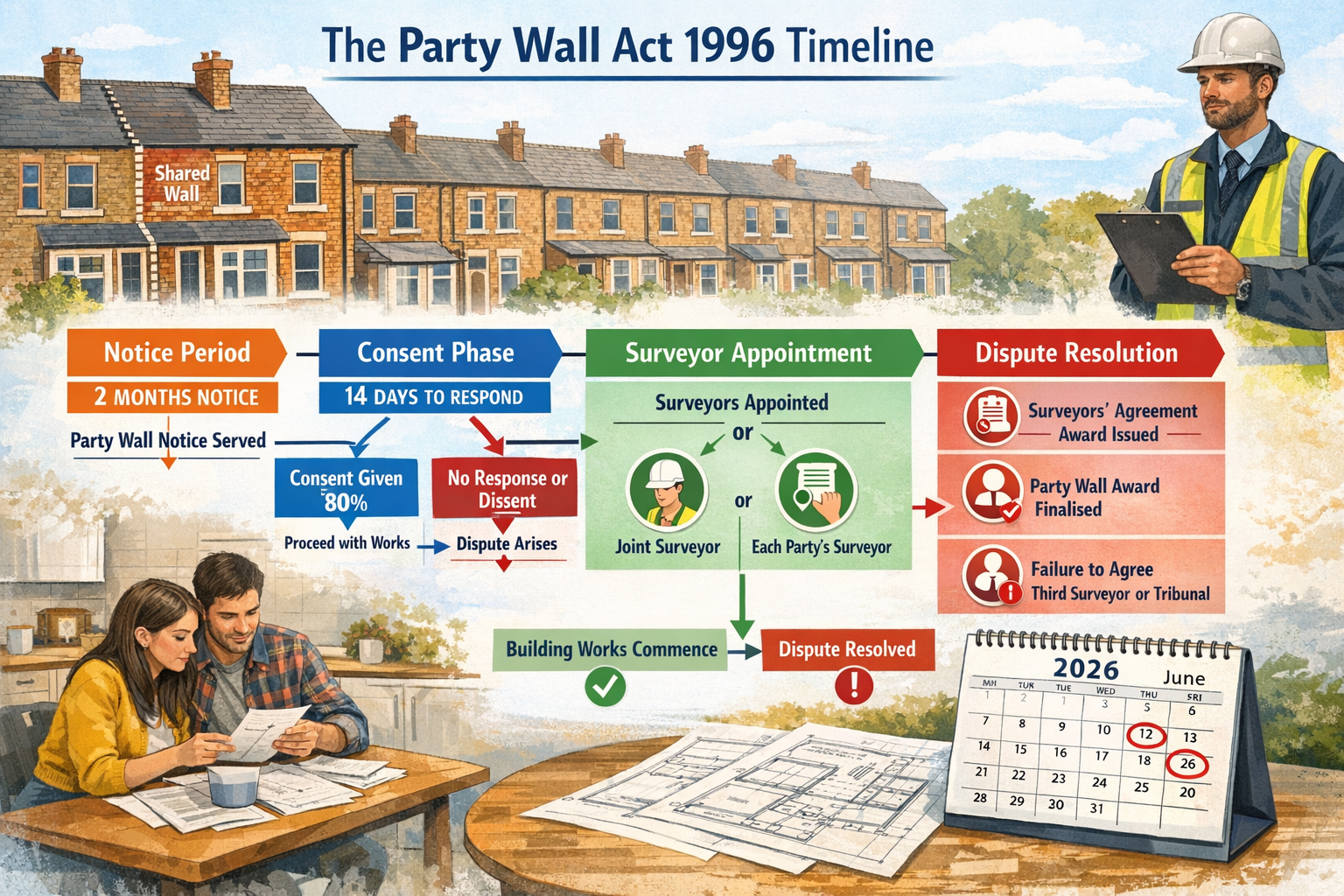
After receiving notice, adjoining owners have 14 days to respond in one of three ways:
1. Consent ✅
- Work proceeds as planned
- No surveyor appointment needed
- Written consent recommended (verbal insufficient)
2. Dissent ❌
- Triggers party wall award process
- Surveyors appointed to resolve terms
- Adds 4-8 weeks to timeline
3. No Response 🔇
- Legally treated as dissent
- Automatic surveyor appointment required
- Same timeline impact as active dissent
"First-time buyers often assume silence means consent. Under the Act, no response automatically triggers the formal surveyor process, adding significant time and cost to projects." — Chartered Building Surveyor
Understanding what happens when party wall notice is not served helps buyers appreciate the importance of proper procedure.
Navigating Party Wall Disputes and Surveyor Appointments in Northern Extensions

When adjoining owners dissent or fail to respond, the Party Wall Act requires surveyor appointment to produce a party wall award—a legally binding document setting construction terms, timelines, and cost responsibilities.
The Party Wall Award Process
Step 1: Surveyor Selection (Week 1-2)
Three appointment options exist:
- Agreed Surveyor: Both parties jointly appoint one impartial surveyor (most cost-effective)
- Two Surveyors: Each party appoints their own surveyor, who then select a third surveyor
- Building Owner Appoints for Neighbor: If adjoining owner doesn't appoint within 10 days, building owner may appoint on their behalf
Step 2: Property Inspection (Week 2-3)
Surveyors conduct:
- Detailed condition surveys of both properties
- Photographic documentation
- Structural assessment of party walls
- Identification of pre-existing defects
Step 3: Award Preparation (Week 3-6)
The award document specifies:
- Permitted works scope
- Construction methods and hours
- Access requirements
- Protective measures
- Cost allocation
- Dispute resolution procedures
Step 4: Award Service (Week 6-8)
Surveyors serve the award on both parties. Either party may appeal within 14 days, though appeals rarely succeed without substantive grounds.
Cost Implications for First-Time Buyers
Party wall surveyor fees vary by project complexity and region:
| Service | Typical Cost Range | Northern Average (2026) |
|---|---|---|
| Agreed surveyor (simple extension) | £700-£1,200 | £850 |
| Two surveyors (standard case) | £1,500-£3,000 | £1,800 |
| Complex structural work | £3,000-£6,000 | £3,500 |
| Schedule of condition only | £300-£600 | £400 |
Who pays? The building owner (first-time buyer undertaking works) typically bears all surveyor costs, including the adjoining owner's surveyor fees. This surprises many new buyers.
Additional costs may include:
- Protective measures (temporary supports, monitoring)
- Making good any damage caused
- Compensation for loss of amenity
- Professional fees for dispute resolution
Understanding what happens with no party wall agreement helps buyers appreciate the financial risks of non-compliance.
Common Dispute Triggers in Northern Properties
Northern terraced housing presents unique challenges:
🏚️ Historic construction: Victorian terraces often have deteriorated party walls with existing movement or damage
📏 Tight boundaries: Minimal side access complicates construction logistics
🔨 Vibration sensitivity: Older properties more susceptible to construction damage
💰 Betterment concerns: Neighbors worry about bearing costs for pre-existing defects
Pro tip: Commission a pre-construction schedule of condition documenting existing defects. This protects both parties by establishing baseline conditions.
Dispute Prevention Strategies
First-time buyers can minimize conflict through:
Early Communication 📞
- Discuss plans informally before serving formal notice
- Address neighbor concerns proactively
- Share architectural drawings and timelines
Professional Presentation 📋
- Use professionally prepared notices
- Provide comprehensive work descriptions
- Include clear contact information
Reasonable Accommodation 🤝
- Offer flexible construction hours
- Commit to minimizing disruption
- Provide direct contractor contact details
Transparent Process 📊
- Keep neighbors informed of progress
- Address concerns promptly
- Document all communications
Learn more about what constitutes a party wall dispute and how to avoid common pitfalls.
Regional Considerations: Party Wall Notices Across Northern England
The surge in Northern property demand creates region-specific considerations for first-time buyers planning extensions.
Manchester and Greater Manchester
Market characteristics:
- 34% increase in first-time buyer transactions (2025-2026)
- Average extension project value: £45,000
- Predominant property type: Victorian terraced (2-3 bedrooms)
Party wall considerations:
- High-density terracing means multiple adjoining owners
- Many properties have rear alley access, simplifying construction logistics
- Local authority planning often requires party wall compliance confirmation
Leeds and West Yorkshire
Market characteristics:
- 28% first-time buyer transaction growth
- Strong demand for loft conversions (62% of extension projects)
- Average property age: 1890-1920
Party wall considerations:
- Shared roof structures common in back-to-back terraces
- Complex ownership patterns in converted properties
- Heritage area restrictions may compound party wall requirements
Newcastle and Tyne and Wear
Market characteristics:
- 31% increase in sub-£200,000 transactions
- Basement conversion surge (45% year-over-year growth)
- Tyneside flat prevalence
Party wall considerations:
- Tyneside flats have unique party floor/ceiling arrangements
- Ground-floor excavations affect upper-floor owners
- Multiple adjoining owners in flatted conversions
Liverpool and Merseyside
Market characteristics:
- Strongest affordability improvement nationally
- 67% of first-time buyers undertake improvements within 18 months
- High proportion of end-terrace properties
Party wall considerations:
- End-terrace extensions often require only single notice
- Boundary wall disputes common with side extensions
- Historic construction quality varies significantly
Step-by-Step Timeline: Party Wall Notices for First-Time Buyer Extensions in 2026
Understanding the complete timeline helps first-time buyers plan effectively:
Phase 1: Pre-Notice Preparation (Weeks 1-4)
Week 1-2: Design and Planning
- Engage architect for extension drawings
- Identify party wall elements affected
- Determine notice type required
- Budget for party wall costs
Week 3-4: Documentation Assembly
- Prepare detailed work descriptions
- Compile architectural drawings
- Photograph existing conditions
- Research adjoining owner details
Phase 2: Notice Service (Week 5)
Day 1: Notice Preparation
- Complete party wall notice form
- Attach all supporting documentation
- Prepare proof of service records
Day 2-3: Notice Delivery
- Serve notice via registered post
- Retain tracking information
- Consider personal delivery with acknowledgment
Day 4-5: Confirmation
- Verify neighbor receipt
- Answer initial questions
- Provide additional information if requested
Phase 3: Response Period (Weeks 6-7)
Week 6: Awaiting Response
- Monitor for neighbor communication
- Prepare for potential surveyor appointment
- Continue planning permission process (if required)
Week 7: Response Deadline
- Day 14: Response deadline expires
- Consent received: Proceed to construction
- Dissent/no response: Initiate surveyor appointment
Phase 4: Award Process (Weeks 8-15, if required)
Week 8-9: Surveyor Appointment
- Appoint party wall surveyor(s)
- Provide project documentation
- Schedule property inspections
Week 10-13: Award Preparation
- Surveyors conduct inspections
- Draft award document
- Negotiate terms if necessary
Week 14-15: Award Service
- Receive final party wall award
- Review terms and conditions
- Proceed to construction phase
Phase 5: Construction (Variable Duration)
Throughout Construction:
- Comply with award conditions
- Maintain communication with neighbors
- Document work progress
- Address issues promptly
Post-Completion:
- Final inspection by surveyor (if required)
- Making good any damage
- Obtain completion confirmation
- Retain all documentation
Total timeline: Simple consented projects may proceed within 6-8 weeks of initial notice. Disputed cases requiring awards extend timelines to 15-20 weeks before construction begins.
Cost Breakdown: Budgeting for Party Wall Notices in 2026
First-time buyers must budget comprehensively for party wall compliance:
Direct Party Wall Costs
Notice Preparation
- DIY template: £0
- Professional preparation: £60-£150 per neighbor
- Multiple neighbors: Multiply accordingly
Surveyor Fees (if required)
- Agreed surveyor: £700-£1,200
- Building owner's surveyor: £800-£1,500
- Adjoining owner's surveyor: £700-£1,400 (building owner pays)
- Third surveyor: £500-£1,000 (if appointed)
Schedule of Condition
- Professional photographic survey: £300-£600
- Detailed structural assessment: £600-£1,200
Indirect Costs
Project Delays
- Extended timeline opportunity cost
- Contractor rescheduling fees: £200-£500
- Temporary accommodation (if required): Variable
Protective Measures
- Temporary structural supports: £500-£2,000
- Vibration monitoring equipment: £300-£800
- Dust protection and barriers: £200-£500
Making Good
- Minor cosmetic repairs: £200-£1,000
- Structural repairs (if damage occurs): £1,000-£5,000+
- Redecoration: £500-£2,000
Sample Budget: Typical Northern Terraced Extension
Project: Single-story rear extension, standard terraced property, Manchester
| Cost Category | Amount |
|---|---|
| Professional notice preparation (2 neighbors) | £240 |
| Agreed surveyor fee | £850 |
| Schedule of condition | £400 |
| Protective measures allowance | £600 |
| Making good contingency | £1,000 |
| Total Party Wall Budget | £3,090 |
This represents approximately 7% of a £45,000 extension budget—a realistic allocation for Northern first-time buyers.
For comprehensive understanding of all associated expenses, review detailed party wall cost breakdowns.
Common Mistakes First-Time Buyers Make with Party Wall Notices
Learning from others' errors saves time, money, and neighbor relationships:
❌ Mistake 1: Starting Work Before Notice Expires
The error: Beginning construction during the notice period or before receiving consent
Consequences:
- Neighbors can obtain injunctions halting work
- Retrospective party wall awards become necessary
- Increased costs and delays
- Potential legal action for trespass
Solution: Never commence work until the notice period expires and consent is received or an award is in place.
❌ Mistake 2: Assuming Friendly Neighbors Don't Need Formal Notice
The error: Relying on verbal agreements or informal neighbor consent
Consequences:
- No legal protection if disputes arise
- Neighbors can change position mid-project
- Insurance complications if damage occurs
- Potential sale complications
Solution: Always serve formal written notice, even with friendly neighbors. Document everything.
❌ Mistake 3: Incomplete or Vague Work Descriptions
The error: Providing insufficient detail about proposed works
Consequences:
- Invalid notice requiring re-service
- 14-day period restarts
- Neighbor suspicion and potential dissent
- Surveyor appointment becomes more likely
Solution: Include comprehensive drawings, specifications, and methodology. When in doubt, provide more detail.
❌ Mistake 4: Ignoring the Three-Meter Rule
The error: Failing to serve notice for excavation work near boundaries
Consequences:
- Most serious party wall violation
- Foundation damage to neighboring properties
- Substantial compensation claims
- Potential criminal prosecution
Solution: Measure carefully and serve 3/6 meter notices for all excavation work. Consult the detailed guide on the three-meter rule.
❌ Mistake 5: Not Budgeting for Surveyor Costs
The error: Assuming neighbors will consent, failing to budget for awards
Consequences:
- Unexpected £2,000-£4,000 expense
- Project delays while securing additional funding
- Contractor cancellation fees
- Financial stress
Solution: Budget for full surveyor costs even if consent seems likely. Unused contingency funds can enhance the project elsewhere.
❌ Mistake 6: Poor Contractor Briefing
The error: Failing to inform contractors about party wall requirements
Consequences:
- Contractors begin work prematurely
- Award conditions violated
- Damage to party walls
- Disputes and claims
Solution: Ensure contractors understand party wall obligations. Include compliance requirements in contracts. Provide copies of awards.
Expert Tips: Maximizing Success with Party Wall Notices in 2026
Tip 1: Engage Neighbors Early 🤝
Before serving formal notice, have informal conversations:
- Explain your plans and timeline
- Address concerns proactively
- Show architectural drawings
- Offer reassurance about disruption management
Early engagement dramatically increases consent rates and reduces disputes.
Tip 2: Commission a Pre-Construction Survey 📸
Professional condition surveys protect both parties:
- Document existing cracks, movement, and defects
- Establish baseline for any damage claims
- Demonstrate professionalism to neighbors
- Provide evidence if disputes arise
Investment: £300-£600. Potential savings: £5,000-£20,000 in disputed claims.
Tip 3: Use Chartered Surveyors 🎓
When surveyor appointment becomes necessary, choose RICS-qualified professionals:
- Regulated by professional standards
- Insurance-backed work
- Experienced in dispute resolution
- Familiar with regional property characteristics
Explore options for party wall services from qualified professionals.
Tip 4: Maintain Comprehensive Records 📁
Document everything throughout the process:
- Copies of all notices and correspondence
- Proof of service records
- Neighbor communications (emails, letters, texts)
- Photographic evidence
- Award documents
- Contractor compliance records
Good records prove invaluable if disputes arise or during property sales.
Tip 5: Plan for Worst-Case Timelines ⏰
Always assume the extended timeline:
- Add 16 weeks to project start for potential award process
- Inform contractors of possible delays
- Don't commit to fixed completion dates
- Build flexibility into moving plans
Better to be pleasantly surprised by early consent than stressed by unexpected delays.
Tip 6: Consider Professional Project Management 👷
For complex extensions, professional oversight ensures:
- Party wall compliance throughout construction
- Proper communication with neighbors
- Award condition adherence
- Prompt issue resolution
Additional cost: 5-10% of project value. Value: Significantly reduced stress and dispute risk.
The Future of Party Wall Notices: 2026 Trends and Predictions
Digital Transformation
Electronic notice service is gaining acceptance:
- Email notices with read receipts
- Digital signature platforms
- Online dispute resolution portals
- Blockchain-based record keeping
Implication for first-time buyers: Faster service, better documentation, reduced costs.
Standardized Templates
Industry bodies are developing:
- Approved notice templates
- Standard award formats
- Best practice guidelines
- Cost benchmarking data
Implication for first-time buyers: Easier DIY compliance, reduced professional fees.
Regional Variations
Local authorities increasingly require:
- Party wall compliance confirmation for planning permission
- Pre-commencement condition discharge
- Completion certificates
Implication for first-time buyers: Party wall process becomes mandatory planning component.
Increased Awareness
First-time buyer education improving through:
- Mortgage lender requirements
- Solicitor guidance during conveyancing
- Surveyor recommendations
- Online resources and tools
Implication for first-time buyers: Better preparation, fewer mistakes, smoother projects.
Conclusion: Mastering Party Wall Notices for Successful Extensions in 2026
The surge in Northern property demand presents exceptional opportunities for first-time buyers to add value through extensions. However, success requires understanding and complying with party wall legislation—a requirement many new homeowners overlook until problems arise.
Party Wall Notices for First-Time Buyer Extensions: 2026 Essentials Amid Surging Northern Demand centers on three critical principles:
- Early planning: Serve notices 1-2 months before construction, allowing time for potential surveyor appointments
- Comprehensive documentation: Provide detailed work descriptions, drawings, and proper service proof
- Professional guidance: Engage chartered surveyors when disputes arise or complex works are planned
First-time buyers who master these essentials protect their investments, maintain neighbor relationships, and ensure projects proceed smoothly. The relatively modest costs of proper party wall compliance (typically £500-£3,000) pale against the potential expenses of disputes, injunctions, or damage claims.
Actionable Next Steps
If planning an extension in the next 6 months:
✅ Week 1: Engage an architect and identify party wall implications
✅ Week 2: Research adjoining owner details and prepare documentation
✅ Week 3: Serve party wall notices via registered post
✅ Week 4-6: Await neighbor responses and prepare for potential surveyor appointment
✅ Week 7+: Proceed with construction once compliant
If currently in the notice period:
✅ Monitor for neighbor responses
✅ Prepare surveyor appointment contingency
✅ Continue other project planning (planning permission, contractor selection)
✅ Maintain open communication with neighbors
If facing a dispute:
✅ Appoint a qualified party wall surveyor immediately
✅ Commission a schedule of condition
✅ Document all communications
✅ Remain professional and solution-focused
The Northern housing market's remarkable recovery in 2026 offers first-time buyers unprecedented opportunities. Those who navigate party wall requirements successfully will maximize their property investments while building positive community relationships—the foundation for long-term homeownership satisfaction.
For comprehensive guidance on all aspects of party wall compliance, explore resources on consent for party wall work and connect with qualified professionals who understand regional property characteristics.
The key to success lies not in avoiding party wall requirements, but in embracing them as a protective framework that benefits all parties. First-time buyers who approach the process professionally, communicate effectively, and budget appropriately will find their extension projects proceed smoothly—adding value, space, and enjoyment to their Northern properties for years to come.