
Dilapidation Survey: The Essential Guide to Protecting Your Property in 2026
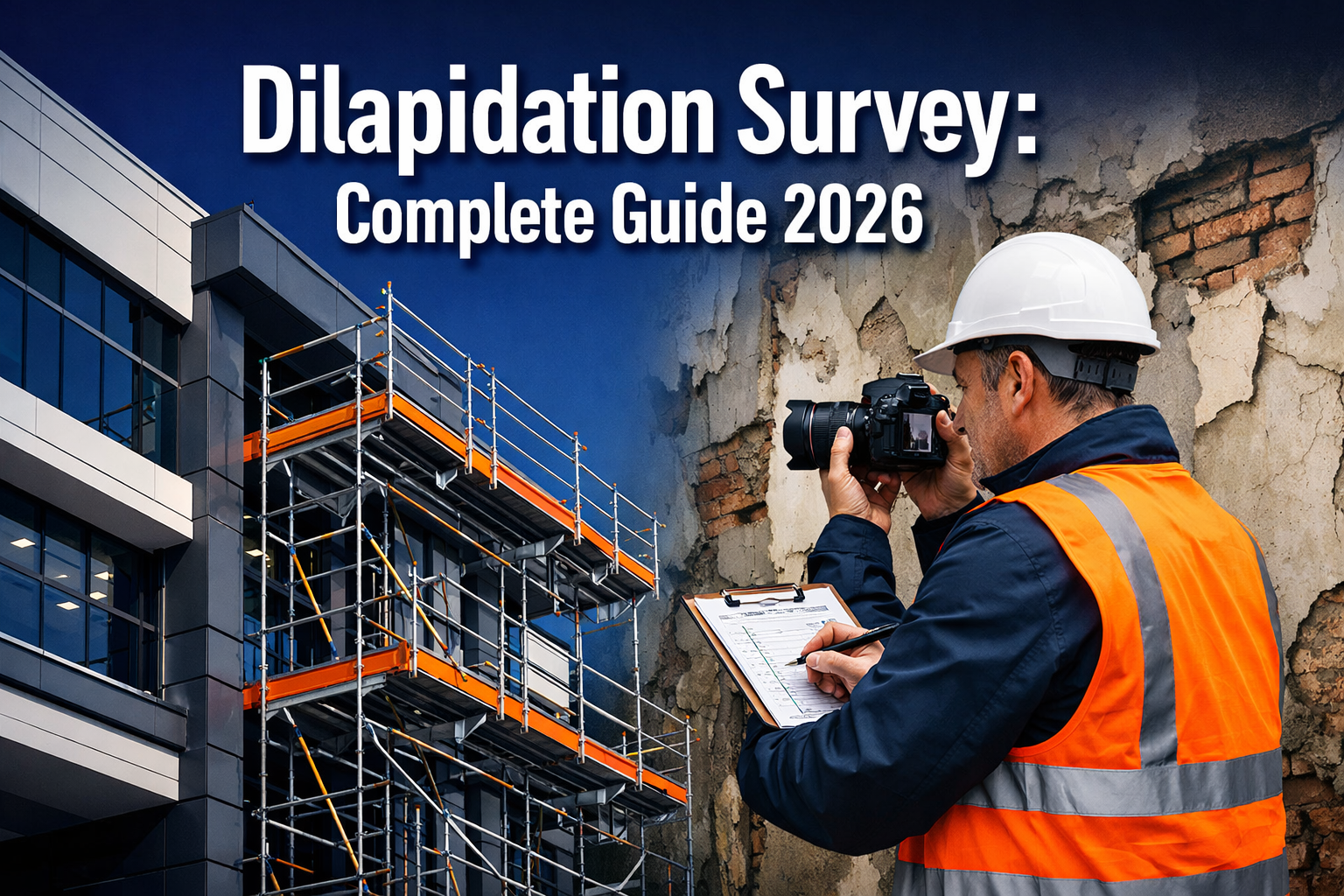
Imagine discovering cracks in your property’s foundation after major construction work next door—only to face a dispute over whether the damage existed before the work began. Without proper documentation, proving your case becomes nearly impossible. This scenario plays out countless times each year, costing property owners thousands in unresolved claims. A dilapidation survey serves as your critical shield against such disputes, providing irrefutable evidence of your property’s condition before construction activities commence.
Key Takeaways
- A dilapidation survey is a comprehensive baseline assessment that documents a property’s structural condition before nearby construction, demolition, or excavation work begins, protecting owners from liability disputes.
- Multiple stakeholders benefit from dilapidation surveys, including property owners, developers, contractors, insurance companies, and local authorities who need reliable documentation for legal and insurance purposes.
- The survey includes detailed photographic evidence, measurements, and written descriptions of existing defects, cracks, and structural wear to distinguish pre-existing damage from construction-related impacts.
- Dilapidation surveys remain valid throughout a construction project’s duration, though follow-up inspections are recommended when significant delays, plan changes, or disputes arise.
- Professional documentation serves as critical legal evidence in court proceedings and insurance claims, making it an essential investment for property protection.
What Is a Dilapidation Survey?
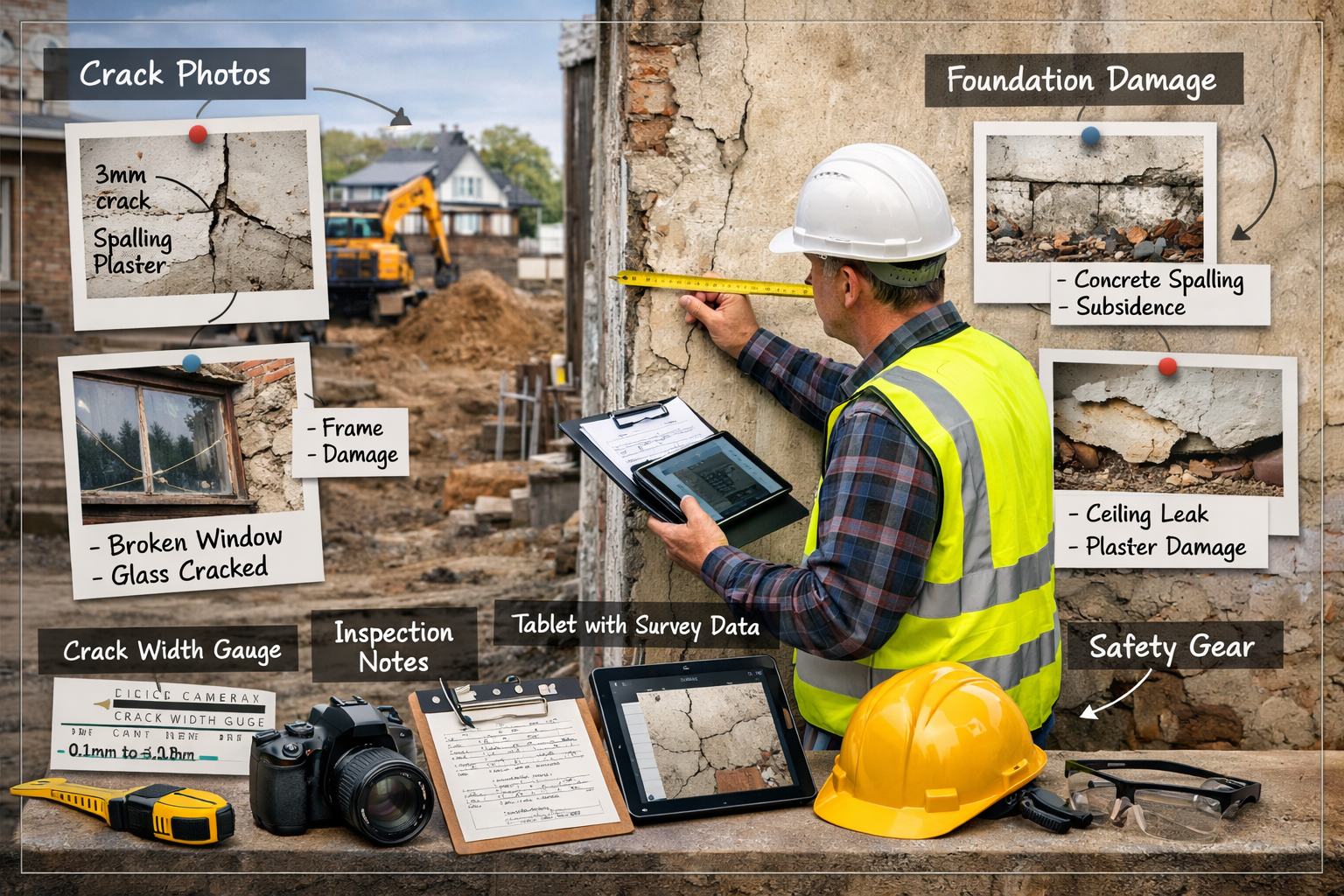
A dilapidation survey is a detailed record and baseline assessment of a property’s structural condition conducted before nearby construction, demolition, or excavation work begins[1][2]. This comprehensive inspection documents the existing state of a building, including any defects, cracks, structural wear, and potential risks that may already be present.
The primary purpose of a dilapidation survey is to establish an undisputable record that distinguishes pre-existing damage from impacts caused by construction activities. By creating this baseline, property owners gain crucial protection against false claims and liability disputes that might arise during or after construction work[1].
Key Components of a Dilapidation Report
A thorough dilapidation report typically includes:
- 📸 High-resolution photographs capturing all visible defects and structural elements
- 📏 Precise measurements of cracks, gaps, and structural irregularities
- 📝 Written descriptions detailing the condition of walls, floors, ceilings, and foundations
- 🗺️ Annotated diagrams showing the location of identified issues
- ⚠️ Risk assessments highlighting areas of concern
- 📋 Inspection notes documenting the surveyor’s professional observations[1][3]
This documentation creates a comprehensive snapshot that can be referenced throughout the construction project and serves as vital evidence if disputes arise.
Who Needs a Dilapidation Survey?
The need for a dilapidation survey extends across various stakeholders in the construction and property sectors. Understanding who benefits from these surveys helps clarify their widespread importance in 2026’s development landscape.
Property Owners and Landlords
Property owners adjacent to construction sites represent the primary beneficiaries of dilapidation surveys. Whether residential or commercial, owners need protection against potential damage from:
- Excavation work that may affect foundations
- Vibrations from demolition or pile driving
- Changes in ground conditions
- Structural movements from nearby development[4]
Developers and Contractors
Construction professionals commission dilapidation surveys to protect themselves from unwarranted claims. A schedule of dilapidations provides contractors with documented proof of pre-existing conditions, safeguarding against liability for damage they didn’t cause[1].
Specialized Industries
Several specialized sectors regularly require dilapidation surveys:
| Stakeholder | Primary Purpose |
|---|---|
| Mining and quarry companies | Document impact of extraction activities on surrounding properties |
| Insurance companies | Verify claims and assess risk exposure |
| Civil contractors | Protect against liability during infrastructure projects |
| Local authorities and councils | Ensure public infrastructure protection during development |
| Strata bodies | Safeguard multi-unit properties from construction impacts[3] |
Commercial Tenants
In commercial leasing arrangements, tenants typically bear responsibility for commissioning dilapidation surveys as required by most lease agreements[5]. This protects both parties by establishing clear accountability for property condition at the start and end of tenancy periods. Professional commercial property surveyors can guide tenants through this process.
The Dilapidation Survey Process: Step-by-Step
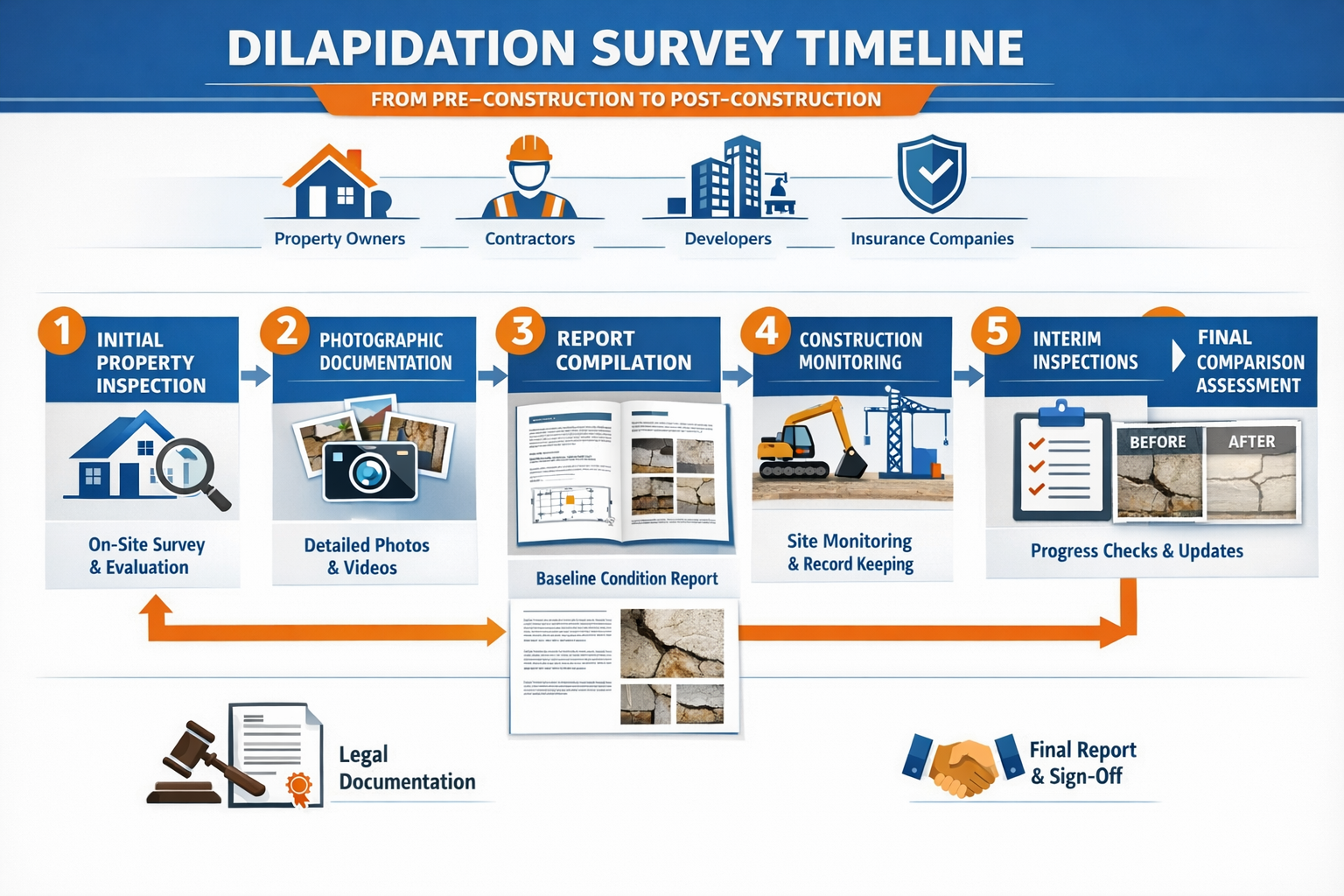
Understanding the dilapidation survey process helps property owners and stakeholders prepare adequately and maximize the value of their investment. The process follows a systematic approach to ensure comprehensive documentation.
1. Initial Consultation and Scope Definition
The process begins with a consultation between the property owner and surveyor to:
- Identify the nature and extent of planned construction work
- Determine which properties require assessment
- Establish the survey’s scope and objectives
- Agree on timelines and deliverables
2. Pre-Survey Preparation
Before the physical inspection, surveyors review:
- Property plans and architectural drawings
- Previous survey reports or maintenance records
- Details of the proposed construction activities
- Access arrangements and safety requirements
3. On-Site Inspection
The physical survey represents the most critical phase, involving:
External Assessment:
- Foundation and structural walls
- Roof condition and drainage systems
- Windows, doors, and external fixtures
- Driveways, pathways, and boundary features
- Neighboring structures and shared elements
Internal Assessment:
- Wall and ceiling conditions
- Floor levels and structural integrity
- Plasterwork and decorative finishes
- Visible signs of movement or settlement
- Existing cracks, stains, or defects[1][3]
Similar to a comprehensive structural survey, the inspection employs specialized equipment including crack width gauges, moisture meters, and professional photography equipment.
4. Documentation and Analysis
Following the inspection, surveyors compile:
- Categorized photographic evidence with date stamps
- Detailed written descriptions of findings
- Scaled diagrams showing defect locations
- Condition ratings for structural elements
- Professional opinions on existing vulnerabilities
5. Report Preparation and Delivery
The final dilapidation report presents findings in a clear, legally robust format that includes:
- Executive summary of property condition
- Comprehensive photographic appendix
- Detailed descriptions of all identified issues
- Risk assessment and recommendations
- Professional certifications and qualifications[1]
6. Follow-Up Inspections
Depending on the construction project’s duration and complexity, follow-up surveys may be conducted:
- Interim inspections during construction to monitor changes
- Post-construction surveys to identify any new damage
- Dispute resolution inspections if claims arise[1]
When Is a Dilapidation Survey Required?
Timing is crucial when commissioning a dilapidation survey. Understanding when these surveys become necessary ensures adequate protection and compliance with legal requirements.
Before Major Construction Projects
A dilapidation survey should be conducted before:
- Demolition work that may create vibrations affecting neighboring properties
- Excavation projects involving deep foundations or basement construction
- Pile driving operations that generate significant ground disturbance
- Large-scale developments adjacent to existing structures
- Infrastructure projects such as road widening or utility installation[4]
“Dilapidation reports serve as critical evidence in legal proceedings and are considered reliable reference documents that can protect all parties involved in construction projects.”[1]
Commercial Lease Requirements
In commercial property contexts, dilapidation surveys are typically required:
- At lease commencement to establish baseline property condition
- Before major tenant alterations requiring a licence to alter
- At lease expiration to assess tenant repair obligations
- During lease renewal negotiations to clarify maintenance responsibilities[5]
Regulatory and Insurance Triggers
Certain situations mandate dilapidation surveys:
- Local authority planning conditions for major developments
- Insurance policy requirements for high-risk construction
- Strata regulations in multi-unit developments
- Mining and quarrying operations near residential areas[3]
Proactive Protection Scenarios
Even without legal requirements, property owners should consider dilapidation surveys when:
- Property values are substantial and worth protecting
- Historical or heritage buildings are nearby
- Previous construction has caused damage in the area
- Properties show existing structural vulnerabilities
- Long-term construction projects are planned[4]
How Long Is a Dilapidation Survey Valid?
A dilapidation survey is usually valid for the entire duration of a construction project[1]. However, several factors influence whether the original survey remains sufficient or requires updating.
Standard Validity Period
Under normal circumstances, a dilapidation survey conducted before construction begins remains valid until project completion. This typically covers:
- Short-term projects (3-12 months): Single baseline survey sufficient
- Medium-term projects (1-2 years): Baseline survey with potential interim inspection
- Long-term projects (2+ years): Multiple inspections recommended
When Follow-Up Inspections Become Necessary
Additional surveys or inspections are recommended when:
Significant Project Delays
If construction pauses for extended periods, conditions may change due to:
- Natural weathering and deterioration
- Seasonal impacts on the property
- Unrelated maintenance issues
- Changes in ground conditions[1]
Construction Plan Modifications
When original plans change substantially:
- Additional excavation depth or extent
- New construction phases not initially planned
- Changes in construction methodology
- Introduction of heavier machinery or equipment[1]
Dispute Emergence
If disagreements arise during construction:
- Claims of new damage from neighboring owners
- Contractor concerns about liability
- Insurance claim requirements
- Legal proceedings necessitating current evidence[1]
Observable Changes
Interim inspections become prudent when:
- Visible new cracks or structural movement appear
- Unusual vibrations or ground settlement occur
- Water ingress or drainage issues develop
- Neighboring properties report damage
Maintaining Survey Validity
To ensure your dilapidation survey remains effective:
✅ Store documentation securely in multiple formats (digital and physical)
✅ Maintain communication with the construction project manager
✅ Monitor property condition regularly during construction
✅ Document any concerns immediately with dated photographs
✅ Engage surveyors promptly if significant changes occur
Working with experienced local chartered surveyors ensures you receive appropriate guidance on inspection timing and frequency.
Benefits of Commissioning a Dilapidation Survey
Investing in a professional dilapidation survey delivers substantial benefits that far outweigh the initial cost. Understanding these advantages helps property owners make informed decisions about protection strategies.
Legal Protection and Evidence
The primary benefit lies in creating irrefutable legal evidence of property condition:
- Provides objective, professional documentation admissible in court
- Establishes clear timelines distinguishing pre-existing from new damage
- Supports insurance claims with credible evidence
- Reduces liability exposure for all parties
- Facilitates dispute resolution through factual reference points[1][4]
Financial Safeguards
Dilapidation surveys deliver significant financial protection:
💰 Prevents unwarranted repair costs by proving damage existed before construction
💰 Supports compensation claims for legitimate construction-related damage
💰 Reduces insurance premiums by demonstrating proactive risk management
💰 Protects property values by ensuring damage accountability
💰 Minimizes legal expenses by providing clear evidence that prevents protracted disputes[4]
Risk Management
For developers and contractors, dilapidation surveys provide:
- Project risk mitigation by identifying potential claim sources early
- Stakeholder confidence through transparent documentation
- Regulatory compliance with planning and building requirements
- Insurance requirement fulfillment for comprehensive coverage
- Professional reputation protection by demonstrating due diligence[3]
Peace of Mind
Beyond tangible benefits, dilapidation surveys offer:
- Confidence that property interests are protected
- Clear understanding of existing property condition
- Reduced stress during construction projects
- Professional validation of property status
- Foundation for fair negotiations if issues arise[4]
Comparison with Other Survey Types
While dilapidation surveys serve specific purposes, they complement other property assessments:
| Survey Type | Primary Purpose | Best Used When |
|---|---|---|
| Dilapidation Survey | Document baseline condition before construction | Construction planned nearby |
| Schedule of Condition | Record property state at lease commencement | Starting commercial tenancy |
| Building Survey | Comprehensive property assessment | Purchasing property |
| Specific Defect Report | Investigate particular issues | Known problems exist |
Choosing the Right Surveyor for Your Dilapidation Survey
Selecting a qualified professional to conduct your dilapidation survey significantly impacts the quality and legal robustness of the documentation you receive.
Essential Qualifications and Credentials
Look for surveyors with:
Professional Accreditation:
- RICS (Royal Institution of Chartered Surveyors) membership
- Relevant professional indemnity insurance
- Specialist experience in dilapidation surveys
- Local knowledge of construction regulations[7]
Technical Expertise:
- Structural engineering understanding
- Building pathology knowledge
- Construction methodology familiarity
- Legal documentation experience
Questions to Ask Potential Surveyors
Before commissioning a survey, ask:
- How many dilapidation surveys have you completed in the past year?
- What qualifications and professional memberships do you hold?
- Do you have experience with properties similar to mine?
- What equipment and technology do you use for documentation?
- How detailed will the photographic evidence be?
- What is the typical turnaround time for report delivery?
- Are you available for follow-up inspections if needed?
- Have your reports been used in legal proceedings successfully?
Red Flags to Avoid
Be cautious of surveyors who:
- ❌ Lack proper professional accreditation
- ❌ Offer prices significantly below market rates
- ❌ Cannot provide references or sample reports
- ❌ Show limited understanding of construction impacts
- ❌ Use outdated documentation methods
- ❌ Are unavailable for follow-up consultations
Local Expertise Matters
Engaging surveyors with local knowledge provides advantages:
- Understanding of regional construction practices
- Familiarity with local soil and ground conditions
- Awareness of area-specific building regulations
- Established relationships with local authorities
- Knowledge of common regional building defects
Whether you need services in Central London, Surrey, or other regions, choosing locally experienced professionals ensures comprehensive assessment.
Cost Considerations for Dilapidation Surveys
Understanding the investment required for a dilapidation survey helps property owners budget appropriately and appreciate the value proposition.
Factors Affecting Survey Costs
Several variables influence dilapidation survey pricing:
Property Characteristics:
- Size and complexity of the building
- Number of structures requiring assessment
- Property age and construction type
- Accessibility and location
- Existing condition and defect quantity
Survey Scope:
- Internal and external inspection requirements
- Number of photographs and measurements needed
- Report detail and complexity
- Follow-up inspection arrangements
- Urgency and timeline requirements
Surveyor Expertise:
- Professional qualifications and experience
- Specialist knowledge requirements
- Reputation and track record
- Geographic location and travel requirements
Typical Price Ranges in 2026
While costs vary significantly based on the factors above, general ranges include:
- Small residential properties: £400-£800
- Medium residential properties: £800-£1,500
- Large residential properties: £1,500-£3,000
- Commercial properties: £1,000-£5,000+
- Complex or multiple structures: £3,000-£10,000+
These figures represent baseline surveys. Follow-up inspections typically cost 40-60% of the original survey price.
Value vs. Cost Analysis
When evaluating survey costs, consider:
Potential Savings:
- Average construction damage claim: £5,000-£50,000
- Legal dispute costs without evidence: £10,000-£100,000+
- Property value protection: Varies by property worth
- Insurance claim success rate: Significantly higher with professional documentation[4]
Return on Investment:
A £1,000 survey investment protecting against a £20,000 damage claim represents a 2,000% return—making it one of the most cost-effective property protection measures available.
Who Pays for Dilapidation Surveys?
Payment responsibility varies by situation:
- Construction-related surveys: Property owners typically commission and pay
- Commercial lease dilapidations: Tenants usually bear costs as per lease terms[5]
- Developer-commissioned surveys: Developers may pay to protect against claims
- Shared benefit scenarios: Costs sometimes split between parties
Common Issues Identified in Dilapidation Surveys
Professional dilapidation surveys frequently uncover a range of existing defects and structural concerns that property owners may not have previously recognized. Understanding common findings helps set realistic expectations.
Structural Issues
Foundation and Settlement Problems:
- Existing cracks in foundation walls
- Evidence of previous ground movement
- Differential settlement patterns
- Subsidence indicators requiring subsidence surveys
Wall and Masonry Defects:
- Hairline to significant cracking in walls
- Mortar deterioration and pointing failures
- Bulging or bowing in masonry
- Lintel deflection above openings
- Cavity wall tie corrosion
Moisture and Dampness
Water Ingress Issues:
- Rising damp in ground floor walls
- Penetrating dampness from external sources
- Condensation problems in poorly ventilated areas
- Roof leaks and water staining
- Failed damp-proof courses
Properties with moisture concerns may benefit from specialized damp surveys to fully assess the extent and causes.
Roof and External Elements
Common Roof Defects:
- Missing or slipped roof tiles
- Deteriorated flashing and weatherproofing
- Gutter and downpipe failures
- Chimney stack deterioration
- Flat roof membrane damage
External Features:
- Cracked or uneven paving and driveways
- Boundary wall defects
- Drainage system issues
- Window and door frame deterioration
- Render and external coating failures
Internal Defects
Cosmetic and Structural Issues:
- Plaster cracking and separation
- Ceiling sagging or staining
- Floor level irregularities
- Door and window operation problems
- Decorative finish deterioration
Documentation Importance
Identifying these pre-existing issues serves critical purposes:
✓ Establishes baseline condition before construction begins
✓ Prevents false attribution of existing defects to construction activities
✓ Identifies vulnerabilities that construction may exacerbate
✓ Supports maintenance planning independent of construction concerns
✓ Provides comprehensive property knowledge for owners
Dilapidation Surveys vs. Schedules of Dilapidations
While the terms sound similar, dilapidation surveys and schedules of dilapidations serve distinct purposes in property management and construction contexts. Understanding the differences ensures you commission the appropriate service.
Dilapidation Survey (Pre-Construction Assessment)
Primary Purpose:
Document property condition before nearby construction, demolition, or excavation work to establish a baseline and protect against construction-related damage claims[1][2].
Key Characteristics:
- Commissioned before construction activities begin
- Focuses on structural condition and existing defects
- Protects property owners from false damage claims
- Serves as evidence in construction-related disputes
- Typically includes extensive photographic documentation
- May require follow-up inspections during/after construction
Common Users:
- Property owners adjacent to construction sites
- Developers protecting against liability
- Insurance companies assessing risk
- Local authorities monitoring infrastructure projects
Schedule of Dilapidations (Lease-End Assessment)
Primary Purpose:
Document tenant repair obligations and property condition at lease end, identifying breaches of lease covenants and required remedial works[5].
Key Characteristics:
- Commissioned toward or at the end of a commercial lease
- Focuses on tenant’s repairing obligations
- Lists required remedial works and estimated costs
- Serves as basis for landlord claims against tenants
- References lease terms and covenants
- May lead to financial settlements or repair requirements
Common Users:
- Commercial landlords seeking lease compliance
- Commercial tenants understanding obligations
- Property managers administering leases
- Legal professionals in lease disputes
Key Differences Summary
| Aspect | Dilapidation Survey | Schedule of Dilapidations |
|---|---|---|
| Timing | Before construction begins | End of lease period |
| Purpose | Protect from construction damage | Enforce lease repair obligations |
| Focus | Structural baseline condition | Tenant covenant compliance |
| Outcome | Reference document for claims | List of required repairs/costs |
| Legal Context | Construction disputes | Landlord-tenant disputes |
When You Might Need Both
Some commercial properties may require both services:
- A schedule of dilapidations at lease commencement establishes tenant baseline
- A dilapidation survey before nearby construction protects the property
- Another schedule of dilapidations at lease end determines tenant liability
Professional surveyors can advise on which service best meets your specific circumstances and legal requirements.
Legal and Insurance Implications
The legal and insurance dimensions of dilapidation surveys significantly enhance their value beyond simple documentation, making them essential tools for risk management and dispute resolution.
Legal Standing and Admissibility
Professional dilapidation surveys carry substantial legal weight:
Court Proceedings:
- Accepted as expert evidence in civil litigation
- Provide objective, professional assessment of property condition
- Establish clear timelines distinguishing pre-existing from new damage
- Support or defend against construction damage claims
- Reduce reliance on subjective witness testimony[1]
Burden of Proof:
Without a dilapidation survey, property owners face significant challenges proving:
- That damage didn’t exist before construction
- The extent of construction-related impacts
- The causal relationship between construction and damage
- Appropriate compensation amounts
With professional documentation, the burden shifts to parties disputing the survey’s findings.
Insurance Applications
Claim Support:
Dilapidation surveys strengthen insurance claims by:
- Providing independent professional evidence
- Establishing clear damage timelines
- Supporting valuation of repair costs
- Demonstrating property owner due diligence
- Reducing claim processing time and disputes
Risk Assessment:
Insurance companies increasingly recognize dilapidation surveys as:
- Evidence of proactive risk management
- Basis for accurate property valuation
- Tools for fraud prevention
- Means of expediting legitimate claims
Policy Requirements:
Some insurance policies now mandate dilapidation surveys:
- High-value property insurance
- Construction all-risk policies
- Professional indemnity coverage for developers
- Commercial property insurance in development areas
Dispute Resolution
Alternative Dispute Resolution:
Dilapidation surveys facilitate:
- Mediation by providing objective baseline data
- Arbitration with credible evidence
- Negotiated settlements based on factual documentation
- Expert determination processes[6]
Preventing Disputes:
The mere existence of a professional survey often:
- Deters frivolous claims from neighboring property owners
- Encourages contractors to exercise greater care
- Promotes transparent communication between parties
- Reduces litigation by establishing clear facts
Regulatory Compliance
Planning and Building Regulations:
Local authorities may require dilapidation surveys for:
- Major development approvals
- Demolition permits near heritage properties
- Excavation work affecting neighboring structures
- Infrastructure projects in residential areas
Professional Standards:
Surveyors conducting dilapidation surveys must adhere to:
- RICS professional standards and guidance
- Building surveying best practices
- Expert witness protocols if providing court evidence
- Continuing professional development requirements[6][7]
Limitation Periods
Understanding legal timeframes is crucial:
- Construction damage claims: Typically 6 years from damage occurrence
- Lease dilapidation claims: Usually 6 years from lease end
- Personal injury from construction: Generally 3 years from incident
Dilapidation surveys provide dated evidence essential for claims within these limitation periods.
Conclusion: Protecting Your Property Investment
A dilapidation survey represents far more than a simple property inspection—it’s a critical investment in protecting your most valuable assets from the risks associated with nearby construction activities. In 2026’s active development environment, where construction projects continue to reshape urban and suburban landscapes, the importance of baseline documentation cannot be overstated.
The comprehensive evidence provided by professional dilapidation surveys serves multiple essential purposes: establishing irrefutable proof of pre-existing conditions, supporting legitimate damage claims, defending against false accusations, and facilitating fair dispute resolution. Whether you’re a property owner facing nearby construction, a developer managing project risks, a commercial tenant fulfilling lease obligations, or an insurance professional assessing claims, dilapidation surveys deliver measurable value that far exceeds their modest cost.
Take Action to Protect Your Property
If you’re facing any of these scenarios, commission a dilapidation survey now:
- Construction notice received: Don’t wait until work begins—schedule your survey immediately
- Planning applications nearby: Proactive documentation provides maximum protection
- Commercial lease requirements: Fulfill obligations and protect your interests
- Property value concerns: Safeguard your investment with professional evidence
Next Steps
For Property Owners:
- Contact qualified local chartered surveyors to discuss your specific needs
- Review construction notices and planning applications in your area
- Gather existing property documentation to share with surveyors
- Schedule surveys well before construction commencement dates
For Developers and Contractors:
- Budget for dilapidation surveys in project planning phases
- Commission surveys for all properties within potential impact zones
- Maintain open communication with neighboring property owners
- Ensure survey documentation is properly stored and accessible
For Commercial Tenants:
- Review lease terms regarding dilapidation requirements
- Engage professional surveyors before lease commencement and expiration
- Document all alterations and maintenance throughout tenancy
- Seek professional advice on repair obligations
The peace of mind and legal protection provided by professional dilapidation surveys make them one of the most cost-effective property protection measures available. Don’t leave your property vulnerable to disputes, unsubstantiated claims, or costly litigation—invest in comprehensive documentation that serves your interests for years to come.
For expert guidance tailored to your specific circumstances, explore professional dilapidation survey services that combine technical expertise, local knowledge, and legal understanding to deliver the protection your property deserves.
References
[1] Guide To Dilapidation Reporting Importance And Process – https://jimsbuildinginspections.com.au/blog/guide-to-dilapidation-reporting-importance-and-process/
[2] Watch – https://www.youtube.com/watch?v=1vxAWNvp5JM
[3] Dilapidation Surveys And Dilapidation Reports – https://esosurveyors.com.au/services/dilapidation-surveys-and-dilapidation-reports/
[4] 5 Reasons Why Dilapidation Surveys Are Important – https://www.giromax.co.uk/blog/5-reasons-why-dilapidation-surveys-are-important/
[5] Commercial Tenants What Is A Dilapidations Survey When Is One Required – https://fourthwallbc.com/blog/commercial-tenants-what-is-a-dilapidations-survey-when-is-one-required/
[6] Dilapidations Conference – https://www.rics.org/training-events/conferences/dilapidations-conference
[7] Dilapidations For Surveyors – https://goreport.com/dilapidations-for-surveyors/