
Do I Need a Survey on a New Build? Your Complete Guide for 2026

Buying a brand-new home comes with the promise of pristine walls, modern fixtures, and the latest building standards. Yet thousands of homebuyers discover costly defects after moving in—issues that could have been identified before completion. The question “do I need a survey on a new build?” is one of the most debated topics in property purchasing, with many buyers assuming warranties provide complete protection. The reality in 2026 is far more nuanced, and understanding your options could save you tens of thousands of pounds in unexpected repairs.
Key Takeaways
- New build warranties don’t cover everything: NHBC and similar warranties have exclusions and require you to prove defects were present at construction
- Snagging surveys identify cosmetic and minor defects before you complete, giving you leverage with developers to fix issues
- Professional building surveys can uncover serious structural problems that warranties may not address immediately
- The cost of a survey (£300-£1,500) is minimal compared to potential repair costs of undiscovered defects
- 2026 building standards are evolving, but new builds still experience common issues with plumbing, electrical systems, and finishes
Understanding New Build Properties in 2026
What Defines a New Build?
A new build property is typically defined as a home constructed within the last two years that has never been previously occupied. In 2026, these properties must comply with updated Building Regulations, energy efficiency standards, and construction quality benchmarks that are more stringent than ever before.
Key characteristics of new builds include:
- 🏗️ Modern construction methods and materials
- ✅ Compliance with current Building Regulations
- 🛡️ Structural warranty coverage (typically 10 years)
- ⚡ Enhanced energy efficiency ratings
- 📋 Building Control sign-off certification
The New Build Warranty System
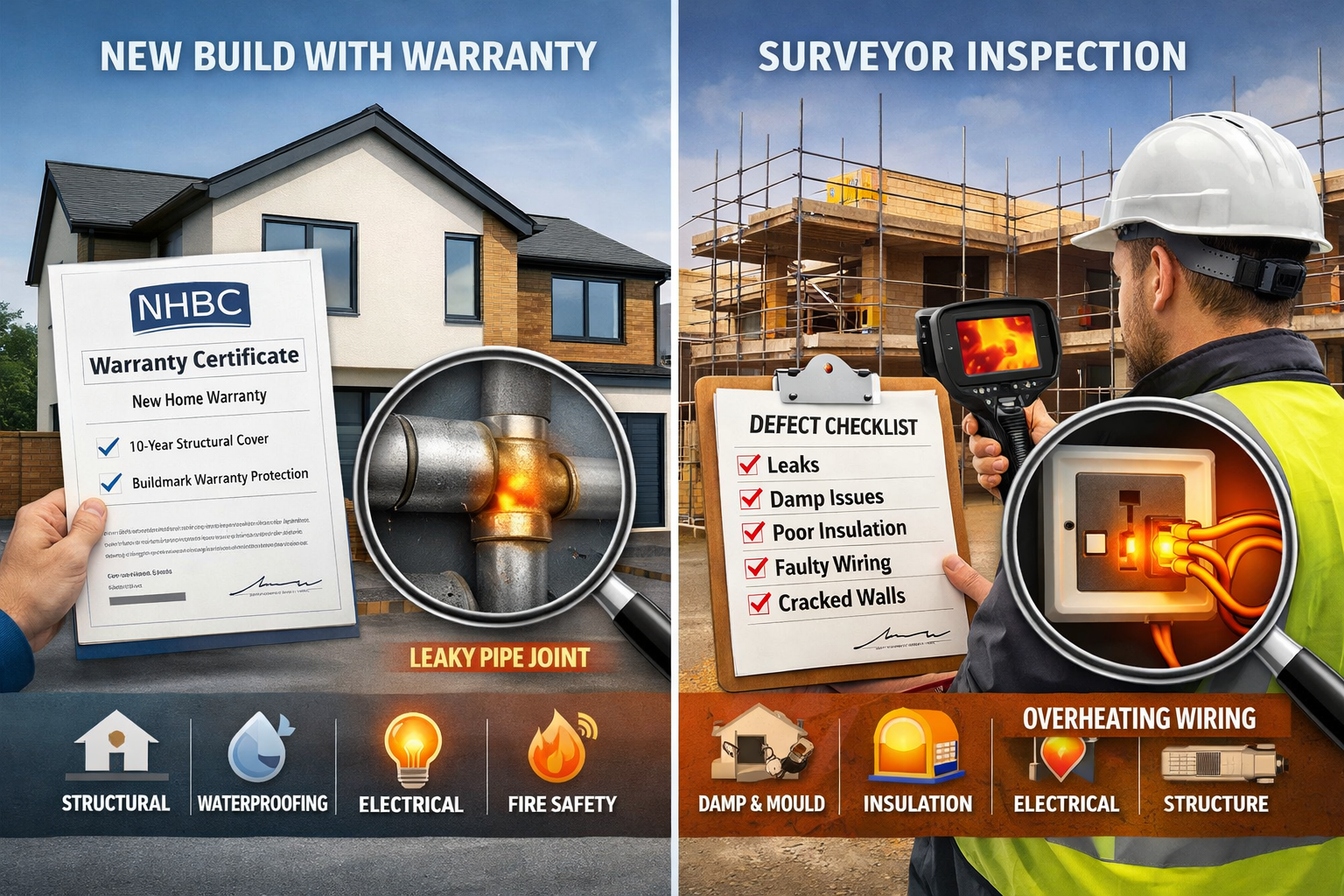
Most new build properties come with a 10-year structural warranty from providers like NHBC (National House Building Council), Premier Guarantee, or LABC Warranty. These warranties typically provide:
| Coverage Period | What’s Protected |
|---|---|
| Years 1-2 | Builder’s defects liability (developer responsible for fixes) |
| Years 3-10 | Major structural defects only (foundation issues, load-bearing walls) |
However, these warranties have significant limitations. They don’t cover cosmetic defects after the initial period, require you to prove defects existed at construction, and may involve lengthy dispute processes.
Do I Need a Survey on a New Build? The Critical Factors
Why Buyers Skip Surveys on New Builds
Many purchasers assume a survey is unnecessary when buying new construction. Common reasons include:
- False security from warranties: Believing the 10-year warranty covers all potential issues
- Mortgage lender requirements: Lenders typically don’t mandate surveys for new builds
- Developer reputation: Trusting established builders to deliver quality construction
- Cost considerations: Wanting to save money on what seems like an unnecessary expense
- Time pressures: Rushing to complete before incentives expire
The Reality of New Build Defects
Despite modern building standards, new build properties frequently have defects. Industry data suggests that the average new build has between 20-30 snagging issues, with some properties experiencing serious structural problems.
Common new build defects discovered in 2026 include:
- Poorly fitted doors and windows with gaps affecting insulation
- Plumbing issues including leaks and incorrect installations
- Electrical problems with sockets, switches, and consumer units
- Uneven flooring and poorly finished surfaces
- Inadequate ventilation leading to condensation and mould
- Drainage problems affecting foundations
- Incomplete or substandard insulation
“The assumption that new builds are defect-free is one of the costliest mistakes buyers make. We regularly find issues that developers should have addressed before handover, and early identification gives buyers significant negotiating power.” — Senior Building Surveyor, 2026
Types of Surveys Available for New Build Properties
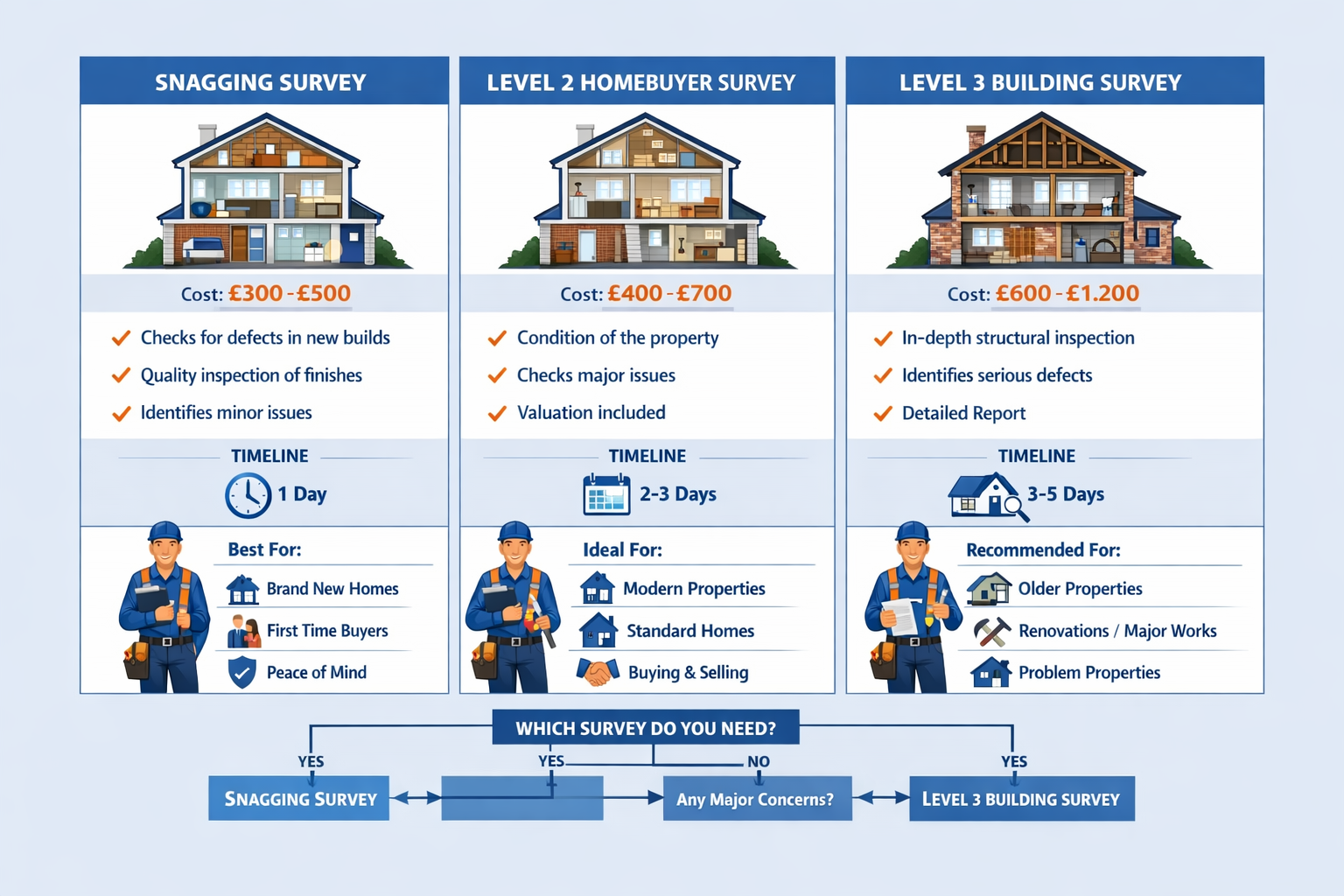
Snagging Surveys
A snagging survey is specifically designed for new build properties and focuses on identifying cosmetic defects and finishing issues before completion. This inspection typically costs between £300-£600 and examines:
- Paint and decoration quality
- Doors, windows, and fittings alignment
- Flooring installation and finish
- Kitchen and bathroom installations
- External finishes and landscaping
Snagging surveys provide a comprehensive list of minor defects that developers should rectify before you move in, giving you leverage during the final stages of purchase.
RICS Home Survey (Level 2)
For buyers wanting more comprehensive coverage, a Level 2 homebuyer survey examines the property’s condition more thoroughly. While typically used for older properties, this survey can identify:
- Structural movement or settlement issues
- Damp and moisture problems
- Roof condition and potential leaks
- Significant defects requiring urgent attention
A Level 2 survey for a new build typically costs £400-£800 depending on property size and location.
RICS Building Survey (Level 3)
The most comprehensive option is a Level 3 building survey, which provides an in-depth analysis of the property’s construction and condition. This detailed inspection costs between £600-£1,500 but offers:
- Complete structural assessment
- Detailed analysis of all accessible areas
- Identification of potential future problems
- Advice on repairs and ongoing maintenance
- Professional photographs and comprehensive reporting
For high-value new builds or properties with complex construction, this level of scrutiny can be invaluable. Understanding the difference between Level 2 and Level 3 surveys helps buyers make informed decisions.
Specialist Defect Surveys
When specific concerns arise, a specialist defect survey targets particular issues such as:
- Drainage and water ingress problems
- Structural cracks or movement
- Damp and condensation issues
- Electrical or plumbing installations
These focused inspections provide expert analysis of specific concerns at a lower cost than full building surveys.
When You Definitely Need a Survey on a New Build
High-Value Properties
For new builds exceeding £500,000, the investment in a comprehensive building survey is proportionally minimal. The financial risk of undiscovered defects increases with property value, making professional inspection essential.
Properties with Complex Construction
New builds featuring:
- Unusual architectural designs
- Multiple levels or extensions
- Basement conversions
- Complex roof structures
- Innovative building methods
These properties warrant thorough professional inspection regardless of warranty coverage.
Developer Track Record Concerns
Research your developer’s reputation before completion. If previous developments show patterns of:
- Numerous customer complaints
- Delayed snagging repairs
- Financial difficulties
- Building Control issues
A professional survey becomes even more critical to protect your investment.
Off-Plan Purchases
Properties purchased off-plan carry additional risks since you cannot inspect the finished product before committing. A pre-completion survey ensures the final build matches specifications and quality standards promised during the sales process.
The Financial Case: Survey Costs vs. Potential Savings
Understanding Survey Costs in 2026
Professional survey costs vary based on property value, location, and survey type:
| Survey Type | Typical Cost Range | Best For |
|---|---|---|
| Snagging Survey | £300-£600 | All new builds |
| Level 2 Survey | £400-£800 | Standard new builds |
| Level 3 Survey | £600-£1,500 | High-value or complex properties |
| Specialist Survey | £350-£900 | Specific concerns |
For detailed pricing information, review our guide on surveyor pricing and rates.
Potential Costs of Undiscovered Defects
Consider the financial impact of common new build defects:
- Drainage problems: £2,000-£8,000 to rectify
- Structural movement: £5,000-£25,000+ for underpinning
- Roof defects: £3,000-£15,000 for repairs
- Damp and mould remediation: £1,500-£8,000
- Electrical rewiring: £3,000-£10,000
- Plumbing system replacement: £2,500-£7,000
A £500 snagging survey that identifies issues before completion can save tens of thousands in post-purchase repairs and the stress of warranty claims.
The Warranty Claim Process Reality
Filing warranty claims involves:
- Documentation burden: Proving defects existed at construction
- Time delays: Claims can take 6-12 months to resolve
- Dispute resolution: Many claims are initially rejected
- Living with problems: Continuing to occupy a defective property during the process
- Excess payments: Some warranties require financial contributions
Early defect identification through surveys eliminates these challenges by ensuring developers fix issues before you complete.
What Surveys Don’t Cover (And Why That Matters)
Limitations of Standard Surveys
Even comprehensive building surveys have boundaries:
- Inaccessible areas: Surveyors cannot examine areas behind fixed units, under floors, or within walls
- Future performance: Surveys assess current condition, not long-term material performance
- Non-visible defects: Problems hidden within structures may not be apparent
- Planning compliance: Surveys don’t verify planning permissions or Building Regulations approval
Complementary Investigations
For complete peace of mind, consider additional specialist surveys:
- Drainage surveys: CCTV inspection of drainage systems
- Damp surveys: Moisture meter testing and thermal imaging
- Electrical testing: Professional electrical installation certification
- Energy efficiency assessment: Independent verification of EPC ratings
How to Choose the Right Survey for Your New Build
Assessing Your Risk Profile
Determine your survey needs by evaluating:
Property factors:
- Purchase price and financial exposure
- Construction complexity and design
- Developer reputation and track record
- Location and ground conditions
Personal factors:
- Risk tolerance and financial reserves
- Plans for immediate occupancy vs. investment
- Ability to manage post-purchase repairs
- Experience with property transactions
Questions to Ask Surveyors
When selecting a professional, ensure they:
✅ Hold RICS (Royal Institution of Chartered Surveyors) qualifications
✅ Have specific experience with new build properties
✅ Provide comprehensive written reports with photographs
✅ Offer clear explanations of findings and recommendations
✅ Carry professional indemnity insurance
✅ Can complete the survey within your transaction timeline
For those seeking RICS home surveys or RICS building surveys, verify credentials and experience levels.
Timing Your Survey
Optimal survey timing for new builds:
- Pre-exchange: Initial snagging survey when the property is substantially complete
- Pre-completion: Final inspection 1-2 weeks before completion date
- Post-completion: Follow-up inspection if significant issues were identified
This phased approach ensures developers address problems before you take ownership while maintaining transaction momentum.
The Survey Process: What to Expect
Booking and Preparation
The survey process typically follows these steps:
- Initial consultation: Discuss property details and concerns with the surveyor
- Quote and booking: Receive detailed quotation and schedule inspection date
- Access arrangements: Coordinate with developer or estate agent for property access
- Survey duration: Expect 2-4 hours for comprehensive inspections
- Report delivery: Receive detailed written report within 3-5 working days
Learn more about how long homebuyer surveys take to plan your transaction timeline.
Understanding Your Survey Report
Professional survey reports include:
- Executive summary: Overview of critical findings and recommendations
- Detailed observations: Room-by-room analysis with photographs
- Defect categorization: Issues ranked by urgency and severity
- Cost implications: Estimated repair costs where applicable
- Maintenance advice: Recommendations for ongoing property care
Acting on Survey Findings
Once you receive your report:
For minor defects:
- Compile a snagging list for the developer
- Request rectification before completion
- Obtain written confirmation of repair commitments
For significant issues:
- Renegotiate purchase price to reflect repair costs
- Request retention of funds until repairs are completed
- Consider withdrawing from the purchase if problems are severe
- Seek legal advice on warranty coverage and developer obligations
Alternative Protections and Considerations
Building Control Certification
All new builds must receive Building Control approval confirming compliance with Building Regulations. However, this certification:
- Focuses on regulatory compliance, not quality or finish
- Doesn’t guarantee absence of defects
- Provides limited recourse for buyers
- Doesn’t replace independent professional surveys
New Build Ombudsman Scheme
Since 2022, developers must register with the New Homes Quality Code and Ombudsman scheme, providing:
- Independent dispute resolution
- Compensation for serious defects
- Developer performance monitoring
- Consumer protection standards
While valuable, this scheme complements rather than replaces pre-purchase surveys.
Insurance-Backed Warranties
Understanding warranty limitations is crucial:
What warranties typically cover:
- Major structural defects (years 3-10)
- Subsidence and settlement issues
- Roof structure failures
- Load-bearing wall problems
What warranties typically exclude:
- Cosmetic defects after year 2
- Normal wear and tear
- Damage from alterations
- Issues caused by poor maintenance
- Defects you knew about at purchase
This final point emphasizes why pre-purchase surveys are essential—discovering defects after completion may void warranty coverage for those specific issues.
Regional Considerations for New Build Surveys
Location-Specific Factors
New build survey requirements vary by region due to:
- Ground conditions: Clay soils in some areas increase subsidence risk
- Local building practices: Regional construction methods and materials
- Weather exposure: Coastal or elevated properties face additional challenges
- Development density: Large-scale developments may have systemic issues
Whether you’re purchasing in London, Essex, Hampshire, or Hertfordshire, local surveyor knowledge proves invaluable.
Finding Local Expertise
Select surveyors with specific regional experience who understand:
- Local developer reputations and track records
- Area-specific construction challenges
- Regional property market conditions
- Local authority Building Control standards
Making Your Decision: Do I Need a Survey on a New Build?
The Risk-Reward Analysis
Arguments for getting a survey:
✅ Identifies defects before you’re legally committed
✅ Provides negotiating leverage with developers
✅ Costs minimal compared to potential repair expenses
✅ Offers peace of mind and professional validation
✅ Protects your largest financial investment
✅ Creates documented evidence for future warranty claims
Arguments against getting a survey:
❌ Additional upfront cost during expensive purchase
❌ Potential transaction delays
❌ May identify issues that complicate completion
❌ Warranty coverage provides some protection
The 2026 Perspective
In 2026, the property market continues evolving with increased buyer awareness and consumer protection. However, the fundamental question “do I need a survey on a new build?” has a clear answer for most buyers: yes.
The combination of:
- Persistent quality issues in new construction
- Warranty limitations and exclusions
- Significant financial stakes
- Minimal survey costs relative to property values
- Enhanced surveyor capabilities and technology
Makes professional inspection a prudent investment rather than an optional extra.
Conclusion: Protecting Your New Build Investment
The decision about whether to commission a survey on a new build property shouldn’t be taken lightly. While warranties provide important protection against major structural defects, they don’t eliminate the need for independent professional inspection before you complete your purchase.
Key action steps for new build buyers in 2026:
- Always commission at least a snagging survey (£300-£600) to identify cosmetic and minor defects before completion
- Consider a Level 2 or Level 3 survey for properties over £400,000 or those with complex construction
- Research your developer thoroughly and adjust survey level based on their track record
- Budget for surveys early in your purchase planning—they’re not optional extras but essential due diligence
- Choose RICS-qualified surveyors with specific new build experience in your region
- Act decisively on survey findings by negotiating repairs, price reductions, or completion delays
- Maintain survey reports as evidence for future warranty claims or resale purposes
The relatively small investment in professional surveys—typically 0.1-0.3% of purchase price—provides disproportionate value through defect identification, negotiating power, and long-term peace of mind. Don’t let the excitement of buying a brand-new home cloud your judgment about proper due diligence.
For comprehensive guidance on choosing the right property survey for your circumstances, consult with qualified professionals who can assess your specific situation and provide tailored recommendations.
Your new build should represent the beginning of a wonderful chapter in your life, not the start of costly repairs and warranty disputes. Professional surveys ensure you start that journey with confidence and complete knowledge of your property’s true condition.
References
[1] Understanding The 2026 Alta Nsps Land Survey Standards Whats New And Why It Matters – https://millmanland.com/company-news/understanding-the-2026-alta-nsps-land-survey-standards-whats-new-and-why-it-matters/
[2] New 2026 Minimum Standard Detail 3684174 – https://www.jdsupra.com/legalnews/new-2026-minimum-standard-detail-3684174/
[3] 20251125 Key Updates To The 2026 Altansps Land Title Survey Standards – https://www.alta.org/news-and-publications/news/20251125-Key-Updates-to-the-2026-ALTANSPS-Land-Title-Survey-Standards
[4] Blog Land Survey Costs 2026 – https://www.thelandgeek.com/blog-land-survey-costs-2026/
[5] What The 2026 Altansps Updates Mean For Cre Professionals – https://www.globest.com/2025/12/22/what-the-2026-altansps-updates-mean-for-cre-professionals/
[6] 2026 Alta Nsps Land Title Survey Standards – https://www.partneresi.com/resources/references/standards-regulations/2026-alta-nsps-land-title-survey-standards/
[7] Alta Standards Updated – https://cretelligent.com/alta-standards-updated/
[8] Altanspsstandards – https://nsps.us.com/page/ALTANSPSStandards