

The London property market in 2026 presents a unique paradox: while buyers enjoy the strongest negotiating position in a decade, uncertainty about property values and structural conditions continues to hold many back from committing. Valuing Stabilising London Flats in 2026: Building Survey Insights for Buyer Recovery Confidence has become essential as first-time buyers and seasoned investors navigate a market where prices have corrected over 5% from their 2022 peak, yet opportunities abound for those armed with proper due diligence.
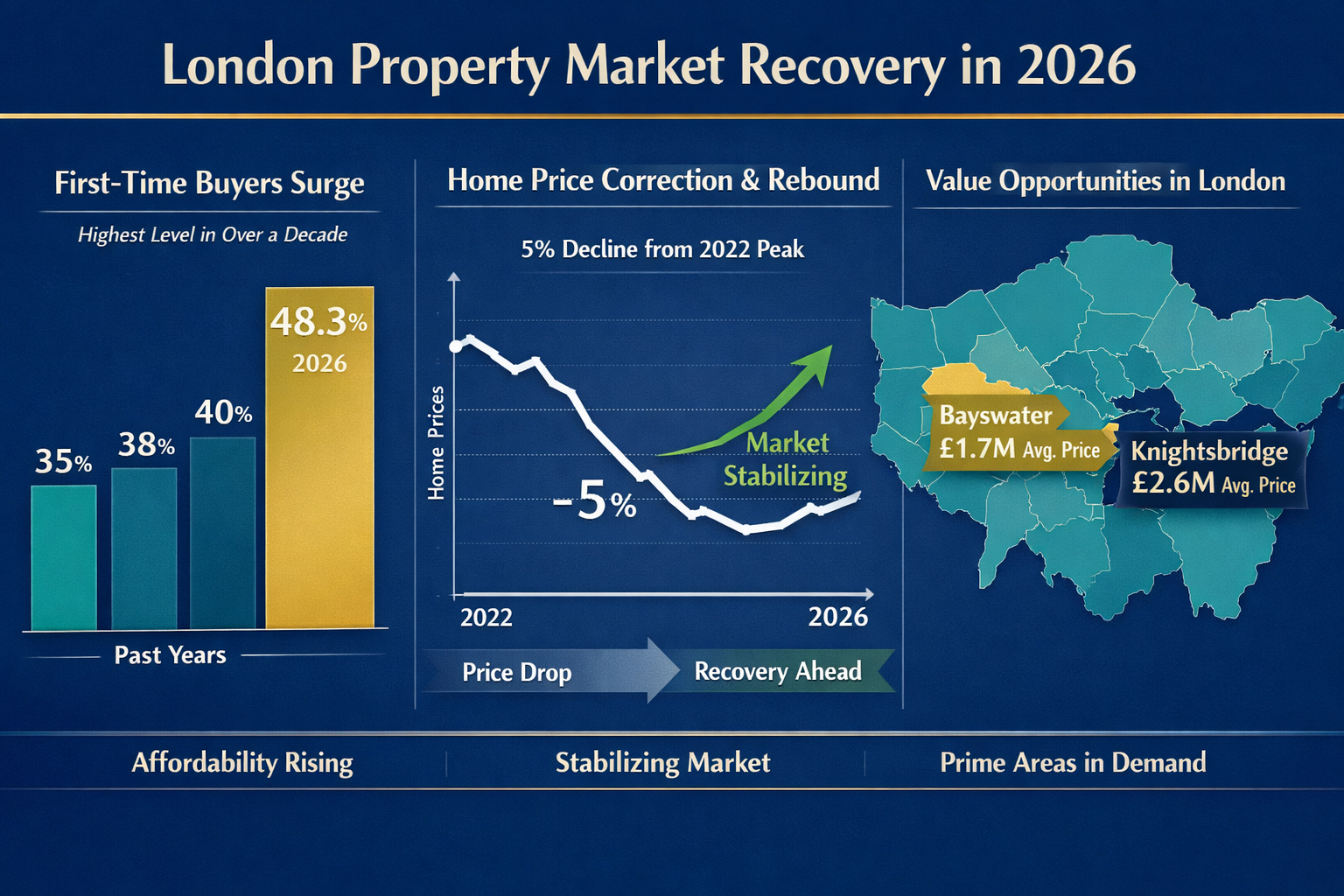
With first-time buyers now representing a record 48.3% of London sales[1], and stock levels surging 8.3% compared to early 2025[1], the conditions for market recovery are aligning. However, the key to capitalising on this buyers' market lies not just in identifying affordable flats, but in understanding their true condition and value through comprehensive building surveys.
Key Takeaways
- 🏘️ Record first-time buyer activity at 48.3% of London sales signals genuine market recovery, but buyers need professional surveys to validate value in a correcting market
- 📊 Prices remain 5% below 2022 peaks with conservative 1-3% growth forecast for 2026, creating opportunities for buyers who can accurately assess property condition
- 🔍 Building surveys reveal hidden costs that impact true property value, essential for negotiating in a market with rising stock and widespread discounting
- 💰 Strategic location choices like Bayswater (£1.7m average) versus traditional prime areas offer value, but require expert structural assessment to avoid costly surprises
- ✅ Professional survey insights restore buyer confidence by quantifying repair costs, identifying defects, and supporting evidence-based negotiations in stabilising market conditions
Understanding the 2026 London Flat Market Recovery
The Shift in Market Dynamics
The London property landscape has undergone a fundamental transformation since the turbulent period of 2022-2024. Industry experts now describe 2026 as offering "the best buyers' market we have seen in ten years"[1], characterised by increased stock availability, mounting sales instructions, and widespread price discounting that gives purchasers unprecedented negotiating leverage.
This shift represents more than just a temporary market correction. Transaction volumes tell a sobering story: January 2026 recorded 30% fewer transactions compared to January 2025, and 20% fewer than the 2017-2019 pre-pandemic average[1]. While sentiment is improving and enquiries are rising, actual completions remain subdued, indicating that buyers are proceeding with heightened caution.
First-Time Buyers Leading the Charge
The demographic composition of London buyers has shifted dramatically. First-time buyers now account for nearly half of all transactions—a figure that has more than doubled from just 22.4% a decade ago, representing the highest first-time buyer share in the entire country[1]. These buyers typically operate with budgets between £1.5m to £2m and prioritise family homes in areas offering excellent schools and transport connections[1].
This surge in novice buyers creates both opportunity and risk. Many lack the experience to identify structural issues, building defects, or maintenance liabilities that could significantly impact their investment. Professional RICS home surveys have become essential tools for this demographic, providing the technical expertise needed to make informed decisions.
Price Corrections Creating Value Opportunities
London property prices have undergone a meaningful correction, now sitting over 5% below their 2022 peak[2]. This adjustment, combined with wage growth outpacing house price increases, has created more realistic entry points for buyers across multiple price bands. However, this correction has not been uniform across all areas or property types.
Prime market examples illustrate the variation:
| Location | Average Price | Change Since 2022 |
|---|---|---|
| Knightsbridge | £2.6m | -15% ⬇️ |
| Kensington | £1.8m | -12% ⬇️ |
| Bayswater | £1.7m | +21% (5-year) ⬆️ |
These disparities create opportunities for value-conscious buyers, particularly in areas like Bayswater where major developments such as Park Modern and The Whiteley London are driving neighbourhood transformation[1]. However, identifying genuine value requires understanding not just market pricing, but the actual physical condition and long-term maintenance requirements of specific properties.
Valuing Stabilising London Flats in 2026: The Critical Role of Building Surveys
Why Traditional Valuations Fall Short in Recovering Markets
In a stabilising market characterised by price uncertainty and variable property conditions, traditional mortgage valuations provide insufficient information for buyers seeking genuine value. Mortgage valuations serve the lender's interests—confirming that a property provides adequate security for the loan amount—but they rarely uncover the structural defects, maintenance issues, or hidden costs that impact true property value.
Building surveys bridge this critical information gap by providing comprehensive assessments of property condition, identifying defects ranging from minor maintenance needs to major structural concerns. For buyers navigating the 2026 London market, where negotiating power has shifted decisively in their favour, survey findings become powerful tools for price renegotiation and informed decision-making.
Chartered surveyors across London report increasing demand for detailed property assessments as buyers recognise that apparent bargains may conceal expensive repair obligations. In a market where sellers are motivated and stock levels are high, survey findings can justify significant price reductions or enable buyers to walk away from properties with excessive defect burdens.
Types of Building Surveys for London Flats
Different survey levels provide varying degrees of detail, and selecting the appropriate survey type depends on property age, construction type, apparent condition, and buyer risk tolerance.
Level 2 Homebuyer Surveys represent the most common choice for standard flats in reasonable condition. These Level 2 Homebuyer surveys provide a detailed assessment of property condition using a traffic light rating system (Condition Ratings 1-3), highlighting defects and maintenance issues without the extensive invasive investigation of more comprehensive surveys.
Level 3 Building Surveys (formerly Full Structural Surveys) offer the most thorough investigation available, particularly valuable for older conversion flats, properties with visible defects, or buildings constructed using non-standard methods. These surveys include detailed analysis of building fabric, structural elements, services, and grounds, providing comprehensive repair cost estimates and maintenance recommendations. Understanding the difference between Level 2 and Level 3 surveys helps buyers select the appropriate level of investigation.
Specialist Defect Surveys address specific concerns identified during initial inspections or viewings. These focused investigations might examine damp penetration, structural movement, roof condition, or other particular issues requiring expert assessment. RICS specialist defect surveys provide targeted technical analysis when specific concerns require detailed investigation.
How Survey Insights Influence Flat Valuations
Building survey findings directly impact property valuation through multiple mechanisms:
1. Repair Cost Quantification 📊
Surveys identify defects and estimate remediation costs, enabling buyers to adjust their maximum purchase price accordingly. A flat with £50,000 of necessary repairs should logically command a lower price than an identical property in excellent condition.
2. Negotiation Leverage 💪
In the current buyers' market, survey findings provide objective evidence supporting price renegotiation. Sellers facing motivated timelines and limited alternative buyers often accept reduced offers when confronted with documented defect evidence.
3. Risk Assessment ⚠️
Surveys reveal potential future liabilities—aging building systems, deferred maintenance, or structural concerns—that impact long-term ownership costs and resale value. This information enables buyers to make risk-adjusted valuation decisions.
4. Insurance and Mortgage Implications 🏦
Certain defects may affect insurance availability or mortgage lending decisions. Structural movement, subsidence, or non-standard construction identified during surveys can impact both insurability and loan-to-value ratios, directly affecting property value.
Building Survey Insights for Buyer Recovery Confidence Across London Locations
Regional Variations in London Flat Conditions
London's diverse building stock varies significantly by location, age, and construction method. Understanding regional characteristics helps buyers target appropriate areas and anticipate common defect patterns.
Central London Conversions
Areas like West London and North West London feature numerous Victorian and Edwardian conversions. These properties often exhibit characteristic issues including:
- Damp penetration from failed damp-proof courses
- Structural movement in load-bearing walls
- Inadequate sound insulation between converted units
- Aging electrical and plumbing systems requiring replacement
- Roof defects affecting top-floor flats
- Shared building element maintenance disputes
Modern Purpose-Built Developments
Newer developments in areas like East London and regeneration zones present different challenges:
- Cladding and fire safety concerns requiring remediation
- Building defects covered by diminishing warranty periods
- Service charge escalation risks
- Developer insolvency affecting completion of common areas
- Modern construction defects including water ingress and thermal bridging
Location-Specific Survey Priorities
Different London areas require tailored survey approaches based on predominant building types and common defect patterns.
North London Terraced Conversions
Properties in North London often require particular attention to:
- Structural alterations during conversion
- Party wall conditions and shared structural elements
- Roof valley gutters prone to leaking
- Original Victorian drainage systems
- Subsidence risk in clay soil areas
Premium Developments in Prime Areas
High-value flats in established prime locations demand scrutiny of:
- Building management quality and reserve fund adequacy
- Historic maintenance records and major works schedules
- Lease terms and ground rent provisions
- Planning restrictions affecting future alterations
- Premium finish quality and specialist system maintenance requirements
Using Survey Data to Identify Genuine Value
In a market where prices are stabilising but remain below peak levels, survey insights help distinguish genuine value opportunities from properties with hidden liabilities.
Value Indicators Revealed by Surveys:
✅ Well-maintained building fabric with evidence of proactive maintenance
✅ Recent major works completion (roof replacement, repointing, window renewal)
✅ Adequate service charge reserves for future maintenance
✅ Absence of significant structural defects requiring immediate remediation
✅ Modern building systems with remaining warranty coverage
✅ Compliant fire safety measures avoiding future remediation costs
Warning Signs Requiring Caution:
❌ Deferred maintenance indicating inadequate building management
❌ Active structural movement suggesting ongoing foundation issues
❌ Damp penetration from multiple sources requiring extensive remediation
❌ Inadequate service charge reserves with major works imminent
❌ Fire safety deficiencies potentially requiring expensive cladding replacement
❌ Non-standard construction affecting mortgage availability and resale
Market Forecasts and Survey-Informed Investment Decisions
Conservative Growth Predictions for 2026
Multiple authoritative forecasters predict modest price growth for London in 2026, with consensus clustering around minimal appreciation:
- Savills: 2% growth[3]
- Halifax: 1-3% growth[3]
- Zoopla: 1.5% growth[3]
These conservative projections reflect continued affordability constraints, elevated interest rates, and economic uncertainty. However, the prime markets show more optimistic longer-term trajectories, with Savills forecasting 1.5% growth in prime southern markets for 2026, accelerating to 17.6% cumulative growth by 2030[1], partly driven by projected 22% wage growth between 2025-2029[1].
In this environment of modest near-term appreciation, capital preservation becomes as important as capital growth. Building surveys protect buyers from purchasing properties with hidden defects that could erode value faster than market appreciation can offset.
Pent-Up Demand and Transaction Recovery
Despite subdued transaction volumes, industry observers report "a noticeable uptick in offers and enquiries" following recent political clarity, as "many agents observe growing buyer confidence"[2]. This pent-up demand, combined with improving affordability metrics, suggests that transaction volumes may recover through 2026 as buyer confidence strengthens.
Building surveys accelerate this confidence recovery by providing the technical certainty that cautious buyers require before committing to significant purchases. As more buyers obtain comprehensive survey information and successfully negotiate based on findings, market confidence spreads through peer networks and professional recommendations.
Strategic Timing Considerations
The current market environment creates a strategic window for well-informed buyers:
Current Advantages:
- Maximum negotiating leverage in a decade
- Rising stock providing extensive choice
- Prices stabilised below peak levels
- Motivated sellers accepting reasonable offers
- Professional survey costs justified by negotiation savings
Emerging Risks:
- Pent-up demand may reduce buyer leverage as confidence returns
- Interest rate changes affecting affordability
- Stock levels potentially declining as market strengthens
- Price growth resuming as transaction volumes recover
Buyers who combine market timing with thorough survey due diligence position themselves to capitalise on current opportunities while protecting against hidden liabilities that could undermine investment returns.
Practical Steps: Leveraging Building Surveys for Confident Flat Purchases
Selecting the Right Survey Level
Choosing the appropriate survey type requires honest assessment of property characteristics and personal risk tolerance:
Opt for Level 2 Homebuyer Survey when:
- Property is less than 50 years old
- Construction appears standard and conventional
- No obvious defects visible during viewing
- Property appears well-maintained
- Budget constraints limit survey expenditure
Choose Level 3 Building Survey when:
- Property exceeds 50 years old
- Visible defects or concerns noted during viewing
- Conversion or non-standard construction
- Planning significant renovations
- Maximum information required for investment decision
- Property represents substantial financial commitment
Commission Specialist Surveys when:
- Specific concerns require detailed investigation
- Damp surveys needed for visible moisture issues
- Structural surveys required for movement evidence
- Building systems require expert assessment
- Compliance verification needed for regulations
Interpreting Survey Findings for Negotiation
Survey reports contain technical information that requires translation into negotiation strategy:
Priority 1 Defects (Urgent/Serious):
These require immediate attention and justify substantial price reduction or seller remediation before completion. Examples include active structural movement, significant damp penetration, or dangerous electrical installations.
Priority 2 Defects (Important but not urgent):
These should be addressed within 1-2 years and support moderate price negotiation. Examples include aging boilers, deteriorating roof coverings, or inadequate insulation.
Priority 3 Defects (Minor/Maintenance):
These represent routine maintenance items that may justify modest price adjustment or can be addressed through normal ownership maintenance.
Negotiation Strategies:
💡 Request seller remediation of Priority 1 items before completion
💡 Seek price reduction equivalent to repair costs plus 10-20% contingency
💡 Obtain multiple contractor quotes to substantiate repair cost estimates
💡 Consider walking away if defect burden exceeds acceptable risk
💡 Request retention of funds in escrow pending post-completion repairs
Building Long-Term Value Through Survey Insights
Survey reports provide value beyond the purchase transaction:
Maintenance Planning 📋
Survey recommendations create a prioritised maintenance schedule, enabling budgeting for future works and preventing minor issues from escalating into major defects.
Renovation Guidance 🔨
Surveys identify structural constraints and opportunities, informing renovation planning and preventing costly mistakes during improvement works.
Resale Documentation 📄
Comprehensive survey records demonstrate responsible ownership and provide transparency to future buyers, potentially supporting premium resale pricing.
Insurance Claims 🛡️
Pre-purchase survey documentation establishes baseline property condition, supporting insurance claims for subsequent damage events.
Conclusion
Valuing Stabilising London Flats in 2026: Building Survey Insights for Buyer Recovery Confidence represents more than a technical process—it embodies the strategic approach required to capitalise on the strongest buyers' market in a decade while protecting against hidden risks that could undermine investment returns.
With first-time buyers driving nearly half of all London transactions, prices stabilised 5% below peak levels, and stock availability at multi-year highs, the conditions for confident purchasing have aligned. However, the 30% reduction in transaction volumes compared to the previous year demonstrates that buyers remain cautious, requiring professional validation before committing to significant purchases.
Building surveys provide this essential validation, transforming abstract market opportunities into concrete investment decisions supported by technical evidence. Whether purchasing a Victorian conversion in North West London, a modern development in East London, or a prime flat in established areas, comprehensive survey insights enable buyers to negotiate confidently, plan maintenance strategically, and build long-term value.
Take Action: Your Next Steps
- Research target areas using market data to identify value opportunities aligned with budget and requirements
- Engage qualified surveyors early in the purchase process to understand survey options and costs
- Commission appropriate surveys matching property characteristics and risk tolerance
- Analyse findings strategically translating technical information into negotiation leverage
- Negotiate confidently using survey evidence to achieve fair pricing reflecting true property condition
- Plan proactively implementing survey recommendations to protect and enhance property value
The London market recovery of 2026 offers genuine opportunities for informed buyers who combine market knowledge with technical due diligence. Professional building surveys transform market uncertainty into buyer confidence, enabling strategic decisions that protect capital and build long-term wealth in one of the world's most dynamic property markets.
For expert survey services across London and the Home Counties, contact qualified chartered surveyors who understand both market dynamics and building pathology, ensuring your property investment decisions rest on solid technical foundations.
References

[1] March 2026 – https://www.black-brick.com/insights/market-update/march-2026/
[2] What To Expect From The London Property Market In 2026 – https://www.winkworth.co.uk/articles/what-to-expect-from-the-london-property-market-in-2026
[3] House Prices – https://moneyweek.com/investments/house-prices/house-prices