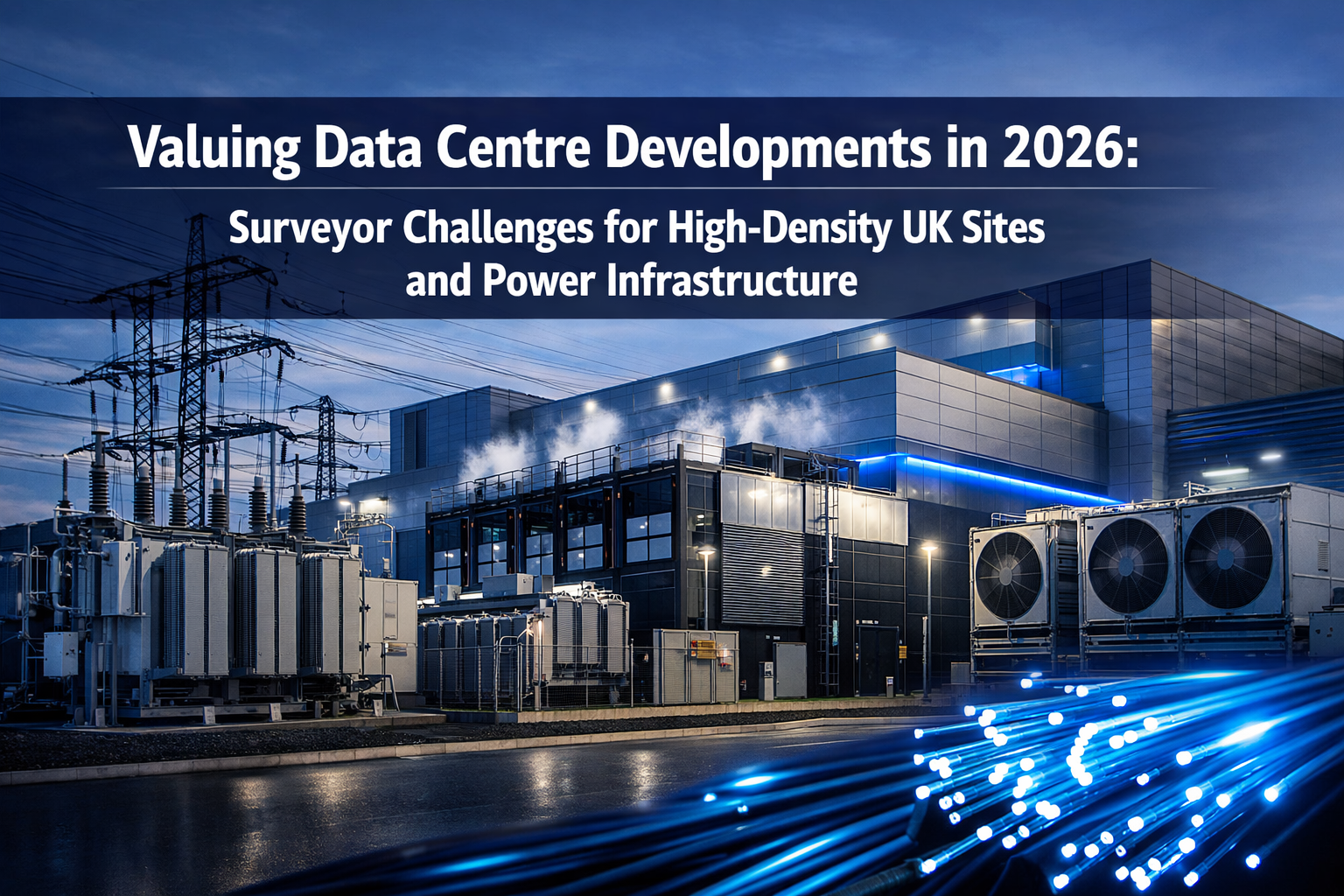

The UK data centre market is experiencing unprecedented growth, driven by artificial intelligence adoption and exponential cloud computing expansion. As demand surges, chartered surveyors face complex new challenges when valuing these specialized facilities. Unlike traditional commercial properties, data centres require sophisticated assessment methodologies that account for power infrastructure, cooling systems, and technological obsolescence—factors that can make or break a multimillion-pound valuation.
Valuing Data Centre Developments in 2026: Surveyor Challenges for High-Density UK Sites and Power Infrastructure has become a critical skill as the sector confronts a significant supply-demand mismatch. With UK data centre demand expected to triple by 2030 but capacity increases projected at only 15% by 2027, accurate valuations have never been more crucial for investors, developers, and financial institutions.[1]
Key Takeaways
- 🔌 Power infrastructure capacity is now the primary value driver for data centre sites, often outweighing traditional location factors
- 📊 High-density facilities require specialized valuation approaches that account for cooling systems, backup power, and technological adaptability
- ⚡ Grid connection availability creates significant valuation premiums, with sites offering immediate high-capacity power commanding substantial price increases
- 🏗️ Construction risk factors including supply chain constraints and skills shortages directly impact development appraisals and project viability
- 🔄 Technological obsolescence presents unique depreciation challenges requiring future-proofing assessments in valuation methodologies

Understanding the 2026 UK Data Centre Market Landscape
Explosive Demand Growth and Supply Constraints
The UK government's National Data Strategy predicts that data usage will double by 2026, creating enormous pressure on existing infrastructure.[1] This growth trajectory positions the UK as one of the top global data centre markets, surpassed only by the USA in total number of facilities and by Germany in select categories.
However, this demand boom faces significant supply-side challenges:
- Capacity gap: Demand expected to triple by 2030 versus only 15% capacity increase by 2027[1]
- Regional imbalance: Traditional London dominance shifting toward regional diversification
- Infrastructure bottlenecks: Limited grid capacity constraining new developments
- Skilled labour shortage: 56% of UK colleges reporting waiting lists for construction courses[5]
The AI and Cloud Computing Revolution
Artificial intelligence workloads are fundamentally changing data centre requirements. Modern AI processing demands:
- Higher power density per rack (15-30 kW versus traditional 5-8 kW)
- Advanced cooling solutions including liquid cooling systems
- Redundant power infrastructure with multiple grid connections
- Low-latency network connectivity requiring strategic geographic positioning
These technical requirements create new valuation complexities that traditional commercial property surveyors must master to provide accurate assessments.
Key Valuation Challenges for High-Density UK Data Centre Sites
Power Infrastructure as Primary Value Driver
In 2026, electrical capacity has overtaken location as the dominant value factor for data centre sites. A facility with immediate access to 20+ megawatts of grid power can command valuation premiums of 40-60% over comparable sites requiring infrastructure upgrades.
Critical power considerations include:
| Power Factor | Valuation Impact | Assessment Complexity |
|---|---|---|
| Grid connection capacity | Very High (40-60% premium) | Requires utility coordination |
| Backup generator systems | High (15-25% premium) | Fuel storage and runtime analysis |
| Uninterruptible Power Supply (UPS) | Medium (10-15% premium) | Technology lifespan assessment |
| Power distribution redundancy | High (20-30% premium) | N+1 or 2N configuration analysis |
| Renewable energy integration | Medium (5-15% premium) | Sustainability certification review |
Surveyors must conduct thorough due diligence on electrical infrastructure, including reviewing utility agreements, transformer capacity, substation proximity, and upgrade timelines. Even minor delays in power availability can result in cost overruns exceeding millions of pounds, directly affecting project valuations.[1]
Cooling System Sophistication and Efficiency
Modern high-density data centres generate enormous heat loads requiring sophisticated cooling infrastructure. The cooling system represents both a significant capital investment and ongoing operational expense that directly impacts property value.
Cooling valuation considerations:
- Traditional air cooling: Lower capital cost but limited density support (5-8 kW/rack)
- In-row cooling: Medium efficiency for moderate density (10-15 kW/rack)
- Liquid cooling: Higher capital cost but supports extreme density (20-30 kW/rack)
- Immersion cooling: Emerging technology with uncertain long-term value
Experienced chartered surveyors in London recognize that cooling efficiency directly correlates with operational profitability. Power Usage Effectiveness (PUE) ratios below 1.3 command premium valuations, while facilities exceeding 1.6 face depreciation concerns.
Technological Obsolescence Risk Management
Data centres face unique obsolescence challenges that traditional commercial properties don't encounter. Technology changes can render facilities outdated before construction completion or well before their anticipated economic lifespan.[1]
Surveyors must evaluate:
- Adaptability to emerging technologies (quantum computing, edge computing)
- Scalability of power and cooling infrastructure
- Network connectivity future-proofing (fiber capacity, carrier diversity)
- Physical security systems and their upgrade potential
- Building management systems (BMS) integration and modernization capability
The rapid pace of technological change requires valuation models incorporating higher depreciation rates than conventional commercial properties, typically 3-5% annually versus 1-2% for traditional offices or warehouses.

Specialized Surveyor Approaches for Data Centre Valuation in 2026
The Income Capitalization Method Adapted for Data Centres
While the income approach remains fundamental to commercial valuation, data centres require significant modifications to traditional methodologies.
Key adaptations include:
- Power-based rental calculations: Pricing per kW of IT load rather than per square foot
- Uptime guarantees: Tier III or IV certification affecting achievable rents
- Contract length premiums: Long-term colocation agreements (10+ years) providing stable income
- Operational cost pass-throughs: Detailed analysis of utility escalation clauses
- Service level agreement (SLA) impacts: Downtime penalties affecting net operating income
Capitalization rates for premium data centres in 2026 typically range from 4.5% to 6.5%, reflecting the specialized nature and higher risk profile compared to conventional commercial properties at 6-8%.
Cost Approach Complexities
The cost approach presents particular challenges for data centre valuations due to specialized equipment and rapid technological change.
Replacement cost considerations:
- Building shell: Relatively straightforward using standard construction costs
- Electrical infrastructure: Highly specialized with significant cost variability (£1,500-3,000 per kW)
- Cooling systems: Technology-dependent with 5-10 year obsolescence cycles
- Network infrastructure: Fiber, switches, and connectivity equipment
- Security and monitoring: Physical and cybersecurity systems
- Commissioning and testing: Often 10-15% of total construction cost
Supply chain bottlenecks in 2026 create significant cost inflation risks. Specialized components like high-capacity transformers, industrial chillers, and backup generators face lead times of 12-18 months, with demand far outstripping supply.[1]
Surveyors must account for functional obsolescence when older facilities cannot support modern power densities or lack adequate cooling for AI workloads, potentially reducing value by 30-50% despite recent construction.
Comparable Sales Analysis Limitations
The scarcity of truly comparable transactions makes the sales comparison approach particularly challenging for data centre valuations. Each facility presents unique characteristics:
- Power capacity and redundancy configuration
- Cooling technology and efficiency
- Geographic location and connectivity
- Tenant mix and contract terms
- Certification levels (Tier I-IV, LEED, ISO standards)
When comparable sales exist, adjustments must account for:
- Power infrastructure differences (£500-1,500 per kW variance)
- Location factors (London premium versus regional sites)
- Technology generation gaps (2-3 year differences creating 15-25% value disparities)
- Occupancy levels and tenant creditworthiness
Experienced surveyors increasingly rely on hybrid valuation approaches, combining elements of income, cost, and comparable sales methodologies while applying professional judgment to weight each method appropriately.
Regional Considerations and Site Selection
The 2026 market shows significant regional diversification away from traditional London dominance. This shift creates new valuation considerations:
London and Southeast advantages:
- Proximity to financial services and tech sectors
- Established fiber infrastructure and carrier hotels
- Higher rental rates (£150-250 per kW annually)
- Premium valuations despite higher land costs
Regional market opportunities:
- Lower land and construction costs (30-40% savings)
- Available grid capacity in strategic locations
- Government incentives for regional development
- Growing edge computing demand
Chartered surveyors in Surrey, Oxfordshire, and other regions must understand local power infrastructure capabilities and connectivity options when assessing site viability and value.

Construction and Development Risk Factors Affecting Valuations
Supply Chain Constraints and Cost Escalation
The specialized nature of data centre construction creates severe supply chain vulnerabilities that directly impact development appraisals and valuations.[1]
Critical bottlenecks include:
- Electrical equipment: Transformers, switchgear, UPS systems (12-18 month lead times)
- Cooling infrastructure: Industrial chillers, computer room air handlers (8-12 months)
- Backup power: Diesel generators, fuel storage systems (6-10 months)
- Network equipment: High-capacity switches, fiber optic systems (4-8 months)
These constraints force developers to order long-lead items before planning approval, creating significant financial risk if projects face delays or cancellation. Surveyors must assess:
- Deposit commitments and cancellation penalties
- Price escalation clauses in equipment contracts
- Alternative supplier availability and costs
- Technology lock-in risks from early procurement
Scope Change Management and Contract Disputes
Data centre projects experience frequent scope changes as technology evolves during the 18-24 month construction period. These changes represent major valuation risks.[1]
Common scope modifications include:
- Power density increases: Client demands for higher kW per rack capacity
- Cooling system upgrades: Migration from air to liquid cooling mid-project
- Security enhancements: Additional physical and cyber security measures
- Redundancy improvements: Upgrading from N+1 to 2N configurations
Poor contract administration and unclear change order provisions are leading causes of construction disputes, potentially adding 15-25% to project costs and delaying revenue generation by 6-12 months.
When conducting development appraisals, expert witness surveyors must carefully evaluate:
- Contract clarity on scope change procedures
- Contingency allowances (typically 15-20% for data centres versus 5-10% for conventional projects)
- Delay liquidated damages provisions
- Professional indemnity insurance adequacy
Skills Shortage and Labour Cost Inflation
The November 2025 survey revealing 56% of UK colleges with waiting lists for construction courses signals serious labour constraints affecting project delivery and costs.[5]
Specialized skills in short supply:
- Electrical engineers with high-voltage experience
- HVAC technicians certified for industrial cooling systems
- Network infrastructure specialists
- Commissioning engineers for complex integrated systems
- Project managers with data centre expertise
This shortage drives wage inflation of 8-12% annually in specialized trades, significantly exceeding general construction inflation of 3-5%. Development appraisals must incorporate realistic labour cost escalation assumptions to avoid undervaluing project costs.
Insurance and Professional Liability Considerations
Emerging technologies and high project values create insurance challenges that affect risk allocation and valuation.[1]
Key insurance issues:
- Professional indemnity coverage gaps: Potential losses exceeding available insurance limits
- Technology performance risks: Unproven cooling or power systems
- Cyber liability: Data breaches during construction or commissioning
- Business interruption: Extended delays affecting client revenue
These gaps often force clients to assume greater risk, requiring higher return expectations and affecting capitalization rates used in valuations. Surveyors must carefully review insurance provisions and their adequacy when assessing project viability.
Party Wall and Adjacent Property Considerations
Party Wall Surveys for Data Centre Expansions
Urban data centre developments frequently involve party wall matters requiring specialized surveying expertise. The confined nature of city sites means expansions often impact adjacent properties.[3][4]
Critical party wall considerations:
- Structural loading: Heavy equipment (generators, chillers, UPS systems) affecting shared walls
- Vibration impacts: Continuous operation of mechanical systems
- Excavation requirements: Deep foundations for equipment or underground power feeds
- Access rights: Installation and maintenance of external cooling or power equipment
RICS compliance frameworks provide essential guidance for managing these complex situations. Documented case studies from 2026 projects demonstrate the importance of early party wall engagement to avoid costly delays.[4]
Surveyors must account for:
- Party wall surveyor fees (£3,000-8,000 per affected property)
- Potential compensation claims from adjacent owners
- Schedule delays from party wall disputes (3-6 months typical)
- Design modifications to minimize party wall impacts
Neighboring Property Impact Assessments
Beyond formal party wall requirements, data centres create unique impacts on surrounding properties:
Noise and vibration:
- Continuous operation of cooling equipment and generators
- Potential value impact on residential neighbors (5-15% depreciation)
- Acoustic mitigation costs (£150,000-500,000 for major facilities)
Visual impact:
- Industrial appearance in mixed-use areas
- Security fencing and surveillance systems
- Cooling tower visibility
Traffic and logistics:
- Delivery of large equipment during construction
- Ongoing maintenance vehicle access
- Emergency generator testing schedules
Comprehensive impact assessments help chartered surveyors identify potential objections and quantify mitigation costs affecting overall project viability.
Future-Proofing Data Centre Valuations: RICS Best Practices
Sustainability and ESG Integration
Environmental, Social, and Governance (ESG) factors increasingly influence data centre valuations as investors demand sustainable infrastructure.
Key sustainability metrics:
- Power Usage Effectiveness (PUE): Target <1.3 for premium valuations
- Renewable energy percentage: 100% renewable power commanding 10-15% premiums
- Water usage: Particularly critical for evaporative cooling systems
- Carbon footprint: Scope 1, 2, and 3 emissions tracking
- Circular economy: Equipment recycling and refurbishment programs
LEED, BREEAM, and EU Taxonomy alignment affect financing availability and investor appetite, directly impacting achievable yields and valuations.
Adaptability and Flexibility Premium
The rapid pace of technological change makes adaptability a crucial value driver. Facilities designed for flexibility command significant premiums:
Flexibility features:
- Modular design: Ability to reconfigure space for different tenant needs
- Scalable power: Electrical infrastructure supporting future density increases
- Cooling system upgrades: Space and connections for technology evolution
- Network diversity: Multiple fiber entry points and carrier options
- Physical expansion: Adjacent land or vertical expansion capability
Surveyors should apply 5-10% valuation premiums for facilities demonstrating genuine adaptability versus single-purpose designs.
Due Diligence Checklist for Data Centre Valuations
Professional surveyors conducting data centre valuations should systematically address:
✅ Power Infrastructure
- Grid connection capacity and redundancy
- Substation proximity and upgrade plans
- Backup generator capacity and fuel storage
- UPS systems and battery technology
- Power distribution architecture (N, N+1, 2N)
✅ Cooling Systems
- Technology type and efficiency (PUE)
- Capacity headroom for density increases
- Redundancy configuration
- Water usage and environmental permits
- Maintenance history and condition
✅ Building and Location
- Structural capacity for equipment loads
- Floor loading specifications (kg/m²)
- Ceiling height and raised floor depth
- Flood risk and climate resilience
- Seismic considerations (if applicable)
✅ Connectivity and Network
- Fiber entry points and carrier diversity
- Network room capacity
- Latency to major internet exchanges
- Meet-me-room facilities
- 5G and edge computing proximity
✅ Compliance and Certification
- Tier certification (Uptime Institute)
- ISO 27001 (information security)
- ISO 14001 (environmental management)
- PCI DSS compliance (if applicable)
- Planning permissions and restrictions
✅ Financial and Operational
- Tenant mix and contract terms
- Historical occupancy rates
- Operating expense ratios
- Capital expenditure requirements
- Technology refresh cycles
This comprehensive approach ensures valuations reflect the complex interplay of factors affecting data centre value in 2026.
Leveraging Specialist Expertise
Given the technical complexity of Valuing Data Centre Developments in 2026: Surveyor Challenges for High-Density UK Sites and Power Infrastructure, surveyors should collaborate with:
- Electrical engineers: For power infrastructure assessment
- Mechanical engineers: For cooling system evaluation
- IT consultants: For technology obsolescence analysis
- Environmental specialists: For sustainability metrics
- Legal advisors: For regulatory compliance review
This multidisciplinary approach produces more accurate and defensible valuations, particularly for high-value transactions or dispute resolution requiring expert witness testimony.
Conclusion
Valuing Data Centre Developments in 2026: Surveyor Challenges for High-Density UK Sites and Power Infrastructure represents one of the most complex and rapidly evolving areas of commercial property valuation. The explosive growth in demand driven by AI adoption and cloud computing expansion, combined with severe supply constraints, creates unprecedented challenges and opportunities for chartered surveyors.
Success requires mastering:
- Power infrastructure assessment as the primary value driver
- Technological obsolescence risk evaluation and mitigation
- Specialized cooling system analysis and efficiency metrics
- Construction risk factors including supply chain constraints
- Regional market dynamics and diversification trends
- Sustainability and ESG integration in valuation models
The supply-demand mismatch—with demand tripling by 2030 while capacity increases only 15% by 2027—ensures that accurately valued data centre assets will command significant premiums in the market. Conversely, facilities lacking adequate power infrastructure, cooling capacity, or technological adaptability face substantial depreciation risks.
Actionable Next Steps
For property professionals seeking to enhance their data centre valuation capabilities:
- Invest in specialized training: Pursue continuing professional development focused on data centre technologies, power systems, and cooling infrastructure
- Build multidisciplinary networks: Establish relationships with electrical engineers, mechanical specialists, and IT consultants
- Study recent transactions: Analyze comparable sales and lease agreements to understand market pricing dynamics
- Engage with industry bodies: Participate in data centre industry associations to stay current on technological developments
- Develop standardized assessment frameworks: Create systematic due diligence checklists and valuation templates specific to data centres
As the UK continues its digital transformation, surveyors who master these specialized skills will find themselves indispensable to investors, developers, and financial institutions navigating this complex and lucrative market sector. The challenges are significant, but so are the opportunities for those who develop genuine expertise in this critical infrastructure asset class.
Whether conducting valuations for commercial properties in London's tech corridor or assessing regional development opportunities, understanding the unique characteristics of data centre assets is essential for professional success in 2026 and beyond.
References
[1] Data Centres – https://www.brownejacobson.com/insights/2026-horizon-scanning-in-construction/data-centres
[2] Party Wall Surveys For Data Centre Expansions In The Uk Ai Boom Rics Guidance And Case Studies From 2026 Projects – https://nottinghillsurveyors.com/blog/party-wall-surveys-for-data-centre-expansions-in-the-uk-ai-boom-rics-guidance-and-case-studies-from-2026-projects
[3] Party Wall Surveys For Data Centre Expansions Navigating Agreements In The 2026 Investment Surge – https://nottinghillsurveyors.com/blog/party-wall-surveys-for-data-centre-expansions-navigating-agreements-in-the-2026-investment-surge
[4] Scale Issue – https://www.buildingengineer.org.uk/intelligence/scale-issue
[5] Data Centre Trends 2026 Soben Part Of Accenture – https://www.accenture.com/content/dam/accenture/final/accenture-com/document-4/Data-Centre-Trends-2026-Soben-Part-of-Accenture.pdf