The buy-to-let investment landscape has transformed dramatically as 2026 brings stricter tax regulations and tightening rental compliance requirements. Professional landlords with substantial property portfolios now face unprecedented challenges in maintaining profitability while navigating complex tax pressures. Valuing Buy-to-Let Portfolios Under 2026 Landlord Tax Pressures: RICS Risk Assessments for Yield Protection has become essential for investors seeking to preserve returns in this increasingly demanding market environment. 📊
Recent market data reveals that the UK residential property market is showing "tentative signs that it may be turning a corner" according to the latest RICS UK Residential Market Survey [3]. However, this optimism must be balanced against the reality of mounting tax obligations, energy efficiency mandates, and specialist underwriting requirements that fundamentally alter how portfolio valuations are conducted.
Key Takeaways
- RICS professional standards provide specialized valuation methodologies specifically designed for buy-to-let and HMO properties that account for tax pressures and regulatory compliance [4]
- Portfolio landlords (those with four or more properties) face specialist underwriting processes that evaluate overall portfolio strength rather than individual properties in isolation [4]
- Energy Performance Certificate (EPC) ratings directly impact property valuations, with non-compliant properties facing significant liquidity risks and reduced market values [3]
- Tax relief changes require comprehensive yield recalculations using net rental income after full tax implications are considered
- Professional RICS valuations offer critical risk assessments that protect portfolio value and inform strategic decision-making in the current regulatory environment
Understanding the 2026 Tax Landscape for Buy-to-Let Investors
Current Tax Pressures Affecting Portfolio Valuations
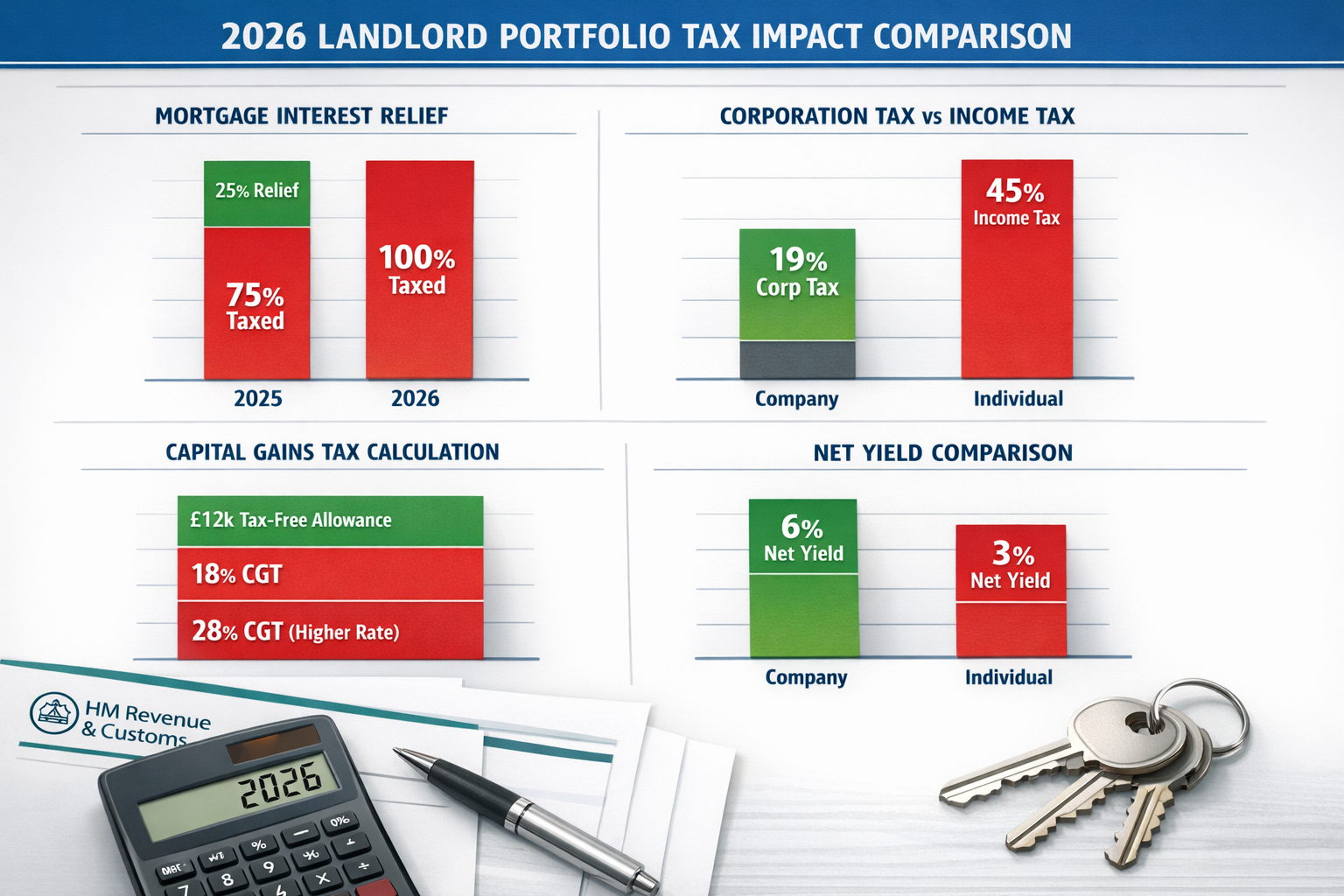
The tax environment for buy-to-let investors in 2026 continues to evolve, creating substantial pressure on net yields. The phased removal of mortgage interest tax relief has fundamentally changed the economics of leveraged property investment. Landlords can no longer deduct mortgage interest from rental income before calculating tax liability. Instead, they receive a 20% tax credit on mortgage interest payments, which particularly impacts higher-rate taxpayers.
Capital gains tax (CGT) considerations have also intensified. When portfolio landlords dispose of properties, they face CGT on profits above the annual allowance. This tax liability must be factored into long-term portfolio valuation strategies, as it directly affects the net realizable value of investment properties.
Additionally, corporation tax structures have become increasingly attractive for professional landlords. Some investors are transferring properties into limited company structures to benefit from corporation tax rates rather than income tax rates on rental profits. This structural shift requires specialized valuation approaches that account for different tax treatments and their impact on overall portfolio yields.
The Portfolio Landlord Definition and Its Implications
The Prudential Regulation Authority (PRA) defines portfolio landlords as those with four or more mortgaged buy-to-let properties [4]. This classification triggers specialist underwriting requirements that fundamentally change how lenders and valuers assess investment viability.
For portfolio landlords, lenders must now:
- Evaluate the overall portfolio strength rather than individual properties in isolation
- Assess the landlord's experience and financial resilience
- Apply stress testing to rental income assumptions
- Consider cross-collateralization risks across the portfolio
These requirements mean that professional RICS valuations must take a holistic view of portfolio performance, examining how tax pressures affect aggregate yields rather than property-by-property returns.
RICS Standards for Valuing Buy-to-Let Portfolios Under 2026 Landlord Tax Pressures

The RICS Professional Standard for Buy-to-Let Valuations
The most authoritative guidance for valuing investment properties comes from the RICS Professional Standard "Valuation of buy-to-let and HMO properties, 2nd edition", which became effective December 1, 2022 [4]. This standard provides specialized methodologies that recognize the unique characteristics of rental investment properties.
Key elements of this standard include:
- Investment method valuations that capitalize net rental income at appropriate yields
- Comparable evidence from similar buy-to-let transactions in the local market
- Risk assessment frameworks that identify factors affecting future performance
- Regulatory compliance considerations including EPC requirements and licensing obligations
The standard explicitly requires valuers to consider the impact of taxation on rental yields when assessing market value. This means that 2026 tax pressures must be reflected in yield assumptions and capitalization rates used in valuations.
Red Book Valuation Requirements
RICS Red Book valuation standards provide the overarching framework for professional property valuations in the UK [2]. When applied to buy-to-let portfolios, Red Book compliance ensures:
- Independence and objectivity in valuation assessments
- Transparent methodology that clearly explains assumptions and limitations
- Market value definitions that reflect actual transaction prices achievable in current conditions
- Due diligence processes that identify material risks affecting value
For portfolio landlords facing 2026 tax pressures, Red Book valuations provide credible, defensible assessments that can be used for refinancing, portfolio restructuring, or disposal decisions. Professional surveyors conducting these valuations must stay current with both tax legislation changes and market sentiment shifts.
Specialized Risk Assessment Methodologies
Valuing Buy-to-Let Portfolios Under 2026 Landlord Tax Pressures: RICS Risk Assessments for Yield Protection requires surveyors to implement comprehensive risk evaluation frameworks. These assessments examine multiple risk categories:
Financial Risks:
- Mortgage interest rate sensitivity
- Void period assumptions
- Tenant default probability
- Tax liability calculations
Regulatory Risks:
- EPC compliance status and upgrade costs
- Licensing requirements for HMOs
- Right to Rent obligations
- Electrical and gas safety certification
Market Risks:
- Local rental demand trends
- Property price volatility
- Competitive supply factors
- Economic conditions affecting tenant affordability
Professional surveyors conducting RICS building surveys integrate these risk assessments into comprehensive valuation reports that inform strategic portfolio management decisions.
Tax-Adjusted Yield Calculations and Portfolio Optimization Strategies
Calculating Net Yields After Tax Pressures
Traditional gross yield calculations (annual rent ÷ property value × 100) no longer provide adequate insight for 2026 investment decisions. Net yield calculations must account for:
- Mortgage interest costs (with only 20% tax credit available)
- Income tax or corporation tax on rental profits
- Property management fees and maintenance reserves
- Insurance and compliance costs including EPC upgrades
- Void periods and tenant turnover expenses
For a higher-rate taxpayer (40% income tax), the effective tax treatment of mortgage interest creates a significant yield drag compared to pre-2017 rules. This makes accurate, tax-adjusted yield calculations essential for portfolio valuation.
Example Net Yield Calculation (2026 Tax Rules)
Consider a property valued at £250,000 generating £15,000 annual rent with a £150,000 mortgage at 5% interest:
| Item | Amount |
|---|---|
| Annual rent | £15,000 |
| Mortgage interest (£150,000 × 5%) | £7,500 |
| Other expenses (management, maintenance, insurance) | £2,000 |
| Gross profit | £5,500 |
| Income tax (40% on £15,000 – £2,000) | £5,200 |
| Less: 20% tax credit on mortgage interest | -£1,500 |
| Net tax liability | £3,700 |
| Net annual return | £1,800 |
| Net yield | 0.72% |
This calculation demonstrates how 2026 tax pressures can reduce net yields to minimal levels, making professional valuation and portfolio optimization critical for maintaining investment viability.
Portfolio Restructuring Strategies
Professional landlords are implementing several strategies to protect yields under current tax pressures:
Limited Company Structures 🏢
Transferring properties into limited companies allows rental profits to be taxed at corporation tax rates (19-25% in 2026) rather than income tax rates up to 45%. However, this involves stamp duty land tax costs and potential CGT on transfer.
Strategic Disposal Programs
Selling underperforming properties with low yields or high upgrade costs can improve overall portfolio efficiency. Professional valuations identify which properties contribute least to portfolio performance.
Energy Efficiency Investments
Upgrading properties to higher EPC ratings not only ensures regulatory compliance but can also command premium rents and improve capital values [3]. Properties must achieve at least an EPC rating of E to be legally rentable under Minimum Energy Efficiency Standards (MEES) regulations.
Geographic Diversification
Concentrating investments in areas with strong rental demand and favorable yield profiles helps offset tax pressures. Professional surveyors can provide local market expertise to identify optimal investment locations.
Energy Performance Compliance and ESG Impact on Valuations
MEES Regulations and Valuation Implications
Energy Performance Certificate (EPC) ratings have become a critical factor in buy-to-let valuations. Properties rated F or G cannot be legally rented unless they qualify for specific exemptions [3]. This creates a binary valuation impact: non-compliant properties face severe liquidity constraints and must be valued with substantial discounts.
The cost of upgrading properties to meet minimum EPC standards varies significantly based on property type and current condition. Typical upgrade costs range from £5,000 to £25,000 per property for insulation, heating system improvements, and glazing replacements.
Professional valuers must assess:
- Current EPC rating and compliance status
- Estimated upgrade costs to achieve compliance
- Potential rental premium for higher EPC ratings
- Market demand for energy-efficient rental properties
ESG Integration in Property Valuations
Environmental, Social, and Governance (ESG) criteria are increasingly integrated into property investment decisions [3]. Institutional investors and professional landlords now consider sustainability factors as material to long-term value preservation.
Environmental factors affecting valuations include:
- Carbon emission levels
- Energy efficiency performance
- Flood risk and climate resilience
- Sustainable material usage
Social factors encompass:
- Tenant health and wellbeing considerations
- Community impact and local employment
- Affordable housing contributions
- Accessibility features
Governance factors involve:
- Regulatory compliance frameworks
- Transparent reporting standards
- Stakeholder engagement processes
- Ethical management practices
As regulatory demands around energy efficiency and carbon reduction continue to rise, properties with strong ESG credentials command valuation premiums while those with poor performance face increasing discounts.
Professional Survey Requirements for Portfolio Risk Management
Choosing the Right Survey Type for Investment Properties
Different survey levels provide varying degrees of information for portfolio risk assessment. Professional landlords should consider:
RICS Level 2 Homebuyer Surveys offer a cost-effective option for relatively modern properties in good condition. These surveys identify visible defects and provide general advice on maintenance and repairs.
RICS Level 3 Building Surveys provide comprehensive assessments suitable for older properties, unusual constructions, or properties requiring significant renovation. These detailed surveys examine all accessible areas and provide extensive analysis of defects and repair priorities.
Specialized surveys including damp surveys, structural assessments, and EPC evaluations may be required for properties with specific concerns or compliance requirements.
When choosing the right property survey, portfolio landlords should balance survey costs against the risk of undiscovered defects that could significantly impact investment returns.
Valuation Survey Integration
Valuing Buy-to-Let Portfolios Under 2026 Landlord Tax Pressures: RICS Risk Assessments for Yield Protection often requires integrated survey approaches that combine structural assessment with investment valuation. Professional surveyors can provide comprehensive reports that:
- Identify structural defects affecting property condition and value
- Estimate repair costs and their impact on net yields
- Assess regulatory compliance status
- Provide market value opinions based on current condition
- Recommend optimization strategies for portfolio performance
Understanding surveyor pricing helps landlords budget appropriately for professional assessments that protect portfolio value.
Market Outlook and Strategic Positioning for 2026
Current Market Sentiment
Professional surveyors are noting a bullish landlord market environment in 2026, with specialized yield assessment methodologies becoming increasingly important [1]. Despite tax pressures, several factors support continued buy-to-let investment:
- Strong rental demand driven by housing shortages and affordability challenges for first-time buyers
- Professional landlord consolidation as smaller investors exit the market
- Institutional investment growth bringing professional management standards
- Rental growth outpacing property price growth in many markets
However, this optimism must be tempered by recognition that only well-managed, compliant portfolios with strong yields will thrive in the current environment.
Strategic Positioning Recommendations
To protect portfolio value under 2026 tax pressures, professional landlords should:
- Obtain professional RICS valuations that accurately reflect tax-adjusted yields and regulatory risks
- Conduct comprehensive compliance audits covering EPC ratings, licensing, and safety certifications
- Implement proactive maintenance programs that preserve property condition and tenant satisfaction
- Consider structural optimization including limited company transfers where beneficial
- Focus on quality over quantity by disposing of marginal properties and reinvesting in higher-yielding assets
- Engage specialist advisors including chartered surveyors, tax accountants, and property lawyers
Professional surveyors provide the foundation for informed decision-making through rigorous valuation methodologies and risk assessments tailored to current market conditions.
Conclusion
Valuing Buy-to-Let Portfolios Under 2026 Landlord Tax Pressures: RICS Risk Assessments for Yield Protection represents a critical competency for professional property investors navigating today's challenging regulatory environment. The combination of restricted mortgage interest relief, capital gains tax considerations, energy efficiency mandates, and specialist underwriting requirements has fundamentally transformed how rental property portfolios must be valued and managed.
RICS professional standards provide the authoritative framework for conducting comprehensive valuations that account for tax-adjusted yields, regulatory compliance risks, and market positioning factors. The specialized methodologies outlined in the "Valuation of buy-to-let and HMO properties" standard ensure that portfolio assessments reflect the complex realities of 2026 investment conditions [4].
Key success factors for maintaining portfolio viability include:
✅ Professional valuation assessments that incorporate full tax implications and regulatory compliance costs
✅ Proactive energy efficiency improvements that ensure MEES compliance and enhance rental appeal
✅ Strategic portfolio optimization through selective disposal and reinvestment in higher-yielding properties
✅ Structural considerations including limited company transfers where tax benefits justify transition costs
✅ Comprehensive risk management through regular surveys and compliance monitoring
Next Steps for Portfolio Landlords
Professional landlords should take immediate action to protect portfolio value:
- Commission professional RICS valuations for your entire portfolio to establish accurate baseline values under current tax rules
- Conduct EPC audits and develop upgrade plans for non-compliant properties
- Review ownership structures with tax advisors to determine optimal configurations
- Implement yield tracking systems that monitor net returns after all tax obligations
- Engage chartered surveyors for ongoing portfolio monitoring and strategic advice
The buy-to-let market in 2026 rewards professionalism, compliance, and strategic thinking. While tax pressures create challenges, well-managed portfolios with strong fundamentals continue to deliver attractive risk-adjusted returns. Professional RICS valuations and risk assessments provide the foundation for successful navigation of this complex investment landscape.
For landlords seeking to protect and enhance portfolio value, partnering with experienced chartered surveyors who understand both valuation methodologies and current regulatory requirements is essential. The investment in professional assessment and strategic planning pays dividends through optimized yields, reduced risks, and enhanced long-term portfolio performance.
References
[1] Valuation Surveys For Professional Buy To Let Investments Assessing Yields In 2026s Bullish Landlord Market – https://nottinghillsurveyors.com/blog/valuation-surveys-for-professional-buy-to-let-investments-assessing-yields-in-2026s-bullish-landlord-market
[2] Valuation Standards – https://www.rics.org/profession-standards/rics-standards-and-guidance/sector-standards/valuation-standards
[3] Future Property Valuation Influence Esg Criteria Residential Buildings – https://www.rics.org/news-insights/future-property-valuation-influence-esg-criteria-residential-buildings
[4] Valuation of buy-to-let and HMO properties 2nd edition – https://www.rics.org/content/dam/ricsglobal/documents/standards/Valuation%20of%20buy-to-let%20and%20HMO%20properties_2nd%20edition.pdf