

Scotland's property market is defying national trends in 2026, delivering robust price growth while southern regions struggle with affordability constraints. For surveyors and valuation professionals, this regional divergence demands precise tactical adjustments to ensure accurate property assessments. Understanding Valuation Tactics for Scotland's 2026 Market Outperformance: RICS Strategies Amid National Recovery has become essential for chartered surveyors navigating this complex landscape, where traditional methodologies require recalibration to reflect Scotland's unique position in the UK's gradual market recovery[2].
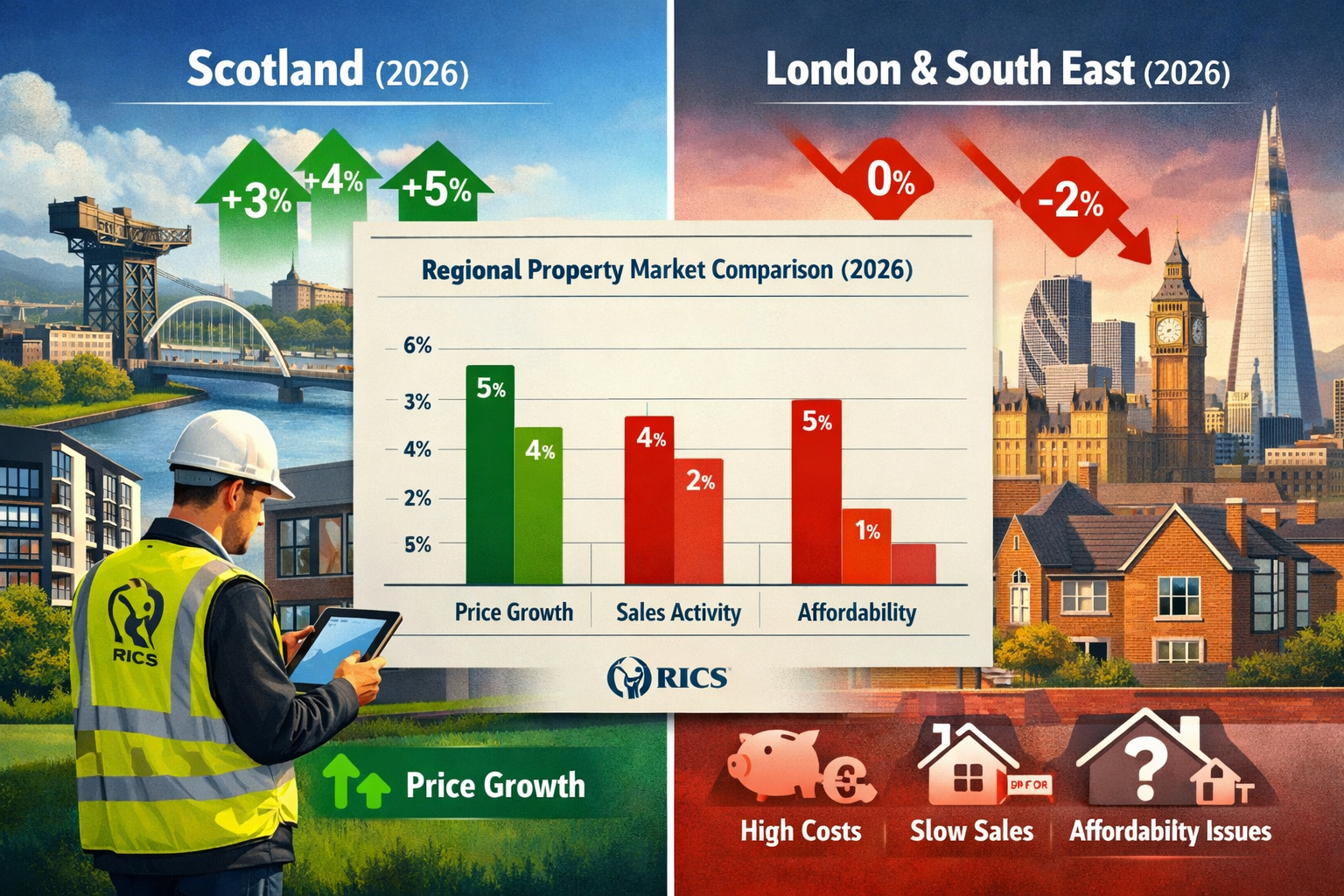
The Royal Institution of Chartered Surveyors (RICS) has identified Scotland as one of the strongest performing regions, with price growth expectations of 3-5% for 2026—a remarkable achievement when compared to the continued stagnation in London, the South East, and East Anglia[4]. This performance gap creates both opportunities and challenges for professionals conducting property valuations across different UK regions.
Key Takeaways
🏴 Regional Divergence: Scotland leads UK price growth at 3-5% in 2026, while southern regions lag due to affordability pressures, requiring region-specific valuation approaches.
📊 Market Sentiment Shift: Surveyor optimism reached its highest level since early 2025, with +43% expecting price increases over the next twelve months[2].
👷 Workforce Crisis Impact: Critical shortage of surveyors threatens market capacity, with Scotland requiring 10,000+ additional construction sector jobs by 2028[1].
🎯 RICS Strategic Framework: New valuation tactics emphasize comparative regional analysis, mortgage rate sensitivity, and workforce capacity constraints in assessment methodologies.
♻️ Sustainability Integration: Net zero considerations and whole life carbon assessments are becoming integral to valuation standards under RICS guidance[1].
Understanding Scotland's 2026 Market Position Within National Recovery
The Regional Performance Gap
Scotland's property market has emerged as a standout performer in the UK's 2026 landscape, demonstrating resilience that contrasts sharply with southern markets. According to RICS data, Scotland and Northern Ireland continue to show the strongest price growth trajectories, while London, the South East, South West, and East Anglia remain constrained by persistent affordability challenges[2].
This divergence isn't merely statistical—it represents a fundamental shift in how surveyors must approach property valuations across different UK regions. The traditional assumption of relatively uniform national market movements has given way to a more nuanced reality where regional economic conditions, housing supply dynamics, and local affordability metrics create distinct valuation environments.
| Region | 2026 Price Growth Forecast | Primary Market Driver | Valuation Challenge |
|---|---|---|---|
| Scotland | 3-5% | Relative affordability, economic recovery | Workforce capacity constraints |
| Northern Ireland | 3-5% | Demand outpacing supply | Limited surveyor availability |
| London | 0-1% | Affordability crisis | Price stagnation assessment |
| South East | 0-2% | High price-to-income ratios | Market uncertainty |
| National Average | 1-3% | Gradual recovery | Regional variation complexity |
For professionals conducting RICS building surveys in Scotland, these figures translate into practical adjustments in comparable evidence selection, market conditions reporting, and future value projections.
Market Sentiment and Transaction Expectations
The sentiment indicators from RICS's January 2026 residential market survey reveal encouraging trends that directly impact valuation methodologies. The net balance for prices over the past three months improved to -10%, showing stabilization after previous declines[2]. More significantly, forward-looking optimism surged, with +43% of surveyors anticipating higher prices over the year ahead—the strongest twelve-month outlook since early 2025[2].
Transaction expectations paint an equally constructive picture. Long-term projections for the next twelve months reached +35%, the strongest reading since December 2024, though short-term expectations moderated to +4%, reflecting immediate market caution[2]. This temporal divergence—optimistic long-term but cautious short-term—creates a valuation nuance that professionals must carefully navigate.
"The recovery is gradual and dependent on mortgage rates and macroeconomic confidence, though sentiment is moving in a constructive direction."[5]
Mortgage Rate Sensitivity and Affordability Dynamics
Scotland's relative affordability advantage represents a critical valuation factor in 2026. While southern regions grapple with price-to-income ratios that have rendered homeownership increasingly inaccessible, Scottish markets benefit from more sustainable multiples. This affordability differential influences not only current transaction volumes but also future appreciation potential—a consideration that must inform valuation assumptions.
Mortgage rate movements remain the primary external variable affecting all UK markets, but their impact varies regionally. In Scotland, where absolute property prices remain lower, rate fluctuations create proportionally smaller monthly payment variations compared to high-value southern markets. Surveyors conducting commercial valuations must factor these sensitivity differentials into their market risk assessments.
RICS-Guided Valuation Tactics for Scotland's 2026 Market Outperformance: Strategic Methodologies
Comparative Regional Analysis Framework
The cornerstone of effective Valuation Tactics for Scotland's 2026 Market Outperformance: RICS Strategies Amid National Recovery lies in rigorous comparative regional analysis. RICS standards have always emphasized market evidence, but 2026's pronounced regional divergence demands enhanced sophistication in evidence selection and weighting.
Key tactical adjustments include:
✅ Geographic Evidence Boundaries: Narrowing comparable evidence searches to Scottish markets exclusively, avoiding contamination from southern market data that reflects fundamentally different dynamics.
✅ Temporal Weighting: Prioritizing recent transactions (within 3-6 months) more heavily than historical practice, given rapid sentiment shifts and market evolution.
✅ Transaction Type Segmentation: Distinguishing between first-time buyer, move-up, and investment transactions, as each segment responds differently to Scotland's affordability advantages.
✅ Mortgage Product Correlation: Tracking which mortgage products (fixed vs. variable, term lengths) are financing comparable transactions, as product mix indicates buyer confidence and risk appetite.
For surveyors preparing Level 3 RICS building surveys, these analytical refinements ensure that valuation opinions reflect genuine Scottish market conditions rather than outdated national assumptions.
Adjusting for Workforce Capacity Constraints
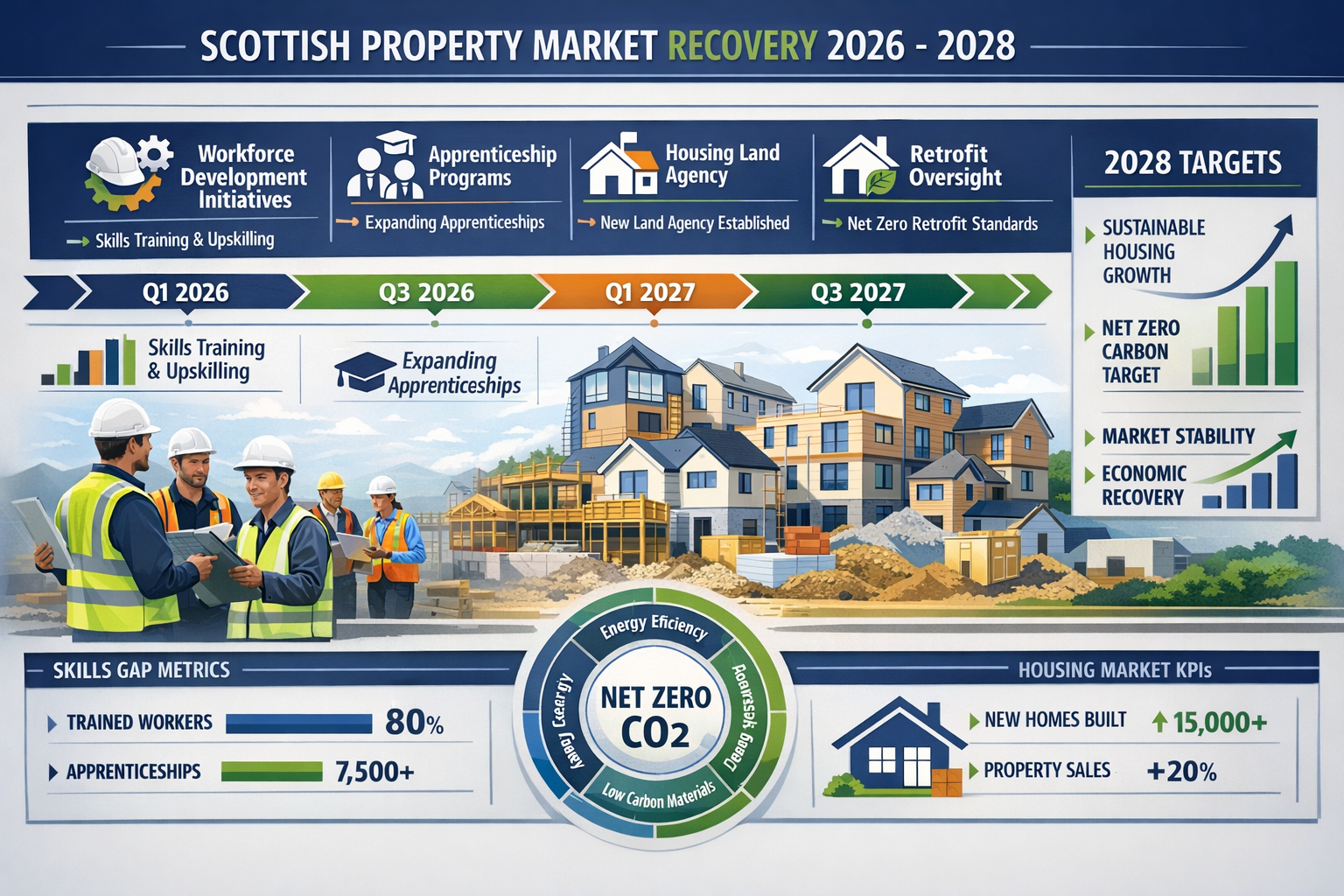
Perhaps the most overlooked valuation factor in Scotland's 2026 market is the critical workforce shortage affecting both construction and surveying sectors. RICS Scotland has identified this capacity crisis as the primary constraint on market performance, with Skills Development Scotland estimating the construction sector will require at least 10,000 additional jobs by 2028 to meet future demand[1].
This workforce deficit creates multiple valuation implications:
-
Supply Constraint Premium: New-build properties may command premiums due to limited construction capacity, affecting comparable evidence interpretation.
-
Renovation Complexity: Properties requiring significant works face extended timelines and cost uncertainty, potentially depressing valuations relative to move-in-ready alternatives.
-
Survey Availability Impact: The shortage of qualified surveyors creates delays in transaction processes, potentially affecting market liquidity assumptions in valuations.
-
Quality Assurance Concerns: Rushed work due to capacity constraints may affect construction quality, requiring enhanced due diligence in property condition assessments.
The RICS Scotland Manifesto 2026 explicitly calls for fully funded apprenticeships for SME-employed apprentices under 25 to rebuild workforce capacity[1]. Until this capacity materializes, valuers must account for these constraints in their market assessments.
Integration of Sustainability and Net Zero Considerations
Scotland's commitment to ambitious net zero targets introduces additional valuation complexity that RICS guidance increasingly emphasizes. The RICS Scotland Manifesto recommends establishing a Ministerial Oversight Group on retrofit and embodied carbon legislation to ensure quality decarbonization aligned with RICS Whole Life Carbon Assessment Standard[1].
For property valuations in 2026, this sustainability focus translates into:
Energy Performance Certificate (EPC) Premium Differentiation: Properties with higher EPC ratings demonstrating measurable market premiums as buyers anticipate future regulatory requirements and energy cost savings.
Retrofit Potential Assessment: Valuation adjustments for properties with clear pathways to improved energy efficiency versus those facing expensive or technically challenging upgrades.
Embodied Carbon Considerations: Emerging market recognition of whole-life carbon impacts, particularly in new-build valuations where construction methodology affects long-term sustainability profiles.
Future Regulatory Risk: Downward adjustments for properties likely to face mandatory upgrade requirements under anticipated Scottish Government regulations.
These sustainability factors interact with Scotland's market outperformance by potentially accelerating the value gap between efficient and inefficient properties—a trend that forward-looking valuations must anticipate.
RICS Red Book Application in Divergent Markets
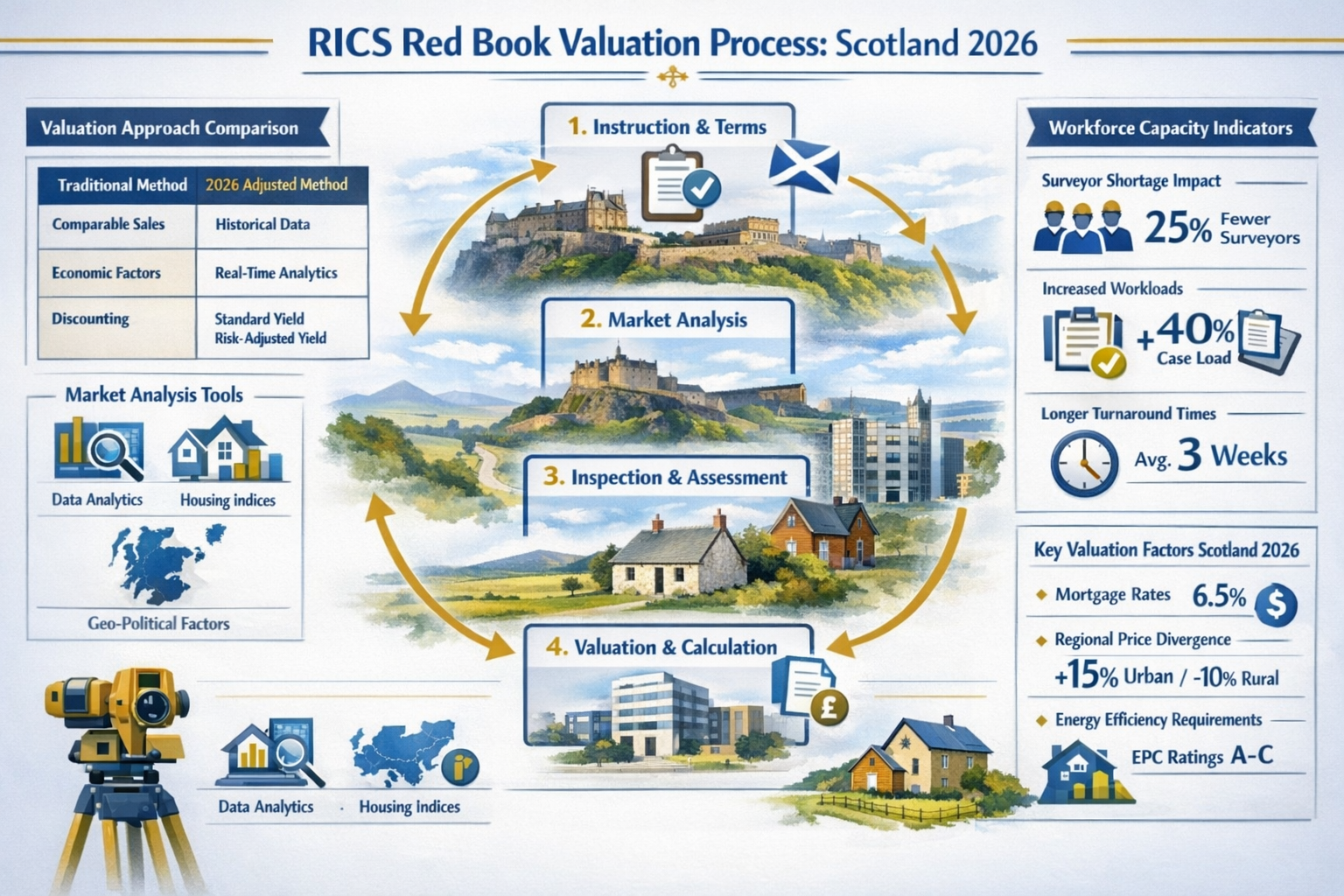
The RICS Valuation – Global Standards (Red Book) provides the foundational framework for all professional valuations[6], but its application in Scotland's 2026 market requires nuanced interpretation given the pronounced regional divergence from national trends.
Critical Red Book considerations for Scottish valuations:
Market Value Definition Precision: Ensuring that "willing buyer, willing seller" assumptions reflect Scottish market realities rather than UK-wide generalizations, particularly regarding mortgage availability and buyer demographics.
Special Assumptions Documentation: Clearly articulating any special assumptions related to regional market divergence, workforce constraints, or sustainability factors that differ from standard UK market conditions.
Uncertainty and Sensitivity Reporting: Enhanced disclosure of valuation uncertainty ranges given rapid market evolution and regional performance gaps, potentially including scenario analysis for different mortgage rate trajectories.
Comparable Evidence Transparency: Detailed documentation of comparable selection rationale, explicitly addressing why certain evidence was included or excluded based on regional relevance.
Professionals seeking to master these applications may benefit from reviewing comprehensive desktop house valuation methodologies that can be adapted for Scottish market conditions.
Implementing RICS Strategies for Accurate Scottish Property Assessments in 2026
Practical Valuation Process Refinements
Translating strategic understanding into operational excellence requires specific process refinements that embed Scotland's market dynamics into everyday valuation practice. The following tactical framework helps surveyors deliver accurate assessments that reflect the region's outperformance:
📋 Pre-Inspection Market Research Enhancement
Before conducting site inspections, Scottish valuers should now undertake expanded market research that includes:
- Local authority planning data review to identify supply pipeline and potential market saturation risks
- Regional employment statistics analysis to understand economic drivers supporting price growth
- Mortgage lending data specific to Scottish markets to gauge financing availability
- Surveyor capacity mapping to assess potential transaction bottlenecks in the local area
This enhanced preparation ensures that subsequent property-specific assessments occur within an accurate market context rather than relying on potentially outdated UK-wide assumptions.
🔍 Inspection Focus Areas for 2026 Conditions
Physical property inspections for RICS building surveys in Scotland should now emphasize:
- Construction quality verification: Given workforce pressures, heightened scrutiny of workmanship standards, particularly in recent renovations or new builds
- Energy efficiency infrastructure: Detailed assessment of insulation, heating systems, and renewable energy installations given growing market premiums
- Maintenance deferred indicators: Identifying properties where owner financial constraints may have delayed necessary works, affecting competitive positioning
- Adaptation potential: Evaluating ease of future modifications for changing household needs or energy efficiency upgrades
These inspection priorities align with market factors driving Scotland's differentiated performance, ensuring that physical property characteristics are evaluated through the lens of current buyer priorities.
📊 Comparable Evidence Selection Protocols
The evidence selection process represents the most critical juncture where regional market understanding translates into valuation accuracy. For Scotland in 2026, best practice protocols include:
-
Primary Evidence Circle: Transactions within 5-mile radius (or appropriate local market boundary) completed within past 6 months, weighted at 100%
-
Secondary Evidence Circle: Transactions within 10-mile radius completed 6-12 months ago, weighted at 70% with temporal adjustments for market movement
-
Tertiary Reference Evidence: Broader Scottish market data for context only, not direct comparable weighting
-
Excluded Evidence: Automatic exclusion of London, South East, and other underperforming regional data unless specifically relevant for unique property types
-
Transaction Type Filtering: Preference for arm's-length transactions with mortgage financing over cash purchases or distressed sales that may not reflect market norms
This hierarchical approach ensures that Scottish market realities dominate the valuation conclusion rather than being diluted by irrelevant UK-wide data.
Technology Integration for Enhanced Market Analysis
Modern valuation practice increasingly leverages technology platforms to process larger datasets and identify market trends more rapidly than traditional manual methods. For Scotland's 2026 market, technology integration offers specific advantages:
Automated Comparable Evidence Systems: Platforms that filter transaction databases by Scottish postcodes, property characteristics, and transaction dates, dramatically reducing research time while improving evidence relevance.
Price Trend Visualization Tools: Software that graphs regional price movements over time, making Scotland's outperformance versus national trends immediately visible and quantifiable.
Mortgage Rate Scenario Modeling: Calculators that project valuation sensitivity to different interest rate scenarios, helping clients understand the primary external risk factor affecting Scottish market sustainability.
Energy Performance Analytics: Databases correlating EPC ratings with achieved sale prices in Scottish markets, quantifying the sustainability premium that buyers are willing to pay.
While technology enhances efficiency, RICS standards require that professional judgment remains central to valuation conclusions. Technology provides data; surveyors provide interpretation within the context of local market knowledge and property-specific factors.
Client Communication and Expectation Management
The pronounced regional divergence between Scotland and southern markets creates communication challenges when clients have experience with different regional markets or when institutional clients apply UK-wide investment criteria.
Effective communication strategies include:
📢 Regional Context Education: Proactively explaining Scotland's market position relative to UK averages, using RICS survey data to demonstrate that Scottish outperformance is data-driven rather than speculative.
📈 Forward Guidance Transparency: Clearly articulating that 3-5% growth expectations are moderate compared to 2025's exceptional performance, managing expectations for sustainable rather than exponential appreciation.
⚠️ Risk Factor Disclosure: Balanced presentation of both positive factors (affordability, economic recovery) and constraints (workforce shortages, mortgage rate sensitivity) affecting Scottish market outlook.
🔄 Valuation Basis Clarification: Explicit confirmation that valuations reflect current Scottish market conditions and may not be comparable to simultaneous valuations in other UK regions due to divergent market dynamics.
For professionals conducting lease extension valuations or other specialized assessments, this communication framework ensures clients understand the regional context affecting their specific property interests.
Addressing the Surveyor Shortage Impact
The critical shortage of surveyors identified by RICS Scotland directly affects valuation practice and market function[1]. This workforce constraint creates both immediate operational challenges and longer-term strategic considerations:
Immediate Practice Impacts:
- Extended turnaround times for survey completion, potentially affecting transaction timelines
- Increased workload pressures that may tempt shortcuts in research or analysis depth
- Premium pricing for surveyor services in high-demand areas, affecting transaction costs
- Limited availability of specialist expertise for unusual property types or complex valuations
Strategic Responses:
✅ Capacity Planning: Firms implementing scheduling systems that balance workload to maintain quality standards despite demand pressures
✅ Apprenticeship Investment: Forward-thinking practices recruiting and training junior surveyors despite short-term cost implications, responding to RICS calls for workforce development[1]
✅ Technology Leverage: Adopting platforms that automate routine tasks, freeing qualified surveyors for judgment-intensive valuation work
✅ Collaborative Networks: Establishing referral relationships with other qualified surveyors to manage overflow demand while maintaining service standards
The RICS Scotland Manifesto's call for urgent review of building surveying and commercial valuation course provision across Scotland, alongside reform of higher education funding[1], signals recognition that workforce development requires systemic intervention beyond individual practice initiatives.
Strategic Recommendations for Valuation Tactics Amid Scotland's 2026 Market Outperformance
Institutional and Lender-Specific Considerations
Financial institutions and mortgage lenders operating across multiple UK regions face particular challenges when Scotland's market dynamics diverge from national trends. Valuation Tactics for Scotland's 2026 Market Outperformance: RICS Strategies Amid National Recovery must address these institutional requirements:
Risk Assessment Framework Adjustments
Traditional lending risk models calibrated to UK-wide market assumptions may inappropriately penalize Scottish property lending if they fail to recognize the region's relative strength. Institutional valuers should:
- Develop Scotland-specific risk matrices that reflect regional market fundamentals rather than applying national default assumptions
- Adjust loan-to-value ratio comfort levels to account for Scotland's more favorable affordability metrics and growth trajectory
- Implement regional stress testing that models Scottish-specific economic scenarios rather than extrapolating from London-centric analyses
- Recognize that geographic diversification into Scottish markets may reduce overall portfolio risk given negative correlation with southern market performance
Portfolio Valuation Consistency
Institutions holding property portfolios across multiple UK regions require valuation consistency while acknowledging regional divergence. Best practices include:
-
Regional Stratification: Separately reporting Scottish portfolio performance versus other regional holdings to identify geographic value drivers
-
Methodology Harmonization: Applying consistent RICS Red Book standards across all regions while adjusting inputs (comparables, growth assumptions) to regional realities
-
Assumption Documentation: Explicitly documenting regional assumption variations to ensure audit trails and regulatory compliance
-
Revaluation Frequency: Potentially increasing Scottish portfolio revaluation frequency given faster market evolution compared to static southern markets
These institutional considerations ensure that Scotland's outperformance is appropriately captured in organizational decision-making rather than being obscured by UK-wide averaging.
Residential Versus Commercial Valuation Distinctions
While residential market data dominates public discussion, Scotland's 2026 market dynamics affect commercial property valuations differently. Professionals conducting commercial building surveys should recognize these distinctions:
Commercial Market Divergence Factors:
🏢 Occupier Demand Drivers: Commercial valuations depend on business location decisions, which respond to factors (labor availability, infrastructure, business rates) that differ from residential market drivers
📍 Geographic Specificity: Commercial markets are hyper-local, with individual street or building characteristics creating value variations that exceed residential market granularity
💼 Lease Structure Impact: Commercial valuations heavily weight existing lease terms, tenant quality, and income security—factors largely independent of residential market trends
🔄 Investment Yield Compression: Commercial property yields may not compress in line with residential price growth if investor risk perceptions differ by sector
Tactical Adjustments for Commercial Valuations:
- Tenant Covenant Analysis: Enhanced scrutiny of tenant financial strength given economic recovery uncertainty
- Lease Event Modeling: Scenario analysis for rent reviews, break options, and lease expiries under different economic trajectories
- Comparable Evidence Segmentation: Strict separation of commercial evidence by property type, location, and lease structure
- Sustainability Premium Quantification: Emerging premiums for energy-efficient commercial properties as occupiers face ESG reporting requirements
The workforce shortage affecting Scotland's construction sector has particular commercial implications, potentially constraining new commercial development and supporting values for existing quality stock.
Specialized Property Type Considerations
Certain property categories require additional tactical refinements when applying valuation methodologies in Scotland's 2026 market:
New Build Properties
Scotland's workforce constraints create unique dynamics for new construction valuations:
- Completion Risk Premium: Buyers may discount new builds due to construction delay risks, affecting developer valuations
- Specification Verification: Enhanced scrutiny of build quality given rushed construction pressures
- Warranty Value: Increased importance of NHBC or similar warranties as quality assurance mechanisms
- Energy Performance Advantage: New builds' superior EPC ratings command growing premiums as retrofit costs for older properties escalate
Period and Listed Properties
Scotland's substantial stock of period and listed properties faces specific valuation challenges:
- Retrofit Complexity: Listed building consent requirements complicate energy efficiency improvements, potentially creating value discounts
- Maintenance Cost Capitalization: Ongoing maintenance requirements for period properties affect net present value calculations
- Specialist Contractor Availability: Workforce shortages particularly acute for heritage skills, affecting renovation feasibility
- Character Premium Sustainability: Assessing whether buyer premiums for period character remain sustainable amid energy efficiency focus
Rural and Remote Properties
Scotland's geographic diversity includes substantial rural property markets with distinct dynamics:
- Connectivity Infrastructure: Broadband and transport links increasingly critical as remote work normalizes
- Service Availability: Surveyor and contractor scarcity particularly acute in remote areas, affecting transaction feasibility
- Market Depth: Limited comparable evidence requiring wider geographic search parameters
- Lifestyle Premium Volatility: Assessing sustainability of pandemic-era rural property premiums as urban amenities regain appeal
Professionals conducting homebuyer surveys across these diverse property types must adapt methodologies to category-specific market dynamics while maintaining RICS standards consistency.
Future-Proofing Valuation Approaches
Looking beyond 2026's immediate market conditions, forward-thinking valuation practice incorporates emerging trends that will shape Scottish property markets in coming years:
Climate Resilience Assessment
Scotland's net zero commitments and climate change adaptation requirements will increasingly influence property values:
- Flood Risk Mapping: Integration of updated flood risk data as climate patterns shift
- Thermal Performance: Valuation differentiation based on heating cost projections under various energy price scenarios
- Adaptation Potential: Premium for properties easily modified for climate resilience versus those facing expensive structural interventions
- Insurance Availability: Growing importance of insurability as climate risks affect coverage availability and pricing
Demographic Shift Implications
Scotland's evolving demographics create long-term value drivers:
- Aging Population: Demand shifts toward accessible, single-level properties with proximity to services
- Household Size Reduction: Continued preference for smaller, efficient properties over large family homes
- Migration Patterns: Internal UK migration toward affordable regions supporting Scottish demand
- Remote Work Normalization: Sustained demand for home office space and connectivity infrastructure
Regulatory Evolution Anticipation
Upcoming regulatory changes require proactive valuation consideration:
- Energy Performance Minimum Standards: Anticipated regulations requiring minimum EPC ratings for rental and sale properties
- Embodied Carbon Disclosure: Potential requirements for whole-life carbon assessment in property transactions
- Retrofit Mandates: Possible government programs requiring energy efficiency upgrades by specific deadlines
- Planning System Reform: RICS Scotland's recommended Housing Land Agency creation potentially affecting development land valuations[1]
Incorporating these forward-looking factors ensures that valuations remain relevant beyond immediate market conditions, providing clients with strategic rather than merely tactical guidance.
Conclusion: Mastering Valuation Tactics for Scotland's 2026 Market Leadership
Scotland's position as a UK market leader in 2026 represents both opportunity and responsibility for the surveying profession. The region's 3-5% price growth expectations, robust transaction optimism, and relative affordability advantages create favorable conditions for property market activity[4]. However, these positive fundamentals coexist with significant constraints—particularly the critical workforce shortage that threatens to cap market potential[1].
Valuation Tactics for Scotland's 2026 Market Outperformance: RICS Strategies Amid National Recovery must therefore balance optimism with realism, recognizing genuine strengths while acknowledging capacity limitations and external dependencies like mortgage rate movements. The pronounced divergence from southern UK markets demands that Scottish valuations stand independently on regional evidence rather than defaulting to national assumptions that no longer reflect local realities.
The RICS framework provides essential guidance through this complexity, with the Red Book standards offering methodological consistency while allowing regional interpretation[6]. The RICS Scotland Manifesto 2026's recommendations—from apprenticeship funding to Housing Land Agency creation to retrofit oversight—chart a course toward sustainable market development that addresses current constraints[1].
Actionable Next Steps for Surveying Professionals
✅ Audit Current Practices: Review recent valuations to ensure Scottish market evidence dominates comparable selection and that regional outperformance is appropriately reflected in growth assumptions.
✅ Enhance Market Intelligence: Establish systematic monitoring of RICS survey data, Scottish government statistics, and local market indicators to maintain current market knowledge.
✅ Invest in Technology: Implement or upgrade valuation platforms that facilitate rapid, accurate comparable evidence analysis specific to Scottish markets.
✅ Develop Specialist Expertise: Build knowledge in emerging value drivers including energy performance, sustainability credentials, and climate resilience factors.
✅ Strengthen Client Communication: Create standardized briefing materials explaining Scotland's market position and how regional dynamics affect individual property valuations.
✅ Support Workforce Development: Engage with RICS Scotland's workforce initiatives, whether through apprenticeship programs, mentoring, or advocacy for education funding reform.
✅ Network Regionally: Participate in Scottish surveying communities to share market intelligence and develop collaborative relationships for capacity management.
For firms seeking to establish or expand Scottish operations, understanding these regional dynamics is non-negotiable. The market's outperformance creates opportunity, but only for professionals equipped with appropriate valuation tactics that reflect local conditions rather than importing methodologies calibrated to very different southern markets.
The gradual national recovery provides a constructive backdrop, with sentiment indicators moving in positive directions and transaction expectations strengthening[2][5]. Scotland's position at the forefront of this recovery reflects fundamental advantages—affordability, economic resilience, and relative value—that should sustain market support even as 2026's growth moderates from 2025's exceptional performance.
Ultimately, mastering Valuation Tactics for Scotland's 2026 Market Outperformance: RICS Strategies Amid National Recovery requires combining technical excellence with market awareness, applying rigorous RICS standards while exercising informed professional judgment. As the UK property market continues its uneven recovery, Scotland's leadership position offers surveyors the opportunity to demonstrate how regional expertise and tactical sophistication deliver accurate, defensible valuations that serve clients and support market function.
The path forward demands continuous learning, methodological refinement, and commitment to the professional standards that distinguish chartered surveyors. By embracing these principles while adapting to Scotland's unique 2026 market conditions, the profession can fulfill its essential role in supporting sustainable property market development across the region.
References
[1] Rics Scotland Manifesto 2026 Surveying Scotland – https://www.rics.org/news-insights/rics-scotland-manifesto-2026-surveying-scotland
[2] Uk Resi Survey Jan 2026 Report Shows Early Signs Market Recovery Despite Caution – https://www.rics.org/news-insights/uk-resi-survey-jan-2026-report-shows-early-signs-market-recovery-despite-caution
[3] Uk Residential Market Survey January 2026 – https://www.rics.org/content/dam/ricsglobal/documents/market-surveys/uk-residential-market-survey/UK-Residential-Market-Survey_January-2026.pdf
[4] Valuation Strategies For Northern Uk Price Surge Surveyor Tactics In Scotland Northern Ireland And North England 2026 – https://nottinghillsurveyors.com/blog/valuation-strategies-for-northern-uk-price-surge-surveyor-tactics-in-scotland-northern-ireland-and-north-england-2026
[5] Market Confidence Edges Higher In Early 2026 – https://www.winkworth.co.uk/articles/market-confidence-edges-higher-in-early-2026
[6] Valuation Standards – https://www.rics.org/profession-standards/rics-standards-and-guidance/sector-standards/valuation-standards